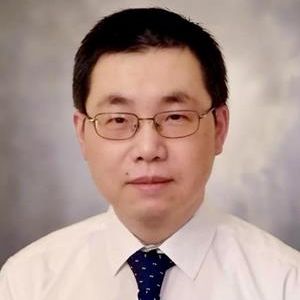
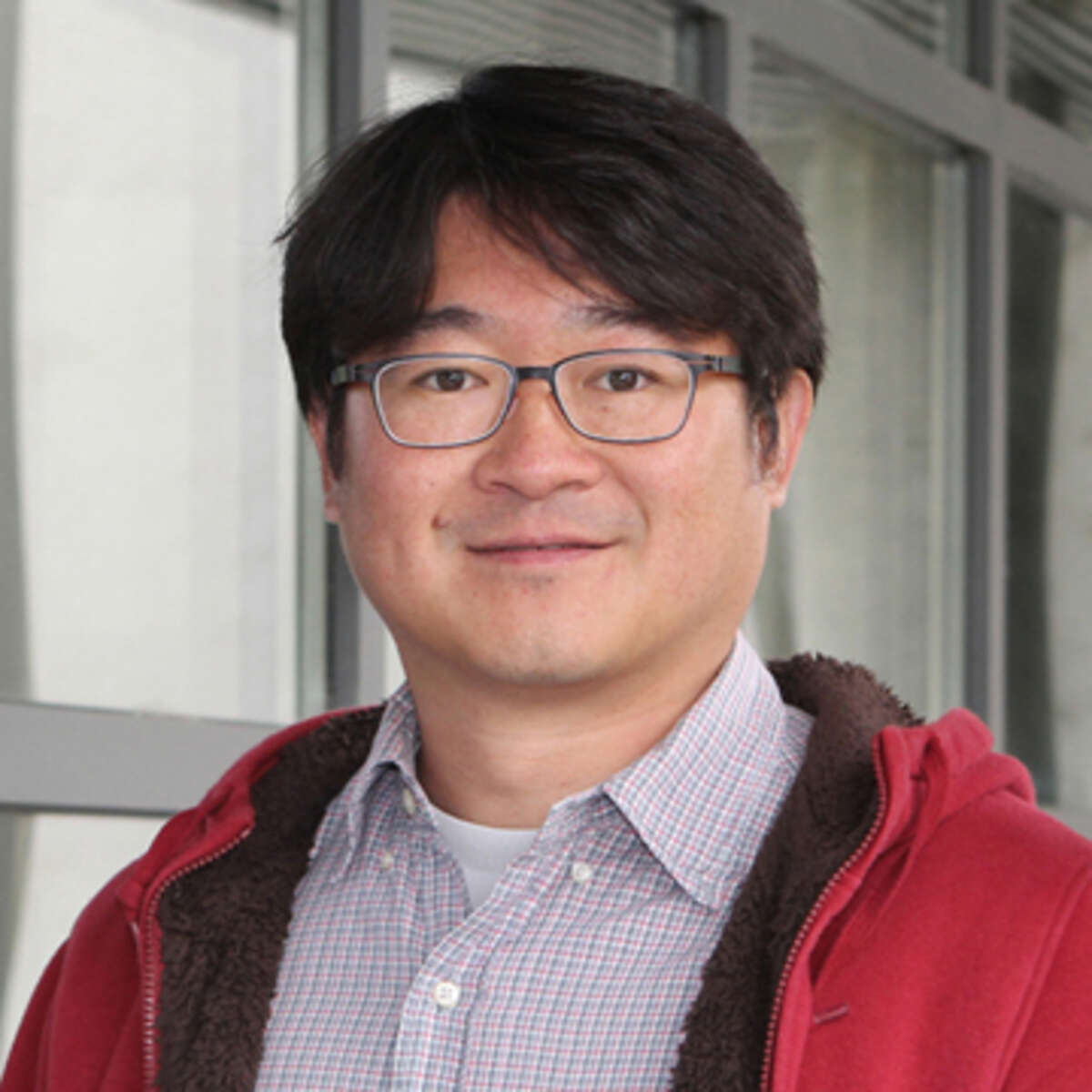
Professor Jes Sammut is a faculty member at the University of New South Wales (UNSW) in the School of Biological, Earth & Environmental Sciences . He serves as Deputy Dean for External Engagement and leads the UNSW Aquaculture Research Group , while also holding the position of Deputy Director (International) at the Centre for Marine Science & Innovation. Additionally, he is an Honorary Research Fellow at ANSTO , where he uses nuclear tools to study seafood provenance. His research spans biological, physical, and social sciences, focusing on aquaculture solutions across Australia, Vietnam, Papua New Guinea, Indonesia, India, Thailand, and the Philippines.
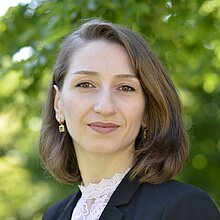
Dr. Miranda Svanidze is a Researcher at the Leibniz Institute of Agricultural Development in Transition Economies (IAMO), affiliated with Martin Luther University Halle-Wittenberg. She has served as a Research Associate at IAMO since November 2019, focusing on agricultural markets, price transmission, and food security in transition economies. Her work contributes significantly to understanding market dynamics in the Black Sea region and post-Soviet states, particularly in relation to geopolitical events like Russia's war in Ukraine. Dr. Svanidze's educational background includes: PhD in Agriculture from Martin Luther University Halle-Wittenberg (MLU), Germany, with highest honors ("summa cum laude") Master's degree in Economics (with Honors) from the International School of Economics at Tbilisi State University (ISET), Georgia Dr. Svanidze's research centers on the functioning of agricultural markets and resilience of agri-food value chains, with specific expertise in price transmission analysis, market integration, consumer behavior, regional trade, and food security. Her work emphasizes agri-food markets in transition economies, particularly examining how geopolitical events like Russia's war in Ukraine impact grain markets, wheat pricing, and food security in the Black Sea region and beyond. She employs sophisticated economic modeling to analyze trade networks, market efficiency, and the effects of policy interventions. Analysis of Dr. Svanidze's recent publications reveals a strong focus on the intersection of geopolitics and agricultural markets, particularly regarding Russia's wheat exports and their global implications. Her work increasingly examines how climate factors, exchange rate fluctuations, and wartime conditions affect agricultural pricing and market integration. There's a notable trend toward analyzing crisis impacts on food systems, with growing attention to consumer behavior in wine markets of the South Caucasus region. Dr. Svanidze has received several notable scientific recognitions: Doctoral grant from the German Academic Exchange Service (DAAD) Selection as a young economist for the 6th Lindau Nobel Laureate Meeting on Economic Sciences (2017) PhD awarded with highest honors ("summa cum laude") from Martin Luther University Halle-Wittenberg Dr. Svanidze has been actively involved in multiple research projects including BlackSeaGrain (studying Russia's grain export business in the Black Sea), CRISPR (consumer protection and innovation marketing of green genetic engineering), EU4Dialogue_SC (improving agri-food value chains in the South Caucasus), MATRACC (global food crisis impact on wheat markets), and VALUMICS (understanding food value chains). Her work often involves international collaboration with researchers across Europe and the Caucasus region. As part of IAMO's Agricultural Markets, Marketing and World Agricultural Trade department, Dr. Svanidze contributes to a team examining market dynamics in transition economies. Her research frequently intersects with teams studying food security, trade policy, and value chain analysis, particularly in regions affected by geopolitical instability. She regularly presents findings at major agricultural economics conferences including the European Association of Agricultural Economists (EAAE) Congress and IAMO Forum events.
Professor Jing Meng is a leading academic at University College London's Bartlett School of Sustainable Construction, holding the position since 2023 after progressing from Lecturer (2019-2021) to Associate Professor (2021-2023). She concurrently serves as a fellow at the Cambridge Centre for Environment, Energy and Natural Resource Governance and maintains active editorial roles as Executive Editor of the Journal of Cleaner Production and Associate Editor for Journal of Geophysical Research: Atmospheres. Her research spans three interconnected domains: Energy Transitions and Technology Innovation (examining cost forecasts and structural emission declines in China), Climate Change Policies (analyzing South-South trade effects and multinational enterprise emissions), and Emission-Health-Socioeconomics Nexus (assessing air pollution impacts and integrated co-mitigation strategies). This interdisciplinary approach is reflected in her publication record across Nature family journals and PNAS. Analysis of her recent publications reveals a consistent focus on global carbon accounting methodologies, with increasing attention to subnational (city-level) analyses, health co-benefits of climate policies, and technological innovation pathways for hard-to-abate sectors. Her work frequently employs multi-regional input-output modeling to trace emissions through complex supply chains. AGU Global Environmental Change Early Career Award (2023) MIT Technology Review Innovators Under 35 Asia Pacific (2022) Clarivate Highly Cited Researcher (2020-2024) Nature Communications Top 50 Earth Sciences Article (2018) MDPI Emerging Sustainability Leader Award (2020) Environmental Research Letters Best Early Career Article (2017) Professor Meng has secured substantial funding from diverse sources including NERC, the British Council, Quadrature Climate Foundation, The Royal Society, and UCL internal grants. She leads an interdisciplinary research group focused on technology innovation and climate policy, with particular emphasis on China's role in global emissions systems. Her work directly supports Sustainable Development Goal 13 (Climate Action) through actionable policy insights.
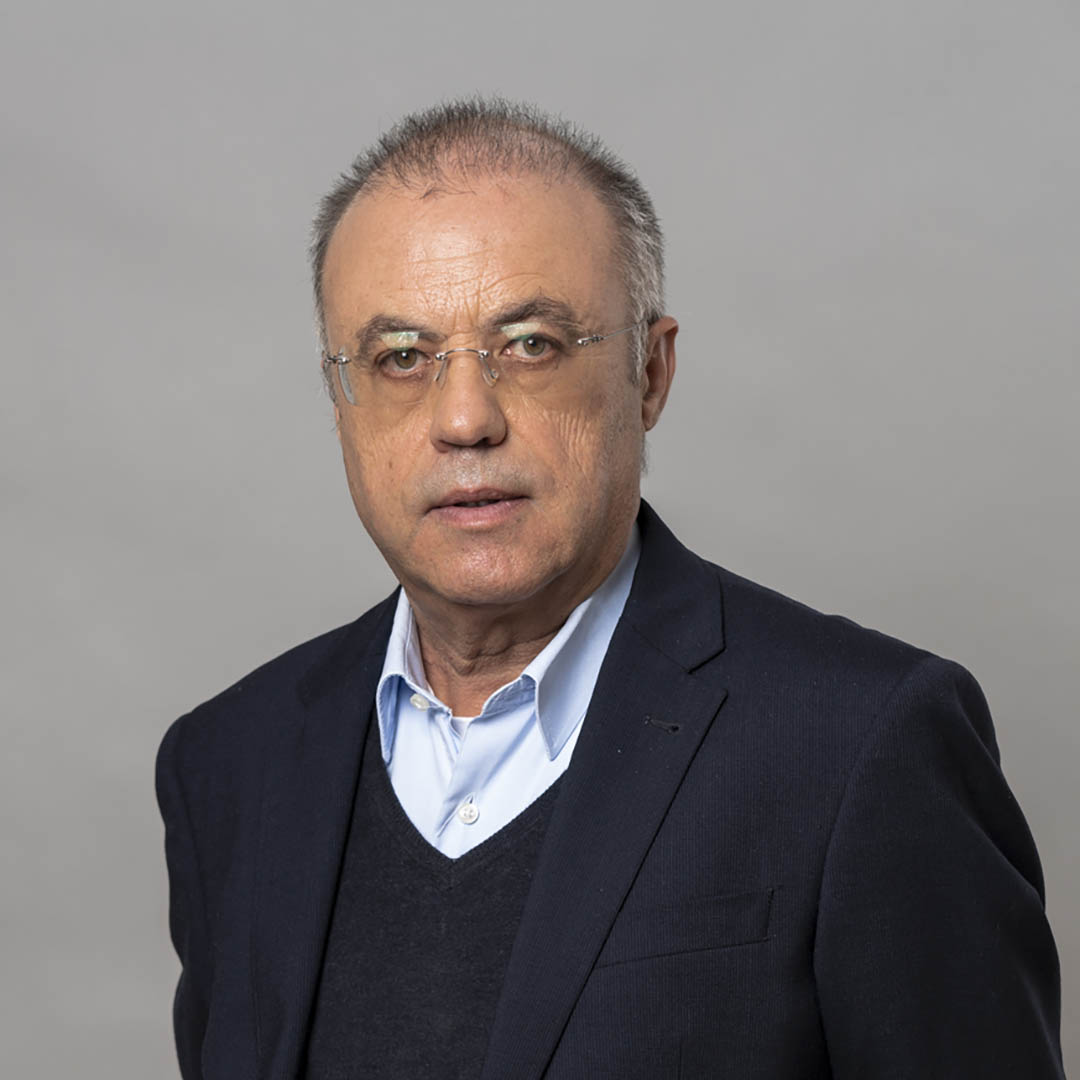
Associate Professor at the University of Lisbon's School of Economics and Management (ISEG) since 1983, João Carlos Lopes specializes in Portuguese economic analysis with emphasis on sectoral dynamics, European integration impacts, and circular economy applications. His institutional affiliation spans decades of active teaching and research within Portugal's premier economics institution. Research interests center on Input-Output Analysis , Circular Economy transitions , and Portuguese industrial history , particularly the cork sector. His work examines EU structural funds' regional impacts, migration economics through consumption patterns, and austerity policy consequences. Key thematic areas include: Macroeconomic policy evaluation in peripheral Eurozone economies Historical evolution of Portuguese industrial clusters EU migration's economic consequences via input-output modeling Rural innovation driven by young farmers in peripheral regions His 15 most recent publications (2013-2024) reveal a clear trajectory toward circular economy applications in Portuguese automotive and construction sectors, while maintaining core focus on EU integration challenges. Articles consistently employ Portuguese case studies to address broader European economic questions, with strong methodological emphasis on input-output frameworks and historical institutional analysis. Supervising over 40 Master's students since 2010, his advising portfolio shows thematic consistency with research interests: Circular Economy : 7 theses on automotive, construction, and pharmaceutical sectors EU Policy Analysis : 12 theses on migration, fiscal policy, and structural funds Portuguese Industry : 9 theses on cork, rubber, and regional specialization Teaching responsibilities include Macroeconomics I and EU Economics courses, with documented instruction from 2007-2025 across undergraduate and graduate programs.
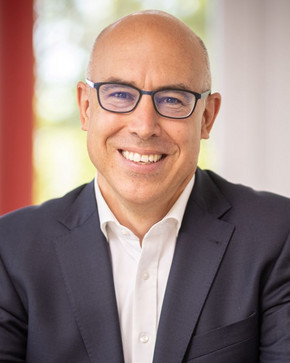
Gabriel Felbermayr is a Professor of Economics at Vienna University of Economics and Business (WU) and Director of the Austrian Institute of Economic Research (WIFO) since 2021. He holds a PhD in Economics and has held academic positions at the University of Munich (ifo Center for International Economics), Kiel University (Chair in Economics), and the University of Tübingen. University Professor: WU Vienna (2021–) Director: WIFO Vienna (2021–) President: Kiel Institute (2019–2021) Research Interests include international trade theory, labor markets in open economies, European integration, migration economics, and climate-trade intersections. His work combines theoretical models with empirical policy analysis, focusing on globalization challenges, supply chain disruptions, and economic sanctions. Current Projects Trump 2.0 Transatlantic Tariff Scenarios Scientific Awards include recognition for his research contributions, though specific award names are not detailed in the text. He has led major projects for institutions like the Austrian Economic Chamber and the Foundation for Family Businesses. Education includes studies at the University of Linz and University of Florence (PhD). His publications span journals like Journal of International Economics , Review of World Economics , and World Development .
Ciarán Mac an Bhaird is an Associate Professor of Business and Management at Dublin City University (DCU), within the Fiontar & Scoil na Gaeilge department. He holds a PhD from Trinity College Dublin, a B.Comm and LL.B from NUI Galway, and an M.Sc. in Finance from DCU. His academic role includes teaching and supervising PhD students focusing on enterprise policy, high-growth firm financing, and entrepreneurship education. Research interests span resourcing small firms, capital structure, alternative finance, and public policy for SMEs. He authored Resourcing Small and Medium Sized Enterprises (Springer-Verlag, 2010), launched by the Irish Minister for Enterprise. His work has been published in journals like Small Business Economics and Venture Capital . He chairs the Entrepreneurial Finance track at the Institute of Small Business and Entrepreneurship Conference and serves as an associate editor for Research in International Business and Finance . Current PhD advisees include Simon Bridge, Nouf Alnasser, Batoul Batoulbanjar, and Sean O Reilly. Professional activities include contributions to policy reports for Enterprise Ireland and the Irish League of Credit Unions, and participation in the U.S. State Department’s International Visitor Leadership Programme.
Craig Lee is a Professor of Oceanography at the University of Washington, where he also serves as Senior Principal Oceanographer and Assistant Director for Research at the Applied Physics Laboratory. His work focuses on physical oceanography with emphasis on observational studies and instrument development. Lee leads research programs studying upper ocean dynamics, coastal processes, and high-latitude oceanography across diverse regions including the Arctic, North Atlantic, and South China Sea. Dr. Lee's educational background includes: B.S. in Electrical Engineering and Computer Science from the University of California, Berkeley (1987) Ph.D. in Physical Oceanography from the University of Washington (1995) Lee's primary research interests center on three interconnected areas: (1) upper ocean dynamics, particularly mesoscale and submesoscale fronts and eddies; (2) interactions between biology, biogeochemistry and ocean physics; and (3) high-latitude oceanography in changing Arctic environments. His work often combines field observations with instrument development to address fundamental questions about ocean circulation and its role in climate systems. He has pioneered approaches using autonomous platforms to study difficult-to-access regions like ice-covered waters. Analysis of Lee's recent publications reveals a strong focus on Arctic oceanography, upper ocean mixing processes, and the application of autonomous observing technologies. His research spans multiple ocean basins with particular emphasis on the Arctic, North Atlantic, and western Pacific. A notable trend is the increasing integration of biogeochemical measurements with physical oceanography to understand coupled systems. His work often addresses climate-relevant questions about ocean circulation, heat transport, and ecosystem responses to environmental change. Dr. Lee provides leadership through service on science steering committees for large research programs and advisory panels for U.S. Arctic efforts. He actively supports and advises graduate students while teaching courses on ocean circulation observations and experimental design. His team has developed innovative technologies including autonomous gliders for ice-covered waters, high-performance towed vehicles, and lightweight mooring systems. Lee leads a research team pursuing diverse field programs including Arctic PISCES, Stratified Ocean Dynamics of the Arctic (SODA), and studies of the Kuroshio Current. His group collaborates extensively with institutions worldwide and contributes to major international research initiatives focused on understanding ocean processes and their climate implications.
Hyung Min Kim is an Associate Professor in Urban Planning at the University of Melbourne's Melbourne School of Design. His research focuses on globalisation's urban impacts, including FDI spatial dynamics, smart cities, liveability, and Asia-Pacific urbanisation. Before joining Melbourne in 2016, he worked at RMIT University (Australia), Xian Jiaotong-Liverpool University (China), and Korea Appraisal Board. He holds a PhD from the University of Melbourne, supported by an Endeavour Postgraduate Award. His work examines global cities' economic and spatial transformations, emphasizing FDI, international real estate investments, and urban policy in Korea, China, and Vietnam. Key themes include urban renewal strategies, land value capture mechanisms, and the interplay between ICT and urban development. Notable research areas include: Global urban governance and expertise export Spatial mismatch in FDI distribution Pedestrian-centric city design Smart city frameworks for productivity and sustainability Historical urban trajectories in North Korea His publications span 20+ countries, analyzing urban phenomena from Hanoi to Suzhou. Current projects explore FDI-urban growth linkages in Southeast Asia and the role of land readjustment in creating walkable cities. He advises on international urban development strategies and has collaborated with governments on smart city implementation frameworks.
Dr Nikki Ji-Yeon Lee is a Senior Lecturer in Asian Media at Nottingham Trent University's Department of Humanities, School of Social Sciences. With prior academic appointments at Yonsei University and Korea National University of Arts in Seoul, her career bridges UK and Korean academic spheres. She co-founded the London Korean Film Festival in 2001 and maintains active industry connections as a former independent documentary filmmaker and film event interpreter. Her educational background includes: BA and MA in Sociology from Yonsei University, Seoul MA in TV Documentary from Goldsmiths College, University of London PhD in Cultural Studies from Goldsmiths College, University of London Lee's research specializes in transnational East Asian cinema with emphases on Korean and Chinese film industries, film festival circuits, and cinematic soundscapes. Her work critically examines globalization's impact on film production, auteur branding, audience reception, and co-production models, particularly investigating how cultural specificity navigates global markets. Current projects explore Korean film sound design, China-Korea media collaborations, and East Asian television drama formats. Analysis of her 2018-2025 publications reveals evolving research trajectories: early work focused on film festival politics and auteur studies (e.g., Park Chan-wook), while recent scholarship increasingly engages with sound studies and occult genres in Korean cinema. Her output consistently bridges industrial analysis with cultural criticism, demonstrating expertise in both Korean cinematic traditions and transnational media flows. Lee has significantly contributed to academic discourse through editorial projects including co-editing The Korean Cinema Book (BFI/Palgrave Macmillan) and Japanese Cinema (Routledge). Her publications in Cinema Journal and Screen establish her as a key voice in East Asian film studies, with Korea Film Council (KOFIC) recognizing her expertise through commissioned research on UK distribution patterns.
Sheng Lu is a Professor and Director of Graduate Studies in the Department of Fashion and Apparel Studies at the University of Delaware, part of the College of Arts & Sciences. His research focuses on the global textile and apparel industry, including trade policy, sustainability, and digital technologies' impact. He holds a PhD from the University of Missouri-Columbia and master's and bachelor's degrees from Donghua University. Dr. Lu's work has been cited in government reports by the U.S. Congress, World Bank, and United Nations. He has received prestigious awards such as the ITAA Mid-Career Excellence Award and Rising Star Award. His research explores sourcing strategies, supply chains, and trade policies, with a focus on Sub-Saharan Africa, recycled materials, and U.S.-China trade dynamics. Education: PhD, University of Missouri-Columbia MS and BS, Donghua University Research Interests: Global textile/apparel trade and policy Sustainability and social responsibility Impact of digital technologies on fashion Media Mentions: Wall Street Journal, New York Times, BBC Featured in Business of Fashion and Associated Press Consulting: International Trade Centre (ITC) consultant His 80+ publications cover topics like recycling in fashion, U.S. tariffs, and regional trade agreements. He advises on global supply chain strategies and teaches courses on sustainable sourcing and trade policy.
Dr. Florian Egli is an Assistant Professor and head of the Public Policy for the Green Transition group at the Technical University of Munich (TUM). He holds a PhD from ETH Zurich's Energy and Technology Policy Group and has been affiliated with institutions like the Institute for Innovation and Public Purpose (UCL) and the Swiss Young Academy. His research focuses on the intersection of finance and political economy in addressing climate change, emphasizing sustainable transitions and energy policy. Education: PhD in Energy Policy from ETH Zurich Senior Researcher and Lecturer at ETH Zurich's Energy and Technology Policy Group Research Interests: Florian investigates how financial mechanisms and political strategies drive the green transition. Key areas include renewable energy financing, climate policy implementation, and the political economy of fossil fuel phase-outs. His work bridges academic research with policy impact, often addressing global challenges like green hydrogen trade and energy equity in developing regions. Recent Article Trends: His publications analyze cost competitiveness of green technologies (e.g., African green hydrogen), financing barriers in energy transitions, and policy frameworks for equitable climate action. These studies highlight the need for de-risking policies and strategic investment to achieve sustainability targets. Awards: ETH Medal for Outstanding Doctoral Theses SAEE Best Dissertation Award University of St. Gallen Impact Award Financial Times Best Academic Research with Societal Impact Award Advising & Grants: As group head, Florian oversees research on green industrial policy and climate finance. He collaborates with international bodies like the OECD and IRENA, advising on energy transition strategies. His work includes policy briefs on electrification in Africa and de-risking renewable investments. Labs & Teams: Leads the Public Policy for the Green Transition group at TUM, fostering interdisciplinary research on sustainable finance, energy policy, and climate governance.
Arianto Patunru is a Research Fellow at the Arndt-Corden Department of Economics within the Crawford School of Public Policy at the Australian National University (ANU). He joined ANU in 2012 and holds a PhD from the University of Illinois at Urbana-Champaign. His roles include coordinating the ANU Indonesia Project, overseeing policy engagements such as the Australia-Indonesia High Level Policy Dialogue, and managing the Indonesia Project on COVID-19 initiatives. Patunru previously headed the Institute for Economic and Social Research (LPEM-FEUI) in Jakarta and taught economics at Universitas Indonesia. His research focuses on international trade, economic development, globalization, and policy analysis. He has published in journals like the American Journal of Agricultural Economics , Journal of Development Studies , and Bulletin of Indonesian Economic Studies , where he serves as an editor. Patunru frequently contributes to policy debates through op-eds in platforms like East Asia Forum and The Conversation , addressing issues such as Indonesia’s economic strategy, trade policies, and climate change. Key research themes include the impact of economic reforms (e.g., Indonesia’s Omnibus Law), trade policy dynamics, and the role of foreign investment. He has explored topics like labor share declines in manufacturing, environmental policy challenges, and vaccination strategies during the pandemic. Patunru’s work bridges academic analysis with practical policy advice, emphasizing Indonesia’s integration into global value chains and the need for balanced economic strategies.
Prof. Dr. Roderick Lim is an Associate Professor at the Biozentrum, University of Basel , where he leads a research group since 2014. His work bridges biophysics, nanotechnology, and molecular biology , focusing on the nuclear pore complex (NPC) and mechanobiology of cells . He develops biomimetic systems for selective molecular transport and ARTIDIS , a nanomechanical tissue diagnostic platform commercialized for breast cancer prognosis . Education : BSc (UNC Chapel Hill), PhD (NUS/IMRE Singapore), Postdoc (Swiss Nanoscience Institute) Positions : Argovia Professor (2014–present), Tenure Track Asst. Prof. (2009–2013), Postdoc (2004–2008) His research on NPC transport selectivity reveals how karyopherins modulate the FG Nup barrier via multivalent interactions, with implications for viral entry and Alzheimer’s disease . His ARTIDIS platform uses atomic force microscopy to detect cancer via tissue softness, linking hypoxia to metastasis . Recent 2025 publications explore bacterial nanoharpoon defense mechanisms and DNA origami-based NPC mimics . Scientific Awards : Pierre-Gilles de Gennes Prize (2008), A*STAR Fellowship (2004) Collaborations : NCCR Molecular Systems Engineering, NanoTera, KTI He mentors PhD students in institutions across Switzerland, Singapore, Sweden, and the UK , with alumni working on polymersome delivery, mechanotransduction, and pathogen transport . His lab pioneered high-speed atomic force microscopy for real-time NPC dynamics and plasmonic nanopores for synthetic biology applications.
Dr Elias Boukrami is an Associate Professor in Banking and Finance and Director (Content) of Business, Finance and Entrepreneurship at Regent’s University London. He specializes in post-Keynesian financial economics, focusing on demand-driven economic output and Business Models Innovation , particularly in financial services. As a leader in curriculum design, he integrated advanced financial technology, simulations, and experiential learning into Regent’s Finance programs. Education: PhD in Empirical Finance (Manchester Graduate Business School), MSc in Financial Services Management (University of Surrey), PGCHE (University of Westminster), BSc in Business and Finance (Ecole Supérieure de Commerce). His research spans Financial Technology , ESG Investment , and Ethical Finance , with over 30 publications including peer-reviewed journals, books, and conference papers. Recent work examines blockchain in Sukuk markets, dual financial systems regulation, and digital transformation in SMEs. He has supervised over 15 PhD theses and serves as Associate Editor for the Journal of Islamic Marketing . Scientific Awards: 2014 Trustees’ Prize for Outstanding Service to Regent’s University London 2018 Double Award: Excellence in Teaching and Learning & Leadership and Management Dr Boukrami acts as external examiner for institutions like Cranfield Business School and University of Bradford, and is a Visiting Professor at University of Lyon 3 IAE France. He has secured grants such as £14,750 from the Algerian Department of Higher Education for research on financial bubbles' impact on the global economy and holds professional affiliations including Fellow of the Higher Education Academy and Chartered Management Institute .
Associate Professor Peter Pugsley is affiliated with the University of Adelaide's School of Humanities, within the Faculty of Arts, Business, Law and Economics. He holds the position of Associate Professor and previously served as Head of the Department of Media. His research focuses on Asian cinema, global cinema trends, popular culture, and media systems, with notable publications on Japanese high school films, cross-cultural cinematic exchanges, and Asian media policy. He teaches courses such as Asian Film Studies and Screenwriting, and has supervised numerous PhD/Masters candidates. He currently serves as President of the Screen Studies Association of Australia and Aotearoa New Zealand (SSAAANZ). Research Interests: Asian film aesthetics, cross-cultural media interactions, television studies, cultural policy, and Australia-Asia relations. His work spans Indian, Malaysian, Hong Kong, Singaporean, and Chinese media, including analyses of TV, film, and social media. Publications: His 15 most recent works (2023-2010) explore topics like East Asian calligraphy in cinema, French-Japanese film exchanges, and gender discourses in Tamil cinema. These contributions highlight transnational film dynamics, cultural symbolism, and media's role in shaping identity. Professional Activities: He has taught abroad at Ritsumeikan University (Kyoto) and contributes to community radio. His leadership in SSAAANZ underscores his influence in screen studies. No scientific awards are explicitly listed, but his prolific publication record reflects academic recognition. Advising & Grants: Supervises multiple graduate students on film and media topics. His teaching spans film theory, screenwriting, and global cinema approaches, reflecting his commitment to both research and pedagogy.