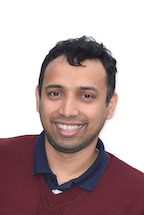
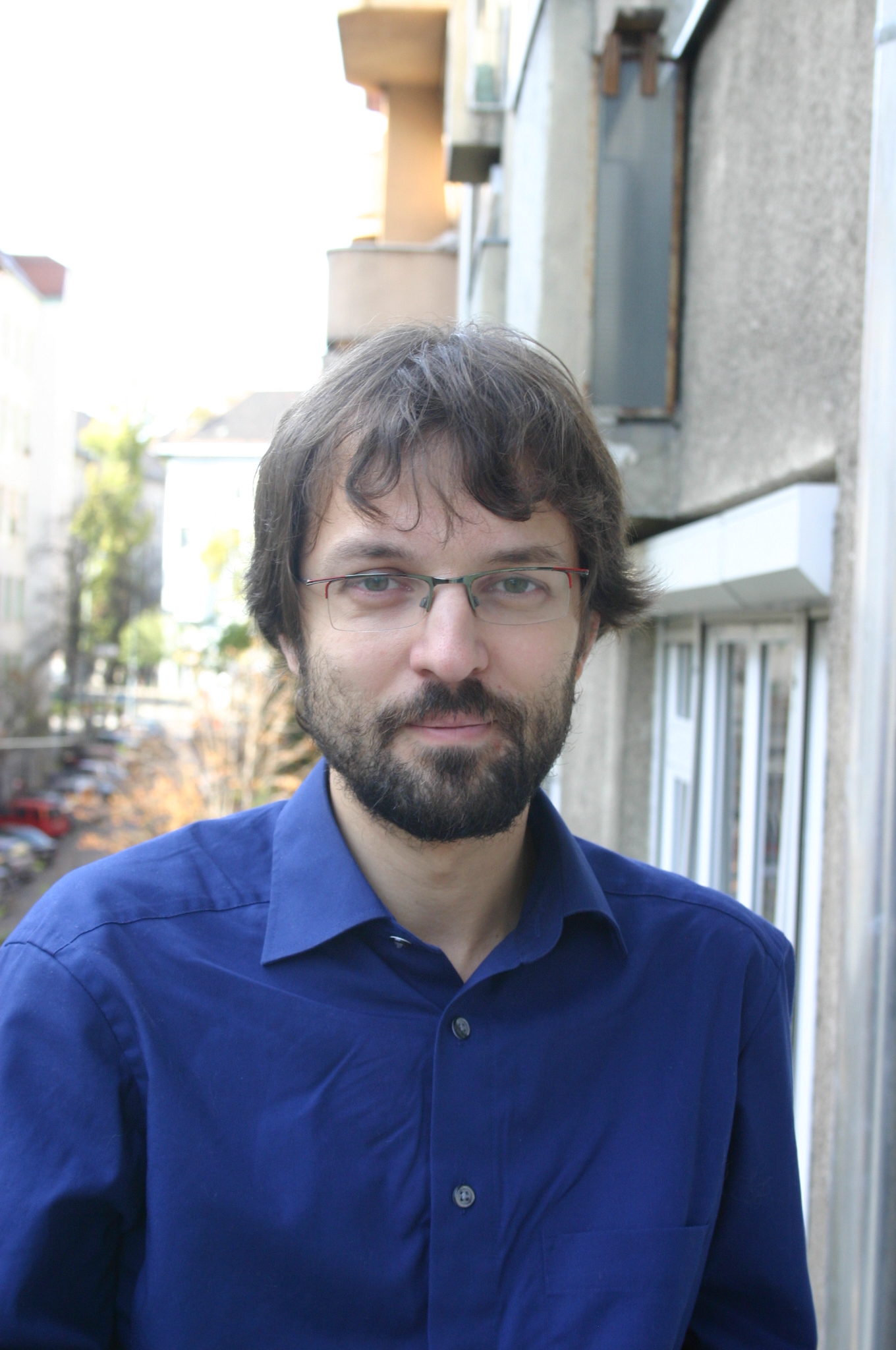
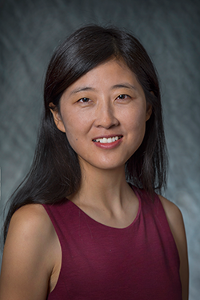
Jared Duker Lichtman is a Szegö Assistant Professor at Stanford University's Department of Mathematics, beginning in the 2024-25 academic year. Previously, he served as an NSF Postdoctoral Fellow at Stanford under Prof. Kannan Soundararajan. He completed his PhD at the University of Oxford in 2023, focusing on multiplicative number theory. His research centers on prime number distribution, multiplicative structures, and analytic number theory. Notably, he established a world record in studying primes' distribution within arithmetic progressions. His work bridges classical number theory with modern techniques like sieve methods and L-function analysis. Jared's publications explore topics such as the abc conjecture, twin primes, and Erdős problems. While no formal awards are listed, his groundbreaking contributions to prime distribution and multiplicative number theory mark him as a rising star in the field. His academic trajectory includes a focus on primes in arithmetic progressions, Goldbach conjecture extensions, and probabilistic number theory applications. Ongoing research likely continues this trajectory, with potential implications for cryptography and additive number theory.
Patrick Speissegger is a Professor in the Department of Mathematics and Statistics at McMaster University. He holds a Ph.D. in Mathematics from the University of Illinois at Urbana-Champaign and a Diploma in Mathematics from the Swiss Federal Institute of Technology Lausanne. His research focuses on O-Minimal Structures, Real Analytic Geometry, and their applications to Differential Equations and Dynamical Systems. Education: Ph.D., University of Illinois at Urbana-Champaign; Diploma, Swiss Federal Institute of Technology Lausanne His recent work explores multisummable series, transseries, and Hilbert's 16th problem. Publications span foundational topics in Model Theory, Pfaffian systems, and geometric definability. He has served as an instructor for various undergraduate and graduate courses, including Advanced Calculus and Quantum Computing. His scholarly activity includes collaborations and presentations on O-Minimal Structures and their implications in Number Theory and Analysis. Despite no explicit mention of scientific awards, his contributions to mathematical logic and analytic geometry remain significant.
Dr. Alessandro Ottazzi is a Senior Lecturer in the School of Mathematics and Statistics at the University of New South Wales (UNSW). He earned his PhD from the University of Genoa (Italy) and held postdoctoral positions at the University of Bern (Switzerland), Università di Milano-Bicocca, and Università di Trento. His research spans geometric analysis, Lie groups, sub-Riemannian geometry, and CR structures, with a focus on the interplay between algebraic topology and analytic methods. Ottazzi's work consistently explores geometric rigidity, function spaces on non-Euclidean structures, and mappings in stratified groups. Recent publications emphasize Hardy spaces, Carnot group embeddings, and measure theory on metric trees. His research demonstrates deep connections between differential geometry, harmonic analysis, and operator theory.
Rickard Sandberg is an **Associate Professor** and **Center Director** at the **Department of Entrepreneurship, Innovation and Technology** at the **Stockholm School of Economics (SSE)**. His work bridges econometrics, statistics, and business analytics with a focus on time series analysis, machine learning applications, and sustainability measurement. **Research Interests**: Machine Learning, Deep Learning, Data Analytics, Predictive Analytics, Forecasting, Nonlinear Time Series Modelling, Structural Economic Modelling, Econometrics, and Measuring Sustainability. His research emphasizes theoretical advancements in statistical methods and their practical application in economic and business contexts. **Key Contributions**: His publications explore unit root testing in nonlinear models, ESG rating challenges, and the impact of energy policies. Notable works include analyzing Scandinavian unemployment trends, cartel damage calculations, and Nordic companies' data-driven transformations. His 2023 paper on ESG ratings proposes solutions for consistency in ambiguous evaluation systems. **Teaching & Outreach**: Teaches advanced econometric time series courses (e.g., MSc 5314) and actively engages in international academic collaborations through presentations in Japan and Brazil. His work on AI for sustainability highlights interdisciplinary outreach efforts. **Labs/Teams**: Leads research initiatives within SSE’s Department, focusing on entrepreneurship and innovation through data and economic modeling frameworks.
Michael Nussbaum is a Professor of Mathematics at Cornell University, affiliated with the College of Arts and Sciences. He holds a Ph.D. (1979) and Dr. Sc. (1990) from the Academy of Sciences Berlin (Germany). His research focuses on quantum statistics, applying mathematical statistics to analyze quantum experiments and developing asymptotic methods for hypothesis testing, equivalence theory of statistical experiments, and nonparametric models. Key contributions include work on quantum Chernoff bounds, Gaussian approximation of quantum models, and asymptotic equivalence between statistical experiments. Recent research emphasizes quantum hypothesis testing, low-rank quantum state estimation, and asymptotic equivalence with quantum Gaussian white noise. Supported by an NSF Grant (DMS-1915884), his work bridges operator algebras, quantum information, and noncommutative probability. Publications span foundational topics like nonparametric regression, spectral density estimation, and functional empirical processes. He teaches courses such as Statistical Theory and Application in the Real World and supervises graduate research. His lab explores interdisciplinary applications of asymptotic statistical methods in quantum engineering and communication technologies.
Nikolaos Kourentzes is a Professor of Informatics at the University of Skövde , specializing in forecasting and operations research. His work bridges theoretical advancements in time series analysis with practical applications in supply chain management, tourism demand, and renewable energy forecasting. Academic Rank: Professor Department: Department of Information Technology Research Interests: His research focuses on hierarchical and temporal forecasting methodologies, integrating macroeconomic indicators into demand planning, inventory optimization, and machine learning applications. He explores forecast reconciliation, shrinkage estimators, and the role of expert judgment in predictive analytics. Recent Publications: Highlights include advances in hierarchical forecasting with leading indicators, probabilistic forecasts during crises like the pandemic, and complex smoothing techniques. His work spans journals such as Omega , International Journal of Forecasting , and European Journal of Operational Research . Collaborations: Kourentzes collaborates with researchers globally, including George Athanasopoulos, Rob Hyndman, and Robert Fildes, across domains like tourism analytics, tire industry forecasting, and public health modeling.
Dr. Akshay Deoras is a Research Scientist at the National Centre for Atmospheric Science (NCAS) within the Department of Meteorology at the University of Reading. His research focuses on Indian monsoon dynamics, tropical climate variability, and extratropical cyclones over North India. He holds an MRes in Climate and Atmospheric Science from the University of Leeds (2017). He has been featured in prominent media outlets including The Indian Express, The Weather Channel, and BBC Marathi, providing expert commentary on extreme weather events like Cyclone Tauktae and monsoon patterns. His work includes presentations at international conferences such as the European Geosciences Union (EGU) and the American Geophysical Union (AGU), earning a Best Presentation Prize at the 2020 RMetS Conference. Academically, he advises the Atal Tinkering Lab program at Somalwar Nikalas School in Nagpur, focusing on fostering STEM skills among high school students. His research emphasizes improving subseasonal-to-seasonal (S2S) prediction models for monsoon low-pressure systems and exploring interactions between monsoon systems and large-scale climate phenomena like the Madden-Julian Oscillation.
Prof. Jens Markus Melenk is a Professor at TU Wien's Faculty of Mathematics and Geoinformation, leading the Computational Mathematics Research Group (E101-02-1). His research focuses on advanced numerical methods for partial differential equations, with a strong emphasis on hp-FEM (hp-Finite Element Method), fractional diffusion equations, and wave propagation problems. He has contributed significantly to the development of robust and efficient algorithms for complex domains and heterogeneous media. Key research interests include the application of hp-FEM to fractional operators (e.g., integral fractional Laplacian), boundary element methods (BEM), and the analysis of wavenumber-explicit convergence for Maxwell's equations and elastic wave equations. His work bridges theoretical analysis and computational implementation, addressing challenges in multiscale problems and singular perturbations. Notable contributions: Exponential convergence of hp-FEM for fractional Laplacian problems, wavenumber-explicit error estimates for wave equations in heterogeneous media. Collaborations: Active involvement with researchers like Markus Faustmann, Christoph Schwab, and Dirk Praetorius. Supervised theses: Includes works on hp-FEM for fractional operators, RBF interpolation, and error estimators for elliptic PDEs. His research group develops and analyzes numerical schemes for challenging PDE scenarios, with applications in electromagnetism, acoustics, and computational mechanics.
Edin Kadrić is a full professor at the University of Sarajevo's Faculty of Mechanical Engineering, where he has served since 2002 in various academic positions, progressing from Assistant to Senior Assistant, and ultimately to Professor in 2014. His academic career spans over two decades at the same institution, demonstrating significant commitment to mechanical engineering education and research in Bosnia and Herzegovina. His educational background includes a Doctorate (2008-2014) with dissertation on inventory management models under risk conditions, a Master's degree (2002-2008) focused on inventory management under risk, and a Bachelor's degree (1994-2002) in mechanical engineering with thesis on measurement of contours of complex machine parts. Kadrić's research primarily centers on inventory management systems, operations research, and decision support systems in engineering. His expertise spans statistical analysis, business process optimization, and quality control systems. He has made significant contributions to understanding inventory management under uncertain conditions, particularly in automotive and manufacturing contexts. His work bridges theoretical operations research with practical industrial applications, focusing on risk assessment and optimization techniques. Analysis of his publication history reveals a consistent focus on inventory management models, particularly the newsvendor model and its extensions, with applications across multiple industries. His research demonstrates a progression from fundamental inventory theory to more complex applications involving risk analysis, seasonal forecasting, and multi-criteria decision making. The most recent publications show increased attention to energy efficiency applications within mechanical engineering contexts, indicating expanding research interests while maintaining core expertise in operations research. Professor Kadrić has supervised several graduate students on topics related to inventory management models, performance assessment of prediction systems, and retail inventory applications. He has participated in multiple research projects including ERASMUS+ initiatives and national research projects focused on inventory management systems under uncertain demand conditions. His professional activities include teaching courses such as Decision Support Systems in Engineering, Design and Analysis of Industrial Experiments, Intelligent Industrial Systems, Process and Quality Control, Operations Analysis, and Multi-criteria Process Management. With strong proficiency in English (C1 level) and basic German skills, he maintains international academic connections while focusing primarily on regional industrial applications.
Professor Alexander Kushpel is affiliated with Çankaya University, Faculty of Arts and Sciences, Department of Mathematics, Turkey, since 2018. He has held academic roles at the University of Leicester (2011-2016), State University of Campinas (1997-2001, 2006-2010), and Ryerson University (2001-2006). PhD in Mathematics, University of Leicester (2015) PhD in Mathematics, Universidade Estadual de Campinas (2009) PhD in Mathematics, Institute of Mathematics of the National Academy of Sciences of Ukraine (1992) His research focuses on Mathematical Analysis , Applied Mathematics , and Geometry , with emphasis on approximation theory, Fourier analysis, and operator entropy. Key article trends include n-widths, Sobolev classes on manifolds, and financial mathematics applications. He has advised Regis Leonardo Braguim Stabile (MSc thesis: "N-width of set of smooth functions on the sphere SD").
Daniel Monclair is a Senior Lecturer at Université Paris-Saclay , affiliated with the Orsay Mathematics Laboratory and the Topology and Dynamics Team . His work bridges Differential Geometry and Dynamical Systems , focusing on group actions, pseudo-Riemannian geometry, and Anosov representations. Education: PhD in Mathematics (2014, ENS de Lyon), HDR (2025, Paris-Saclay University). Research interests include Lorentzian geometry , convergence groups , isometric actions , and Anosov representations . His recent articles analyze pseudo-Riemannian hyperbolic geometry, anti-de Sitter manifolds, and geometric structures for Anosov groups. Key themes: spectral analysis of Lorentzian manifolds, regularity of limit sets, and dynamics of spacetime attractors. Email: daniel.monclair@universite-paris-saclay.fr Orsay Institute of Mathematics, Building 307, Office 2M22 F-91405 Orsay Cedex, France
Arindam Roy is an Associate Professor in the Department of Mathematics and Statistics at the University of North Carolina at Charlotte. He serves as the Director of the Math and Stat Honors Program and is affiliated with research in analytic number theory, algebraic number theory, and graph theory. Current Position: Associate Professor, UNC Charlotte (2025–) Previous Positions: Assistant Professor, UNC Charlotte (2018–2025); G.C. Evans Instructor, Rice University (2015–2018) His research focuses on zeros of the Riemann zeta-function and L-functions, partial sums of zeta functions, divisor problems, integral transforms, and graph theory. Recent work explores value distributions, Turán inequalities, and connections to Ramanujan's theories. Key trends in his publications include analytic number theory, special functions, and the interplay between modular forms and graph theory. His articles often address critical line behavior, approximation techniques, and arithmetic functions.
Gergely Zábrádi is an Associate Professor and Head of the Department of Algebra and Number Theory at the Institute of Mathematics, Eötvös Loránd University (ELTE), Budapest. He earned his PhD from Trinity College, University of Cambridge, and conducted postdoctoral research at Westfälische Wilhelmsuniversität Münster. His academic focus lies at the intersection of algebraic number theory, Iwasawa theory, and the p-adic Langlands programme. Education: PhD in Mathematics, Trinity College, University of Cambridge (2008) Habilitation, Eötvös Loránd University (2016) Research Interests: Zábrádi's research spans algebraic number theory , particularly noncommutative Iwasawa theory for elliptic curves, and the p-adic Langlands programme . He explores deep connections between Galois representations , automorphic forms , and L-functions , utilizing tools like (φ,Γ)-modules and perfectoid spaces . Publications Overview: His recent work includes studies on generalized Montréal functors , matrix Kloosterman sums , and sup-norm problems for automorphic forms. These publications reflect a consistent engagement with foundational questions in arithmetic geometry and representation theory. Advising and Grants: Zábrádi has supervised numerous PhD, Master's, and Bachelor's theses, guiding students through topics ranging from Iwasawa theory to p-adic Galois representations . His mentorship has produced award-winning research, including first-prize recognition at the Hungarian Student Research Competition (OTDK). Research Groups and Labs: He leads a vibrant research group at ELTE, fostering collaboration with international scholars and participating in networks like the CENTRAL programme. His team focuses on advancing the p-adic Langlands correspondence and related arithmetic questions.
Stevan Pilipović is a Full Professor at the University of Novi Sad, Faculty of Sciences, Department of Mathematics and Informatics, since 1987. He holds a BSc (1973), MSc (1977), and PhD (1979) from Novi Sad and Belgrade Universities. His research focuses on generalized functions, integral transforms, pseudodifferential operators, and microlocal analysis. He has authored over 300 scientific papers and 10 monographs, served as editor for journals like Publications de l’Institut Mathématique , and led research projects, including the Center of Excellence for Applications of Mathematics. He is a Full Member of the Serbian Academy of Sciences and Arts (since 2009) and has mentored 30 doctoral students. His work spans functional analysis, fractional calculus, and stochastic processes, with contributions to conferences and international collaborations. Education: BSc (1973), MSc (1977), PhD (1979) in Mathematics. Positions: Full Professor (1987–present), Associate Professor (1985–1987), Assistant Professor (1980–1985). Research: Specializes in functional analysis, PDEs with singularities, fractional calculus applications in mechanics, and stochastic processes. Leadership: Organized international conferences, chaired the Serbian Scientific Mathematical Society, and coordinated EU-funded projects.
Yongli Sang is an Associate Professor of Statistics in the Department of Mathematics at the University of Louisiana at Lafayette. She earned her Ph.D. in Statistics (2017) and M.S. in Statistics (2014) from the University of Mississippi, and holds a M.S. (2012) and B.S. (2009) in Mathematics from institutions in China. Ph.D. in Statistics, University of Mississippi (2017) M.S. in Statistics, University of Mississippi (2014) M.S. in Mathematics, Central China Normal University (2012) B.S. in Mathematics, Shandong Normal University (2009) Her research focuses on advanced statistical methodologies for high-dimensional data, time series analysis, nonparametric statistics, and robust statistical techniques for correlated data. She has developed innovative jackknife empirical likelihood methods for testing diagonal symmetry, homogeneity of variances, and K-sample problems with applications in diverse fields. Recent publications highlight her work on Gini correlations in high-dimensional settings, computational efficiency, and confidence interval estimation. She also explores transformations of linear processes and their memory properties, bridging theoretical statistics with applied data analysis challenges. At the University of Louisiana at Lafayette, she supervises Ph.D. student Sameera Hewage and teaches graduate courses including Mathematical Statistics, Regression Analysis, and Biometry.