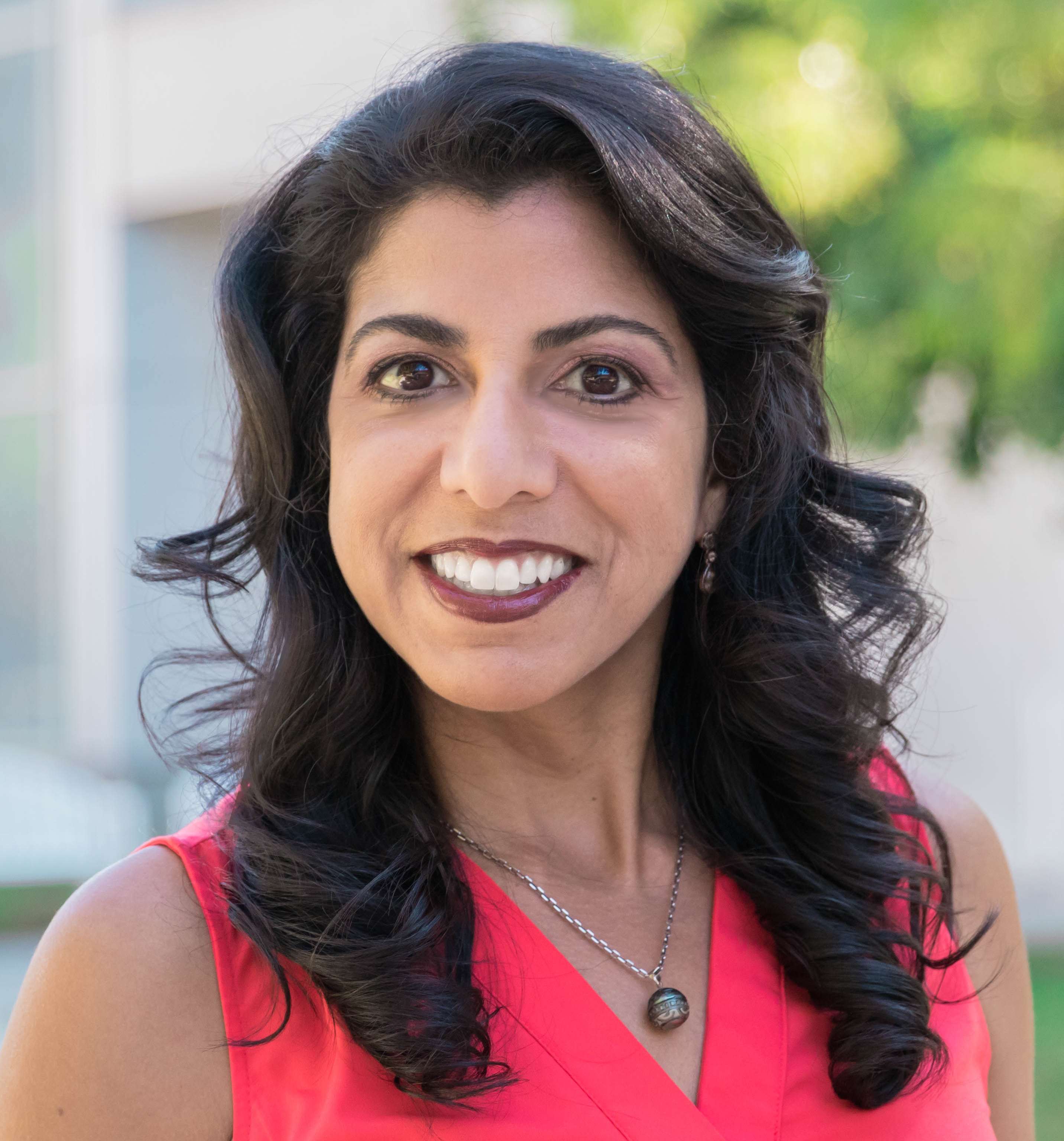
Raissa M. D'Souza is a Professor and Associate Dean of Research in the College of Engineering at the University of California, Davis. She holds joint appointments in the Department of Computer Science, Department of Mechanical and Aerospace Engineering, Graduate Group in Applied Mathematics, and Graduate Group in Physics. Her research focuses on complex networks, percolation theory, cascades, and interdependent systems, with applications to social, biological, and technological networks. She leads the Networks and Control research group and is a Founding Lead Editor of Physical Review Research . Her work spans interdisciplinary collaborations, including with the Santa Fe Institute and the Complexity Sciences Hub Vienna. Key awards include Fellowships from AAAS (2024), APS (2016), and the Network Science Society (2019), as well as the Euler Award for her contributions to network science. Dr. D'Souza has advised over 10 PhD students and has secured grants from agencies including the NSF. Her lab explores topics like explosive percolation, synchronization in oscillator networks, and network controllability. Notable recent work includes studies on exotic synchronization patterns and strategies for mitigating cascading failures in interdependent systems.
Carey Rappaport is a Professor of Electrical and Computer Engineering at Northeastern University. He serves as deputy director of the U.S. Department of Homeland Security’s ALERT Center (Awareness and Localization of Explosive-Related Threats) and associate director of the Gordon-CenSSIS Center (Bernard M. Gordon Center for Subsurface Sensing and Imaging Systems). His research focuses on microwave and millimeter-wave sensing technologies for homeland security and biomedical applications, including tunnel detection, airport security systems, and breast cancer diagnostics. His work on explosives detection involves standoff and portal-based millimeter-wave radar, X-ray backscatter, IR and Terahertz spectroscopy for trace detection, and electronic sensing of hidden triggers. He has emphasized balancing technological effectiveness with privacy, health, and cost considerations in security systems. His projects include developing airport scanners with improved imaging and analyzing challenges in securing "soft targets" like public events. Rappaport's research has been highlighted in media outlets such as Boston Herald, The Economist, and Northeastern University news. He has discussed technical limitations of ground-penetrating radar in tunnel detection and policy implications for international airport security measures, including the 2011 Moscow airport bombing and 2023 Gaza Metro tunnel network analysis.
Timothy John O'Brien is a Professor of Astrophysics and Associate Director of the Jodrell Bank Centre for Astrophysics at the University of Manchester, Faculty of Science & Engineering, Department of Physics & Astronomy. He also served as Director of Teaching & Learning in the Department of Physics & Astronomy from 2016-2020 and as Associate Dean for Social Responsibility for the Faculty of Science & Engineering during the same period. His educational background includes a B.Sc. (Hons) in Physics with Astrophysics from the University of London (1985) and a Ph.D. in Astrophysics from the University of Manchester (1990). Professor O'Brien's research concentrates on the study of exploding stars—mainly nova outbursts caused by thermonuclear explosions on the surface of white dwarfs in binary star systems. Over the years, he has developed expertise in a wide range of astrophysical techniques, working across the spectrum from radio waves to X-rays while also carrying out numerical simulations of the aftermath of explosions using his own hydrodynamic codes. Recently, he has developed an interest in the search for extra-terrestrial intelligence (SETI) using radio telescopes. His research fingerprint shows strong activity in Novae (100%), Optical Bursts (94%), Recurrent Novae (56%), Ejecta (45%), Planetary Nebula (38%), Emissions (32%), Classical Novae (32%), and Nebula (28%). His recent publications demonstrate a continued focus on nova outbursts, particularly in symbiotic novae systems like RS Ophiuchi, with high-resolution imaging techniques and multi-wavelength observations. His work spans theoretical modeling, observational astronomy across the electromagnetic spectrum, and data analysis from major telescope facilities. Kelvin Medal of the Institute of Physics (2014) for Public Engagement Professor O'Brien has extensive teaching experience, having worked as a lecturer in three universities since 1988. He has taught a wide range of courses in astronomy & astrophysics, physics, applied mathematics, and computing. From 1999-2009, he directed a distance learning program in astronomy that enrolled over 1,300 students. His current teaching includes Dynamics, Physics of the Solar System, and a course on the Search for Extraterrestrial Life. He has also supervised numerous project students throughout his career. He is actively involved in public engagement, including regular media appearances and events at the Jodrell Bank Centre for Engagement. He was a co-founder of the bluedot festival and contributed to the successful nomination of Jodrell Bank Observatory as a World Heritage Site in 2019.
Yuri Bazilevs is the E. Paul Sorensen Professor of Engineering at Brown University's School of Engineering and Co-Director of the Mechanics of Undersea Science and Engineering Center. His research focuses on computational mechanics, isogeometric analysis, fluid-structure interaction, and high-performance computing. Prior to Brown, he held positions at UC San Diego, where he advanced to Full Professor in 2014 after a rapid tenure. He earned his PhD in 2006 and postdoc training in computational engineering at UT Austin's ICES. Research interests span computational fluid dynamics, solid mechanics, and advanced discretization methods like isogeometric analysis (IGA) and meshfree approaches. He has developed novel formulations for complex phenomena such as underwater explosions, composite material failure, and hypersonic flow dynamics. His work integrates cutting-edge numerical methods with practical engineering applications in aerospace, energy, and biomedical systems. Recent publications highlight advancements in IGA for architected materials, RKPM-based crack modeling, and stabilized formulations for compressible flows. His contributions bridge theoretical mechanics with computational innovation, addressing challenges in multiphysics coupling and large-scale simulations. Collaborations span academia and industry, emphasizing practical validation and real-world impact. Bazilevs' expertise includes variational multiscale methods, peridynamics for fracture mechanics, and immersive particle methods for fluid-structure interaction. His work has been applied to wind turbine aerodynamics, gas turbine optimization, and cardiovascular flow analysis. He actively contributes to computational infrastructure development, such as the tIGAr software framework for IGA automation.
Jay Strader is a Professor in the Department of Physics and Astronomy at Michigan State University, where he serves as Graduate Director for the astronomy PhD program and Associate Chair for astronomy. His research focuses on compact objects, particularly black holes and neutron stars in globular clusters, neutron star binaries in Fermi gamma-ray sources, and intermediate-mass black holes. He has received a Packard Fellowship for Science and Engineering and grants from NSF and NASA. His research group includes postdoc Ryan Urquhart, graduate students Thomas Do and Rebecca Kyer, and several undergraduates, with past students like Teresa Panurach (now director of NoVEL Consortium) and Samuel Swihart (NRC fellow at Naval Research Lab). Education: PhD in Astronomy, UC-Santa Cruz/Lick Observatory Awards: Packard Fellowship Collaborations: Member of Rubin Observatory's Stars, Milky Way, and Local Volume science collaboration since 2008 Previous Positions: Hubble Fellow and Menzel Fellow at Harvard-Smithsonian Center for Astrophysics (2007-2012) Program Initiatives: Co-founder of PAREDS program for early research opportunities at MSU His work has been supported by NSF and NASA grants, and he has contributed to studies on black holes in M22, hypervelocity globular clusters around M87, and transitional millisecond pulsars. His group collaborates with Laura Chomiuk and contributes to data catalogs like the M31 globular cluster velocity dispersion database.
Dr. Mark Hoggard is an ARC DECRA Research Fellow at the Research School of Earth Sciences, The Australian National University (ANU). His research focuses on geodynamics, sea-level modelling, nuclear test monitoring, and critical mineral systems. He holds a PhD from ANU and has studied at institutions including Cambridge University, Harvard, and Columbia. Hoggard’s work integrates geophysical data with numerical modelling to explore Earth’s dynamic processes, including mantle convection, glacial isostatic adjustment, and lithospheric evolution. Affiliations: Research School of Earth Sciences (ANU), Geoscience Australia (collaborative projects). Education: PhD (ANU), MA (Cambridge), BSc (ANU). Research Interests: Dynamic topography and its influence on sea-level records. Mantle structure and its relationship to mineral systems. Glacial cycles and ice sheet dynamics. Seismic monitoring of underground nuclear tests. Recent Article Trends: Recent work emphasizes geodynamic corrections to Pliocene sea-level estimates, mantle rheology influences on ice sheet models, and statistical methods for distinguishing seismic events from explosions. Key themes include linking deep Earth processes to surface observations and advancing methods for critical mineral exploration. Grants & Projects: Leads projects such as CoastRI GIA Modelling (2024–2027) and Next Generation Sea-Level Modelling (2022–2025). Collaborates with institutions like Los Alamos National Laboratory on nuclear test detection algorithms. Labs/Teams: Part of ANU’s Geodynamics group and the Exploring for the Future program at Geoscience Australia, focusing on Australia’s crustal structure and mineral potential.
Alex Liu is a Researcher at the Department of Earth Sciences within the University of Cambridge. He specializes in palaeobiology , focusing on the origin and early evolution of animals, particularly the Ediacaran biota (~579–539 million years ago), and their co-evolution with Earth's environment. Research Focus: Refines understanding of animal body plan evolution, taphonomy, sedimentology, and macroevolutionary trends. Methodologies: Combines fieldwork, experimental studies, petrology, phylogenetics, and big-data analyses. Collaborations: Works with international museums and research teams on fossil sites in Namibia, Canada, and Brazil. Additional Interests: Explores meiofaunal evolution, paleogeography, paleoclimate, and conservation paleobiology. He supervises Cambridge NERC Doctoral Landscape Awards (DLA) projects and welcomes student contributions to taxonomic, paleoecological, and analytical studies.
Göran Ekström is the Newberry Professor of Earth and Environmental Sciences at Columbia University's Lamont-Doherty Earth Observatory. He holds joint affiliations with the School of Earth and Environmental Sciences and the Department of Earth and Environmental Sciences. Previously, he was a professor at Harvard University (1990–2006) before moving to Columbia. His research focuses on seismic wave analysis, earthquake mechanics, and environmental geophysics with notable contributions to understanding glacial earthquakes, volcanic processes, and nuclear explosion monitoring. Education: B.S. in Physics (Swarthmore College, 1981), Ph.D. in Geophysics (Harvard University, 1987). Postbaccalaureate studies at Moscow State University and postdoctoral work at Columbia University. He has served as chair of major organizations like the Incorporated Research Institutions for Seismology and EarthScope Steering Committee. Research interests span seismology, tectonophysics, and environmental geology. Notable achievements include discovering glacial earthquakes linked to Greenland ice dynamics and developing the Global Centroid Moment Tensor Project. His work integrates seismic data from global networks to study Earth’s interior structure and tectonic processes. Awards include the Beno Gutenberg Medal (2015) and election to the U.S. National Academy of Sciences (2019). He advises on geohazard monitoring and collaborates with international agencies for seismic treaty verification. Current projects include studies of mantle dynamics using surface-wave tomography and analysis of geophysical signals from extreme events like landslides and volcanic eruptions.
Dr. Zhigang Peng is a Professor in the School of Earth & Atmospheric Sciences at Georgia Institute of Technology, part of the College of Sciences. His research focuses on seismicity dynamics, fault zone imaging, and data science applications in geophysics. He holds a Ph.D. in Geological Sciences from the University of Southern California (2004), an M.S. in Electrical Engineering (2002), and a B.S. in Geophysics from the University of Science and Technology of China (1998). Dr. Peng’s work spans seismological studies of earthquake triggering mechanisms, fault zone structures, and deep-focus earthquakes. He has pioneered dense seismic array techniques to image fault systems and employs machine learning for event detection and phase picking. His recent projects include analyzing the 2023 Kahramanmaraş earthquake sequence in Türkiye and the 2024 Noto earthquake in Japan. He leads initiatives like the Center for Collective Impact in Earthquake Science (C-CIES), promoting inclusive scientific collaboration. Research Highlights: Fault zone imaging, dynamic triggering, AI-driven seismology Labs: ES&T 2235 (Seismology Lab), ES&T 2256 (Office) His awards include the 2002 AGU Outstanding Student Paper Award. He actively contributes to earthquake hazard assessment, nuclear explosion monitoring, and volcano-seismic interactions, with over 150 peer-reviewed publications.
Imre Bartos is an Associate Professor of Physics at the University of Florida, specializing in multi-messenger astrophysics that combines gravitational waves, neutrinos, and electromagnetic signals. His research investigates extreme cosmic explosions involving black holes and neutron stars, with emphasis on merger environments in active galactic nuclei. Groundbreaking work includes demonstrating how nearby neutron star mergers influenced Solar System composition, identifying AGN disks as factories for eccentric black hole mergers, and developing techniques to probe black hole origins through gravitational wave localization. His group participates in major collaborations including LIGO, LISA, and IceCube observatories. Professor Bartos received the Sloan Fellowship and shares Breakthrough Prize honors for contributions to gravitational wave astronomy. He leads observational programs using Chandra, VLA, and Fermi telescopes while mentoring students in computational astrophysics techniques.
John Martin is an Associate Professor at the University of Illinois Springfield, affiliated with the School of Integrated Sciences, Sustainability, and Public Health. Since 2006, he has taught introductory physics for science majors and astronomy courses while directing the Henry R. Barber Research Observatory and hosting public UIS Star Parties. His research focuses on stellar astrophysics, particularly the life cycles of massive stars and phenomena like Eta Carinae. Stellar Astrophysics Massive Star Evolution Luminous Blue Variables (LBVs) Supernova Impostors Be Stars and Disks Photometry and Spectroscopy His publications, including over 100 peer-reviewed works, emphasize Eta Carinae's 5.5-year spectroscopic events, LBVs in M31/M33, Be star dynamics, and supernova impostors like SN 2009ip. Awards include the 2011 University of Illinois University Scholar title, JJ Nassau Fellowship (1997), and Dean's List recognitions. He earned his PhD in Astronomy from Case Western Reserve University (2003) and BS in Astro-Physics from the University of Virginia (1995). Scientific awards include 2011 University of Illinois University Scholar 1997 JJ Nassau Graduate Research Fellowship 1995 Mastin Graduate Fellowship 1995 Dean's List, University of Virginia 1994 Dean's List, University of Virginia
Keith D. Koper is a Professor in the Department of Geology & Geophysics at the University of Utah and serves as Director of the University of Utah Seismograph Stations (UUSS). He is also the editor-in-chief of The Seismic Record . His work integrates academic research with operational seismic monitoring and public safety initiatives across Utah and the Intermountain West. Education: PhD in Geophysics, Washington University, 1998 BA in Math, Geology, and ISP, Northwestern University, 1993 Dr. Koper's research focuses on array seismology, forensic seismology, deep Earth structure (especially the inner core), earthquake rupture imaging, ambient seismic noise, and seismic hazards in the Intermountain West, including mining-induced and urban earthquakes. His work combines observational seismology with advanced signal processing and machine learning techniques to improve detection, discrimination, and imaging capabilities. He has led or contributed to major projects involving the Wasatch Front, Yellowstone, and regional seismic networks. His recent research emphasizes machine learning for earthquake detection, high-resolution relocation of aftershock sequences (e.g., Magna 2020, Bluffdale 2019), microseism generation in lakes, and fine-scale imaging of the Earth's inner core using seismic reflections. His studies often involve interdisciplinary collaboration, particularly with mining engineering and geodesy. Dr. Koper's research has been consistently funded by federal and state agencies, including the National Science Foundation (NSF), U.S. Geological Survey (USGS), Department of Energy (DOE), Air Force Research Laboratory (AFRL), and the Utah Department of Public Safety. His publications reflect a strong trend toward integrating computational methods with traditional seismological analysis to tackle complex problems in both natural and induced seismicity. Scientific Service and Leadership: Editor-in-Chief, The Seismic Record Director, University of Utah Seismograph Stations Secretary, U.S. Air Force Seismic Review Panel Former Chair and Vice-Chair, Utah Seismic Safety Commission Dr. Koper mentors graduate students in seismology and geophysics, including recent advisees Sean Hutchings and Alysha Armstrong. His research group actively engages in both fundamental and applied seismological research, with strong ties to national labs such as Sandia. The group is involved in deploying portable seismic arrays, analyzing large datasets, and developing new algorithms for event detection and classification. The University of Utah Seismograph Stations, under his leadership, plays a critical role in monitoring seismicity in Utah and Yellowstone, producing real-time earthquake information, ShakeMaps, and public outreach materials. The station also contributes to national and international efforts in nuclear test monitoring and volcanic hazard assessment.
Matthew J. Graham is a Research Professor of Astronomy at the California Institute of Technology (Caltech), serving as the Project Scientist for the Zwicky Transient Facility (ZTF). His work bridges astronomy, machine learning, and data science, focusing on time-domain sky surveys that produce hundreds of thousands of public transient alerts per night. Previously, he has worked on the Catalina Real-time Transient Survey (CRTS), NOAO DataLab, Virtual Observatory, and Palomar-Quest Digital Sky Survey. Dr. Graham's primary research interests involve applying machine learning and advanced statistical methodologies to astrophysical problems, particularly the variability of quasars and other stochastic time series. His work addresses the unprecedented data volumes generated by 21st-century astronomy while expanding our ability to work with complex information systems beyond simple correlations. His current projects include real-time low latency inferencing via the NSF-funded A3D3 Institute, reinforcement learning for optimizing astrophysical follow-up campaigns, neural differential models for supermassive black hole variability, and functional analysis of multivariate time series. Analysis of Graham's recent publications reveals a strong focus on time-domain astronomy, particularly leveraging the capabilities of the Zwicky Transient Facility. His work spans multiple areas including gravitational wave counterpart identification, active galactic nuclei variability, supernova characterization, and machine learning applications for transient detection. A notable trend is the integration of artificial intelligence techniques to handle the massive data streams from modern sky surveys, enabling real-time analysis and decision-making that would be impossible with traditional methods. Dr. Graham has been instrumental in developing infrastructure for time-domain astronomy, including the alert distribution system for ZTF and data processing pipelines for handling massive transient datasets. His work on the Catalina Real-time Transient Survey established important methodologies for identifying variable and transient sources that continue to influence the field. As Project Scientist for ZTF, Graham leads a major international collaboration involving Caltech, IPAC, and numerous partner institutions worldwide. The facility represents a significant advancement in time-domain astronomy, providing unprecedented coverage of the dynamic sky and enabling discoveries across multiple areas of astrophysics.
Joanna Austin is a Professor of Aerospace and serves as the Graduate Option Representative for Aeronautics and Space Engineering, as well as the Undergraduate Option Representative for Aerospace at the California Institute of Technology (Caltech). She leads the Caltech Hypersonics Group, which operates facilities like the T5 Reflected Shock Tunnel and the Hypervelocity Expansion Tube (HET). Her research focuses on reactive, compressible flows in applications such as hypervelocity flight, planetary entry, supersonic combustion, bubble dynamics, and explosive geological events. Key projects include studying shock-boundary layer interactions, Martian atmospheric entry aerothermodynamics, and high-speed fluid-structure interactions. She advises four Ph.D. students and collaborates with a team including staff members like Liza Bradulina and research assistants such as Noel Esparza-Duran. Her work bridges experimental fluid dynamics with geophysical phenomena, leveraging advanced diagnostics like Focused Laser Differential Interferometry (FLDI) and laser spectroscopy. The group’s facilities enable studies of high-enthalpy flows and hypersonic aerodynamics critical for aerospace and planetary exploration. Research highlights include investigations into CO₂ Martian entry conditions, boundary layer transition mechanisms, and fluid-structure coupling in high-speed flows. The Hypersonics Group’s experimental setups replicate extreme environments to advance predictive models for aerospace systems. Her contributions span both fundamental fluid mechanics and applied engineering challenges, with a focus on real-gas effects and shock dynamics. Collaborations with institutions like NASA and academic partners further her interdisciplinary impact.
Brandon Schmandt is a Professor in the Department of Earth, Environmental and Planetary Sciences at Rice University, where he leads research using seismology to investigate Earth systems. His work integrates interdisciplinary approaches, data science, and numerical modeling to study tectonic processes, magmatic systems, and environmental interactions. His educational background includes a PhD in Geological Sciences from the University of Oregon (2011) and a BA in Environmental Studies from Warren Wilson College (2006). Dr. Schmandt's research focuses on seismology, tectonics, volcanology, and surface processes , with emphasis on seismic imaging of subsurface structures. His group employs innovative time-series analysis and field projects to resolve geologic history and contemporary Earth dynamics, particularly examining fault zones, magmatic reservoirs, and deep convective processes. Key methodologies include dense seismic arrays and machine learning applications. Analysis of his recent publications (2023-2025) reveals dominant trends in seismic event discrimination (earthquakes vs. explosions), magmatic system imaging (Yellowstone, Cascades), and global mantle structure studies. There is strong emphasis on induced seismicity, machine learning applications, and high-resolution imaging of Earth's discontinuities using dense arrays. His distinguished honors include: Aki Award of the AGU Seismology Section GSA Donath Medal AGU Macelwane Medal Body Dr. Schmandt directs an active research group conducting field projects across diverse settings including the Raton Basin, Yellowstone, Antarctica, and the Caribbean. While specific student advisees and grant details aren't provided in available materials, his group's work involves collaborative data collection, advanced computational modeling, and development of novel seismic analysis techniques applicable to both natural and anthropogenic seismic sources. The research program maintains focus on magmatic systems beneath volcanic regions, induced seismicity mechanisms, and global mantle structure using dense node arrays and interdisciplinary approaches to address fundamental questions in Earth dynamics.