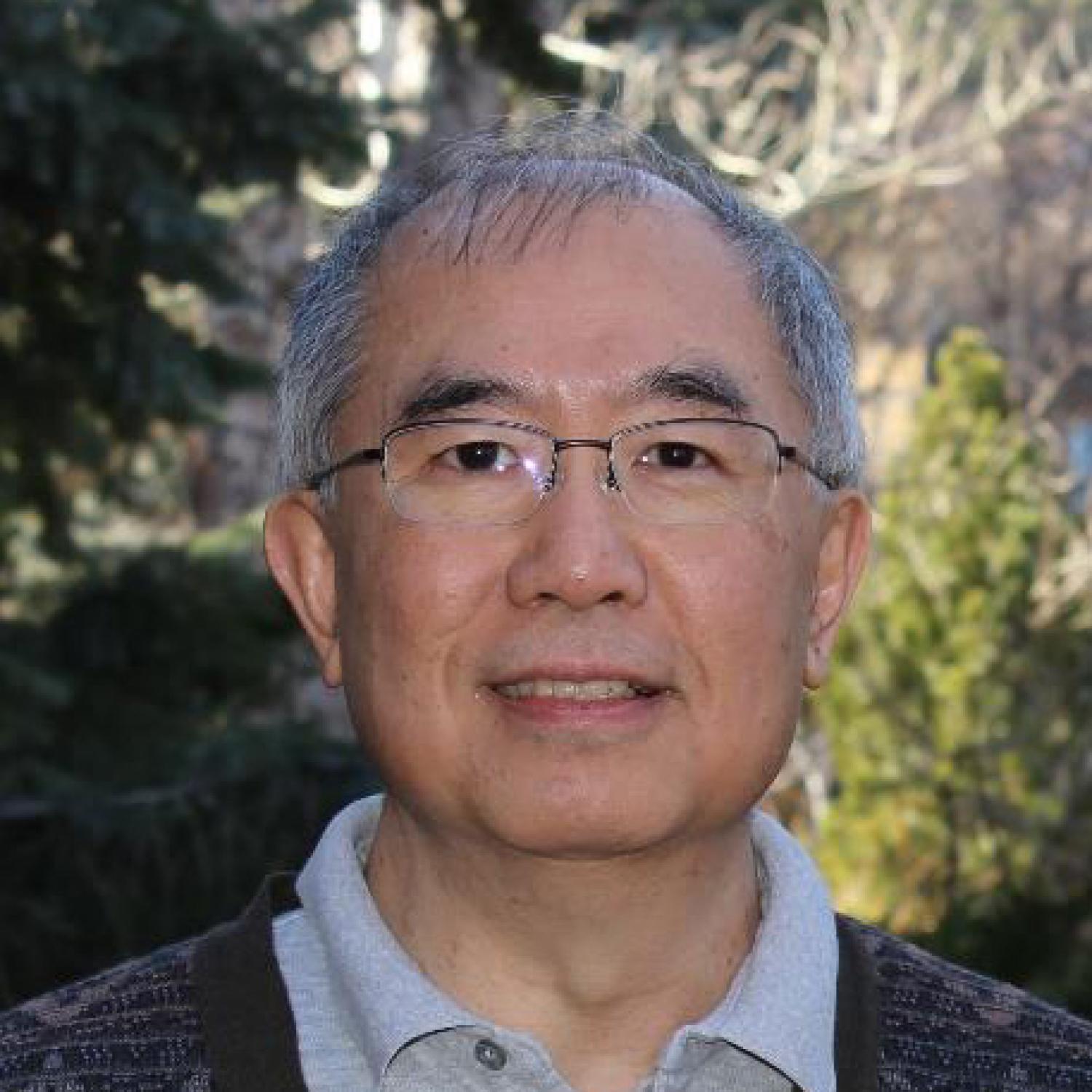
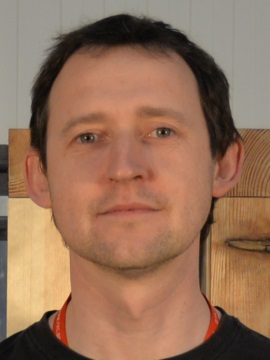
Steven Son is the Alfred J McAllister Professor of Mechanical Engineering at Purdue University with a courtesy appointment in Materials Engineering. His research focuses on energetic materials, combustion physics, and advanced propulsion systems through experimental and computational investigations. Primary Affiliation: Department of Mechanical Engineering, College of Engineering Laboratory: Zucrow Labs, Purdue University Dr. Son's research spans: Combustion and detonation physics Laser diagnostics and spectroscopy Smart energetic material design Additive manufacturing of propulsion components Flexoelectric and piezoelectric material applications Thermal decomposition mechanisms His recent work demonstrates advancements in: Aluminized composite propellant characterization Shock sensitivity of molecular crystals Throttleable solid propellant systems Machine learning for energetic material properties 3D-printed energetic compositions Current advisees include graduate student Ethan Binkley , while his laboratory group conducts research at Zucrow Labs, Purdue's premier propulsion research facility.
Chanel Fallon is a Lecturer in the Department of Mechanical Engineering at the University of Bath, affiliated with the Centre for Integrated Materials, Processes & Structures (IMPS). Her research focuses on dynamic material behavior and infrastructure protection under extreme conditions. She holds a PhD and MEng from the University of Cambridge. Research interests include dynamic experimental techniques (e.g., gas guns, Split-Hopkinson pressure bars), numerical modeling of extreme loading, blast/impact mitigation for civilian infrastructure, and strain-rate/temperature-dependent material characterization. Recent projects include cryogenic composite testing (EPSRC-funded), GKN Prosperity Partnership in aerospace materials, and blast protection strategies for concrete structures. She collaborates widely on material testing and structural resilience. Advising and Grants: Principal Investigator/Co-Investigator on 4 research projects, including EPSRC grants and industry partnerships. Supervises doctoral students in protective materials and structural dynamics. Labs/Teams: Active in the IMPS Centre, specializing in advanced material testing and computational modeling.
Armin Stuedlein is a Professor of Geotechnical Engineering at Oregon State University's College of Engineering, specializing in ground improvement, liquefaction mitigation, and soil-structure interaction. He holds a Ph.D. from the University of Washington (2008) and joined OSU in 2009 after consulting in port and harbor engineering. His research focuses on geotechnical testing, probabilistic analysis, and seismic resilience, with over 150 peer-reviewed publications. Education: Ph.D., Civil Engineering, University of Washington (2008) M.S., Civil Engineering, Syracuse University (2003) B.S., Environmental Engineering, SUNY-Environmental Science & Forestry (2000) Research Interests: Liquefaction mitigation and ground improvement techniques Dynamic soil behavior and cyclic softening Seismic retrofit strategies for infrastructure Biocementation and soil modification Probabilistic geotechnical engineering Awards: 2018 ASTM Award for Outstanding Geotechnical Testing Article 2015 ASCE Journal Associate Editor of the Year 2013 Deep Foundations Institute Young Professor Award Advising/Grants: Active in mentoring graduate students and securing grants from NSF, DOTs, and industry partners. Leads the Full-Scale Geotechnics Group, focusing on field-scale geotechnical experimentation. Labs/Teams: Oversees the Full-Scale Geotechnics Group and collaborates with the Geotechnical Research team, advancing large-scale testing methodologies and field applications.
Professor Chengqing Wu is a distinguished academic in the School of Civil and Environmental Engineering at the University of Technology, Sydney (UTS). He serves as Professor of Structural Engineering with a research focus on blast-induced phenomena and advanced concrete technologies. His expertise spans structural response to blast loading, mitigation of blast effects, and the development of ultra-high performance concrete systems. Professor at University of Technology, Sydney Former Chair of Australian Chapter of International Association of Protective Structures (2013-2017) Associate Editor of ASCE Journal of Performance of Constructed Facilities Editorial Board Member of International Journal of Protective Structures Professor Wu's research interests center on structural engineering with emphasis on blast resistance, ultra-high performance concrete, geopolymer concrete, and structural response to extreme loading conditions. His work bridges theoretical analysis with practical applications, particularly in protective structures and extreme environment construction. His research group has made significant contributions to understanding material behavior under blast, impact, and extreme thermal conditions, with applications ranging from terrestrial infrastructure to potential lunar construction. Analysis of Professor Wu's recent publications reveals a strong focus on advanced concrete technologies for extreme environments. His research spans 3D-printed concrete, lunar and Martian construction materials, cryogenic performance of concrete, and blast-resistant structural systems. A notable trend is the increasing application of computational methods and machine learning techniques to predict structural response to explosions, alongside traditional experimental approaches. His work demonstrates a progression from fundamental material characterization to complex structural system analysis, with growing emphasis on sustainable construction and extraterrestrial applications. Author/co-author of over 200 international journal papers Editor of four conference proceedings Editor of two ASCE special issues Editor of two International Journal of Protective Structures special issues Professor Wu has successfully attracted over 4 million dollars in research funding from diverse sources including the Australian Research Council (ARC), Defence Science and Technology Organization (DSTO), and industry partners. His current projects include Eco-friendly Ultra-High Performance Rubberised Concrete, Decarbonised Infrastructure, Structural protective design on large capacity flywheel energy storage system, and Gas Explosion Resistance of Non-Cement Based High Performance Concrete. He actively supervises undergraduate honors students, coursework master's students, and research higher degree candidates, with several scholarships available for prospective postgraduates and research associates. Professor Wu leads research in protective infrastructure technology through the Joint Research Centre for Protective Infrastructure Technology and Environmental Green Bioprocess with Tianjin Chenjian University. His team operates the National Drop Weight Impact Testing Facility and contributes to the National Facility for Physical Blast Simulation. Current research directions include sustainable concrete technologies for extreme environments, blast-resistant structural systems, and innovative applications of concrete in space exploration contexts.
Professor Wensu Chen is a Director of the Centre for Infrastructural Monitoring and Protection (CIMP) and holds the position of ARC Future Fellow at Curtin University's School of Civil and Mechanical Engineering. He leads research in protective structures and materials, structural resilience, and multi-hazard mitigation. With a BE/MSc from Tianjin University, ME from the University of Melbourne, and a PhD from the University of Western Australia, his career spans academia and industry. His research focuses on novel metaconcrete materials, blast-resistant designs, and modular construction. He has secured multiple ARC grants (Discovery, DECRA, Linkage) and collaborates with industry/government bodies like DEMIRS WA and Engineers Australia. Research interests include metamaterials, structural strengthening, and dynamic response analysis under impact and blast loads. Key awards include the Curtin Early-Career Researcher of the Year and Western Australian Premier’s Science Award nominations. He supervises over 20 PhD students and teaches courses in structural analysis and dynamics. His work emphasizes sustainable, resilient infrastructure with applications in building envelopes, seismic control, and tunnel safety under explosive threats.
Chris Bishop: Academic & Research Overview Chris Bishop serves as Interim Head of Department and Associate Professor of Strength and Conditioning at the London Sports Institute , part of Middlesex University. His academic career includes a MSc (2012) and PhD (2020) in Strength and Conditioning from the same institution. He has authored/co-authored over 250 peer-reviewed articles, 3 book chapters, and is co-editing 3 textbooks. His research focuses on athlete performance profiling, inter-limb asymmetry analysis, and golf biomechanics, with advisory roles at The R&A and DP World Tour. Teaching & Supervision Lead courses in MSc Strength and Conditioning Science, Performance Training, and Research Methods Supervising 7 PhD students researching performance profiling and athlete performance Research Contributions His work spans systematic reviews on training methodologies, inter-limb asymmetry applications, and golf performance metrics. Notable projects include: Validation of flywheel resistance technology for sports assessment Analysis of eccentric overload training effects Development of velocity-based training frameworks Awards & Affiliations Former Chair of UK Strength and Conditioning Association (2021) Editorial roles at Journal of Strength and Conditioning Research and Strength and Conditioning Journal Military service: Previously led performance divisions in healthcare and football sectors Labs & Teams Leads research projects at the London Sports Institute focusing on elite athlete development and sport science integration in professional sports.
Jorge Arede is a lecturer at the Polytechnic Institute of Viseu (School of Education) and the University of Trás-os-Montes and Alto Douro, with a PhD in Sports Science (2021) and Master's in Team Sports (2016) from the University of Trás-os-Montes and Alto Douro. He received FCT PhD funding (SFRH/BD/122259/2016) and a grant for the DEM project in youth sports talent development. Doctorate: University of Trás-os-Montes and Alto Douro (2021) Master's: University of Trás-os-Montes and Alto Douro (2016) Bachelor's: Polytechnic Institute of Viseu (2014) His research focuses on youth athletic development, biological maturation, strength and conditioning, and talent identification in basketball and football. He has published over 30 indexed articles, five book chapters, and edited a textbook on basketball physical preparation. His work explores maturity-based training adaptations, injury prevention, and game-specific performance metrics. Recent publications analyze the FIFA 11+ warm-up program, differential learning approaches, and bio-banding in youth sports. His h-index ranges from 12 (Web of Science) to 15 (Google Scholar), with over 40,000 publication reads. He has received nine research distinctions and the 2020 Outstanding Reviewer Award (Journal of Sport and Health Science, IF=9.7). Grants: SFRH/BD/122259/2016 (FCT), DEM (UTAD) Awards: 2020 Outstanding Reviewer Award, nine high-level research distinctions Peer Review: Scientific Reports, Journal of Sports Sciences, PLOS ONE As a Level II Basketball Coach, he has worked with the Portuguese U16 Men's Basketball Team and tutored FPF Level I/II trainees. He collaborates with CIDESD, ISCE-Douro, and the International Basketball Research Network.
Kevin Hughes is a Senior Lecturer in the Energy Engineering Group at the Department of Mechanical Engineering, School of Mechanical, Aerospace and Civil Engineering, University of Sheffield. He holds a PhD and first degree in Chemistry from the University of Leicester (1987) and focuses on fuel combustion, fuel cells, and process modelling in carbon capture and storage (CCS) systems. His research combines experimental and theoretical approaches, including planar laser diagnostics, quantum chemistry, and CFD simulations. Education: PhD and BSc in Chemistry from University of Leicester. Research Interests: Fuel combustion, pollutant chemistry, PEM fuel cells, CCS process modelling, catalyst development, and combustion in supercritical CO2. Grant Projects: FP7-ENERGY-2010-2 (RELCOM), Gas-FACTS (EPSRC), EP/J020788/1, EP/M001482/1 (Selective EGR), TEABPP (Energy Technology Institute). Scientific Contributions Publications: Over 50 papers on fuel combustion mechanisms, fuel cell optimization, CCS systems, and alternative fuels. Collaborations: Regular work with M. Pourkashanian, D.B. Ingham, S. Michailos, and M.S. Ismail. Technical Expertise Chemical Kinetics Validation Quantum Chemistry Applications Gas Diffusion Layer Analysis Surrogate Fuel Development Supercritical Combustion
Dr Richard Collins is a Senior Lecturer in Water Engineering at the University of Sheffield , affiliated with the School of Mechanical, Aerospace and Civil Engineering. His research focuses on hydraulic transients , pipeline integrity , and smart water infrastructure . Graduated with an Aerospace Engineering degree (2005) and PhD in Materials and Mechanical Engineering (2009) Current research explores pressure transients , leak detection , and autonomous robotic systems for pipeline inspection Projects include fatigue analysis , biofilm mobilisation , and ultrasound-based pipe assessment His publications emphasize cast iron pipe fatigue , acoustic leak detection , and transient-induced contamination . Funded by RCUK and Datatecnics , his work bridges mechanical engineering and civil infrastructure challenges.
Ronald Y. S. Pak is a Professor in the Department of Geotechnical Engineering & Geomechanics at the University of Colorado. He holds the position of Professor in the School of Civil, Environmental and Architectural Engineering. His research focuses on geotechnical earthquake engineering, dynamic soil-structure interaction, wave propagation, and constitutive modeling in porous media. Education: Ph.D., California Institute of Technology, Pasadena (1985) M.S., California Institute of Technology, Pasadena (1980) B.E., McMaster University, Canada (1979) Research Interests: Dynamic soil-structure interaction and wave propagation in geotechnical systems Rock mechanics under dynamic and cyclic loading conditions Poroelasticity and boundary element methods for multi-layered media Seismic response of structures and canyons to oblique ground motion Experimental and analytical modeling of geotechnical systems Key Contributions: Development of advanced computational frameworks for soil-structure interaction Studies on water weakening mechanisms in saturated rocks Analysis of seismic amplification effects in complex topographies Awards & Affiliations: NSF Presidential Young Investigator (1985) Association of Professional Engineers Gold Medal, Ontario, Canada Editorial Board Member, ASCE Journal of Engineering Mechanics Member, American Society of Civil Engineers Facilities & Location: Office: ECOT 423, University of Colorado Contact: 303-492-8613 | pak@colorado.edu
Baran Toprak serves as an Assistant Professor in the Geotechnics Department within the Department of Civil Engineering at Kırıkkale University's Faculty of Engineering and Natural Sciences. Appointed to this faculty position in February 2020 following completion of his doctorate, he has been affiliated with the university since 2002 after military service completion in 2001. His academic credentials include: Civil Engineering degree from Balıkesir University Faculty of Engineering and Architecture (1999) Master's in Geotechnics (2005) Doctorate (2019) Dr. Toprak's research centers on Geotechnical Engineering with specialized expertise in foundation design under dynamic loads, soil-structure interaction, and innovative soil improvement techniques. His work addresses critical challenges in low-bearing-capacity soils through methods like fly ash column treatment and advanced in-situ testing (CPT/SPT). He investigates seismic behavior of reinforced concrete structures on improved soils and develops protective systems like gabion walls for blast mitigation, bridging theoretical analysis with practical field applications across earthquake-prone regions of Turkey. Analysis of his 15 publications (2013-2025) reveals consistent focus on geotechnical investigation methodologies, foundation engineering in challenging soils, and dynamic soil-structure interaction. Key trends include utilization of industrial byproducts (fly ash, slag) for soil stabilization, optimization of structural systems via metaheuristic algorithms, and detailed post-earthquake damage assessments linking soil amplification to building resonance. His research demonstrates strong field application emphasis through municipal projects in Kırıkkale and Düzce provinces. No scientific awards were documented in the source materials. No information regarding student advising, research grants, or laboratory leadership was provided in the available documentation.
Professor Luming Shen is a distinguished academic in the School of Civil Engineering at The University of Sydney. With over two decades of experience in mechanical behavior of materials research, he leads cutting-edge investigations at the intersection of civil engineering, materials science, and computational mechanics. His work spans multiple scales from nano to macro, focusing on fundamental understanding that can be applied to real-world engineering challenges in water purification, structural safety, and sustainable infrastructure. Professor Shen's educational background includes: Bachelor's degree in Building Engineering from Tongji University, China Master's degree in Structural Engineering from Tongji University, China PhD in Civil Engineering from the University of Missouri-Columbia, USA Professor Shen's research focuses on the mechanics and behaviors of materials across multiple scales. His primary interest lies in understanding both brittle materials (concrete, rock, glass) and ductile materials (aluminum, titanium, metals). Two major thrusts of his work include nano-mechanics and materials research, particularly developing carbon nanotube membranes for water purification, and studying novel composite materials under impact and extreme loading conditions for applications in blast-resistant structures and vehicle safety. He employs high-performance computing for molecular and macro-level analyses, complemented by physical laboratory testing. Professor Shen's extensive publication record demonstrates a consistent focus on multiscale modeling of materials behavior, with recent work emphasizing granular materials dynamics, carbon nanotube applications, 3D-printed concrete technology, and energy storage systems. His research shows a clear evolution toward increasingly complex multiphysics problems that integrate mechanical, thermal, and fluid dynamics phenomena at multiple scales. The interdisciplinary nature of his work bridges civil engineering, materials science, computational mechanics, and environmental engineering, with applications spanning from fundamental material science to practical civil infrastructure solutions. Professor Shen actively supervises multiple research students, including Yifang Cao working on 3D printing concrete, Jiangshuai Meng studying granular materials under impact loads, and Runda Wang applying machine learning to rock burst prediction. His research is supported by access to advanced computational resources and laboratory facilities at The University of Sydney, particularly through his membership in The University of Sydney Nano Institute. The university has provided specialized space and equipment necessary for conducting physical tests on materials under high-speed impact conditions. Professor Shen maintains active laboratory facilities for conducting physical tests on materials under various loading conditions, particularly high-speed impact testing. His work is supported by computational resources for molecular dynamics and multiscale modeling. As a member of The University of Sydney Nano Institute, he collaborates with interdisciplinary researchers working at the nanoscale, particularly in applications related to water purification technologies using carbon nanotube membranes.
Richard Bomphrey is a Professor of Comparative Biomechanics at the Royal Veterinary College (RVC), University of London, where he leads the Structure and Motion Laboratory within the Department of Comparative Biomedical Sciences. He previously served as Interim Vice Principal for Research (2021–2022) and Associate Dean for Research (2022–2023), highlighting his leadership in academic research. His work bridges biology and engineering, focusing on animal locomotion, particularly flight in insects and birds. Richard earned his biological sciences degree from the University of Exeter and completed his DPhil in biomechanics at the University of Oxford. He held postdoctoral positions at Oxford and the University of Bath before securing an EPSRC Fellowship, which facilitated his transition to RVC in 2013. His research explores evolutionary biology through the lens of functional morphology, unsteady aerodynamics, and fluid-structure interaction. He investigates how flying animals sense, stabilize, and control flight, with implications for bio-inspired unmanned air systems. His lab employs advanced techniques such as wind tunnels, high-speed videography, volumetric particle image velocimetry (PIV), and virtual reality chambers for tethered insects. The 15 most recent publications reflect a strong focus on insect and bird flight mechanics, vortex dynamics, biomimetics, and bio-inspired engineering. Key themes include leading-edge vortices, wing morphology, flow sensing in mosquitoes, and aerodynamic adaptations in raptors and dragonflies. His interdisciplinary approach integrates experimental biology with computational modeling and engineering principles. Wellcome Trust New Scientist Popular Science Writing Prize Daily Telegraph STEM Hero of the Month He actively mentors students and leads a vibrant research team, supervising PhD and Master’s students. His outreach includes science festivals, public lectures, and media appearances (BBC, SKY, Discovery Channel). He has contributed to major public engagement initiatives such as the Royal Society Summer Science Exhibition and UCL’s bio-inspired robotics summer school. His laboratory, the Structure and Motion Lab, is equipped with state-of-the-art tools for biomechanical analysis, including tomographic PIV and a virtual flight arena for insects. The team investigates both external flight dynamics and internal flows, such as haemodynamics in abdominal aortic aneurysms, demonstrating the breadth of their biomechanical inquiry.
Prof. Dr. Sami Karadeniz is a faculty member in the Mechanical Engineering Department at Baskent University . His research spans computational mechanics, structural analysis, and additive manufacturing. Recent publications focus on: Bird strike simulations on aircraft components using SPH methods (2022-2023) Ballistic performance analysis of high-strength concrete (2023) Thermal stress studies in structural components (1990) Electron beam powder bed fusion for Ti6Al4V parts (2023) Contact: skaradeniz@baskent.edu.tr
Dr. Nagy Róbert is an Assistant Professor at the Department of Structural Mechanics, Faculty of Civil Engineering, Budapest University of Technology and Economics. His academic career spans both engineering and biomedical research domains. Education: Structural Engineer MSc Visiting Scientist: Imperial College London Languages: English (fluent), Italian (conversational), Portuguese (basic), Chinese (beginner) Research focuses on two primary areas: (1) Biomechanics – analyzing hemodynamic stresses in abdominal aortic aneurysms and developing inverse kinematic methods for rupture risk estimation using SPH numerical models and finite element simulations; (2) Structural Engineering – investigating explosion-resistant building design, blast parameter attenuation in urban geometry, and linear buckling analysis of thin-walled members. Additional work includes agricultural processing effects on cereal properties and digital pedagogy implementation in schools. His computational mechanics expertise bridges civil engineering applications (explosive load modeling) and biomedical innovations (aneurysm simulations). Key methodologies include smoothed particle hydrodynamics, nonlinear finite element analysis, and stress distribution modeling. Teaching contributions include tutorials in Statics, Advanced Mechanics, Strength of Materials, and Dynamics at both BSc and MSc levels in Hungarian and English. He also developed curriculum components for Nonlinear FEM and basic mechanics courses.