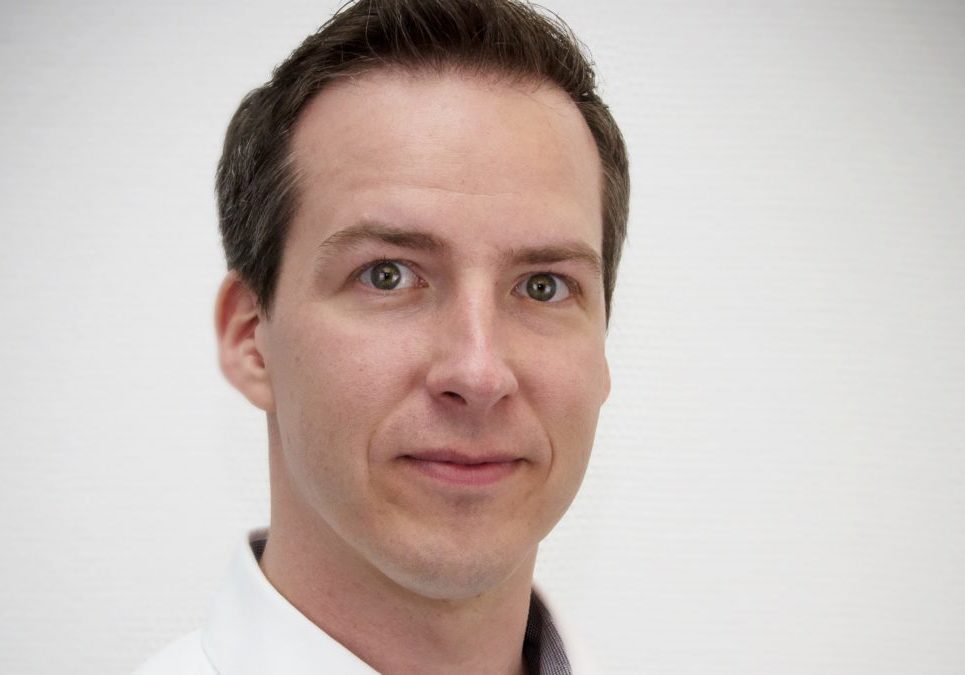
Toni Mattis is a Ph.D. researcher and teaching assistant at the Software Architecture Group of the Hasso Plattner Institute (University of Potsdam, Germany). His work integrates artificial intelligence into software engineering practices, focusing on live programming environments , code repositories mining , and test prioritization . His research interests center around: Software modularity and architectural knowledge reification Exploratory programming and live programming environments Machine learning applications on code repositories Test prioritization techniques using AI and lexical analysis Recent publications analyze: AI-generated dynamic context for program comprehension (2024) Parallel version control for exploratory programming (2025) Game-based contexts for example-driven development (2024) Task complexity modeling in software maintenance (2022-2023) Scientific recognition includes: 2018 3rd Prize ACM Student Research Competition 2017 2nd Prize ACM Student Research Competition German Academic Scholarship Foundation (2010-2014) Multiple national computer science contest awards (2009) As educator, he has designed and supervised: Master's seminars on AI for Programming (2024) Code repository mining courses (2017-2020) Software testing modules covering TDD, BDD, and mutation testing
Dr. Alison Ashbury is a Researcher at the Max Planck Institute of Animal Behavior , affiliated with the Department of Animal Societies Ecology . Her work focuses on the behavioral ecology of primates, particularly orangutans, examining sleep patterns, social tolerance, movement dynamics, and conservation strategies. Her research spans topics such as sleep homeostasis , social learning , habitat fragmentation , and reproductive behavior in wild primate populations. Publications highlight her expertise in field experimentation and socio-ecological analysis, often integrating conservation biology and environmental stressor impacts. Key trends in her recent work include Investigating how socio-ecological factors disrupt sleep Assessing long-term conservation efficacy Studying sex-specific behavioral adaptations Exploring cultural transmission in nesting behaviors
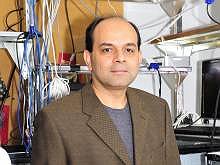
Atif Memon is a Professor in the Department of Computer Science at the University of Maryland, College Park (UMCP), where he has been a faculty member since 2001, progressing from Assistant Professor to Associate Professor and finally to Professor in 2015. He is also a Professor at the Institute for Advanced Computer Studies at UMCP. Dr. Memon founded and heads the Event Driven Software Lab (EDSL), where his research focuses on design, development, quality assurance, and maintenance of event-driven software applications. Dr. Memon received his Ph.D. in Computer Science from the University of Pittsburgh in 2001, with a dissertation titled "A Comprehensive Framework for Testing Graphical User Interfaces." His advisors were Martha Pollack and Mary Lou Soffa. Prior to his Ph.D., he earned an M.S. in Computer Science from King Fahd University of Petroleum and Minerals in Saudi Arabia (1995) and a B.C.S. in Computer Science from the University of Karachi (1991). Dr. Memon's research primarily focuses on software testing, particularly for event-driven systems. He is renowned for designing and developing GUITAR, a model-based GUI testing framework that operates on Android, iPhone, Java Swing, .NET, Java SWT, and web systems. His work extends to Community Event-based Testing (COMET), a community infrastructure for event-based testing researchers. His research interests include: Automated GUI and mobile application testing Model-based software testing techniques Event-driven software quality assurance Testing methodologies for emerging technologies Test automation and script maintenance Flaky tests and test reliability Dr. Memon's recent publications demonstrate a strong focus on practical applications of software testing, particularly in mobile environments. His work bridges theoretical testing concepts with real-world implementation challenges, with significant contributions to GUI test automation, mobile application testing, and test script maintenance. The trend in his recent work shows increasing emphasis on mobile platforms, security testing, and addressing the challenges of flaky tests in continuous integration environments. His research spans both academic innovation and practical industry applications, as evidenced by his collaborations with companies like Google, Apple, and others. Among his notable achievements, Dr. Memon received the Best Paper Award at SECURWARE 2014 for his work on "N-Gram Based User Behavioral Model for Continuous User Authentication" and a retrospective award for the most influential paper among the papers of 2003 Working Conference on Reverse Engineering. Dr. Memon currently advises six PhD students at Maryland on various aspects of testing event-driven software systems, and so far six students have completed their doctoral thesis work under his guidance. His research has been supported by significant funding from agencies including DARPA, NSF, NIH, and NSA for projects such as "Vetting Android Applications for Security Using Graphical User Interface Logic," "COMET - Community Event-based Testing," "Algorithms and Software for the Assembly of Metagenomic Data," and "Research in Science and Public Policy for the U.S. National Security Agency." As the founder and head of the Event Driven Software Lab (EDSL), Dr. Memon leads a team focused on advancing the state of the art in testing event-driven software applications. The lab has developed several influential tools and frameworks, most notably GUITAR, which has been widely adopted in both academic and industrial settings. Dr. Memon has also been instrumental in developing community infrastructure for testing researchers through COMET, enabling uniformity in experimentation and benchmarking in event-driven software testing.
Peetsche Peemöller serves as a Lecturer at the Muthesius Academy of Fine Arts in Kiel, Germany—the sole art school in Schleswig-Holstein. They teach foundational courses within the Department of Industrial Design, including industrial design principles, color theory, drawing fundamentals, spatial representation, and creative doodling techniques. Teaching Expertise: Their instruction centers on core design competencies essential for artistic development. Key areas include: Industrial Design methodologies Color theory applications Freehand and technical drawing Three-dimensional spatial visualization Exploratory doodling as a creative tool These subjects align with the academy's project-based curriculum emphasizing real-world client engagement and interdisciplinary collaboration. Operating within a small-class environment (max 20 students per semester), Peetsche Peemöller contributes to the institution's mission of fostering creative freedom and individual artistic biographies. The academy actively promotes LGBTQIA* inclusion and diversity across its programs, reflecting its commitment to equitable artistic education.
Marcel Hebing serves as Professor of Data Science at the Digital Business University of Applied Sciences (DBU), founder of Impact Distillery (mStats DS GmbH) and kaleidemoskop GmbH, and Associate Researcher at the Alexander von Humboldt Institute for Internet and Society (HIIG). Previously, he contributed to the Socio-Economic Panel (SOEP) at the German Institute for Economic Research (DIW Berlin) for seven years, developing critical data infrastructure for one of the world's largest social science datasets. His interdisciplinary background in computer science, sociology, statistics, and business informatics underpins his research approach. This foundation enables unique perspectives on data quality, interpretation challenges, and machine learning applications in societal contexts. Research Interests Hebing's work centers on three interconnected pillars: (1) generating robust, application-oriented insights through classical statistics and machine learning; (2) building automated infrastructures for end-to-end data management and analysis; and (3) enforcing rigorous quality standards throughout analytics project lifecycles. His current projects address urgent societal challenges including the BMBF-funded InnoTwin (digital twin of German society), ESG forecasting models for sustainable corporate governance, normative AI frameworks, and exploratory modeling for evidence-based decision-making. These efforts consistently bridge technical data science with social science applications. Publication Trends His publication record reveals a decade-long evolution from foundational data infrastructure work (2012-2017) toward contemporary examinations of AI's impact on research systems. Early publications focused on metadata standards, panel data management, and the sociology of data sharing, while recent work investigates large language models' implications for science (2023) and sustainable impact frameworks. Across all periods, his research maintains strong interdisciplinary connections between computer science, social science, and science policy, with consistent emphasis on practical implementation and societal relevance. Scientific Awards No specific scientific awards, fellowships, or medals are documented in the available sources. Grants and Advising Current Projects: Leading BMBF-funded InnoTwin initiative, ESG forecasting framework development, normative AI deployment systems, and exploratory modeling for robust decision-making (EMA) Advising: No information regarding formal student supervision or advisee relationships is provided in available materials Labs and Teams Through Impact Distillery (mStats DS GmbH), Hebing directs applied data science teams translating technical solutions into business and policy contexts. At HIIG, he contributes to the 'Knowledge & Society' research program examining digital transformations in knowledge production, while co-organizing initiatives like the Impact School workshops and Pop-Up Labs on inclusive AI. His leadership integrates academic research with entrepreneurial execution across multiple organizational contexts.
Prof. Dr. Wolfram Rollett is a full professor (W3) of Empirical Educational Research with a focus on School Development at the University of Education Freiburg, Germany. Since 2021, he has served as Dean of the Faculty of Educational Sciences. Previously, he directed the Institute of Educational Science (2014-2016, 2019-2020) and coordinated the Special Interest Group 18 on Educational Effectiveness for the European Association for Research on Learning and Instruction (EARLI). His professional journey includes research positions at TU Dortmund and TU Braunschweig, with international collaborations in Brazil and Spain. Education: Diploma in Psychology (1995) from RWTH Aachen PhD in Psychology (2007) from TU Braunschweig Habilitation in Educational Science (2012) from TU Dortmund Research Focus: Rollett's work examines educational effectiveness through longitudinal studies of all-day schools, inclusive education models, and digital learning innovations. His research investigates: Impact of classroom composition on academic outcomes Development of inclusive STEM teaching methods Effects of extended education programs School quality measurement and improvement frameworks He leads major projects like the Study on the Development of All-Day Schools (StEG), funded by BMBF and ESF. Publication Trends: Rollett's recent articles cluster around three themes: COVID-19 learning impact studies (2022-2023), inclusive science education innovations (2021-2022), and longitudinal analyses of school tracking systems (2023). His work consistently applies mixed-methods approaches to educational effectiveness research, with strong emphasis on policy implications. Professional Engagement: He leads the research group on school development, supervises doctoral candidates, and coordinates national evaluation projects. Notable collaborations include the Freiburg School of Education (FACE) initiative and cross-national research with Brazilian universities. Rollett regularly contributes to educational policy forums and curriculum development committees.
Dr. Martin Dröge is a Researcher at Humboldt University Berlin since 2021, affiliated with the Chair of Digital History. He previously worked as a research assistant at the University of Paderborn (2012-2021) and Paderborn's AI-SKILLS project. His academic career spans roles at the LWL Institute for Westphalian Regional History and the Freiherr-vom-Stein Society. Education: Magister Artium in modern and contemporary history, media studies, and educational science from University of Paderborn Research focuses on text mining , data visualization , gender history , and Nazi Germany studies . His publications blend digital methodologies with regional historical analysis, including monographs on Karl Friedrich Kolbow and Nazi masculinity ideologies. Recent work includes a 2022 interactive Python textbook for historians and exploratory text analysis of Prussian governance. His 2015 monograph on Kolbow received critical acclaim from esteemed journals. Scientific Award: Ignaz-Theodor-Liborius-Meyer Prize (2017) for regional history contributions
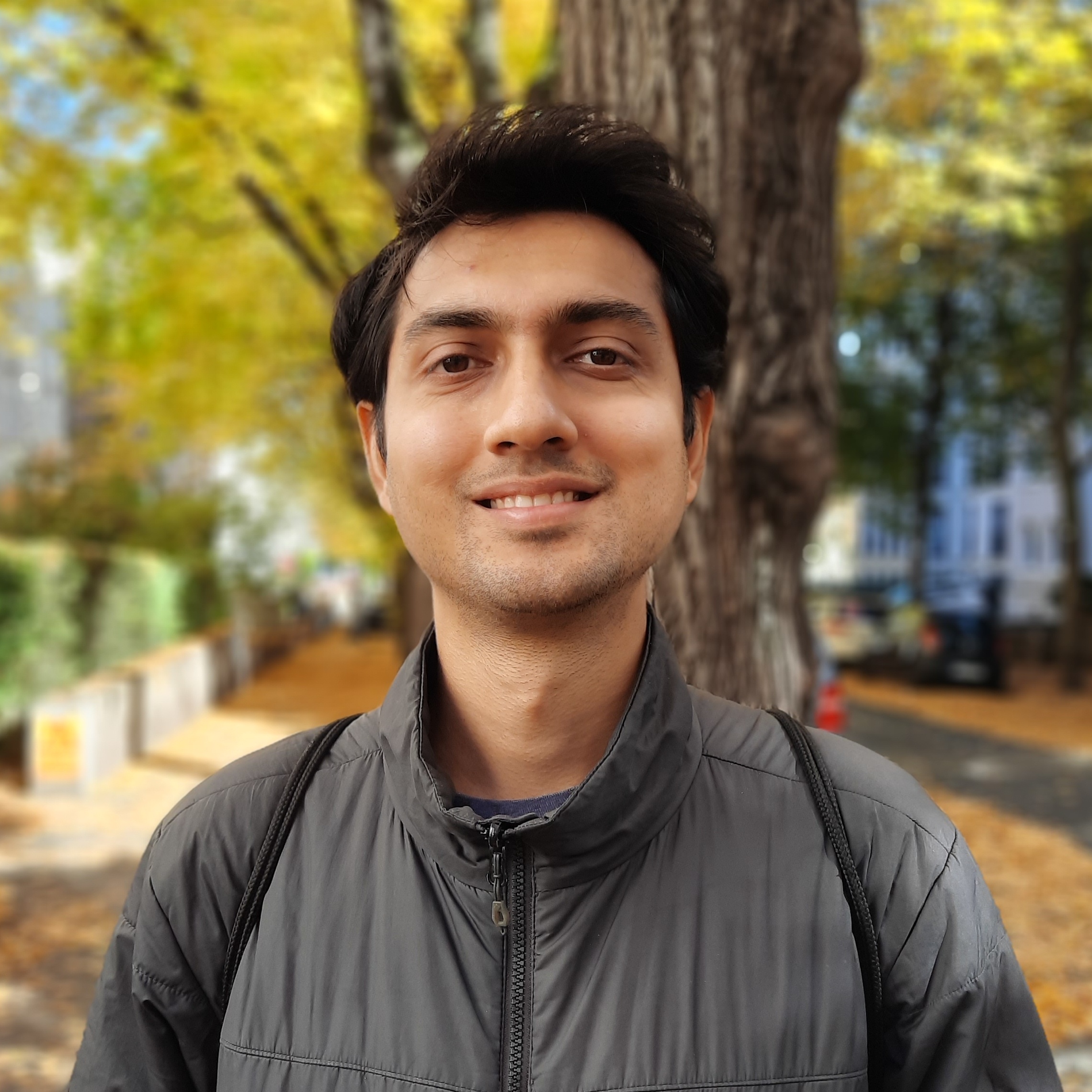
Alap Kshirsagar is a postdoctoral researcher at the Intelligent Autonomous Systems lab within the Computer Science Department at TU Darmstadt, Germany. He joined the lab in July 2022 and is affiliated with the Adaptive Mind research cluster , which integrates Cognitive Science, Experimental Psychology, and Artificial Intelligence. Education: Ph.D. in Mechanical Engineering, Cornell University (2022) M.S. in Mechanical Engineering, Indian Institute of Technology (IIT) Madras (2017) B.S. in Mechanical Engineering, Indian Institute of Technology (IIT) Bombay (2014) Research Interests: Alap specializes in Human-Robot Interaction , Robotic Manipulation , and Tactile Perception . His work explores Dynamic Motor-Skill Learning , Vision-Based Tactile Sensors , and Safe Reinforcement Learning frameworks. He investigates how humans adapt to robotic collaborators and develops simulation tools like TacEx for tactile sensing research. Publication Trends: His recent work focuses on human-robot handover dynamics , visuotactile integration , and adaptive motor-skill learning . Key contributions include tactile sensor simulation frameworks (TacEx), computational models for fear-induced postural control , and variational expert systems for HRI. Collaborative projects span Isaac Sim , German Robotics Conference , and IEEE/RSJ IROS initiatives. Scientific Awards: 🏆 Best Workshop Paper, ICRA@40 (2024) 🏆 Best Late Breaking Report, IEEE RO-MAN (2019) Advising & Grants: Alap supervises Bachelor's and Master's theses on topics like non-verbal communication , self-supervised robotic pouring , and visuotactile pose estimation . He collaborates with institutions including Georgia Tech , DFKI , and IIT Bombay .
Dr. Ulrike Schütte serves as Managing Director of the Department of Research and Young Scientists at the Center for Teacher Education and Educational Research (CeLeB) at the University of Hildesheim since April 2017. Her academic background includes a Doctorate in Special Education from Leibniz University Hannover (2017), a Master of Arts in Special Education and Rehabilitation Sciences (2010), and a Bachelor of Arts in Rehabilitation Sciences from Humboldt University of Berlin (2007). Dr. Schütte's research focuses on the intersection of special education, intercultural communication, and linguistic diversity. Her work particularly examines professional development for language educators and speech therapists working in culturally diverse contexts. She has conducted extensive research on implementing speech-language pathology programs in Tanzania, exploring culturally sensitive approaches to language development and communication therapy in international settings. Her scholarship addresses critical issues in inclusive education, teacher professionalization, and the challenges of linguistic diversity in educational settings. Analysis of her recent publications reveals a strong emphasis on international comparative education, particularly between Germany and African contexts. Her research increasingly incorporates digital learning environments and examines how professional development can be enhanced through research-based learning approaches. Schütte's work consistently addresses the practical implementation challenges of theoretical frameworks in diverse educational settings, with particular attention to cultural sensitivity and context-specific adaptations. As Managing Director of the Research and Young Scientists Department, Dr. Schütte oversees research initiatives and supports early-career researchers at CeLeB. She has organized and contributed to numerous academic conferences on teacher education and educational research, with a particular focus on professionalization in teacher training and inclusive educational practices. Her leadership extends to collaborative projects addressing digitalization in education and the development of research competencies among teacher trainees.
Maria Majekova is a Junior Group Leader (tenured) at the University of Tübingen's Institute of Evolution and Ecology (Faculty of Science) since 2021, with prior roles as Assistant Professor (2018-2021) and Visiting Scientist at University of South Bohemia (2014-present). Her academic career spans Comenius University (PhD, MSc) and collaborations across Europe. PhD in Plant Ecology from Comenius University (2014) MSc in Soil Science from Comenius University (2009) Her research explores plant ecological strategies through functional trait analysis , focusing on: Temporal stability and synchrony in plant communities Plant water economics linking physiology to climate change Plant decision-making and memory under competition She integrates field experiments on semi-natural gradients with greenhouse studies across individual, population, and community scales. Her publications highlight drought tolerance mechanisms , niche partitioning , and functional trait dynamics in global grasslands and restored ecosystems. Project leadership includes: 2023-2026 DFG Priority Program Biodiversity Exploratories (ExploreNiche) 2021-2024 DFG Grant on trait-stability relationships 2021-2023 Seed Grant for African conservation research She mentors students including PhD candidates Sepideh Golshani, Johanne Gresse, and master students Undine Schoellkopf, Lukas Janke, and Rosa Kramp.
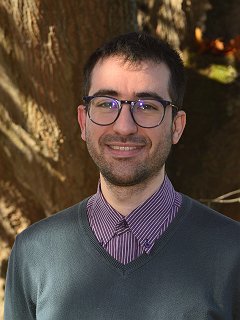
Djamel Eddine Khelladi is a CNRS Researcher at the IRISA laboratory within the DIVERSE team at University of Rennes, specializing in software engineering with emphasis on model-driven techniques and empirical validation. His work bridges theoretical frameworks and industrial-scale applications, particularly in evolving software ecosystems. His academic foundation includes a Ph.D. from Sorbonne University (formerly University Pierre et Marie Curie) at the Laboratory of Computer Science of Paris 6 (LIP6), followed by postdoctoral research at Johannes Kepler University Linz's Institute for Software Systems Engineering. This trajectory established his expertise in software evolution and model-driven approaches. Khelladi's research centers on software evolution challenges, particularly model-code co-evolution in highly-configurable systems like the Linux kernel. He develops scalable analysis tools (e.g., HyperAST, HyperDiff) and investigates empirical phenomena in build systems, configuration management, and polyglot programming environments. Recent work increasingly integrates large language models for automated co-evolution tasks while maintaining rigorous empirical validation. His publication trends reveal a consistent focus on practical tooling for software evolution, with growing exploration of AI-assisted engineering. Key themes include scalability in software history analysis, reproducibility in configurable systems, and debugging multi-language environments, often using Linux kernel ecosystems as testbeds. As an active community contributor, Khelladi serves on program committees for ASE, ICSE, and ESEC/FSE while advancing research through the DIVERSE team at IRISA. This group specializes in variability-intensive software systems, providing the collaborative environment for his empirical and tool-building research.