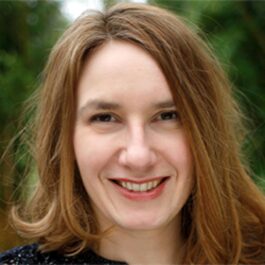
Dr. Indratmo is an Associate Professor and Chair of the Department of Computer Science at MacEwan University. He holds a PhD from the University of Saskatchewan, an M.Sc. from the University of Manitoba, and a B.Eng. from Petra Christian University. His research focuses on information visualization, human-computer interaction, and social computing, with a particular emphasis on developing tools for analyzing social media data. He has contributed to projects like a visual analytical tool for sentiment analysis in Edmonton's traffic-related social media data and studies on multimedia content effectiveness in communication strategies. Indratmo teaches a range of computer science courses, emphasizing student engagement through transparent pedagogical practices. His work bridges technical innovation with social impact, aiming to enhance communication strategies for organizations through data-driven insights. He has published extensively in journals like Big Data Research and Visual Informatics , and his research spans topics from educational visualization tools to smart mirror applications and geospatial heritage systems. Outside academia, he enjoys outdoor activities in the Canadian Rockies. Notable collaborations include work on stacked bar chart efficacy, web-based course registration models, and exploratory browsing frameworks. His research portfolio demonstrates a commitment to both theoretical advancement and practical applications in computing.
Danielle Li is the David Sarnoff Professor of Management of Technology and a Professor at the MIT Sloan School of Management, specializing in the Technological Innovation, Entrepreneurship, and Strategic Management academic group. She is also a Faculty Research Fellow at the National Bureau of Economic Research (NBER). Her academic journey includes an AB in mathematics and the history of science from Harvard College and a PhD in economics from MIT. Prior to joining MIT, she taught at Harvard Business School and the Kellogg School of Management. AB in Mathematics and History of Science, Harvard College PhD in Economics, MIT Professor Li's research focuses on the economics of innovation and labor economics, with particular emphasis on how organizations evaluate ideas, projects, and people. She investigates the intersection of technology and workplace dynamics, especially how AI impacts worker productivity, the nature of work, and career trajectories in AI-intensive environments. Her work examines how businesses implement AI tools and the resulting effects on workforce composition and skill requirements. Her publication portfolio reveals a consistent focus on innovation economics, labor market dynamics, and the organizational implications of technology. Recent work increasingly centers on AI's workplace impact, with her 2025 Quarterly Journal of Economics paper 'Generative AI at Work' demonstrating how AI assistance increases worker productivity by 15% on average, with differential effects across experience levels. Her research combines rigorous economic analysis with practical business implications, spanning pharmaceutical innovation, hiring practices, promotion decisions, and gender gaps in the workplace. Best Paper Prize: 2017 FIRCG Conference Best Paper Prize: 2018 CEPR Management, Organizations, and Entrepreneurship Conference Best Paper Prize: 2017 Red Rock Conference Best Paper Prize: 2018 LBS Summer Finance Symposium Best Paper Prize: 2019 American Economic Journal: Applied Economics Professor Li's research has been supported by significant grants and has influenced both academic discourse and business practice. Her work on AI in the workplace has informed executive education programs at MIT Sloan, including 'Making AI Work: Machine Intelligence for Business and Society' and 'Artificial Intelligence' courses. She actively engages with media and business leaders to translate research findings into practical insights, frequently appearing in the New York Times, Wall Street Journal, and Economist. Her research on gender promotion gaps and hiring practices has particular relevance for organizational human resource policies. Professor Li is deeply embedded in MIT's AI research ecosystem, collaborating with colleagues across Sloan and CSAIL. She contributes to MIT's AI Expert Spotlight series, focusing on how businesses should implement AI responsibly and effectively. Her work bridges economic theory with practical business applications, particularly in understanding how AI transforms work processes and organizational structures.
Steven Paul Reise is a Research Professor in Quantitative Psychology at the University of California, Los Angeles (UCLA), where he has been a faculty member since 1998. He co-directs the Advanced Quantitative Methods training program, supporting graduate students in measurement, latent variable modeling, and modern experimental design. Dr. Reise earned his Ph.D. in Psychology from the University of Minnesota (1990), mentored by IRT pioneer David Weiss and personality researcher Auke Tellegen. Dr. Reise specializes in applying latent variable measurement models—including Structural Equation Modeling (SEM) and Item Response Theory (IRT)—to personality, psychopathology, and health outcomes research. His methodological work focuses on hierarchical models, MIMIC modeling, person-fit statistics, and bifactor modeling. He has been recognized with prestigious awards, including the Raymond B. Cattell Award (1998), UCLA Psychology Department Distinguished Teaching Award (2008), and University of California Campus-Wide Distinguished Teaching Award. His recent publications explore multidimensionality in SEM, bifactor modeling, person-fit indices, and applications to psychopathology and health outcomes. Dr. Reise collaborates on projects spanning gene-to-phenotype modeling, impulsivity, and advanced psychometrics. Scientific Awards : Raymond B. Cattell Award (1998), UCLA Psychology Teaching Award (2008), UC Campus-Wide Teaching Award, Outstanding Paper of the Year (2012).
Jessica Hullman is the Ginni Rometty Professor of Computer Science at Northwestern University's McCormick School of Engineering and a Faculty Fellow at the Institute for Policy Research. Her research develops theoretical frameworks and interfaces for human-AI collaboration, focusing on uncertainty quantification, statistical modeling, and decision-making in domains like scientific research and AI-assisted analysis. Education: PhD in Information (Visualization), University of Michigan (2013) MS in Information Analysis, University of Michigan (2008) BA in Comparative Studies, Ohio State University (2003) Tableau Postdoctoral Fellowship, UC Berkeley (2015) Research Focus: Hullman's work bridges formal models of rational inference (e.g., Bayesian decision theory) with real-world applications. Key areas include: human-AI complementarity in decision-making, visualization of uncertainty, statistical reform, and LLM applications in behavioral science. Her research consistently addresses the alignment of data-driven interfaces with human cognitive capabilities. Publication Trends: Recent work demonstrates a strong emphasis on human-AI collaboration frameworks, decision-theoretic evaluation of visualizations, and methodological rigor in machine learning and social science. Key themes include uncertainty quantification (conformal prediction, privacy tradeoffs), behavioral experiments in AI-assisted tasks, and critical analyses of scientific practices. Awards & Honors: Microsoft Faculty Fellow (2019) Google Faculty Award NSF CAREER, Medium, and Small Awards Multiple best paper/honorable mention awards at top HCI/visualization venues (CHI, VIS) Funding & Labs: Principal Investigator for NSF-funded projects including HCC: Medium on visualization tools. Previously affiliated with University of Washington's Interactive Data Lab and DataLab. Current research includes NSF-supported work on improving data visualization for reasoning about analytical assumptions.
Narges Mahyar is an Associate Professor at the University of Massachusetts Amherst in the Manning College of Information and Computer Sciences (CICS) . She is currently on sabbatical with the Aviz team at the Inria Center, University of Paris-Saclay . Her research focuses on Human-Computer Interaction (HCI) , Information Visualization , and Digital Civics , aiming to empower communities through technology. Education: She holds a PhD in Computer Science from the University of Victoria, an MS in Information Technology from the University of Malaya, and a BS in Electrical Engineering from Tehran Azad University. She completed postdoctoral fellowships at the University of British Columbia (2014–2016) and the University of California San Diego (2016–2018). Research Interests: Her work addresses complex societal challenges like climate change, urban planning, and healthcare by designing inclusive technologies. Key areas include civic engagement, data visualization for equity, and integrating AR/VR for public participation. Notable projects include CommunityClick and RisingEMOTIONS , which enhance public input in decision-making. Publications & Awards: With over 50 publications, her work has received prestigious awards including Best Paper Awards at CHI 2023 , Eurovis 2022 , and CSCW 2020 . Her research emphasizes ethical design and inclusivity, particularly involving marginalized communities. Grants & Advising: She has secured grants totaling over $1.4 million, including NSF funding for projects like "Mapping Instability" . Advises PhD student Mahmood Jasim and collaborates with Ali Sarvghad and Pari Riahi on interdisciplinary research. Labs & Teams: Leads the HCI-VIS Lab at UMass, focusing on social computing and visualization. Collaborates internationally with teams like Aviz and Inria on civic tech initiatives.
Patrick Dallasega is an Associate Professor in the Department of Industrial Plants at the Faculty of Science and Technology of the Free University of Bolzano (Italy). He holds a PhD from the University of Stuttgart and has been a Visiting Scholar at Chiang Mai University (Thailand) and Worcester Polytechnic Institute (USA). His expertise spans supply chain management, Industry 4.0 integration in SMEs, lean construction methodologies, and sustainable production planning in ETO/MTO environments. He teaches Project Management and Industrial Plants courses in Industrial Mechanical Engineering programs. His research focuses on digital transformation in manufacturing, including smart mobile factories, augmented reality applications for training, and synchronization of production and on-site assembly processes. Collaborative projects like the AR-enhanced industrial training initiative with Memc aim to reduce errors and costs in complex industrial setups. His work emphasizes human-centered technology integration, sustainability, and real-time data utilization for adaptive production strategies. Education Bachelor/Master: Free University of Bolzano (Italy) MSc: Polytechnic University of Turin (Italy) PhD: University of Stuttgart (Germany) Research Interests Professor Dallasega’s research explores the intersection of Industry 4.0 technologies with lean manufacturing principles, particularly in complex Engineer-to-Order (ETO) and Make-to-Order (MTO) sectors. He investigates how digital twin frameworks, augmented reality (AR), and real-time data analytics can enhance supply chain resilience, reduce operational losses, and improve workforce training efficiency. His work also addresses sustainability challenges in mobile and distributed manufacturing systems, emphasizing eco-friendly logistics and smart factory design. Key Projects Recent collaborations include: Development of an AR-based training module to boost procedural knowledge retention in machinery setups Comparative studies on Industry 4.0 adoption in SMEs across Europe and Asia Framework for digital twin-driven quality control in precast manufacturing Grants & Advising No specific grants or student advisees are listed in the provided data. His focus remains on collaborative industry projects and institutional teaching responsibilities. Labs & Teams Involved in cross-disciplinary teams at the Free University of Bolzano, particularly in the NOI Techpark innovation hub. Leads initiatives on smart mobile factories and human-centered robotics applications in manufacturing environments.
Assoc. Prof. Duygu Koçak is an academic at Alanya Alaaddin Keykubat University's Faculty of Education, specializing in Measurement and Evaluation in Education. She holds a Ph.D. from Ankara University (2016) and conducted postdoctoral research at the University of Toronto (2018-2019). Her roles include Associate Professor, Department Head, and Deputy Head of Department at her current institution. Her research focuses on educational measurement, psychometrics, and statistical methodologies in education. Her academic journey includes positions at Adıyaman University (2014-2016) and lecturing roles since 2016. She has authored/co-authored over 30 peer-reviewed articles on topics like test validity, Monte Carlo simulations, and learning disabilities. Notable works include the 'Academic Jealousy Scale' (2019) and studies on homework impact (2020). Dr. Koçak has contributed to edited volumes on data analysis and measurement tools. She serves as a referee for journals like the Journal of Measurement and Evaluation in Education and Psychology and has presented at international conferences on educational statistics and assessment.
Teresa Harms serves as an Honorary Research Fellow in the Management and Organisations department at the UWA Business School, The University of Western Australia. Her academic work bridges business, health, and transportation research through innovative time-use methodologies. Her research profile centers on Time Use , Travel Behavior , and Mixed Methods analysis, with significant contributions to understanding patient work in healthcare contexts and active travel patterns. The fingerprint of her work includes intersections with Self-Management, Comorbidity, and Organizational Methods, reflecting interdisciplinary applications across medical and urban planning domains. Analysis of her 2018 publications reveals cohesive methodological threads: both studies leverage time-use data to examine behavioral patterns—one in healthcare settings exploring patient work through mixed methods, the other analyzing UK travel behavior using wearable technology. This demonstrates her signature approach of applying temporal frameworks to diverse real-world systems. She contributed as Investigator 02 to the Healthway-funded Exploratory Research Grant Active travel: Using wearable technology to analyse daily travel behaviour (2018-2021), collaborating with D. Olaru, M. Rosenberg, and P. Hooper. This project generated substantial academic engagement with 125 Mendeley readers and social media coverage.
Satoshi Funabashi is an Assistant Professor in the Department of Intermedia Art and Science at Waseda University's School of Fundamental Science and Engineering, Japan. He is affiliated with the Graduate Program for Embodiment Informatics under Waseda University's Program for Leading Graduate Schools and contributes to multiple graduate schools including the Graduate School of Creative Science and Engineering. Education: Doctor of Engineering (Waseda University, 2017-2021) Research Focus: Robotics, tactile sensing, deep learning, and embodiment informatics Academic Appointments: Assistant Professor (non-tenure-track) His research centers on symbiotic robotics and tactile-driven manipulation, with recent publications exploring graph convolutional networks, vision-touch fusion, and morphology-specific deep learning for robotic hands. He has secured multiple competitive research grants including JSPS KAKENHI and JST ACT-I programs. Scientific Awards: Grant-in-Aid for Scientific Research (B) (KAKENHI), JSPS (2024-2027) Grant-in-Aid for Early-Career Scientists, JSPS (2022-2024) JST ACT-I Research Fellow (2020-2022, 2018-2020) JSPS Research Fellowship DC1 (2017-2020) He collaborates with the Intelligent Dynamics and Representation Lab (Prof. Tetsuya Ogata) and the Intelligent Machine Lab (Prof. Shigeki Sugano) at Waseda University. He has interned at MIT's CSAIL (2018-2019) and conducted research at UC Davis (2015). His work has been cited over 500 times with an h-index of 14 according to Google Scholar.
Dr. Xiaohan Yu is a Lecturer in Artificial Intelligence at Macquarie University's School of Computing, joining in December 2023. Previously, he completed his doctoral studies at Griffith University and served as a Research Fellow at the ARC Research Hub for Driving Farming Productivity. His research focuses on Ultra-Fine-Grained Visual Categorization (Ultra-FGVC), Smart Farming, and Automated Crop Cultivar Identification, with over 70 publications in top-tier venues like ICCV, CVPR, and IEEE Transactions. He holds editorial roles at Pattern Recognition and SN Computer Science , and received the APRS Early Career Award (2022) and ACM MM 2024 Outstanding Area Chair distinction. Education: Completed doctoral studies in Artificial Intelligence at Griffith University, Australia. Research Interests: Ultra-Fine-Grained Visual Categorization (Ultra-FGVC) Smart Farming and Agricultural Robotics Computer Vision Applications in Healthcare (e.g., trachoma detection) Deep Learning, Continual Learning, and Domain Adaptation Key Contributions: Pioneered Ultra-FGVC research, developed frameworks like Mix-ViT and CLE-ViT, and contributed to benchmarking multi-object tracking in farming. His work bridges pattern recognition with real-world applications in agriculture and healthcare. Scientific Awards: Australian Pattern Recognition Society (APRS) Early Career Researcher Award 2022 ACM Multimedia 2024 Outstanding Area Chair Award Advising & Grants: Actively involved in editorial roles (Area Chair for ACM MM, IJCNN) and grant-funded research through ARC hubs. His work is supported by collaborations in agriculture and AI-driven solutions for crop cultivar identification. Labs & Affiliations: Member of Macquarie's Smart Green Cities Research Centre and Frontier AI Research Centre , advancing interdisciplinary AI applications.
Hari Subramonyam is an Assistant Professor (Research) at Stanford University's Graduate School of Education with a courtesy appointment in Computer Science. He serves as the Ram and Vijay Shriram Faculty Fellow at Stanford's Institute for Human-Centered AI (HAI) and is a core faculty member of Stanford HCI. Subramonyam earned his PhD in Information from the University of Michigan under advisor Eytan Adar. His research focuses on the intersection of Human-Computer Interaction (HCI) and Learning Sciences, specifically developing AI systems to augment human learning through cognitively informed design, co-design with educators, and transformative learning experiences. His work prioritizes ethical AI, responsible design practices, and human values in technology creation. Research spans generative AI for education, human-AI interaction paradigms, and accessible learning technologies. Subramonyam's publications demonstrate strong focus on human-centered AI systems for education, visualization, and creative applications. His recent work (2023-2025) concentrates on generative AI interfaces for writing assistance, educational tools, and collaborative systems, while maintaining consistent exploration of visualization techniques and AI transparency frameworks. Awards & Honors: Best Paper Award at CHI (2025, 2020, 2019) Honorable Mention Award at CHI (2025) Best Paper Award at IUI (2021) Ram and Vijay Shriram Faculty Fellow HAI Hoffman Yee Grant (2024) Cover Story in Interactions Magazine (2024) Advising & Grants: Leads 27 students including PhD advisee Neha Rajagopalan (co-advised) and diverse MS/BS researchers. Received HAI Hoffman Yee Grant (2024) for "Integrating Intelligence: Building Shared Conceptual Grounding for Interacting with Generative AI" as co-investigator. Teaches courses on data visualization (CS 448B) and educational technology design (EDUC 432). Labs & Leadership: Core faculty at Stanford HCI group, directing research on human-centered AI systems. Organizes workshops including "Tools for Thought" (CHI 2025) and "Human–AI Coevolution" (ICLR 2025). Maintains collaborations with National University of Singapore and University of Michigan.
Aaqib Saeed is an Assistant Professor in the Department of Industrial Design at Eindhoven University of Technology. His research focuses on Human-Centric AI, Federated Learning, Self-Supervised Learning, and Audio Understanding, with applications in Personal Health. He holds a PhD (cum laude) from TU/e and an MSc (cum laude) from the University of Twente. Education: PhD in Computer Science (cum laude), TU/e (2021) MSc in Computer Science (cum laude), University of Twente (2018) Research Interests: Development of robust federated learning frameworks for decentralized data Self-supervised learning for audio and physiological signal analysis AI-driven solutions for healthcare monitoring Key Contributions: DeltaMask: Reducing communication overhead in federated fine-tuning FedNS: Mitigating noisy decentralized data in federated learning Labeling Chaos to Learning Harmony: Handling label noise in FL Professional Experience: Visiting Industrial Fellow, University of Cambridge (2023) Research Scientist, Philips Research (2019–2023) Research Internships: Google Research, TNO/EIT Digital Awards: UT Scholarship (MSc) Cum Laude awards for both PhD and MSc Labs/Teams: EAISI Health, EAISI Foundational, Computational Design Systems.
Marcelo Worsley is the Karr Family Associate Professor in Computer Science and Learning Sciences at Northwestern University's School of Education and Social Policy (SESP). His research focuses on promoting STEM education for underserved populations through hands-on, project-based learning. He holds a PhD and MS in Learning Sciences and Computer Science from Stanford University, along with dual bachelor's degrees in Chemical Engineering and Portuguese. His work emphasizes inclusive learning technologies, multimodal learning analytics, and fostering agency in students to address real-world challenges. Research Interests: Worsley’s research spans four core areas: (1) designing meaningful hands-on learning experiences; (2) extracting and analyzing multimodal data; (3) developing naturalistic interfaces for education; and (4) bridging engineering education with conceptual change. His Technological Innovations for Inclusive Learning and Teaching (tiilt) Lab aims to address inequities in education by co-designing tools with teachers and learners. Grants & Projects: Worsley has led initiatives such as Multimodal Learning Analytics (funded by NSF EAGER) and PE++ , integrating computer science with physical education. His projects often involve intergenerational making, refugee youth engagement, and culturally responsive computing. Publications: His work appears in journals like Journal of Learning Analytics and conferences such as ICLS and EDM. Recent themes include AI in education, embodied learning in games like Minecraft, and leveraging sports for computational thinking.
Rosario B. Jaime-Lara is an Assistant Professor at the University of California, Los Angeles (UCLA) School of Nursing. She holds advanced degrees including a PhD in Nursing from the University of Pennsylvania, MSN from Columbia University, and dual BS degrees in Nursing and Biological Sciences from University of Pennsylvania and UC Davis. Her research focuses on neurophysiological mechanisms of eating behavior, nutritional disparities in Mexican-American communities, and chemosensory science. Key themes include obesity research, sensory neuroscience, and translational clinical studies. She employs rodent models and clinical research methodologies to explore taste/smell physiology and metabolic health. Jaime-Lara has received over 17 honors including the 2022 Hommer Memorial Award and multiple diversity fellowships. Her work spans interdisciplinary collaborations in genomics, microbiome research, and health IT interventions for chronic disease management. Recent publications emphasize olfactory dysfunction in coronaviruses, fat taste mediators, and metabolic profiling. Her research bridges basic science and clinical practice, with particular attention to underserved populations.
Tanja Blascheck is a PostDoc Researcher and Margarete von Wrangell Fellow at the Institute for Visualization and Interactive Systems (VIS) at the University of Stuttgart. Her work focuses on visual analytics , eye tracking , and microvisualizations for smartwatches and other wearable devices.