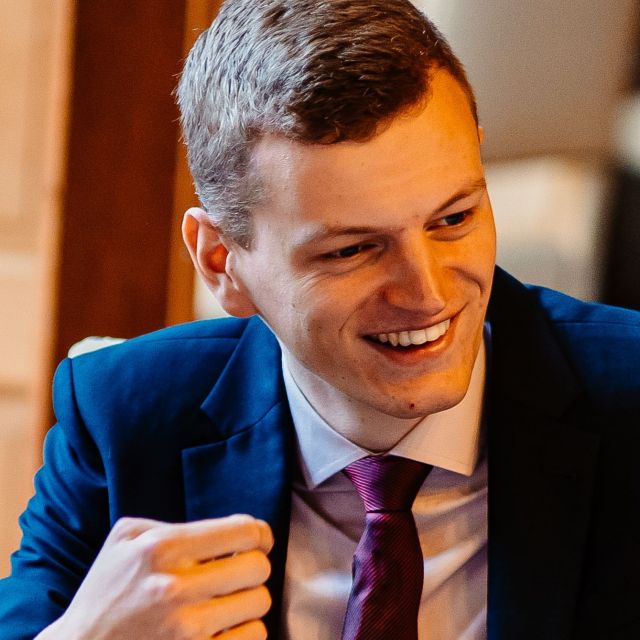
Philip Brown is an Associate Professor and Interim Department Head of Foundational Sciences at Texas A&M University at Galveston, directing the Math Lab. He holds a Ph.D. in Mathematics from Texas A&M University (2000), and degrees from the University of Witwatersrand, Johannesburg (M.S. 1992; B.S. 1990). His expertise spans Complex Analysis, Conformal Mapping, and Special Functions, with a focus on geometric function theory and algebraic structures. Brown teaches Algebra, Trigonometry, Calculus, and Differential Equations, and is active in mathematical societies like the South African Mathematical Society and Tex Users Group. His research explores conformal mappings in gear-shaped domains, octonion rings, and numerical approximations of fundamental constants. Notable works include Detecting Square Numbers (2021) and Idempotent and Nilpotent Elements in Octonion Rings (2024). He authored Foundations of Mathematics: Algebra, Geometry, Trigonometry & Calculus (2016). Brown emphasizes student confidence and accessibility in his teaching philosophy. His publications consistently address advanced topics in complex analysis and applied mathematics, blending theoretical insights with numerical methods. Professional service includes roles in academic leadership and curriculum development. Though no explicit awards are listed, his extensive publication record reflects sustained scholarly contribution.
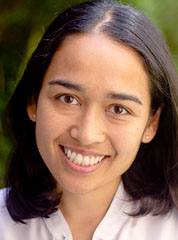
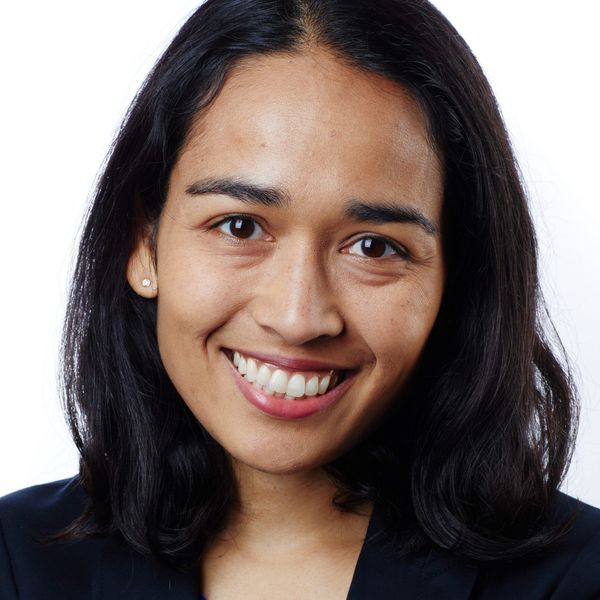
Jennifer S. Balakrishnan is a Professor and Director of Graduate Admissions in the Department of Mathematics and Statistics at Boston University. Her research focuses on algorithmic number theory and arithmetic geometry, with primary support from the National Science Foundation and Simons Foundation. She actively contributes to the Simons Collaboration on Arithmetic Geometry, Number Theory, and Computation and serves as Editor-in-Chief of Research in Number Theory. Her research centers on developing computational methods for solving Diophantine equations, particularly through p-adic techniques including the Chabauty-Coleman method and its quadratic extensions. She investigates rational and integral points on algebraic curves and higher-dimensional varieties, with emphasis on modular curves, hyperelliptic curves, and effective implementations of theoretical frameworks. Her work bridges abstract arithmetic geometry with concrete computational algorithms. Professor Balakrishnan's publication trends reveal sustained contributions to rational points computation, with recent focus on quadratic Chabauty generalizations, p-adic height pairings, and modular form applications. Her collaborative work spans algorithmic development, theoretical extensions to number fields, and computational verification of conjectures in Diophantine geometry. She serves on editorial boards for Transactions of the AMS, Memoirs of the AMS, Mathematics of Computation, and other leading journals, and holds leadership roles as Treasurer of the Number Theory Foundation and Advisory Board member for the Mathematical Research Data Initiative. Professor Balakrishnan currently advises one Ph.D. student and has received continuous research funding from major national foundations. She actively organizes academic events including GeMsGetMath for high school students, ANTS XVI, and workshops at MIT and MSRI, demonstrating strong commitment to community building and mentorship in number theory.
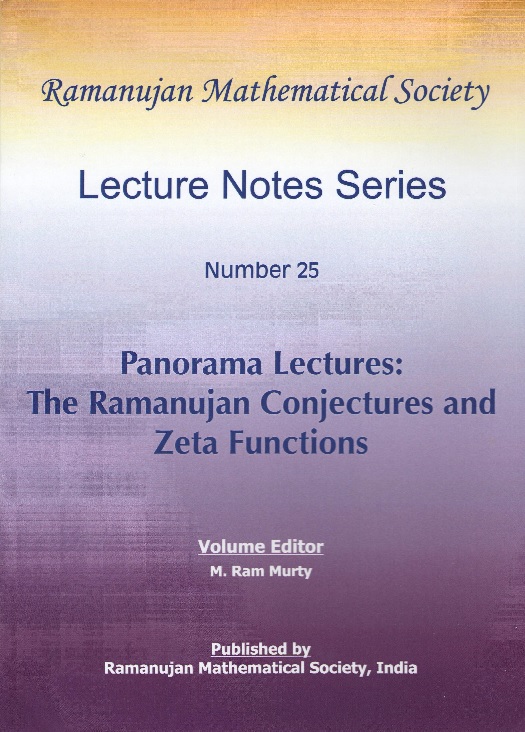
Ram P Murty is a distinguished Professor of Mathematics and Statistics at Queen's University, holding the title of A. V. Douglas Distinguished University Professor and Queen's Research Chair. He is affiliated with the Faculty of Arts and Science and cross-appointed in the Department of Philosophy. His research focuses on number theory, zeta functions, and sieve methods, with contributions to graph theory and Indian philosophy. He has supervised numerous students and postdoctoral fellows, including notable names like Abhishek Bharadwaj and Seoyoung Kim. Murty earned his Ph.D. from MIT (1980) under Harold Stark and Dorian Goldfeld. He has been recognized with prestigious awards, including the Balaguer Prize (1996), Fellowships from the Royal Society of Canada and American Mathematical Society, and the CRM-Fields-PIMS Prize (2024). His interdisciplinary work spans mathematical philosophy, with publications on Indian thought and yoga. He teaches courses on the history of mathematics and Indian philosophy, reflecting his dual academic engagement. Murty's academic network includes adjunct roles at institutions like the Tata Institute of Fundamental Research and the Harish-Chandra Research Institute. His research integrates advanced number theory with applications in cryptography and graph theory, demonstrating a commitment to both theoretical and applied mathematics.
Jennifer Balakrishnan is a Professor in the Department of Mathematics and Statistics at Boston University and currently serves as Director of Graduate Admissions. Her research focuses on algorithmic number theory and arithmetic geometry, with particular emphasis on computational methods in arithmetic geometry, quadratic Chabauty, modular curves, and hyperelliptic curves. Her work is supported by the National Science Foundation and the Simons Foundation, and she is part of the Simons Collaboration on Arithmetic Geometry, Number Theory, and Computation. Dr. Balakrishnan holds editorial roles at Transactions of the AMS, Memoirs of the AMS, Mathematics of Computation, and others, including serving as Editor-in-Chief of Research in Number Theory . She teaches advanced courses such as MA 842 (Greatest hits in arithmetic geometry) and actively mentors one current Ph.D. student. Her research interests span computational aspects of arithmetic geometry, including p-adic methods, effective Mordell conjecture approaches, and rational points on curves. Notable contributions include developing quadratic Chabauty techniques for modular and hyperelliptic curves. She organizes conferences and workshops, such as the Park City Mathematics Institute and the Boston University-Keio University workshop, fostering collaboration in arithmetic geometry and number theory. Dr. Balakrishnan’s research is further highlighted by her involvement in the Simons Collaboration and contributions to computational tools like explicit Coleman integration. Her work bridges theoretical advancements with algorithmic implementations, advancing both foundational mathematics and its computational frontiers.
Professor Tom Fisher holds a position as Professor in Number Theory at the Department of Pure Mathematics and Mathematical Statistics (DPMMS) at the University of Cambridge. His academic profile shows continuous research activity with publications extending to 2025, demonstrating his active engagement in the field. His primary research interests include: Arithmetical Algebraic Geometry Computational Number Theory Elliptic Curve Descent Calculations Construction of explicit elements in the Tate-Shafarevich group Professor Fisher's work focuses on developing computational methods for studying elliptic curves and their arithmetic properties. His research has particularly emphasized descent calculations, which are fundamental techniques for understanding the rational points on elliptic curves. His publications reveal a strong emphasis on explicit constructions and algorithms for computing various invariants in arithmetic geometry. Analysis of his recent publications (2021-2025) shows consistent contributions to several key areas: elliptic curve descent methods, Jacobian varieties of genus 2 curves, Cassels-Tate pairings, and density results in arithmetic statistics. His work often bridges theoretical number theory with practical computational approaches. Professor Fisher has maintained significant collaborative relationships throughout his career, frequently working with leading mathematicians including Manjul Bhargava, John Cremona, and Michael Stoll on projects related to elliptic curves and their arithmetic properties. These collaborations have resulted in numerous joint publications across top mathematics journals. His research has practical applications in cryptography and theoretical significance for understanding the deep structure of elliptic curves and their rational points. The consistent output of high-quality research demonstrates his standing as an active contributor to modern number theory.
Bjorn Poonen is a Professor of Mathematics and Distinguished Professor in Science at the Massachusetts Institute of Technology . His research spans Arithmetic Geometry , Number Theory , and Computational Mathematics , with support from the National Science Foundation and the Simons Foundation . He is a founding member of the Simons Collaboration on Arithmetic Geometry, Number Theory, and Computation . Research Interests : Poonen investigates Rational Points on Varieties , Undecidability in Number Theory , and Computational Methods for solving Diophantine equations. His work bridges Arithmetic Geometry with Number Theory , often leveraging Algebraic Geometry and Model Theory to address foundational problems. Recent Publications highlight trends in Explicit Descent , Brauer-Manin Obstructions , and Galois Representations . Notably, he explores Effective Methods for determining Integral Points on curves and Uniform Boundedness of rational and preperiodic points on varieties. Awards and Recognition : Awarded the 2023 AMS Doob Prize for his influential book Rational Points on Varieties . Recipient of the 2011 Chauvenet Prize for expository excellence in Undecidability in Number Theory . Recognized for Outstanding Undergraduate Teaching at MIT, including the MIT School of Science Prize in Undergraduate Teaching (2014, 2009). Academic Service : Poonen has organized major conferences like the Arizona Winter School and Arithmetic Geometry, Number Theory, and Computation workshops. He serves on editorial boards for journals such as the Journal of the American Mathematical Society and Involve , and participates in panels for the American Mathematical Society , including the Leroy P. Steele Prize and Cole Prize committees.
Samir Siksek is a Professor of Mathematics at the University of Warwick's Mathematics Institute. His primary role includes teaching advanced courses such as MA268 Algebra III and TCC Modular Curves, and he actively contributes to the Number Theory Group at Warwick. Education details are not explicitly stated in the text, but his PhD thesis on 'Descents on curves of genus 1' (1995) is referenced. Research interests focus on Number Theory, particularly Galois representations, Diophantine equations (including Fermat-type equations), arithmetic geometry, and modular forms. His work spans explicit methods for solving Diophantine equations, modular curves, and applications of modular forms. Key contributions include resolving cases of Fermat's Last Theorem over various number fields and advancing techniques in Chabauty methods and the Mordell-Weil sieve. He organizes events like the 'Modular curves and their arithmetic' conference (December 2023) and has contributed to workshops at BIRS, CMI-HIMR, and Banff. His research has been published in top journals like Inventiones Mathematicae and Compositio Mathematica. Professional activities include advising postdocs and PhD students, leading the Warwick Number Theory Seminar, and collaborating on projects like the L-Functions and Modular Forms Database (LMFDB).
Andrew R Booker serves as Professor of Pure Mathematics in the School of Mathematics at the University of Bristol. His research focuses on deep connections between analytic number theory, automorphic forms, and L-functions, with significant contributions to computational methods in algebraic number theory. His educational background includes an M.Sc. from the University of Virginia and a Ph.D. from Princeton University. Key research interests span: Analytic properties of L-functions and modular forms Computational algebraic number theory Spectral theory of automorphic forms Diophantine approximation and equations His recent publications demonstrate a consistent focus on murmurations phenomena in modular forms, converse theorems for L-functions, and computational class group algorithms. Booker's scientific recognition includes a Leadership Fellowship (2009-2015) supporting his work on explicit number theory. His grant portfolio features three major projects: Detecting squarefree numbers (2013-2015) L-functions and modular forms (2013-2019) Explicit number theory, automorphic forms and L-functions (2009-2015) He has supervised 9 research students and maintains active international collaborations, including a 2012 visiting position at Kyoto University.
Steven Groen is a C.C. Hsiung Visiting Assistant Professor at Lehigh University's Department of Mathematics, working with Joseph Kramer-Miller. He will transition to a postdoctoral position at Utrecht University under Valentijn Karemaker in September 2025. His research focuses on arithmetic geometry, particularly curves and abelian varieties in characteristic p, combining geometric and number-theoretic methods. He holds a PhD from the University of Warwick (2023, supervised by Damiano Testa) and dual degrees from the University of Groningen (BSc/MSc Mathematics, BA Philosophy). Education: PhD in Mathematics, University of Warwick, 2023 MSc in Mathematics, University of Groningen, 2019 BA in Philosophy, University of Groningen, 2017 BSc in Mathematics, University of Groningen, 2017 Research Interests: Steven investigates arithmetic geometry, algebraic geometry, and number theory, with specialties in abelian varieties (especially in characteristic p), Ekedahl-Oort and Newton strata, and explicit elements of the Tate-Shafarevich group. His work often involves computational methods and collaborations across institutions. Recent Work Trends: His publications explore isogenies of genus-2 curves, structural properties of abelian varieties in positive characteristic, and applications of the Cartier operator. Current projects bridge theoretical questions with computational experiments in algebraic geometry. Awards: No awards explicitly listed in the provided text. Teaching & Grants: Taught Math 21 (Calculus) at Lehigh in Fall 2023. Collaborates actively with peers (e.g., Vishal Arul, Huy Dang, Everett Howe) on NSF-funded projects. No grant details specified in text. Labs/Teams: Engaged in collaborative research groups at Warwick and Lehigh, with upcoming work at Utrecht University.
Francisco Criado is a researcher with significant contributions to computational geometry, discrete mathematics, and applied algorithm design. His work spans theoretical and applied domains, including convex optimization, Voronoi diagrams, and geometric modeling in gas dynamics and earthquake decision-making frameworks. Collaborators : Francisco Santos, Sebastian Pokutta, Michael Joswig Key Venues : Discrete & Computational Geometry , Foundations of Computational Mathematics , NeurIPS Research Interests focus on geometric algorithms, polyhedral complexes, and applications of fuzzy logic. His 2025 papers explore convex hulls, zonotopes, and tropical geometry, while earlier works address gas dynamics and decision-making models. Article Trends reveal expertise in high-dimensional geometry, combinatorial optimization, and numerical methods. He frequently employs randomized and linear convergence algorithms in 2022–2025. Advising and Grants : No explicit data provided, but his extensive co-authorship network suggests collaborative research leadership.
Alina Ostafe is an Associate Professor in the School of Mathematics and Statistics at The University of New South Wales (UNSW) in Sydney, Australia. She joined UNSW in 2013 as a Postdoc and has steadily progressed through the academic ranks to her current position as Associate Professor since January 2023. Her research focuses on the intersection of number theory and dynamical systems, with particular emphasis on arithmetic properties of polynomial iterations and Diophantine problems. Dr. Ostafe received her PhD in 2010 from the Institute of Mathematics at the University of Zurich, Switzerland, following an MSc from the University of Bucharest, Romania in 2007. Her academic journey includes postdoctoral positions at both UNSW and Macquarie University before her appointment to the faculty. Her research interests span several interconnected areas within number theory and dynamical systems. She investigates Diophantine problems, polynomials and rational functions over local and global fields, finite fields, and arithmetic statistics of matrices. Within dynamical systems, her work focuses on the arithmetic properties of elements in orbits and algebraic properties of iterates. This research bridges classical number theory with modern dynamical systems theory, yielding insights into the distribution of special points in algebraic dynamical systems. An analysis of her recent publications reveals a strong focus on counting problems in arithmetic statistics, particularly concerning matrices with number-theoretic constraints. Her work frequently examines multiplicative dependence in various contexts, including linear recurrence sequences, rational values modulo finitely generated groups, and superelliptic equations. She also investigates the distribution of special points in dynamical systems, with applications to quantum ergodicity and character sums. Dr. Ostafe has received significant recognition through multiple competitive grants: Australian Research Council Future Fellowship (2026-2029) Multiple Australian Research Council Discovery Projects (2018-2026) UNSW Science Faculty Research Grants (2015-2025) UNSW Start-up Grant (2017) UNSW Vice-Chancellor's Postdoctoral Fellowship (2013-2016) Swiss National Science Foundation Grants (2010-2013) As an advisor, Dr. Ostafe currently supervises PhD student Muhammad Afifurrahman and has mentored several postdoctoral researchers including Subham Bhakta, Kamil Bulinski, Ali Mohammadi, Ayreena Bakhtawar, and Jorge Mello. She is actively involved in the mathematical community through her editorial role at Research in Number Theory and her organization of numerous conferences and seminars, including the Number Theory Web Seminar and the UNSW Number Theory Seminar. Dr. Ostafe is a key organizer of the UNSW Number Theory Seminar, which has been running since 2015, and has co-organized multiple international conferences including workshops at BIRS, MFO, and CIRM. Her leadership in the number theory community extends to her role as co-organizer of the Number Theory Web Seminar, which has built an international platform for researchers in the field.