

Nina Balcan is a Professor at Carnegie Mellon University and holds the Cadence Design Systems Professorship in Computer Science. She is affiliated with the School of Computer Science, specifically the Machine Learning Department (MLD) and Computer Science Department (CSD). Her research spans foundational aspects of machine learning, artificial intelligence, theoretical computer science, algorithmic game theory, and interdisciplinary connections in learning theory. Machine Learning Artificial Intelligence Theoretical Computer Science Algorithmic Game Theory Multi-Agent Systems Data-Driven Algorithm Design Her recent work focuses on advancing algorithm design through machine learning, robustness in adversarial environments, and economic modeling. Key contributions include Learning to Branch (JACM 2024), Regret Minimization in Stackelberg Games (NeurIPS 2024), and Learning Accurate Decision Trees (UAI 2024, Outstanding Student Paper Award). She has pioneered novel approaches to data-driven optimization, semi-supervised learning, and privacy-preserving clustering. Nina has received prestigious accolades including ACM Fellow AAAI Fellow Simons Investigator 2019 ACM Grace Murray Hopper Award Her teaching at CMU includes graduate courses on machine learning, advanced machine learning, and specialized topics like algorithmic game theory.
جستوجوی استاد و پژوهشگر
استاد راهنما، استاد دانشگاه یا پژوهشگر مناسب برای مسیر پژوهشیتان را پیدا کنید و با او ارتباط بگیرید.
نمایش ۳۱-۴۵ از ۵٬۲۶۶ استاد راهنما
اطلاعات این پروفایلها از صفحات عمومی دانشگاهها جمعآوری شده و ممکن است بهروز نباشد.
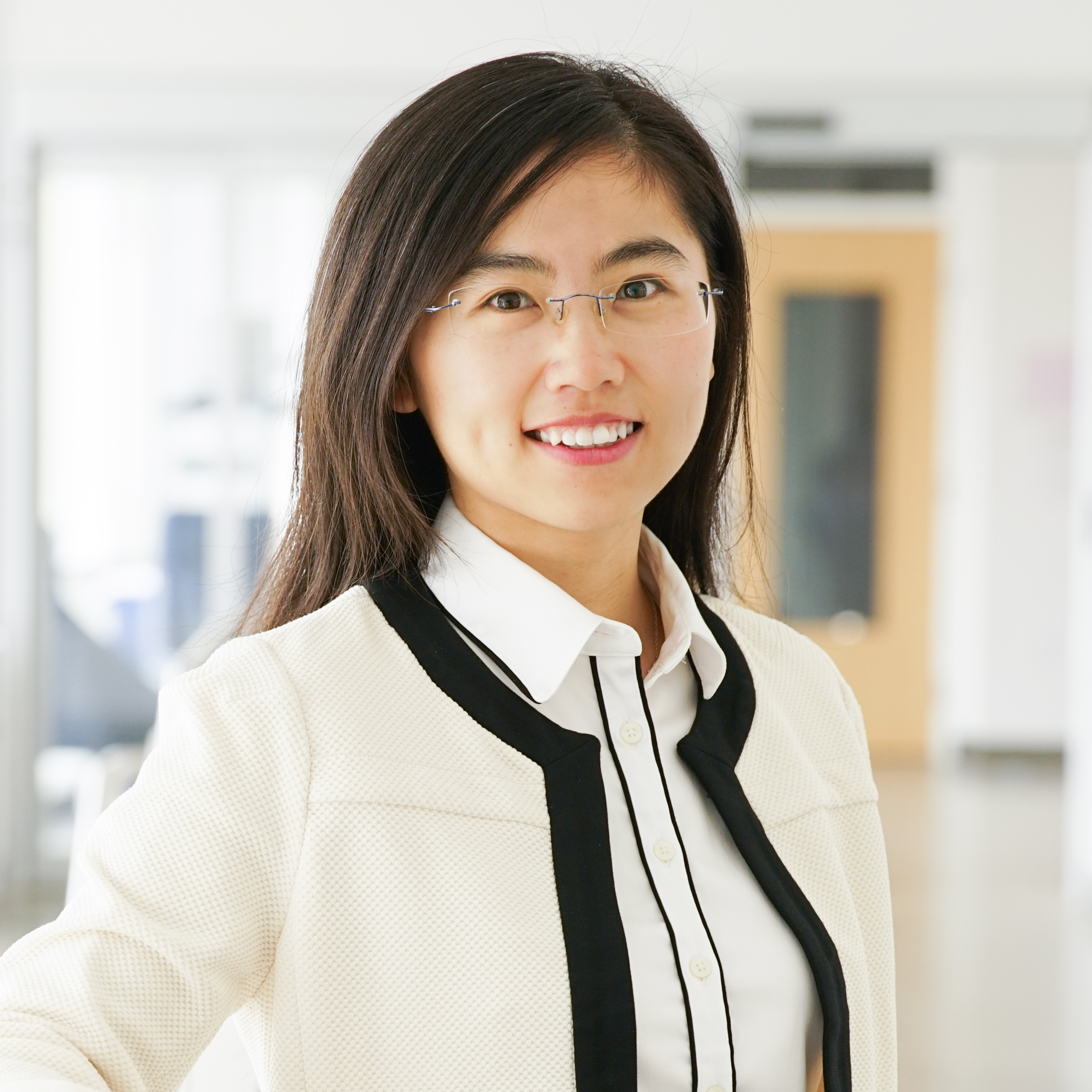
Fei Fangمشاهده پروفایل
دانشیار
Fei Fang is an Associate Professor in the Software and Societal Systems Department at Carnegie Mellon University (CMU) , where she explores the intersection of artificial intelligence and multi-agent systems . Her work integrates machine learning with game theory to address challenges in security , sustainability , and mobility , aligning with the AI for Social Good mission. Ph.D. in Computer Science, University of Southern California (2016) B.Eng. in Electronic Engineering, Tsinghua University (2011) Recent research focuses on reinforcement learning , large language models (LLMs) , and human-AI collaboration . Her team’s work has been recognized with 15+ awards across prestigious venues like IAAI, AAAI, and IJCAI. Notable accolades include the 2023 Allen Newell Award , 2022 Sloan Fellowship , and NSF CAREER Award (2021) . She actively contributes to educational initiatives , including teaching "Demystifying AI for Everyone" at CMU, and has sought part-time teaching assistants for course development. Her research spans 15+ domains , including AI ethics , cyber defense , traffic optimization , and public health .
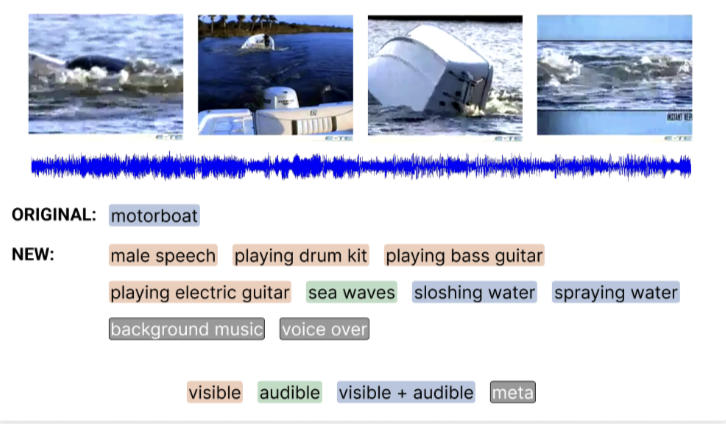
Almut Sophia Koepke is a junior research group leader at the Technical University of Munich and University of Tübingen, focusing on multimodal learning problems integrating sound, vision, and text. Her work bridges foundational research in audio-visual understanding with practical applications in few-shot learning, zero-shot translation, and cross-modal attention mechanisms.
Eric Wongمشاهده پروفایل
استادیار
Eric Wong is an Assistant Professor in the Department of Computer and Information Science at the University of Pennsylvania, affiliated with the ASSET Center and leading the Brachio Lab. His research focuses on robust and reliable machine learning, including model debugging, adversarial robustness, and explainable AI. He holds a PhD from Carnegie Mellon University (CMU), advised by J. Zico Kolter, and completed a postdoc with Aleksander Madry. His work bridges theory and practice, addressing challenges in model interpretability, safety, and scalability. Teaching includes CIS 5200 (Machine Learning), CIS 3333 (Mathematics for Machine Learning), and a specialized course on debugging ML pipelines. Notable contributions include the FIX Benchmark for interpretable features and defenses against LLM jailbreaking attacks. He received an Amazon Research Award in 2024 and has published extensively in top conferences like ICML, NeurIPS, and ICLR. Affiliations: University of Pennsylvania (CIS), ASSET Center, Brachio Lab Education: PhD in Machine Learning (CMU), Postdoc at MIT Key Projects: FIX Benchmark, DOLPHIN framework, SmoothLLM defense Awards: Amazon Research Award (2024) Lab Focus: Safe AI, model debugging, neurosymbolic learning

Rana Hanockaمشاهده پروفایل
استادیار
- Computer Graphics
- Machine Learning
- Computer Vision
- +۳ مورد دیگر
Rana Hanocka is an Assistant Professor of Computer Science at the University of Chicago, leading the 3DL research group focused on AI-driven 3D geometry processing. She earned her Ph.D. in 2021 from Tel Aviv University under Professors Daniel Cohen-Or and Raja Giryes. Her work explores neural networks for unstructured 3D data, including mesh convolutional networks and self-priors for shape reconstruction. Key research areas include geometric deep learning, human-AI collaboration in 3D modeling, and interpretable neural networks. Notable contributions include MeshCNN (SIGGRAPH 2019) and Point2Mesh (NeurIPS 2020), advancing mesh analysis and point cloud processing. Awards include the 2023 Pazy Research Award and 2020 Rising Star in EECS. Education : Ph.D. Computer Science, Tel Aviv University (2021) Labs/Groups : 3DL Group at UChicago Grants : NSF Grant for AI-driven 3D modeling tools (2023) Research directions emphasize creative human-AI partnerships, unsupervised learning from shape collections, and explainable 3D neural networks. Ongoing projects include style-aware 3D synthesis, interactive segmentation, and multimodal shape interfaces.
Matthias Hein is a Professor at the Department of Computer Science, Faculty of Mathematics and Natural Sciences, University of Tübingen. His research focuses on Machine Learning , Adversarial Robustness , and Out-of-Distribution Detection , with applications in computer vision and medical imaging. He has received notable recognition including the Best Paper Honorable Mention Prize at ICLR 2021 and Outstanding Paper Award at CVPR 2021. His work includes developing benchmarks like RobustBench and Spurious ImageNet , and frameworks such as Sparse-RS and DIG-IN . His recent publications emphasize adversarial robustness across multiple domains (vision, text), counterfactual explanations for classifiers, and improved OOD detection methods . Collaborators include prominent researchers like Francesco Croce, Julian Bitterwolf, and Alexander Meinke. Scientific Awards : Best Paper Honorable Mention (ICLR 2021) CVPR 2021 Outstanding Paper Award Key Research Areas : Adversarial Robustness Vision-Language Models Medical Imaging AI Neural Network Calibration

Eytan Adar is a Professor of Information and Computer Science at the University of Michigan, holding dual appointments in the School of Information and the College of Engineering's Electrical Engineering and Computer Science department. His work sits at the intersection of human-computer interaction and artificial intelligence, focusing on large-scale systems analysis and novel interface design. Adar's research spans multiple domains including social media analysis (Twitter, Reddit), academic citation networks, meme propagation, information extraction, and political networks. His methodological expertise includes data mining, data visualization, and graph-based network analysis. His work often operates at internet scale, examining language, creativity, social network dynamics, and text production. His recent publications reveal a strong focus on AI-human collaboration, with particular attention to generative AI interfaces, visualization techniques for complex data, and ethical considerations in AI systems. His work shows a consistent pattern of bridging theoretical insights with practical system implementations. Best Paper Award at ProtoAI: Model-Informed Prototyping for AI-Powered Interfaces, IUI'21 Honorable Mention Award at CHI'24 for feminist interaction techniques research Best Paper Award at ICWSM'18 for Wikipedia language edition analysis Best Paper Award at ICML 2016 Workshop for neural language model visualization Best Student Paper at WSDM'09 for web dynamics research Best of CHI at CHI 2008 for web revisitation patterns analysis Adar has advised numerous PhD students who have gone on to prominent positions at organizations including Google, Apple, RAND, Northwestern University, and Stanford. His research is generously supported by the NSF, IARPA, NIH, the Education Department, and major technology companies including Adobe, Microsoft, Facebook, Google, and Yahoo. He is also a founder of the International Conference on Web and Social Media (ICWSM) and has served as Co-General Chair for WSDM and Co-Program Chair for UIST.
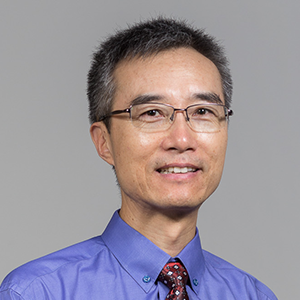
WANG Yeمشاهده پروفایل
دانشیار
WANG Ye is an Associate Professor in the Department of Computer Science at the School of Computing, National University of Singapore (NUS). He holds a PhD in Information Technology from Tampere University of Technology, Finland, and has been a tenured faculty member at NUS since 2002, following his industry research role at Nokia Research Center. He is the director of the Sound and Music Computing Lab at NUS, leading cutting-edge research in AI-driven music and health technologies. PhD, Information Technology, Tampere University of Technology, Finland (2002) MSc, Telecommunications, Braunschweig University of Technology, Germany (1993) BSc, Telecommunications, South China University of Technology, China (1983) His research is centered on Sound and Music Computing for Human Health and Potential (SMC4HHP) , with a focus on eHealth, eLearning, mobile/wearable computing, and music information retrieval. His work spans AI for stroke rehabilitation, language learning through singing, singing voice synthesis, and automatic music transcription. He has pioneered systems like SLIONS (language learning via karaoke), CocoLyricist (AI co-creation for stroke recovery), and SinTechSVS (expressive singing voice synthesis). The latest articles highlight a strong trend in AI-driven music and health technologies , particularly in controllable lyric generation, singing voice synthesis, automatic pronunciation assessment, and multimodal music transcription. The research increasingly integrates large language models, explainable AI, fairness, and real-world deployment, reflecting a shift from theoretical exploration to practical, human-centered applications in healthcare and education. Dr. Wang has received numerous scientific honors, including: Best Paper Awards at ACM MM, ISMIR, IEEE ISM, and CHI First Prize, Asia Pacific Assistive, Rehabilitative, and Therapeutic Technologies Challenge (2015) Faculty Teaching Excellence Award, NUS School of Computing (2024) Top Paper Award, ACM Multimedia 2022 AI in Medicine Collaborative Grant for CocoLyricist project He has supervised over 11 PhD and 20 MComp students and is currently guiding six PhD candidates. His grants come from MOE, NRF, A*STAR, Nokia, and Smule. He has served as General Chair of ISMIR2017 and TPC Co-Chair of ICOT2017, and is on the editorial boards of IEEE Transactions on Multimedia and Journal of New Music Research. He has also developed and taught the first course on Sound and Music Computing in Singapore. Dr. Wang leads the Sound and Music Computing Lab (SMC Lab) , a multidisciplinary team exploring the synergy of music computing, AI, mobile technology, and cloud systems for health and education. The lab actively collaborates with medical institutions such as NUS Yong Loo Lin School of Medicine, Singapore General Hospital, and Harvard Medical School, and is currently working on projects in AI-supported language learning, stroke rehabilitation, and intelligent music interfaces.
Anwar Haqueمشاهده پروفایل
دانشیار
- Network Security
- 5G and Beyond Networks
- IoT
- +۹ مورد دیگر
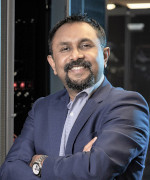
Dr. Anwar Haque is an Associate Professor in the Department of Computer Science at Western University, Canada, and a Faculty of Science Distinguished Research Professor. He holds a Ph.D. in Electrical and Computer Engineering and an M.Sc. in Computer Science from the University of Waterloo. Prior to academia, he was Associate Director at Bell Canada. His research focuses on 5G networks, IoT, cybersecurity, AI, and autonomous systems, with over 100 peer-reviewed publications and $15M in collaborative grants. Dr. Haque leads the Western Information & Networking Group (WING) Lab and is the founder/CEO of Bamboo Innovations Inc., a tech startup developing socially responsible smart technologies. Leadership roles include industry expert-in-residence in the Faculty of Science, Undergraduate Chair of the Computer Science Department, and member of Western’s Senate. He has delivered over 30 keynote talks and media features include BBC Earth and The Globe and Mail. Awards include the IEEE CCECE Leadership Award and multiple grants from NSERC, MITACS, and Bell Canada. His work spans network reliability, smart grids, and cybersecurity, with industry partnerships like the Bell-Western 5G Research Centre.

Oana Cocarascuمشاهده پروفایل
مدرس ارشد
- Argument mining
- Explainable AI
- Machine learning
- +۵ مورد دیگر
Dr. Oana Cocarascu is a Senior Lecturer in Artificial Intelligence at the Department of Informatics, Faculty of Natural, Mathematical & Engineering Sciences, King's College London. She holds a PhD and MEng in Computing (Artificial Intelligence) from Imperial College London and conducts applied research focusing on how artificial intelligence can be deployed to support real-world applications, with machine learning and natural language processing as core components of her work. Her research interests span argument mining, explainable AI, machine learning, natural language processing, and symbolic reasoning. She is particularly focused on developing AI systems that can provide transparent, accountable, and ethical decision-making processes. Her work addresses critical challenges in bias mitigation, fairness metrics, fact verification systems, and argumentation-based explanations for complex AI decisions. Analysis of her recent publications (2023-2025) reveals a strong focus on fairness in AI systems, with particular attention to individual fairness metrics and nuanced evaluation frameworks. She has made significant contributions to fact verification systems, especially in multimodal contexts involving charts and tabular data. Her work increasingly integrates argumentation theory with natural language processing to create explainable AI systems that can justify their decisions through structured reasoning. Dr. Cocarascu leads an EPSRC-funded project titled 'A framework for evaluating and explaining the robustness of NLP models' (2024-2027) and is actively involved in the Natural Language Processing Group at KCL. Her research fingerprint shows strong activity in argumentation (100%), decision-making (74%), artificial intelligence (50%), explainable AI (39%), and bias mitigation (35%). She has contributed to numerous high-impact publications in top venues including ACL, EMNLP, AAAI, and the Journal of Artificial Intelligence Research, with a particular focus on making AI systems more transparent, accountable, and aligned with human values. Her work intersects with UN Sustainable Development Goals, particularly those related to reducing inequality and building resilient infrastructure.

Giovanni De Micheli is a Full Professor at École Polytechnique Fédérale de Lausanne (EPFL), holding appointments in both the School of Computer and Communication Sciences (IC) and the School of Engineering (STI). He is affiliated with the Integrated Systems Laboratory (LSI) and serves as Scientific Director of EcoCloud. His primary office is located in INF 341 building at EPFL's Lausanne campus where he conducts research and teaching activities. Professor De Micheli's research spans multiple domains in electronic design automation and integrated circuit design. His primary interests include: Integrated Circuit Design and Hardware Synthesis Logic Optimization and Boolean Methods Nanoelectronics and 2D Electronics Quantum Computing and Emerging Technologies Low-Power Electronics and Energy-Efficient Systems Electronic Design Automation for Novel Computing Paradigms His recent publications demonstrate a strong focus on advancing logic synthesis techniques for both conventional and emerging technologies. Professor De Micheli's work bridges theoretical foundations with practical applications, particularly in adapting traditional EDA methods to novel computing paradigms like quantum computing and superconducting electronics. His research group has made significant contributions to the development of efficient algorithms for circuit optimization across multiple technology domains, with particular emphasis on area, power, and delay optimization while maintaining functional correctness. Professor De Micheli has supervised numerous doctoral students throughout his career at EPFL, mentoring over 40 PhD candidates whose research spans various aspects of electronic design automation, circuit design, and emerging technologies. His students have gone on to make significant contributions in both academia and industry. As Scientific Director of EcoCloud, Professor De Micheli leads research initiatives focused on energy-efficient computing systems and sustainable cloud infrastructure. His laboratory, the Integrated Systems Laboratory, serves as a hub for interdisciplinary research connecting computer science, electrical engineering, and materials science, with particular focus on next-generation computing technologies.
Timothy M. Hospedales is a Professor of Artificial Intelligence at the Institute of Perception, Action and Behaviour within the School of Informatics at the University of Edinburgh . He also serves as VP AI and Head of Samsung AI Research Centre Europe . His research focuses on efficient and robust AI , emphasizing meta-learning , lifelong transfer-learning , and domain adaptation in both probabilistic and deep learning frameworks. Applications span computer vision , vision and language , reinforcement learning for robotics , and finance . Professor at University of Edinburgh (2020–present) ELLIS Fellow (2021) Head of Samsung AI Research Europe (2020–present) Founding Director of Applied Machine Learning Lab at QMUL (2012–2016) His work includes pioneering contributions to meta-learning , few-shot learning , and self-supervised methods , with notable awards such as the Best Paper Prize at ICML AutoML 2018 and Best Student Paper at ICPR 2018 . He has co-authored 15+ recent papers on topics like Vision-Language Models , Medical AI Fairness , and Diffusion Model Optimization . He served as Program Co-Chair for BMVC 2018 and AAAI 2022 , and authored a book on Visual Adaptation in the Deep Learning Era (2022). Co-Chair, BMVC 2018 Guest Editor, IET CV Special Issue (2016) Keynote Speaker at TASK-CV Workshop (ECCV 2016) Special Issue on Fewer Labels (IEEE PAMI 2020) His leadership extends to organizing workshops like the Learning-to-Learn Workshop at ICLR 2021 , Meta-Learning Workshop at NeurIPS 2020 , and Domain Generalisation Workshop at ICLR 2023 . Current projects include Meta-Omnium (CVPR 2023) for general-purpose meta-learning and MetaAudio (ICANN 2022) for few-shot audio classification benchmarks.

- Artificial Intelligence
- AI Safety
- AI Alignment
- +۹ مورد دیگر
Sheila McIlraith is a Professor in the Department of Computer Science at the University of Toronto, holding the Canada CIFAR AI Chair at the Vector Institute and serving as Associate Director and Research Lead at the Schwartz Reisman Institute for Technology and Society. Her research spans AI safety, ethics, reinforcement learning, and knowledge representation, with a focus on human-compatible AI and long-term societal impacts. Her career includes six years as a Research Scientist at Stanford University and a year at Xerox PARC. McIlraith’s work has been recognized through ACM and AAAI fellowships, as well as prestigious awards like the SWSA 10-Year Award (2011) and the CAIAC Lifetime Achievement Award (2024). Research Interests: AI Safety and Alignment Human-Compatible AI Reinforcement Learning with Ethical Constraints Semantic Web Services Cognitive Robotics and Diagnostic Systems Probabilistic and Logical Reasoning Recent Contributions: Her work emphasizes ethical AI integration, such as the Embedded Ethics Education Initiative (E3I), and addresses challenges in long-term AI risks, multi-agent systems, and interpretable decision-making frameworks. Awards and Honors: ACM Fellow AAAI Fellow 2023 IJCAI-JAIR Best Paper Prize 2024 CAIAC Lifetime Achievement Award Labs and Teams: McIlraith leads initiatives at the Schwartz Reisman Institute and contributes to the Vector Institute, focusing on societal and ethical dimensions of AI technology.
James R. Eaganمشاهده پروفایل
دانشیار
James R. Eagan is an Associate Professor in the Computer Science and Networks Department (Infres) at Télécom Paris , part of the Institut Polytechnique de Paris. He is also a Visiting Professor at the University of Colorado, Boulder for the 2024–25 academic year. His research focuses on making computers more expressive tools for human interaction, emphasizing malleable software, collaborative dynamic media, and multi-surface environments. His work spans Human-Computer Interaction , Data Visualization , and User Interface Programming . A key theme involves adapting software for user-driven customization, exemplified by projects like Webstrates (shareable dynamic media) and SchemeLens (semantic zoom for technical diagrams). He also explores uncertainty in data analytics and gesture-based interfaces for experts. Recent publications from 2020–2024 address Explainable AI (XAI) , Financial Crime Detection , and Interactive Data Analysis . His tools Tarantula and SchemeLens have received acclaim, including the 2015 ACM SIGSOFT Impact Award and Best Paper at UIST 2015. Scientific accolades include: Prix de l’Impact 2015 d’ACM SIGSOFT Best Paper Award at UIST 2015 Honorable Mention at CHI 2017 He teaches courses in Mobile Application Development , Human-Computer Interaction , and Data Visualization . His lab, DIVA (Design, Interaction, Visualization & Applications), operates within the Information Processing and Communication Laboratory (LTCI). He actively recruits PhD candidates and postdocs for research in these domains.
Tim G. J. Rudnerمشاهده پروفایل
استادیار
- Machine Learning
- Deep Learning
- AI Safety
- +۱۲ مورد دیگر
Tim G. J. Rudner is an Assistant Professor in the Department of Statistical Sciences at the University of Toronto, a Faculty Member at the Vector Institute, and a Title A Fellow at Trinity College, University of Cambridge. He was previously an Assistant Professor and Faculty Fellow at New York University. University: University of Toronto School: Faculty of Arts and Science Department: Department of Statistical Sciences Affiliation: Vector Institute, Trinity College (Cambridge) He holds a PhD in Computer Science and an MSc in Statistics from the University of Oxford, where he was advised by Yee Whye Teh and Yarin Gal, and a BS in Applied Mathematics and Economics from Yale University. PhD: Computer Science, University of Oxford MSc: Statistics, University of Oxford BS: Applied Mathematics and Economics, Yale University His research focuses on building robust, transparent, and trustworthy machine learning systems, particularly for high-stakes applications. He develops probabilistic models that improve generalization under distribution shifts, provide reliable uncertainty estimates, and enable fair and interpretable predictions. His work spans generative models, large language models, healthcare, and biomedical discovery. The recent publications highlight a strong trend toward function-space modeling, Bayesian regularization, and AI safety. Tim's work emphasizes principled uncertainty quantification, robustness to subpopulation and semantic shifts, and the development of frameworks for AI governance and specification. His research bridges theoretical advances with real-world applications, especially in safety-critical domains like medicine and defense. Tim has received numerous accolades including being named a Rhodes Scholar, Qualcomm Innovation Fellow, and 2024 Rising Star in Generative AI. He was awarded a $700,000 Foundational Research Grant and a $30,000 Apple Seed Grant for improving LLM trustworthiness. Rhodes Scholar Qualcomm Innovation Fellow AISTATS Notable Paper Award (2024) Outstanding Paper Award, ICLR GenAI4DM Workshop (2024) Apple Seed Grant ($30,000) Foundational Research Grant ($700,000) NeurIPS Spotlight Talk 2024 Rising Star in Generative AI He actively mentors students, particularly first-generation and low-income scholars, and has contributed to major policy frameworks including the OECD AI Classification Framework and a series of CSET issue briefs on AI safety. His work demonstrates a strong commitment to responsible AI development, combining technical rigor with societal impact. Tim leads research efforts at the intersection of machine learning theory and practical deployment, with ongoing projects in generative modeling, reliable LLMs, and AI governance. His lab produces high-impact work regularly published at top-tier conferences such as NeurIPS, ICML, and AISTATS.
فقط ۷۵۰ نتیجه اول نمایش داده میشود. برای رسیدن به نتایج دقیقتر، جستوجو را با فیلترها محدودتر کنید.