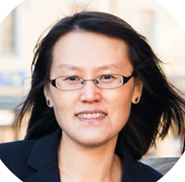
Lili Jiang is an Associate Professor at the Department of Computing Science, Umeå University, where she serves as Director of Studies and Programme Director for the MSc in Computing Science. She holds a PhD in Computer Science with expertise in AI trustworthiness, data mining, and natural language processing. Her research bridges computer science and artificial intelligence, focusing on privacy, fairness, and federated learning systems. Her research interests center on: Developing trustworthy AI systems with emphasis on privacy-preserving techniques Ensuring algorithmic fairness in socio-technical decision-making Advancing few-shot learning methods for NLP tasks Creating robust data federation frameworks for cross-database analysis Recent publications demonstrate strong focus on few-shot learning (particularly in NLP), privacy-preserving AI , and applied data mining for industrial/environmental systems. Her work consistently addresses real-world challenges through multimodal learning and explainable AI techniques. She leads the Deep Data Mining research group and collaborates with the Interpresence institute. Key projects include: Explainable, Safe, Contact-Aware Planning for Heavy Machinery (XSCAVE, 2024-2028) Assessment and Engineering of Equitable AI Systems (2022-2024) Privacy-aware Federated Database Infrastructure for Micro-Data Analysis (2018-present)
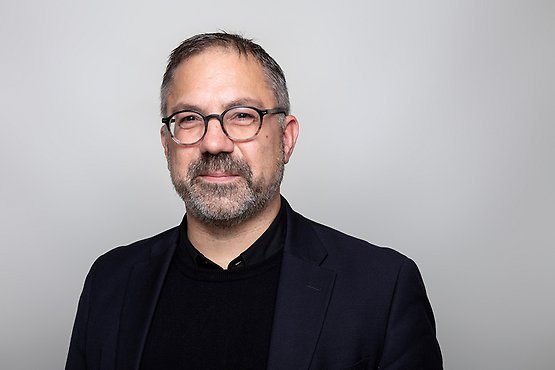
Sebastian Dalleiger is an Assistant Professor at the Division of Theoretical Computer Science, Kungliga Tekniska Högskolan (KTH Royal Institute of Technology). His research focuses on theoretical foundations of machine learning, data mining, and graph theory, with particular expertise in matrix factorization, pattern discovery, and hypergraph analysis. Current affiliation: KTH Royal Institute of Technology Department: Theoretical Computer Science Email: sdall@kth.se His recent work explores federated learning architectures, non-negative matrix factorization, and structural analysis of stochastic block models across multiple graphs. He develops algorithms combining proximal optimization with privacy-preserving techniques, addressing challenges in distributed data analysis. Publications demonstrate interdisciplinary applications in network science, information theory, and computational geometry. Key contributions include novel frameworks for Ollivier-Ricci curvature in hypergraphs and sequential false discovery control for pattern mining.
Shafiullah Soomro serves as Associate Professor in the Department of Artificial Intelligence at Quaid-e-Awam University of Engineering Science and Technology, Pakistan. He completed his Ph.D. in Application Software from Chung-Ang University, South Korea (2018), where he was honored as Best PhD Graduate. Ph.D., Application Software, Chung-Ang University (2018) His research spans medical image segmentation, computer vision, and AI applications in environmental monitoring. Specializing in automatic segmentation techniques using machine learning, he combines theoretical frameworks with practical biomedical implementations. Recent work integrates Swedish National Forest Inventory data with airborne laser scanning for forest attribute prediction. Current research projects include ForestMap (global forest cartography), AI-driven tree volume measurement (Sweden-Brazil collaboration), and machine learning models for predicting mechanical properties of oxynitride glasses. Best PhD Graduate, Chung-Ang University Dr. Soomro has mentored multiple MS students across Korea and Pakistan while supervising 2 Master's and 1 PhD students currently. His teaching portfolio includes 11 undergraduate, 2 MS, and 1 PhD courses such as Artificial Intelligence, Digital Image Processing, and Advanced Image Processing/Computer Vision. He actively contributes to academic curriculum design and research community development within the Computer Science and Artificial Intelligence department.
Professor Karl Andersson serves as Dean for the Faculty of Science and Technology and Head of Subject for Cyber Security at Luleå University of Technology in Skellefteå, Sweden. He holds positions in both the Department of Computer Science and the Department of Systems and Space Engineering, with research focus primarily in cybersecurity and next-generation network technologies. Dr. Andersson earned his Master's degree in Computer Science and Technology from the Royal Institute of Technology in Stockholm before working in industry with Capgemini Group as a consultant, project manager, business developer, and branch manager. He returned to academia to complete his PhD with a dissertation titled "On Access Network Selection Models and Mobility Support in Heterogeneous Wireless Networks." His postdoctoral work included research appointments at Columbia University in New York and as a JSPS Fellow at the National Institute of Information and Communications Technology in Tokyo. His research interests span cybersecurity, 5G/6G networks, Internet of Things, wireless network mobility, and explainable artificial intelligence. From 2017-2023, he led the Center for Distance-spanning Technology at LTU, focusing on fifth and sixth generation mobile networks, IoT, and data centers. His recent publications demonstrate a growing interest in applying machine learning to cybersecurity challenges and medical diagnostics. Professor Andersson's publication record shows a strategic evolution from wireless networking fundamentals to applied cybersecurity and machine learning solutions. His recent 2025 publications indicate active research in explainable AI frameworks, malicious URL detection, and medical applications of machine learning, suggesting an interdisciplinary approach that bridges cybersecurity with healthcare applications. Senior Member of IEEE Senior Member of ACM General Chair for IEEE Conference on Local Computer Networks (LCN) 2020-2021 Reviewer for numerous prestigious journals including IEEE Transactions on Mobile Computing and IEEE Transactions on Computers Member of editorial boards for Journal of Internet Services and Information Security and Journal of Wireless Mobile Networks, Ubiquitous Computing, and Dependable Applications As Dean for the Faculty of Science and Technology since January 2022, Professor Andersson oversees significant research funding and academic programs. His service as a reviewer for major conferences (ICC, Globecom, VTC, WCNC) and journals demonstrates his standing in the academic community. The Center for Distance-spanning Technology that he led from 2017-2023 likely secured substantial research grants in 5G/6G and IoT domains. Based in Campus Skellefteå at Forskargatan 1, Professor Andersson's work through the Department of Computer Science and Department of Systems and Space Engineering connects theoretical research with practical applications in next-generation networking and security. His leadership of the Center for Distance-spanning Technology positioned LTU as a significant player in 5G/6G research, while his recent publications suggest expanding collaborations with medical researchers applying AI to healthcare challenges.