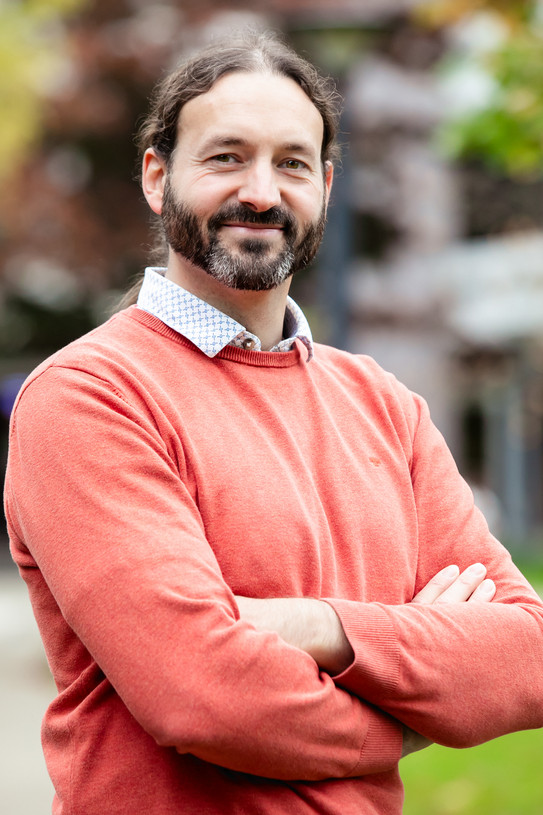
Maren Bennewitz is a Professor at the University of Bonn specializing in humanoid robots. She serves as Vice Rector for Digitalization and leads research at the Lamarr Institute for Machine Learning and Artificial Intelligence . As a principal investigator in national and European projects, she contributes to the executive board of the Cluster of Excellence PhenoRob and co-founded the Center for Robotics at Bonn. Key affiliations: University of Bonn, Lamarr Institute, PhenoRob Cluster, Center for Robotics Her research focuses on robot navigation , active perception , intelligent manipulation , and personalized human-robot interaction . Recent work explores privacy-preserving navigation, agricultural robotics, and neuromorphic obstacle avoidance. Publications highlight applications in crop monitoring, multi-agent safety, and VR-based explainability systems. Notable trends in her research include agricultural robotics (AID4Crops, PhenoRob), multi-objective reinforcement learning , and human-swarm interaction . The Lab at University of Bonn develops solutions for dynamic environments, balancing technical innovation with ethical considerations in robotics.
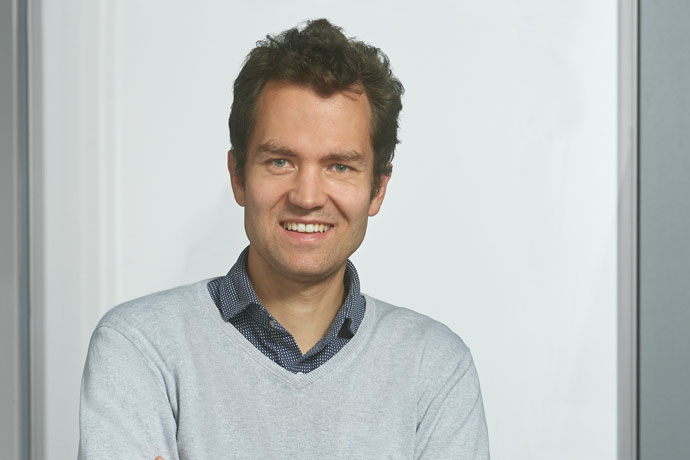
William Saakyan is a researcher at Bielefeld University's Faculty of Engineering, working within the Human-Centered Artificial Intelligence Group at the Center for Cognitive Interaction Technology (CITEC). His office is located in CITEC 3-110, and he can be reached at +49 521 106-2920 with telephone secretariat support available at +49 521 106-6891. His research spans the critical intersection of artificial intelligence and human social behavior analysis, with particular emphasis on healthcare applications and child psychology. Saakyan's technical expertise combines computer vision, machine learning, and signal processing to develop systems capable of understanding human physiological states and social interaction patterns under real-world constraints. Analysis of his publication record reveals a consistent focus on creating clinically relevant tools that address practical challenges in low-illumination physiological measurement, social interaction assessment in children, and bias mitigation in emotion recognition systems. His work on the Simulated Interaction Task for Children (Kids-SIT) represents a significant contribution to standardized assessment methodologies for social anxiety disorders. Saakyan's research aligns with Bielefeld University's strategic Socio-Technical World research area, which investigates capabilities enabling humans, robots, and AI systems to act and communicate effectively in complex environments. His publications demonstrate strong interdisciplinary collaboration between computer science, psychology, and clinical practice.
Dr. Alexander Schulz is a Researcher at the University of Bielefeld within the Faculty of Engineering and its Machine Learning Group . He focuses on machine learning applications across diverse domains including biomedical engineering , fairness evaluation , and data visualization . Research Interests Transfer learning for medical applications Dimensionality reduction techniques Bias detection in language models Classifier visualization tools Collaborations Center for Cognitive Interaction Technology (CITEC) Machine Learning Reports publications His recent publications highlight trends in dynamic graph analysis , semantic bias measurement , and physiological data generation . He has contributed to tools like the Box and Beans test for prosthetics evaluation and DeepView for classifier boundary visualization. Collaborative projects include cardiovascular data synthesis for implantable devices and fairness-aware AI frameworks. Dr. Schulz works at CITEC 2-228 and is reachable at aschulz@techfak.uni-bielefeld.de . His work integrates theoretical machine learning with practical implementations in healthcare and industrial systems.
Florian J. Boge is a Professor for Philosophy of Science with a Focus on Artificial Intelligence at the Department of Philosophy and Political Science, Technische Universität Dortmund. His research spans the philosophy of AI, epistemology of science, simulation theory, quantum physics, and epistemic logic. Research Interests: Impact of AI on scientific understanding Philosophy of modeling and simulation Foundations of quantum mechanics Scientific realism and anti-realism Recent Publications: His work explores opacity in AI systems, robustness in simulation-infected experiments, and the philosophical implications of quantum theory. Articles like Two Dimensions of Opacity and the Deep Learning Predicament and Quantum Reality: A Pragmaticized Neo-Kantian Approach highlight his interdisciplinary approach. Funding & Affiliations: He leads the DFG-funded Emmy Noether junior research group UDNN: Scientific Understanding and Deep Neural Networks and is an associated PI at the Lamarr Institute for Machine Learning and AI. He also serves as associate editor at the European Journal for Philosophy of Science .
Prof. Dr. Christoph Kayser is a Professor and Chair for Cognitive Neuroscience at the Faculty of Biology, University of Bielefeld, Germany. He also holds positions at the Center for Cognitive Interaction Technology (CITEC) as both a Participating Research Group member in Cognitive Neuroscience and as a Board member of CITEC. His research is situated at the intersection of cognitive neuroscience, multisensory integration, and neural mechanisms of perception. His primary research interests include multisensory perception and integration in the brain, perceptual decision making, neural oscillations and their role in cognition, auditory perception and the function of auditory cortex, and mathematical tools in neuroscience. His work bridges theoretical approaches with empirical neuroscience, focusing on how the brain integrates information from multiple sensory modalities to form coherent perceptions and guide behavior. Analysis of his recent publications reveals a consistent focus on multisensory integration mechanisms, particularly examining how visual, auditory, and other sensory inputs are combined in the brain. His research demonstrates increasing interest in respiratory-brain interactions, the role of neural oscillations in perceptual processes, and the development of computational models to explain multisensory phenomena. Notably, his work spans both fundamental research on neural mechanisms and applied research in areas like auditory rehabilitation following cochlear implantation. Fellow of the Royal Society of Biology, FRSB (2016) Attempto Prize of the University of Tübingen (2009) Otto Hahn Medal of the Max Planck Society (2007) PhD Fellowship Neuroscience Center Zurich (2001) Professor Kayser serves as a reviewing editor for 'The Journal of Neuroscience' since 2015. His academic career shows a trajectory from research positions at the Max Planck Institute and ETH Zurich to professorial roles at the University of Glasgow and currently at Bielefeld. His research is supported through the Center for Cognitive Interaction Technology (CITEC), one of the Central Academic Institutes at Bielefeld University, which promotes interdisciplinary research on cognitive systems. His laboratory work focuses on neural mechanisms of multisensory perception, utilizing approaches including EEG/MEG, behavioral experiments, and computational modeling. The research group is part of the Socio-Technical World strategic research area at Bielefeld University, which explores capabilities and mechanisms that enable agents such as humans, robots, and AI to operate, communicate, and learn in complex environments.
Dr. Lena Ackermann is a researcher in the Knowledge Representation and Machine Learning Group within the Faculty of Engineering at University of Bielefeld. Her work contributes to the university's strategic research area of Socio-Technical World, which focuses on capabilities that enable agents like humans, robots, and AI systems to act, communicate, and learn in complex environments. Her research spans Artificial Intelligence , Machine Learning , and Knowledge Representation with emphasis on cognitive interaction technologies. Within Bielefeld's research ecosystem, her work connects with the Center for Cognitive Interaction Technology (CITEC) and the Research Institute for Cognition and Robotics (CoR-Lab), where interdisciplinary teams from computer science, psychology, and other fields collaborate on intelligent systems. Dr. Ackermann's research intersects with major university initiatives including: CRC TRR 318 'Constructing Explainability' (DFG) PREDICT - The Future of Prediction project SAIL - Sustainable Life-cycle of Intelligent Socio-Technical Systems These projects position her work within Bielefeld's nationally recognized research profile, which ranks 3rd in Social and Behavioral Sciences and 8th in Psychology according to the DFG Funding Atlas 2024.
Marcel Welsing serves as a Lecturer at the Faculty of Law, University of Bielefeld, contributing to legal education within Germany's prominent interdisciplinary research university. His institutional affiliation places him within the university's strategic 'Socio-Technical World' research framework focused on intelligent systems and their societal integration. His research interests center on legal dimensions of emerging technologies, particularly examining regulatory frameworks for artificial intelligence and interactive intelligent systems. This work connects with Bielefeld's Institute for the Law of Intelligent Technology Systems (RiT), which investigates legal aspects of human-technology interaction within complex societal domains. The university's interdisciplinary approach enables collaboration across faculties including Computer Science, Psychology, Sociology, and Business Administration. As part of Bielefeld University's commitment to 'Transcending Boundaries,' Welsing's academic work contributes to addressing legal challenges in technology governance through interdisciplinary perspectives. His teaching likely incorporates insights from major research initiatives such as CRC TRR 318 'Constructing Explainability' and the 'SustAInable Life-cycle of Intelligent Socio-Technical Systems (SAIL)' network.
Christiane Wilk is a Lecturer at the Faculty of Law, Bielefeld University. She contributes to the academic and teaching profile of the university, which emphasizes interdisciplinary research and transcending boundaries between disciplines, people, and science and society. Role: Lecturer Affiliation: Faculty of Law, Bielefeld University Contact: christiane.wilk@lg-bielefeld.nrw.de Her work aligns with the university's strategic research areas, particularly the Socio-Technical World , which explores capabilities and mechanisms enabling agents like humans, robots, and AI to act in complex environments. The Faculty of Law is involved in interdisciplinary projects such as the CRC TRR 318 Constructing Explainability and the PREDICT initiative, though direct participation by Wilk is not specified in the provided text.
Dr. Christoph Worms is a Lecturer in the Faculty of Law at Bielefeld University, Germany. His work focuses on the intersection of law and intelligent technical systems within the university's Socio-Technical World research framework. His research interests center on legal frameworks for emerging technologies: Law of Artificial Intelligence Technology Law Digital Law Legal Aspects of Intelligent Systems Socio-Technical Systems Regulation Dr. Worms contributes to Bielefeld University's strategic research area on the Socio-Technical World, which examines how humans, robots, and AI interact in complex environments. This research area has positioned Bielefeld University as 3rd in Social and Behavioral Sciences according to the DFG Funding Atlas 2024. He is affiliated with the Institut des Rechts intelligenter Techniksysteme (RiT) [Institute for Law of Intelligent Technical Systems], which focuses on the legal implications of technical interactive intelligent systems across societal domains. His work connects with major research initiatives including CRC TRR 318 'Constructing Explainability', the PREDICT project on algorithmic forecasting consequences, and the SAIL project on sustainable life-cycles of intelligent socio-technical systems.
Sergey Rykovanov serves as Associate Professor and Head of the Artificial Intelligence & Supercomputing Laboratory at Skolkovo Institute of Science and Technology's Artificial Intelligence Center. He holds a PhD in Physics from Ludwig Maximilian University of Munich and has prior research experience at Lawrence Berkeley National Laboratory (USA) and Helmholtz Institute Jena (Germany). Education: PhD in Physics, Ludwig Maximilian University of Munich His research bridges artificial intelligence and supercomputing infrastructure, focusing on how high-performance computing enables breakthroughs in AI applications. Key interests include: Development of AI algorithms optimized for supercomputing architectures Computational physics simulations using AI Real-world implementations in medical diagnostics, oil extraction, and aerospace systems GPU acceleration techniques derived from gaming technology Dr. Rykovanov actively disseminates knowledge through public lectures, including his February 2024 presentation at Yekaterinburg's Yeltsin Center explaining how supercomputers drive AI's exponential growth and their societal implications across industries. He leads the Artificial Intelligence & Supercomputing Laboratory, which develops next-generation AI models requiring massive computational resources, with applications ranging from spacecraft control systems to medical diagnostic tools.
Annina Metzner, M.Sc., is affiliated with the Department of Material Handling and Logistics at Technische Universität München. She contributes to research projects such as FAIRPLAN, which focuses on AI-supported resource planning in hospitals using explainable AI (XAI) to enhance fairness and efficiency in scheduling while considering employee preferences. University: Technische Universität München Department: Department of Material Handling and Logistics Her research interests align with the application of Artificial Intelligence in Logistics and Hospital Resource Planning , emphasizing Explainable AI and Operations Management . The FAIRPLAN project demonstrates her work in optimizing resource allocation through transparent and interpretable AI systems. Contact: annina.metzner@tum.de | Room: 5505.EG.503 | Address: Boltzmannstr. 15, 85748 Garching b. München, Germany
Virginie van Wassenhove is a cognitive neuroscientist affiliated with the University of Maryland, College Park (PhD 2004), NeuroSpin MEG center (Director since 2008), and INSERM (Team Leader since 2012). She co-directs C-BRAINS since 2021 and contributes to the LNC2 Subjectivity, Brain, and Viscera as an associated member since 2025. Her research bridges temporal cognition, multisensory integration, and neural oscillations. Her work explores how time perception emerges from neural dynamics, including alpha/beta oscillations, grid-like signals, and multisensory illusions. Recent projects analyze temporal disorientation during pandemics, the Kappa effect in tactile-visual domains, and AI-driven virtualization of personal reality. She applies MEG, fMRI, and computational models to study predictive coding, hippocampal contributions to timing, and cross-frequency coupling in cognitive processes. Key article trends: Neural entrainment in dyslexia (2016-2021), time perception during lockdowns (2022), VR/time illusions (2023-2024), and advanced MEG/fMRI decoding methods (2025) Core sub-fields: Temporal metacognition, multisensory causal inference, emotional-temporal interactions, scale-free brain dynamics, neuroeconomic models of time She serves as Academic Editor for Journal of Cognitive Neuroscience and contributes to CNRS Section 26 (2022-present), focusing on interdisciplinary brain research spanning behavioral neuroscience, computational models, and social cognition.
Prof. Dr.-Ing. Marcin Grzegorzek is a Professor of Medical Informatics at the University of Lübeck and Head of the AI for Assistive Health Technologies research area at the DFKI Lübeck Laboratory. His career spans roles as a junior professor at the University of Siegen, research associate at the University of Koblenz-Landau, and research assistant at Queen Mary University of London. His research focuses on learning-based and explainable pattern recognition methods for heterogeneous personal data, with applications in personalized nutrition, diagnostic movement analysis, pain monitoring, and sleep analysis. He leads the BMBF research network CogAge and the ERDF-funded KIBA research laboratory, specializing in AI-supported rehabilitation robotics. He founded expandAI GmbH and serves on the scientific advisory board of Perfood GmbH, while collaborating with Future-Shape GmbH on sensor technologies for nursing facilities. His recent publications highlight applications of deep learning in medical imaging and wearable sensor data analysis.
Sebastian Vollmer is a Professor for Application of Machine Learning at the University Kaiserslautern-Landau (RPTU) since 2021 and a Senior Researcher at the German Research Center for Artificial Intelligence (DFKI). He has previously held tenured positions as an Associate Professor at the University of Warwick (2016–2021), a Departmental Lecturer at the University of Oxford (2014–2016), and a Postdoctoral Researcher at Oxford (2013–2014). His research bridges machine learning , Bayesian inference , and computational statistics with applications in health informatics , social good , and physics-informed anomaly detection . He has led initiatives at the Alan Turing Institute, including the Data Science for Social Good program and Health & Medical Sciences Programme . Vollmer's recent work focuses on biologically informed neural networks , narrative priming in public goods games , and knowledge retrieval from large language models . His projects include PIAD (personalized AI-based lifestyle interventions), ML-Bau-Doc+ (ML for building documentation), and TrustifAI (trustworthy AI for health). Scientific Awards : 2014 Faculty Prize, University of Warwick 2009-13 German Academy Foundation Scholarship 2009 3rd Prize, International Mathematics Competition He supervises PhD and MSc students in data science, leads research departments at DFKI, and collaborates with startups like Cera Care and Fly Notes to address public sector challenges.
Dr. Jeremias Sulam is an Assistant Professor in the Biomedical Engineering Department at Johns Hopkins University's Whiting School of Engineering, where he has been faculty since 2018. His research bridges theoretical machine learning with biomedical applications, focusing on interpretability, adversarial robustness, and representation learning. Dr. Sulam's research interests center on making machine learning models more interpretable and robust, with particular emphasis on: Formal frameworks for sufficient and necessary explanations in model interpretability Proximal operators and novel approaches to diffusion models Robustness certification against sparse adversarial perturbations Sparse representations and dictionary learning for inverse problems Concept bottleneck models that maintain performance while increasing interpretability His recent publications (2024-2025) show a strong focus on explainable AI and generative models, with theoretical contributions that have practical implications for medical imaging and other biomedical applications. Dr. Sulam's work consistently combines mathematical rigor with practical implementation, as evidenced by his publications in top machine learning venues. Dr. Sulam's research is supported by active collaborations with researchers across multiple institutions, as shown by his diverse co-author list spanning computer science, mathematics, and biomedical engineering disciplines. His work demonstrates how theoretical machine learning advances can be applied to solve real-world problems in healthcare and biomedical domains.