David Martens is a Professor of Data Science at the University of Antwerp , where he directs the Applied Data Mining Research Group within the Faculty of Business and Economics . He also serves as Chair of the Department of Engineering Management and Director of the Antwerp Center on Responsible AI . His academic work spans data mining , interpretable machine learning , and the societal impact of AI . PhD in Applied Economic Sciences (KU Leuven, 2008) Director, Antwerp Center on Responsible AI Chair, Department of Engineering Management Martens' research focuses on responsible AI and data ethics , with applications in finance, public policy, and behavioral analysis. His recent publications emphasize counterfactual explanations , LLM interpretability , and privacy implications in AI systems. His articles reveal trends in Explainable AI (XAI) , including narrative-driven explanations , graph neural networks , and ethical challenges like monetization risks and algorithmic bias. Keywords span Computer Science , Artificial Intelligence , and Behavioral Data . Martens is a leading voice in data science ethics , authoring the book Data Science Ethics: Concepts, Techniques, and Cautionary Tales (Oxford University Press, 2022). He combines academic rigor with industry experience, having consulted for banks, telecom firms, and startups in fraud detection and digital advertising .
Tom Dhaene is a Full Professor at Ghent University, affiliated with the Department of Information Technology (INTEC-IDLab) within the Faculty of Engineering and Architecture (FEA). He also holds a position at imec, a research and innovation hub in nanoelectronics and digital technologies. Research Unit: Internet Technology and Data Science Lab (IDLab) Academic Rank: Full Professor Affiliations: Ghent University, imec His research focuses on data-efficient machine learning, surrogate modeling, Gaussian processes, Bayesian optimization, and system identification. He has developed widely used software tools such as the SUMO toolbox and ooDACE, and holds 5 U.S. patents. His work bridges theoretical advancements with practical applications in engineering and biomedical domains. Recent publications highlight his contributions to physics-informed machine learning, antenna design, microwave optimization, and healthcare applications. Notably, he explores Bayesian active learning, multi-objective optimization under uncertainty, and efficient modeling techniques for complex systems. Prof. Dhaene's research has been recognized through over 500 peer-reviewed publications and collaborations across academia, industry, and government sectors globally.
Véronique Hoste is Senior Full Professor of Computational Linguistics at Ghent University's Faculty of Arts and Philosophy, where she serves as Department Head of Translation, Interpreting and Communication and Director of the LT3 language technology research team. She also holds the position of Research Director for the Faculty of Arts and Philosophy. Her educational background includes a PhD in Computational Linguistics from the University of Antwerp (2005) focused on optimization in machine learning for coreference resolution. Key research areas encompass machine learning for natural language processing, semantic and discourse modeling, including specialized work in event detection, entity/event coreference resolution, irony detection, and emotion analysis. Hoste's publication trends reveal strong interdisciplinary focus, with recent work bridging NLP with crisis communication, digital humanities, and ethical AI. Her team develops high-quality datasets (e.g., EmoTwiCS for emotion trajectories) and collaborates extensively with commercial partners on projects like SentEMO for aspect-based sentiment analysis. Current research emphasizes multimodal emotion analysis, fuzzy rough set methods for sentiment detection, and cross-document event coreference. Elected member of the Royal Flemish Academy of Belgium for Science and the Arts (KVAB) Francqui Chair appointment by Université Libre de Bruxelles (2023-2024) Co-founded LT3 spin-off AlfaSent (2024) for customer feedback analysis Authored first Dutch-language book on NLP: "Taaltechnologie ontrafeld" She actively supervises multiple PhD students on projects including Common-sense knowledge in irony detection (Common-sense), cross-document event coreference (Encore), and empathy modeling in conversational agents (FlandersAI). Her team secures funding through interdisciplinary collaborations like NewsDNA for news recommendation and METRICS for emotion trajectory analysis. Hoste also engages in public outreach through the "AI at school" initiative and advises on language technology integration in high school curricula. The LT3 laboratory under her leadership maintains strong industry partnerships and develops practical NLP tools including EmotioNL and Automatic Term Extraction systems, while advancing core research through projects like CLARIAH-VL for data curation.
Maarten De Vos is a Professor at the Department of Electrical Engineering (ESAT) , KU Leuven , with dual appointments in the Faculty of Medicine and Faculty of Engineering Science . He leads interdisciplinary research at the intersection of artificial intelligence and biomedical signal processing.
Dr. Freija De Vleeschouwer is a postdoctoral researcher and teaching faculty member in the Department of Chemistry at Vrije Universiteit Brussel (VUB) in Brussels, Belgium. With an ORCID identifier 0000-0003-0563-1509, she has established herself as a prominent researcher in computational chemistry with 927 citations and a 15 h-index. Her academic journey includes multiple FWO postdoctoral fellowships and a Research Professor appointment in Basic, Nature & Applied Sciences (2020). Dr. De Vleeschouwer's research focuses on the application of computational quantum chemical methods to solve complex problems in molecular design and materials science. Her work spans several key areas including density functional theory, molecular reactivity, self-healing polymers, and nonlinear optical materials. She employs a multidisciplinary approach combining computational predictions, molecular dynamics simulations, and experimental validation to advance understanding in these fields. Her recent research output demonstrates a strong trend toward computational-experimental integration, particularly in the development of self-healing polymer networks through Diels-Alder chemistry. She has also made significant contributions to understanding hexaphyrin compounds and their optical properties using explainable machine learning approaches. This work bridges traditional computational chemistry with modern data science techniques. Scientific Awards: FWO postdoctoral fellowship (2010) for molecular design using conceptual DFT FWO postdoctoral fellowship (2013) for inverse molecular design in radical chemistry Poster prize at the 15th International Congress of Quantum Chemistry (2015) Research Professor in Basic, Nature & Applied Sciences (0.1 ZAP) (2020) Dr. De Vleeschouwer actively supervises graduate students and has served on PhD committees. Her research is supported by multiple competitive grants including FWOTM and SRP projects. She organizes international conferences, including the 19th International Conference on Density Functional Theory and its Applications (2022), and participates in international collaborations such as research stays at Palacky University Olomouc. She leads several active research projects through 2026-2027, including FWOTM1148 on accelerating Diels-Alder kinetics in self-healing polymers and SRP73 on molecular and material property prediction using combined quantum chemical approaches.
Konstantinos Gryllias is a Professor in the Department of Mechanical Engineering at KU Leuven's Faculty of Engineering Sciences. He leads research in the Mechatronic System Dynamics (LMSD) unit at the Arenberg campus. His academic affiliations extend across multiple KU Leuven institutes including Leuven.AI, Leuven.AM (Additive Manufacturing), and the Gravitation Institute. He serves on important governance bodies as a member of the Faculty Council of Engineering Sciences, Faculty Doctoral Committee of Engineering Sciences, and Departmental Council of Mechanical Engineering. Dr. Gryllias specializes in signal processing, fault detection and diagnosis of rotating machinery, condition monitoring, and machine learning applications in structural health monitoring. His research spans linear and nonlinear vibrations, anomaly detection, rotordynamics, and pattern recognition. His work bridges theoretical signal processing with practical engineering applications in wind turbines, marine propulsion systems, and industrial machinery. His recent publications demonstrate strong focus on deep learning approaches for wind turbine anomaly detection, bearing diagnostics, stern bearing lubrication optimization, and structural health monitoring using advanced signal processing techniques. The research shows increasing integration of explainable AI methods with traditional vibration analysis. Dr. Gryllias teaches advanced courses including Monitoring & Prognostics, Structural Dynamics, Smart Sensing Technologies, and Applied AI perspectives. His teaching portfolio reflects the interdisciplinary nature of his research, connecting mechanical engineering fundamentals with cutting-edge AI methodologies. He currently leads multiple research projects through 2025-2029, primarily as Promotor, focusing on fault detection in gears using fiber optic sensors, multi-sensor monitoring of drivelines, physics-inspired machine learning for condition monitoring, and digital twin applications for wind turbine efficiency improvement.
Vân Anh Huynh-Thu is an Assistant Professor in the Department of Electrical Engineering and Computer Science at the University of Liège (Belgium). Her research focuses on improving machine learning techniques with an emphasis on model interpretability. She is based at B28: Systems and Modeling in Quartier Polytech, Allée de la Découverte 10, 4000 Liège, Belgium. Her primary research interests span Machine Learning , Bioinformatics , and Gene Regulatory Network Inference . Dr. Huynh-Thu has developed several influential methods including GENIE3, dynGENIE3, and Jump3 for inferring gene regulatory networks from expression data. Her work bridges the gap between machine learning theory and biological applications, particularly in understanding complex disease mechanisms through computational approaches. She has made significant contributions to interpretable machine learning models that maintain high predictive accuracy while providing insights into feature importance and model behavior. Her research demonstrates a progression from purely computational methods toward translational applications in medical research. Analysis of her recent publications reveals a clear trajectory from foundational work on gene regulatory network inference toward broader applications in medical research, particularly in Crohn's disease. Her research increasingly integrates machine learning with clinical applications, demonstrating a shift from purely computational methods to translational research with direct medical implications. The consistent emphasis across her work is on interpretability, rigorous validation, and the application of tree-based methods to complex biological systems, with a growing focus on proteomics and biomarker discovery for inflammatory bowel diseases. Dr. Huynh-Thu maintains an active GitHub presence with implementations of her methods, demonstrating her commitment to open science and reproducibility. Her software repositories have garnered significant attention from the research community, with GENIE3 alone having 88 stars and 37 forks on GitHub. She has developed multiple implementations of her algorithms in Python, MATLAB, and R, making them accessible to researchers across different computational environments. Her work has been influential in the DREAM challenges, where GENIE3 was the best performer in two network inference competitions.
Els Lefever is an Associate Professor at Ghent University, where she works with the LT3 (Language and Translation Technology) research team. Her position focuses on computational linguistics and natural language processing research, with strong ties to both theoretical and applied aspects of language technology. Dr. Lefever earned her PhD in Computer Science from Ghent University in 2012 with her dissertation titled "ParaSense: Parallel Corpora for Word Sense Disambiguation." Her academic journey began as a computational linguist at the R&D department of Lernout & Hauspie Speech Products before transitioning to academia. Els Lefever's research spans multiple areas within computational linguistics with particular expertise in multilingual natural language processing. Her work focuses on computational semantics, cross-lingual word sense disambiguation, and multilingual terminology extraction. Recent research directions include automatic detection of irony in online text, argumentation mining in social media, sentiment analysis of financial news, language modeling for low-resourced languages, and computational approaches to Byzantine Greek epigrams. Her research demonstrates a consistent pattern of bridging theoretical computational linguistics with practical applications across diverse language domains and historical periods. Professor Lefever actively supervises PhD research on several cutting-edge topics including terminology extraction from comparable corpora, event extraction and sentiment mining of financial news, language modeling for low-resourced languages, argumentation mining in social media, and the automatic detection of links between Byzantine Greek epigrams. Her supervision portfolio demonstrates her commitment to advancing multiple frontiers of computational linguistics simultaneously. As an educator, Professor Lefever teaches courses in Terminology and Translation Technology, Language Technology, Localisation, Digital Text Analysis, and Digital Humanities. Her teaching reflects her research interests, providing students with both theoretical foundations and practical skills in language technology applications. The LT3 research group, where Professor Lefever is a key member, maintains strong connections with both academic and industry partners. The group has participated in numerous international conferences and shared tasks including SemEval competitions across multiple years, demonstrating consistent contributions to benchmark datasets and evaluation methodologies in natural language processing.
Nikolaos Tsiogkas is an Assistant Professor in the Declarative Languages and Artificial Intelligence (DTAI) group at KU Leuven's Faculty of Engineering Technology, Department of Computer Science. His research focuses on robotics, artificial intelligence, and autonomous systems, with particular emphasis on cognitive reasoning, knowledge representation, and sensor fusion for robotic navigation. Projects: Promotor of initiatives like 'Harnessing Robotics for Safe Agriculture' (2024-2028) and 'ROSANA: Robust Semantic Navigation in Orchards' (2022-2027); co-promotor in demining robotics and multi-arm manipulation research. Research: Combines symbolic AI with robotics, exploring knowledge graphs for explainable navigation, reinforcement learning frameworks, and computationally efficient free-space detection algorithms.
Tinne De Laet is a Professor at the Faculty of Engineering Sciences, KU Leuven. She leads student guidance initiatives and contributes to educational policy through roles in disciplinary bodies and committees. Her research intersects engineering education, learning analytics, and artificial intelligence in pedagogy. Professor, Faculty of Engineering Sciences, KU Leuven Head of Student Guidance Engineering Sciences Member, KU Leuven Institute for Digital Society (DigiSoc) Member, KU Leuven Institute for Artificial Intelligence (Leuven.AI) Member, KU Leuven Institute for Educational Research (LIVO) Her research focuses on improving academic transitions, leveraging learning analytics for student support, and integrating AI into educational frameworks. Recent projects include: Co-promotor for causal pathology modeling in cerebral palsy (2025-2028) Promotor for concept mastery in differential equations (2025-2029) Promotor for LLM applications in education (2025-2029) Promotor for AI explainability in learning analytics (2024-2028) Co-promotor for AI explainability in learning analytics (2024-2028) Her publications highlight innovations in learning dashboards, ethical AI adoption, metacognitive scaffolding, and lifelong learning competencies. She actively shapes educational policy through curriculum committees and large-scale assessment frameworks.
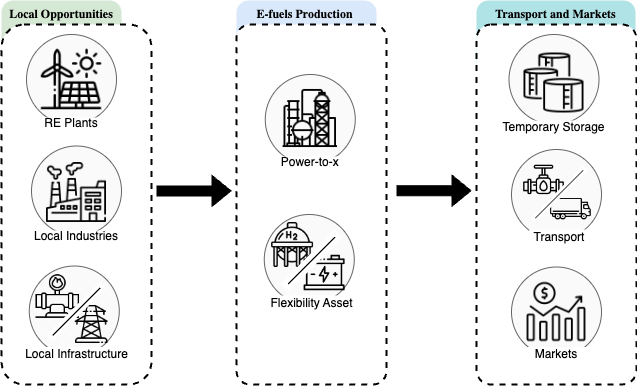
Prof. Damien Ernst is a faculty member at the Montefiore Institute, Department of Electrical Engineering and Computer Science, University of Liège (Belgium). His research focuses on energy systems, remote renewable energy hubs, reinforcement learning, and optimization algorithms. He actively contributes to decarbonization strategies for hard-to-abate sectors like shipping and aviation. Academic Rank: Professor University: University of Liège School: Montefiore Institute Department: Electrical Engineering and Computer Science Research interests include: Design and techno-economic analysis of remote renewable energy systems Reinforcement learning applications in energy and optimization Energy transition policy and sustainability modeling Machine learning techniques for energy system transparency Integration of nuclear, hydrogen, and battery technologies His recent publications demonstrate expertise in: Remote Renewable Energy Hub (RREH) design Small Modular Reactor (SMR) integration Asymmetric Actor-Critic algorithms Energy system optimization and modeling Grid stability and hosting capacity analysis Explainable AI for closed-domain question answering Prof. Ernst leads PhD projects at the intersection of Operations Research and Energy Systems, focusing on energy systems models' transparency and optimization techniques.
Dr. Vincent Ginis is a prominent academic at Vrije Universiteit Brussel (VUB), associated with the Applied Physics Department and the Data Analytics Lab. His roles include doctoral scholarship supervision and research leadership in interdisciplinary projects. He holds a strong background in applied physics, metamaterials, and AI-driven solutions for societal challenges. Current affiliations include: Principal Investigator in 19 funded projects (2010–2029), focusing on AI ethics, sustainable transitions, and historical data analysis Supervisor of 60+ student theses across master's and doctoral levels Recipient of 15+ prestigious awards including the Agathon De Potter Award and FWO/Barco Prize Research interests span: Applied Physics: Metamaterials, optics, and photonics AI Applications: Ethics, bias mitigation, and historical data digitization Social Sciences: Wealth inequality, intergenerational mobility, and policy impact analysis Recent work highlights include groundbreaking studies on: Large Language Models' performance in OCR tasks Bias patterns in AI citation practices Ethical frameworks for human-centered AI systems Notable collaborations span institutions in Europe and beyond, with 1295 citations across 120+ publications. His work is amplified through platforms like Strava data for urban planning and historical datasets from 19th-century archives.
An Jacobs is a prominent Professor at the Vrije Universiteit Brussel (VUB) in the Faculty of Social Sciences, specifically within the Department of Sociology and Communication Sciences. With a Doctor of Political and Social Sciences in Sociology, Jacobs has established herself as a leading researcher at the intersection of technology, healthcare, and social sciences. Her work spans multiple disciplines with significant contributions to human-robot collaboration, digital health, and the sociology of technology. Her research interests focus on Human-Computer Interaction , Human-Robot Collaboration , Participatory Design , and Digital Health Inclusion , particularly for older adults. Jacobs explores how technology can be designed with and for users, emphasizing the importance of understanding user experiences, especially in healthcare contexts. Her work on multimorbidity self-management platforms demonstrates her commitment to creating practical solutions that address real-world challenges in healthcare systems. She has pioneered approaches to studying technology acceptance among older adults and has made significant contributions to understanding digital bother and burden in aging populations. Analysis of Jacobs' recent publications reveals a strong trend toward human-centered AI applications in healthcare, with particular emphasis on explainable AI systems, breast cancer screening innovations, and digital self-management tools for chronic conditions. Her work consistently bridges technical development with social implications, ensuring that technological solutions are not only effective but also ethically sound and socially appropriate. The interdisciplinary nature of her research is evident in publications spanning biomedical engineering, oncology, endocrinology, and social robotics. Finalist science communication award 2019 from the Royal Flemish Academy of Belgium for Science and the Arts Jaarprijs Wetenschapscommunicatie 2019 Silver ITEA Achievement Award 2012 Sustainability Leadership Recognition in Robotics 2024 As a principal investigator on numerous research projects including Brubotics, COMPASs 2.0, and DIGIT-ABLE, Jacobs has secured substantial funding for interdisciplinary research that combines social sciences with technological innovation. Her approach emphasizes co-creation with end-users, particularly evident in her work on digital health solutions for older adults with multimorbidity. Jacobs leads the Digital Ageing Consortium, which has produced significant datasets on older adults' technology experiences in Flanders. Her laboratory work spans multiple domains, from robotics research at Audi Vorst (where humans and robots work side-by-side) to in vitro testing of nano-aerosol exposures. Jacobs collaborates extensively across disciplines, working with medical researchers, engineers, and social scientists to address complex challenges in technology adoption and healthcare innovation.
Dimitri Van Landuyt serves as an Associate Professor in the Department of Computer Science at KU Leuven , affiliated with the Information Systems Engineering Research Group (LIRIS) . He leads and co-promotes multiple high-impact research projects focused on security and privacy engineering, including initiatives on model-driven security risk analysis , privacy by design , and IoT security . His work spans GDPR compliance, synthetic data management, and threat modeling innovations. Academic Leadership : Member of the Council of FEB and Campus Council Leuven/Kortrijk Research Pillars : Privacy threat modeling, security automation, IoT systems, GDPR technical implementation His publications demonstrate expertise in privacy-enhancing technologies, with recent work analyzing LLM applications in threat modeling, developing tree-based privacy analysis frameworks, and creating adaptive trust management architectures. He explores serious games for security training, synthetic data quantification standards, and runtime threat assessment mechanisms. Dimitri contributes to educational programs through courses in ICT Service Management , Security & Privacy by Design , and Research Methodologies . He supervises student research while collaborating with industry and academia on data protection challenges.
Tijl De Bie is a Senior Full Professor at the University of Ghent, specializing in machine learning, data science, and their applications in bioinformatics, computational social sciences, and HR analytics. He leads the AI and Data Analytics (AIDA) research group within IDLab-ELIS. PhD in Machine Learning (KU Leuven, 2005) Worked at U.C. Berkeley, U.C. Davis, University of Southampton, and University of Bristol His research focuses on foundational aspects of data science, including fairness in AI, network embeddings, and human-centric methodologies. Recent work explores temporal network simulation, bias mitigation, and large-scale career trajectory datasets. Notable awards include an FWO Odysseus Group I grant and three ERC grants (Consolidator, Proof of Concept, Advanced). Current projects involve ethical AI frameworks and dynamic network analysis. Scientific Awards : FWO Odysseus Group I, ERC Consolidator, ERC Proof of Concept, ERC Advanced Grant He collaborates extensively in interdisciplinary research, applying machine learning to social media analysis and financial domains. His team develops open-source tools like EvalNE and Fondue for network embedding evaluation.