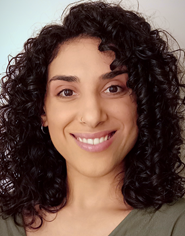
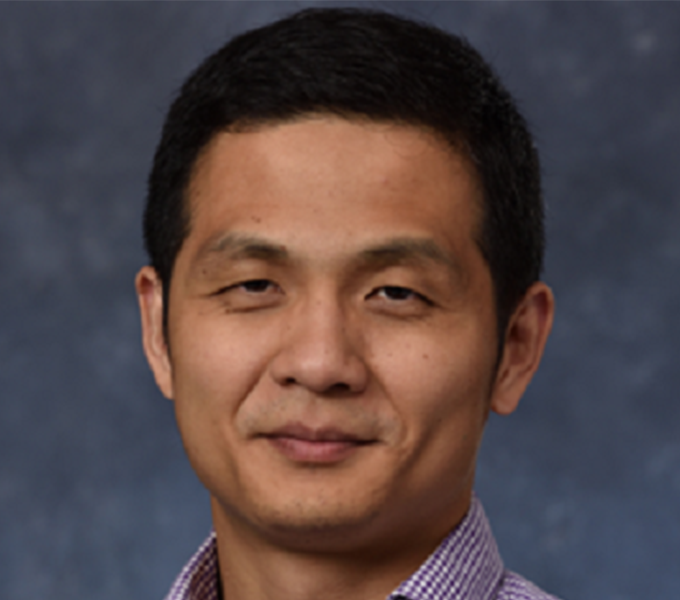
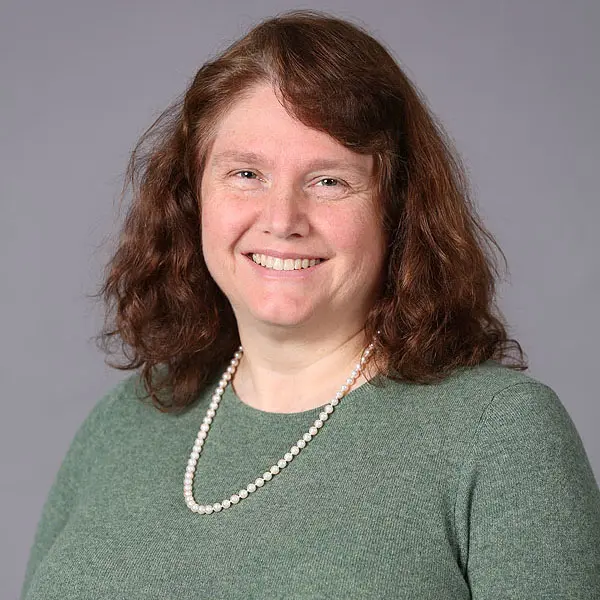
Leila Methnani is a doctoral student at the Department of Computing Science at Umeå University . Her research focuses on ethical and sociotechnical challenges in artificial intelligence, particularly in areas such as AI alignment , trustworthy AI , and human-AI collaboration . She has published extensively on topics including Explainable AI (XAI) , MLOps , and hybrid human-AI systems . Her recent work explores: Trustworthy AI in variable autonomy robotic systems Explainable and counterfactual-based AI interfaces for industrial operators Operationalizing AI ethics through socio-technical assessments Real-time reactive planning with social norms in multi-agent systems She has co-authored publications in journals such as Ethics and Information Technology , ACM Computing Surveys , and Frontiers in Artificial Intelligence . She is reachable via email at leila.methnani@umu.se .
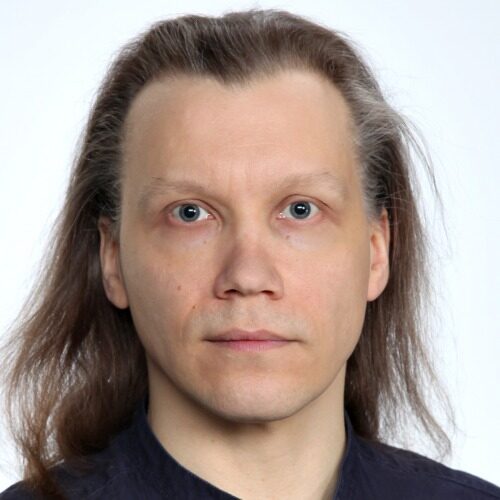
Matti Tedre is a Professor at the School of Computing, Faculty of Science, Forestry and Technology, University of Eastern Finland. His research focuses on computer science education, ICT4D, social studies of computer science, and the history and philosophy of computer science. He leads the Technologies for Learning and Development research group and is involved in the Generation AI project (2022–2028), exploring AI education for security mindset development. His work bridges theory and practice, emphasizing educational technology, AI literacy, and participatory design. Recent projects include developing low-cost AI kits for novice learners and co-designing ML-driven apps with children. He collaborates globally on topics like K-12 computing education, data agency, and ethical AI integration in classrooms. Key contributions include studies on scaffolding in ML education, children’s understanding of algorithmic biases, and the role of generative AI in creative learning. His research also addresses challenges in Tanzanian ICT adoption, including financial management systems for informal groups and timetabling software for higher education institutions. Tedre’s interdisciplinary approach spans computer science, education, and sociology, with a focus on democratizing AI access and fostering critical digital literacy among youth and educators.
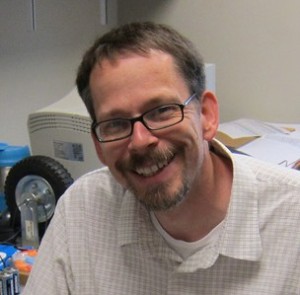
Dr. Tim Oates is a Professor in the Department of Computer Science and Electrical Engineering at the University of Maryland, Baltimore County . His research spans machine learning, artificial intelligence, and brain-machine interfaces, with a focus on weakly supervised methods, human-in-the-loop reinforcement learning, and grounded policy development for robotics. Ph.D., Computer Science, University of Massachusetts, Amherst, 2000 M.S., Computer Science, University of Massachusetts, Amherst, 1997 B.S., Computer Science and Electrical Engineering, 1989 Current research threads include: Developing non-invasive brain injury severity assessment via medical time series Modeling human brain development through computational frameworks Designing algorithms for autonomous robotic learning Recent publications highlight AI security mechanisms (backdoor detection via tensor decomposition, matrix factorization) Medical applications (3D artery reconstruction, skin lesion diagnosis, EEG denoising) Neuro-symbolic integration (holographic representations, language-guided reinforcement learning) Mathematical reasoning (schema-based problem solving, subitizing algorithms) Contact: oates@cs.umbc.edu | Office: 336 Information Technology and Engineering (ITE) Building
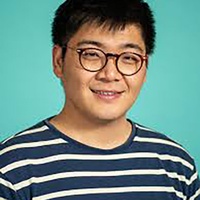
Dewei Yi is a Senior Lecturer (Associate Professor) in the Department of Computing Science, School of Natural and Computing Sciences at the University of Aberdeen, UK. He holds a PhD from Loughborough University and is an active researcher in AI, computer vision, and intelligent systems. He serves as Director of the MSc AI and MSc Robotics and AI programmes. Research Interests: His research spans AI-enabled healthcare, medical image processing, intelligent vehicles, robotics, precision agriculture, remote sensing, and applied machine learning. He focuses on hybrid intelligent systems, personalised AI, federated learning, fairness, and explainability. Recent Publication Trends: His latest work includes medical image quality evaluation using contrastive learning, federated learning for diabetic retinopathy, UAV-based solar panel inspection, vascular image analysis, and emotion recognition from ECG data, reflecting a strong trend toward healthcare and intelligent systems with real-world impact. Scientific Awards: Fellow of the Higher Education Academy (FHEA) Outstanding Reviewer, Transportation Research Part C (TRC) Advising and Grants: Dr Yi supervises multiple PhD students in AI, computer vision, and machine learning. His graduated PhDs include Debinal Bakyavathi Rajan, Sami Hamid Al Sulaimani, and Adinath Abhimanyu Ghadage. He has secured significant funding as PI and Co-PI, including a £408K Smartawl 5.0 project and a £794K Cancer Research UK grant (Co-PI). Labs and Teams: He leads research in AI for healthcare and intelligent vehicles, collaborating with institutions like University of Warwick, Loughborough University, and industry partners such as AVL Powertrain Ltd. His work is supported by interdisciplinary teams focusing on embedded AI, medical applications, and sustainable technologies.
Prof. Dr.-Ing. Udo Fiedler is a faculty member at the Technical University of Central Hesse (THM), Department of Business Administration and Economics, where he serves as Head of the Production Engineering Laboratory and Member of the Senate. His academic work focuses on manufacturing engineering with specialization in high-speed machining, production processes, and machine tools. His research interests include: High-Speed Machining (HSC) and precision manufacturing Green machining of sintered parts in the green state Process optimization using statistical experimental design Machine tool technology and NC programming Industry 4.0 applications in manufacturing education Process monitoring and control for increased manufacturing safety Prof. Fiedler's publication record demonstrates an evolution from fundamental machining processes toward integrating AI with traditional manufacturing. His recent work shows strong emphasis on applying artificial intelligence to quality prediction, optimizing green machining processes, and implementing Industry 4.0 concepts through learning factory approaches, bridging traditional manufacturing engineering with modern digital technologies. His significant scientific contributions include: Development of methods for NC programming of complex workpieces Research on stability lobe diagrams for milling processes Studies comparing different production methods including HSC, EDM, and generative processes Work on mechatronic tool holders for process monitoring Applications in the ophthalmic industry for precision machining of spectacle lenses Prof. Fiedler teaches multiple courses at THM including Factory Planning/Ergonomics, Handling and Assembly Technology, Innovative Manufacturing Processes, and Machine Tools at the bachelor's level, and Learning Factory 1 and 2 at the master's level. He leads current research projects including Klag-Robotics (2023-2025), Loewe Project OST (2018-2021), and GrünSpan (2014-2015), demonstrating sustained research activity across multiple manufacturing domains.
Haoyi Xiong is an active academic researcher in artificial intelligence, machine learning, and data science, with extensive publications in top-tier journals and conferences including IEEE TPAMI, NeurIPS, ICML, KDD, and AAAI. His work spans explainable AI, graph neural networks, diffusion models, remote sensing, and large language models. Research Interests: Explainable AI (XAI) and model interpretability Graph Neural Networks and contrastive learning Diffusion models and generative AI Medical and remote sensing image analysis Large language models and autonomous agents Learning to rank and web search His recent publications (2023–2025) show a strong trend toward self-supervised learning , model robustness , and integration of LLMs with structured data and knowledge graphs . He frequently collaborates with researchers from major tech and academic institutions. Scientific Awards: No explicit awards mentioned in the provided text. Advising and Grants: While no direct mention of students or grants, his role as a senior author on numerous papers suggests he advises graduate students and likely leads funded research projects in machine learning and AI. His work on frameworks like COLTR , GS2P , and MUSCLE indicates leadership in developing scalable AI systems. Labs and Teams: Though not explicitly stated, his frequent collaboration with Jiang Bian, Dejing Dou, and Dawei Yin suggests affiliation with a well-established AI research lab or industry-academia partnership focused on data mining, intelligent systems, and large-scale learning.
Soufiene Djahel is a Professor at the Centre for Future Transport and Cities (CFTC) at Coventry University, UK. His research focuses on connected and autonomous vehicles (CAVs), unmanned aerial vehicles (UAVs), cyber security, and smart cities. He holds a PhD in Secure Routing and Medium Access Protocols from Université des Sciences et Technologies de Lille (2010), and has held academic positions including Senior Lecturer at the University of Huddersfield and Manchester Metropolitan University. His research interests include CAV coordination protocols, cyber-physical security solutions, and intelligent transportation systems. Djahel leads projects such as the £1.2M AeroPharma Logistics initiative and has secured funding from the Newton Fund and JSPS. He is a recipient of the 2021 JSPS Invitational Fellowship and has published extensively in IEEE journals and conferences. Current projects explore UAVs-as-a-service, digital twins for CAVs, and B5G/6G for smart infrastructure. He advises PhD students on topics like AI-based threat mitigation and transport electrification. Djahel also serves as an external examiner and editorial board member for journals like IEEE Transactions on Intelligent Transportation Systems.
Lily Rui Liang is a Professor and Director of the MSCS Program in the Department of Computer Science and Information Technology at the University of the District of Columbia (UDC), School of Engineering and Applied Sciences. She joined UDC in 2004 after completing her Ph.D. at the University of Nevada, Reno. Her educational background includes: Ph.D. in Computer Science and Engineering, University of Nevada, Reno Dr. Liang's research spans cybersecurity , digital image processing , artificial intelligence , and computer science education , with a dedicated focus on broadening participation in computing . Her technical work includes deepfake detection and reinforcement learning for cybersecurity, while her educational innovations develop inclusive curricula for commuter and underrepresented students through Minecraft, robotics, and service learning. Analysis of her recent publications (2024-2018) shows a strategic evolution from core AI/image processing research toward educational interventions, particularly addressing commuter student engagement in urban settings while maintaining technical contributions in multimedia security and deep learning. Her scientific awards and honors include: Fellow of Center for the Advancement of STEM Leadership (CASL) (2019-2020) Fellow of Opportunities for UnderRepresented Scholars (OURS) (2014) Outstanding University Service Award from School of Engineering and Applied Sciences, UDC (2014) Myrtilla Miner Faculty Fellow (2012-2013) Frontiers of Engineering Education (FOEE) Conference participant, NAE (2011) Project Kaleidoscope (PKAL) Summer Leadership Institute participant (2011) Preparing Critical Faculty for the Future (PCFF) program participant (2011) Dr. Liang serves as Co-PI on multiple NSF grants including the UDC-CSEC-ENGAGE Project ($399,924, 2024-2027) for cybersecurity workforce development, CUE-T: HBCU Learning Community ($654,004, 2023-2026), and the AI-CyS Research Partnership ($152,350, 2021-2024) with six HBCUs and national labs. Her mentorship is evidenced through extensive curriculum development projects targeting K-12 and undergraduate students, particularly women and commuters. She leads the MSCS program and coordinates the AI-CyS consortium researching video authentication and autonomous cybersecurity agents, establishing UDC as a hub for HBCU cybersecurity education and AI research.
Kaidi Xu is an Assistant Professor in the Department of Computer Science at Drexel University's College of Computing & Informatics. His research focuses on Trustworthy AI, with expertise in formal verification of neural networks, adversarial attacks (especially in the physical world), and certified defenses. He actively publishes in top-tier conferences including NeurIPS, ICML, ICLR, CVPR, and AAAI, and leads the award-winning research team 'alpha-beta-crown'. PhD in Computer Science, Northeastern University (2021) MS in Computer Science, University of Florida (2017) BS in Computer Science, Sichuan University (2015) Dr. Xu's research spans critical areas in AI security and robustness. He investigates formal methods to verify neural network behavior, develops techniques to defend against real-world adversarial manipulations (such as the famous 'Adversarial T-shirt'), and explores model compression and explainability. His work bridges theoretical guarantees with practical applications in healthcare, material science, and autonomous systems. His recent publications reflect a strong trend toward certified robustness, interdisciplinary applications, and formal verification across vision, language, and multimodal systems. He has consistently published at NeurIPS, ICML, CVPR, and ACL, demonstrating sustained impact in both machine learning and computer vision communities. Winner of VNN-COMP'21 with highest score Three-time VNN-COMP champion (2021–2023) with team alpha-beta-crown Faculty Research Excellence Award, CCI@Drexel (2024) Recipient of multiple Carleone Faculty Awards (2025) NSF grant recipient for projects on transit systems and material synthesis Dr. Xu advises PhD students, including Jinhao, and has secured significant external and internal funding, including multiple NSF grants and Drexel internal awards. He is actively recruiting motivated students with strong machine learning backgrounds. He also contributes to the academic community as an Area Chair for NeurIPS 2025, organizer of workshops like GenAI4Health@AAAI 2025, and frequent program committee member. He leads the 'alpha-beta-crown' research team, known for its leadership in neural network verification and repeated success in the VNN-COMP competitions. The team focuses on developing scalable, sound, and complete verification tools for deep learning models, pushing the frontier of AI safety and reliability.
Wei Gao is an Associate Professor at the Swanson School of Engineering, University of Pittsburgh. His research focuses on the design, deployment, analysis and measurement of on-device AI architectures and algorithms on mobile, embedded and networked systems. He has strong interests in unveiling analytical principles underneath practical AI deployment problems, and designing systems based on these principles. The developed AI and system solutions are widely applied to various application scenarios, including Internet of Things, edge computing and smart health. Dr. Gao received his PhD from Pennsylvania State University in 2012 and his B.E. from the University of Science and Technology of China in 2005. Dr. Gao's research spans across Cyber-Physical Systems , Infrastructure Security , High Performance Computing , and the Distributed Governance of Information . His work particularly emphasizes on-device AI architectures and algorithms for mobile and embedded systems. He explores how to deploy AI efficiently on resource-constrained devices, with applications in Internet of Things, edge computing, and smart health. His research aims to bridge theoretical principles with practical system implementations, focusing on creating efficient, secure, and reliable AI solutions for real-world deployment scenarios. His recent work has increasingly focused on bringing Large Language Models to edge devices while maintaining performance and security. Analysis of Dr. Gao's recent publications (2021-2025) reveals a strong focus on on-device AI, particularly around Large Language Models for resource-constrained environments. His work addresses critical challenges including model personalization, security against illegal adaptation, sparse activation techniques, and physics-grounded generation. Much of his research targets making AI more efficient, secure, and practical for deployment on edge devices with limited computational resources, while also exploring applications in health monitoring and power systems. Dr. Gao has received significant recognition for his research, including: NSF Faculty Early Career Development (CAREER) Award (2016) Dr. Gao mentors numerous graduate students who contribute to his research in mobile computing, embedded systems, and on-device AI. His research has been supported by various grants, most notably the NSF CAREER award, enabling his team to explore innovative approaches to mobile and embedded AI systems. His lab investigates how to optimize AI for resource-constrained environments while maintaining performance and security, with particular focus on balancing computational efficiency with model accuracy. Dr. Gao leads a research group focused on mobile and embedded AI systems, with particular emphasis on making AI practical for deployment on everyday devices. His team explores novel techniques for model compression, efficient inference, and secure deployment of AI models on edge devices, with applications ranging from health monitoring to smart infrastructure.
Dr. Anne Koelewijn is an Assistant Professor leading the Biomechanical Motion Analysis and Creation (BioMAC) group at Friedrich-Alexander-Universität Erlangen-Nürnberg (FAU) since 2019. Her research bridges biomechanics, computational modeling, and wearable technology to analyze human movement. She holds a Junior Professorship in Computational Movement Science within the Department of Electrical-Electronic-Communication Engineering. Her educational background includes a Doctor of Engineering in Mechanical Engineering from Cleveland State University (focus: prosthesis design and gait simulations), an MSc in Mechanical Engineering (BioMechanical Design specialization), and a BSc in Aerospace Engineering , both from Delft University of Technology. She completed postdoctoral work at École Polytechnique Fédérale de Lausanne on neuromuscular control. Research interests center on human movement optimization , neuromuscular control mechanisms , and in-the-wild movement analysis . Her work integrates musculoskeletal modeling, optimal control theory, and machine learning to study gait adaptations, exoskeleton design, and pathological movement patterns (e.g., Parkinson’s disease). Publications emphasize predictive simulations , wearable sensor technology , and biomechanical energy optimization , with recent advances in radar-based motion capture, inertial pose estimation, and digital twin applications for medical engineering. Promising Scientist Award , International Society of Biomechanics (2023) Best Paper Award , 5th International Symposium on Wearable Robotics (2020) She leads the BioMAC research group, focusing on computational methods for movement science and collaborating internationally on projects involving exoskeletons, injury prevention, and neuroprosthetics.
Prashant Sankaran is an Assistant Professor in the Department of Industrial and Systems Engineering at the University at Buffalo (School of Engineering and Applied Sciences). He holds a PhD in Mechanical & Industrial Engineering from Rochester Institute of Technology (2023), an MS in Industrial & Systems Engineering from RIT (2020), and a BTech in Mechanical Engineering from Sharda University (2014). His research focuses on artificial intelligence for reasoning under uncertainty, explainable AI, and applications in healthcare, energy management, transportation, and space exploration. He integrates operations research and AI techniques to address complex optimization challenges. Research interests include computational design of bioelectronic materials, kidney exchange optimization via graph machine learning, and solving NP-hard combinatorial problems with hybrid learning-optimization frameworks. His work bridges theoretical advancements (e.g., genetic algorithms) with real-world applications like autonomous logistics systems and renewable energy management. No scientific awards have been mentioned. While no advisees are listed, his publications reflect collaborations across AI, robotics, and healthcare sectors. His research spans topics from deep reinforcement learning in warehouse automation to synthetic data generation for transplant systems.
Holly A. Yanco, Ph.D. , is a Professor of Computer Science at the University of Massachusetts Lowell (UML), where she also serves as the Distinguished University Professor and Director of the New England Robotics Validation and Experimentation (NERVE) Center . She founded the Human-Robot Interaction (HRI) Laboratory at UML in 2001, fostering interdisciplinary research in robotics, assistive technology, and artificial intelligence. Education: Dr. Yanco earned her B.A. in Computer Science from Wellesley College , followed by an M.S. and Ph.D. in Computer Science from the Massachusetts Institute of Technology (MIT) . Research Interests: Her work spans human-robot interaction , robotics education , assistive technologies , urban search and rescue (USAR) , and multi-modal interfaces . She has led collaborative initiatives such as Artbotics , integrating art and robotics in K-12 and college curricula, and Pyro , a Python-based robotics platform recognized as Premier Courseware of 2005 . Grants & Funding: Her research has been supported by the National Science Foundation (NSF) , U.S. Army Research Office , Microsoft Research , and National Institute of Standards and Technology (NIST) . Notable grants include an NSF CAREER Award (2005) and leadership roles in DARPA’s Fast Lightweight Autonomy (FLA) program . Awards & Recognition: Dr. Yanco has received teaching awards from UMass Lowell and MIT , served as General Chair of the 2012 ACM/IEEE International Conference on Human-Robot Interaction , and held leadership roles in AAAI’s Executive Council (2006-2009) . Lab & Outreach: The HRI Lab engages students from high school to Ph.D. levels, emphasizing K-12 outreach through Botball tournaments , STREAM teacher workshops , and the Artbotics program in collaboration with The Revolving Museum .
Thomas Ploetz is an Adjunct Professor in the School of Electrical and Computer Engineering at Georgia Institute of Technology. His work focuses on sensor-based human activity recognition, wearable computing, and computational behavior analysis with applications in healthcare, smart homes, and education. He leads interdisciplinary research integrating machine learning, IoT systems, and human-centered design. His research interests include improving activity recognition robustness through synthetic data generation, developing explainable AI for time-series analysis, and advancing healthcare technologies like diabetic foot ulcer monitoring systems. He explores ethical implications of wearable sensing in diverse populations, including underrepresented groups. Key contributions include IMUTube (virtual sensor data generation), ProxiCycle (cyclist safety monitoring), and DISCOVER (smart home activity recognition framework). His work addresses challenges in data scarcity, domain adaptation, and long-term system maintenance in pervasive computing environments. He has been awarded grants such as the GVU/IPaT Research and Engagement Grant (2020), and his research appears in top venues like UbiComp and ISWC. He actively contributes to the wearable computing community through conference organization and editorial work.
Santiago Ontañón is an Associate Professor in the Department of Computer Science at Drexel University's College of Computing and Informatics. He is also a Senior Research Scientist at Google DeepMind, reflecting a strong dual affiliation in both academic and industrial AI research. His work bridges theoretical AI with practical applications in gaming and machine learning. PhD in Computer Science (Artificial Intelligence), cum laude, Autonomous University of Barcelona Postdoctoral Researcher, Georgia Institute of Technology Researcher, Artificial Intelligence Research Institute (IIIA), Barcelona, Spain Dr. Ontañón's research focuses on artificial intelligence, machine learning, and robotics, with a particular emphasis on game AI. His interests span case-based reasoning, reinforcement learning, Monte Carlo tree search, player modeling, and procedural content generation. He has made significant contributions to AI in real-time strategy games and explainable AI systems. His recent publications reflect a consistent trend in AI for games, hierarchical planning, and learning from demonstration. The articles span topics such as reproducible deep reinforcement learning, adaptive player modeling, and integrating domain knowledge into search algorithms, indicating a mature and impactful research trajectory in AI and game technologies. Senior Research Scientist, Google DeepMind Organizer, microRTS AI Competition Advising multiple PhD students in AI and game-related topics He has advised numerous PhD students, many of whom have completed their theses on advanced AI topics in games and reasoning. His research is supported by access to substantial computational resources and collaborative networks in both academia and industry. He actively promotes open science by releasing software, data, and teaching materials. He leads research efforts in AI for games and maintains an active lab focused on game AI, with projects like microRTS, FTL, and Darmok. His team develops systems for reinforcement learning, planning, and natural language understanding in game environments.