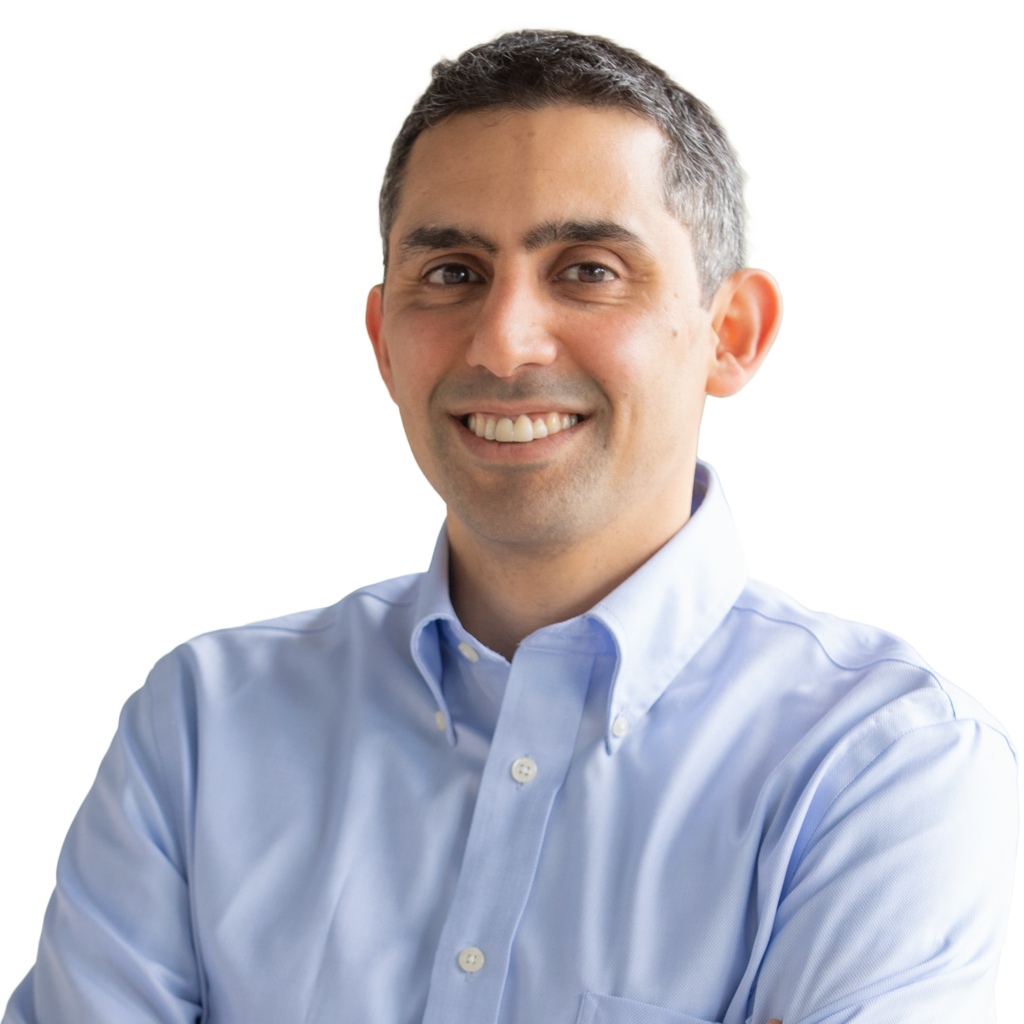
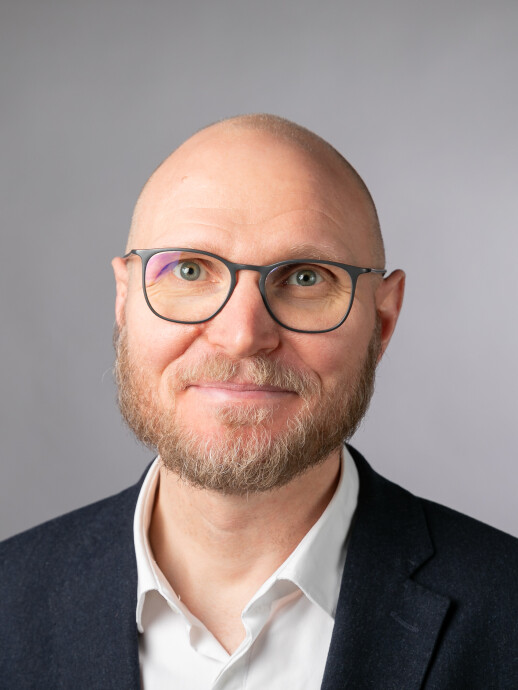
Kassem Fawaz is an Assistant Professor in the Department of Electrical & Computer Engineering at the University of Wisconsin-Madison. His research focuses on security, privacy, and mobile computing, with applications in social robotics, generative AI, and adversarial machine learning. He teaches graduate-level courses including Advanced Computer Security, Master's Research, and Independent Study in Electrical & Computer Engineering. Education: PhD (2017) and MS (2011) from the University of Michigan, BE (2009) from the American University of Beirut His work addresses challenges in privacy-preserving analytics, model robustness, and ethical AI, leveraging commodity devices for secure systems. Recent publications explore social media algorithms, black-box attacks, and family dynamics in generative AI use. Key scientific awards include the NSF CAREER Award (2020), Caspar Bowden Award (2019), and multiple student travel grants from ACM, PETS, and USENIX. He has supervised graduate research projects and taught core security courses since 2023.
Oisin Mac Aodha is a Reader (Associate Professor) in Machine Learning at the School of Informatics, University of Edinburgh. He is also an ELLIS Scholar and founder of the Turing interest group on biodiversity monitoring and forecasting, having previously served as a Turing Fellow from 2021-2025. Mac Aodha completed his undergraduate degree in electronic engineering from the University of Galway in Ireland, followed by his MSc and PhD at University College London (UCL). His academic journey includes postdoctoral positions at UCL (2013-2016) working with Prof. Gabriel Brostow and Prof. Kate Jones, and at Caltech (2016-2019) in Prof. Pietro Perona's Computational Vision Lab as part of the Visipedia team. His research centers on computer vision and machine learning with emphasis on 3D understanding, human-in-the-loop methods, and AI for conservation and biodiversity monitoring. He has made significant contributions to monocular depth estimation (including the influential Monodepth2 paper), fine-grained visual categorization, and biodiversity monitoring systems. His work bridges theoretical machine learning with practical ecological applications, developing tools for species identification, range estimation, and conservation efforts. Recent publications reveal a strong trend toward ecological applications while maintaining fundamental contributions to 3D vision and representation learning. His major scientific achievements include: Turing Fellow (2021-2025) ELLIS Scholar Founder of the Turing interest group on biodiversity monitoring and forecasting Co-organizer of the Fine-Grained Visual Categorization (FGVC) workshop series at major vision conferences Mac Aodha advises multiple PhD students and postdocs working on computer vision for biodiversity monitoring, 3D understanding, and human-in-the-loop learning. His team has developed practical tools like Whombat (an open-source annotation tool for bioacoustics) and contributed to field-deployed biodiversity monitoring systems. He has served as Area Chair for top conferences including NeurIPS, CVPR, ICCV, and ICML, demonstrating his standing in the computer vision community. His research group collaborates extensively with ecologists at University College London, particularly with Prof. Kate Jones' team, bridging machine learning expertise with ecological domain knowledge. The Vision at Edinburgh group he contributes to focuses on developing practical AI tools that address real-world conservation challenges while advancing fundamental computer vision research.
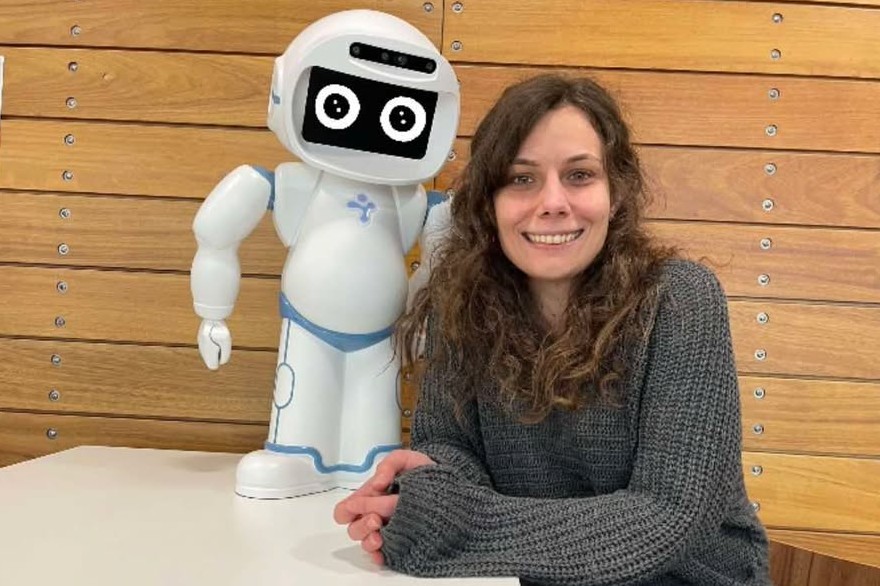
Fethiye Irmak Dogan is a Postdoctoral Research Associate at the University of Cambridge's Department of Computer Science and Technology, working in the Affective Intelligence and Robotics Laboratory. She holds a Ph.D. in Computer Science from KTH Royal Institute of Technology (2023), an M.Sc. and B.Sc. in Computer Engineering from Middle East Technical University (METU). Her research focuses on human-robot interaction, continual learning, and socially appropriate robot behaviors leveraging explainability. She has conducted robotics research at KTH's Division of Robotics, Perception and Learning and collaborated internationally, including a visiting scholar stint at Georgia Institute of Technology. Education highlights include: B.Sc., Computer Engineering, METU (2015) M.Sc., Computer Engineering, METU (2018), with research at Kovan Robotics Lab Ph.D., Computer Science, KTH (2023), with visiting research at Georgia Tech Research interests emphasize deploying autonomous robots in human environments, resolving ambiguous user instructions through explainability, and enabling socially intelligent robot behaviors. Recent work explores continual learning for context adaptation, multimodal frameworks for human-robot collaboration, and vision-language models for wellbeing assessment in children. Key projects include BT-ACTION (modular instruction understanding), GRACE (LLM-driven socially appropriate actions), and STREAK (continual learning for household tasks). Her contributions span robotics, AI ethics, and human-centered design, with a focus on real-world applications in healthcare and education.
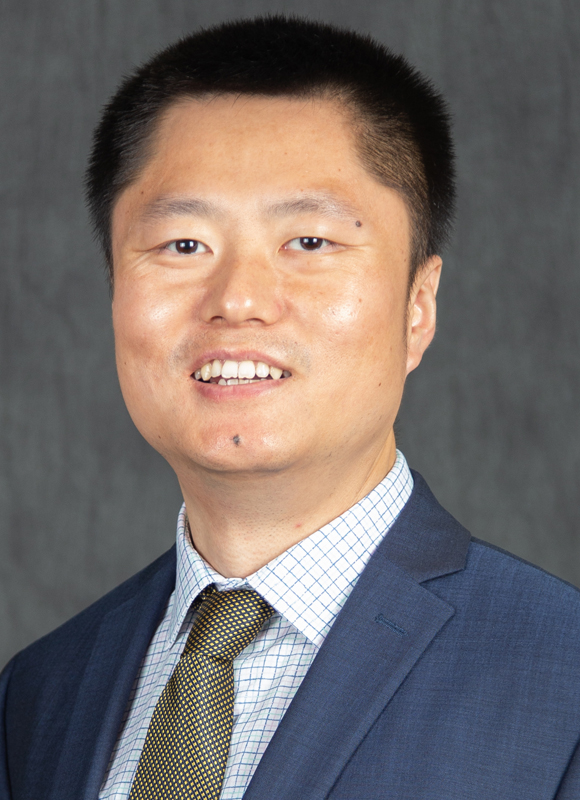
Dr. Yanchao Liu is an Associate Professor at Wayne State University's College of Engineering, Department of Industrial and Systems Engineering. He has received research funding from the National Science Foundation and the State of Michigan, including the NSF Career Award. His academic career spans prior industry roles as a Data Scientist and Manager of Advanced Analytics at Sears Holdings Corporation (2016-2017) and Director of Brand Marketing Analytics at Catalina Marketing Corporation (2017). He teaches courses in data science, IoT, and stochastic processes. B.S. Industrial Engineering, Huazhong University of Science and Technology (2006) M.S. Industrial Engineering, University of Arkansas (2008) Ph.D. Industrial and Systems Engineering, University of Wisconsin-Madison (2014) Dr. Liu's research focuses on mathematical modeling for transportation systems, industrial AI, and data analytics. His work addresses drone traffic management, battery-constrained delivery routing, and optimization algorithms for urban mobility. He has developed novel methods for UAV safety diagnostics, random forest implementations, and fairness-aware path planning in urban air mobility. His publications span journals like Journal of Guidance, Control and Dynamics , Transportation Research Part C , and IEEE Transactions on Intelligent Transportation Systems , with conference contributions at IISE and FAIM. His research combines theoretical advancements with practical applications in smart cities and logistics. NSF Career Award (2020) Faculty Research Excellence Award (2021) IEEE PES Best Conference Paper (2015) IEEE Transactions on Smart Grid Best Reviewer (2015) Hubei Province Distinguished Bachelor’s Thesis Award (2006) Dr. Liu advises PhD students like Zhenyu Zhou and J. Chen. He has contributed to energy market modeling (with M.C. Ferris) and published extensively on drone operations, machine learning algorithms, and stochastic processes. His work includes U.S. patent pending applications for UAV safety systems.
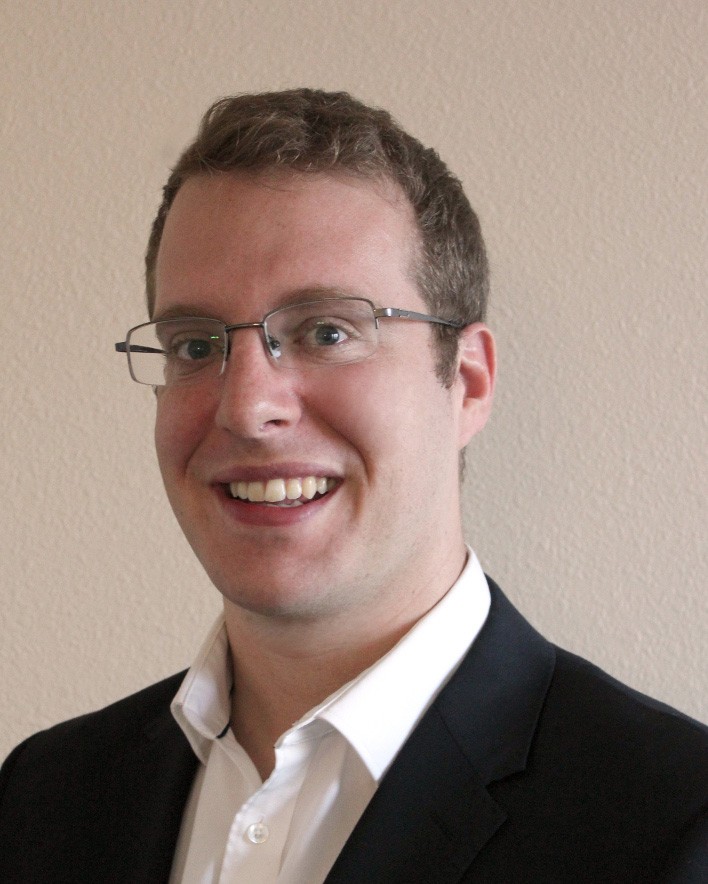
Brad Hayes is an Associate Professor of Computer Science at the University of Colorado Boulder within the College of Engineering and Applied Science, where he directs the Collaborative AI and Robotics (CAIRO) Laboratory. He also serves as Chief Technology Officer at Circadence, leading efforts in developing AI-enabled products for cybersecurity training and assessment. Undergraduate degree from Boston College PhD in Computer Science from Yale University Postdoctoral Associate at MIT Professor Hayes' research focuses on developing techniques that enable autonomous agents and robots to learn from and collaborate with humans safely, reliably, and productively. His work occurs at the intersection of pervasive and personalized artificial intelligence, human-robot teaming, and decision support. He has made significant contributions to collaborative robotics, dependable explainable AI, and imitation learning, with applications spanning manufacturing, healthcare, disaster response, autonomous vehicles, and space exploration. His recent publications reveal a strong emphasis on human-robot interaction, with particular focus on improving predictability in collaborative tasks, developing explainable AI systems that build trust, leveraging augmented and virtual reality for enhanced collaboration, and creating more efficient learning algorithms from human demonstrations. His work increasingly integrates large language models and advanced neural network architectures while maintaining a strong human-centered design approach. Sustainability Recognition (2025) for computational efficiency in motion planning Best Student Paper Runner-up at AAMAS 2022 Nominated for Best Technical Paper at HRI 2024 Best Technical Paper Runner-up at HRI 2019 Hayes has successfully mentored numerous graduate students through the CAIRO Lab, including multiple PhD graduates in 2024 alone. His lab receives funding from various organizations supporting research in human-robot interaction and collaborative AI. He frequently collaborates with industry partners and has established connections with major technology companies through his research and speaking engagements. The CAIRO Lab, under Hayes' direction, is a vibrant research environment focused on turning theoretical concepts into practical applications through hands-on work with real robots and human participants. The lab's research spans multiple domains including manufacturing, disaster response, autonomous vehicles, and space exploration, with a consistent emphasis on safe and effective human-machine teaming.
Barbara Plank is a full professor and chair for AI and Computational Linguistics at Ludwig Maximilian University of Munich (LMU), where she heads the Munich AI and NLP (MaiNLP) lab and co-directs the Center for Information and Language Processing (CIS). She additionally serves as a visiting full professor at the IT University of Copenhagen, maintaining active dual institutional affiliations in computational linguistics and NLP research. Her research focuses on human-centric natural language processing challenges, particularly learning under sample selection bias (domain adaptation, transfer learning) and annotation bias, learning with limited data through continual/semi-supervised/weakly-supervised methods, multimodal learning at language-vision-speech interfaces, and fortuitous supervision for variety-space aware language understanding. She pioneers methodologies addressing human label variation as a critical factor in model robustness rather than mere noise. Recent publications (2024-2025) reveal dominant trends in modeling human label variation across NLP tasks, especially natural language inference and entity recognition, alongside dialectal language processing and LLM evaluation frameworks. Her work systematically investigates how human disagreement in annotations can be leveraged to build more robust, adaptable systems rather than treated as errors. Scientific recognition includes: ERC Consolidator Grant for the DIALECT project advancing natural language understanding for non-standard languages and dialects ACL 2024 Area Chair Award for the paper 'VariErr NLI: Separating Annotation Error from Human Label Variation' Leading the MaiNLP lab at CIS (LMU), she directs research integrated with MCML (Munich Center for Machine Learning), Munich Intelligent Robotics, ELLIS Unit Munich, UniDive, and COST action. Current projects include ERC-funded DIALECT and KLIMA-MEMES, focusing on human-facing NLP solutions for real-world language diversity challenges. She actively shapes the field through ACL leadership as VP-Elect and numerous keynotes emphasizing human-centric approaches. The MaiNLP lab at Akademiestr. 7, 80799 Munich, drives innovation in computational linguistics through interdisciplinary collaboration, maintaining strong ties with European research networks while developing practical applications for language variation and robust NLP systems. The lab's work directly informs her teaching in LMU's Computational Linguistics programs, bridging research and education in cutting-edge NLP methodologies.
Helge Langseth is a Professor at the Department of Computer Technology and Informatics , within the Faculty of Information Technology and Electrical Engineering at the Norwegian University of Science and Technology (NTNU). His research focuses on Artificial Intelligence , Machine Learning , and Probabilistic Graphical Models , particularly Bayesian Networks and their applications in Decision Support Systems . Langseth's work addresses Explainable AI (XAI) , Reinforcement Learning , and Recommender Systems . He has contributed to Bayesian Optimization , Probabilistic Modeling , and Robotic Control in oceanic environments. His recent publications emphasize transparency , fairness , and scalability in AI systems, with applications spanning maritime trade, migraine diagnosis, and power grid management. He is affiliated with the Intelligent Systems Research Group at NTNU and actively mentors doctoral and master's students. Co-authored works with Yanzhe Bekkemoen , Sverre Herland , and Jørgen Hanssen reflect his role in advising the next generation of AI researchers.
Dr Andrew Coles is a Reader in Artificial Intelligence at the Department of Informatics, King's College London, within the Faculty of Natural, Mathematical & Engineering Sciences. His research focuses on temporal and numeric planning, explainable planning, and human-robot collaboration. He leads and co-investigates multiple research projects funded by EPSRC, the Royal Academy of Engineering, and the European Commission. His research interests include Artificial Intelligence, Temporal and Numeric Planning, Planning with Rich Domain Models, Explainable Planning, Human-Robot Interaction, Autonomous Systems, Heuristic Search, and Decision-Making. He has published extensively in top-tier AI and robotics conferences such as ICAPS, IROS, HRI, AAAI, and IJCAI. His recent publications demonstrate a strong trend toward explainable AI in human-robot collaboration, with a focus on multimodal sensing (e.g., eye tracking), user needs for explanation, and adaptive planning. His work integrates planning algorithms with human-centered evaluation and real-world applications in robotics. Scientific Awards: International award for PhD thesis on assistive robots (2020) Advising and Grants: Dr Coles has supervised multiple students, including Lara Wachowiak, Guillem Canal, and Petra Tisnikar. He has led or co-investigated several major research projects, including: COHERENT (EPSRC): Collaborative Hierarchical Robotic Explanations Plan and Goal Reasoning for Explainable Autonomous Robots (Royal Academy of Engineering) ADE (European Commission): Autonomous Decision Making in Very Long Traverses ERGO (European Commission): European Robotic Goal-Oriented autonomous controller Labs and Teams: He is affiliated with the Reasoning and Planning research group and the Trusted Autonomous Systems Hub at King's College London, focusing on developing trustable autonomous systems through robust planning and human-centered AI.
James A. Evans is the Max Palevsky Professor of Sociology and Data Science at the University of Chicago, where he is a faculty member in the Department of Sociology within the Division of the Social Sciences. He is the director of Knowledge Lab and the Faculty Director of the Masters Program in Computational Social Science . He holds additional affiliations as an External Professor at the Santa Fe Institute , External Faculty at the Complexity Science Hub, Vienna , and Visiting Faculty Researcher at Google . Education: B.A. in Anthropology, Brigham Young University (1994) M.A. in Sociology, Stanford University (1999) Ph.D. in Sociology, Stanford University (2004) His research centers on the collective system of thinking and knowing , exploring how ideas emerge, spread, and evolve through social and technical systems. He investigates innovation, collective intelligence, and the science of science , using large-scale data modeling, machine learning, generative AI, and network analysis to study knowledge creation. His work spans domains including science, technology, law, and religion, with a focus on how AI is reshaping discovery processes. The most recent publications highlight trends in AI and scientific discovery , with a strong emphasis on innovation, knowledge systems, and human-machine intelligence . His research increasingly explores AI as a transformative agent in science , including the concept of 'alien intelligence' and the development of complementary AI to augment human capacity. Projects like the $20M NSF-funded APTO initiative aim to build language models that predict technological outcomes by analyzing historical data. Scientific Recognition and Funding: Research supported by the National Science Foundation (NSF) , National Institutes of Health (NIH) , Air Force Office of Scientific Research (AFOSR) , and philanthropic sources Work published in Nature, Science, PNAS , and leading social science journals Featured in The New York Times, The Economist, The Atlantic, Wired, NPR, BBC, Le Monde , and others James Evans advises on science policy and funding strategies, emphasizing the importance of diversity, interdisciplinary collaboration, and demographic balance in fostering innovation. He critiques current academic incentives and proposes alternative discovery regimes. He leads Knowledge Lab , a collaborative research environment that conducts seminars, grants, and employment opportunities in computational social science and AI.
Mannes Poel is a researcher specializing in Datamanagement & Biometrics with a focus on applied machine learning. His work spans healthcare analytics, sensor technology optimization, and meta-learning frameworks for missing data. ORCID: 0000-0002-3813-9732 Active Domains : Artificial Intelligence, Medical Predictive Modeling, Industrial Sensor Analytics Collaboration Network : Interdisciplinary work with institutions in healthcare (e.g., Diagnostics journal) and engineering (e.g., IEEE MEMS conference) Scientific Achievements : Best paper award at Intetain 2107 (2017) Research Trends : His recent publications (2024-2025) emphasize explainable AI for missing data in clinical contexts and machine learning-enhanced sensor systems for industrial fluid dynamics. These works combine traditional ML with real-time data processing and cross-domain model adaptation.
Dr. Chien-Ming Huang is the John C. Malone Assistant Professor in the Department of Computer Science at Johns Hopkins University. He leads the Intuitive Computing Laboratory and is affiliated with the Malone Center for Engineering in Healthcare, Laboratory for Computational Sensing and Robotics, Institute for Assured Autonomy, and Data Science and AI Institute. His research focuses on human-robot interaction, human-computer interaction, and artificial intelligence applications in healthcare and education. BS in Computer Science, National Chiao Tung University (2006) MS in Computer Science, Georgia Institute of Technology (2010) PhD in Computer Science, University of Wisconsin–Madison (2015) Postdoctoral Research, Yale University (2015-2017) Dr. Huang's work bridges human-robot interaction, robotics, and AI to develop technologies that enhance social, physical, and behavioral support for diverse populations. His research includes adaptive robot systems for autism intervention, aging care technologies, and explainable AI frameworks for medical decision support. Current projects focus on end-user robot programming, socially aware navigation, and conversational agents for health management. His publications span major venues like Science Robotics , HRI, CHI, and ICRA, with recent emphasis on robot error awareness, small talk in collaboration, and AI explanation design for healthcare. Dr. Huang has received numerous accolades including the NSF CAREER Award and John C. Malone Endowed Chair. 2022 NSF CAREER Award John C. Malone Endowed Chair 2013 RSS Best Paper Runner-Up 2012 Human-Robot Interaction Pioneer Dr. Huang mentors PhD, postdoctoral, and undergraduate researchers, emphasizing interdisciplinary collaboration and technical rigor. He serves as Associate Editor for ACM Transactions on Human-Robot Interaction and has organized key conferences including HRI and ICMI. His lab develops systems for robotic assistance in surgical training, home healthcare, and educational contexts.
Mika Viljanen is a Professor of Private Law at the Faculty of Law , University of Turku . His work intersects legal theory , socio-legal studies , and doctrinal law , with a focus on artificial intelligence , financial regulation , and private law (torts and contracts). He teaches core private law modules and leads the Faculty Willem C. Vis Moot Court team. Key Affiliations : University of Turku (Faculty of Law), ETAROS Project, FLAIG Project Research Trajectory : From his 2008 dissertation on quantifying tort damages to contemporary studies on AI regulation and global value chain liability , his scholarship bridges traditional private law with emerging technologies and economic systems. Recent projects include ETAROS (AI and Law) and FLAIG (Financial Regulation). Publications Spotlight : His 2023-2025 works explore AI governance , robot safety regulation , and human rights in EU AI frameworks , reflecting his commitment to interdisciplinary analysis.
Prof. Felix Balzer is a Professor for Medical Data Science and Chief Medical Information Officer (CMIO) at Charité - University Medicine Berlin . He serves as Director of the Institute of Medical Informatics, leading digitalization efforts for patient care and overseeing implementation of the hospital's electronic medical record (EMR) systems. Medical Data Science professorship (2021) Director of Institute of Medical Informatics Acting Chief Information Officer (2024-2025) Deputy Chief Medical Officer for Clinical Digitalization (2025) His research focuses on: Digital healthcare transformation Machine learning in critical care Alarm fatigue mitigation Interoperability standards (FHIR, OMOP) Electronic health records (EHR) optimization Patient monitoring systems The 2025-2026 publications reveal expertise in ICU data analysis, predictive modeling for postoperative delirium, and pandemic response technology. His work bridges clinical practice with technical implementation through: Interdisciplinary teams Multi-center trials Real-time clinical data architectures Human factors in healthcare AI
Ziyu Yao is an Assistant Professor in the Department of Computer Science at George Mason University , co-leading the George Mason NLP Group . He is affiliated with the C4I & Cyber Center , Center for Advancing Human-Machine Partnership , and Institute for Digital InnovAtion at GMU. PhD in Computer Science and Engineering from Ohio State University (2021) Internships: Microsoft Semantic Machines, Carnegie Mellon University, Microsoft Research, Fujitsu Lab of America, Tsinghua University Research Interests: Focus on Natural Language Processing (NLP) and Artificial Intelligence (AI) , particularly advancing LLM systems through knowledge grounding , reasoning , and planning . Key areas include: Mechanistic Interpretability for LLMs Interactive Semantic Parsing/Code Generation Responsible and Trustworthy NLP Interfaces Interdisciplinary Applications in Mathematics Education and Network Communication Recent Articles (2024-2025) explore trends in LLM cascading for cost efficiency, mechanistic interpretability surveys, vision-language model reasoning, and interdisciplinary educational technology. Collaborations span institutions like Microsoft Research , William & Mary , and University of Cambridge . Scientific Awards: Presidential Fellowship (OSU Graduate School, 2020) Graduate Student Research Award (OSU CSE, 2021) Top Reviewer at NeurIPS 2023 Advising & Grants: Mentors PhD students like Murong Yue , Hao Yan , and Mohamed Aghzal . Leads NSF projects on AI-driven Mathematics Education and LLM Interpretability , alongside grants from Commonwealth Cyber Initiative and Microsoft Accelerate Foundation Models Research . Organized workshops at COLM 2025 and ICML 2025 . Labs & Teams: Co-leads the NLP Lab at GMU and collaborates with the MathVC NSF Project team (w/ Jennifer Suh, William & Mary). Develops platforms like Gentopia for tool-augmented LLMs and IntelliExplain for non-professional programmers.
Qiaoning Carol Zhang serves as Assistant Professor of Human Systems Engineering within The Polytechnic School at Arizona State University's Ira A. Fulton Schools of Engineering. Her research investigates the critical intersection of human perception, social contexts, and emerging technologies including artificial intelligence, robotics, and automated vehicles, with emphasis on creating intuitive, user-friendly, and inclusive systems. Her academic foundation includes: Ph.D. in Information, University of Michigan (2023) M.S. in Industrial and Operations Engineering, University of Michigan (2018) B.S. in Industrial Engineering, Hunan University (2016) Dr. Zhang's research program centers on understanding how individual differences and social dynamics shape technology interactions. Key focus areas include Human-AI Collaboration , Human-Robot Interaction , Human Factors in Automated Vehicles , and User Experience Design . Her work employs interdisciplinary methodologies to ensure technology adapts to diverse user needs across complex socio-technical environments, particularly in transportation and healthcare robotics. Analysis of her 15 most recent publications (2021-2025) reveals dominant themes in trust dynamics within automated vehicles, with significant attention to explainable AI interfaces. Research consistently examines how voice characteristics (gender, similarity), explanation modalities, and individual differences (age, personality) impact cognitive and affective trust. Recent work extends to healthcare robotics for elderly populations using Kano model analysis to identify critical user requirements. No scientific awards are documented in the provided materials. Dr. Zhang actively recruits Ph.D. candidates and undergraduate/master's researchers with backgrounds in human-computer interaction, data science, and interdisciplinary fields (design, computer science, cognitive science). She emphasizes opportunities in transportation technology, healthcare robotics, AI, and UX research/design, requiring applicants to submit CVs, research statements, and representative work samples. While specific grants aren't detailed, her research scope indicates substantial funding in human factors and emerging technology domains. Her research team focuses on developing empathetic technology through projects examining trust calibration in automated vehicles and healthcare robot design for older adults. Current initiatives include voice interface optimization for diverse user groups and Kano model applications in home healthcare robotics, aiming to bridge technical capabilities with human-centered design principles.