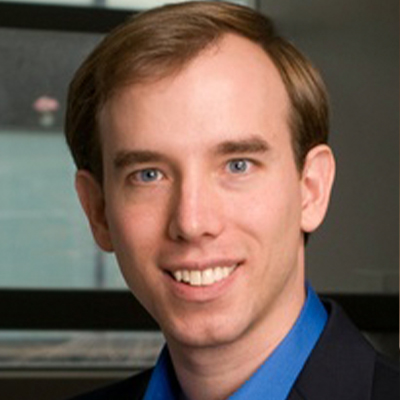
Ryan Heuser is an Assistant Professor in Digital Humanities at the University of Cambridge, specializing in computational approaches to literary and intellectual history, prosody, and artificial intelligence's impact on language. His work bridges data science, machine learning, and literary studies through digital methodologies. Doctoral training in Eighteenth-Century British Literature, Stanford University (2019) Founding member & Associate Research Director, Stanford Literary Lab Junior Research Fellow, King’s College Cambridge (2019-2022) Research interests span computational modeling of semantic revolutions, large-scale literary field analysis, and the intersection of digital methods with historical and intellectual studies. His book Explorations in the Digital History of Ideas (2023) co-edited with Peter de Bolla exemplifies this approach. Recent publications focus on historical semantics, metrical analysis, and digital mapping of emotions in literature, reflecting his interdisciplinary expertise in natural language processing, network theory, and literary data visualization. Currently leads teaching initiatives at Cambridge Digital Humanities and contributes to computational projects exploring textual rhythms and large language models.
James A. Robinson is a University Professor at the University of Chicago with joint appointments in the Harris School of Public Policy and Department of Political Science. An economist and political scientist, he conducts influential research on political and economic development, examining how political power, institutions, and prosperity interact through both quantitative economic modeling and qualitative fieldwork methodologies. Robinson's research focuses on institutional analysis and political economy, with deep regional expertise in sub-Saharan Africa and Latin America. He has conducted extensive fieldwork across Bolivia, Colombia, Haiti, Democratic Republic of Congo, Nigeria, Sierra Leone, South Africa, and Zimbabwe, investigating how historical institutions shape contemporary economic outcomes. His interdisciplinary approach integrates economic theory with anthropological and historical case studies to explain patterns of economic divergence and political stability. Recent publications (2023-2025) reveal persistent themes in institutional persistence, state-society dynamics, and the cultural foundations of development. His work increasingly examines the interaction of economic and political inequality, the role of non-institutional factors in leadership strategies, and the historical roots of peripheral development trajectories across diverse global contexts. Scientific recognition includes: 2024 Sveriges Riksbank Prize in Economic Sciences in Memory of Alfred Nobel Fellow, Institute of African Studies at the University of Nigeria, Nsukka Robinson co-authored three seminal books with Daron Acemoglu: Economic Origins of Dictatorship and Democracy (theoretical foundations of regime stability), Why Nations Fail (translated into 41 languages, arguing inclusive institutions drive prosperity), and The Narrow Corridor (analyzing state-society struggles for liberty). He maintained a 28-year summer school at Colombia's University of the Andes (1994-2022) and continues active research collaborations across Africa and Latin America.
Dr. Corey T. Callaghan is an Assistant Professor in the Department of Wildlife Ecology and Conservation at the University of Florida . Based at the Fort Lauderdale Research and Education Center , his research focuses on global change ecology using big data from citizen science platforms like eBird and iNaturalist, combined with geospatial analyses and macroecological theory . Ph.D. (2019) from UNSW Sydney M.S. (2015) from Florida Atlantic University B.S. + B.S. (2013) from Canisius College His work examines urban ecology , including how species traits influence urban tolerance across birds, amphibians, and butterflies. He develops adaptive sampling frameworks to optimize citizen science data collection while addressing biases. Current projects analyze human-nature interactions through citizen science participation, secondary data in photographs, and machine learning for biodiversity monitoring. He actively contributes to conservation strategies for urban biodiversity and data-driven restoration efforts . Recent publications highlight his expertise in cross-taxa comparisons , continental-scale analyses , and ecosystem service quantification . He leads the Global Ecology Research Group at the University of Florida, emphasizing collaborative science and open-source methodologies .
John F. Beacom is a Distinguished Professor of Physics and Astronomy at The Ohio State University and Director of the Center for Cosmology and AstroParticle Physics (CCAPP). His academic roles include leadership in astroparticle physics research and education. He holds joint appointments in both the Department of Physics and the Department of Astronomy within the College of Arts and Sciences. Beacom earned his Ph.D. in Physics from the University of Wisconsin (1997) and dual B.S. degrees in Physics and Mathematics from the University of Kansas (1991). He has held postdoctoral positions at Fermilab and Caltech before joining Ohio State in 2004. His research focuses on neutrinos, dark matter, and multi-messenger astrophysics, with emphasis on neutrino detection techniques, supernova physics, and cosmological implications. He leads major projects like the All-Sky Automated Survey for Supernovae (ASAS-SN) and contributes to the Deep Underground Neutrino Experiment (DUNE). Awards: APS Fellow (2014), NSF CAREER Award (2005–2010), multiple teaching awards for distinguished instruction. Grants: Extensive funding from NSF, DOE, and collaborative international initiatives. Labs/Teams: CCAPP, DUNE Collaboration, ASAS-SN project. His articles span neutrino physics, detector development, and observational astrophysics, reflecting interdisciplinary expertise in theoretical and experimental particle astrophysics.
Professor Catherine Greenhill is a faculty member at the School of Mathematics and Statistics, UNSW Sydney , where she serves as Professor and head of the Combinatorics group. Her academic career spans institutions including the University of Queensland, University of Oxford, University of Leeds, University of Melbourne, and Australian National University. D.Phil., University of Oxford (1996) M.Sc. (Research) in Combinatorics (1992) B.Sc. (Hons) in Pure Mathematics (1991) Her research focuses on the intersection of discrete mathematics , theoretical computer science , and probability , particularly in asymptotic combinatorics , probabilistic methods , and analysis of algorithms . Her work includes asymptotic enumeration of combinatorial structures and design of randomized algorithms for graph sampling and counting. Her recent publications (2025–2021) center on random graphs and hypergraphs , with key contributions to switch Markov chains , degree sequence analysis , and chromatic number bounds . These works reflect her expertise in probabilistic combinatorics and algorithmic complexity . Scientific Awards: Fellow of the Australian Academy of Science (2022) Christopher Heyde Medal in Pure Mathematics (2015) June Griffith Fellowship (2013) Hall Medal (2010) Advising and Grants: She has supervised numerous PhD/Masters students and secured multiple ARC Discovery Grants (2019–2021, 2014–2016, 2012–2014). Her grants address topics like hypergraph modeling, random discrete structures, and network analysis in illicit drug trafficking.
Stephen Licht is an Associate Professor of Ocean Engineering and Graduate Director at the University of Rhode Island's College of Engineering, where he directs the Robotics Laboratory for Complex Underwater Environments (R-CUE). His research focuses on developing maritime robots capable of operating in dynamic and unpredictable environments through biologically inspired propulsion, distributed pressure sensing, model-based optimal control, and compliant underwater manipulation technologies. Ph.D. in Oceanographic and Mechanical Engineering from MIT/WHOI Joint Program (2008) B.S. in Mechanical Engineering from Yale University (1998) Former Senior Research Scientist at iRobot and Senior Robotics Engineer at Vecna Robotics Current Research Affiliate with MIT Department of Mechanical Engineering Former Visiting Faculty at Libera Università di Bolzano (2019-2020) Dr. Licht's research spans marine robotics with emphasis on biologically inspired propulsion systems that provide high authority and bandwidth thrust, nonlinear attitude control for maneuvering in dynamic conditions, compliant underwater manipulation technologies, and unmanned aerial monitoring of coastal structures. His work bridges mechanical engineering principles with oceanographic applications to create more capable underwater robotic systems that can operate in complex marine environments. His recent publications demonstrate a strong trend toward soft robotics applications for deep-sea exploration, with particular focus on jamming grippers and neutrally buoyant manipulation systems. The research also shows increasing integration of additive manufacturing techniques for field-deployable solutions and computational methods for autonomous systems operating in challenging marine environments. His work spans fundamental control theory, mechanical design, and practical field applications. Dr. Licht has secured significant research funding as both Principal Investigator and Co-Principal Investigator from major organizations including the Office of Naval Research, NOAA, NSF, and various university collaborations. His grants focus on advancing unmanned underwater vehicle technology, soft robotics for deep-sea applications, and coastal monitoring systems. Active mentor to numerous graduate and undergraduate students in Ocean Engineering Successful track record of student placements at organizations including Jaia Robotics, Scripps Institution of Oceanography, FORSSEA Robotics, and government research labs Collaborates with researchers at MIT, WHOI, University of Connecticut, University of Maine, and international institutions Licht leads the R-CUE lab which develops innovative solutions for underwater robotics challenges, with particular expertise in biomimetic propulsion, soft robotics for deep-sea applications, and autonomous systems for environmental monitoring. The lab maintains strong industry connections with OceanGate Inc. and FabNewport, and engages with local educational institutions through outreach programs with Roger Williams Middle School.
Kevin Jamieson is an Associate Professor at the Paul G. Allen School of Computer Science & Engineering and an Adjunct Professor in the Department of Statistics at the University of Washington . His academic journey includes a B.S. (2009) , M.S. (2010) , and Ph.D. (2015) in electrical engineering from the University of Washington, Columbia University, and University of Wisconsin–Madison respectively. He completed a postdoc at UC Berkeley's AMP Lab before joining UW in 2017. Ph.D., Electrical Engineering, University of Wisconsin–Madison (2015) M.S., Electrical Engineering, Columbia University (2010) B.S., Electrical Engineering, University of Washington (2009) Jamieson's research lies at the intersection of interactive machine learning , active learning , and sequential decision making . His work focuses on: Adaptive sampling strategies in multi-armed bandits and reinforcement learning (RL) Developing instance-dependent optimal algorithms that adapt to problem difficulty Applications in robotics , human perception studies , and hyperparameter optimization Representation learning for large models and experimental design frameworks His 15 most recent publications (2025-2022) demonstrate expertise in bandit theory , contextual RL , and game-theoretic learning . Notable trends include sample-efficient optimization , adaptive A/B testing , and sim-to-real transfer in robotics. Jamieson has received: NSF CAREER award for foundational contributions Amazon Faculty Research award for innovation in learning systems He actively recruits graduate students and postdocs , emphasizing collaboration in areas like: Multi-agent RL and strategic actor learning Empirical process suprema and adaptive sampling theory Applications in robotics , large language model finetuning , and biomedical data analysis Jamieson leads the Washington AI Lab (WAIL) and develops open-source learning systems like the NEXT framework for real-world adaptive data collection. He serves as co-PI for the Institute for the Foundations of Data Science (IFDS) and co-organizes the Distinguished Seminar in Optimization & Data .
Prof. Konrad Schindler holds the position of Full Professor at the Department of Civil, Environmental and Geomatic Engineering at ETH Zürich. He is also the Head of the Institute of Geodesy and Photogrammetry (IGP), leading research and educational activities in geomatics and computer vision. His career spans roles as a Photogrammetric Engineer, scientific assistant, postdoc researcher, and academic faculty across institutions including Graz University of Technology, Monash University, and TU Darmstadt before joining ETH Zürich in 2010. Education: Undergraduate studies in Geodesy (1992–1995), Graz University of Technology, Austria MEng in Photogrammetry and Geoinformation (1995–1999), Vienna University of Technology, Austria PhD in Computer Science (2001–2003), Graz University of Technology, Austria Research focuses on Photogrammetry , Remote Sensing , Computer Vision , and Image Understanding with interdisciplinary applications in environmental monitoring, geospatial analysis, and disaster response. He develops computational methods for 3D reconstruction, fusion of multi-modal data, and AI-driven solutions for satellite imagery interpretation. His work bridges geomatic engineering and machine learning to address challenges in urban mapping, climate modeling, and biological systems analysis. Publications reflect expertise in geospatial AI, diffusion models, and benchmarking datasets for disaster resilience. Notable works include Marigold (image analysis adaptation) and BRIGHT (building damage assessment). His research emphasizes practicality and scalability, such as affordable depth estimation and global biomass datasets. He has received the 2013 Marr Prize Honourable Mention (IEEE) and the 2012 U.V. Helava Award (ISPRS), alongside several Best Presentation Awards. His contributions span technical leadership, editorial roles (ISPRS Journal), and service to Swiss remote sensing commissions. Advising and grants: While no specific advisee names or grant details are listed, his career trajectory includes mentoring postdocs and junior faculty. He teaches advanced courses in Photogrammetry , Image Interpretation , and Machine Vision , integrating cutting-edge AI techniques into curricula. His research group collaborates on global-scale projects like canopy height mapping and satellite-based climate variable assessments. Labs/Teams: As Institute Head, he oversees the IGP lab at ETH Zürich, with prior affiliations including the Digital Perception Lab (Monash University) and the Computer Vision Lab (ETH Zurich). His work often involves multi-institutional collaborations focused on geospatial AI and environmental science.
Professor Hutan Ashrafian is a clinician-scientist and surgeon at the University of Leeds Business School, holding dual roles as Professor of Research Impact and Senior Research Fellow at Imperial College London. His expertise spans AI in healthcare, metabolic surgery, and ancient history. He pioneered STARD-AI and QUADAS-AI guidelines for AI diagnostics, collaborated on AI-driven breast cancer screening with Google and NHS, and led global health policy initiatives. Ashrafian’s work bridges medicine, history, and philosophy, including his contributions to understanding historical figures’ medical conditions, such as King Tutankhamun’s epilepsy. He has authored over 550 publications, 12 books, and holds a PhD in computational physiology and an MBA with distinction. Awards include the Hunterian Prize and Wellcome Trust Fellowship. His research also explores AI ethics, quantum physics paradoxes, and art-based medical diagnostics. Education: PhD in Computational Physiology (Imperial College London) MBA (Warwick Business School) MD (University College London) Bachelor of Science in Immunology (University College London) Research Interests: Ashrafian’s work spans: AI in Medicine: Diagnostic algorithms, guideline development (STARD-AI/QUADAS-AI), and ethical frameworks. Metabolic Surgery: Bariatric interventions, gut microbiome, and obesity treatments. Ancient History: Medical analyses of historical figures (e.g., Tutankhamun, Julius Caesar) and art-based pathology identification. Philosophy: AI rights (AIONAI law), temporal paradoxes, and the Simulation Argument. Awards: Royal College of Surgeons Arris and Gale Lectureship Hunterian Prize Wellcome Trust Research Fellowship Advising & Innovation: Supervised >50 PhD students, co-founded Oxford Medical Products (weight loss tech), and serves as CSO at Flagship Pioneering’s Preemptive Health division. He advises on NHS digital transformation and global health policy. Labs/Teams: Leads AI initiatives at Imperial’s Institute of Global Health Innovation and collaborates with Google, NICE, and international institutions on health tech solutions.
Jan Østergaard is a Full Professor in Information Theory and Signal Processing at Aalborg University's Department of Electronic Systems. He leads the AI and Sound research section and directs the CASPR center. His expertise spans AI-driven acoustic signal processing, information theory, and EEG signal analysis. Østergaard holds a M.Sc. from Aalborg University and a PhD (cum laude) from Delft University of Technology. Major awards include the Danish Young Researcher’s Award and a EURASIP Best Thesis honor. His work focuses on speech enhancement, sound zone technologies, and neural tracking of auditory attention. Recent research emphasizes low-latency speech transmission, deep learning for sound field control, and robust voice activity detection. He serves on editorial boards and national committees, advancing Denmark’s sound technology initiatives. Education: M.Sc. (Aalborg, 1999), PhD (Delft, 2007) Research interests emphasize practical AI applications in sound systems, including hearing aid improvements, data-efficient acoustic modeling, and feedback control in networked systems. Over 210 publications and 17 active projects reflect his interdisciplinary impact across academia and industry.
Minh Q. Phan is an Associate Professor of Engineering at Dartmouth College's Thayer School of Engineering. His expertise spans system identification, iterative learning control, model predictive control, robotic swarm control, and intelligent control systems. He holds a BS from the University of California, Berkeley, and MS/M.Phil/PhD degrees from Columbia University in Mechanical Engineering. Dr. Phan has contributed to over 50 peer-reviewed publications and serves as an Associate Editor for the Journal of Guidance, Control, and Dynamics. His research focuses on advancing control theory applications in robotics, structural health monitoring, and sustainable construction materials. Key contributions include the development of OKID (Observer/Kalman Filter Identification) methods and bilinear system identification frameworks. Education History: Bachelor of Science in Mechanical Engineering, UC Berkeley, 1985 Master of Science in Mechanical Engineering, Columbia University, 1986 Master of Philosophy in Mechanical Engineering, Columbia University, 1988 Doctor of Philosophy in Mechanical Engineering, Columbia University, 1989 Research Interests: Advanced control methodologies for dynamic systems Model-based predictive control strategies Applications in robotics and aerospace engineering Structural health monitoring via system identification Machine learning for materials science Teaching Responsibilities include courses like ENGG 149 (Systems Identification), ENGS 145 (Modern Control Theory), and ENGG 148 (Structural Mechanics). His work bridges theoretical control systems with practical industrial applications, including automation in food processing and sustainable construction practices. Dr. Phan has collaborated on projects addressing viral epidemiology in Vietnam and coastal erosion mitigation strategies.
Dr. Guillermo Amador is an Assistant Professor in the Experimental Zoology department at Wageningen University & Research. His research focuses on understanding how animals interact with complex environments through locomotion, adhesion, and fluid dynamics. He investigates biological systems like insects, plants, and marine organisms to inspire bio-engineered solutions for robotics, microfluidics, and material science. Amador received his PhD in Mechanical Engineering from Georgia Institute of Technology (USA), followed by postdoctoral research at the Max Planck Institute for Intelligent Systems (Germany) and a Marie Sklodowska-Curie fellowship at TU Delft (Netherlands). His expertise spans biophysics, biomaterials, and biomechanics, with a focus on self-cleaning mechanisms and bioadhesion. He collaborates with the 4TU consortium on Dutch Soft Robotics to develop bio-inspired designs. His work bridges fundamental biology with engineering applications, emphasizing interdisciplinary approaches to solve challenges in robotics and environmental science. Amador teaches courses including Biomimetics and Functional Zoology , integrating his research into education. His research highlights include studies on cuttlefish suction cups, stick insect adhesion, and pollen transport mechanisms in pollinators.
Sheng Shen is a Professor in the Mechanical Engineering Department at Carnegie Mellon University (CMU) , with courtesy appointments in the Departments of Electrical and Computer Engineering and Materials Science and Engineering . He earned his Ph.D. in Mechanical Engineering (Minor in Electrical Engineering) from Massachusetts Institute of Technology (MIT) , and his B.S. and M.S. from Huazhong University of Science and Technology in China. Prior to joining CMU in 2011, he conducted postdoctoral research at UC-Berkeley . Education: Ph.D., Mechanical Engineering, MIT (2010) B.S. & M.S., Power Engineering & Engineering Thermophysics, Huazhong University of Science and Technology (2000 & 2003) Research interests include nanophotonics , nanoscale energy transport and conversion , nanofabrication , and advanced manufacturing , with applications in thermal management , light sources and devices , thermal emission control , solar energy conversion , infrared sensing , and multifunctional materials . His work leverages interdisciplinary expertise in thermal and optical measurements , material synthesis , device fabrication , and theoretical modeling . Recent publications highlight advancements in infrared radiation control , thermal interface materials , metasurface engineering , and graphene-based nanosystems . His scientific awards include: NSF CAREER Award DARPA Director's Fellowship DARPA Young Faculty Award Elsevier/JQSRT Raymond Viskanta Award CMU Dean's Early Career Fellowship Philomathia Foundation Research Fellowship Hewlett-Packard Best Paper Award Best Paper Award, Julius Springer Forum Advising spans Ph.D. and postdoctoral researchers in nanoscale energy systems, with alumni contributing to solar energy conversion , infrared sensing , and flexible electronics . His lab receives funding from ARL, DARPA, DOE, DTRA, NASA, NSF, and ONR , and recently secured a DURIP award for instrumentation.
Tomaso Aste is a Professor of Complexity Science at the Department of Computer Science, University College London (UCL). He founded the Financial Computing and Analytics group and co-founded the UCL Centre for Blockchain Technologies. His work bridges complex systems, data science, and finance, with applications in blockchain, fintech, and market modeling. Education: PhD in Physics (Politecnico di Milano, 1994); Laurea in Physics (University of Genoa, 1990) Prior Appointments: Reader at University of Kent's School of Physics; Associate Professor at Australian National University's Applied Mathematics His research focuses on data-driven modeling of complex systems , particularly financial systems, complex networks, and statistical physics. He has pioneered information filtering networks and topological machine learning methods for financial applications, including portfolio optimization, risk assessment, and cryptocurrency analysis. Recent publications highlight his expertise in financial time-series analysis, blockchain technology, and AI-driven modeling. Articles explore topics like limit order books, cryptocurrency market fragility, and topological neural networks. His work has influenced regulatory technology (RegTech) frameworks and digital economy strategies. Scientific Awards : Marie Curie Individual Fellowship University of Genoa graduate study specialization Fellowship Bacheflor Boncompagni-Ludovisi Foundation Fellowship Awarded fellowships from European Commission and academic foundations support his interdisciplinary research. He has held editorial roles at journals like Philosophical Magazine and Granular Matter , and contributed to professional societies including American Physical Society and Australian Research Council panels. Teaching & Academic Leadership : Co-created four UCL Master's programs: Financial Risk Management, Computational Finance, Financial Technologies, Emerging Digital Technologies Coordinates executive training on AI, blockchain, fintech, and regtech for regulators and private firms Teaches graduate-level courses in Data-Driven Modeling, Data Science, and Advanced AI
Eric Eaton is a Research Associate Professor of Computer and Information Science at the University of Pennsylvania , and a core member of the GRASP (General Robotics, Automation, Sensing, and Perception) Laboratory . His expertise centers on lifelong machine learning , transfer learning , and interactive AI , with impactful applications to robotics, precision medicine, and computational sustainability. Education & Affiliations Ph.D. in Computer Science, University of Maryland, Baltimore County (UMBC) – dissertation on selective knowledge transfer advised by Marie desJardins Former Visiting Assistant Professor, Bryn Mawr College Former part-time faculty, Swarthmore College and UMBC Two years as Senior Research Scientist at Lockheed Martin Advanced Technology Laboratories Research Interests Eaton’s research advances versatile AI systems that can learn multiple tasks over long lifetimes, transfer knowledge across domains, and interact effectively with humans and other agents. Core themes include: Lifelong & continual learning – continual acquisition and refinement of knowledge across tasks Knowledge transfer – selective, cross-domain, and zero-shot transfer techniques Interactive AI – human-in-the-loop learning and interpretable models Applications – autonomous service robotics, precision medicine, sustainability, and search & rescue Selected Scientific Awards IJCAI-16 Distinguished Student Paper Award for zero-shot transfer research IJCAI-15 Best Paper Nomination for autonomous cross-domain transfer ICML 2020 Workshop Best Paper Award for lifelong policy gradient learning Grants & Funding Current and past research is supported by the Office of Naval Research (ONR), the National Science Foundation (NSF), and Lockheed Martin, enabling large-scale projects in lifelong robotics and medical AI. Students & Postdocs Eaton has advised a diverse cohort of scholars including current PhD students David Isele, Seungwon Lee, Jorge Mendez, and Mohammad Rostami, as well as postdocs Boyu Wang and numerous alumni now in faculty positions or leading industry research teams. Labs & Teams He leads the Autonomous Service Robot Fleet within GRASP, creating low-cost robots that learn lifelong skills in university and office settings. His group also collaborates with clinicians for AI-driven precision medicine, and partners with defense and sustainability initiatives.