Nihar B. Shah is an Associate Professor at Carnegie Mellon University with joint appointments in the Machine Learning and Computer Science departments within the School of Computer Science. His research focuses on developing theoretically grounded algorithms for evaluating scientific work, with applications in peer review, fairness, and human-AI collaboration. His work has impacted over 100,000 research papers and grant evaluations. Education: Ph.D. in EECS, UC Berkeley M.E. in Telecommunications, Indian Institute of Science B.Tech. in Electronics, NIT Karnataka Research Interests: Shah's group investigates the science of evaluation through machine learning, optimization, and large-scale experiments. Key areas include peer review systems, algorithmic fairness, LLM applications in science, and human-AI collaboration frameworks. Research addresses fundamental questions about research validity, funding allocation, and equitable assessment. Publication Trends: Recent work focuses on improving peer review through randomized controlled trials, security against collusion, LLM-based review systems, and bias mitigation. Publications consistently appear in premier venues (NeurIPS, PLOS ONE, AAAI) with growing emphasis on real-world deployments. Awards & Honors: Young Alumnus Medal (IISc 2024) NSF CAREER Award (2020-2025) Google Research Scholar Award (2021) Multiple best paper awards (HCOMP, ICLR) Research Group & Funding: Leads a focused research team with NSF, Google, and JP Morgan support. Alumni hold positions in academia and industry. Current projects involve large-scale evaluations of scientific work and algorithmic fairness.
Alanson Sample is an Associate Professor in the Department of Electrical Engineering and Computer Science at the University of Michigan (since 2018), leading the Interactive Sensing and Computing Lab. His research focuses on Human-Computer Interaction, Cyber-Physical Systems, and wireless technology innovations. He holds a PhD in Electrical Engineering from the University of Washington (2011), with prior postdoctoral work there developing implantable medical devices. Before academia, Sample held senior roles at Disney Research (2013-2018) as Executive Lab Director and Principal Research Scientist, leading teams in Robotics, AI, Computer Vision, and HCI. Earlier, he worked at Intel Labs (2008-2013) on energy harvesting for wearables and IoT. Key research themes include wireless power systems, embedded sensing, and privacy-aware technologies. Over 150+ publications span topics like magnetic sensing (MagDesk), acoustic gesture recognition (HandSAW), and privacy-preserving activity tracking (PrivacyMic). His work bridges academic and industry innovation, particularly in scalable interactive systems and medical technology. Notable projects include the Quasistatic Cavity Resonance wireless charging system, RFID-based sensing platforms (WISP), and wearable health monitoring devices. His lab develops hardware-software co-design frameworks for energy-efficient embedded systems. Current research emphasizes medical applications, smart infrastructure, and ubiquitous computing interfaces.
Verena Zimmermann serves as Assistant Professor (Tenure Track) for Security, Privacy and Society at ETH Zurich within the Department of Humanities, Social and Political Sciences. She leads the Security, Privacy and Society research group, focusing on human-centered approaches to safety, IT security, and privacy challenges in emerging technologies. Her academic foundation includes a PhD in Usable Security from TU Darmstadt, where her dissertation From the Quest to Replace Passwords towards Supporting Secure and Usable Password Creation earned dual awards from the German Association for Data Protection and Data Security (GDD) and the Ernst-Ludwigs-Hochschulgesellschaft. Zimmermann's research pioneers the shift from viewing humans as security vulnerabilities to recognizing them as integral solutions. Her work spans password security, phishing interventions, smart home privacy, and cybersecurity education, consistently applying human factors principles to design systems that align with natural user behavior. Current projects explore emotional dimensions of security engagement, quantum governance frameworks, and LLM-related privacy concerns through interdisciplinary lenses combining computer science, psychology, and safety science. Recent publications reveal strong thematic trends toward understanding user motivations in security behavior, developing personalized training through augmented reality and adaptive systems, and translating safety science principles to cybersecurity incident management. Her work increasingly addresses societal implications of emerging technologies like quantum computing and generative AI. Her distinguished recognitions include: GDD Dissertation Award for Usable Security research Ernst-Ludwigs-Hochschulgesellschaft Dissertation Award IANUS Award (2nd place) for Moving from a 'Human-as-Problem' to a 'Human-as-Solution' Cybersecurity Mindset Zimmermann actively mentors through ETH's Human-Centered Security and Privacy Lab while collaborating internationally with institutions including ATHENE (German National Center for Applied Cybersecurity), Abertay University's Cybersecurity Division, and the Safety Science Innovation Lab. Her research receives support from Swiss and European funding bodies focused on privacy-preserving technologies and organizational security behavior. At ETH Zurich, she directs the Security, Privacy and Society group which employs design thinking, LEGO Serious Play, and mixed-methods research to tackle real-world security challenges. The team partners with industry stakeholders to develop practical solutions for phishing resistance, smart home privacy, and cybersecurity education while maintaining strong ties to the Research Training Group 2050 Privacy and Trust for Mobile Users.
Arvind Karunakaran is an Assistant Professor at Stanford University in the Department of Management Science and Engineering. He holds affiliations with the Center for Work, Technology, and Organization (WTO) , Stanford Technology Ventures Program (STVP) , Stanford Institute for Human-centered Artificial Intelligence (HAI) , and the Digital Economy Lab (DEL) . His research focuses on authority and accountability in the workplace , particularly under technological change and human-AI augmentation. Education: Ph.D. from MIT Sloan School of Management (2018) His work employs ethnographic and field-based methods to study empirical puzzles in workplace dynamics, complemented by comparative-historical analysis and quantitative/textual data analysis . Key research areas include social/algorithmic evaluation of workers , human-AI reskilling , and conflicts in symmetrical relations . Recent publications analyze AI's impact on workplace inequality , platform governance , and crowd-based accountability . His findings are published in top journals like Administrative Science Quarterly and Organization Science . Scientific Awards & Recognitions: Best Published Paper Award (ASA, 2025) Gerard J. Tellis Best Junior Faculty Paper Award (AIM Conference, 2025) W. Richard Scott Article Award (ASA, 2024) Responsible Research in Management Award (RRBM, 2024) Future of Organizations Fellowship (2024) Professor Karunakaran advises doctoral and master's students in areas related to technology and organizations , and teaches courses on organizational behavior , organizational theory , and innovation management .
Jakob Foerster is an Associate Professor at the University of Oxford's Department of Engineering Science and a Supernumerary Fellow at St Anne's College. He leads the FLAIR lab, focusing on multi-agent reinforcement learning (MARL), human-AI coordination, and AI foundational research. Previously, he was a Research Scientist at Facebook AI Research (FAIR) and holds a DPhil from Oxford. His work has been cited over 5,000 times and includes seminal contributions like QMIX and the Hanabi Challenge. Research interests span compute-efficient scaling of AI, MARL applications in finance and bio, and ethical AI. He actively collaborates across academia and industry, co-organizing workshops like NeurIPS' Emergent Communication. His lab emphasizes open-ended RL, environment design, and scalable algorithms. Notable awards include the CIFAR AI Chair (2019) and NeurIPS Best Paper Runner-Up (2018). Current efforts include FLAIR's research on zero-shot coordination and the JaxMARL framework. He advises students in Oxford's Engineering DPhil and AIMS CDT programs.
Babak Falsafi is a Full Professor at the School of Computer and Communication Sciences (IC) at EPFL, leading the Parallel Systems Architecture Laboratory (PARSA). He is a renowned expert in computer architecture, datacenter systems, and cloud-native server design. His research focuses on post-Moore era computing, emphasizing heterogeneous architectures, energy efficiency, and scalable IT infrastructure. Falsafi is the founder of EcoCloud, an EC-sponsored industrial-academic consortium investigating sustainable information technology. He holds ACM and IEEE fellowships, a Sloan Research Fellowship, and has contributed to major projects like Optimus Prime (data transformation acceleration), AstriFlash (flash-based online service systems), and Midgard (virtual memory re-design). His work spans hardware-software co-design, memory systems, and security. Falsafi advises numerous PhD students and collaborates with industry partners such as Google and Cavium. Key achievements include pioneering scalable multiprocessor architectures, snoop filters in IBM BlueGene, and spatial memory streaming in ARM cores. His lab develops open-source tools like QFlex for server simulation. He frequently presents at top conferences (HPCA, ISCA, MICRO) and chairs workshops on post-Moore infrastructure. Teaching roles include leading courses in computer architecture and parallel systems across multiple EPFL departments (SIN, EDIC, SSC, SMA). His work addresses datacenter challenges like the 'data tax' and mitigating latency through specialized accelerators.
Dr. Herb Lin is the Hank J. Holland Fellow in Cyber Policy and Security at the Hoover Institution and Senior Research Scholar for Cyber Policy and Security at the Center for International Security and Cooperation (CISAC), both at Stanford University. He also serves as Chief Scientist, Emeritus for the Computer Science and Telecommunications Board of the National Academies, where he worked from 1990 to 2014, and as Adjunct Senior Research Scholar and Senior Fellow in Cybersecurity at Columbia University's Saltzman Institute for War and Peace Studies. Dr. Lin received his doctorate in physics from MIT, providing him with a strong technical foundation that informs his policy work at the intersection of technology and national security. His academic background bridges the gap between deep technical understanding and policy application in the cybersecurity domain. Dr. Lin's research focuses on the policy dimensions of cybersecurity and cyberspace, with particular emphasis on offensive cyber operations as instruments of national policy, information warfare, and influence operations affecting national security. His work addresses critical challenges at the intersection of emerging technologies like artificial intelligence, quantum computing, and their implications for nuclear security, election integrity, and democratic processes. He has been instrumental in analyzing how cyber capabilities are transforming traditional security paradigms and how policy frameworks must adapt to these changes. His extensive publication record reveals a consistent focus on the evolving relationship between cyber capabilities and national security strategy. Lin's work demonstrates increasing attention to the implications of artificial intelligence for warfare, the vulnerabilities created by quantum computing for current cryptographic systems, and the growing threat of cyber-enabled information warfare to democratic institutions. His research trajectory shows a progression from traditional cybersecurity issues toward the broader implications of digital technologies for national and international security. Member of Science and Security Board of Bulletin of the Atomic Scientists Served on President Obama's Commission on Enhancing National Cybersecurity (2016) Regular congressional testimony on cybersecurity matters Contributor to Stanford Emerging Technology Review As a mentor and collaborator, Dr. Lin works extensively with policymakers, military officials, and technology experts to translate complex cybersecurity concepts into actionable policy recommendations. His approach emphasizes practical solutions to emerging threats while recognizing the technical limitations and policy constraints that shape real-world security outcomes. Dr. Lin is associated with multiple research initiatives including Stanford's Center for International Security and Cooperation and the Stanford Emerging Technology Review, which aim to connect technological advances with policy considerations for national security decision-makers.
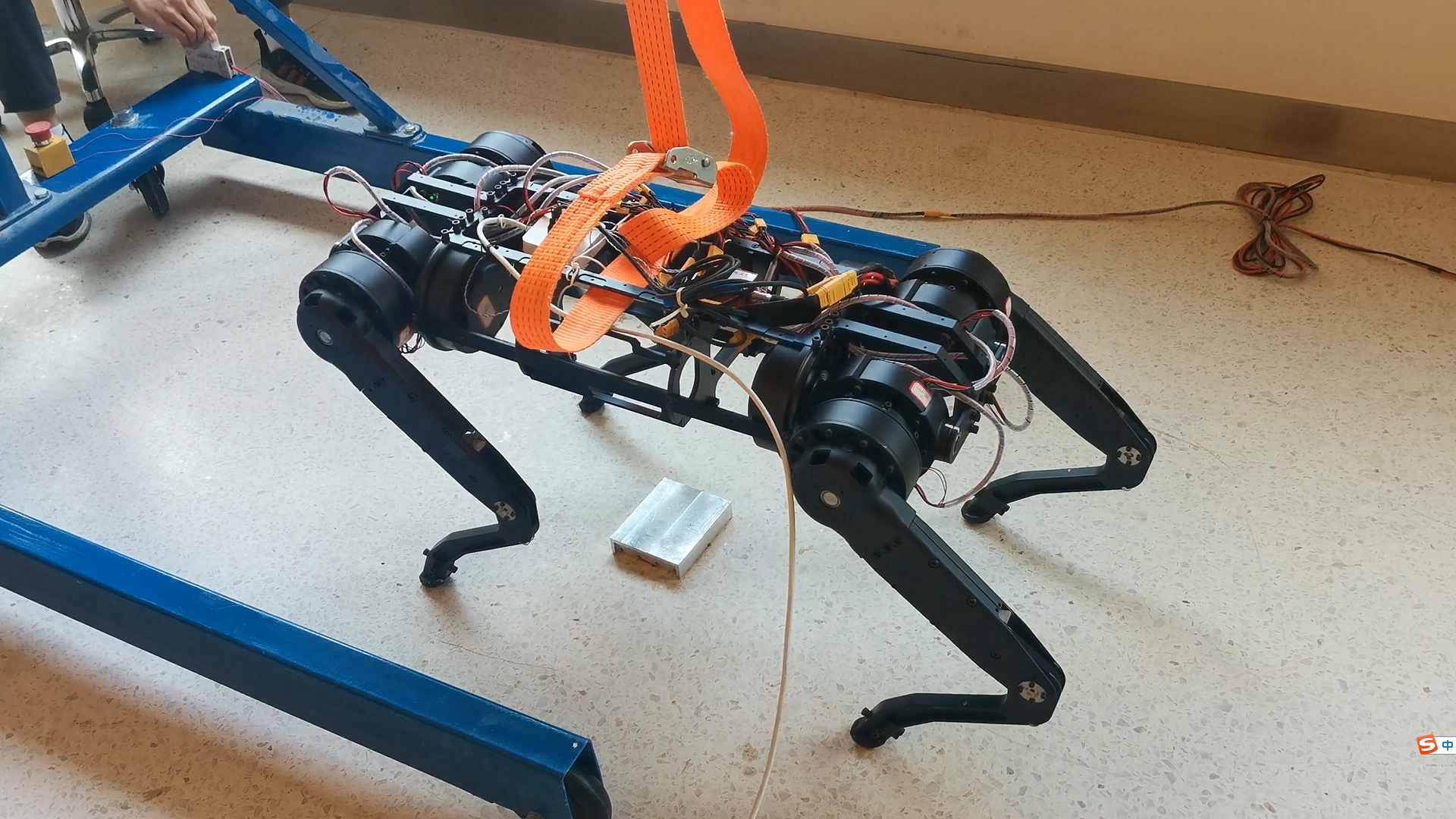
Wei Zhang is a tenured Professor at the Southern University of Science and Technology (SUSTech) , Shenzhen, China, and a Senior Member of IEEE. He serves as Associate Editor for IEEE Transactions on Control System Technology and leads the CLEAR Lab (Control & Learning for Robotics and Autonomy) within the School of Automation and Intelligent Manufacturing (AiM). His career spans institutions including the University of California, Berkeley (postdoc), and The Ohio State University (Assistant/Associate Professor). Education: PhD in Electrical Engineering from Purdue University (2009), MS in Electrical and Computer Engineering from University of Kentucky (2005), BS in Automation from University of Science and Technology of China (2003) Research Interests focus on integrating control theory, optimization, and machine learning to develop intelligent systems. Key areas include: Legged Robots: Dynamic locomotion control, bio-inspired gait design, and push recovery mechanisms Autonomous Systems: Real-time motion planning, obstacle avoidance, and safe navigation in adversarial environments Smart Grids: Distributed control for energy systems and transactive energy optimization Machine Learning: Reinforcement learning for robotics, Q-learning convergence analysis, and hybrid control-learning frameworks Publication Trends highlight interdisciplinary work at the intersection of robotics and control systems. His recent 2024 papers address: Whole-body control for wheeled-quadrupedal robots Geometric object pose refinement in computer vision Task-space Riccati feedback for underactuated systems Teacher-student reinforcement learning architectures Scientific Awards include: 2016 : NSF CAREER Award 2015 : Lumley Research Award (Ohio State University) 2013 : AFOSR Summer Faculty Fellowship 2018 : National Distinguished Expert (Young, China) 2019 : International Underwater Robot Competition 2nd Prize (team advisor) Academic Leadership involves editorial roles at IEEE Transactions on Control System Technology and IEEE Transactions on Power Systems. His lab provides state-of-the-art robotics platforms including quadruped robots, Kuka manipulators, and UAVs for algorithm validation. Research collaborators span The Ohio State University , UC Berkeley , CMU , and The University of Hong Kong .
Deval Desai serves as Reader in International Economic Law at the University of Edinburgh's Edinburgh Law School, a position he has held since 2020 after serving as Lecturer from 2020-2023. His academic career includes research positions at Harvard Law School and the Geneva Graduate Institute. Dr. Desai also brings extensive practical experience from a decade working with the World Bank on rule of law and governance in sub-Saharan Africa, as well as advising the United Nations on rule of law issues. Dr. Desai's educational background includes an MA in History and French Literature from Oxford University, followed by legal training at City University/BPP Law School (PGDipL and PGDipLP), and advanced law degrees (LLM and SJD) from Harvard Law School. At Harvard, he held prestigious fellowships including the Byse Fellowship, Program on Negotiation Next Generation Fellowship, and Institute for Global Law and Policy Fellowship. MA (Oxon), History and French Literature PGDipL, PGDipLP, City University/BPP Law School LLM, Harvard Law School SJD, Harvard Law School Dr. Desai's research centers on law and development, administrative law and regulation, theories of the state, and patterns of knowledge and authority across the Global North and South. His work examines institutional reform processes, particularly how expertise and knowledge operate within rule of law initiatives. His interdisciplinary approach draws from legal and social theory, development studies, international relations, and performance studies, as evidenced in his monograph Expert Ignorance (Cambridge University Press). His recent work focuses on fiscal sociology, administrative law in the Global South, and the politics of social welfare provision. Dr. Desai's publications span leading journals in law, political science, and development studies, revealing a consistent focus on the intersections between legal institutions, governance, and development. His work demonstrates increasing engagement with comparative methodologies and critical perspectives on knowledge production in global governance. Recent articles show particular attention to fiscal policy, welfare systems, and responses to global crises like the Covid-19 pandemic, with comparative studies between India and European contexts. Dame Muriel Spark Medal (2024, Royal Society of Edinburgh) Chancellor's 'Rising Star' Award (2023, University of Edinburgh) Member of the Young Academy of Scotland Fellow of the Royal Society of Arts Fellow of the Young Academy of Europe Dr. Desai has secured significant research funding from diverse international sources, including a £2.1 million Swiss National Science Foundation Sinergia grant titled 'Reversing the Gaze: Towards Post-Comparative Area Studies' where he serves as PI. He also leads projects funded by the British Academy, University of Edinburgh's Big Ideas Accelerator, Scottish Funding Council, and Foreign, Commonwealth, and Development Office. His commitment to mentoring is evident through his recognition with the Susan Manning Award for Inspiring Mentor and his leadership in establishing programs like the Global Scholars' Academy at the Geneva Graduate Institute and the Global Justice summer school at CEU. As editor-in-chief of the Cambridge University Press book series 'Elements in Legal Theory and the Global South' and serving on multiple editorial boards, Dr. Desai plays a significant role in shaping scholarly discourse. His current research projects examine 'loss' in legal institutions guiding transitional processes, constitutional implications of fiscal arrangements in fragile contexts, and social welfare provision in India and Italy.
M. Granger Morgan is the Hamerschlag University Professor of Engineering at Carnegie Mellon University , with appointments in the Department of Engineering and Public Policy , Department of Electrical and Computer Engineering , and H. John Heinz III College . He co-directs the NSF Center for Climate and Energy Decision Making and the Electricity Industry Center at CMU. Education: Ph.D., Applied Physics and Information Science, University of California, San Diego (1969) M.S., Astronomy and Space Science, Cornell University (1965) B.A., Physics, Harvard College (1963) His research spans science, technology, and public policy with focus areas in energy systems , climate change mitigation , electric grid resilience , and uncertainty characterization in policy analysis . Recent publications analyze hydrogen market barriers , carbon sequestration timelines , and interdependent energy infrastructure risks . Scientific leadership includes: Member, National Academy of Sciences Member, American Academy of Arts and Sciences Co-chair, NAS Report Review Committee Board member, International Risk Governance Council Foundation Advisory Board, E.ON Energy Research Center, RWTH Aachen DOE Electricity Advisory Committee member Former EPA Science Advisory Board Chair Fellow of AAAS, IEEE, and Society for Risk Analysis Contact: Office 5220 Wean Hall, Phone 412-268-2672, Email granger.morgan@andrew.cmu.edu
Prof Christina Lim is a Professor at the Department of Electrical and Electronic Engineering, University of Melbourne, Australia. She serves as the Associate Dean of Research for the Faculty of Engineering and Information Technology (FEIT) and manages the Tucker Lab. Previously, she held roles as Research Group Leader of the Electronics and Photonics System group and Deputy Head of Department (Teaching and Operations) Education: PhD and Bachelors from University of Melbourne Research Interests: Radio-over-Fibre, Optical Wireless Communications, Microwave Photonics, Augmented Reality Displays, Reservoir Computing, Optical Crosshaul Networks Recent publications demonstrate expertise in optical waveguide design for AR, underwater optical wireless communications, photonic switching, and network optimization. Her projects focus on next-generation wireless infrastructure, including Photonics Computing Enabled Ultra-Broadband Wireless Communications (2024-2027, $598k ARC grant) and Additive Manufacturing of Optical Elements (2025). She has secured significant funding, including ARC Discovery Projects and Future Fellowships. Scientific Honors IEEE Fellow (2022) Optica Fellow (2018) ARC Future Fellow (2009-2013) ARC Australian Research Fellow (2004-2008) Professional Service Vice-President of Conferences, IEEE Photonics Society Deputy Editor, IEEE/Optica Journal of Lightwave Technology ARC College of Experts (2014-2016)
Emma Brunskill is an Associate Professor of Computer Science at Stanford University, with a courtesy appointment in Education. She holds a PhD in Computer Science from MIT (2009). Her research focuses on reinforcement learning, educational technology, and healthcare applications, aiming to develop AI systems that support human learning and decision-making. Notable projects include AI tutoring systems, policy evaluation methods, and behavior change interventions using large language models. Her work bridges theory and practice, addressing challenges in off-policy evaluation, fairness-aware decision making, and scalable educational tools. Brunskill has contributed to foundational research in reinforcement learning algorithms and their applications in real-world scenarios such as healthcare, education, and human-AI collaboration. She also leads initiatives to improve equity and efficiency in educational technologies through data-driven approaches. Brunskill's research has been supported by grants such as the NSF RI: Small grant for data-efficient reinforcement learning. She actively explores the ethical implications of AI systems, particularly in healthcare and education settings. Her recent work emphasizes leveraging large language models (LLMs) for personalized feedback and simulated training environments, as seen in studies like GPTCoach and LLM-based counselor upskilling.
Andreas Rietbrock is Professor and Director of the Geophysical Institute (GPI) at the Karlsruhe Institute of Technology (KIT) , Germany, where he also serves as Dean of Studies for Geophysics . He is a leading expert in earthquake seismology, seismic tomography, and subduction zone dynamics, with a strong focus on integrating advanced observational techniques and computational methods. Education: While specific degrees are not listed in the provided text, his extensive publication record and leadership roles indicate advanced academic training in geophysics and seismology. Research Interests: His work spans a wide range of topics including: Seismic imaging of subduction zones (e.g., Nazca, Lesser Antilles) Earthquake rupture dynamics and fault mechanics Volcanic seismology and magma transport Full waveform inversion and AI-enhanced seismic analysis Distributed Acoustic Sensing (DAS) applications Induced seismicity and reservoir monitoring Research Trends: His recent publications (2022–2025) emphasize the use of dense seismic arrays, AI-based data processing, and multi-method tomography to study complex tectonic environments. Key themes include high-resolution imaging of slab structures, fluid migration in subduction zones, and the integration of DAS and machine learning for seismic monitoring. Scientific Contributions: Andreas has led major international projects such as the ANTICS Large-N deployment in Albania and the VoiLA project in the Lesser Antilles. He has published extensively in top-tier journals like Nature , Geophysical Research Letters , and Journal of Geophysical Research , with over 200 peer-reviewed articles. Teaching and Supervision: He teaches courses such as "Introduction to Geophysics II", "Seismology", and "Current Topics in Seismology and Risk". While specific student names are not listed, his role as Dean and principal investigator on numerous projects indicates active supervision of graduate students and postdocs. Labs and Teams: He leads the seismology group at GPI, coordinating large-scale deployments of seismic instruments, including ocean-bottom seismometers and fiber-optic DAS systems. His team collaborates globally with institutions in Europe, South America, and Asia.
John M. Woodley is a distinguished Professor in the Department of Chemical and Biochemical Engineering at the Technical University of Denmark (DTU), where he leads research at the PROSYS - Process and Systems Engineering Centre and contributes to the DTU Microbes Initiative. With over 30 years of experience, he has established himself as a leading expert in biocatalysis and bioprocess engineering, with research spanning both theoretical and experimental work across multiple scales. His primary research interests focus on the interface of bioprocess engineering, process chemistry, and reaction engineering. Dr. Woodley's work encompasses multi-step biocatalysis (including systems biocatalysis and flow chemistry), downstream processing from biocatalytic reactors and fermentations (including ISPR), modeling tools for bioprocess assessment (thermodynamics, kinetics, process simulation, economic evaluation), and bio-oxidations (including oxygen supply methods). His enzymatic investigations particularly target alcohol oxidases, carbohydrate oxidases, cytochrome P450s, Baeyer-Villiger monooxygenases, and transaminases. His research portfolio demonstrates consistent innovation in sustainable chemical production, with particular emphasis on enzymatic synthesis of pharmaceuticals and chemicals from renewable resources. Analysis of his recent publications reveals a strong focus on overcoming industrial implementation challenges, particularly regarding enzyme stability in various reactor environments, optimization of multi-enzyme systems, and scale-up methodologies for biocatalytic processes. Dr. Woodley actively supervises multiple PhD students and leads several significant research projects, including 'P450-based biocatalytic processes for the pharmaceutical industry' (2025-2028), 'Integrated model for up- and downstream bioprocess intensification' (2024-2027), and 'ENFACE: A tool for prediction of enzyme stability at gas-liquid interfaces' (2024-2027). His work has resulted in an impressive publication record of 781 research outputs across various formats, including journal articles, book chapters, and conference proceedings. His research group operates within the Department of Chemical and Biochemical Engineering at DTU, utilizing advanced facilities for biocatalysis research, including specialized reactor systems for studying gas-liquid interfaces, computational modeling resources, and laboratories for enzyme characterization and bioprocess development. Through his leadership in the PROSYS center, he contributes to DTU's strategic focus on sustainable process technologies and systems engineering.
Claus Lamm is a Full Professor of Biological Psychology at the University of Vienna , where he leads the Social, Cognitive and Affective Neuroscience Unit (SCAN-Unit) . He serves as Vice Dean for Research and Advancement of Early Career Researchers at the Faculty of Psychology and holds affiliations with the Vienna Cognitive Science Hub , Environment & Climate Change Hub , and Austrian Academy of Sciences . His academic career spans international collaborations and formative research experience abroad. Scientific Focus: Lamm investigates the neural underpinnings of empathy and prosocial behavior , employing multi-modal approaches combining neuroimaging, psychopharmacology, and psychoneuroendocrinology . His work extends to comparative studies with ravens and dogs, and explores environmental social neuroscience through climate change decision-making research. Recent publications show trends in cross-cultural psychology , machine learning applications , and neurobiological pathways related to social behavior. Awards & Grants: Recipient of the APS Mentor Award for his support of early career researchers. Funded by European Research Council , Austrian Science Fund , Vienna Science and Technology Fund , and intramural grants exceeding €10 million. Key projects include "Unravelling the opioid system in empathy" and "Comparative dog-human fMRI" . Media Engagement: A prominent public science communicator, Lamm has appeared in Nature , Science Magazine , and Austrian media outlets like Ö1 Mittagsjournal and ORF2 , discussing topics from pandemic psychology to social media effects . He maintains active outreach through Science TV and educational programs .