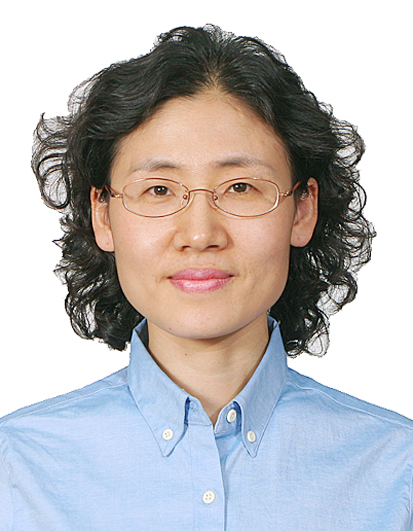
Min-Joo Kim is a Professor in the Department of English at Texas Tech University's College of Arts & Sciences, with additional affiliations to the Linguistics Program and Philosophy department. She holds a Ph.D. from the University of Massachusetts Amherst (2004) and specializes in theoretical syntax, semantics, and their interface. Her secondary research interests include language acquisition, pragmatics, and grammaticalization. Kim's research investigates linguistic phenomena including Noun Modification, E-type Anaphora, Existential Sentences, Free Choice, Implicature, Aspect, and Evidentiality. Her work employs formal linguistic frameworks to analyze Korean and English data, frequently exploring cross-linguistic patterns and cognitive interfaces. Her publications demonstrate a consistent focus on syntax-semantics-pragmatics interfaces, with recent work examining anaphoric systems, copular constructions, and temporal-aspectual phenomena. The research consistently integrates formal linguistic theory with empirical analysis of Korean and cross-linguistic data. Awards and Honors: TTU's 2019 Integrated Scholar 2021 President's Faculty Book Award Outstanding Faculty Research Award (Inaugural Recipient) National Humanities Center Summer Residency Fellowship C. L. Baker Award nominee (Linguistic Society of America, 2022) As Director of Linguistics at TTU for over 10 years, Kim established the linguistics program's foundation. She has served as Associate Editor for Glossa: a journal of general linguistics and maintains extensive disciplinary service through editorial and conference activities.
David Rothenberg is a Distinguished Professor in the Humanities & Social Sciences department at New Jersey Institute of Technology (NJIT). His research spans the intersection of music, nature, and philosophy, with a focus on animal communication and ecological aesthetics. He is known for books like Why Birds Sing , Bug Music , and Survival of the Beautiful , translated into over eleven languages. Rothenberg holds a Ph.D. from Boston University (1991) and a B.A. from Harvard College (1984). His work investigates the musicality of animals, cultural transmission in species, and the philosophical implications of human-nature relationships. Notable projects include collaborations with whales, birds, and insects, exploring interspecies music and ecological soundscapes. His publications reflect interdisciplinary themes, blending biology, musicology, and environmental ethics. Recent works examine technological limits, urban wildlife, and Wittgensteinian philosophy applied to natural phenomena. Rothenberg actively engages in public discourse through lectures, performances, and media. Awards and honors are not explicitly listed, but his extensive academic and creative output underscores significant contributions to eco-philosophy and bioacoustics. He teaches courses on globalization, electronic music, and environmental ethics at NJIT.
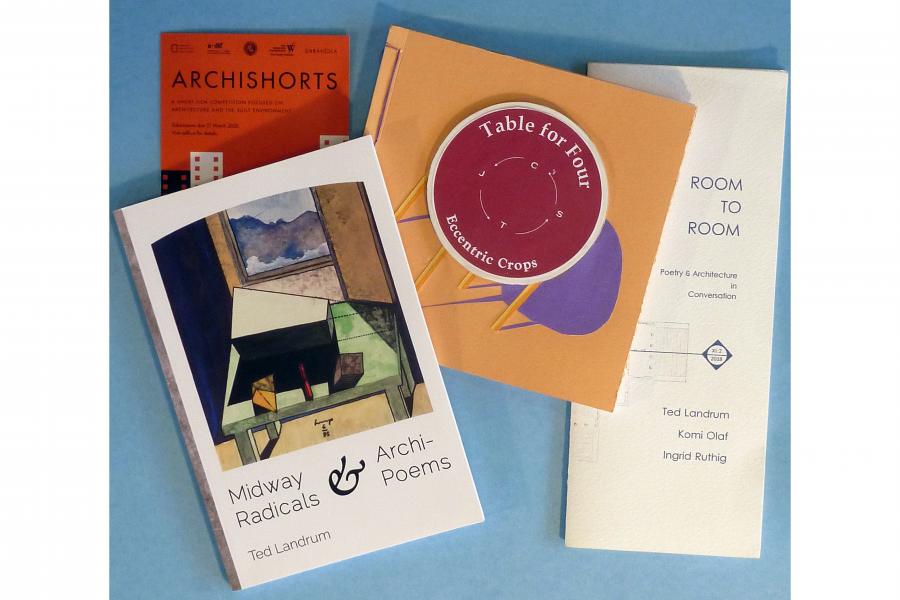
Ted Landrum is a Sessional Instructor in the Department of Architecture at the University of Manitoba since 2009, blending teaching with interdisciplinary research at the intersection of architecture and poetry. His academic background includes a B.Sc. in Environmental Design, B.Arch (Professional), and M.Arch-2 (Post-Professional) from Ball State University. His work explores the poetic dimensions of architecture through experimental poetry, performance art, and collaborative projects. Research & Teaching Teaching focuses on advanced technical topics (e.g., architectural lighting, masonry) and design studios at both undergraduate and graduate levels. Research spans architectural theory, poetic practice, and interdisciplinary creativity, exemplified by his book Midway Radicals & Archi-Poems (2017), shortlisted for the Lansdowne Prize for Poetry. He co-curates Winnipeg’s Architecture + Design Film Festival and coordinates its ArchiShorts film contest. Awards & Recognition Publications include poetry chapbooks Table for Four (2020) and collaborations with artists like Ingrid Ruthig. His writing appears in Canadian Architect , CV2 , and the American Society for Aesthetics journal. Active in literary festivals such as Thin Air and Planet Earth Poetry, he bridges architectural discourse with poetic innovation. Professional Engagements Affiliations include the Building Technology Educators Society, Manitoba Building Envelope Council, and Manitoba Writers’ Guild. His creative projects explore ‘archi-poetry’—a mode of research blending textual experimentation with spatial imagination, showcased in venues like Warehouse Journal and international conferences.
Daniel Batten is a PhD Candidate in Hispanic Studies at the University of Kentucky, serving as Spanish Instructor and Assistant Director of the Kentucky Foreign Language Conference. His research focuses on cross-linguistic influence in L2 Spanish vowel perception/production, supervised by Dr. Alan V. Brown. He holds an MA in Spanish Language and Linguistics from Middlebury College and a BA in Spanish and International Studies cum laude from the University of Richmond. His teaching portfolio includes courses ranging from elementary to advanced Spanish language instruction, including grammar and syntax. Batten actively contributes to academic service through leadership roles in the Hispanic Studies Graduate Student Association and managing the Atlas Lingüístico Guaraní-Románico research project. His research interests span applied linguistics, second language acquisition, phonetics, and colonial literature. Recent work explores sociolinguistic variation in media (Eurovisión analysis), digital language practices among Latinx YouTubers, and innovative pedagogical approaches to teaching Spanish sociolinguistic variation. His methodologies include experimental tools like mouse tracking to study L2 vowel identification processes.
Sophia Alexandra Malamud is an Associate Professor of Linguistics in the Department of Computer Science at Brandeis University's Michtom School of Computer Science. She is also affiliated with the Department of Anthropology, the Interdepartmental Program in Linguistics and Computational Linguistics, the Benjamin and Mae Volen National Center for Complex Systems, and the Department of Philosophy at Brandeis University. Dr. Malamud directs the Meaning In Language Research Group (MILa) and is part of the Laboratory for Linguistics and Computation. University of Pennsylvania (Ph.D.) University of Pennsylvania (B.A.) Dr. Malamud specializes in theoretical linguistics with a focus on language meaning, including formal semantics, formal pragmatics, discourse functions of syntax, and the semantics-pragmatics interface. Her research spans multiple languages including English, Russian, Mandarin, and Heritage Russian. She investigates topics such as discourse coherence and word order, indexicality, impersonal pronouns, passives and impersonals, semantics of plurals, and pragmatics of speech acts. Recently, she has expanded into language acquisition and attrition, particularly heritage language knowledge. Her current projects examine utterance-final particles in Mandarin, tag questions in American English, and pragmatic phenomena in monolingual and bilingual Russian speech. Analysis of Dr. Malamud's recent publications reveals a strong focus on the semantics-pragmatics interface, particularly on speech act modifiers, clause types, and indirectness across languages. Her work demonstrates consistent application of formal models, especially Decision and Game theory, to linguistic phenomena. There's a clear progression from theoretical work on semantics and pragmatics toward empirical corpus-based research, particularly with the BiRCh project creating a parsed and audio-aligned corpus of bilingual Russian child speech. Her publications show increasing collaboration with researchers across disciplines and institutions. NSF Linguistics Award #1651083 for Parsed and Audio-aligned Corpus of Bilingual Russian Child Speech (BiRCh) Mandel Center Grant for Annotated corpus of child, emigre, and heritage Russian Multiple Theodore and Jane Norman Fund awards Center for German and European Studies research awards Dr. Malamud has successfully mentored numerous students through thesis projects at various levels, from undergraduate to doctoral research. Her grant portfolio demonstrates significant success in securing external funding, particularly from the NSF, with the BiRCh project representing a major multi-year, multi-investigator effort. She has developed innovative community-engaged learning approaches, such as the Waltham Speech Project, which creates linguistic resources while providing students with hands-on research experience. Her teaching spans foundational courses like Introduction to Linguistics to specialized topics like Heritage Language Experience and Language Acquisition. Dr. Malamud leads the Meaning In Language Research Group (MILa), which focuses on cross-linguistic exploration of formal semantics, formal pragmatics, and the semantics-pragmatics interface. The group pursues corpus-based investigations of written and spoken language, observational and experimental studies of language use and acquisition, and develops annotated corpora of spoken languages. MILa is part of the Brandeis Laboratory for Linguistics and Computation and collaborates with researchers at MIT, University of Maryland, University of St. Gallen, and Mokpo National University.
Veronica Whitford is an Associate Professor and NSERC Canada Research Chair Tier II at the University of New Brunswick's Department of Psychology. Her research focuses on developmental cognitive psychology/neuroscience and psycholinguistics, examining language, reading, and neurocognitive performance across the lifespan. She uses multi-method approaches including eye-tracking, EEG, and behavioral assessments to study diverse populations such as neurotypical individuals, those with neurodevelopmental disorders, and those with mental health conditions. Education: PhD in Experimental Psychology (McGill University), followed by postdoctoral fellowships in Developmental Cognitive Neuroscience at the University of Western Ontario and Harvard University/MIT. Her research interests emphasize bilingualism's cognitive effects, cross-language activation during reading, and neurocognitive deficits in schizophrenia and developmental dyslexia. Recent work explores wearable ECG-based systems for psychiatric diagnosis and the role of individual differences in language processing. Key awards include the NSERC Canada Research Chair Tier II. Teaching focuses on introductory psychology, biological psychology, and language development courses. Her publications (2012–2025) span topics like eye movement patterns in reading disorders, bilingual cognitive advantages, and neurophysiological measures of word processing. Ongoing projects investigate the intersection of bilingualism, aging, and brain connectivity.
Gianina Iordachioaia is Professor of Linguistics at the University of Graz, researching theoretical and comparative aspects of morphology, particularly deverbal nominalization patterns across languages. Research examines: Morphosyntactic realization of argument structure Semantic interfaces in derivation Categorial shift mechanisms Crosslinguistic variation in nominalization Publications extensively analyze zero-derived nouns, affixal nominalizations, and their syntactic-semantic properties. Recent experimental work investigates causativity in nominalization across English, Italian, and Romanian. Supervises doctoral research in morphology and syntax. Leads projects on derivational databases and teaches advanced seminars in morphological theory.
William O’Grady is a Professor at the University of Hawaiʻi at Mānoa, where he contributes to the Department of Linguistics. His research focuses on syntactic theory, language acquisition, and endangered languages like Jejueo. He holds a Ph.D. from the University of Chicago and has authored seminal works such as *Syntactic Carpentry* and *Natural Syntax: An Emergentist Primer*. His work emphasizes 'emergentism,' exploring how processing pressures shape linguistic systems. Education: B.A. from University of Prince Edward Island, M.A. from Université Laval, M.Ed. from Harvard University, and Ph.D. from University of Chicago. Research interests include syntax, heritage languages, AI applications in linguistics, and language revitalization. He has co-authored works on Korean and Jejueo, including *Jejueo: The Language of Korea’s Jeju Island*. Recent projects address language revitalization challenges and AI’s role in syntax modeling. Key contributions include over 100 publications, including influential papers on processing-driven syntax, language universals, and acquisition. His work on Jejueo emphasizes community-based preservation strategies. Advising: Supervised over 40 graduate students in syntax, acquisition, and language documentation. Notable advisees include researchers in Korean, Tagalog, and endangered languages. Labs/Teams: Collaborates with interdisciplinary teams on language revitalization, including projects in Jeju Island and Micronesia. Active in language documentation and pedagogy for endangered languages.
Francisco Ordóñez is a Professor in the Department of Linguistics at Stony Brook University. He holds a Ph.D. from the City University of New York (1997). His research focuses on formal syntax, particularly the comparative study of Romance languages including Spanish, Catalan, French, Italian, and Occitan dialects. He has received significant funding, including a 2006 National Science Foundation Grant for $192,000 to study clitic patterns in Romance languages. He co-founded the Romania Nova project with Mary Kato, investigating Latin American Spanish and Portuguese varieties. His academic contributions include over 30 publications since 1997, focusing on clitic behavior, differential object marking (DOM), syntactic variation, and historical syntax. Notable works include The Clausal Structure of Spanish (2000) and co-editing Romance Languages and Linguistic Theory (2018). His research spans experimental syntax, diachronic change, and cross-dialectal comparisons, often leveraging empirical data from minority Romance language varieties. Ordóñez has contributed to linguistic databases like the Syntactic Atlas of Spanish (ASinEs) and the Clitics of Romance Languages project. His work emphasizes syntactic parameterization, clitic distribution, and the evolution of Romance language structures through a comparative lens.
Tom Juzek is an Assistant Professor of Computational Linguistics at Florida State University (FSU), with a courtesy appointment in Scientific Computing. His research focuses on applying computational methods to linguistic questions, particularly AI-generated language, its impact on human language use, and model behavior analysis. Prior to academia, he worked in the tech industry. Education: M.A. in Phonetics, University of Bonn Ph.D. in Linguistics, University of Oxford His research interests include computational linguistics, natural language processing, corpus linguistics, and experimental/information-theoretic approaches. He co-organizes the SC Machine Learning Seminar and has been featured in national and international media, including Science Friday and Die Welt . Recent publications explore topics such as AI language patterns, syntactic acceptability datasets, and diachronic syntactic shifts. His work bridges theoretical linguistics with computational methods, emphasizing empirical validation and interdisciplinary collaboration. Mentorship & Teaching: Juzek advises the Computational Linguistics track in FSU’s Data Science Program and mentors students in the Undergraduate Research Opportunity Program. He teaches courses like AI-assisted Python programming for language data and research methods in linguistics. Labs & Collaborations: Engaged in collaborative projects on human-AI collaboration in detecting deepfakes and analyzing language model behavior. His lab focuses on developing computational tools for linguistic analysis.
Matthew Patience is an Assistant Professor of Spanish and Linguistics at Florida State University's Department of Modern Languages and Linguistics, part of the College of Arts and Sciences. He directs the Spanish Basic Program and holds a Ph.D. in Hispanic Linguistics from the University of Toronto. His research focuses on second language acquisition, phonetics, crosslinguistic influence in multilingual speakers, and indigenous language revitalization. He teaches courses such as Introduction to Language, Language Learning, and Language Instruction and Acquisition of Spanish Phonology . His work emphasizes experimental phonetics and the role of individual differences in language learning. Key research themes include pronunciation instruction methods, phonological variation in Spanish, and the impact of multilingualism on speech production. He has published extensively on topics like L2/L3 acquisition challenges, bilingual Inuktitut-English perception, and Mandarin speakers' acquisition of French and Spanish phonetics. No scientific awards are listed, but his contributions to applied linguistics and multilingual studies are notable. His advising and grant activities are not detailed here. He is involved in the Spanish Basic Program administration and maintains active research collaborations in phonetics and language revitalization initiatives.
Neil Cohn is an Associate Professor at Tilburg University's Department of Communication and Cognition, within the Tilburg School of Humanities and Digital Sciences. His research focuses on visual language, cognitive processes in visual narratives, and the structural parallels between visual and linguistic systems. He explores how sequential images (e.g., comics) are structured and processed similarly to spoken languages, using corpus analysis, cognitive neuroscience (EEG), and experimental methods. Education: Ph.D. in Psychology from Tufts University (2012), M.S. in Psychology (2010), M.A. in Social Sciences (2005), B.A. in Asian Studies (2002). Postdoctoral research at UC San Diego (2012–2015). Research Interests: Visual language structure, cross-cultural analysis of comics, multimodal communication, neurocognitive mechanisms of visual narrative comprehension, and the development of drawing abilities. He leads projects such as the ERC-funded TINTIN and PICTREE initiatives, studying visual grammar and neural processing of visual sequences. Teaching: Courses include 'Visual Language,' 'Multimodal Communication,' and 'Cognition of Visual Narratives.' Focuses on drawing skills, EEG research, and visual thinking. Publications: Over 100 peer-reviewed articles and 6 books, including The Visual Language of Comics (2013) and Who Understands Comics? (2020). His work bridges linguistics, cognitive science, and art, with contributions to emoji standardization and collaborations with institutions like BBC News. Awards: ERC Consolidator and Starting Grants, FABBS Early Career Impact Award (2019), Robert J. Glushko Dissertation Prize (2013). Grants: Active funding includes the PICTREE project (2025–2030) and collaborations on visual narrative processing in children with language disorders.
Dr. Jan Engelen is an Assistant Professor at Tilburg University's Tilburg School of Humanities and Digital Sciences (TSHD), Department of Communication and Cognition. His research focuses on cognitive processes underlying reading comprehension, multimodal communication (e.g., emoji processing), and computational linguistics. He holds a Ph.D. from Erasmus University Rotterdam (2014) and has postdoctoral experience at the Open University of the Netherlands. Engelen’s work bridges theoretical and applied research, with contributions to corpus linguistics (e.g., the Dutch restaurant review corpus) and interdisciplinary collaborations in computational linguistics. His recent publications include groundbreaking studies on emoji semantics (2023), cognitive turn analysis in psychology (2023), and in-out effects in word perception (2022). He co-edited the Computational Linguistics in the Netherlands Journal (2022) and organizes academic conferences. Engelen teaches courses on language psychology, text analysis, and methodology.
Pärtel Lippus is a Professor of Estonian Phonetics at the University of Tartu's Institute of Estonian and General Linguistics, part of the Faculty of Humanities and Arts. He holds a PhD in Linguistics from the University of Tartu (2011) and has been a leading researcher in Estonian phonetics, speech prosody, and language variation. His academic roles include editorial positions at journals like Phonetica and the Estonian Journal of Linguistics , and leadership in national and international research projects such as the PER ASPERA phonetics laboratory. Education: Doctorate in Linguistics (2011), University of Tartu; Magister (2005), University of Tartu; Exchange studies in Helsinki University's Phonetics Department (2004). Research focuses on Estonian phonetics, prosody, and cross-linguistic speech perception. Notable contributions include work on vowel quantity contrasts, prosodic phrasing, and the acoustic analysis of palatalization. Awards include the 2022 SayEst phonetic app award and the 2003 Estonian President's Folklore Prize. Key projects include leading the phonetics lab in the PER ASPERA project (2016–2022) and organizing international conferences like the ISAPh 2024 Symposium. His work integrates corpus linguistics, experimental phonetics, and computational methods in language research.
Dr. Marianna Pagkratidou is an Assistant Professor in Psychology at Dublin City University (DCU), where she directs the Cognition in Learning Lab (Cllab). Her research focuses on spatial cognition, STEM learning, and reading comprehension through visual arts like comics. She teaches modules including Cognition Across the Lifespan, Computational Psychiatry, and Science Communication, while supervising undergraduate and postgraduate students. Ph.D. in Cognitive and Experimental Psychology (University of Cyprus) M.A. in Cognitive and Educational Psychology (University of Cyprus) B.A. in Early Childhood Education Sciences (University of Thrace) Her research explores how spatial training improves STEM learning, particularly addressing gender disparities in spatial ability. She investigates the cognitive mechanisms behind reading comprehension using comics as an educational tool. Recent publications examine spatial cognition in STEM, comics-based learning, and gender differences in spatial ability. She contributes to educational outreach through initiatives like Pint of Science and science festivals. Doctoral Scholarship (Graduate School, 2017-2018) Doctoral Scholarship (University of Cyprus Department of Psychology, 2020-2021) Marianna supervises students in the SellSTEM Marie Skłodowska-Curie ITN project and has taught diverse modules across psychology and interdisciplinary programs. Her work bridges cognitive psychology, educational technology, and science communication.