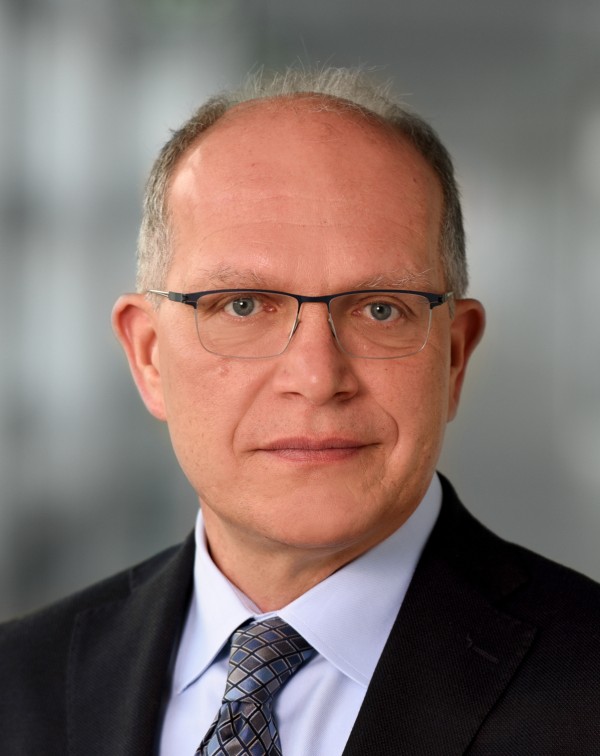
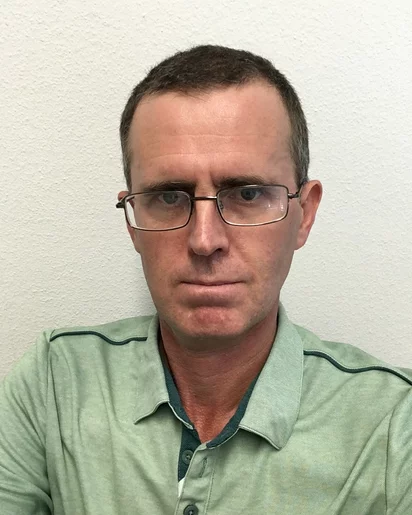
Benoît Valley is a Full Professor at the University of Neuchâtel's Faculty of Science and Director of the Centre for Hydrogeology and Geothermics (CHYN). He specializes in geomechanics, geothermics, and hydrogeology, focusing on stress and fracture characterization in rock masses. His work addresses geothermal energy, CO2 storage, and nuclear waste sequestration. Education: PhD from ETH Zurich (2007), followed by research roles at MIRARCO Canada and ETH Zurich. Appointed to University of Neuchâtel in 2014 as Assistant Professor, promoted to Full Professor in 2020. Research interests include stress field dynamics, hydraulic stimulation, and fracture network analysis. Awards include the Bernard Kübler and Jean Landry Prize (2002). Teaching includes courses on geosciences, hydrogeology, and geothermal energy at undergraduate and graduate levels. Key initiatives: Leadership in CHYN, involvement in Swiss geoscience platforms, and contributions to projects like SPINE (EU-funded) and TIBEX (SFOE-funded). Labs: Established the Geothermics and Geomechanics Laboratory at CHYN, focusing on deep geothermal systems and reservoir engineering.
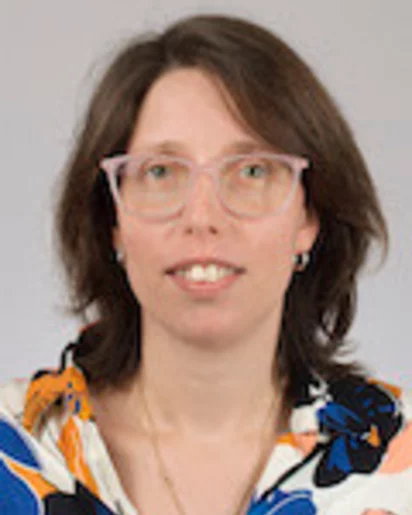
Federica Sandrone is a Lecturer at the School of Architecture, Civil and Environmental Engineering (ENAC) at École Polytechnique Fédérale de Lausanne (EPFL), where she also serves as a Scientist at the Laboratory of Experimental Rock Mechanics (LEMR) within the Institute of Civil Engineering. Her academic career spans over 15 years with continuous contributions to tunnel engineering and rock mechanics research. Her research focuses on the intersection of rock mechanics and tunnel engineering, with particular expertise in tunnel pathology analysis, TBM performance in challenging geological conditions, and long-term tunnel behavior. Sandrone's work bridges theoretical analysis with practical engineering applications, addressing real-world problems in tunnel infrastructure management and maintenance. Her research methodology combines field investigations, laboratory testing, and numerical modeling to understand complex geomechanical behaviors. Analysis of her recent publications reveals a consistent focus on tunnel inspection methodologies, TBM performance prediction in difficult ground conditions, and the long-term behavior of tunnel structures. Her work has evolved from fundamental tunnel pathology studies to more advanced applications involving GIS integration, probabilistic modeling, and modern inspection techniques including laser scanning and image analysis. Engineer at SBB-Infrastructure (2008-present) responsible for Tunnels Management and Maintenance Assistant for Tunnel Engineering courses (2007-present) PhD supervision including Erika Paltrinieri's 2015 thesis on TBM performance Development of tunnel inspection methodologies and condition assessment procedures Her teaching activities include courses in Rock Mechanics and Underground Construction, where students learn about the mechanical behavior of rock materials, tunnel excavation and support design, planning and management of underground works, and risk assessment in tunnel construction.
Bozidar Stojadinovic is a Full Professor and Chair of Structural Dynamics and Earthquake Engineering at ETH Zürich's Department of Civil, Environmental and Geomatic Engineering. He leads the Institute of Structural Engineering and previously held professorships at UC Berkeley and the University of Michigan. His research focuses on community disaster resilience, seismic design, and experimental methods like hybrid simulation. Education: PhD in Civil Engineering, UC Berkeley (1995) MS in Civil Engineering, Carnegie-Mellon University (1990) BS in Civil Engineering, University of Belgrade (1988) Research Interests: Performance-based probabilistic resilience evaluation of civil infrastructure. Earthquake engineering, including seismic isolation and response modification techniques. Development of experimental testing methods, such as hybrid simulations for dynamic structural analysis. Awards: ICE Journal John Henry Garrood King Medal (2023) ACI Chester Paul Siess Award (2017) NSF CAREER Award (1999) Teaching & Advising: Teaches courses on seismic design and structural dynamics at ETH. Advised 49 doctoral students to date. His work integrates advanced methodologies to enhance structural resilience against natural hazards. Labs/Teams: Leads ETH's Institute of Structural Engineering, advancing research in seismic protection and infrastructure resilience through experimental and computational innovations.
Cécile Münch-Alligné is a Professor in Hydraulic Energy at the University of Applied Sciences and Arts Western Switzerland (HES-SO) in Sion, where she serves as the Head of the Hydroelectricity Research Group and the Renewable Energy Program. She leads the Hydro Alps Lab, which conducts applied research in hydropower combining experimental and numerical approaches. Her work focuses on enhancing the flexibility of both small and large hydropower plants, with particular emphasis on adapting these systems to the evolving energy landscape and integration of renewable energy sources. Her educational background includes a BSc in Energy and Environmental Techniques, an MSc in Engineering, and a BSc in Industrial Systems, all from HES-SO Valais-Wallis. Her research spans multiple domains within hydraulic engineering and renewable energy systems, with particular expertise in CFD simulation, numerical methods, and hydraulic machine design. Münch-Alligné's research interests primarily center around improving hydropower flexibility through innovative approaches such as hydraulic short-circuit operating modes, variable speed operation, and energy recovery systems in water networks. She investigates both large-scale pumped storage power plants and micro-hydropower systems for urban water networks, with a strong focus on practical implementation and commercialization of research findings. Her work bridges theoretical modeling with experimental validation to address real-world challenges in the energy transition. Her research has been published extensively in leading journals, covering topics from Pelton turbine dynamics and Francis turbine vortex analysis to micro-turbine implementations in drinking water networks. The publications reveal a clear trend toward enhancing operational flexibility of hydropower systems to better integrate with intermittent renewable energy sources, with increasing emphasis on practical demonstration projects and commercial applications. As Principal Investigator, she has led multiple significant research projects including the SCCER 4 WP 3.2.0 2017-2020 (Supply of Electricity), Hydrolienne pour canaux artificiels Centrale de Lavey, and SOLUTION DE TRANSFERT D'ENERGIE PAR POMPAGE-TURBINAGE A PETITE ECHELLE. These projects, totaling over 2 million CHF in funding from sources including CTI, OFEN, and industrial partners, demonstrate her ability to secure substantial research funding and collaborate effectively with both academic and industry partners. Münch-Alligné leads the Hydro Alps Lab research team, which includes numerous researchers such as Steiner Amandus, Walpen Olivier, Vaccari Aldo, and others. Her collaborative approach extends to partnerships with institutions like Stahleinbau GmbH and The Ark Energy, facilitating the transfer of knowledge from research to industry application. The lab's work spans from fundamental fluid dynamics research to full-scale demonstration projects, creating a comprehensive pipeline from theory to practical implementation.
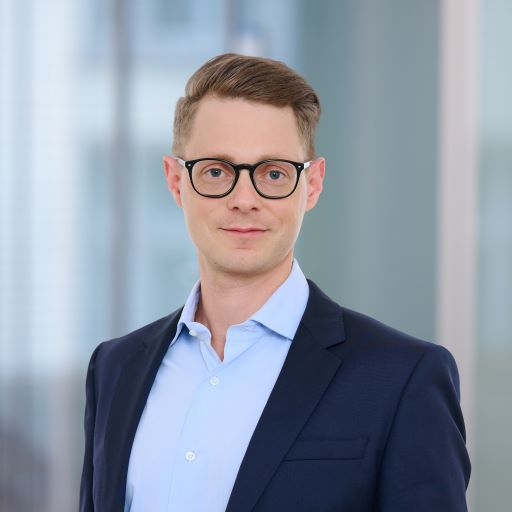
Leo Wanner is a prominent Professor at Universitat Pompeu Fabra's Department of Information and Communication Technologies, specializing in Natural Language Processing. With a research career spanning over three decades, he has made significant contributions to computational linguistics, particularly in natural language generation, collocations, and hate speech detection. He has served as editor for multiple editions of the International Conference on Computational Linguistics (COLING) including the 2025 edition. Wanner's research interests encompass a wide range of topics in computational linguistics, with recent work focusing on hate speech detection, multilingual processing, and the capabilities of large language models. His work bridges theoretical linguistics with practical applications, addressing challenges in lexical semantics, syntax, and discourse analysis. Notably, he has pioneered research in collocation processing and has contributed to the development of frameworks for analyzing thematic progression in texts. His publication record demonstrates consistent productivity with significant contributions across multiple subfields. Recent work shows a strong focus on contemporary challenges in NLP, particularly hate speech detection and the capabilities of large language models. His research often takes a multilingual perspective, addressing challenges across different language families including Romance and Slavic languages. Wanner has led significant research projects including the development of FORGe, a multilingual deep sentence generator based on the Meaning-Text Theory, which achieved top performance in the WebNLG challenge. His work on multilingual surface realization has established important benchmarks in the field through shared tasks that have engaged researchers worldwide. As an academic leader, Wanner has mentored numerous researchers and contributed to building research infrastructure through corpus development and annotation schema design. His work on collocation resources, thematic progression analysis, and hate speech detection frameworks has provided valuable resources for the broader NLP community.
Florencia Malamud is a Researcher and Instrument Scientist at the Paul Scherrer Institute (PSI), leading the POLDI instrument in the Laboratory for Neutron Scattering and Imaging. Her work focuses on advanced neutron-based techniques for material characterization, including Bragg edge imaging, diffraction contrast imaging, and texture analysis. She specializes in studying crystallographic structures, phase transformations, and mechanical behaviors in materials such as high-Mn steels, superalloys, and superconductors. Her research integrates experimental methods like neutron diffraction and tomography to investigate industrial materials (e.g., additive manufacturing components) and historical artifacts (e.g., Napoleonic-era copper bolts). Key areas include optimizing material properties through composition and processing, and understanding deformation mechanisms in metallic materials. Malamud’s publications span materials science, metallurgy, and neutron scattering applications. She collaborates on projects involving nuclear-grade materials, aerospace alloys, and archaeological metallurgy. Her work emphasizes bridging fundamental physics with applied engineering challenges. No scientific awards are explicitly mentioned. Her advising and grants are not detailed in the provided texts. She is affiliated with PSI’s neutron scattering laboratory and contributes to instrumentation development for advanced materials research.
Prof. Dr. Robert Eberlein is a Senior Lecturer in Mechanics at the ZHAW School of Engineering , specifically working at the Institute of Mechanical Systems (IMES) . He has served as Director of IMES since 08/2017, following previous roles as Senior Lecturer at IMES (11/2013-07/2017) and industry leadership positions including CTO of Angst+Pfister Group (06/2006-10/2013). Dr. Eberlein holds a Dr.-Ing. (PhD) in Numerical Mechanics from Darmstadt University of Technology (1992-1997) and completed an exchange program at UC Berkeley (1991-1992). Education: Dr.-Ing. (PhD) in Numerical Mechanics, Darmstadt University of Technology (07/1992-07/1997); Exchange Student at University of California, Berkeley (07/1991-06/1992) Professional: Director of Institute IMES (08/2017-today); Senior Lecturer at IMES (11/2013-07/2017); CTO & Group Executive Committee, Angst+Pfister Group (06/2006-10/2013); Group Leader in Biomechanics, Sulzer Innotec (07/1998-04/2006) Dr. Eberlein focuses on experimental and numerical modeling of solid polymers and lightweight structures. His research spans material modeling, finite element analysis, and fatigue life prediction for materials like POM gears, TPU and vulcanizates. Recent work explores digital twin development for rubber spring elements and machine learning enhanced process simulation in additive manufacturing. His projects include Lifetime prediction of POM gears , Measurement of human soft tissue properties , and Optimization of plastic gear geometry . Scientific achievements include: Professor ZFH (Fachhochschulrat) - 12/2019 Dr.-Ing. (PhD) summa cum laude - Darmstadt University of Technology - 07/1997 Graduate Assistantship - Darmstadt University of Technology - 01/1993 His work appears in journals like International Journal of Non-Linear Mechanics , Rubber Chemistry and Technology , and Journal of Loss Prevention in the Process Industries . Publications since 2015 show a consistent focus on material characterization , finite element modeling , and fatigue analysis with applications in industrial components and biomedical systems.
Anastasios Vassilopoulos serves as Head of the Composite Mechanics Group (GR-MeC) and Adjunct Professor at École Polytechnique Fédérale de Lausanne (EPFL), within the School of Architecture, Civil and Environmental Engineering. He directs the Doctoral Program in Civil and Environmental Engineering while maintaining active roles in the Structural Engineering Group and School Council. His research focuses on composite materials for renewable energy infrastructure , particularly wind turbine rotor blades. Key areas include fatigue analysis of adhesively bonded joints, experimental methods for FRP composites under complex loading, and design methodologies for composite structures. His work bridges fundamental mechanics with industrial applications through extensive collaboration with wind energy stakeholders. Analysis of his 15 most recent publications reveals dominant themes in thick adhesive joint mechanics (73% of articles), fatigue/fracture characterization (67%), and machine learning applications (40%). The research consistently targets wind turbine blade challenges, with 87% of articles addressing specific aspects of renewable energy infrastructure. Methodological trends show increasing integration of computational-experimental approaches and AI-driven predictive modeling. Dr. Vassilopoulos has secured 18 major research projects since 2000, primarily funded by Swiss National Science Foundation and international collaborations. Current projects include NSF-funded work on wind turbine blade adhesive joints (2020-2024) and fire-resistant composite bridge decks. His teaching portfolio includes advanced courses on composites design, structural mechanics, and floating offshore renewables. As Doctoral Program Director, he oversees PhD training while personally supervising 17 doctoral students to completion.
Prof. Dr. Heinz Burtscher serves as Professor at the FHNW University of Applied Sciences Northwestern Switzerland since 1996, where he founded and led the Institute of Aerosol and Sensor Technology until 2018. Affiliated with the School of Engineering and Environment , he specializes in Aerosol Measurement Technology and Measurement and Sensor Technology with focus on combustion-generated nanoparticles, environmental aerosol monitoring, and sensor development for particulate matter analysis. PhD in Electrical Engineering (1980) from ETH Zurich Postdoctoral qualification in experimental physics (1991) on combustion aerosols His research interests span: Characterization of small particles from combustion processes (e.g., diesel soot, wood burning) Development of field measurement techniques for particle emissions Advancements in sensor technology for ambient air monitoring Toxicological evaluation of nanoaerosols Innovations in exhaust gas cleaning systems Recent publications address sub-23 nm particle measurement , e-cigarette vapor characterization , and real-time SOA formation potential in combustion emissions. He received the Smoluchowski award (1994) from the Gesellschaft für Aerosolforschung (GAeF) and maintains active membership in GAeF and the Swiss Aerosol Group. As both educator and researcher, Burtscher teaches Power electronics , Electrical drives , and Sensor systems while leading projects on: Volcanic ash detection systems Nanoparticle exposure assessment Vehicle cabin air filtration Periodic emission inspection protocols He works closely with the Institute for Sensors and Electronics at FHNW and collaborates with ETH Zurich's combustion research groups.
Prof. Raphael Flepp is an Assistant Professor of Sports Data Based Management and Economics at the Department of Business Administration, University of Zurich. His research focuses on behavioral economics, sports economics, and managerial decision-making, particularly examining outcome bias, market efficiency, and psychological factors influencing economic decisions. He has contributed to understanding biases in managerial dismissals, sports performance evaluation, and risk-taking behaviors in gambling contexts. His work integrates field experiments and quasi-experimental methods to analyze topics like casino gambling, sports betting markets, and leadership dynamics. Key themes include the impact of randomness on performance evaluations, the role of sentiment in pricing, and separating psychological vs. strategic momentum in sports. Flepp's research bridges behavioral economics with applied settings in sports and finance, providing insights into how cognitive biases affect real-world decision-making processes. Flepp's publications span journals such as the Journal of Economic Behavior & Organization, Journal of Sports Economics, and Economics Letters. He has collaborated extensively with co-authors like Prof. Franck and Dr. Meier, addressing topics ranging from CEO turnover dynamics to liquidity advantages in betting markets. His work emphasizes empirical rigor and practical relevance in both academic and applied contexts.
Dr. Konstantin Mikityuk is Group Leader of Advanced Nuclear Systems at Paul Scherrer Institute's Laboratory for Simulation and Modelling. He has researched fast reactor safety since 1992, focusing on neutronics and thermal-hydraulics of sodium-cooled systems. As coordinator of the Horizon-2020 ESFR-SMART project, he leads European sodium fast reactor safety research. He represents Switzerland in the Generation-IV International Forum Experts Group and co-chairs its Education Task Force. Dr. Mikityuk also serves as Swiss representative to IAEA's Technical Working Group on Fast Reactors. His research develops computational methods for reactor safety assessment, including advanced simulation tools for sodium boiling phenomena, core power distribution, and fuel performance. Recent work examines metallic fuel behavior, accident progression in loss-of-flow scenarios, and uncertainty quantification methodologies. He obtained his PhD from Russian Research Centre "Kurchatov Institute" (2002) and holds engineering degrees from Moscow Engineering Physics Institute.
Andreas Taras is a Full Professor at ETH Zurich's Department of Civil, Environmental and Geomatic Engineering, where he serves as Deputy Head of the Institute of Structural Engineering. His research focuses on steel and composite structures, structural stability, and fatigue behavior. Key research domains include: innovative steel-concrete-timber composite systems, stability and reliability of metallic structures, fatigue life prediction in bridges, and structural optimization using advanced analysis methods. His work integrates experimental testing with computational approaches to advance sustainable structural design. Recent investigations explore cutting-edge applications like iron-based shape memory alloys in structural glass systems, robotic additive joining for reclaimed steel, and novel hybrid systems combining folded sheet steel with cement-free concrete. Publications demonstrate consistent innovation in structural materials and connection technologies.
Sean Sullivan is an Associate Professor of Law at the University of Iowa College of Law, specializing in antitrust law, competition policy, and legal fact-finding. His research bridges law and economics with a focus on market definition, merger analysis, and evidence law. Sullivan maintains an active scholarly profile with numerous publications in top law journals. University of Iowa College of Law - Associate Professor of Law Sullivan's research interests center on antitrust law and competition policy, with particular expertise in market definition frameworks, coordinated effects in mergers, and the intersection of economics and legal analysis. His work challenges conventional wisdom in antitrust enforcement while developing novel theoretical frameworks. He has also made significant contributions to evidence law, particularly regarding fact-finding methodologies and the theoretical foundations of legal proof. Sullivan's recent publications demonstrate a clear trend toward increasingly sophisticated economic analysis applied to antitrust problems, with growing attention to emerging technological challenges like deepfakes in evidence law. His scholarship combines theoretical rigor with practical implications for enforcement agencies and courts, often challenging simplifications in antitrust doctrine while offering nuanced alternatives. Sullivan has established himself as a leading voice in antitrust scholarship through his numerous publications in prestigious journals including the Antitrust Law Journal, Virginia Law Review, and University of Colorado Law Review. His work has been cited by scholars and practitioners in the field. Sullivan actively collaborates with economists and legal scholars across institutions, as evidenced by his co-authored works with researchers from USC Gould School of Law, University of Virginia School of Law, and Temple University. His experimental economics work demonstrates engagement with empirical methodologies beyond traditional legal scholarship.
Prof. Anna Soter is a distinguished physicist specializing in atomic and particle physics, with a focus on precision measurements and fundamental interactions. Her research explores advanced spectroscopy techniques and quantum mechanical systems. Affiliation : Not explicitly stated Academic Role : Professor Her work includes experimental studies on muonic hydrogen and cold muonium beams, contributing to understanding atomic structure and gravity experiments. Recent publications highlight her expertise in laser spectroscopy and quantum physics. Scientific Contributions : Laser spectroscopy of exotic atoms Cold muonium beam development Precision tests of quantum electrodynamics
Stefana Parascho serves as Tenure Track Assistant Professor at the Swiss Federal Institute of Technology in Lausanne (EPFL) within the School of Architecture, Civil and Environmental Engineering (ENAC), specifically in the Institute of Architecture (IA). She leads the Laboratory for Creative Computation (CRCL) and concurrently heads the Diversity Office at ENAC, demonstrating dual commitments to technological innovation and institutional equity. Her research pioneers intersections of digital fabrication, robotics, and sustainable architecture, with particular focus on transforming construction waste into valuable resources. Through computational design and robotic assembly, she develops novel methodologies for upcycling concrete rubble and timber into structurally sound building components, directly addressing circular economy challenges in construction. Her work bridges theoretical frameworks with physical prototyping, emphasizing human-robot collaboration and material reintegration. Analysis of her recent publications reveals a cohesive trajectory toward waste valorization through digital processes, with concrete rubble masonry and timber reuse forming the core technical pillars. These investigations consistently integrate robotic fabrication, structural validation, and circular design principles across 15+ publications since 2023, establishing new paradigms for resource-efficient construction. As an academic advisor, she supervises four PhD candidates (Grangeot Maxence, Skevaki Eleni Maria, Vallat Gabriel Rémi, Wang Jingwen) while contributing to architectural education through courses like "Digital design and making: A critical introduction" that merge technical skill development with theoretical critique. Her leadership extends to the ENAC Teaching Committee and institutional diversity initiatives, reflecting comprehensive engagement with academic community development. Her operational base at CRCL (https://crcl.epfl.ch) provides the technical infrastructure for robotic experimentation, while her Diversity Office role (https://www.epfl.ch/schools/enac/about/diversity-office/) demonstrates parallel commitment to inclusive academic environments. This dual focus positions her at the forefront of both technological innovation and cultural transformation within architectural academia.