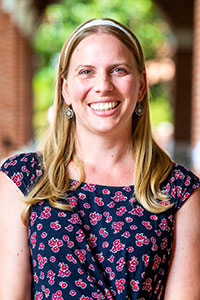
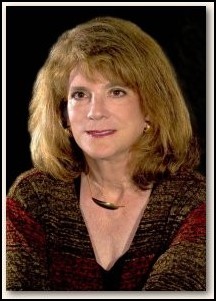
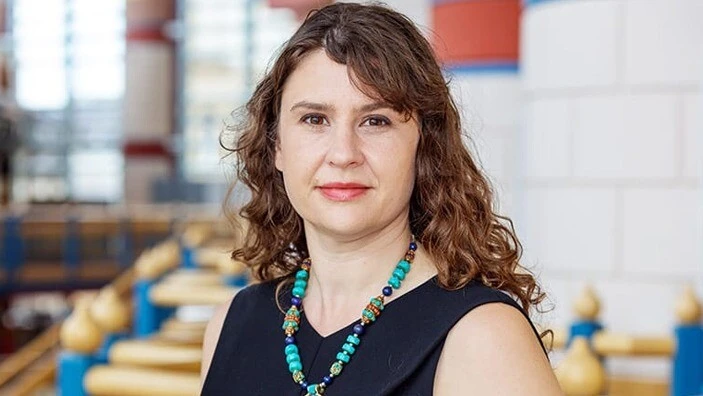
Dr. Rebecca Bromley-Trujillo is an Associate Professor in the Department of Political Science at Christopher Newport University (CNU) and serves as Research Director of the Wason Center for Civic Leadership. She holds a Ph.D. and M.A. in Political Science from Michigan State University and a B.A. in Political Science from the University of Texas, San Antonio. Her research focuses on state and local climate policy, the interplay between public opinion and policy, and the role of science in policymaking. Dr. Bromley-Trujillo previously taught as an Assistant Professor at the University of Kentucky before joining CNU. Research Interests: American environmental policy State and local climate change policy efforts Public opinion and policy relationships Scientific influence on policy processes Her work appears in journals such as Review of Policy Research , Climatic Change , and Journal of Public Policy . She co-authored Climate Policy in the American States (2024) and developed the CHORUS dataset analyzing state interest group policy positions. Her recent research explores experimental climate policy designs and the judicialization of federalism in U.S. politics. Professional Affiliations: Center for Sustainability in Education (CNU) Wason Center for Civic Leadership (CNU) Dr. Bromley-Trujillo's teaching spans American politics, environmental policy, public administration, and political behavior. She emphasizes applied research and policy analysis in her academic work.
John F. Brady is the Chevron Professor of Chemical Engineering and Mechanical Engineering at the California Institute of Technology. He earned his B.S. from the University of Pennsylvania (1975), M.S. (1977) and Ph.D. (1981) from Stanford University, and has held academic roles at Caltech since 1985, including Executive Officer for Chemical Engineering (1993-99; 2013-19). His research focuses on fluid mechanics, transport processes, and complex/multiphase fluids. Elected to the National Academy of Sciences (20XX) Elected to the American Academy of Arts and Sciences (20XX) Brady's publications reveal expertise in active matter dynamics, microrheology, and non-equilibrium systems. His work spans fundamental fluid mechanics to applied biomedical device design, with a strong emphasis on computational modeling and experimental validation in colloidal and soft matter physics.
Sebastian Kube is an Assistant Professor in the Department of Materials Science & Engineering at the University of Wisconsin-Madison's College of Engineering, with additional affiliation in Mechanical Engineering. His research accelerates alloy development through autonomous discovery methods combining robotics, data science, and advanced characterization. Dr. Kube's educational background includes: Postdoctoral Researcher (2023), University of California Santa Barbara (Tresa Pollock Lab) PhD (2021), Yale University (Jan Schroers Lab) BS (2016), Giessen University His work focuses on refractory multi-principal element alloys for extreme environments (>1300°C) and metallic liquid structure-property relationships. He develops autonomous platforms to navigate complex parameter spaces, targeting improved glass forming ability and rapid solidification processing through B2 precipitation strategies and novel characterization techniques. Recent publications emphasize refractory high-entropy alloys, BCC-B2 systems, and metallic glasses, integrating experimental and computational approaches to decode phase stability, deformation mechanisms, and glass formation for accelerated materials design. Major recognitions include: 2025 DARPA Young Faculty Award 2024 ARPA-E IGNIITE Early Career Award RCSA Scialog Fellowship for Automating Chemical Laboratories He mentors graduate students through thesis courses (M S & E 790/890/990) and leads the Autonomous Alloy Discovery Lab, which develops robotic systems for high-throughput experimentation. Current projects target next-generation turbine alloys and environmentally sustainable materials for aerospace, energy, and defense applications.
Isabelle Pichon is an academic affiliated with the University of La Réunion (UCO), specifically within the Faculty of Human and Social Sciences. She holds a Doctorate in Psychological Sciences from the Catholic University of Louvain (2006) and serves as an Educational Manager for the 3rd Year Psychology Degree - PSTO Masters program. Her research focuses on prosocial behaviors, religion's impact on social dynamics, intergroup relations, stereotypes, and ethical behavior. She has authored and co-authored numerous peer-reviewed articles in journals like Le sociographe and Basic and Applied Social Psychology , exploring topics ranging from minority resilience to ideological conflicts. Her academic work bridges sociology and psychology, emphasizing societal norms, identity formation, and the psychological underpinnings of social actions. Recent studies include investigations into how religious priming influences prosociality and the ethical tensions between collective norms and individual behavior. Notable contributions include analyzing sexual minorities' resilience mechanisms and the interplay between personal and professional identity among social work students. Dr. Pichon has presented at conferences such as the XXème congrès AIPTLF (2018), addressing themes like work-life transition dynamics. Her research methodologies include experimental approaches and quantitative analyses. No scientific awards or grants are explicitly listed, but her extensive publication record underscores sustained scholarly engagement in social and psychological sciences.
Dr. Ed E. Moret is an Associate Professor of Computational Medicinal Chemistry at Utrecht University, where he serves as Managing Director of the Utrecht Institute for Pharmaceutical Sciences. He is a member of the Departmental Executive Board and Chair of the Board of Examiners of the School of Pharmacy. His academic career spans over three decades with significant contributions to pharmaceutical sciences. Utrecht University, Utrecht Institute for Pharmaceutical Sciences School of Pharmacy, Department of Chemical Biology and Drug Discovery Managing Director since January 2010 Dr. Moret's educational background includes completing Gymnasium-b at Gymnasium Camphusianum in Gorinchem in 1979, followed by pharmacy studies at Utrecht University until 1988. He earned his PhD in 1993 with research on calculations and simulations of DNA-alkylating cytostatics under supervision of Prof. L.H.M. Janssen and Prof. J.P.A.E. Tollenaere. He also conducted postdoctoral research at the Scripps Research Institute with Prof. A.J. Olson. His primary research interests focus on molecular recognition, particularly in auto-immune diseases, with expertise spanning computational medicinal chemistry, computer-aided drug discovery, cheminformatics, and bioinformatics. Dr. Moret's work bridges the gap between theoretical calculations and experimental validation in drug design. His research portfolio demonstrates a consistent trajectory from fundamental molecular interactions to applied drug discovery, with particular emphasis on enzyme inhibitors, carbohydrate-protein interactions, and molecular recognition processes. Analysis of his publication record reveals a strong focus on structure-based drug design, with significant contributions to the development of inhibitors for enzymes like β-glucocerebrosidase, NNMT, and neuraminidase. His work spans multiple therapeutic areas including lysosomal storage disorders, cancer metabolism, and infectious diseases. The interdisciplinary nature of his research is evident in the integration of computational approaches with experimental validation across biochemistry, pharmacology, and medicinal chemistry. Teacher of the Year (awarded three times by Pharmacy students) Member of editorial boards for Medicines and Conceptuur journals Secretary of Board of FIGON (2016) Secretary of Raad voor de Farmaceutische Wetenschappen (2024) Member of Board of Stichting Farmaceutische Erfgoed (2024) Dr. Moret has been actively involved in educational innovation, developing and coordinating the master's programme Drug Innovation, the profile Drug Regulatory Sciences, and the Honours programme Pharmaceutical Sciences. He has taught courses for pharmacy, chemistry, UCU and medical sciences students, as well as PhD courses in bioinformatics and computer-aided drug discovery. His educational contributions include developing an inquiry-based elective course on drug discovery, for which he published educational research. He holds BKO and SKO teaching qualifications and participated in the Centre of Excellence in University Teaching program. As Managing Director of the Utrecht Institute for Pharmaceutical Sciences, Dr. Moret leads research initiatives across chemical biology, drug discovery, and pharmaceutical sciences. His leadership extends to multiple advisory and editorial roles within the pharmaceutical research community, reflecting his significant contributions to both academic and professional spheres of pharmaceutical sciences.
Gareth Hall is a Senior Lecturer in Psychology at Aberystwyth University's Department of Psychology, where he has been an established member since the department's founding in 2007. He holds a PhD from Glamorgan University and is a Chartered Member of the British Psychological Society (BPS) and a Fellow of the Higher Education Academy (FHEA). His academic career includes significant administrative roles such as Examinations Officer (2007-2014, 2016), Senior Tutor (2014), and Acting Director of Admissions and Recruitment (2009, 2011). Dr. Hall's research focuses on social psychology with particular expertise in social identity theory applied to real-world contexts. His work spans sport psychology, examining sport for development programs, intergroup behavior in fandom, and well-being in physical culture communities like CrossFit. He has pioneered research testing laboratory theories in real-world settings, challenging traditional experimental paradigms through creative methodologies that incorporate digital technologies and interdisciplinary approaches. His publication record shows consistent output since 2006, with significant contributions in 2019-2023 focusing on sport psychology applications in Brazil, forensic psychology, and educational technology. His work demonstrates a clear trajectory toward interdisciplinary collaboration, particularly in sport for development contexts and the application of social identity theory to complex social issues. Scientific Awards and Recognition: Teaching and Learning Improvement Award from Aberystwyth University (2011) Active editorial roles including for Frontiers in Sports and Active Living (2021) and Bulletin of Latin American Research (2019) Dr. Hall has secured research funding from prestigious organizations including the Economic and Social Research Council (2018) and British Council (2015). His external engagements include committee membership with the British Psychological Society's Undergraduate Education Committee (2015-present), AQU Catalunya (2022-2023), and visiting researcher positions at the University of Padua (2017-2018). His work contributes to multiple UN Sustainable Development Goals, particularly those related to social development and inclusion.
Elizabeth F. Loftus is a Distinguished Professor at the University of California, Irvine with appointments in the Department of Psychology and Social Behavior, Department of Criminology, Law, and Society, and Department of Cognitive Sciences. She also holds affiliate professor appointments in Psychology and Law at the University of Washington. As a Fellow of the Center for the Neurobiology of Learning and Memory, she maintains active research programs across multiple disciplines. Dr. Loftus's research focuses on the malleability of human memory, particularly in legal contexts. Her pioneering work on the misinformation effect demonstrates how memories can be altered by post-event information, with profound implications for eyewitness testimony. She has extensively studied false memories, repressed memory phenomena, and the creation of memory distortions through suggestion, hypnosis, and other therapeutic techniques. Her research has challenged conventional wisdom about memory reliability and has been instrumental in legal cases involving eyewitness testimony. Analysis of her recent publications reveals consistent themes in cognitive psychology and legal applications, with particular emphasis on memory distortion mechanisms, source monitoring failures, and the creation of false memories through suggestion. Her work spans experimental psychology, legal psychology, and clinical applications, demonstrating how memory can be manipulated in predictable ways. Grawemeyer Award in Psychology (2005) American Psychological Association Award for Distinguished Scientific Applications of Psychology (2003) Member, American Academy of Arts and Sciences Member, National Academy of Sciences (U.S.) Dr. Loftus has been central to numerous high-profile legal cases involving memory reliability, including the Eileen Franklin case where she served as an expert witness. Her research has influenced legal standards for evaluating eyewitness testimony and has prompted critical examination of recovered memory therapy practices. She has been involved in litigation concerning false memory syndrome and therapeutic malpractice, with her research cited in numerous court cases. At UC Irvine, she collaborates with researchers in the Center for the Neurobiology of Learning and Memory, bridging cognitive psychology with neuroscience approaches to memory research.
Dr. Pulin Gong is an Associate Professor in the School of Physics at the University of Sydney. His research focuses on understanding the self-organizing mechanisms of neural circuits' spatiotemporal dynamics and their computational principles. He investigates distributed dynamic computation via propagating neural waves, irregular neural activity variability, and coherent spatiotemporal patterns in large-scale neural data. His work combines experimental and computational approaches to unravel neural coding principles. Research interests include: Distributed dynamic computation (e.g., visual feature integration) Irregular neural dynamics and membrane potential fluctuations Coherent spatiotemporal wave patterns (e.g., spiral waves) Recent projects involve analyzing cortical wave patterns in mice and primates, fractional neural sampling, and Lévy walk dynamics in neural systems. Collaborators include institutions like Fudan University and Kyoto University. Current research student: Andrew LY, working on cortico-cortical loop dynamics and AI applications.
Geoffrey Cook is a Senior Lecturer at the Scripps Institution of Oceanography, UC San Diego, within the VC Marine Sciences school and Geosciences Research Division. He holds a PhD in Geology from Washington State University (2009), an M.S. from Boise State University (2002), and a B.A. from Franklin and Marshall College (2000). His research focuses on physical volcanology, including the volcanic evolution of large calderas, petrogenesis of magmas, and geoscience education. Notable projects include studies on the Otowi Member of the Bandelier Tuff and crustal assimilation processes in Iceland’s Fagradalsfjall Fires (2021). He emphasizes innovative teaching methods, such as active learning and experiential education, to address student misconceptions in geoscience. Dr. Cook has received multiple teaching awards, including the 2023 Scripps Outstanding Undergraduate Teaching Award and the 2018 UCSD Panhellenic Chapters Outstanding Faculty Award. His publications span volcanology, geochemistry, and educational pedagogy, with recent work in Nature (2024) and active learning strategies in STEM education. His academic profile reflects a commitment to both advancing geoscience research and improving undergraduate education through evidence-based practices.
Filippo Carlo Wezel is a Full Professor of Organization and Management at the Faculty of Economics of Università della Svizzera italiana (USI), where he also serves as Director of the Institute of Management and Organisation. He holds additional research affiliations as a Visiting Research Professor at emlyon Business School (France) and a Research Fellow at Judge Business School, University of Cambridge. He plays a significant editorial role as Senior Editor at Organization Studies and serves on the editorial review boards of Organization Science , Strategic Entrepreneurship Journal , Strategic Organization , and the Advisory Board of Research in the Sociology of Organizations . His educational background includes a PhD in Management from the University of Bologna. Prior to joining USI in 2009, he held academic positions at the University of Groningen (post-doctoral researcher) and Tilburg University (Assistant and Associate Professor). He has also been a visiting scholar at leading institutions including Wharton, MIT, Columbia, Duke, London Business School, LSE, and Hong Kong University. His research centers on organizational identity, managerial and inter-firm mobility, entrepreneurship, and institutional theory. His recent publications explore identity hybridization in political parties, category dynamics in creative industries, historical organizational practices in colonial firms, and stigma in emerging markets. He frequently employs longitudinal, historical, and experimental methodologies, often bridging sociology and management. The most recent articles (2020–2025) reflect a strong trajectory in the sociology of organizations, with recurring themes of identity, categorization, legitimacy, and mobility. He investigates how social evaluations, historical constraints, and institutional environments shape organizational behavior and strategic positioning. His work spans diverse contexts—from 18th-century Lyon silk traders to modern ICT firms and medical marijuana markets—demonstrating a broad empirical and theoretical reach. Scientific Honors and Editorial Roles: Senior Editor, Organization Studies Editorial Review Board, Organization Science Editorial Review Board, Strategic Entrepreneurship Journal Editorial Review Board, Strategic Organization Advisory Board, Research in the Sociology of Organizations He has extensive experience in teaching organizational theory and behavior at undergraduate, master’s, PhD, and executive levels. His research has been published in top-tier journals such as Administrative Science Quarterly , American Sociological Review , Academy of Management Journal , and Strategic Management Journal . He leads a vibrant research agenda at USI, supported by a broad international network, though specific grants and funded projects are not detailed in the provided text. He is also involved in mentoring students and shaping the next generation of organizational scholars, though a list of advisees is not available. Filippo Carlo Wezel is a key figure in the European organizational studies community, leading the Institute of Management and Organisation at USI and fostering interdisciplinary dialogue between organization theory and strategy. His work combines deep historical insight with contemporary theoretical innovation, contributing significantly to our understanding of how organizations and careers evolve under institutional and social pressures.
Professor Christian F. Doeller is a leading cognitive neuroscientist serving as Director of the Department of Psychology at the Max Planck Institute for Human Cognitive and Brain Sciences (MPI CBS) in Leipzig and Vice President of the Max Planck Society (since 2023). His roles include honorary professorships at the University of Leipzig (2019) and TU Dresden (Cognitive Neuroscience of Learning and Memory). He holds a PhD in Psychology from Saarland University (2005) and has held positions at institutions such as UCL (London), Radboud University (Nijmegen), and NTNU (Trondheim). His research focuses on spatial navigation, memory systems, and cognitive mapping in the human brain, leveraging neuroimaging (fMRI, EEG) and computational modeling. Key areas include hippocampal/entorhinal cortical function, grid cells, and the neural basis of spatial and conceptual representations. Recent work explores non-Euclidean spatial cognition, value-based decision making using grid-like maps, and hormonal influences on navigation. His lab combines experimental psychology, neuroimaging, and theoretical neuroscience to understand how brains build predictive models of environments and concepts. Publications emphasize cognitive maps, neural representations of space/value, and memory formation mechanisms. Over 100 journal articles span high-impact journals like Nature Neuroscience , Neuron , and Current Biology . His work bridges basic research and translational applications in neurodegenerative disorders and spatial cognition deficits.
Michael Levine is the Anthony B. Evnin '62 Professor in Genomics and Professor of Molecular Biology at Princeton University, where he also serves as Director of the Lewis-Sigler Institute for Integrative Genomics. He joined Princeton in 2015 after a distinguished career at UC Berkeley, where he was Professor of Genetics and held leadership roles in genetics and genomics programs. His research focuses on how noncoding regions of the genome regulate gene expression in space and time during development. His lab has pioneered studies in Drosophila and the protovertebrate Ciona intestinalis , uncovering fundamental mechanisms such as enhancer function, transcriptional bursting, short-range repression, and long-range enhancer-promoter interactions. His work has also revealed evolutionary insights into the origins of vertebrate innovations like the neural crest and neurogenic placodes. Levine's recent publications demonstrate a strong emphasis on quantitative and live-imaging approaches to dissect gene regulation dynamics. His work integrates experimental embryology with computational modeling, especially using deep learning to predict transcriptional outcomes. Themes across his recent articles include biomolecular condensates, chromatin architecture, and the physical principles underlying enhancer function. Elected to the National Academy of Sciences (1998) Molecular Biology Award, National Academy of Sciences (1996) Wilbur Cross Medal, Yale University (2009) EG Conklin Medal, Society of Development Biology (2015) Dr. Levine has trained numerous researchers and co-authored studies with emerging scientists, indicating active mentoring and grant-funded research. His leadership roles at major institutes and sustained publication record reflect a robust, well-supported research program. He has also contributed to national genomics initiatives, including service at the DOE Joint Genome Institute. His lab operates at the intersection of molecular biology, genomics, and quantitative developmental biology, utilizing model organisms and cutting-edge imaging and computational tools to unravel the logic of gene regulatory networks.
Pietro Ortoleva is a Professor of Economics and Public Affairs at Princeton University , affiliated with the Department of Economics and the School of Public and International Affairs. His research spans Decision Theory , Behavioral Economics , Experimental Economics , and Political Economy , with a focus on understanding deviations from traditional economic models. Education: PhD in Economics, New York University (2009); BA in Economics, Università degli Studi di Torino (2004). Professional Roles: Coeditor of the American Economic Review (since 2021), former Editor of the Journal of Economic Theory (2018–2020), and editorial board member for multiple journals. His work investigates stochastic choice , ambiguity aversion , and reference-dependent preferences , often through incentivized experiments. Recent studies include the role of social norms in vaccine uptake , cautious utility models , and non-Bayesian belief updating . He has secured multiple National Science Foundation grants for projects on behavioral economics and decision-making under uncertainty. His 15 most recent publications reveal trends in behavioral decision theory , with emphasis on randomization preferences , time lotteries , cognitive biases , and political behavior . These studies frequently bridge economics, psychology, and public policy.
Guodong Shi is Associate Professor at the University of Sydney's Australian Centre for Robotics, heading the Centre for Robotics and Intelligent Systems. His research develops theoretical frameworks for multi-agent coordination, distributed optimization, and networked control systems. Current projects investigate collective decision-making under information constraints, privacy-preserving optimization, and game-theoretic formulations for social and robotic networks. His group develops algorithms for distributed solution of linear equations, Boolean networks, and equilibrium seeking. Doctoral supervision includes projects on acrobatic legged robots, reinforcement learning for robotic stability, and safe control under dynamic environments. Laboratory capabilities support theoretical and experimental validation. Research has applications in autonomous swarm robotics, smart grid optimization, and social network analysis. Teaching includes graduate courses on networked systems and optimization.
Monique Boddington is a Management Practice Associate Professor and Director of the MSt in Entrepreneurship programme at the Cambridge Judge Business School, University of Cambridge. She holds a PhD from the University of Cambridge, where her thesis applied philosophical frameworks to archaeology to explore knowledge creation. Her research focuses on entrepreneurship, particularly early-stage venture formation, startup strategy, experimentation, pivoting, gender dynamics, and the application of sociological frameworks to entrepreneurial practice. She is dedicated to enhancing entrepreneurship education to empower future entrepreneurs. Her professional experience includes leading research initiatives such as the EVER project on early-stage venture strategy and EU-funded projects measuring entrepreneurship education impact. She advises on entrepreneurship policy globally and supports startups across industries. Monique teaches modules like Experimentation and Pivoting, Entrepreneurial Impact (Ethics and Diversity), and Management Praxis across Cambridge Judge programmes. Her research trends emphasize gendered norms in entrepreneurship, anthropological approaches to entrepreneurial action, and the intersection of education and innovation. She has contributed to over 15 peer-reviewed articles and edited books since 2014, focusing on gender inclusion, pivoting strategies, and educational methodologies. Monique has advised multiple students and collaborates on initiatives like the EnterpriseWISE programme to increase accessibility for women in science and engineering (WISE). Her work bridges theory and practice, influencing both academic discourse and real-world entrepreneurial ecosystems.