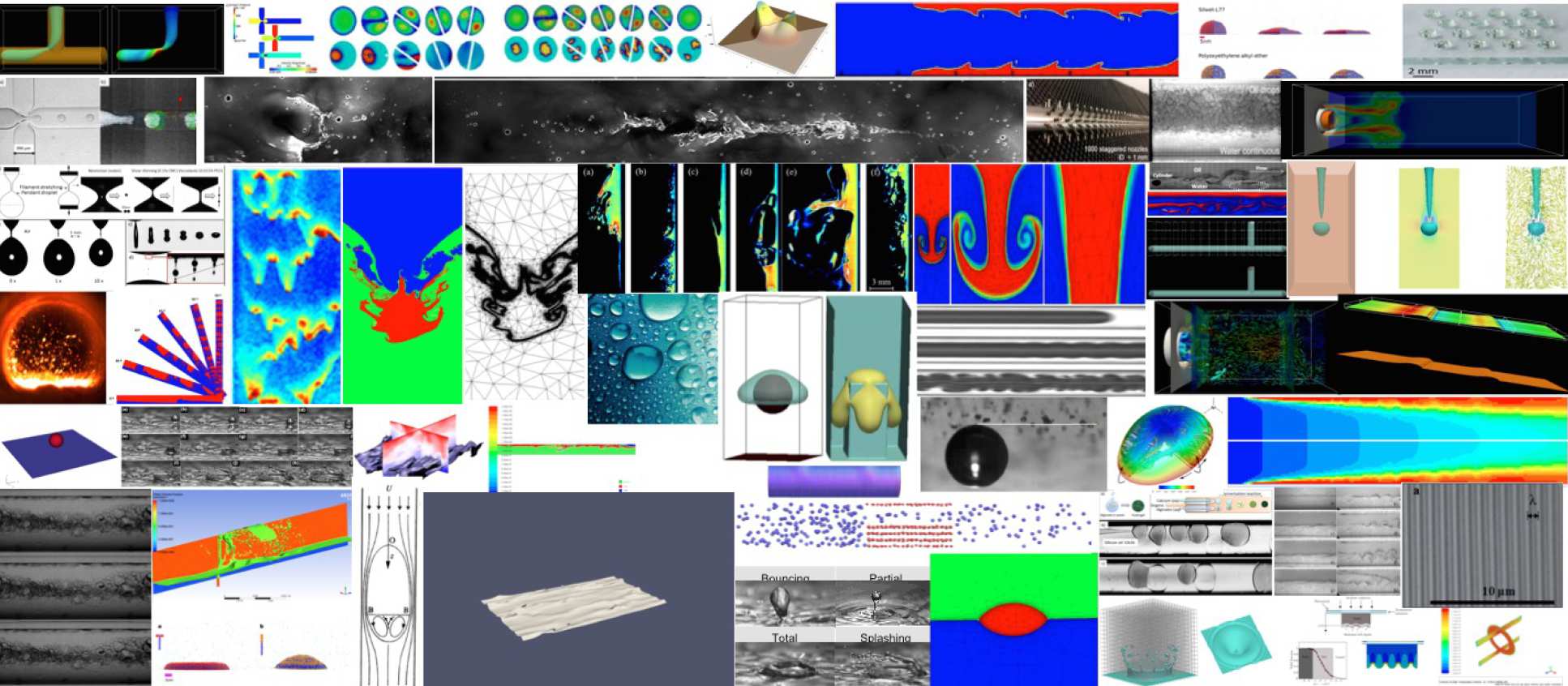
Professor Omar Matar is a Professor of Fluid Mechanics and RAEng/PETRONAS Research Chair in Multiphase Fluid Dynamics at the Department of Chemical Engineering, Imperial College London. He leads the Matar Fluids Group, focusing on interfacial fluid mechanics, multiphase flows, computational fluid dynamics (CFD), and applications in energy, manufacturing, and nanotechnology. His roles include Head of Department of Chemical Engineering, Director of the PETRONAS Centre for Engineering of Multiphase Systems (PETCEMS), and Editor-in-Chief of the Journal of Engineering Mathematics. Education: PhD in Chemical Engineering, Princeton University (1993) MEng Chemical Engineering, Imperial College London (1989) Research Interests: Interfacial fluid mechanics, multiphase flows, CFD, and machine learning 2D materials exfoliation and scale-up, immersive technologies (AR/VR) Applications in energy systems, nanotechnology, and personalized education Awards: Fellow of the Royal Academy of Engineering (2020) Recipient of the Imperial College President’s Medal (2020) EPSRC Programme Grant Principal Investigator (MEMPHIS, PREMIERE) Grants & Projects: MEMPHIS: £5M EPSRC-funded Programme Grant (2012–2017) PREMIERE: EPSRC Programme Grant (2019–present) PETCEMS: PETRONAS-funded Centre for Multiphase Systems Engineering Labs & Collaborations: Leads the Matar Fluids Group, collaborating with institutions like UCL, University of Edinburgh, and industry partners such as BP and First Light Fusion. Active in developing high-performance CFD codes (e.g., BLUE) and machine learning-driven models for multiphase systems.
Steve Chase is a Professor at Carnegie Mellon University , affiliated with the Biomedical Engineering , Electrical and Computer Engineering , Neuroscience Institute , and Robotics Institute departments. His research spans Computational Neuroscience , Neural Engineering , and Systems Neuroscience , with a focus on neural circuits, motor control, and brain-computer interfaces (BCI). Research Areas: Sensation & Perception, Methods Development, Diseases & Disorders, Physiological & Anatomical Methods. Lab Highlights: Development of the RotaWheel, memory trace studies in the motor cortex, and investigations into BCI stabilization and learning dynamics. Scientific Contributions: His lab has published extensively in journals like Neuron , Nature Computational Science , eLife , and PNAS , with notable works on neural activity patterns, dimensionality reduction in calcium imaging, and sensory constraints on motor cortex modulation. Students and postdocs in his lab have received awards, including the CNBC best paper award.
Anujit Chakraborty is an Associate Professor in the Department of Economics at the University of California, Davis . His research bridges Economic Theory , Behavioral Economics , and Experimental Economics , focusing on decision-making under risk and time constraints, procrastination, and present-biased behavior. Education : Ph.D. in Economics (University of British Columbia, 2017), M.S. in Quantitative Economics (Indian Statistical Institute, 2011), B.E. in Electronics Engineering (Jadavpur University, 2009) His work explores procrastination , present bias , prosocial behavior , and interpersonal uncertainty , often using experimental methods to analyze anomalies in economic preferences. Recent publications investigate democracy measurement , news source diversity , and peer-grading systems . Dr. Chakraborty teaches Intermediate Economics (ECN 100B) and Behavioral Economics at both undergraduate and Ph.D. levels.
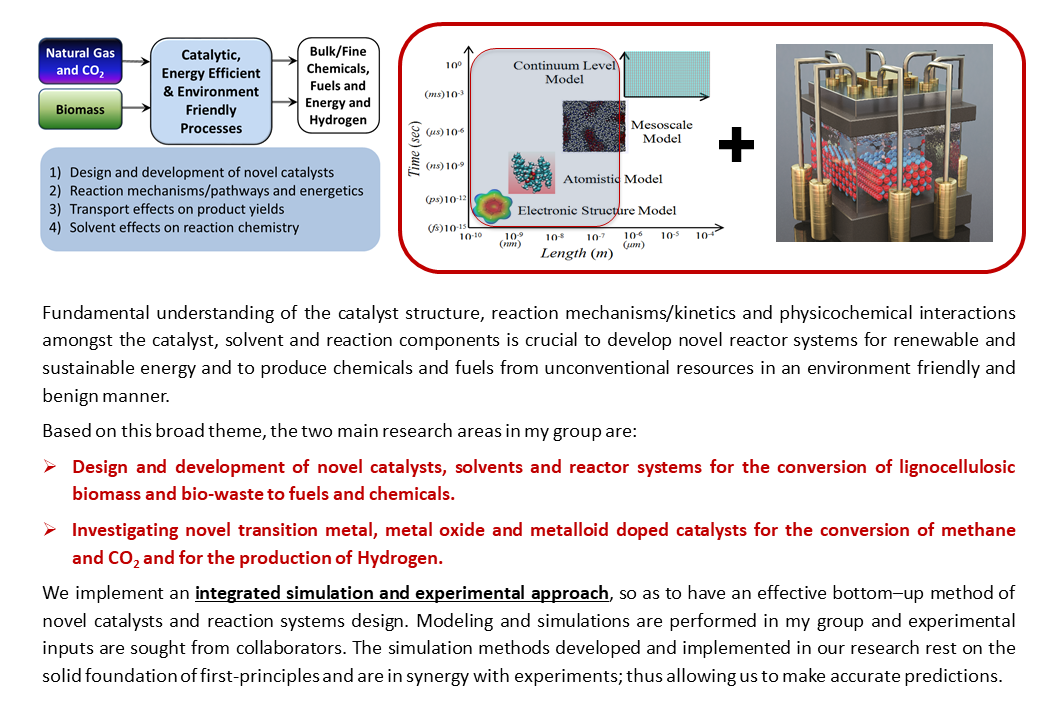
Dr. Samir H. Mushrif is a Professor in the Department of Chemical and Materials Engineering at the University of Alberta . Prior to this role, he served as faculty at the School of Chemical and Biomedical Engineering at Nanyang Technological University (NTU), Singapore . He holds a PhD in Chemical Engineering from McGill University and completed postdoctoral research at the University of Delaware, USA . Education : PhD (Chemical Engineering, McGill University), Postdoc (University of Delaware) His research focuses on computational catalysis , molecular modeling , and reaction engineering for biomass conversion and CO2 reduction . He develops novel catalysts, solvents, and reactor systems using integrated quantum mechanical and classical molecular simulations , synergized with experimental data to enable sustainable energy and chemical production . Recent publications highlight trends in condensed phase chemistry for biomass reactions, machine learning applications in solvent configuration prediction, and mechanistic studies of lignin-carbohydrate complex deconstruction. His work bridges methane activation on metal oxides, hydrodeoxygenation of bio-oil compounds, and polymerization pathways in lignin structures. Scientific Awards include: NSERC Doctoral and Post-doctoral Fellowships Discovery International Award 2017 (Australian Research Council) NANYANG EDUCATION AWARD 2016 (Singapore) SCBE Teaching Excellence Awards (Silver 2015, Gold 2016) Bharat Gaurav (Pride of India) Award 2014 Dr. Mushrif's NSERC Discovery Grant (2018), CFI John R. Evans Leaders Fund Grant (2022), and AcRF Tier-2 Grant (Singapore, 2015) have advanced his work. Current PhD and Master's students include José Carlos Velasco Calderón , Arul Mozhi Devan Padmanathan , and Sagar Bathla , among others. The CARES Lab (Catalysis Research for Sustainability) under his leadership combines ab initio molecular dynamics , machine learning potentials , and Density Functional Theory to design materials for renewable energy . Collaborations span institutions in France , Canada , India , and the UK .
Paul D. Asimow is the Eleanor and John R. McMillan Professor of Geology and Geochemistry at the California Institute of Technology (Caltech), part of the Division of Geological and Planetary Sciences. He holds a B.A. from Harvard University (1991), an M.S. (1993), and a Ph.D. (1997) from Caltech. His career progression includes roles as Assistant Professor (1999–2005), Associate Professor (2005–2010), and Professor (2010–present), with the McMillan Professorship since 2016. Education: A.B. in Geology, Harvard University, 1991 M.S. in Geology, Caltech, 1993 Ph.D. in Geology, Caltech, 1997 Research Interests: Focuses on computational, experimental, and observational approaches to igneous petrology and mineral physics. Key areas include adiabatic mantle melting, water's role in mantle dynamics, high-pressure mineral physics, and processes at mid-ocean ridges. His research utilizes advanced facilities like the Lindhurst Laboratory of Experimental Geophysics and the alphaMELTS software package for thermodynamic modeling. Articles Overview: Recent work spans planetary crust formation, Martian petrogenesis, and high-pressure mineral behavior. Themes include experimental techniques, computational modeling, and cosmochemical studies of meteorites. Awards and Honors: James B. Macelwane Medal (AGU) Frank Wigglesworth Clarke Medal (Geochemical Society) Richard P. Feynman Prize for Teaching Excellence (Caltech) Fellow of the American Geophysical Union Fellow of the Mineralogical Society of America Grants and Labs: Received NSF funding for developing an interactive phase equilibria curriculum. Leads the Lindhurst Laboratory, focusing on shock-wave experiments and high-pressure mineral physics. Collaborates on software tools like alphaMELTS and MAGMASOURCE. Labs and Teams: Active in the Caltech Shock Wave Laboratory, advancing experimental methods for planetary material studies. Engages in interdisciplinary projects on Mars geology and terrestrial planet formation.
James A. Evans is a Professor at the University of Chicago, where he serves as Director of the Knowledge Lab and Faculty Director of the Masters Program in Computational Social Science. He is also an External Professor at the Santa Fe Institute. His research bridges computational methods with social theory to analyze collective cognition, innovation, and knowledge production across science, technology, and broader societal domains. Director, Knowledge Lab Faculty Director, Masters Program in Computational Social Science External Professor, Santa Fe Institute Evans’s research explores how social and technical institutions shape discovery processes, utilizing machine learning, network modeling, and large-scale data analysis. His work spans fields like computational social science, sociology of science, and data science, focusing on team dynamics, peer review, and the global structure of scholarship. His recent publications examine team size effects on innovation, discursive influence in academia, and the interplay between tradition and novelty in research strategies. Articles trend toward interdisciplinary approaches combining social theory, computational methods, and science policy. Evans supports novel observatories for human understanding through crowdsourcing, sensor networks, and semantic modeling. He has received funding from the National Science Foundation, National Institutes of Health, and Air Force Office of Scientific Research, with findings featured in major media outlets like Nature , Science , and The New York Times .
Zhe Ji is an Assistant Professor in the Department of Biomedical Engineering at McCormick School of Engineering and the Department of Pharmacology at Feinberg School of Medicine, Northwestern University. His research integrates computational and experimental genomics to study gene transcription and RNA translation in cell fate commitment and oncogenic processes, aiming to develop precision medicine strategies. **Education**: Postdoctoral Fellow in Cancer Systems Biology, Harvard Medical School Postdoctoral Fellow in Computational Biology, Broad Institute of MIT and Harvard Ph.D. in Computational Genomics, Rutgers University B.S. in Biotechnology, Nanjing University, China **Research Focus**: Keywords include Data Science, Computational Biology, Functional Genomics, RNA, Cancer, Inflammation, and Machine Learning. The lab explores regulatory mechanisms underlying disease, with a focus on translational control, cancer metastasis, and inflammatory networks. **Grants & Advising**: No specific grants or student advisees listed. The lab emphasizes collaborative projects and computational-experimental approaches. **Lab Affiliations**: Zhe Ji’s lab is part of Northwestern’s interdisciplinary environment, bridging engineering and medicine to advance genomic technologies and therapeutic strategies.
Aidan J Horner is a Professor in the Department of Psychology at the University of York. He holds a BSc in Psychology (2005) and MSc in Cognitive Neuroscience (2006) from the University of York, followed by a PhD in Cognitive Neuroscience from the University of Cambridge (2010). His career includes postdoctoral research at Otto-von-Guericke University (2010–2011) and University College London (2011–2016), and a visiting scholar position at Stanford University (2008). He returned to York as a Lecturer in 2016, advancing to Senior Lecturer and his current Professorship. Research Focus: Horner’s work examines how the brain encodes and retrieves long-term memories, particularly spatial and event-based information. He employs experimental psychology, virtual reality, neuroimaging (e.g., fMRI, MEG), and computational modeling to study hippocampal and cortical mechanisms underlying memory formation, consolidation, and forgetting. His recent studies explore the role of theta oscillations in memory binding, the impact of emotion on memory coherence, and forgetting dynamics. Publications & Awards: Over 50 peer-reviewed articles, including high-impact work in Current Biology , Nature Communications , and Cognition . Recognized with the Annual Cognitive Paper Prize Award (2022) for groundbreaking contributions to memory research. Grants & Projects: Lead investigator on ESRC-funded projects (e.g., "Promoting rapid and sustained learning of novel information" , 2018–2022). Collaborates with institutions like the York Neuroimaging Centre (YNiC) to advance neuroimaging techniques in cognitive studies. Labs & Teams: Affiliated with the York Neuroimaging Centre (YNiC), integrating neuroimaging with behavioral and computational approaches to memory systems. Active in interdisciplinary teams studying memory plasticity and cognitive neuroscience.
Assoc Prof Ng Teng Yong is an Associate Professor at the School of Mechanical & Aerospace Engineering (NTU), specializing in numerical modeling and simulation. With a background as Research Manager at A*STAR Institute of High Performance Computing, his work spans materials science, nanotechnology, and aerospace engineering. Current focus on graphene-based desalination membranes Expertise in molecular dynamics simulations Investigates nanoscale fluid mechanics and structural dynamics Recent publications highlight advancements in energy-efficient electrodialysis, smart robotics, and nonlinear vibration analysis. His interdisciplinary approach integrates computational methods with experimental validation in additive manufacturing and soft material mechanics.
Georgia Zellou is an Associate Professor in the Department of Linguistics at the University of California, Davis, where she co-directs the Phonetics Lab and conducts award-winning research at the intersection of phonetics, speech perception, and human-AI interaction. Her work investigates how phonetic detail is cognitively represented through variations in speech production, with significant contributions to understanding speech alignment with voice assistants, face-masked speech intelligibility, and cross-linguistic perception of synthetic voices. Her academic credentials include a Ph.D. in Linguistics from the University of Colorado at Boulder (2012), an M.A. in Linguistics from Stony Brook University (2007), and a B.A. in Linguistics & Anthropology from the University of Florida (2005, Cum Laude, Phi Beta Kappa). Ph.D., Linguistics, University of Colorado at Boulder (2012) M.A., Linguistics, Stony Brook University (2007) B.A., Linguistics & Anthropology, University of Florida (2005) Professor Zellou's research program centers on laboratory phonology approaches to real-world communication challenges, examining how acoustic-phonetic details influence speech perception across contexts. Her studies span speech alignment with voice-AI systems (e.g., Amazon Alexa), sociophonetic variation in bilingual speech, and the cognitive mechanisms underlying perceptual compensation for coarticulation. She employs experimental methods including eye-tracking, acoustic analysis, and perceptual testing to uncover how phonetic variation functions pragmatically in human communication and human-machine interaction. Analysis of her 15 most recent publications (2023-2025) reveals three dominant research trajectories: (1) human-AI voice interaction dynamics, including prosodic alignment and social evaluation of TTS voices; (2) intelligibility optimization in challenging contexts (face masks, clear speech for diverse listeners); and (3) cross-linguistic phonetic variation in vowelless words and consonant clusters. These works consistently bridge theoretical phonology with applied speech technology, demonstrating how fine-grained phonetic detail influences communication effectiveness in both human-human and human-machine contexts. Her scientific recognition includes: Fulbright Scholar (2022) for research in France Chancellor’s Award for Excellence in Undergraduate Mentoring (2019) Fellow of the Linguistic Society of America (2020) Amazon Faculty Research Award (2019) for Alexa-related speech studies Dean’s Fellow designation at UC Davis (2020-2023) Professor Zellou maintains an active mentoring practice recognized with the Chancellor’s Award, supervising undergraduate researchers in the Phonetics Lab while teaching core linguistics courses from introductory to advanced graduate levels. Her research program is supported by competitive grants including NSF funding, Amazon Research Awards, and UC Davis internal grants (Hellman Foundation, ISS Junior Faculty Grant), reflecting the translational value of her work for speech technology development. She has co-directed major initiatives including the 2019 LSA Linguistic Institute. The Phonetics Lab she co-leads serves as a hub for experimental phonetics research, focusing on speech production-perception relationships through projects investigating vocal accommodation to voice assistants, nasal coarticulation dynamics, and cross-linguistic prosody. Current collaborations with industry partners aim to implement human speech adaptation principles into voice assistant design to enhance naturalness and engagement.
Stefano Fusi is an Associate Professor of Neuroscience at Columbia University's Vagelos College of Physicians and Surgeons, with joint affiliations at the Mortimer B. Zuckerman Mind Brain Behavior Institute and Kavli Institute. His laboratory focuses on computational modeling of neural circuits and neuromorphic engineering. Education PhD in Physics, Hebrew University of Jerusalem (1999) BS in Physics, Sapienza University of Rome (1992) Research Focus Fusi investigates how biological complexity supports neural computation through three primary domains: theoretical analysis of neural circuit dynamics, representational geometry in learning systems, and hardware implementations of brain-inspired algorithms. His work bridges machine learning, neurophysiology, and theoretical physics, emphasizing high-dimensional representations and memory optimization. Recent publications demonstrate consistent focus on neural coding principles across hippocampus, prefrontal cortex, and sensory systems, with innovations in modeling working memory, stress responses, and cross-species computational paradigms. Collaborations & Labs Leads an interdisciplinary laboratory collaborating with Columbia experimental neuroscientists, MIT engineers, and Stanford computational researchers to validate theoretical models. Current projects include neuromorphic hardware development and neural decoding of emotional states.
Professor Nick Chater is a leading figure in the field of Behavioural Science, affiliated with the University of Warwick at Warwick Business School since 2010. He has held previous chairs in psychology at Warwick and UCL. His research spans cognitive and social foundations of rationality, with applications to business and public policy, and he has authored over 200 papers and six books. He is a fellow of the British Academy, Cognitive Science Society, and Association for Psychological Science. His research interests include cognitive science, behavioral economics, decision making, and computational psychology, with a focus on reasoning, language, and mathematical modeling of mental processes. He has been recognized with prestigious awards such as the Spearman Medal, Experimental Psychology Society Prize, and the David E Rumelhart Prize for lifetime achievement in cognitive science. His work extends to practical applications through co-founding Decision Technology and advising the UK government's Climate Change Committee and the Behavioural Insight Team. Recent publications highlight his interdisciplinary approach, bridging economics, cognitive science, computational modeling, and behavioral public policy. Topics include thermal macroeconomic theory, Bayesian sampling, paradoxes in cognition, and language emergence via social interaction. These works emphasize probability judgments, moral cognition, and computational limitations in human inference. British Psychological Society's Spearman Medal (1996) Experimental Psychology Society Prize (1997) David E Rumelhart Prize (2023) PROSE Award (2019) Chater's academic contributions include collaborations with researchers like Adam N. Sanborn, Hossam Zeitoun, and Morten H. Christiansen, focusing on Bayesian inference, behavioral public policy, and cognitive modeling. He has also been a resident scientist on BBC Radio 4's The Human Zoo.
Dr. Ulrike Kuhl is a Researcher at the University of Bielefeld, serving as Project Coordinator for the AI Academy OWL at the Research Institute for Cognition and Robotics and as Scientific Project Coordinator within the Faculty of Engineering's Machine Learning Group. Her office is located at CITEC 2-412, and she can be reached at +49 521 106-12125. Dr. Kuhl's research spans several interconnected domains at the forefront of human-centered AI development: Explainable Artificial Intelligence (XAI) frameworks and their psychological impact Cognitive learning enhanced through AI technologies Counterfactual explanation methodologies and user behavior Human-AI interaction design principles Applications of machine learning in environmental monitoring and sports analytics Analysis of Dr. Kuhl's publication trajectory reveals a consistent focus on bridging the gap between sophisticated AI systems and human understanding. Her work particularly examines how different explanation types affect user trust and decision-making, with recent publications exploring counterfactual explanations in contexts ranging from water distribution networks to educational technology. She has developed experimental frameworks like the 'Alien Zoo' methodology for systematically studying explanation usability. Dr. Kuhl actively contributes to the Center for Cognitive Interaction Technology (CITEC) at the University of Bielefeld, an interdisciplinary hub where computer scientists, engineers, and cognitive scientists collaborate on next-generation interactive technologies. Through her coordination of the AI Academy OWL initiative, she facilitates regional collaboration between academic researchers and industry partners to advance artificial intelligence applications in the Ostwestfalen-Lippe region.
Casey Reas is a Professor of Design Media Arts at the University of California, Los Angeles (UCLA), within the UCLA School of the Arts and Architecture. Previously, he served as an Associate Professor at Interaction Design Institute Ivrea (2001–2003). His academic background includes a BSc in Design from the University of Cincinnati (1996) and an MSc in Media Arts and Sciences from MIT (2001). Reas co-created the open-source programming language Processing with Ben Fry, revolutionizing visual arts and education globally. He is renowned for blending art and technology, creating generative works exhibited in institutions like the Centre Georges Pompidou and the Whitney Museum of American Art. His research focuses on computational aesthetics, algorithmic art, and digital media's intersection with music and design. Education: Bachelor of Science in Design, University of Cincinnati, 1996 Master of Science in Media Arts and Sciences, MIT, 2001 Research Interests: Reas explores the synergy between code and creativity, emphasizing generative systems, real-time visualization, and interactive installations. His work often addresses themes of randomness, pattern formation, and human-computer interaction. Notable projects include Processing language development, music video collaborations with The National, and immersive installations like Sketch Machine and Warm Up . Recent Collaborations: Music videos for The National’s Sleep Well Beast (2017), blending algorithmic visuals with Grammy-winning music. Interactive installations such as Impure Functions (2017) and Warm Up (2017), co-created with UCLA’s Conditional Studio. Public commissions like Sketch Machine (2018), an open-source drawing tool for GIPHY. Awards: Contributor to The National’s Grammy Award for Best Alternative Music Album ( Sleep Well Beast , 2018). Labs/Teams: Reas leads the Reas Studio and collaborates with UCLA’s Arts Conditional Studio, focusing on experimental software, generative art, and interdisciplinary projects.
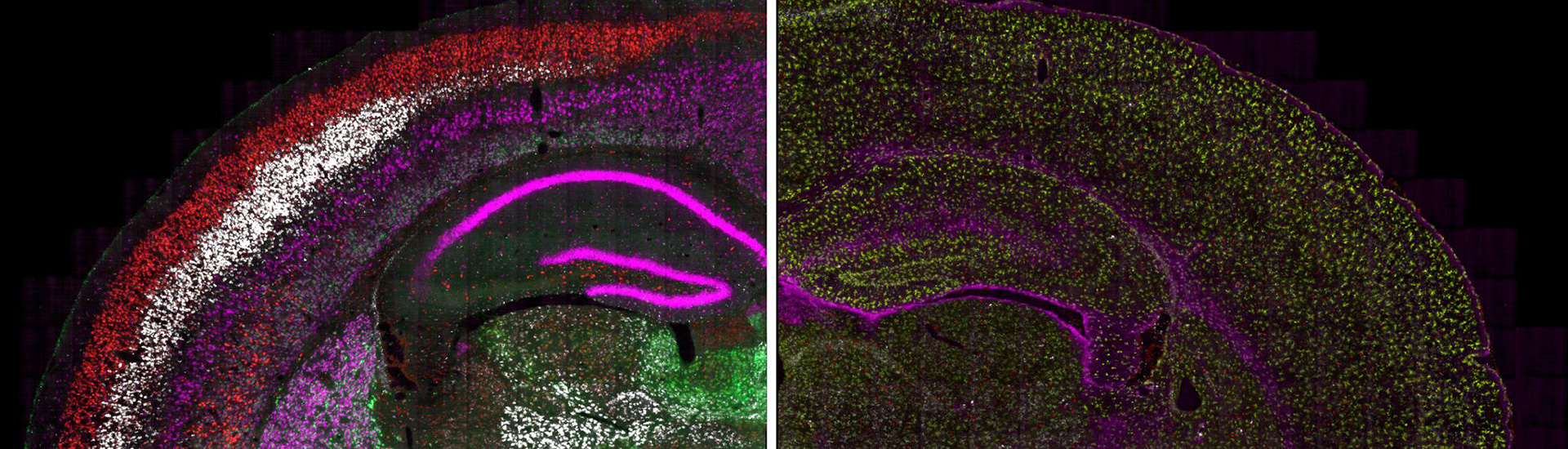
Omer Bayraktar is a Group Leader at the Wellcome Sanger Institute , leading research in the Cellular Genomics Programme. His work focuses on decoding human brain cellular diversity using spatial transcriptomics , imaging , and functional screening to study neural complexity in health and disease. Bayraktar's educational background includes a PhD from HHMI under Chris Doe, investigating neural diversity development in Drosophila , followed by postdoctoral work at University of California, San Francisco and University of Cambridge as a Life Sciences Research Foundation Fellow. He developed a spatial transcriptomic pipeline during his postdoc to analyze astrocyte heterogeneity in the cerebral cortex. His research explores neural cell type mapping , glial-neuronal interactions , and cellular pathways in neurodevelopmental disorders . Recent publications emphasize 3D tissue mapping , multi-omic integration , and computational tools like Cell2fate and WebAtlas. His work bridges neurogenetics and computational biology to advance understanding of human tissue ecosystems. Bayraktar's lab collaborates with the Human Cell Atlas initiative and develops technologies such as automated histology pipelines and highly-multiplexed smFISH for molecular cell typing. His team also investigates glia-based therapies and astrocyte functional heterogeneity in neurodevelopmental contexts. Key scientific contributions include: Discovering astrocyte layer patterns independent of neuronal laminae Developing cell2location for spatial cell mapping Characterizing Drosophila neural stem cell models with human relevance Notable awards include the Life Sciences Research Foundation Fellowship during his postdoctoral training. His current group includes a PhD student , Senior Data Scientists , and Bioinformaticians .


.jpg)