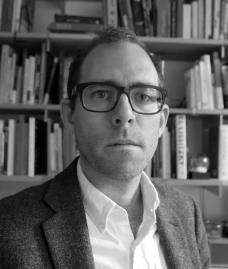
Craig Buckley is an Associate Professor in the Department of the History of Art and affiliated with the Yale School of Architecture. His research bridges modern architecture with visual arts and media, focusing on techniques like montage, collage, and screen-based practices. Education: BA (Trent University), MA (University of Western Ontario), PhD (Princeton University) His work examines how media such as print, film, and digital screens shape architectural culture. Key themes include cinema architecture, media theory, and the intersection of design with socio-political movements like 1968 protests. His recent articles analyze topics such as colonial-era cinema architecture, media façades, and pneumatic structures. He teaches courses on architecture’s relationship with media and print culture, often utilizing Yale’s special collections.
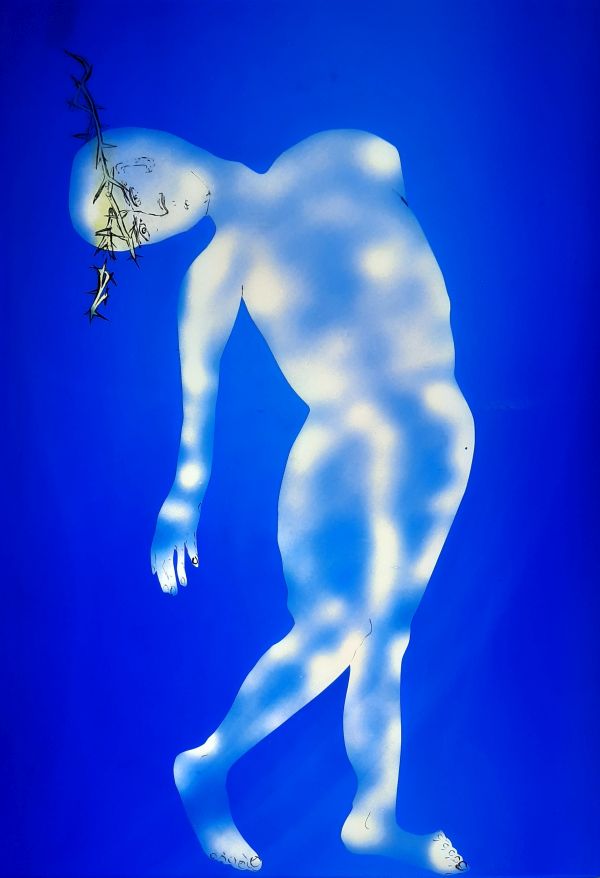
Mark Angus is a Visiting Lecturer at the Estonian Academy of Arts, Faculty of Design, and has been a pivotal figure in stained glass art since the 1970s. His work spans architectural commissions for churches and public spaces in the UK, Germany, and Ireland, alongside autonomous art in painting, printmaking, and artist’s books. He operates studios in Frauenau (Germany) and Graz (Austria). Education : Bristol Polytechnic (Chartered Surveyor, 1970), Swansea School of Art (Architectural Stained Glass, 1978). Research Interests focus on: Stained Glass as a medium for spiritual and secular narratives. Vitreography (glass-based printmaking) and its interplay with light and subtlety. Artist’s Books integrating letterpress and visual storytelling. Human Figure Representation in glass and paper, emphasizing dialogue and existential themes. Recent Publications include his 2018 artist’s book 80 Capriccios and the Turbulences of the Self , drawing on Goya’s Los Caprichos to critique modernity, and 2025’s KUNST. Kunst im Landkreis Passau, Bd. 70 , documenting regional art practices. His RED (2014) and Juvenescence (2014) explore color symbolism and eternal youth through acrylics and illustrated novels. Scientific & Artistic Awards : 1990: South West Arts & Crafts Fellowship 1984: South West Arts Major Craft Award 1979: Crafts Council Setting-up Grant 1978: Worshipful Company of Glaziers Travelling Scholarship Teaching & Collaborations : He has taught at the Estonian Academy of Arts, Penland School of Crafts (USA), and Bild-Werk Frauenau (Germany), including 2025’s masterclass Risk & Resonance – The Stained Glass Experience . His exhibitions, such as 80 Capriccios (2024, Neuburg am Inn), reflect interdisciplinary dialogues between glass, poetry, and theological themes.
Lucien Castaing-Taylor is the John Cowles Professor of Art and Anthropology at Harvard University and Director of the Sensory Ethnography Lab (SEL), currently on leave for Fall 2025. His work bridges anthropology and artistic practice through sensory ethnography, engaging critically with ecological crises and political challenges while maintaining an ethnographic commitment to lived experience. His research spans sensory ethnography, phenomenology, media anthropology, and post-human/multi-species relations, with deep engagement in cultural and political ecology across the Franco-Creole Caribbean, Europe, and American West. Castaing-Taylor interrogates intellectual history and reason while developing methodologies that merge artistic negative capability with ethnographic rigor to capture life's flux without imposing conventional narrative structures. Castaing-Taylor's creative output demonstrates a consistent trajectory from early works like In and Out of Africa (1992) to recent projects such as De Humani Corporis Fabrica (2022), evolving from representational ethnography toward immersive sensory experiences. His filmography and installations increasingly address the Anthropocene, human-animal relations, and embodied knowledge through experimental audiovisual techniques that challenge documentary conventions and expand ethnographic possibilities. His major awards include: Alpert Award in the Arts (2013) True Vision Award (2013) Los Angeles Film Critics' Circle Douglas Edwards Independent and Experimental Film Award (2012) FIPRESCI Award (2012) As Director of the SEL, Castaing-Taylor cultivates a collaborative environment where anthropology converges with experimental filmmaking and installation art. The lab functions as an incubator for boundary-pushing audiovisual research that engages with urgent planetary issues through sensory immersion, fostering new modes of ethnographic inquiry that transcend traditional academic publishing.
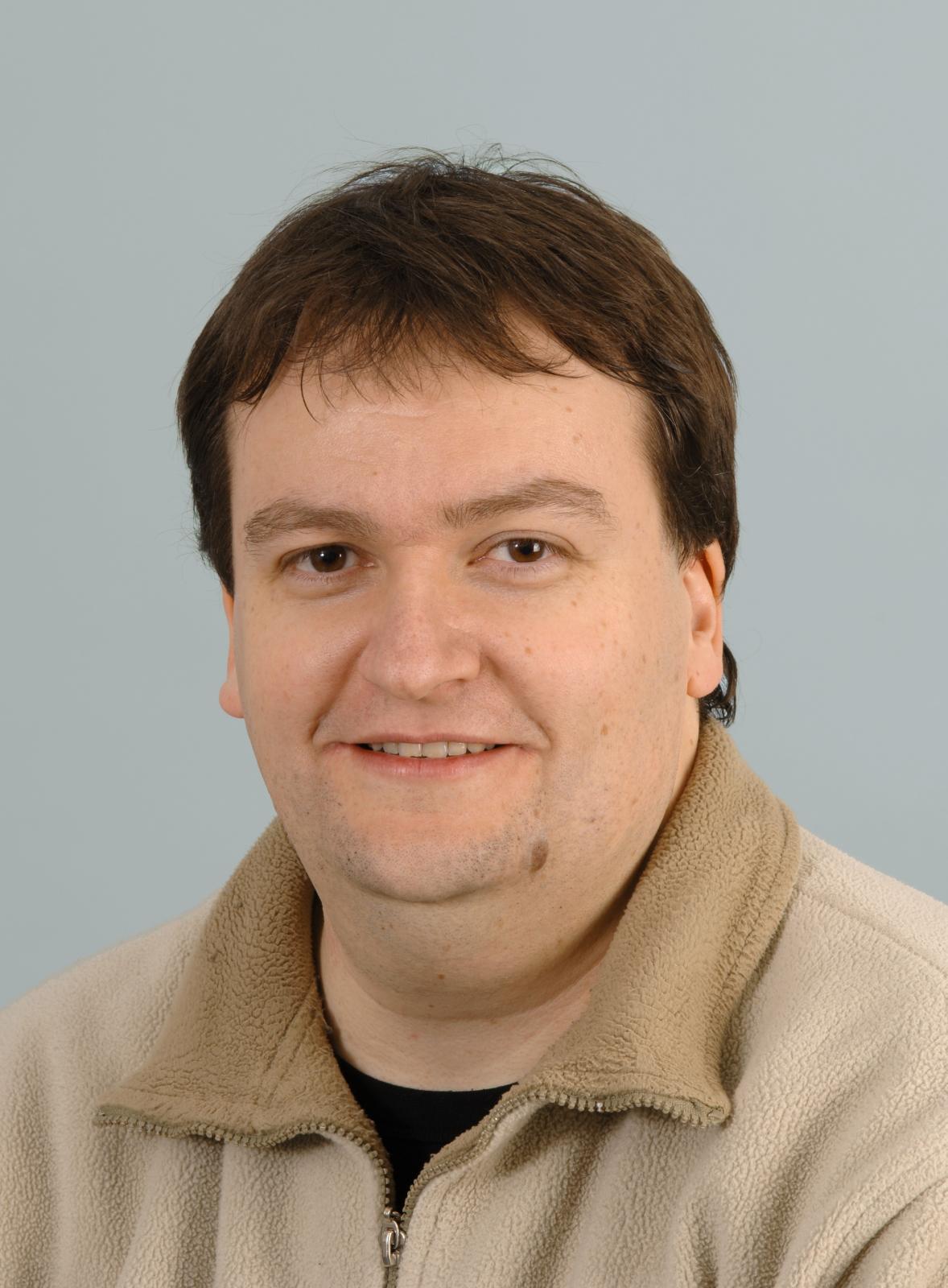
Kyle Bellucci Johanson serves as a Visiting Critic in Cornell University's College of Architecture, Art, and Planning, Department of Art. Holding an MFA from California Institute of the Arts and a BA in Art and Reconciliation Studies from Bethel University, he merges artistic practice with critical theory through performance architecture and collaborative media. Whitney Independent Study Program (2022–23) Founding fellow at land's edge free school (Los Angeles) Teaching experience at SAIC, UIC, CUNY, and Cooper Union His research investigates: Power structures through spatial interventions Critical theory applications in art practice Post-capitalist imaginaries Hauntology and historical materialism Transdisciplinary approaches to social critique Project trends reveal: Reinterpretation of Soviet design principles Investigation of worker identity in post-industrial contexts Temporal and spatial dislocation in artistic practice Monument critique through performative methods Quantum theory-inspired architectural concepts Reimagining of common spaces as political sites Scientific awards include: Creative Research Grant (2025) Whitney ISP participation (2022–23) Automata Studio Residency (2022) Artists Run Chicago Grant (2021) BOLT Residency (2020–21) Through projects like KLUB WRKR —a nomadic workers' club reimagined for the gig economy—and table (2018–2022), a Chicago-based experimental space for artistic practice, he interrogates institutional frameworks while fostering community through discursive meals and collaborative exhibitions.
Prof. Dr. André Rubbia is a Full Professor of Experimental Physics at ETH Zurich's Department of Physics, holding this position since December 2003 after serving as Associate Professor from 1998. His research spans neutrino physics, astro-particle physics, and dark matter detection through major international collaborations including CERN, Gran Sasso National Laboratory, and Fermilab. He currently serves as Co-Spokesperson for the billion-dollar DUNE neutrino project at Fermilab, managing over 900 scientists. His educational background includes: Diploma in Physics from the University of Geneva (1990), with thesis work on the L3 experiment at CERN's LEP accelerator Ph.D. in Physics from MIT (1993) under Nobel Laureate S.C.C. Ting, focusing on high-energy electron-positron collisions Rubbia's research centers on fundamental particle interactions, particularly neutrino oscillations and physics beyond the Standard Model. He pioneered liquid Argon Time Projection Chamber (LAr TPC) technology and dual-phase detection systems, enabling breakthroughs in neutrino mass measurements and dark matter searches. His work spans underground laboratories (Gran Sasso, Canfranc), the LHC's CMS detector, and neutrino beam experiments like T2K. Recent explorations include antimatter gravity tests, electron-positron bound states, and dark hidden sector searches. His 2025 publications reveal intense focus on neutrino oscillation parameter precision (T2K, Hyper-Kamiokande), FASER's LHC neutrino program, and DarkSide-20k dark matter detector development. Key themes include cross-section measurements, advanced detector technologies (SiPMs, emulsion tracking), and statistical methods for oscillation analysis, reflecting integration of theoretical modeling with cutting-edge instrumentation. Scientific recognition includes: Breakthrough Prize for Fundamental Physics (2016) awarded to the international team for discovering matter-anti-matter asymmetry in neutrino oscillations APS Viewpoint selection for editing the paper announcing first electron neutrino appearance at accelerators Rubbia has supervised over fifty PhD and Master's theses while securing substantial research funding as Principal Investigator for 20+ Swiss National Science Foundation projects and Coordinator of two EU FP7 Design Studies. His DUNE leadership involves complex international grant management across 30+ countries. He leads ETH Zurich's experimental particle physics group across multiple facilities: the ICARUS neutrino detector at Gran Sasso, CMS at CERN, DUNE at Fermilab, and DarkSide-20k for direct dark matter detection. His team developed the first underground ton-scale liquid argon detector and maintains collaborations with Japanese (Super-Kamiokande) and American (Fermilab) institutions.
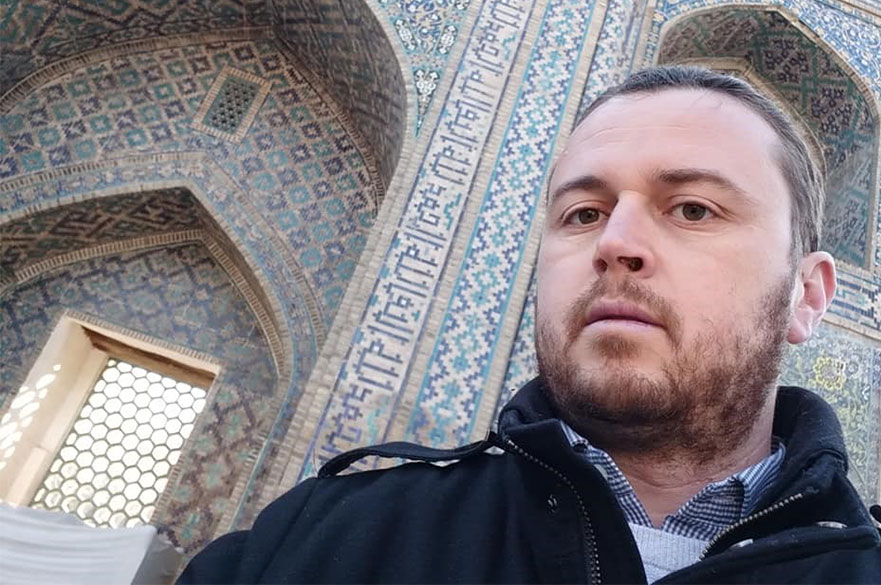
Dr. Majdi Faleh is an Academic Fellow/Lecturer in Cultural Heritage at the School of Architecture Design and Built Environment, Nottingham Trent University. He focuses on architectural globalization, migration and heritage, Islamic architecture ethics, and social justice in cities. Previously, he held roles at the University of Bahrain, MIT’s Aga Khan Programme, and multiple Australian institutions. He coordinates the Tunisia ENGAGE Hub Network for Humanitarian Heritage and leads the ARC-funded 'Australian Mosque Today' project. Education: PhD in Architecture and Humanities (University of Western Australia), Master of Architecture (Ball State University). Affiliations: Registered Architect in Tunisia, member of AIA, ICOM, and multiple architectural networks. His research bridges marginalized communities’ heritage with global architectural trends, emphasizing ethical frameworks in design. Notable projects include studies on Tunisian medinas, Dubai’s urbanization, and Australian mosque architecture. His work has been supported by ARC grants, Fulbright, and other international bodies. He has authored/co-authored over 20 peer-reviewed articles and book chapters on topics like public housing challenges for refugees, Islamic architectural ethics, and cultural preservation. Awards include the MIT Aga Khan Fellowship and Fulbright grants. Grants & Projects: Led £400k ARC-funded mosque project, coordinated Tunisia-UK humanitarian heritage networks, and contributed to Melbourne’s African immigrant housing studies. He has taught at universities in Australia, China, and the Middle East, and his practice spans architecture in the US, Tunisia, and France. Fluent in five languages, he engages in international conferences and editorial roles for journals like Journal of Architecture .
Casey Reas is a Professor of Design Media Arts at the University of California, Los Angeles (UCLA), within the UCLA School of the Arts and Architecture. Previously, he served as an Associate Professor at Interaction Design Institute Ivrea (2001–2003). His academic background includes a BSc in Design from the University of Cincinnati (1996) and an MSc in Media Arts and Sciences from MIT (2001). Reas co-created the open-source programming language Processing with Ben Fry, revolutionizing visual arts and education globally. He is renowned for blending art and technology, creating generative works exhibited in institutions like the Centre Georges Pompidou and the Whitney Museum of American Art. His research focuses on computational aesthetics, algorithmic art, and digital media's intersection with music and design. Education: Bachelor of Science in Design, University of Cincinnati, 1996 Master of Science in Media Arts and Sciences, MIT, 2001 Research Interests: Reas explores the synergy between code and creativity, emphasizing generative systems, real-time visualization, and interactive installations. His work often addresses themes of randomness, pattern formation, and human-computer interaction. Notable projects include Processing language development, music video collaborations with The National, and immersive installations like Sketch Machine and Warm Up . Recent Collaborations: Music videos for The National’s Sleep Well Beast (2017), blending algorithmic visuals with Grammy-winning music. Interactive installations such as Impure Functions (2017) and Warm Up (2017), co-created with UCLA’s Conditional Studio. Public commissions like Sketch Machine (2018), an open-source drawing tool for GIPHY. Awards: Contributor to The National’s Grammy Award for Best Alternative Music Album ( Sleep Well Beast , 2018). Labs/Teams: Reas leads the Reas Studio and collaborates with UCLA’s Arts Conditional Studio, focusing on experimental software, generative art, and interdisciplinary projects.
Associate Professor Wenhua Zhao is a globally recognized expert in offshore hydrodynamics and renewable energy technologies at The University of Queensland , School of Civil Engineering. With over 110 publications and 30 million AUD in secured research funding, his work bridges theoretical and practical advancements in marine engineering. Research focuses on Clean Energy , Artificial Intelligence , and Climate Change , specifically floating wind energy, floating solar, offshore aquaculture, and green hydrogen production. His 15 most recent articles (2024-2025) emphasize wave-structure interactions, gap resonance dynamics, and AI-driven wave prediction, published in top journals like Journal of Fluid Mechanics and Ocean Engineering . Scientific awards include the prestigious ARC Future Fellowship (2024-2028) and DECRA Fellowship (2019-2022) , recognizing his contributions to academia and industry. He teaches the 'Design of Offshore Energy Systems' course , training hundreds of students in coastal and ocean engineering, and serves as Deputy Editor for Ocean Engineering and Associate Editor for ASME's Journal of OMAE . Available for research supervision, Zhao actively collaborates with editorial boards of Applied Ocean Research and other Q1 journals.
Katharina Knust is a filmmaker and artistic staff member at the Lucerne School of Design, Film and Art (HSLU) since 2021. She holds a background in media arts from Bauhaus-Universität Weimar and Concordia University Montreal. Her interdisciplinary work bridges documentary, feature film, and installation art, with notable projects like Letztes Jahr in Utopia (2018), awarded the Basler Filmpreis. Education: Bauhaus-Universität Weimar (Media Arts) Concordia University Montreal (Media Arts) Research focuses on interactive documentary and experimental filmmaking. Her work has screened at festivals like DOK Leipzig and CPH:DOX. She also serves as a guest lecturer in film at the University of Basel and collaborates in residencies/workshops. Notable Achievements: Basler Filmpreis (2018) World premiere at CPH:DOX (2018) Professional Roles: Production Manager for hybrid film-installation projects Assistant Director for boundary-crossing film projects
Wu Hung is the Harrie A. Vanderstappen Distinguished Service Professor at the University of Chicago, affiliated with The College , the Department of Art History , and the Department of East Asian Languages and Civilizations . He serves as Director of the Center for the Art of East Asia and Consulting Curator at the Smart Museum of Art .
Golan Levin is Professor of Electronic Art at Carnegie Mellon University's School of Art, with courtesy appointments in the School of Design, School of Architecture, School of Computer Science, and Entertainment Technology Center. From 2009 to 2022, he served as Director and Co-Director of CMU's Frank-Ratchye STUDIO for Creative Inquiry, a laboratory dedicated to supporting atypical, anti-disciplinary research at the intersection of arts, science, technology, and culture. Levin's research spans interactive art, digital fabrication, information visualization, and generative design. He explores the critical potential of visualization, generative computation for expressive form, and how abstraction connects to realities beyond language. His practice engages interactive gestural robotics, nonverbal interaction aesthetics, and tactical applications of personal digital fabrication through responsive artifacts and media provocations that highlight human-machine relationships. His publications reveal consistent innovation in real-time audiovisual systems, interactive fabrication interfaces, and pedagogic tools for artists. Key trends include slit-scan video techniques, tangible augmented-reality performance, and noise-based visualizations, demonstrating his commitment to expanding human action vocabulary through digital media while bridging artistic expression with computational systems. Levin's work has received significant recognition: Permanent collection inclusion at Museum of Modern Art (MoMA) Whitney Biennial exhibition "50 Designers Shaping the Future" by Fast Company (2012) Competitive grants from National Endowment for the Arts, National Endowment for the Humanities, Creative Capital, and Rockefeller MAP Fund As an educator, Levin teaches "studio courses in computer science" on interactive art, experimental capture, and generative design, emphasizing computation as a medium for critical inquiry. His research funding from major cultural institutions supports interdisciplinary exploration at the arts-technology nexus. The Frank-Ratchye STUDIO for Creative Inquiry, which he directed for 13 years, remains a vital hub for anti-disciplinary collaboration, continuing his legacy of fostering creative agency through technology-infused artistic practice.
Assoc. Prof. Dr. Sema Alaçam Doğan has been affiliated with Istanbul Technical University since 2014, serving as an Associate Professor in the Department of Architecture . She has held administrative roles including Deputy Head of Department and Erasmus Coordinator. Education : PhD in Informatics in Architectural Design (2008-2014), MS in Informatics in Architectural Design (2005-2008), and BS in Architecture (1999-2005) from Istanbul Technical University. Her research explores Computational Design , Artificial Intelligence in Architecture , and Sustainable Material Innovation . She investigates digital tools for heritage preservation, daylight optimization in BIM, and cognitive development in architecture students. Recent publications analyze AI-assisted design literacy , machine learning for Sinan mosques , and environmental comfort in Harran houses . Her work integrates algorithmic frameworks with sustainable practices. Scientific awards include multiple ITU Publication and Performance Awards (2021-2024), FABFEST Prizes , and the 2024 Artemis Educator Award from NASA. Active projects like "Physical Computation in Architectural Drawing" and "Robotic Fabrication with Recycled Wind Turbine Blades" demonstrate her leadership in computational and sustainable research.
Dr. Caterina Albano is a Reader at Central Saint Martins, University of the Arts London. She holds a PhD in Renaissance Studies (London University, 1993–1998) and specializes in interdisciplinary research at the intersection of art, medical sciences, and cultural theory. Her work explores the cultural history of emotion, politics of memory, and contemporary art practices, with a focus on themes like fear, vulnerability, and the unconscious. Albano is a prominent curator, organizing exhibitions such as Psychoanalysis: The Unconscious in Everyday Life (Science Museum, London) and Crossing Over: Art, Science and Biotechnologies (Royal Institution). She also co-founded the Art and Science Research Group at CSM and chairs the College Research Degree Subcommittee. Her research integrates curatorial practice with academic inquiry, addressing topics such as neuroscience, biogenetics, and the ethics of air in contemporary art. Albano supervises doctoral students in art and curatorial practices and actively contributes to academic discourse through editorial roles and grant assessments. She speaks multiple languages, including Italian, French, German, and English, and her work bridges art, science, and humanities to explore complex cultural and societal issues.
Edwin van der Heide is a part-time Lecturer and researcher at Leiden University, affiliated with the Leiden Institute of Advanced Computer Science (LIACS) and the Academy for Creative and Performing Arts (ACPA). His work bridges sound, space, and interaction through installations, performances, and environments. Key roles include: Co-head of ArtScience Interfaculty (Royal Conservatoire & Royal Academy of Art, The Hague) until 2016 Edgard Varèse Guest Professor at TU Berlin (2009) Invited artist at Le Fresnoy (France) and HKB Bern University of the Arts (2019) Research Interests: Spatial sound composition, audience interaction, interdisciplinary art, and the intersection of technology with auditory perception. Notable projects include Whispering Wind (permanent installation at Leiden University) and Spiral of Time (MACBA, Barcelona). Recent Articles & Exhibitions (2023–2024): Focus on large-scale installations like Pneumatic Sound Field and Spiral of Time , emphasizing public engagement and spatial acoustics. Awards: Witteveen+Bos Art+Technology Award (2009), Best Paper Award for BAI (摆) (2018). Grants & Labs: Collaborations with institutions like NCCA (Russia), MAXXI (Italy), and involvement in projects like Evolving Spark Network (global sound art initiatives).
Martha Stiegman is an Associate Professor at the Faculty of Environmental and Urban Change, York University. Her research integrates Indigenous knowledge, food sovereignty, and arts-based methodologies to address issues of social, environmental, and disability justice. She is actively engaged in community-based research and public scholarship in Toronto and Mi’kma’ki (Nova Scotia). Her educational background includes a PhD from Concordia University’s Special Individualized Program and a BA in English Literature & Political Science from McGill University. This interdisciplinary foundation supports her work at the intersection of activism, research, and art. Stiegman’s research focuses on three interconnected domains: Indigenous/settler treaty relations, food sovereignty and justice movements, and participatory video and arts-based research. She emphasizes decolonizing methodologies and community-led knowledge production. Her work explores how arts-based approaches can deepen dialogues across communities and strengthen collective action for justice. Her recent publications and multimedia projects demonstrate a strong trend toward interdisciplinary, community-engaged scholarship that bridges Indigenous epistemologies, environmental justice, and disability justice. She frequently uses film, digital storytelling, and public art to mobilize knowledge and challenge colonial narratives. Co-creator of A Treaty Guide for Torontonians (2022) Lead on the Polishing the Chain project exploring Toronto’s treaty relationships Editor of the forthcoming Anti Colonial Food Systems (Routledge) Active collaborator with Indigenous scholars and artists including Dr. Sherry Pictou, Ange Loft, and Elder Kerry Prosper Stiegman has been involved in significant research grants such as the Atlantic Aboriginal Health Research Program. While specific advisees are not listed, her collaborative projects suggest active mentorship and supervision. She does not appear to lead a formal lab but works within research collectives and community partnerships.