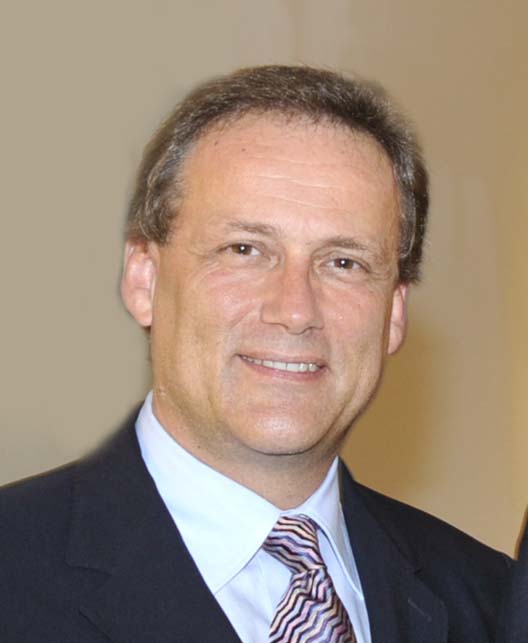
Dimitrios Konstantinidis serves as Associate Professor and Vice Chair for Undergraduate Studies in the Department of Civil and Environmental Engineering at the University of California, Berkeley. His expertise spans earthquake engineering and engineering mechanics with emphasis on seismic safety of critical infrastructure. Education: Ph.D. in Civil & Environmental Engineering, UC Berkeley (2008) M.S. in Civil & Environmental Engineering, UC Berkeley (2001) B.S. in Civil & Environmental Engineering, UC Berkeley (1999) His research integrates experimental testing and mathematical modeling to advance seismic isolation technologies, improve nonstructural component performance, and enhance resilience of hospitals and power plants. He pioneered methodologies for characterizing rubber bearings in protective systems, documented in his authoritative book Mechanics of Rubber Bearings for Seismic and Vibration Isolation . His work directly informs modern design codes through practical engineering solutions. Professor Konstantinidis secured a PEER grant for pioneering seismic isolation research in February 2025. He actively mentors graduate students through individual research courses (CIVENG 299/601) and teaches core subjects including Engineering Dynamics (CIVENG 126) and Earthquake Protective Systems (CIVENG 223).
Professor Susanne Braun is a distinguished faculty member in the Department of Management and Marketing at Durham University's Faculty of Business. Her academic work focuses on leadership identity dynamics, narcissism in leadership contexts, and authentic leadership development. Braun maintains an active research program with numerous publications spanning leadership theory, organizational psychology, and identity studies. Her research interests center on leader and follower identity dynamics , examining how individuals' perceptions of themselves as leaders evolve and influence their behavior. She extensively investigates narcissism in leadership , differentiating between grandiose and vulnerable forms and exploring their contextual manifestations. Her work on authentic leadership examines how leaders can develop genuine self-expression in organizational contexts. Braun's research employs diverse methodologies including multi-study investigations, quasi-experimental designs, and dynamical systems approaches to capture the fluid nature of leadership identities. Braun's publication record reveals consistent scholarly output with a notable concentration in 2023-2025, demonstrating her active research trajectory. Her work spans multiple publication types including journal articles, book chapters, and authored books. Thematically, her research shows progression from foundational work on narcissism and motivation to lead toward more complex investigations of identity dynamics in response to organizational events and contexts. She frequently collaborates with international scholars, indicating strong global research networks. Braun has supervised nine doctoral students, including both PhD and Doctor of Business Administration candidates. Her supervision portfolio shows consistent activity from 2015 to present, with five current students and four completed degrees. She frequently serves as Director of Studies and collaborates with other faculty members as second supervisors, demonstrating integration within her academic community.
Jan Theeuwes is a full Professor and current Head of Department at Vrije Universiteit Amsterdam's Department of Cognitive Psychology. With over 250 peer-reviewed publications, he leads research in visual attention, statistical learning, and distractor suppression mechanisms. His work bridges fundamental cognitive science with practical applications in road design and human factors. His educational background includes: BSc in Mechanical Engineering (1981) BSc and MSc in Experimental Psychology with highest honors (cum laude) from Tilburg University (1987) PhD from Vrije Universiteit with highest honors (1992) Theeuwes' research focuses on fundamental knowledge acquisition regarding perception, attention, memory, and emotion using diverse methodologies including behavioral measurements, eye tracking, fMRI, psychophysiological recordings, patient studies, and computational modeling. His specific contributions span attentional and oculomotor capture, working memory, multimodal integration, remapping, face perception, visual search, emotion processing, unconscious processing, the attentional blink, reward processing, and applied road design research. His recent work demonstrates how statistical learning shapes attentional selection by creating predictive models of where and when to expect relevant information. Analysis of his recent publications reveals a strong focus on the neural and behavioral mechanisms of learned distractor suppression, with particular emphasis on how statistical regularities in the environment shape attentional priority maps. His research increasingly integrates electrophysiological methods with behavioral paradigms to uncover the temporal dynamics of attentional selection and suppression processes. His notable scientific achievements include: Election to the Royal Dutch Academy of Science (KNAW) in 2010 Receiving the first Bertelson Award for outstanding psychological research from the European Society for Cognitive Psychology in 2001 Serving as president of ESCOP (European Society for Cognitive Psychology) from 2016 to 2018 Theeuwes serves as principal advisor to the Dutch Department of Transportation (Rijkswaterstaat) regarding road design and signing. In 2023, he co-founded Attention Architects with two former PhD students, a company applying eye-tracking research to practical settings. His work has received substantial research funding supporting his investigations into attentional mechanisms and their real-world applications. Theeuwes has established collaborations across multiple institutions and mentored numerous researchers who have gone on to establish their own careers in cognitive science. He leads the Cognition Team at Vrije Universiteit Amsterdam, which investigates fundamental attentional processes using cutting-edge methodologies. The team maintains strong connections with applied research settings through projects with government agencies and industry partners, particularly in transportation safety. Their current work focuses on how statistical learning dynamically shapes attentional selection in complex visual environments.
Jürgen Cito is an Associate Professor with tenure at Vienna University of Technology (TU Wien), specializing in software engineering, explainable AI, and performance engineering. He leads research at the IPA Lab (as indicated by his personal website) and maintains a visiting researcher position at Google. His academic journey began with joining TU Wien as an Assistant Professor in Spring 2020, with promotion to Associate Professor announced in April 2024. His research interests span multiple critical areas of modern software development, with particular focus on developer experience, program comprehension, and the intersection of AI with software engineering practices. His work bridges theoretical foundations with practical industrial applications, as evidenced by collaborations with major technology companies. Analysis of his recent publications reveals a strong emphasis on practical tools and methodologies that enhance software quality, performance, and security. His research trajectory shows increasing focus on explainable AI techniques applied to software engineering problems, performance prediction from source code, and automated security testing approaches that leverage large language models. best teaching award for distance learning for Web Engineering (2020) Cito actively contributes to the software engineering community through numerous conference committee roles, including program committee positions at ASE, ICSE, ESEC/FSE, and other major venues. His lab appears to focus on developer tools, program analysis, and AI-assisted software engineering, with connections to both academic and industrial research environments.
David Kurz is a Visiting Assistant Professor in Environmental Studies at Boston College. He holds a PhD in Environmental Science, Policy, and Management from UC Berkeley, an MPhil in Zoology from the University of Cambridge, and an AB in Ecology & Evolutionary Biology from Princeton University. His interdisciplinary research focuses on the human dimensions of wildlife conservation, climate policy, and socio-ecological systems. Dr. Kurz explores how climate change, urbanization, and land-use shifts impact ecosystems and human communities. Key research projects include studying bearded pig distributions in Borneo, cultural implications of lobster die-offs in the Long Island Sound, and equity in urban green space access. His work bridges natural and social sciences to address challenges in biodiversity conservation and climate resilience. Recent publications highlight topics like wildfire biodiversity overlaps in California, socio-ecological dynamics in Malaysian Borneo, and the impacts of the COVID-19 pandemic on wildlife. He emphasizes mentorship, guiding students toward real-world problem-solving and engaged scholarship. Dr. Kurz’s teaching and research align with Boston College’s commitment to environmental justice and interdisciplinary collaboration.
Dr. Dustin Crowther is an Associate Professor in the Department of Second Language Studies at the University of Hawaii at Manoa. He holds a PhD from Michigan State University and currently serves as Director of the Center for Academic Spoken English (CASE), an initiative supporting non-native English speakers in academic oral communication. His primary research focuses on second language speech comprehensibility, global Englishes pedagogy, and listener perception dynamics. Dr. Crowther has held editorial roles for TESOL Quarterly (2019-2024) and will become Editor of the Journal of Second Language Pronunciation in 2025. Dr. Crowther's expertise includes L2 pronunciation instruction, program development in SLA, and methodological practices in second language research. He co-authored Shaping Learners' Pronunciation: Teaching the Connected Speech of North American English (2022) and co-edited Investigating World Englishes: Research Methodology and Practical Applications (2019). His research appears in top-tier journals like Applied Linguistics , Language Learning , and TESOL Quarterly . Education: PhD, Michigan State University Professional Roles: Editor ( Journal of Second Language Pronunciation ), Director (CASE), Affiliate Faculty in Linguistics His work bridges SLA research with pedagogical applications, emphasizing global Englishes' role in multilingual academic contexts. Dr. Crowther collaborates with international scholars through the CASE initiative and has developed innovative assessment methodologies for L2 speaking tasks.
Sean Yendrys is a Professor and Head of the MA Program in Graphic Design at the Estonian Academy of Arts in Tallinn, Estonia. He is an independent graphic designer based in Berlin and Tallinn, collaborating with artists, architects, and institutions globally. He previously directed the independent design summer program "A School, A Park" in Montreal (2016–2018). His teaching roles include Parsons The New School, Vermont College of Fine Arts, and Bergen Academy of Art and Design, among others. Education: BFA from Concordia University, MFA from Yale School of Art. Research focuses on alternative pedagogical models in design education, institutional critique, and the intersection of graphic design with performance art and spatial politics. His design practice spans exhibition identities, editorial projects, and experimental publishing for institutions like the Canadian Centre for Architecture, Harvard GSD, and Tanzkongress 2019. Recent publications include contributions to Para-Platforms (2018), Extra-curricular (2020), and the 2024 Movement Research Performance Journal . Current projects emphasize collaborative editorial work and institutional design frameworks.
Dr. Edyta Frelik is a Senior Lecturer at the Department of American Studies, Faculty of Languages, Literatures and Cultures, Maria Curie-Skłodowska University. Her academic career spans research and teaching in American art history, visual culture, and interdisciplinary intersections between literature and visual arts. She holds a PhD in Humanities (UMCS, 2013) and has been recognized with prestigious awards including the Terra Foundation Award (2013) and Georgia O’Keeffe Museum nomination (2018). Her research focuses on: Modernist artists' intellectual engagements Interactions between textual and visual media Anti-intellectualism in American art and culture Gender dynamics in avant-garde practice Relationships between science/technology and artistic expression Recent publications highlight her expertise in artists like Georgia O’Keeffe, Ad Reinhardt, and Frank Lloyd Wright, with thematic clusters in: American cultural identity formation Artistic self-representation strategies Transatlantic modernist dialogues Architectural language theory Visual epistemology Post-historical cultural analysis Scientific recognitions include: 2013 : Terra Foundation Award for Best Essay by International Scholar 2018 : Georgia O’Keeffe Museum Book Prize Nomination 2022 : NCN MINIATURA 5 Grant Dr. Frelik has organized international conferences like Wordstruck (2015) and actively participates in academic exchanges across Europe and North America.
Xinfeng Gao is a Professor of Mechanical & Aerospace Engineering at the University of Virginia, leading the CFD & Propulsion Laboratory. She specializes in high-performance computing (HPC) algorithms for fluid dynamics, combustion, and plasma systems. Her work integrates numerical methods, parallel computing, and data analytics to address complex engineering challenges. Prior to UVA, she held a professorship at Colorado State University from 2011 to 2023, establishing the CFD and Propulsion Lab there. She earned her PhD in Aerospace Engineering from the University of Toronto in 2008, followed by postdoctoral research at Lawrence Berkeley National Laboratory (LBNL). Her research focuses on three core areas: high-order CFD methods for high-speed flows, parallel adaptive algorithms for spatial and temporal domains, and HPC combined with data analytics for aerospace design optimizations. Applications include reduced-order models for turbulence, propulsion device innovation, and quantum computing for fluid simulations. She collaborates with national labs (LLNL, LBNL), aerospace industries (Boeing), and software companies to translate research into practical solutions. Her recent grants include the NSF Mid-Career Advancement Award (2022–2025) for CFD+DA integration in commercial tools and UVA’s RIG Award (2025–2026) for gas-surface material studies under extreme conditions. She teaches MAE 6720 (Computational Fluid Dynamics) and MAE 3420 (Computational Methods). Key awards include the 2023 University of Virginia Research Achievement Award and the 2022 NSF MCA Award. Her work emphasizes cross-disciplinary innovation, blending computational science with experimental validation through initiatives like the Gas-Surface-Materials RIG project, involving experts from MAE, MSE, Chemistry, and Physics.
Ti John is a Research Fellow at Aalto University's Department of Computer Science within the School of Science. He is affiliated with Professor Marttinen's research group and the Probabilistic Machine Learning group led by Professor Samuel Kaski. His work connects with the Finnish Center for Artificial Intelligence (FCAI) and the Helsinki Institute for Information Technology (HIIT). Dr. John's research focuses on machine learning, particularly Bayesian optimization, Gaussian processes, and point process models. His work spans theoretical developments in neural processes and practical applications in healthcare analytics and large language models. He has made significant contributions to equivariant neural processes, causal mediation analysis in healthcare, and interpretability of additive models. His publication record shows consistent output with 17 publications between 2021-2024, including multiple papers at top AI conferences like NeurIPS, ICML, and ICLR. His research demonstrates strong interdisciplinary connections between statistical modeling, artificial intelligence, and healthcare applications. Active reviewer for NeurIPS, ICLR, AISTATS Reviewer for Journal of Machine Learning Research Member of Finnish Center for Artificial Intelligence project Dr. John has been actively contributing to the machine learning community through peer review and conference participation, demonstrating expertise across multiple subfields of artificial intelligence and statistical modeling.
Professor Nicholas Hanley holds the Chair in Environmental and One Health Economics at the University of Glasgow's Institute of Biodiversity, Animal Health and Comparative Medicine. He joined in 2017 after previous roles at the Universities of Stirling, Edinburgh, and St Andrews. His research focuses on applying economic methods—including behavioral economics—to biodiversity conservation, One Health challenges, sustainability metrics, and the design of Payment for Ecosystem Services (PES) schemes. He is an Associate Editor of Resource and Energy Economics and Ecological Economics . Current research includes modeling biodiversity net gain policies in the UK, ecological-economic simulations of woodland expansion impacts, and the relationship between natural sounds (e.g., bird song) and mental well-being. He also leads work on coastal resilience, soil carbon markets, and the economic implications of historic pollution. His projects often integrate interdisciplinary approaches, combining ecology, economics, and policy analysis. Key research themes include valuing biodiversity offsets, spatial coordination in conservation auctions, and the economic consequences of land-use changes. His work emphasizes practical policy applications, such as designing effective conservation markets and evaluating trade-offs between environmental and economic objectives. Publications span over 350 articles, with recent work focusing on marine plastic pollution agreements, livestock disease economics in Tanzania, and sediment management in hydropower systems. His research frequently highlights the importance of integrating behavioral insights and spatial analysis into environmental policy design.
Mutian Niu serves as an Assistant Professor at the Department of Environmental Systems Science, ETH Zurich, where he leads the Professorship for Animal Nutrition. His research addresses critical sustainability challenges in livestock production through innovative approaches to methane mitigation and precision animal nutrition. His primary research domains include Animal Nutrition , Dairy Science , and Methane Mitigation , with specific expertise in feed additives (3-nitrooxypropanol, microalgae), rumen fermentation dynamics, and physiological responses in dairy cattle. He integrates computational methods including machine learning for respiratory monitoring and video-based behavioral analysis, bridging animal science with environmental sustainability. Analysis of his recent publications reveals a strong interdisciplinary trajectory focused on practical methane reduction solutions. Key trends include methodological advancements in methane measurement validation, meta-analyses of feed additive efficacy, and emerging applications of computer vision for non-invasive health monitoring in dairy operations. His work consistently emphasizes environmental impact reduction while maintaining production efficiency in ruminant systems.
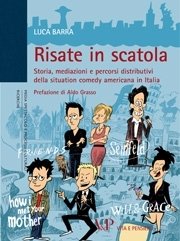
Luca Barra is Full Professor of Television and Digital Media at the Department of Arts, University of Bologna. His research focuses on media studies, particularly television history and contemporary evolution, transnational circulation of content, serialization, and comic/humorous genres. He has coordinated the Master's Degree in Information, Cultures and Media Organization since 2021 and serves as editor-in-chief of VIEW. Journal of European TV History and Culture. University of Bologna, Department of Arts Research areas: Television History, Transnational Media, Digital Transformation, Italian TV Production Barra's work examines the international mediation of ready-made TV formats, Italian streaming partnerships, and the cultural implications of digital television. His recent articles analyze dystopian narratives, sitcom reception in Italy, and the redefinition of celebrity during the pandemic. He contributes to academic discourse through editorial roles in journals like SERIES and Comunicazioni Sociali. His publications include monographs on Italian television programming, sitcoms, and co-edited volumes exploring European premium TV fiction and digital media frameworks. Barra has led research projects such as ATLas and F-ACTOR, and collaborates with international institutions including Brown University and NECS.
Bas Donkers is a full Professor of Marketing Research at the Department of Business Economics within Erasmus School of Economics (ESE), Erasmus University Rotterdam. Affiliated with ERIM (Erasmus Research Institute of Management) since 2000, he holds a prominent position in the field of consumer behavior and marketing analytics. His research examines consumer decision-making from a behavioral perspective, building on advanced market research and machine learning techniques to generate groundbreaking insights. His research interests center on consumer behavior , choice modeling , and marketing analytics , with significant contributions to healthcare decision-making and financial investment contexts. Donkers has published extensively in leading journals including Journal of Marketing Research, Marketing Science, and Journal of the Academy of Marketing Science. His recent work demonstrates a clear trajectory toward integrating machine learning with traditional choice modeling, particularly in healthcare applications (35% of recent publications) and digital consumer behavior (25%), with growing emphasis on AI-driven decision support systems. ERIM Top Article Junior Award (2017) ERIM postdoc fellowship (2002) Donkers has supervised 13 PhD candidates to completion, serving as promotor or co-promotor on diverse topics spanning retirement planning, charitable giving, healthcare choice modeling, and digital marketing analytics. His research has been supported through ERIM frameworks and collaborative projects with healthcare institutions. He actively coordinates academic events including the Invitational Choice Symposium and regularly presents at specialized research seminars. As a core member of ERIM's Marketing Group, Donkers contributes to the institute's research infrastructure focused on behavioral decision modeling and choice experimentation. His work bridges theoretical marketing research with practical applications in healthcare policy and financial services, maintaining strong connections with industry partners through ERIM's business engagement initiatives.
Prof. Maurizio Musso is a Professor of Experimental Physics at the University of Salzburg , leading the Musso Group within the Faculty of Natural and Life Sciences . His research focuses on condensed matter physics, materials science, and Raman spectroscopy applications. The group specializes in the characterization of novel materials, including biofoams, nanomaterials, and sustainable biomaterials, leveraging advanced spectroscopic techniques such as Raman scattering and FTIR. Prof. Musso is also actively involved in teaching, contributing to courses in the Joint-Degree Bachelor’s Program in Engineering (PLUS-TUM), the Master’s program in Chemistry and Physics of Materials, and the Bachelor’s degree in Physics. Research activities emphasize multi-technique analysis of materials like tannin-furanic foams and nanostructured silicon, with applications in energy storage, environmental sensing, and industrial manufacturing. The Musso Group collaborates on projects related to sustainable materials development, plasmonic device fabrication, and electrochemical systems. Their work bridges fundamental research with practical applications, such as wastewater filtration and renewable energy solutions. Prof. Musso’s team includes researchers like Dr. Sonja Gamsjäger (visiting scientist), Gebhard Sabathi (MSc/Ing.), and Dr. Paolo Sereni (Senior Lecturer). They utilize state-of-the-art facilities for material synthesis, characterization, and nanofabrication. Current studies explore machine learning-driven data validation in Raman spectroscopy and the structural dynamics of polymers under varying conditions. Notable projects include the IN-CIMa initiative for smart material characterization and the PLUS Research programs on eco-sustainable materials. Prof. Musso’s contributions to Raman spectroscopy and material science have positioned him as a leader in experimental physics and sustainable technology innovation.