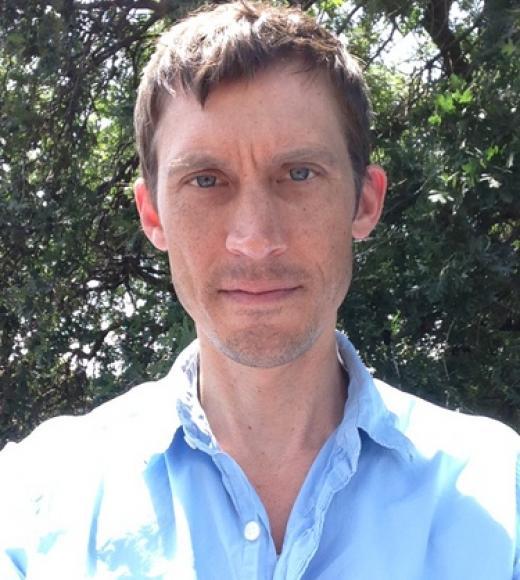
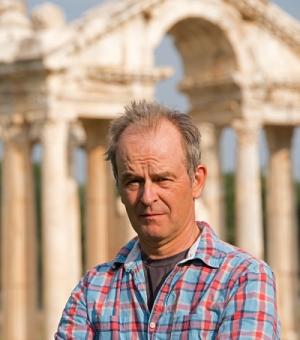
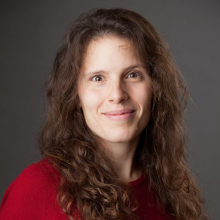
Ryan Heuser is an Assistant Professor in Digital Humanities at the University of Cambridge, specializing in computational approaches to literary and intellectual history, prosody, and artificial intelligence's impact on language. His work bridges data science, machine learning, and literary studies through digital methodologies. Doctoral training in Eighteenth-Century British Literature, Stanford University (2019) Founding member & Associate Research Director, Stanford Literary Lab Junior Research Fellow, King’s College Cambridge (2019-2022) Research interests span computational modeling of semantic revolutions, large-scale literary field analysis, and the intersection of digital methods with historical and intellectual studies. His book Explorations in the Digital History of Ideas (2023) co-edited with Peter de Bolla exemplifies this approach. Recent publications focus on historical semantics, metrical analysis, and digital mapping of emotions in literature, reflecting his interdisciplinary expertise in natural language processing, network theory, and literary data visualization. Currently leads teaching initiatives at Cambridge Digital Humanities and contributes to computational projects exploring textual rhythms and large language models.
Clare Hemmings is a Professor of Feminist Theory at the Department of Gender Studies, London School of Economics and Political Science (LSE), where she has been since 1999. Her work bridges feminist theory, queer studies, and sexuality studies, with a focus on how these fields are institutionalized and narrated. She holds a PhD and has authored seminal works like Why Stories Matter (2011) and Considering Emma Goldman (2018), which explore feminist historiography and political ambivalence. Her research emphasizes interdisciplinary methods, including archival interventions and creative writing to challenge dominant narratives. Hemmings’ research interests include feminist epistemology, queer of color critique, and anarchist thought. She has been active in countering 'anti-gender' movements and is currently developing a project on 'Feminist Knowledge Struggles.' Her work is marked by attention to form, affect, and the intersection of nationalism, feminism, and sexuality. She supervises PhD students Senel Wanniarachchi and Rawda Elaskary and has received the FWSA Book Prize 2012 for Why Stories Matter . Hemmings’ articles span feminist theory, political mobilizations, and affect studies. Her recent work engages with family memory archives and decolonial methodologies. She is a prolific scholar, contributing to journals like Memory Studies , Feminist Studies , and Radical Philosophy . Her interdisciplinary approach integrates literary criticism, sociology, and activism, offering transformative frameworks for feminist praxis.
Lucien Castaing-Taylor is the John Cowles Professor of Art and Anthropology at Harvard University and Director of the Sensory Ethnography Lab (SEL), currently on leave for Fall 2025. His work bridges anthropology and artistic practice through sensory ethnography, engaging critically with ecological crises and political challenges while maintaining an ethnographic commitment to lived experience. His research spans sensory ethnography, phenomenology, media anthropology, and post-human/multi-species relations, with deep engagement in cultural and political ecology across the Franco-Creole Caribbean, Europe, and American West. Castaing-Taylor interrogates intellectual history and reason while developing methodologies that merge artistic negative capability with ethnographic rigor to capture life's flux without imposing conventional narrative structures. Castaing-Taylor's creative output demonstrates a consistent trajectory from early works like In and Out of Africa (1992) to recent projects such as De Humani Corporis Fabrica (2022), evolving from representational ethnography toward immersive sensory experiences. His filmography and installations increasingly address the Anthropocene, human-animal relations, and embodied knowledge through experimental audiovisual techniques that challenge documentary conventions and expand ethnographic possibilities. His major awards include: Alpert Award in the Arts (2013) True Vision Award (2013) Los Angeles Film Critics' Circle Douglas Edwards Independent and Experimental Film Award (2012) FIPRESCI Award (2012) As Director of the SEL, Castaing-Taylor cultivates a collaborative environment where anthropology converges with experimental filmmaking and installation art. The lab functions as an incubator for boundary-pushing audiovisual research that engages with urgent planetary issues through sensory immersion, fostering new modes of ethnographic inquiry that transcend traditional academic publishing.
Claire Battershill is an Assistant Professor jointly appointed in the Faculty of Information and the Department of English at the University of Toronto. She holds a PhD from the University of Toronto and a BA (Hons) from the University of Oxford. Her research focuses on the history and future of the book, with a particular emphasis on feminist experimental publishing, literary aesthetics, and 20th/21st-century publishing practices. She is Co-Director of the Modernist Archives Publishing Project (MAPP), a critical digital archive of early 20th-century publishers’ records, and Co-Creator of the SSHRC-funded 'Make Believe' research-creation project. Her publications include Women and Letterpress Printing: Gendered Impressions (2022) and Using Digital Humanities in the Classroom (2022). Dr. Battershill has held prestigious roles such as Wendy M. Cecil Professor in VicOne at Victoria College and Fellow of the Royal Historical Society. She has secured grants including the SSHRC Impact Award (2017) and funding from the Canada Council for the Arts. Her teaching spans courses like INF2228H (The Future of Things: Digitization and Remediation) and BKS1002H (Book History in Practice), blending theory with hands-on engagement in digital humanities and book studies. Her research interests span digital humanities pedagogy, collaborative publishing projects, and the intersection of feminist theory with material book culture. She actively contributes to interdisciplinary initiatives like the Critical Digital Humanities Initiative (CDHI) at the University of Toronto.
Margaret E. Roberts is a Professor in the Department of Political Science at the University of California, San Diego. She co-directs the China Data Lab at the 21st Century China Center and serves as an affiliate at the UC Institute on Global Conflict and Cooperation. Her academic appointments reflect her interdisciplinary approach combining political science, statistics, and computational methods. University of California, San Diego, Department of Political Science (Current) Co-director, China Data Lab at the 21st Century China Center Affiliate, UC Institute on Global Conflict and Cooperation Roberts earned her PhD in Government from Harvard University (2014), MS in Statistics from Stanford University (2009), and BA in International Relations and Economics from Stanford University (2009). Her educational background bridges political science, statistics, and computational methods, forming the foundation for her interdisciplinary research approach. Professor Roberts' research focuses on the intersection of political methodology and the politics of information, with specific expertise in automated content analysis and the politics of censorship and propaganda in China. Her work employs innovative methods including social media analysis, online experiments, and large-scale text analysis to understand how censorship and propaganda influence information access and political beliefs. She has made significant contributions to text-as-data methodologies, developing tools like the Structural Topic Model (stm) R package that have become widely used in social science research. Roberts' research portfolio demonstrates consistent focus on authoritarian information control, particularly in China, while expanding into broader applications of text analysis in political science. Her publications span top journals in political science, computer science, and interdisciplinary fields, reflecting the cross-disciplinary nature of her work. Goldsmith Book Award Best Book Award in the Human Rights Section Best Book Award in Information Technology and Politics Section Best Book Award of the last decade in the Political Communication Section of the American Political Science Association Chancellor's Associates Endowed Chair at UCSD Foreign Affairs Best Books of 2018 Professor Roberts has secured significant research funding supporting her work on Chinese censorship, propaganda, and text analysis methodologies. Her research has practical applications for understanding digital authoritarianism, content moderation, and the development of computational tools for social science research. She has mentored numerous students and collaborators, contributing to the next generation of scholars working at the intersection of political science and computational methods. Roberts also leads the China Data Lab, which serves as a hub for research on Chinese politics and society using digital methods.
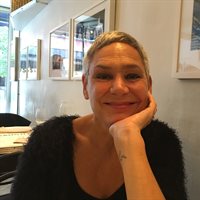
Haidy Geismar serves as Professor of Anthropology at University College London (UCL), where she is affiliated with the Department of Anthropology. She co-directs UCL's Digital Anthropology Program and is the founding director of the School for the Creative and Cultural Industries at UCL East. Geismar also serves as curator of the UCL Ethnography collections, facilitating exhibitions with community groups, students, and artists. Her institutional affiliations extend to the Tate and Victoria and Albert Museum in London, where she maintains long-term professional relationships. Geismar's research explores the intersections of intellectual and cultural property, indigenous rights, and colonial legacies with digital technologies and museum practices. Her work focuses on how digital platforms transform cultural representation, particularly in the South Pacific region including Vanuatu and New Zealand. She investigates how communities engage with digital collections, examining both the materiality of digital objects and their social implications. Her research demonstrates how indigenous knowledge systems interact with contemporary digital infrastructures to create new forms of cultural expression and preservation. Analysis of Geismar's recent publications reveals a clear trajectory toward examining the material dimensions of digital culture within museum and archival contexts. Her work increasingly addresses how digital technologies reshape cultural heritage practices while maintaining critical attention to postcolonial perspectives. There is a notable emphasis on sensory experiences in digital spaces, the politics of representation in digital collections, and the ways digital platforms enable or constrain indigenous knowledge systems. Geismar's professional recognition includes: Mellon Research Fellow at Tate (2019-2020) Fellow of the Royal Anthropological Institute Chairperson of Te Maru o Hinemihi (since January 2024) Photography Committee member of the Royal Anthropological Institute (2016-2024) While specific grant information isn't detailed in the available materials, Geismar's sustained research projects indicate successful funding acquisition. Her long-term collaborations with the Vanuatu Cultural Centre since 2000 and with Maori curators in New Zealand since 2004 suggest significant research support. Current projects like 'Finding Photography' and 'Collecting in Context' demonstrate ongoing research activity requiring funding. Geismar has created the Culture Lab at UCL East, an experimental curatorial space designed as a collections-rich environment for innovative display and research. This facility serves as a hub for her work with the School for the Creative and Cultural Industries, which brings together academic research with creative practice. The Culture Lab hosts exhibitions like 'Power!' and facilitates collaborations between university researchers, community groups, and students, creating a dynamic space for exploring the intersection of material culture and digital technologies.
Jay David Bolter holds the Wesley Chair of New Media and serves as Professor and Director of Computational Media at the Georgia Institute of Technology, where he is affiliated with the School of Literature, Media, and Communication within the Ivan Allen College of Liberal Arts. A foundational figure in digital media studies, he is renowned for his influential theoretical works and practical contributions to new media forms. His research spans Augmented Reality , Virtual Reality , Digital Culture , and the History of Media , with particular emphasis on remediation theory (developed with Richard Grusin) and the evolution of digital writing. As an active member of the Augmented Environments Lab, Bolter creates narrative-driven AR applications for cultural heritage sites and educational contexts, blending theoretical rigor with experimental design. His work consistently examines how new media technologies reshape human perception and cultural practices. Recent publications reveal a concentrated exploration of reality media (AR/VR) as narrative spaces, with articles addressing biofeedback integration in VR fitness, agency-driven interactive storytelling, and theoretical frameworks for understanding immersive experiences. His scholarship bridges historical media analysis with cutting-edge technical implementation, demonstrating how remediation processes continue to evolve in mixed reality environments. This trajectory reflects his lifelong investigation into the interplay between technological capabilities and human expression. Bolter maintains significant collaborative partnerships, including co-authoring seminal texts like Remediation and developing the Storyspace hypertext system with Michael Joyce. His leadership in the Augmented Environments Lab drives interdisciplinary projects that merge humanities perspectives with technological innovation, particularly in creating culturally resonant AR experiences. Teaching responsibilities include advanced courses in mixed reality design, computational media, and digital media theory, shaping the next generation of media scholars and practitioners.
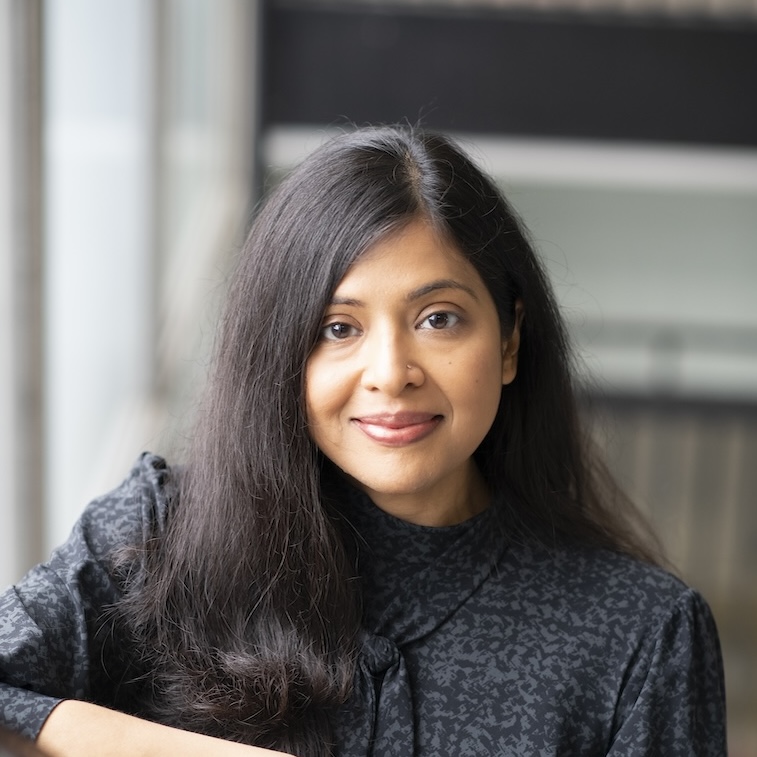
Malini Guha is an Associate Professor of Film Studies at Carleton University , cross-appointed to the Institute for Studies in Art and Culture and affiliated with Migration and Diaspora Studies . She holds the Ruth and Mark Phillips Professorship (2025-2027), focusing on geographical thinking across disciplines. Education: B.A. (University of Toronto), M.A. (York University), PhD (University of Warwick) Research Interests : Guha's work spans cinema and the city , diasporic/postcolonial cinema , public projection art , and ciné-geography . Recent projects include SSHRC-funded research on traction, flight, and becoming in moving images. Selected Publications : Author of From Empire to the World: Migrant London and Paris in the Cinema (2015) and co-editor of London as Screen Gateway (2023). Her articles appear in Feminist Media Histories , Routledge Companion to Media and the City , and Canadian Journal of Film Studies . Scientific Awards : Ruth and Mark Phillips Professorship (2025-2027) FASS Mid-Career Research Grant (2021) SSHRC Insight Development Grant (2023-2025) Collaborative Work : Co-organized Carleton’s Racialized and Indigenous Faculty Alliance (2022-2024), co-taught interdisciplinary course on Race and Representation in the Arts (2023), and collaborates with artist Neven Lochhead on projects like Something Happened (2024).
Lee Miller is a Professor in the Department of Neurobiology, Physiology, and Behavior at the University of California, Davis, College of Biological Sciences. His research integrates neural engineering, physiology, and computational methods to develop communication restoration technologies and investigate sensory processing mechanisms. His primary research interests include neural engineering for speech neuroprosthetics, electrophysiological analysis of speech production, auditory neuroscience, and geometric approaches to neuromuscular signal decoding. He employs surface electromyography (EMG), electroencephalography (EEG), and computational modeling to study brain-machine interfaces for speech restoration and multisensory integration. Recent publications reveal a dominant focus on EMG-based speech neuroprostheses, with geometric and topological analysis of neuromuscular signals emerging as a key methodology. His lab has pioneered non-invasive approaches to speech articulation decoding, created standardized EMG databases, and investigated neural mechanisms of attention in speech-in-noise processing. This work bridges engineering innovation with fundamental neuroscience to address communication disorders. Professor Miller leads the Miller Lab at UC Davis, which specializes in neural engineering for communication restoration. The lab develops real-time speech synthesis systems from neural signals and investigates the physiological basis of speech production and perception using multimodal recording techniques.
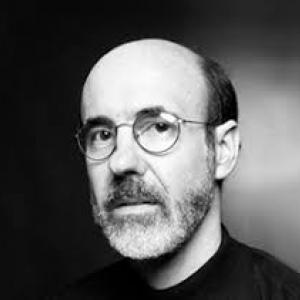
Professor Bert Smith is a distinguished academic at the University of Oxford, serving as a Fellow of Lincoln College. He holds the position of Professor in the Faculty of Classics, with a specialization in Greek Archaeology and Roman Art/Archaeology. His academic journey includes MA, MPhil, and DPhil degrees from Oxford University. Prior to his current role, he was a Harkness Fellow at Princeton University (1983-85) and taught Hellenistic and Roman art at New York University’s Institute of Fine Arts (1986-1995). His research focuses on the art and visual cultures of the ancient Mediterranean, particularly the relationship between visual representation and social/political contexts. As director of the Aphrodisias excavation project since 1991, he has contributed significantly to understanding the archaeology of Greek cities in the Eastern Roman Empire. Key achievements include a British Academy/Philip Leverhulme Fellowship (2007-2008) and leadership in the AHRC-funded 'Last Statues of Antiquity' project (2009-2012), resulting in a collaborative book (2016). Teaching responsibilities include lectures and seminars on Greek and Roman art and archaeology. His publications span over four decades, with notable works on sarcophagi iconography, Aphrodisias excavations, and Hellenistic art. He actively collaborates with institutions like the Oxford Centre for Greek and Roman Antiquity (OCGRA). Current research continues to explore late antiquity art and archaeology through fieldwork and interdisciplinary projects.
Brandon M. Stewart is an Associate Professor of Sociology at Princeton University with extensive interdisciplinary affiliations. He serves as Director of the Statistics Core at the Office of Population Research and maintains formal connections with the Politics Department, Princeton Institute for Computational Science and Engineering, Center for Information Technology Policy, and Center for the Digital Humanities. Stewart holds editorial leadership as Co-Editor-in-Chief of Political Analysis and Associate Editor at Sociological Methods & Research . His educational background includes: Ph.D. in Government from Harvard University (2015) Master's degree in Statistics from Harvard University (2014) Stewart's research pioneers innovative quantitative methods for social science applications, specializing in automated text analysis and modeling complex heterogeneity in regression. His methodological frameworks enable researchers to uncover hidden structures in large datasets that were previously too costly or impossible to analyze. While his recent work has focused on using newspaper archives to study propaganda mechanisms in contemporary China, his tools are deliberately designed for broad applicability across diverse domains including education, human trafficking, forced migration, international relations, constitutional law, and psychology. His publication record demonstrates consistent innovation at the intersection of statistics, machine learning, and social inquiry. Stewart's work shows a clear trajectory from foundational methodological development to practical implementation across numerous substantive areas, with recurring themes of enhancing causal inference with textual data, developing robust topic modeling techniques, and creating accessible computational tools for social scientists. Stewart's scholarly excellence has been recognized through multiple prestigious awards: 2024 Leo Goodman (Early Career) Award from the Methodology Section of the American Sociological Association 2023 Emerging Scholar Award from the Political Methodology Society Edward R Chase Dissertation Prize Gosnell Prize for Excellence in Political Methodology Political Analysis Editor's Choice Award Recognition for Excellence in Mentoring Graduate Students As a mentor, Stewart has guided several successful graduate students to faculty positions at institutions including UCLA and Georgetown. His collaborative approach is evident in numerous multi-author projects spanning disciplines from political science to computational linguistics. His leadership extends to the Sociology Statistics Reading Group, which he founded to foster interdisciplinary methodological exchange, and his summer methods camp that trains social scientists in advanced quantitative techniques.
Catherine Guastavino is a Professor at McGill University's School of Information Studies (within the Faculty of Arts) and an Associate Member at the Schulich School of Music. She also contributes to the Centre for Interdisciplinary Research in Music Media and Technology (CIRMMT). Her roles include leading research projects and supervising graduate students in music technology and related fields. She holds a PhD in Psychoacoustics from Université Pierre et Marie Curie (Paris VI), an MSc from IRCAM (France), and a BSc in Mathematics from McGill University. Her research focuses on auditory perception, soundscape analysis, human-computer interaction, and urban acoustics. Notable projects include the 'Sounds in the City' partnership addressing urban noise policy and the development of immersive soundscape simulation tools. She leads or co-leads grants from SSHRC, NSERC, and MITACS, emphasizing interdisciplinary approaches to sound in urban environments. Guastavino's work bridges academic research with practical applications, such as designing sound installations for public spaces and improving acoustic environments in transportation and performance venues. She collaborates with city planners, musicians, and engineers, reflecting her commitment to making cities sound better through evidence-based strategies. Key Projects: SSHRC Partnership Grant for urban soundscape management (2018-2023) NSERC Discovery Grant on auditory localization (2019-2024) MITACS projects on Montreal festival soundscapes and noise policy Labs & Partnerships: Multimodal Interaction Laboratory (MIL) Collaborations with Ville de Montréal and Quartier des Spectacles Education: PhD: Psychoacoustics (Paris VI) MSc: Computer Science & Music Technology (IRCAM) BSc: Mathematics (McGill) Her teaching includes courses like Music Information Retrieval, integrating computational methods with artistic and scientific applications.
Irene Albers is a full Professor at Free University of Berlin's Department of Philosophy and Humanities, holding dual appointments at the Peter Szondi Institute for General and Comparative Literature and Institute for Romance Philology since 2004. She chairs both the Examination Board and Doctoral Committee for General and Comparative Literature, serves as Trustee of Studienstiftung des deutschen Volkes since 2004/05, and has been Principal Investigator for the Friedrich-Schlegel Graduate School for Literary Studies and Cluster Languages of Emotion since 2007. Her research bridges comparative literature, anthropology, and visual culture with institutional leadership spanning editorial projects and international conferences. Her educational background includes: Born in Bremen (1967) Romance Studies, Philosophy, and German Studies at Universities of Tübingen, Tours, and Konstanz M.A. from University of Konstanz (1993) Ph.D. from University of Konstanz (1999) on literature and photography in Émile Zola, Proust, and Claude Simon Albers' core research examines literary anthropology through colonial/postcolonial lenses, focusing on French literary engagement with Africa, surrealism, and literature-photography intersections. She pioneered studies on Michel Leiris' ethnological poetics and Claude Simon's photographic techniques, extending to historical emotion research (anatomy of affects, body language) and romance novella traditions. Her work consistently challenges Eurocentric literary canons through primitivism critique and heteronomy aesthetics, emphasizing textual restitution and cultural reclamation. Recent publications (2018-2025) reveal a sharp turn toward colonial restitution ethics, particularly in oral literature provenance. Articles increasingly analyze literature as colonial loot, connecting French modernism with African/Caribbean contexts through collaborative projects with anthropologists like Eléonore Devevey. This trajectory builds from earlier surrealist studies to concrete frameworks for decolonizing literary scholarship, spotlighting institutional complicity in cultural appropriation while advancing symmetrized modernity revisions. Scientific awards include: Senior Fellow and Prize Winner of the Zukunftskolleg, University of Konstanz (2009) Albers supervises master's and doctoral students through dedicated AVL colloquia while securing major research funding as Principal Investigator for Friedrich-Schlegel Graduate School (2007-present) and Cluster Languages of Emotion (2007-2012). Her current DFG-funded project 'Literature as Colonial Loot?' with Andreas Schmid pioneers philological provenance research. Earlier, she contributed to Collaborative Research Center 511 'Literature and Anthropology' (Konstanz, 1999-2002) and DFG-funded conferences on Claude Simon. She leads the DramaNet research project and co-edits the 'machina' series at transcript Verlag since 2010. As board member (2007-2009) and deputy (2008-2012) of Cluster Languages of Emotion, she coordinates Area D 'Cultural Codings of Emotions'. Her Zukunftskolleg fellowship (2012-2013) and Marcel Proust Society collaborations underscore sustained engagement with literary anthropology networks.
Dr. Emily Cuming is a Senior Lecturer in the Humanities and Social Science school at Liverpool John Moores University , specializing in British literature, culture, and social history from the 19th century to the present. Her research focuses on maritime relations, working-class girlhood, life writing, and representations of domestic spaces including council estates, slums, and bedsits. PhD, MA, BA in English & Russian from University of Manchester (2006, 2002, 2001) Editor of Key Words: A Journal of Cultural Materialism Co-leader of the Home and Domestic Cultures research network Committee member of the Research Institute for Literature and Cultural History Board member of the Centre for Port and Maritime History Her research combines literary analysis with historical and cultural studies, emphasizing material culture, port cities, and marginalized voices. Recent publications include Maritime Relations: Life, Labour and Literature at the Water’s Edge, 1830-1914 (Cambridge University Press, forthcoming 2025) and Housing, Class and Gender in Modern British Writing, 1880-2012 (CUP, 2016). She has received multiple research grants including AHRC Connected Communities funding and Liverpool John Moores University QR awards. Dr. Cuming teaches undergraduate modules on Life Stories , Representing Domestic Space , and Waterscapes , as well as MA courses on Place: Imagining Place in Modern Times . She supervises three PhD projects and welcomes new supervisees in her research areas. 2025: Enhancing Research Cultures funding for 'The Sinking of the Lancastria' 2024: Editorial board member of Journal of Victorian Culture 2023: NCCPE Engage Prize for 'Around the Toilet' project 2022: Caird Short-term Research Fellowship 2016: NCCPE Engage Prize winner
John G. Bullock is a Professor in the Department of Political Science at Northwestern University. His research focuses on political psychology, public opinion, and methodological issues in political science. He teaches courses including Introduction to American Politics (undergraduate lecture), Political Behavior (graduate seminar), Political Psychology (undergraduate lecture), Public Opinion and Representation in the United States (undergraduate seminar), and Quantitative Causal Inference (graduate seminar). Dr. Bullock's research interests span several interconnected domains: Political Psychology : Examining how partisanship affects factual beliefs and political decision-making Public Opinion : Studying political knowledge measurement, the influence of elite cues, and attitudes toward redistribution Methodology : Developing rigorous approaches to mediation analysis, survey design, and causal inference Political Behavior : Investigating how voters process information and respond to party cues His publication record demonstrates a consistent focus on methodological rigor, particularly in survey design and causal inference. Bullock has made significant contributions to understanding partisan bias in factual beliefs (showing such differences may be more illusory than real), the measurement of political knowledge (demonstrating how response options affect knowledge estimates), and the challenges of mediation analysis (arguing conventional approaches are fundamentally flawed). His recent work has expanded to examine leadership competence in government, particularly through his analysis of the U.S. response to the COVID-19 pandemic. Dr. Bullock maintains an active scholarly presence through his personal website and GitHub profile, where he shares academic tools including R packages and LaTeX classes. His work appears consistently in top political science journals including the American Political Science Review, Journal of Politics, and British Journal of Political Science.