Gina Bloom is a Professor of English at the University of California, Davis, with affiliations in the PhD programs in Education and Performance Studies. Her research spans Shakespeare, early modern drama, gender theory, and digital humanities, focusing on games, performance, and educational technologies. PhD, MA, and Certificate in Women's Studies from the University of Michigan BA from the University of Pennsylvania Her work includes the award-winning digital game Play the Knave and a decolonial pedagogy curriculum for teaching Shakespeare. She collaborates with UC Davis’s ModLab and DataLab, emphasizing social justice and immersive learning. Awards include Best AR/VR Game (2022) and Shakespeare Publics Award (2025). Her publications blend game studies, theater history, and feminist theory, with recent articles addressing decolonial education and digital embodiment. Winner, Shakespeare Publics Award (2025) Finalist, GEE! Learning Game Award (2023) Winner, Best AR/VR Game Award (2022)
Jung Hyup Kim is an Associate Professor in the Department of Industrial and Systems Engineering at the University of Missouri, College of Engineering. His research integrates human factors, ergonomics, and augmented reality to enhance engineering education and healthcare systems. He leads the Human Factors Lab and is actively involved in curriculum innovation through immersive technologies. Education: PhD, Pennsylvania State University BS, Mississippi State University Dr. Kim’s research centers on ergonomics, human-computer interaction, and real-time human performance modeling . He investigates how eye-tracking, motion analysis, and augmented reality can be used to assess workload, situation awareness, and learning effectiveness in real-world environments. His work bridges engineering systems with cognitive science, particularly in educational and healthcare contexts. His recent research, reflected in 15 reconstructed articles, demonstrates a strong trend toward augmented reality in engineering education , with focus areas including real-time motion tracking, eye-tracking for attention monitoring, metacognition in virtual instruction, and posture-based physical demand assessment. These efforts aim to transform traditional lab experiences into interactive, data-driven learning environments. Scientific Awards: No awards explicitly mentioned in the text. Dr. Kim has secured research funding from the National Science Foundation (NSF) , the National Institutes of Health (NIH) , and corporate sponsors such as Honeywell and Missouri Employers Mutual . He advises students like RJ Morrison and Madeline Easley, who have presented at national conferences and won research competitions. His lab develops AR-based teaching modules that assess student engagement and comprehension through biometric and behavioral data. His lab, the Human Factors Lab ( humanfactorslab.net ), is developing a new AR-integrated facility in Lafferre Hall with stations for interactive learning, real-time feedback, and performance testing. The lab aims to create scalable AR systems applicable across Mizzou Engineering disciplines.
Yu Chen is an Associate Professor in the School of Information Systems and Technology at San José State University’s Lucas College and Graduate School of Business. She holds a PhD in Computer and Communication Sciences from the Swiss Federal Institute of Technology at Lausanne (EPFL), and has held postdoctoral positions at the University of California, Irvine. Her work bridges human-computer interaction, AI, and social impact, with a strong focus on education and inclusive innovation. PhD, Computer and Communication, EPFL, Switzerland MS, Security and Mobile Computing, Aalto University, Finland MS, Security and Mobile Computing, Norwegian University of Science and Technology (NTNU), Norway BE, Information Security, Huazhong University of Science and Technology (HUST), China Her research centers on human-AI interaction , AI for social good , emerging technology education , and health informatics . She is particularly interested in how chat-based interfaces can support student success, career advising, and community problem-solving. She emphasizes design thinking, empathy, and interdisciplinary collaboration in her pedagogy. Her recent publications span AI education, chatbot design, inclusive learning, and ethical AI. A recurring theme is the use of conversational agents to empower students and address societal challenges such as food insecurity, housing, and mental health. The research demonstrates a strong commitment to experiential learning and real-world impact. Collaborative Research: Broadening Inclusive Participation in AI Undergraduate Education (NSF) Girls in AI: AI Education for K-12 Girls (SJSU RSCA) Innovation Farm: AI-Powered Social Innovation (SJSU CEP) AI Counselors and Tutors for Student Development (SJSU RSCA) Yu Chen has received numerous honors, including the SJSU College of Business Distinguished Undergraduate Teaching Award (2024), multiple Master Teacher Awards, and recognition for research excellence at AMCIS and ICIS. She was also awarded the Erasmus Mundus Scholarship and a Swiss National Science Foundation fellowship. She actively mentors undergraduate students in research, many of whom have co-authored peer-reviewed publications and won awards in student competitions. Her lab, the AI for Social Good initiative, fosters a collaborative, student-driven environment where interdisciplinary teams prototype AI solutions for community challenges. She advocates for trust in students, no-code tools, and education that is relevant, creative, and socially responsible.
Summary Associate Professor Mehrdad Arashpour is an internationally recognized researcher and educator in construction and civil infrastructure, focusing on automation and information technologies. He leads the ASCII Lab at Monash University's Department of Civil and Environmental Engineering. His academic roles include Head of Construction Engineering and membership in the CIB's Working Commission on Off-site Construction (W121) and Infrastructure Task Group (TG91). Education: Ph.D., RMIT University, Australia M.Sc., Grenoble University, France B.Sc., IU University, Iran Research Interests: Digital twins, computer vision, robotics, BIM integration, sustainable construction, and automation in construction processes. His work contributes to UN Sustainable Development Goals, particularly in sustainable cities and communities. Grants & Awards: Over $6M in grants from ARC, Austroads, and industry partnerships. Recognitions include Editor's Choice Paper (ASCE, 2019) and Outstanding Reviewer (Elsevier, 2016). Teaching: Courses like Risk Management in Engineering Projects and Infrastructure Research Project. Advises on PhD topics in computer vision, robotics, and BIM. Labs & Collaborations: ASCII Lab focuses on smart, sustainable solutions for construction. Collaborates with global researchers and organizations like SPARC Hub and Building 4.0 CRC.
Sylvie Delacroix is the Inaugural Jeff Price Chair in Digital Law and Director of the Centre for Data Futures at King's College London. She is also a Visiting Professor at Tohoku University, focusing on bridging theory and practice in ethics and public policy initiatives. Her research spans Data & machine ethics Ethical agency and habit Social sustainability of data ecosystems Participatory infrastructure for AI systems Uncertainty communication in LLMs Legal theory and digital law Recent publications address LLM interfaces as transitional spaces for democratic revival and sustainable data rivers in generative AI. Her work has attracted significant grant funding from the Patrick J. McGovern Foundation, Wellcome Trust, and Omidyar Network. Scientific awards include the Leverhulme Prize Peter Birks 2d Prize for Outstanding Legal Scholarship Montgomery Fellowship at Dartmouth College She supervises PhD research on large language models and uncertainty communication, as well as habit in ethical lives. Her policy contributions include advising the Law Society of England and Wales on algorithmic justice systems.
Dr. Dave Murray-Rust is an Associate Professor in Human-Algorithm Interaction Design at TU Delft's Faculty of Industrial Design Engineering. He explores the intersection of humans, data, and AI through design research, focusing on ethical AI systems and sociotechnical interactions. His work bridges computer science, design theory, and digital sociology, addressing challenges like algorithmic fairness and human-AI collaboration. He leads initiatives such as the AI Futures Lab and Data-Centric Design Lab, advancing methods for leveraging behavioral data in design processes. His research emphasizes experiential AI frameworks, metaphors for designers, and the legibility of AI systems. He has been honored with awards including Best alt.HRI 2024 and a CHI 2023 Best Paper Award for contributions to fairness perceptions in algorithmic decision-making. Murray-Rust teaches courses like the Speculative Design Studio and collaborates on projects like DCODE (Designing the Future of AI) and the BrightSky Project. His work extends to public engagement through installations like GeoPact and explorations of blockchain's societal impact. He holds an Honorary Fellowship at the University of Edinburgh.
Dr. Kate Fu is the Jay and Cynthia Ihlenfeld Associate Professor of Mechanical Engineering at the University of Wisconsin-Madison. She previously held academic positions at Georgia Institute of Technology (2014-2021) and completed postdoctoral fellowships at MIT and Singapore University of Technology and Design. Her education includes a Ph.D. (2012), M.S. (2009) from Carnegie Mellon University, and B.S. (2007) from Brown University. Her research focuses on engineering design cognition, computational design tools, and design innovation. Key areas include creativity enhancement, design-by-analogy methodologies, and integrating artificial intelligence into design processes. She has pioneered work on gender dynamics in engineering teams and equity in education. Notable awards include the NSF CAREER Award (2019), ASME Young Investigator Award (2020), and SREB Mentor of the Year (2022). She actively contributes to engineering education through courses like Geometric Modeling for Design, Experiential Design Projects, and graduate research supervision. Her work bridges disciplinary boundaries with projects on additive manufacturing, design justice frameworks, and social impacts of engineering solutions. Current research explores equity in makerspaces, energy justice metrics, and cognitive processes in design teams.
Dr. Marjan Alavi is an Assistant Professor at McMaster University's W Booth School of Engineering Practice and Technology, affiliated with the Mechanical Engineering department as an Associate Member. She holds a Professional Engineer (P.Eng.) license in Ontario and has over 15 years of academic and industrial experience in electrical engineering. Her research focuses on model-based and data-driven approaches for fault diagnosis, prognosis, and fault-tolerant control in hybrid systems, with applications in power electronics, energy systems, and smart infrastructure. Education: B.Sc. (2004) from K.N. Toosi University of Technology, M.Sc. (2007) from Sharif University of Technology, Ph.D. (2014) from Nanyang Technological University (Singapore), and a Postdoc (2015) at the University of Toronto's Energy Systems Group. Teaching: Instructs courses on Real-Time Systems (SEP 6ES3, SFWRTECH 4ES3), Smart Cities and Communities (SMRTTECH 4SC3), integrating real-world engineering challenges with theoretical frameworks. She emphasizes hands-on learning through remote labs and experiential projects. Professional Contributions: Serves as IEEE Toronto Section Executive Member, Technical Reviewer for IEEE Transactions on Industrial Electronics, and Vice Chair of IEEE Industrial Applications Society (2015). Founded Intelligent Diagnosis Corporations, a Canadian startup focused on research and innovation in diagnostics technologies. Key Projects: Developed fault diagnosis strategies for electro-hydraulic actuators, vehicle-mounted infrastructure monitoring systems, and remote laboratory platforms for emergency traffic control. Research spans predictive maintenance, smart city technologies, and railway systems certification benefits. Awards: Recipient of the Singapore International Graduate Award (SINGA) 2010. Recognized for her work in bridging academic research with industrial applications, particularly in enhancing system reliability through advanced control methodologies.
Mathew Yarossi is an Assistant Professor at Northeastern University with a joint appointment in the College of Engineering (Electrical and Computer Engineering) and Bouvé College of Health Sciences (Physical Therapy, Movement, and Rehabilitation Sciences). He holds a PhD from Rutgers University (2017) and joined Northeastern in 2022. Research Focus: His work bridges movement neuroscience, clinical research, and engineering, with emphasis on AI-driven solutions for rehabilitation. Key areas include physiological signal processing, neuromuscular control, and human-robot interaction. His NSF-funded project on dyadic object handover with robots highlights his interdisciplinary approach. Publications: Recent work explores VR-based interventions, EMG-driven prosthetics, and computational modeling of transcranial stimulation. His 2025 patent on virtual reality experiment design underscores his translational impact. Awards: Holds a patent for VR experiment systems (2025). Advising & Grants: Mentors students in PEAK Experiences programs and collaborates with the U.S. Army on AI applications in combat systems. His lab is part of the Institute for Experiential AI.
Mehdi Khamassi is a Research Director at the French National Center for Scientific Research (CNRS), assigned to the Institute of Intelligent Systems and Robotics (ISIR) at Sorbonne University in Paris, France. He holds an engineering background in computer science (specializing in AI and statistical modeling) from the National School of Computer Science for Industry and Business (2003), a Cogmaster in cognitive science from Pierre and Marie Curie University (2003), and a PhD in cognitive neuroscience from UPMC/Collège de France (2007). Recruited by CNRS in 2010, he co-organizes the Symposium of Biology of Decision-Making (SBDM) and co-directs the modeling major for the Cogmaster program. His research integrates computational modeling , neuroscience experiments , and robotic systems to study decision-making and learning mechanisms. Key interests include: Reinforcement learning in biological and artificial systems Role of social/non-social rewards in adaptive behavior Ethical implications of autonomous decision-making in AI Neuro-robotic models of hippocampal-prefrontal interactions Recent publications (2023-2025) demonstrate strong focus on reinforcement learning paradigms, AI alignment with human values, neurorobotics, and computational neuroscience. Work frequently bridges machine learning theory with empirical validation in biological systems or robotic platforms. He leads research within the ACIDE team at ISIR, exploring adaptive coordination of learning strategies in brains and robots. Current collaborations include NTUA (Greece), University of Oxford, and University of Trento.
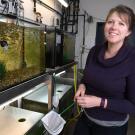
Kate Laskowski is an Associate Professor in the Department of Evolution and Ecology at University of California, Davis , focusing on behavioral diversity and plasticity. Her research explores how evolutionary processes shape developmental mechanisms generating individual variation. Education: B.S. in Biological Sciences (2006, UMBC), Ph.D. in Integrative Biology (2013, University of Illinois) Her work integrates ultimate and proximate perspectives to analyze how genetic, parental, and experiential cues build phenotypes. Recent research emphasizes clonal fish models to study non-genetic origins of behavior, eco-evolutionary dynamics, and collective behavior across scales. Publications from 2023-2025 highlight themes in behavioral repeatability , predation risk responses , genetic life-history trade-offs , and social conformity vs. individuality . Her methods combine experimental studies with statistical modeling and meta-analytic frameworks. Scientific Awards: Sloan Fellow (2023) Kate collaborates with the Center for Population Biology and advises in the Animal Behavior and Population Biology graduate programs. Her lab investigates behavioral individuality in clonal systems, with applications to conservation and evolutionary theory.
John Basl is an Associate Professor of Philosophy at Northeastern University and Associate Director of the Northeastern Ethics Institute, where he leads initiatives in AI and data ethics. He holds affiliate roles at Khoury College of Computer Science, the Institute for Experiential AI, and Harvard's Edmond and Lily Safra Center for Ethics. His research focuses on applied ethics, particularly in AI, machine learning, data ethics, and environmental ethics. He is the author of The Death of the Ethic of Life (Oxford UP) and has contributed to interdisciplinary projects on AI governance, including the NSF-funded AI & Data Ethics (AIDE) Graduate Training Program and the National Internet Observatory. His work explores ethical challenges posed by emerging technologies, such as moral obligations to AI systems, transparency in automated decision-making, and the ethical implications of autonomous vehicles. Basl’s research also engages with environmental ethics, addressing questions about species partiality, ecological justice, and the moral status of non-human entities. He actively collaborates with technologists, policymakers, and ethicists to ensure ethical considerations are integrated into technological development. His media engagements include talks on AI ethics at institutions like the University of Toronto and the Web Summit, and articles in outlets like Aeon Magazine. Current projects include grants focused on training the next generation of AI ethics scholars and analyzing the societal impacts of generative AI. Basl advocates for accessible, interdisciplinary approaches to ethics in technology, emphasizing practical solutions to real-world challenges.
Dr. Johanna Lorenz is a Researcher at the University of Hamburg Business School, affiliated with the Professorship for Information Systems and Digital Innovation led by Prof. Dr. Recker. Her work focuses on digital innovation, experiential consumer offerings, and the intersection of technology with human bodies. She holds a postdoctoral position and contributes to academic discourse through peer-reviewed publications. Her research interests include value creation strategies in digitalized experiential offerings, somatic information systems artifacts, and the entanglements between digital innovation and the human body. She has collaborated on studies published in the Journal of Management Information Systems and prominent conference proceedings such as ECIS and PACIS. Dr. Lorenz’s articles explore cutting-edge topics like physical-digital consumer experiences, digitalized service models, and the embodiment of technology. Her work bridges theoretical frameworks with practical business applications, emphasizing sustainable digital innovation in modern economies.
Daniel A Levinthal is the Reginald H. Jones Professor of Corporate Strategy and Professor of Management at the Wharton School, University of Pennsylvania. With extensive publications on organizational adaptation and industry evolution in technological contexts, he serves as Editor-in-Chief for Strategy Science and Organization Science. Research Interests Industry evolution Organizational learning Technological competition His 2024 research examines organizational search strategies, showing how cautious exploitation combines slow belief updating with strong explicit exploitation for effective adaptation. Recent work explores how political coalitions drive organizational change, with hierarchical belief influence structures proving more effective than flat designs in certain environments. Earlier studies developed the "Mendelian executive" framework and advanced Carnegie School decision-making theory. Scientific Awards Fellow of Strategic Management Society Fellow of Academy of Management Distinguished Scholar Awards (3 divisions) Irwin Award as Distinguished Educator 4 Honorary Doctorates Levinthal teaches advanced strategy courses (MGMT9000, MGMT9150) and graduate enterprise management (MGMT6110). His research has established foundational insights about organizational capabilities, knowledge aggregation, and strategic inertia.
Ji-young Shin serves as an Assistant Professor in the Teaching Stream within Education Studies at the University of Toronto Mississauga's Department of Language Studies. Her position integrates teaching, research, and practical application in language education with emphasis on assessment innovation and technology integration. Her academic credentials include: PhD in English / Second Language Studies & ESL from Purdue University, USA MS in Educational Psychology & Research Methodology from Purdue University, USA MA in Teaching English to Speakers of Other Languages (TESOL) from Hankuk University of Foreign Studies, South Korea BA in English Education (Japanese minor) from Hankuk University of Foreign Studies, South Korea Shin's research program focuses on language assessment, corpus linguistics, and technology-mediated pedagogy. She employs mixed methods with quantitative emphasis, utilizing corpus-informed computational analysis and latent-trait modeling complemented by qualitative discourse analysis. Her work addresses critical gaps in second language acquisition, educational measurement, and digital learning environments, particularly regarding AI applications and test validation across diverse language contexts. Her publication trajectory from 2017-2025 demonstrates consistent innovation in language assessment methodologies and technology integration. Key themes include AI-powered chatbots for L2 Korean instruction, online vocabulary testing for Spanish, and corpus-based writing pedagogy. Her work shows increasing focus on artificial intelligence applications and cross-linguistic validation studies, reflecting evolving priorities in language education research. Shin has secured competitive research funding including: Global Classrooms Grant (2025–2026) for VR-enhanced intercultural competence Black, Indigenous, and/or Racialized Scholar Grant (2025–2026) for cross-border AI language learning IRCC Engage3 Project (2022–2024) as Co-PI on VR/AI educational advancement Advancement Fund Plus (2022) for generative AI in teacher education British Council Award (2019) for technology-mediated assessment development She teaches advanced courses including 'The Future of Ed Tech: Active Learning Classrooms and Artificial Intelligence' (EDS285) and supervises community-based experiential learning (EDS388). Her grant portfolio indicates active supervision of research assistants and collaboration with international teams focused on AI implementation and assessment validation. Current projects explore generative AI for language learning across diverse contexts and virtual reality applications in teacher education. While specific laboratory infrastructure isn't documented, her collaborative publications with researchers across Korea, Spain, and the United States suggest participation in international research networks focused on language assessment technology and corpus applications.