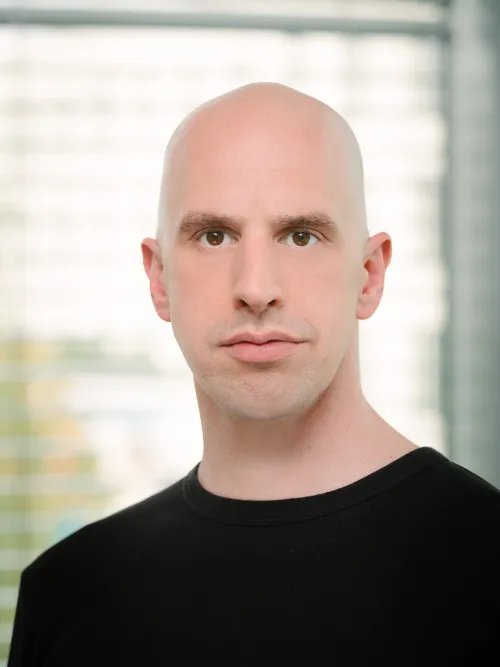
Weide Zhang serves as a Lecturer specializing in Interaction Design. Research focuses on Interaction Design, encompassing the development of user-centered digital interfaces, human-computer interaction systems, and experiential design methodologies for emerging technologies.
Katherine Gürtler serves as Professor of Intercultural Communication and English at Regensburg University of Applied Sciences, where she has been Dean of the Faculty of Applied Natural and Cultural Sciences since 2021. Her administrative roles include University Foreign Language Officer, Head of the AW Language Program, and membership on multiple academic committees including the International Relations Examination Board. Her research centers on critical media literacy through the Media & Democracy Lab (MEDDEM), English language acquisition in STEM fields via The Pepita Project, and transnational communication studies. She investigates gender dynamics in education, comparative educational systems, and intercultural competence development, with particular focus on engineering contexts and digital communication environments. Her publication trends reveal three interconnected strands: 1) Technical English pedagogy for engineers emphasizing domain-specific communication, 2) Critical analysis of media framing in political contexts including disinformation campaigns, and 3) Post-pandemic adaptations in language education leveraging digital tools. Recent work increasingly examines emotional dimensions of social media engagement and cross-border educational mobility. Preis für gute Lehre (2020) Erster Preis 'Preis für herausragende Lehre während des Corona-Semesters' (2020) Zertifikat Hochschullehre Bayern (2018) Nominierung Rosenheimer Lehrpreis (2013) Genderprojekt Förderpreis (2020) Guertler directs the Media & Democracy Lab and Pepita Project while advising the BA International Relations and Management program. Her teaching innovations include H5P quiz systems for digital motivation and negotiation technique frameworks, supported by grants from the Bavarian State Ministry and university foundations. Current research examines vaccine meme engagement and RT DE's framing of geopolitical events.
William Hill serves as Senior Lecturer in Graphic Design and Course Director for the BA Graphic Design program at Canterbury Christ Church University within the School of Arts, Humanities, Media and Creative Digital. He is based in the Daphne Oram creative arts building (room DO.1.06) in Canterbury and maintains active research and teaching responsibilities. His research focuses on Graphic Design and Visual Communication with specific interests in gender studies applications and human-centered design methodologies. This is evidenced through his participation as a core researcher in the collaborative "Being Human: Kent - Women Making Sense" project examining women's experiential frameworks through design lenses. His work bridges theoretical design principles with practical sense-making applications. As Course Director, Hill oversees curriculum development, academic standards, and student progression for the undergraduate Graphic Design program. His institutional role involves significant academic leadership while maintaining active research collaboration with scholars including Dr Susan Civale, Mrs Helen Wright, and Dr Sonia Overall. Contact is facilitated through his university email and office location in Canterbury.
Rory E. Kim, PharmD, MACM, BCACP serves as a Clinical Associate Professor in the Titus Family Department of Clinical Pharmacy at the University of Southern California School of Pharmacy. She directs the PharmD Scholarly Project and co-directs the USC Mann International Student Summer Program while chairing both the PharmD Curriculum Committee and PharmD Scholarly Project Committee. Previously serving as Director of the PGY1 Pharmacy Residency in Ambulatory Care for four years, Dr. Kim maintains clinical practice in the Specialty Endocrine Clinic at Los Angeles General Hospital as part of an interprofessional care team. PharmD: University of Kansas Master of Academic Medicine (MACM): USC Keck School of Medicine PGY1 Pharmacy Residency & Fellowship: Ambulatory Care and Academia at USC Dr. Kim's research focuses on the Scholarship of Teaching and Learning with particular expertise in Ambulatory Care education, International Education initiatives, and Innovative Teaching Methodologies. Her work bridges clinical practice with educational innovation, emphasizing interprofessional collaboration, diabetes management education, and technology-enhanced learning environments. She has pioneered digital approaches to pharmacy education including interactive fiction modules and international virtual collaborations that have transformed curriculum delivery. Analysis of her recent publications reveals a clear trajectory toward integrating digital health technologies into pharmacy education while maintaining strong foundations in clinical practice. Her work increasingly emphasizes computational thinking, data literacy, and global perspectives in preparing future pharmacists, with significant contributions to understanding medication persistence in chronic disease management and advancing interprofessional education frameworks. Professor of the Year 2022, Class of 2023 Implementation of the required PharmD Scholarly Project Design and implementation of the Peer Review of Teaching Process As Director of the PharmD Scholarly Project, Dr. Kim oversees a comprehensive research requirement for all pharmacy students, guiding them through literature analysis, research methodology, and scholarly dissemination. Her leadership in the International Student Summer Program has established USC as a leader in global pharmacy education, creating cross-cultural learning opportunities that have proven resilient through pandemic disruptions. Her educational innovations have generated multiple national presentations and implementation models adopted by peer institutions.
Dr. Krzysztof Guzek serves as an Assistant Professor at the Institute of New Media and Composition within the Faculty of Fine Arts at the Władysław Strzemiński Academy of Fine Arts in Łódź. He directs three pioneering workshops: the Creative Coding Workshop (established 2022), Digital Image Workshop (led since 2016), and Videomapping and Augmented Reality Workshop (founded 2024), positioning him at the forefront of digital art education in Poland. His research centers on the intersection of computational methods and artistic expression, with core expertise in Creative Coding, Generative Systems, and Immersive Technologies. The Creative Coding Workshop—the first dedicated studio of its kind in Polish art academies—explores programming as an artistic medium through courses in algorithmic design, data visualization, and real-time kinetic imaging. His Digital Image Workshop investigates time-based and interactive digital imagery, while the Videomapping Studio pioneers spatial projection techniques fused with AR/VR for creating experiential installations that redefine physical-digital boundaries. Dr. Guzek mentors undergraduate students across New Media and Graphic Design programs, guiding them in developing original computational artworks through progressively complex projects. His studios foster experimental approaches to viewer interaction, multi-plane projection, and 3D spatial composition, cultivating a distinctive language of multimedia expression that transcends traditional artistic frameworks through technological innovation.
Dr. Fernando Parra serves as Associate Professor of Accountancy and Director of the Institute for Family Business at California State University, Fresno's Craig School of Business. He teaches Accounting Information Systems, Cost Accounting, and Current Topics in Accounting from his office in PB531, with contact email parra@mail.fresnostate.edu and phone 559.278.8071. His academic credentials include: Ph.D. in International Business from the University of Texas at El Paso (2015), dissertation: "Enterprise Systems, Information Security Management Systems and their impact on Enterprise Risk" Graduate Certificate in Accounting from the University of Texas at El Paso (2016) Master of Information Technology (Joint Computer Science and Business Degree) from the University of Texas at El Paso (2007) B.S. in Business Administration (Computer Information Systems) from the University of Texas at El Paso (2000) Dr. Parra's research centers on Accounting Information Systems, Accounting Pedagogy, Family Businesses, and Information Systems Security and Controls, examining digital transformation's impact on business practices and technology integration in accounting education. He emphasizes experiential learning through community-engaged service projects. His 2021-2023 publications reveal interdisciplinary trends across accounting education, social media marketing, auditing, and human resources, featuring technology applications (Google Sheets, social media), risk management frameworks (COSO), and socio-economic factors like immigrant workforce integration. These works consistently bridge accounting with information systems in evolving business contexts. His scholarly recognition includes: 1st Place Teaching Case Award (AxcessCapon Teaching Innovation Competition, 2022) Dr. Parra champions holistic student development through service-learning initiatives like #OpenforBusiness, connecting classroom knowledge with community organizations. While specific grant details aren't provided, his work demonstrates sustained focus on practical accounting applications and real-world business problem-solving. As Institute for Family Business Director, he leads initiatives supporting family-owned enterprises and collaborates on interdisciplinary projects at the accounting-information systems-business management nexus.
Dr. Deborah A. Fields is a Research Professor in the Instructional Technology & Learning Sciences department at Utah State University's Emma Eccles Jones College of Education and Human Services. Her work focuses on connected learning, digital media literacy, and equity in STEM education through innovative approaches like electronic textiles and virtual world studies. Fields holds a Ph.D. in Psychological Studies in Education from UCLA (2010) and has held academic positions since 2010, including roles at the University of Pennsylvania. Her research emphasizes youth participation in digital spaces, computational thinking, and crafting-based learning. Key areas include: Designing e-textiles curricula for high school computer science Virtual world ethnographies (e.g., Whyville studies) Equity in maker education Online youth communities and media creation Her TEDx talk on tween activism in virtual worlds highlights her focus on youth agency in digital environments. Fields has authored over 80 peer-reviewed publications and secured $1.5M+ in research grants, including NSF-funded projects on computational thinking and epidemic simulations. Recent work explores pandemic education design, gender dynamics in crafting, and debugging practices in physical computing. She leads national initiatives like the Kids DIY Media Partnership and contributes to policy frameworks for children's digital rights.
Matthew P. Hare is an Associate Professor in the Department of Natural Resources and the Environment at Cornell University, and Director of the Environment and Sustainability program within the College of Agriculture and Life Sciences. He holds affiliations with the Cornell Atkinson Center for Sustainability and the Cornell Center for Computational and Population Genomics. Hare earned his BA in Human Ecology from College of the Atlantic, MS in Zoology from the University of Alaska Fairbanks, and PhD in Genetics from the University of Georgia. His research focuses on conservation genetics, evolutionary genomics, and phylogeography, with applications to aquatic systems. Key areas include measuring gene flow, hybridization, and genetic impacts of hatchery supplementation, as well as investigating adaptive processes in marine and freshwater species. Hare’s lab has explored oyster restoration in urban estuaries, domestication effects on bivalves, and the genetic resilience of populations under environmental change. Teaching responsibilities include NTRES 2830 (DNA, Genes and Genetic Diversity) and NTRES 4100 (Advanced Conservation Biology). He actively recruits graduate students through the Natural Resources, Ecology & Evolutionary Biology, and Zoology & Wildlife Conservation fields. Recent collaborative projects include oyster filtration models funded by NY Sea Grant and NSF-supported studies on balanced polymorphisms in oysters. Hare’s leadership roles include curriculum development for the cross-college Environment & Sustainability major, emphasizing interdisciplinary education and experiential learning. His work bridges basic and applied science, with publications addressing both ecological theory and management challenges in fisheries and restoration ecology.
George Witmer is a Professor at Lehigh University's Department of Computer Science and Engineering (CSE), part of the P.C. Rossin College of Engineering and Applied Science. He serves as Co-Director for the Computer Science and Business (CSB) Program and manages the combined capstone program for CSB and CSE. He teaches introductory programming courses for the college. His roles include academic leadership, curriculum development, and student mentorship. Education: B.S., Chemical Engineering, Brigham Young University MBA, Lehigh University Ph.D., Chemical Engineering, University of Houston Research Focus: Witmer specializes in AI-driven computer education methodologies, beginner programming pedagogy, and experiential learning strategies. His work bridges technical innovation with educational practices to enhance student engagement and skill development. Professional Background: Prior to academia, he held IT leadership roles at Air Products (leading IT Innovation and R&D Computing), PPL, and Lutron as an Enterprise Architect. His industry experience informs his academic work in applying real-world technical challenges to educational frameworks. Affiliations: Located in Packard Lab 200B, Witmer actively contributes to interdisciplinary programs like CSB and oversees capstone projects merging computer science with business applications.
Richard Fry serves as an Associate Professor in the Design Department at Brigham Young University - Provo, within the College of Fine Arts and Communications. His academic work bridges design thinking, education, and interdisciplinary innovation. Research focuses on design thinking pedagogy Develops crossdisciplinary educational frameworks Integrates technology in design education His scholarship examines how design methodologies can enhance innovation capacity across academic and professional settings, with particular emphasis on collaborative learning environments. Fry's publications reveal sustained engagement with design process modeling and creativity cultivation strategies for both design and engineering students. While his work spans nearly two decades, recent research trends emphasize studio pedagogy optimization and concept-driven project frameworks. Notably, he pioneered intensive design thinking workshops and boot camps that have demonstrably increased innovation aptitude in technology and engineering populations.
Erhardt Graeff is an Associate Professor of Social and Computer Science at Franklin W. Olin College of Engineering and a faculty associate at the Edmond J. Safra Center for Ethics at Harvard University. His work sits at the intersection of technology, ethics, and civic life, focusing on how technological design can support democratic engagement and social justice. His educational background includes a PhD in Media Arts and Sciences from the Massachusetts Institute of Technology, grounding his interdisciplinary approach in both technical and humanistic scholarship. Dr. Graeff's research centers on the ethical responsibilities of technologists, particularly engineers, as citizens and stewards of democracy. He develops civic education models for undergraduate engineering students, promoting student-owned and -led public interest technology projects. His pedagogical philosophy emphasizes experiential learning and civic agency. Although no publications are listed in the provided text, his scholarly focus appears to converge around civic technology, democratic innovation, and ethics in engineering education, suggesting strong interdisciplinary engagement across computer science, education, and social sciences. Faculty Associate, Edmond J. Safra Center for Ethics, Harvard University PhD in Media Arts and Sciences, Massachusetts Institute of Technology Dr. Graeff is actively involved in academic mentorship through project-based learning, though specific advisees are not named. He has no listed scientific awards in the provided material. His civic commitment extends beyond academia into public service as chair of the Trustees of the Needham Free Public Library and member of Needham’s Town Meeting. His work is supported by his dual expertise in social science and computer science, and he contributes to initiatives that integrate ethical reasoning and civic responsibility into technical education. He is engaged in building institutional and curricular frameworks for public interest technology within engineering education.
Michael Razen is a Professor and Department Head at MCI | Die Unternehmerische Hochschule® as well as an affiliated researcher at the Department of Banking and Finance at Universität Innsbruck. He holds a PhD in Economics from Universität Innsbruck (2017) and became a Privatdozent in 2023. His research focuses on Behavioral Finance, Market Efficiency, and Financial Literacy, employing experimental and econometric methods. He leads the 'Innsbruck Decision Sciences' research group and co-founded the FiT financial literacy program for youth. Razen has been recognized with awards including the Bates-White Prize and CFA Society Austria Prize. He teaches courses like Data Science and Decision-Making at MCI while maintaining active academic collaborations across institutions globally. His research team includes Sebastian Bachler, Sabine Ferdik, and others. Recent work explores domain-specific financial decision-making, computational reproducibility in finance, and family firm CSR dynamics. Over 20 peer-reviewed publications span journals like Science, Strategic Entrepreneurship Journal, and European Economic Review. He advises both academic and industry stakeholders, sits on the board of the Austrian Financial Literacy Foundation, and frequently presents at international finance conferences. Education: BSc in Economics, Universität Innsbruck (2011) MSc in Finance and Economics, London School of Economics (2012) PhD in Economics, Universität Innsbruck (2017) Privatdozent (Habilitation), Universität Innsbruck (2023) Grants & Awards: 2022: Bates-White Prize for Best Paper (Society for Financial Econometrics) 2018: CFA Society Austria Prize Multiple research stipends from Universität Innsbruck (2013–2015) Teaching Roles: Lead courses in Data Science, Decision Theory, and Financial Literacy Advises master's theses and entrepreneurship labs at MCI Labs/Teams: Core member of Innsbruck Decision Sciences, founder of FiT program, and collaborator in international financial research networks. Current projects include AI ethics in business decisions and stakeholder analysis for corporate sustainability.
Prof. Dr. Thomas Keller is a Professor at the Zurich University of Applied Sciences (ZHAW) , affiliated with the School of Management and Law and the Centre of Information Systems - People & Technology . His research focuses on Virtual Reality (VR) , Digital Transformation , and Human-Computer Interaction , with particular emphasis on educational applications and inclusive technology design. PhD in Information Systems, University of Zurich (2004-2008) MSc in Information Systems, University of Zurich (1998-2002) Certificate in Electrical Engineering, ETH Zurich (1996-1998) MSc in Electrical Engineering, ETH Zurich (1996-1998) Thomas Keller's research explores VR applications in vocational training , digital legacy solutions, and affective computing . He develops immersive learning environments for apprentices, language learners, and children with special needs, while investigating responsible innovation through speculative science fiction prototyping. His recent publications demonstrate a clear trend in VR for education (6/15), digital transformation (5/15), and inclusive technology (4/15). Topics span VR training effectiveness , AI ethics , and blockchain visualization . As a deputy project leader and co-project leader, he has developed technology-supported stress management programs for healthcare workers and immersive scenarios for responsible innovation. His work also includes VR applications for children with special needs and digital estate solutions .
Boris Müller is Professor for Interaction Design at the University of Applied Sciences Potsdam, where he has been employed since May 2004. He currently serves as Vice Dean and head of the Interface Design graduate programme. Müller is also co-director of the Urban Complexity Lab, a research group focusing on data visualisation and information design, which he established together with Prof. Dr. Marian Dörk. Born in 1972 in Berlin, Müller studied design at the University of the Arts Bremen before pursuing a Master of Arts in Computer Related Design at the Royal College of Art in London. His professional career has spanned multiple prestigious institutions including MetaDesign San Francisco, the Institute for Media Communication of the Fraunhofer Gesellschaft, and the Interaction Design Institute Ivrea in Italy, where he worked as a researcher and visiting professor. Müller's research focuses on the intersection of design, data, and technology, with particular emphasis on Data Visualisation , Interaction Design , and Generative Design . His work explores how visual representations can make complex information accessible and engaging, while also investigating the philosophical and cultural implications of digital interfaces. He has published extensively on these topics, with a particular interest in how design can facilitate understanding of scientific data, especially related to climate change and urban environments. Over the past decade, Müller's publications have evolved to address increasingly complex challenges at the intersection of design, data science, and societal issues. His recent work shows a growing emphasis on speculative design approaches, critical examinations of AI in creative practice, and innovative methods for visualizing climate data. Müller has also been increasingly focused on the pedagogical aspects of design education, exploring how to prepare the next generation of designers for a rapidly changing technological landscape. Scientific Awards Special Distinction at the Lucky Strike Junior Designer Award (2000) 1st prize in the student category of the EuroPrix (2001) Excellence Award of the 4th ACA Media Arts Festival in Tokyo (2000) Honourable Mention of the rhizome.org Net Art Commission (2002) Certificate of Typographic Excellence from the Type Directors Club New York (2003) 100 best posters (100 Beste Plakate) (2003) iF design award (2005) Information is Beautiful Silver Award (2013) German Infographics Award, category Science (2014) Müller has supervised numerous students through the Interface Design graduate programme at the University of Applied Sciences Potsdam, though specific names of advisees are not publicly listed. His work at the Urban Complexity Lab has attracted various research grants focused on data visualization and urban futures. Müller frequently collaborates with international institutions, as evidenced by his lectures at venues including Kyushu University in Japan and Aalto University in Finland. As co-director of the Urban Complexity Lab, Müller leads a research group dedicated to exploring how data visualization can help understand complex urban systems. The lab's work combines design practice with scientific research, creating innovative approaches to representing urban data. Müller's team has developed several notable projects, including the SENSES project which translates complex scientific climate scenario information into relevant knowledge for different user groups.
Sumita Ghosh is an Associate Professor in the School of Built Environment at the Faculty of Design, Architecture and Building (DAB) at University of Technology Sydney (UTS). With over 28 years of teaching, research and professional experience as an architect and urban planner, she has established herself as a leading expert in urban resilience and sustainable planning. Her academic appointments include Director of Higher Degree Research Programs (since Dec 2023), former Higher Degree Research Coordinator (2021-2023), and former Course Director of Postgraduate Planning (2022-2023). She is also a member of the DAB Faculty Ethics Committee and affiliated with the Centre for Advanced Modelling and Geospatial Information Systems (CAMGIS) at UTS. Director of Higher Degree Research Programs, UTS Faculty of Design, Architecture and Building (Dec 2023 - present) Associate Professor, School of Built Environment, UTS (Jan 2019 - present) Senior Lecturer, School of Built Environment, UTS (Jan 2011 - Dec 2018) Lecturer, Macquarie University (2010) Dr. Ghosh holds a PhD from The University of Auckland, New Zealand, a Graduate Certificate in Remote Sensing and Earth Observation from Pennsylvania State University, a Master of City Planning from Indian Institute of Technology (IIT) Kharagpur, and a Bachelor of Architecture from National Institute of Technology, India. Her extensive educational background spans architecture, urban planning, and geospatial technologies. Sumita Ghosh's research focuses on urban resilience, connecting to multiple strands of urban sustainability research. Her core interests include green infrastructure planning and policy (urban forestry and local food production), urban morphologies, and climate change impacts and adaptation using spatial GIS and remote sensing applications. She explores food urbanism theory and practices in designing and master planning for precincts to create healthy and sustainable communities. Her work integrates nature-based solutions to address urban challenges such as flood risk, heat island effects, and food security, with a particular emphasis on high-density urban environments. Dr. Ghosh's research has significant implications for urban policy and practice, especially regarding sustainable urban transformation in the context of climate change. Analysis of Dr. Ghosh's recent publication record reveals a strong focus on urban sustainability, with particular emphasis on green infrastructure, urban agriculture, and climate resilience. Her work spans multiple geographic contexts from Australian cities to global case studies in Dhaka and Accra. The interdisciplinary nature of her research is evident in publications that bridge urban planning, environmental science, public health, and social equity. A notable trend is her increasing focus on nature-based solutions as a response to climate change impacts, with particular attention to how these solutions can be integrated into high-density urban environments. Her research demonstrates a consistent commitment to translating academic knowledge into practical planning applications. Chief Investigator (CI) from UTS in a collaborative research project funded by Horticulture Australia Limited (HAL) Category 1 grant investigating Australia's urban forest carbon benefits CI in City of Sydney's Environmental Grant Programme on rooftop urban food production CI in Landcom's urban transformation project on local foodscapes and placemaking CI in IKEA's project on measuring sustainable lifestyles and CO2 emissions savings Current work with Achieve Australia on mapping Specialist Disability Housing (SDA) in NSW Current work with NSW Department of Education and Training on sharing green space Dr. Ghosh teaches urban design, strategic planning, master planning, and spatial analysis using GIS methods in the Master of Planning degree at UTS. She has supervised numerous PhD and postgraduate research students, with completed theses covering topics such as climate change vulnerability in informal settlements, wind resilience in tall buildings, and office layout impacts on organizational culture. Currently, she supervises four PhD students working on projects related to green infrastructure, flood resilience, urban agriculture, and post-COVID green spaces. Her leadership extends to directing UTS's Higher Degree Research Programs, shaping the next generation of urban planning scholars and practitioners.