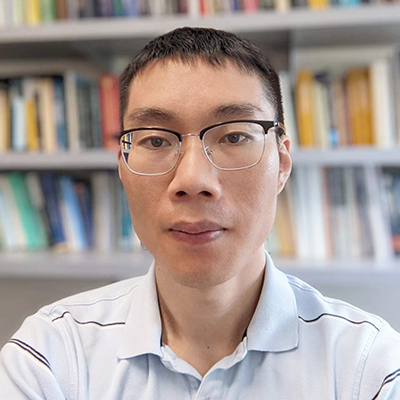
Dr Henry Moss is a Researcher at the Department of Applied Mathematics and Theoretical Physics within the School of Physical Sciences at the University of Cambridge. His work focuses on machine learning applications in climate modeling, Bayesian optimization, and Gaussian processes, bridging computational mathematics with environmental science and chemistry. His research interests include: Bayesian optimization for environmental and chemical systems Reinforcement learning in climate modeling Gaussian processes for molecular property prediction High-throughput machine learning in scientific domains Interpretable AI for coastal flooding prediction Hybrid ML-physics modeling Dr Moss's publications highlight his contributions to federated learning for climate models, sparse Gaussian process techniques, and multi-objective optimization frameworks. These works span applications in weather prediction, chemical engineering, and oceanography. Email: hwm26@cam.ac.uk
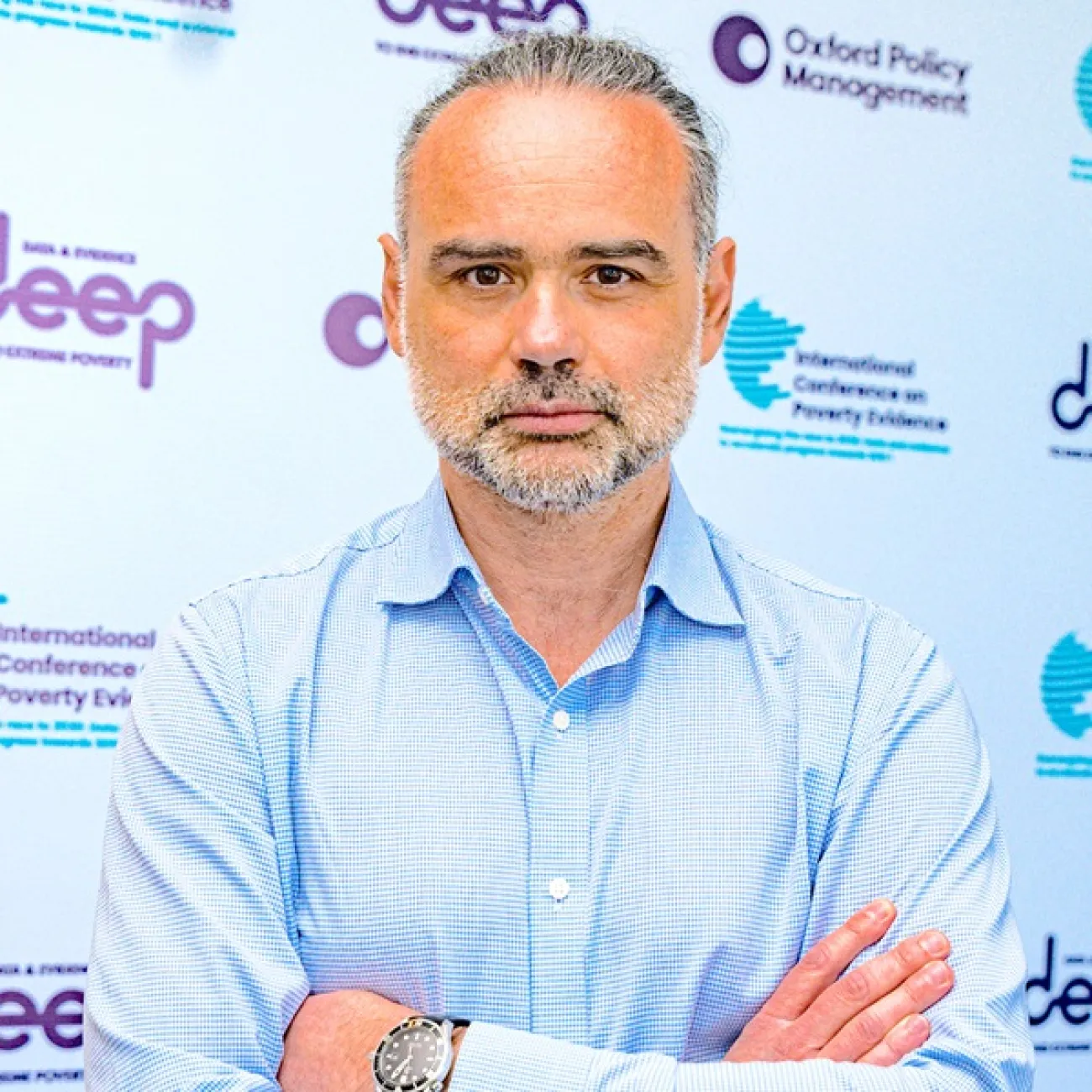
Professor Nikos Tzavidis is a Professor of Statistical Methodology at the University of Southampton . He has held academic positions at institutions including University College London and the University of Manchester, and currently leads research initiatives integrating statistical methodology with geospatial and survey data. His work focuses on Small Area Estimation, official statistics, and poverty mapping, with applications across global development and public policy. Research interests: Small Area Estimation and Official Statistics Outlier Robust Inference Quantile and M-quantile Models Geospatial Data Analysis Poverty Mapping Machine Learning Applications in Statistics Recent research trends emphasize machine learning integration, geospatial data utilization, and advanced quantile modeling for poverty and demographic studies. His publications span journals like the Journal of Official Statistics and the Journal of the Royal Statistical Society . Scientific awards: ISI Fellow (2013) American Statistical Association (2004) Vice Chancellor's Teaching Award (2013) Johann von Spix Professor (2023) He supervises PhD students in social statistics, demography, and geography, and serves on editorial boards for journals including the Journal of Official Statistics . Externally, he has held leadership roles in the International Statistical Institute and contributed to United Nations and World Bank projects.
Keming Yu is a Professor and Chair in Statistics at the Department of Mathematics, Brunel University London, within the College of Engineering, Design and Physical Sciences. He is also the Impact Champion for REF in Mathematical Sciences. He joined Brunel in 2005 after holding positions at the University of Plymouth, Lancaster University, and The Open University. He earned his PhD from The Open University and earlier degrees in Mathematics and Statistics from Chinese institutions. PhD in Statistics – The Open University, UK MSc in Statistics – China BSc in Mathematics – China His research centers on quantile regression, Bayesian modeling, survival analysis, and statistical methods for big data . His work spans applications in health, finance, environment, and social sciences. He has made significant contributions to robust and flexible regression methods, including expectile, mode, and censored quantile regression. His recent publications (2023–2025) show a strong focus on streaming data, spatiotemporal modeling, high-dimensional data, and Bayesian methods . He frequently publishes in top-tier journals such as the Journal of the Royal Statistical Society Series A, B, and C , Statistica Sinica , and Computational Statistics and Data Analysis . His work often involves collaboration with international researchers, especially in China and Europe. He has contributed to methodological discussions in leading statistical journals, demonstrating active engagement with the academic community. His work on financial risk, environmental statistics, and health data analysis reflects interdisciplinary impact. Reviewed and contributed to discussions on safe testing, confidence sequences, and betting-based inference. Active in developing methods for nonignorable missing data, censored models, and functional covariates. He supervises PhD students and is involved in teaching and curriculum development, including as Course Director for the MSc Statistics with Data Analytics. His research is supported by extensive publication output and academic service. He leads or contributes to research on Bayesian models, robust regression, and scalable methods for big data , often involving collaborations in interdisciplinary teams. His lab or research group focuses on statistical methodology development with real-world applications.
Professor Spiridon Ivanov Penev is a leading academic in the School of Mathematics and Statistics at the University of New South Wales. He holds a PhD in Mathematical Statistics from Humboldt University (Berlin, Germany) and has been affiliated with UNSW since 1992, progressing from Lecturer to Professor in 2019. His research spans wavelet methods, saddlepoint approximations, structural equation models, and stochastic risk analysis. Education: PhD in Mathematical Statistics, Humboldt University Current Affiliation: Department of Statistics, School of Mathematics and Statistics, UNSW His work focuses on advanced nonparametric techniques, including wavelet-based signal recovery with adaptive sampling rates, and robust inference in structural equation models. He has developed bias-corrected reliability measures for psychometric applications and contributed to stochastic optimization problems in finance and engineering. Recent publications highlight his expertise in semiparametric regression, robust portfolio optimization, and marine engineering applications using machine learning. Key trends include the use of Bregman divergence for shape-preserving estimation and Markov chain methods for climate model weighting. Scientific Awards: DAAD award Elected member of the International Statistical Institute (ISI) He has supervised numerous grants as Chief Investigator, including Australian Research Council projects and industry collaborations. Administrative roles include membership in the School of Mathematics and Statistics Executive Committee. Teaching duties span advanced statistical inference, multivariate analysis, and data science applications.
Maarten de Rijke is a Professor at the University of Amsterdam's Informatics Institute, leading the Information Retrieval Lab (IRLab). He specializes in information retrieval, machine learning, and recommendation systems, focusing on neural ranking models, fairness, and conversational search. His work bridges theory and practice, addressing challenges in reproducibility, robustness, and ethical AI. He supervises numerous PhD students and postdocs, including recent defenses by Barrie Kersbergen, Antonis Krasakis, and Vera Provatorova. His lab collaborates internationally, organizing events like SIGIR workshops and the Search Engines Amsterdam (SEA) meetup. Key awards include the Best Reproducibility Paper Award (2025) and Best Paper at WSDM 2021. Research interests span generative retrieval, adversarial robustness, and fairness in ranking. Notable projects include the FULTR dataset, FairDiverse toolkit, and studies on empathetic conversational systems. He actively promotes open science through reproducible methodologies and community-driven benchmarks.
Archer Yang is an Associate Professor in the Department of Mathematics and Statistics at McGill University, with additional affiliations as an Associate Academic Member of Mila - Quebec AI Institute, Associate Member of the School of Computer Science, and Member of the Quantitative Life Science Program. His academic journey began with a PhD from the University of Minnesota under the supervision of Hui Zou, establishing his foundation in statistical methodology and machine learning. Dr. Yang's research spans three interconnected themes: statistical machine learning, applications in drug discovery, and computational genomics and healthcare. In statistical machine learning, he focuses on developing dimensionality reduction, probabilistic models, and causality-inspired methods to address complex high-dimensional data challenges. His work in drug discovery involves creating machine learning models to accelerate drug candidate identification and enhance understanding of drug efficacy and safety. In computational genomics and healthcare, he develops techniques to analyze genomic data, identify biomarkers, and explore the genetic basis of diseases, with the goal of improving precision medicine and predicting patient outcomes. His overarching objective is to bridge advanced data-driven methodologies with impactful applications in pharmacology, genomics, and healthcare. His recent publications reveal a strong trend toward applying machine learning to healthcare challenges, particularly in congenital heart disease analysis, mortality prediction, and drug discovery. His work demonstrates expertise in developing interpretable models that can handle complex, high-dimensional biomedical data while maintaining statistical rigor. The integration of causal inference methods with machine learning appears to be a growing focus in his research trajectory. ICML Spotlight Paper (top 2.6%, 313/12,107) Dr. Yang actively supervises a large research group including multiple postdoctoral fellows, PhD students, and Master's students. His lab has developed several notable software tools, including ml-mr for machine learning in Mendelian randomization. His supervision extends across statistics, computer science, and biomedical applications, reflecting the interdisciplinary nature of his work. He appears to maintain strong collaborative relationships with researchers in healthcare and genomics fields. His laboratory, the Archer Yang Lab, maintains active GitHub repositories focused on machine learning applications in healthcare and drug discovery, with particular emphasis on interpretable models and statistical methodology development. The lab appears to work at the intersection of theoretical statistics and practical biomedical applications, with projects spanning from algorithm development to clinical implementation.
Ignacio Cascos Fernandez is an Associate Professor at the Department of Statistics, School of Engineering, Carlos III University of Madrid. His research focuses on Multivariate Analysis (depth functions, multivariate quantiles) and Probability Theory (stochastic orders, random sets, financial risk measures). Key Research Areas Multivariate analysis with emphasis on data depth and quantiles Probability theory involving stochastic orders and random sets Applications to financial risk modeling and statistical process control Notable Awards IASC ERS Young Researchers Award (2006) Elected member of the International Statistical Institute (2008) PhD Supervision Advised José Manuel Cueto (2021) on multifactor models for equity returns Advised Maicol Ochoa (2022) on expectiles and multivariate analysis Recent Projects Developed data depth methodologies for biological age prediction Created statistical tools for complex data in finance and real estate analysis
Professor Spiridon Penev is a faculty member at the School of Mathematics & Statistics , University of New South Wales (UNSW), Sydney. After completing his PhD in Mathematical Statistics at Humboldt University, Berlin, he worked at Technical University of Sofia (Bulgaria) for 10 years, becoming Associate Professor in 1991. He joined UNSW in 1992, progressing from Lecturer to Professor in 2019. His teaching focuses on Statistical Inference , Multivariate Analysis , Longitudinal Data Analysis , and related advanced courses. Research Interests: Wavelet Methods in Non-Parametric Curve Estimation, Edgeworth Expansions, Saddlepoint Approximation, Structural Equation Models, Inference in Semiparametric Models, and Stochastic Risk Modelling. Article Trends: His work spans from foundational wavelet methods (pre-2010) to modern applications in climate model ensembles , portfolio optimization , marine engineering , and machine learning . Keywords include Statistics, Finance, Climate Science, Structural Health Monitoring, and Optimization. Awards: DAAD Award, Elected Member of the International Statistical Institute (ISI). Grants: Led ARC Discovery Project (2016–2018), ARC Linkage Project (2018–2022), and industry collaborations like SCA water quality analysis (2014–2019). Location: School of Mathematics and Statistics, UNSW Sydney, Room 1038, The Red Centre.
Rajmadan Lakshmanan is a Research Fellow at the Faculty of Mathematics , Technische Universität Chemnitz , specializing in optimal transport theory, stochastic optimization, and computational finance. Since 2021, he has contributed to academic development through teaching assistant roles and active participation in research seminars and workshops.
Vincenzina Vitale serves as a Tenure-Track Assistant Professor of Statistics within the Department of Social and Economic Sciences at Sapienza University of Rome. Her academic profile centers on advanced statistical methodologies with applications spanning economics, public policy, and sustainability initiatives. She teaches core courses including Statistics and Data Science for Sustainability and Statistical Methods and Models for Economics and Public Policy, maintaining regular office hours on Tuesdays from 12:30 to 14:30 by email appointment. Her research program focuses on multivariate analysis, specializing in innovative fuzzy clustering techniques for complex data structures such as time series, spatial data, and mixed data types. She extensively employs probabilistic graphical models, particularly Bayesian networks, for data integration and modeling challenges. This work bridges theoretical statistics with practical applications in electoral analysis, financial volatility, sports analytics, and public health domains including COVID-19 pandemic response. Analysis of her 15 most recent publications reveals a dominant trend toward developing spatially-aware and robust fuzzy clustering algorithms. These methods increasingly incorporate regularization techniques, entropy principles, and copula models to handle interval-valued data, count data, and tail dependencies. Key application areas include regional competitiveness measurement (NUTS2/NUTS3 frameworks), electoral studies, sports performance analytics, and pandemic modeling, demonstrating consistent contributions to top-tier statistical journals. No scientific awards or fellowships were documented in the available materials. While her publication record indicates significant research productivity, specific details regarding graduate student advising, research grants, or collaborative projects were not explicitly mentioned in the provided texts. Similarly, information about laboratory facilities or dedicated research teams remains undocumented in the current sources.
Dr. Chao Wang is a Senior Lecturer at the University of Sydney's Sydney Business School. He holds a PhD in Econometrics from the same university, along with master's degrees in Machine Learning & Data Mining (Helsinki University of Technology) and Mechatronic Engineering (Beijing Institute of Technology). His research focuses on financial econometrics, time series modeling, and volatility analysis, particularly using Bayesian methods and high-frequency data. He teaches courses like Quantitative Business Analysis (BUSS1020) and Machine Learning for Business (QBUS6840). Dr. Wang's research interests include parametric/non-parametric volatility models, Bayesian MCMC estimation, and applications of machine learning in finance. His work addresses microstructure noise in high-frequency data and integrates realized measures like variance and range. He has supervised students on topics such as spatiotemporal volatility forecasting and financial technology-based risk management. Grants: Machine learning and high-frequency data-based risk forecasting (2022), financial tail risk forecasting with deep learning (2021), and parametric tail risk forecasting (2020). Key collaborations: With Prof. Robert Gerlach and Minh-Ngoc Tran on Bayesian frameworks and realized measures. Publications: Over 15 peer-reviewed articles in top journals like Quantitative Finance and Journal of Financial Econometrics , focusing on risk forecasting methodologies. His work bridges econometric theory and practical financial applications, emphasizing robust risk prediction under volatile market conditions.
Elena Di Bernardino is a full Professor at Université Côte d'Azur, leading research in spatial statistics, extreme value theory, and environmental risk modeling. She holds the prestigious Junior membership at the Institut Universitaire de France (2025-2030) and serves as Head of the Probability & Statistics team at the J.A. Dieudonné Laboratory. Her work integrates stochastic geometry, copula theory, and machine learning to address multidisciplinary challenges such as climate risk assessment and wildfire prediction. **Education**: Dual Italian-French national, Elena earned a PhD in Applied Mathematics from Université Lyon 1 (2011) and habilitation (HDR) from Université Pierre et Marie Curie (2017). Her academic journey includes postdoctoral research in Venezuela and Canada, alongside engineering studies at the Polytechnic of Milan. **Research**: Key focus areas include spatio-temporal dependence modeling, multivariate risk measures, and geometric inference on random fields. She leads major national projects like the ANR COCHAIRS initiative under France's PEPR Risques program, and collaborates internationally via Simons-CRM and MITACS grants. **Awards**: Recognitions include the Chercheurs Simons-CRM Prize (2019), PEDR grants (2015, 2019, 2023), and continuous funding through EU and French National Research Agency (ANR) programs. **Leadership**: Currently chairs the Scientific Council of the J.A. Dieudonné Laboratory and oversees strategic initiatives at the 3IA Côte d'Azur Institute. She actively mentors 8 current PhD/postdoc researchers and has supervised over 14 completed doctoral projects. **Teaching**: Teaches advanced courses in extreme value theory, risk modeling, and environmental statistics at both undergraduate and graduate levels.
Yuexiao Dong is an Associate Professor in the Department of Statistics, Operations, and Data Science at Temple University's Fox School of Business and Management. He holds a PhD from Pennsylvania State University (2009) and a Bachelor's in Mathematics from Tsinghua University. His research focuses on sufficient dimension reduction, high-dimensional data analysis, and machine learning. Dr. Dong has been funded by the NSF for his work on 'New Developments in Sufficient Dimension Reduction' and serves as a Gilliland Research Fellow. He is an Associate Editor for the Journal of Systems Science and Complexity since 2015. His research is published in top journals such as the Annals of Statistics and Biometrika . Key interests include developing methodologies for efficient data analysis, particularly in handling high-dimensional and non-Euclidean data. He teaches Quantitative Foundations for Data Science at the undergraduate level. Education: Bachelor’s in Mathematics, Tsinghua University PhD in Statistics, Pennsylvania State University Awards: Gilliland Research Fellow NSF Grant: New Developments in Sufficient Dimension Reduction Dr. Dong’s work bridges statistical theory and applications, emphasizing computational efficiency and real-world relevance. Recent projects include Bayesian model averaging, real-time dimension reduction, and expectile-based regression techniques.
Rosella Giacometti is a Full Professor in Mathematical Methods for Economics and Actuarial and Financial Sciences at the Department of Management, University of Bergamo, Italy. Since February 2022, she has served as Dean of the School of Economics and Management at the University of Bergamo. Her academic career spans several decades with extensive teaching experience in financial mathematics, risk measurement, and portfolio theory. Professor Giacometti earned her degree in Computer Science from the University of Milan in 1990, followed by an M.Sc. in Statistics and Operational Research from the University of Essex, UK (1993-94), and a PhD from the University of Brescia (1992-95). Her research focuses on financial risk management, particularly in market risk, credit risk, operational risk, and mortality risk. Her work combines mathematical modeling with practical applications in portfolio optimization and risk measurement. She has led several major research projects including the GACR 19-11965S "A network approach to portfolio optimization and tracking problems" (2018-2021). Professor Giacometti's recent publications demonstrate a strong focus on advanced portfolio optimization techniques, network analysis in banking systems, and the measurement of tail risks in financial markets. Her work increasingly addresses contemporary challenges such as climate risk exposure in banking and ESG-integrated risk measures. 2017 Winner of the national special funding for distinguished researchers (FFABR 2017) 1992 Winner of the scholarship funded by Banca Popolare di Bergamo 1995 Grant from IMI-SIGECO Professor Giacometti has advised numerous students and has been actively involved in professional training courses for banks and government institutions, including the Prime Minister's Office in 2012. She has held visiting positions at prestigious institutions including the University of Washington Bothell, Stony Brook University, and the University of Cyprus. Her research has been supported by multiple grants from MIUR (PRIN projects) and other funding bodies. She leads international collaborations through Erasmus+ agreements with Charles University, Prague, and Texas Tech University, and has served in various leadership roles including as Member of the University Board of Directors (2016-2018) and Director of the Master's Degree in "The Educational operator and Autism" (2015-2016).
Yuwen Gu is an Assistant Professor in the Department of Statistics at the University of Connecticut. Their research focuses on high-dimensional statistics, variable selection, model combination, nonparametric methods, causal inference, and optimization techniques. Their recent publications highlight advancements in quantile regression, sparse modeling, and high-dimensional data analysis. Notable trends include applications of kernel methods, distributed computing for large-scale statistics, and regularization techniques for insurance and multi-source data. Yuwen Gu's work also explores interdisciplinary domains, such as bioacoustic signal processing in ecological studies, though their primary contributions remain in statistical methodology and computational efficiency.