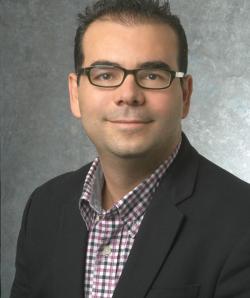
Ben Green is the Waynflete Professor of Pure Mathematics at the University of Oxford and a Fellow of Magdalen College. His work spans additive combinatorics, analytic number theory, harmonic analysis, ergodic theory, discrete geometry, and group theory, with a focus on interdisciplinary approaches. Research Interests: Additive combinatorics and its applications to primes Analytic number theory (prime distribution, L-functions) Harmonic analysis (Fourier methods, spectral theory) Ergodic theory and its combinatorial applications Discrete geometry (ordinary lines, convex structures) Group theory (approximate groups, expansion) Article Trends: His recent work emphasizes multiplicative functions, Ramsey-type problems in number theory, expansion in finite groups, and extremal set theory. Themes include prime gaps, arithmetic progressions, and interactions between analysis and algebra. Scientific Awards: Clay Research Award (2004) Ostrowski Prize (2005) Whitehead Prize (2005) Leverhulme Prize (2007) European Mathematical Society Prize (2008) Royal Society Fellow (2010) Sylvester Medal (2014) Senior Whitehead Prize (2019) Advising: Ben has supervised numerous D.Phil students across additive combinatorics, analytic number theory, and related fields. Past students hold postdoctoral and academic positions globally.
Nathan (Nati) Linial is a Professor at the School of Computer Science and Engineering at the Hebrew University of Jerusalem, where he has been a faculty member since completing his postdoctoral period at UCLA. He earned his undergraduate degree in mathematics from the Technion and his PhD in graph theory from the Hebrew University. His research spans multiple areas of theoretical computer science and mathematics, with primary focus on combinatorics, theoretical computer science, and bioinformatics. Linial's work has made significant contributions to high-dimensional combinatorics, expander graphs, metric embeddings, and computational molecular biology. His research often bridges geometry, analysis, and combinatorial structures, demonstrating deep connections between seemingly disparate mathematical fields. Linial's recent publications reveal a strong trend toward high-dimensional combinatorial structures, including simplicial complexes, hypertrees, and high-dimensional permutations. His work frequently employs probabilistic methods, linear programming techniques, and geometric approaches to solve fundamental combinatorial problems. The breadth of his research is evident in both pure mathematical contributions and applications to computational biology. Fellow of the American Mathematical Society ISI Highly Cited Researcher Conant Prize (2008) for the influential survey paper "Expander graphs and their applications" Linial has served on the editorial boards of several prestigious journals including the Israel Journal of Mathematics (as Chief Editor 2013-2017), Random Structures and Algorithms, and Combinatorica. His academic leadership extends to organizing conferences and workshops in combinatorics and theoretical computer science. He has mentored numerous students whose work spans theoretical computer science, combinatorics, and computational biology. Linial is associated with research projects including ProtoNet (for protein sequence classification) and EVEREST (for evolutionary conserved protein domains), demonstrating his commitment to interdisciplinary research that bridges computer science with molecular biology.
Rasmus Kyng is an Assistant Professor in the Department of Computer Science at ETH Zurich, where he has been since 2019. His research focuses on fast algorithms for graph problems, convex optimization, and their applications in machine learning. He has received grants from the Swiss National Science Foundation, including project grants and a starting grant. Education: B.A. in Computer Science from the University of Cambridge (2011), PhD in Computer Science from Yale University (2017), advised by Daniel A. Spielman. Postdoctoral positions included Harvard University (2018–2019) and a research fellowship at the Simons Institute, UC Berkeley (2017). Research Interests: Development of nearly linear-time algorithms for fundamental graph problems (e.g., maximum flow, minimum-cost flow), dynamic graph algorithms, discrepancy theory, and fine-grained complexity. His work bridges numerical linear algebra and combinatorial optimization, emphasizing practical implementations such as the Laplacians.jl package. Awards: FOCS Best Paper Award (2022), Inaugural ICBS Frontiers of Science Award (2022), Machtey Award (Best Student Paper, FOCS 2017). Teaching: Advanced Graph Algorithms and Optimization (ETH Zurich, 2020–2023), Algorithms, Probability, and Computing (ETH Zurich, 2020–2022). Supervised numerous PhD students and mentored postdocs in theoretical computer science. Labs/Teams: Co-leads a research group with Maximilian Probst Gutenberg, focusing on dynamic graph algorithms and optimization. Collaborations include work on sparsification, spectral graph theory, and machine learning applications.
Venkatesan Guruswami is a Chancellor's Professor in the Department of EECS and a Senior Scientist at the Simons Institute for the Theory of Computing at UC Berkeley . He also holds a Professor position in the Department of Mathematics . His academic journey began with a B.Tech in Computer Science from the Indian Institute of Technology, Madras (1997) , followed by a Ph.D. in Computer Science from the Massachusetts Institute of Technology (2001) . After a Miller Research Fellowship at UC Berkeley (2001–02), he held faculty roles at the University of Washington and Carnegie Mellon University before returning to UC Berkeley in January 2022. Education : B.Tech, IIT Madras (1997) Ph.D., MIT (2001) Professional Affiliations : Chancellor's Professor, UC Berkeley (EECS) Senior Scientist & Interim Director, Simons Institute Professor, UC Berkeley (Mathematics) Guruswami's research spans multiple domains within Theoretical Computer Science , focusing on Error-Correcting Codes , Approximation Algorithms , Randomness in Computing , Probabilistically Checkable Proofs , and Computational Complexity . His groundbreaking work in List Decoding has enabled codes with minimal redundancy for correcting worst-case errors, while recent advancements include Polar Codes , Deletion-Correcting Codes , and Constraint Satisfaction Problems . He has also contributed to Quantum Coding Theory , Locally Recoverable Codes , and Approximation Hardness in various computational contexts. His publications reflect a deep engagement with interdisciplinary topics. Key trends include: Quantum Information Theory : Quantum LDPC codes, transversal gates, and quantum storage. Algebraic Coding : Reed-Solomon codes, AG codes, and polynomial-based constructions. Computational Complexity : Hardness of approximation, CSPs, and parameterized intractability. Data Transmission : Polar codes, deletion channels, and feedback mechanisms. Algorithmic Techniques : Spectral methods, semirandom models, and Lasserre hierarchy applications. Guruswami has received numerous accolades, including the Simons Investigator Award , Presburger Award , Packard Fellowship , Sloan Research Fellowship , ACM Doctoral Dissertation Award , and the IEEE Information Theory Society Paper Award . He is an ACM Fellow (2017) and IEEE Fellow (2019) , with recent honors like the Guggenheim Fellowship (2023) and AMS Fellow (2023) . As an advisor, he has mentored over 25 PhD and postdoctoral researchers , including Atri Rudra , Prasad Raghavendra , and Peter Manohar , whose work has won awards like the Edmund M. Clarke Doctoral Dissertation Award and CRA Outstanding Undergraduate Researcher Award . His research is supported by grants from the National Science Foundation , Packard Foundation , and Sloan Foundation . He also serves as Editor-in-Chief of the Journal of the ACM and holds leadership roles in IEEE and arXiv moderation. Guruswami is actively involved in Simons Institute programs and co-organized workshops on Coded Computation and Information Theory . His work bridges theoretical advancements with practical applications in Cloud Storage , Quantum Computing , and Group Testing , including pandemic-era contributions like AC-DC: Amplification Curve Diagnostics for SARS-CoV-2 .
Emmanuel Kowalski is a Professor of Mathematics at ETH Zurich , where he has been since 2008. Previously, he held professorships at Université Bordeaux I (2000–2007) and was a Veblen Research Instructor at Princeton University and the Institute for Advanced Study (1998–2000). His research focuses on analytic number theory, automorphic forms, and algebraic geometry. Education: École Normale Supérieure de Lyon (1989–1992); PhD in Mathematics from Rutgers University (1998). Research Interests include automorphic forms, L-functions, sieve methods, exponential sums, and probabilistic number theory. His work often bridges number theory with algebraic geometry and harmonic analysis. He has authored over 70 research papers and 6 books, including the influential Analytic Number Theory (2004) with Henryk Iwaniec. Scientific Awards and Invitations include the von Neumann Visiting Fellowship at IAS Princeton (2009), membership in the Board of the Institut des Hautes Études Scientifiques (2016–present), and four invitations to lecture at the prestigious Bourbaki Seminar. He has also delivered key lectures at the Riemann International School of Mathematics and conferences honoring major mathematicians. Grants and Leadership He has organized numerous conferences and research programs, including the 2019 Arithmetic, geometry and modular forms conference at FIM and the 2022 goMath program on Women in Mathematics. He co-leads projects funded by the Swiss National Science Foundation (SNF), such as Trace functions and arithmetic Fourier transforms .
David Fisher is the Milton B. Porter Professor of Mathematics at Rice University, specializing in geometric rigidity theory, dynamical systems, and geometric group theory. His research explores lattice actions, superrigidity, quasi-isometric embeddings, and the Zimmer program, with collaborations spanning institutions like the University of Chicago and Stanford University. B.S., Columbia University Ph.D., University of Chicago (1999) His work focuses on the interplay between group actions, Lie groups, and topology. Key contributions include advancements in Zimmer's conjecture, rigidity of warped cones, and quasi-isometric rigidity of solvable groups. His publications highlight collaborations with leading mathematicians such as Alex Eskin, Gregory Margulis, and Shmuel Weinberger. Fisher’s research intersects coarse geometry, harmonic maps, and measure rigidity, often addressing fundamental questions in non-uniform lattices and affine actions. He maintains active engagement in the mathematical community through publications and academic leadership.
Amir Mohammadi is a Professor in the Department of Mathematics at the University of California, Berkeley , appointed in 2025. He is a member of the Senate Faculty and conducts research in the College of Letters and Science. His research interests lie at the intersection of ergodic theory , dynamical systems , and discrete subgroups of Lie groups . He explores deep connections between homogeneous dynamics, number theory, and geometry, with a focus on effective equidistribution, measure rigidity, and Diophantine approximation. His recent publications reflect a strong emphasis on effective results in homogeneous dynamics, including studies on unipotent flows, quadratic forms, and geodesic planes in hyperbolic manifolds. The work often involves collaboration with leading mathematicians and appears in top-tier journals such as Inventiones Mathematicae , Duke Mathematical Journal , and the Journal of the American Mathematical Society . Research is supported in part by the National Science Foundation (NSF) .
Rishidev Chaudhuri is an Associate Professor at the University of California, Davis in the Department of Neurobiology, Physiology and Behavior within the College of Biological Sciences. His research focuses on computational neuroscience and neural dynamics, employing mathematical models to investigate how neural circuits generate cognitive processes such as memory, perception, and decision-making. His work explores neural dynamics through models of memory systems, attentional mechanisms, and probabilistic inference. Recent publications highlight advances in understanding hippocampal memory scaffolds, parietal-frontal interactions, and neuromorphic computing inspired by brain architecture. Education: BA in Physics (Amherst College), PhD in Applied Mathematics (Yale University) Centers: Center for Neuroscience; affiliated with Applied Mathematics and Neuroscience Graduate Groups Scientific awards and honors are not explicitly mentioned in the provided materials.
Gerry Brady is a Clinical Professor in the Masters Program in Computer Science at the University of Chicago. He holds a Ph.D. in Mathematical Logic from the University of Oslo (1997), an M.A. in Mathematical Logic from the University of Chicago, and a B.A. in Mathematics with honors from the same institution. His research focuses on the history and foundations of mathematical logic, particularly the contributions of figures like C.S. Peirce and Thoralf Skolem. Notably, his doctoral thesis was expanded into the 2000 book From Peirce to Skolem , published by Elsevier. Brady has authored or co-authored works on categorical logic, relational calculus, and the philosophical underpinnings of symbolic logic. He contributed to pioneering efforts in computerizing academic journal production at the University of Chicago Press in the 1990s. His teaching emphasizes problem-solving skills, which he links to workplace success for MPCS graduates. He currently holds an office in Crerar Library and can be reached at brady@cs.uchicago.edu.
Alireza Salehi Golsefidy is a Professor in the Department of Mathematics at the University of California, San Diego (UCSD). He received his Ph.D. from Yale University under Gregory Margulis, a Fields Medalist. His research focuses on algebraic, arithmetic, and analytic properties of linear groups, homogeneous dynamical systems, and expander graphs. He has held positions at Princeton University and the Institute for Advanced Study as a Veblen Research Instructor before joining UCSD in 2011. Education: Ph.D. in Mathematics, Yale University (2006). Research Interests: His work bridges discrete subgroups of Lie groups, homogeneous dynamics, and number theory. Recent contributions include studies on super-approximation, spectral independence, and geometric group theory. He has organized workshops on thin groups, arithmetic groups, and homogeneous dynamics at MSRI and Oberwolfach. Grants & Awards: Alfred P. Sloan Research Fellowship (2012), Clay Liftoff Award (2006), NSF grants 1602137, 1902090, and 2302519. His research explores applications of expander graphs and random walks in algebraic structures. Teaching: Currently teaching Algebra (Math 200C) in Spring 2025. Past courses include advanced algebraic topology, representation theory, and graduate-level number theory. Labs/Teams: Co-organizes UCSD's Algebra Seminar and contributed to the 2013 Lie Theory Workshop. Active in collaborative projects on group actions and automorphic forms.
Dan Spielman is the Sterling Professor of Computer Science and holds joint appointments as Professor of Statistics and Data Science and Mathematics at Yale University. He is affiliated with the Department of Mathematics within the Faculty of Arts and Sciences. His research focuses on spectral graph theory, algorithms, linear systems, and their applications in computer science, mathematics, and statistics. He has been recognized as an ACM Fellow for his contributions to theoretical computer science and mathematics. Dr. Spielman's work bridges theoretical and applied domains, with notable advancements in graph sparsification, Laplacian solvers, and the resolution of the Kadison-Singer problem. His research also encompasses algorithmic design, optimization, and probabilistic methods. Key grants include NSF funding for projects like 'Generalized Algebraic Graph Theory: Algorithms and Analysis' (2016). His scientific awards include the ACM Fellowship (2011), acknowledging his impactful contributions to algorithms and complexity theory. Spielman’s interdisciplinary approach integrates spectral graph theory with practical applications, addressing fundamental problems in computation and mathematics.
Dr. Kezhi (Ken) Li is an Associate Professor of AI in Healthcare at the Institute of Health Informatics, University College London (UCL). He leads the AI for Health research group and has established himself as a leading expert in applying artificial intelligence to solve complex problems in healthcare, with over 130 publications in leading journals (total impact factor greater than 400). Dr. Li earned his Doctor of Philosophy from Imperial College of Science, Technology and Medicine in 2013, followed by research positions at the Medical Research Council (2015-2017), University of Cambridge (2014-2015), and Royal Institute of Technology (KTH) (2013-2014). His academic journey reflects a consistent trajectory from technical AI research toward increasingly healthcare-focused applications. Dr. Li's research focuses on solving physiological, medical, clinical, and operational problems in healthcare using AI techniques. His specific expertise includes AI in healthcare using electronic health records (EHR), biomedical time series analysis using monitors/wearables, diabetes management, large language models (LLM) in healthcare (especially mental health), patient flow optimization, and digital health with federated learning. His work bridges the gap between cutting-edge AI methodologies and practical healthcare applications, with a strong focus on improving patient outcomes and healthcare system efficiency. Analysis of Dr. Li's publication history reveals a strong emphasis on diabetes management technologies, particularly blood glucose prediction systems using advanced neural network architectures. More recently, his work has expanded into mental health applications of large language models, blockchain-based federated learning for healthcare data, and mortality prediction in critical care settings. His research demonstrates a clear evolution from purely technical AI development toward increasingly clinically impactful applications, with growing emphasis on explainability, privacy preservation, and real-world implementation challenges. Dr. Li has received numerous prestigious awards recognizing his contributions to healthcare AI: Best Application Award of IEEE Global Blockchain Conference (2025) Fellow of British Computer Society (2025) Fellow of the Royal Society for Public Health (2024) Healthcare Partnership of the Year category at the London Higher Awards (2024) ECR Promising Project Award (2023) Gallivan Award finalists (2022) Stylianos Kalaitzis PhD Award Winner (2022) HDR UK Team of the Year (COVID-19) Award (2021) As an educator, Dr. Li serves as the Director of MRes study (AI-enabled Healthcare Systems) at UCL. He leads multiple key modules including Healthcare Artificial Intelligence Journal Club, Dissertation in Artificial Intelligence Enabled Healthcare, and Advanced Machine Learning for Healthcare. His supervision extends across dissertation projects and junior researchers in his AI for Health group. His research has been supported by various grants, including those from HDR UK, focusing on translating AI innovations into practical healthcare solutions. Dr. Li leads the AI for Health research group (https://ai4hucl.github.io/ai4h_webs/), which comprises researchers with diverse expertise in machine learning, healthcare systems, and clinical domains. The group maintains strong collaborations with healthcare providers and industry partners to ensure their research addresses real-world healthcare challenges and can be effectively translated into clinical practice.
Goulnara Arzhantseva is a full Professor at the Department of Mathematics within the Faculty of Mathematics at the University of Vienna. With an active research career spanning over a decade, she has established herself as a prominent figure in geometric group theory and related fields. Her work demonstrates continuous scholarly output with publications appearing consistently from 2011 through 2024. Professor Arzhantseva's research focuses primarily on geometric group theory, with particular emphasis on discrete groups, metric geometry, approximation properties of groups, small cancellation theory, expanders, and sofic groups. Her work bridges pure mathematics with applications in metric geometry and functional analysis. The breadth of her research is evident in her collaborations with numerous mathematicians across different institutions and countries. Her publication record shows a clear trajectory of increasingly sophisticated work in geometric group theory. The most recent publications (2022-2024) focus on metric approximations of discrete groups, spectral gap properties, origami expanders, and acylindrical hyperbolicity in cubical small cancellation groups. These works represent cutting-edge research at the intersection of group theory, geometry, and combinatorics. Scientific Awards: Prize mentioned in search results (4 total, specific names not provided) Prize mentioned in search results (4 total, specific names not provided) Prize mentioned in search results (4 total, specific names not provided) Prize mentioned in search results (4 total, specific names not provided) Professor Arzhantseva has been actively involved in numerous research projects, with records showing 7 projects between 2011-2024. Her collaborative approach is evident in her extensive publication record, which includes significant contributions to prestigious mathematics journals. While specific details about her advising activities are not provided in the available information, her substantial research output suggests active mentorship of graduate students in geometric group theory.
Mehmet Koyutürk serves as the Andrew R. Jennings Professor in the Department of Computer and Data Sciences at Case Western Reserve University's Case School of Engineering, with additional affiliation as a Member of the Cancer Genomics and Epigenomics Program at the Case Comprehensive Cancer Center. His computational research bridges algorithm development with biological applications, focusing on network-structured data analysis to address complex biomedical challenges. Dr. Koyutürk earned his Ph.D. in Computer Science from Purdue University following B.S. and M.S. degrees in Electrical Engineering and Computer Engineering from Bilkent University. His primary research domains include high-throughput biological data analysis, systems/network biology methodologies, data mining algorithms, and scientific computing optimization, with particular emphasis on phosphorylation networks, genomic interactions, and multi-omics integration. Recent publication trends reveal expanding applications of his network science expertise into Alzheimer's disease phosphoproteomics, bipolar disorder biomarker discovery, and intimate partner violence analysis, while maintaining core contributions to graph neural networks and biological link prediction. His group actively develops open-source analytical tools like RokaiXplorer for phospho-proteomic data accessibility. Scientific Recognition Andrew R. Jennings Professorship Dr. Koyutürk leads multiple NIH-funded initiatives including R01-LM012980 for phosphoproteomics analysis, U01-CA198941 (BD2K program) for big network integration, and R01-LM011247 for GWAS enhancement, complemented by NSF CAREER Award CCF-0953195. He serves on the steering committee for CWRU's Systems Biology and Bioinformatics graduate programs and as Associate Editor for IEEE/ACM Transactions on Computational Biology and Bioinformatics (TCBB), with extensive collaboration through Mark Chance's Center for Proteomics and Bioinformatics. His laboratory specializes in developing scalable algorithms for biological network analysis, currently advancing projects on kinase-substrate association prediction, co-phosphorylation network characterization in cancer, and network-based approaches to intimate partner violence data mining, with strong emphasis on translating computational methods into biomedical insights through open-source software dissemination.
Prof. Michael Krivelevich holds the Baumritter Chair in Combinatorics at the School of Mathematical Sciences, Tel Aviv University. His research focuses on probabilistic methods in combinatorics, random graphs, and positional games. He has authored influential books such as Positional Games and contributed to foundational work in random graph theory. Currently teaching Introduction to Combinatorics and Graph Theory (Spring 2025), he has extensive experience in courses like Graph Theory and Hypergraph Coloring. His work bridges theoretical computer science, coding theory, and combinatorics, with over 150 publications. Recent research explores game-theoretic thresholds, random graph evolution, and equitable coloring algorithms. Education: Ph.D. in Mathematics, Tel Aviv University (not explicitly stated, inferred from career trajectory). Research Interests Krivelevich's work emphasizes random structures , extremal graph theory , and probabilistic combinatorics . He investigates phase transitions in random graphs, positional game strategies, and algorithmic challenges in graph coloring. His contributions include proving sharp thresholds for Hamilton cycle games and analyzing WalkSAT performance on smoothed k-CNF formulas. Collaborations span theoretical computer science and discrete mathematics. Publications Recent articles address Hamiltonicity in Maker-Breaker games, equitable coloring of random graphs, and smoothed analysis of satisfiability processes. His work often combines rigorous proofs with algorithmic insights. Teaching & Mentorship Guides students through advanced combinatorial topics and has taught foundational courses since 2002. No explicit student listings available in provided texts.