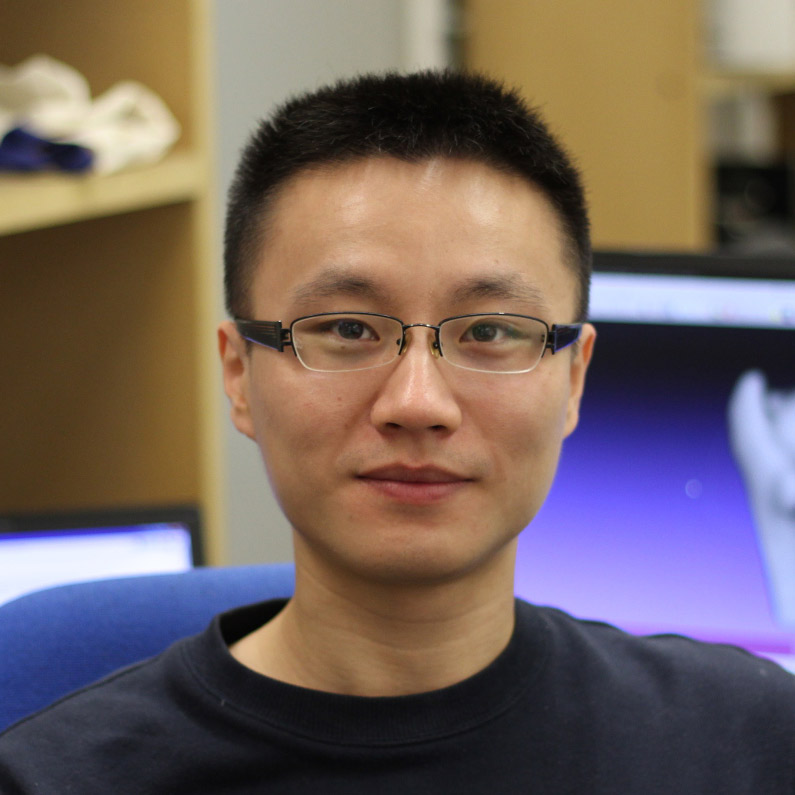
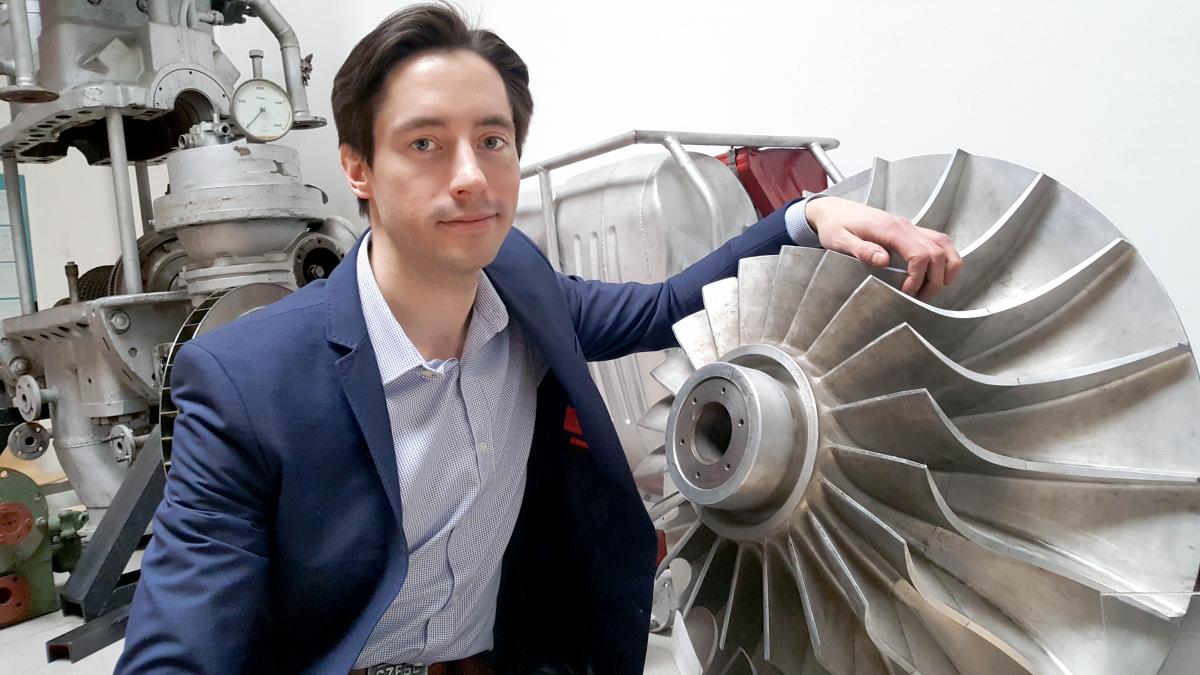
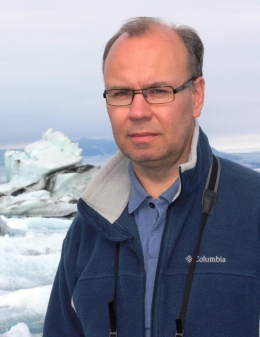
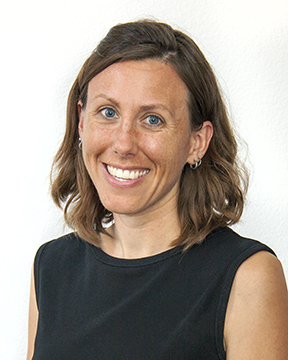
Dr. Xi Zou is a Lecturer in Aerospace Engineering at Swansea University since May 2023. He holds a PhD from the University of Pavia and Polytechnical University of Catalonia via the Erasmus Mundus Joint Doctorate fellowship. Previously, he worked as a postdoctoral researcher at the University of Nottingham and a Stress Engineer at Airbus China. His expertise includes finite element methods, mesh generation, reduced order modelling, and composite structures analysis. Education: BSc in Spacecraft Design (Beihang University), MSc in Mechanics (Beihang University), PhD in Engineering (Erasmus Mundus Joint Doctorate) His research focuses on advancing numerical methods for structural analysis, particularly in composite materials and airframe structures. Recent work includes developing NURBS-enhanced finite element meshes and efficient damage hotspot identification tools. He has published widely in journals like Computer-Aided Design and International Journal for Numerical Methods in Engineering. Dr. Zou has supervised MSc projects exploring expandable space modules using origami principles. He actively collaborates with industry and teaches modules such as Engineering Mathematics and Finite Element Analysis.
Dr. Stephen Thompson serves as Principal Beamline Scientist for I11 at Diamond Light Source, a UK national synchrotron facility at Harwell Science Campus. Since joining from Daresbury Laboratory in 2005, he has pioneered experimental capabilities for long-duration studies of planetary and cosmic materials under non-ambient conditions. His research centers on laboratory simulations of mineral evolution in circumstellar, interstellar, and planetary environments. Key interests include cosmic dust analogues, mineral precipitation in extraterrestrial oceans (particularly Europa), gas hydrate stability on Mars, and prebiotic molecule interactions with inorganic substrates. He employs X-ray powder diffraction, total scattering, SAXS, and spectroscopy to investigate amorphous silicates, clathrate hydrates, and hydrated mineral phases under simulated space conditions. Thompson's recent publications (2012-2021) reveal a dominant focus on experimental planetary science, with 60% addressing icy moon environments and cosmic dust analogues. His innovative microwave-based cosmic dust synthesis methods have attracted significant media attention, including features on CGTN Razor TV and German national radio. The work demonstrates strong interdisciplinary connections between astrophysics, mineralogy, and astrobiology. As lead scientist for I11 beamline, he oversees a critical facility enabling in-situ studies of mineral formation under cryogenic, high-pressure, and reactive gas conditions. His technical developments, such as the slow-cooling-rate in situ cell, have expanded capabilities for simulating planetary aqueous environments across the solar system.
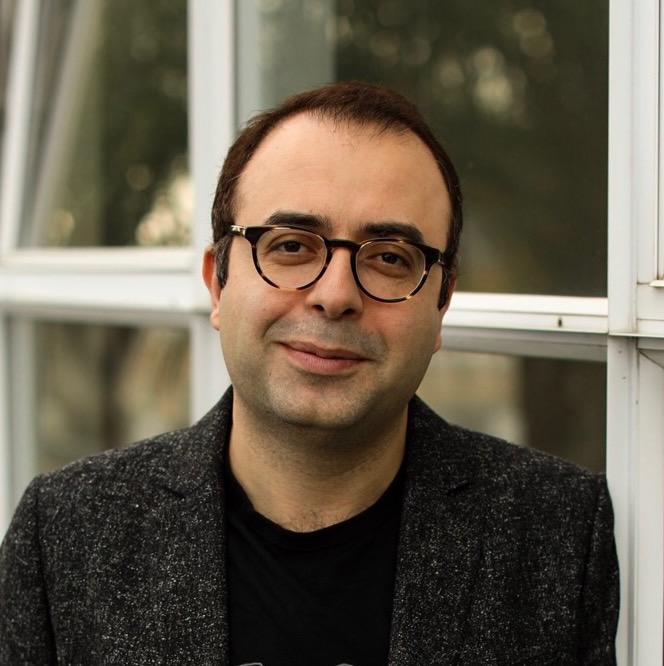
Leonardo De Carlo is an Assistant Professor (Professor Auxiliar) of Mathematics at the Departamento de Engenharia Informática e Sistemas de Informação, Universidade Lusófona, Lisbon. He is also an integrated researcher at the Grupo de Física Matemática (GFM) at Instituto Superior Técnico (IST), Lisbon, and a collaborator at COPELABS (ILIND), a research unit within Universidade Lusófona. His interdisciplinary work bridges mathematical physics, statistical mechanics, and data science. Education: Doctor of Philosophy in Mathematics, Scuola Internazionale Superiore di Studi Avanzati (SISSA), 2017 Laurea Specialistica in Physics, Dipartimento di Fisica, "La Sapienza", Università di Roma, 2012 His research focuses on non-equilibrium statistical mechanics , hydrodynamics of particle systems , wavefunction physics , and mathematical structures in chaotic dynamics . Recently, he has expanded into statistical learning algorithms and AI for weather forecasting . His work combines rigorous mathematical analysis with computational modeling. The analysis of his recent publications reveals a strong emphasis on the microscopic origins of macroscopic behavior , particularly in non-equilibrium settings. Themes include hydrodynamic limits , current fluctuations , quantum-inspired stochastic models , and geometric structures in dynamical systems . There is a clear trajectory from fundamental physics to applied machine learning, especially in modeling complex systems through both analytical and data-driven approaches. Scientific Affiliations and Research Units: Grupo de Física Matemática (GFM), IST Lisbon (FCT-funded) COPELABS (ILIND), Universidade Lusófona Center of Technology and Systems (CTS) Leonardo has advised no publicly listed students yet. His research has been supported through institutional affiliations and FCT funding. He previously worked as a postdoctoral researcher at Instituto Superior Técnico, Scuola Normale Superiore, and LUISS Guido Carli, and briefly in industry at CINECA as an HPC Data Engineer on AI-driven weather forecasting. He has also taught at the high school level in both public and private sectors. His future research aims to unify insights from statistical physics with modern machine learning techniques.
Amin Saberi is a Professor of Management Science and Engineering at Stanford University, with a courtesy appointment in Computer Science. His research focuses on algorithms, social network analysis, market design, and optimization, with applications in economics and computer science. He holds a B.Sc. from Sharif University of Technology (2000) and a Ph.D. in Computer Science from Georgia Institute of Technology (2004). He has been honored with the Terman Fellowship, Alfred P. Sloan Fellowship, and multiple best paper awards at FOCS, SODA, and EC. As founder and CEO of NovoEd, he pioneered scalable social learning platforms used globally. His academic roles include membership in ICME and Bio-X. Education: B.Sc., Computer Science, Sharif University of Technology (2000) Ph.D., Computer Science, Georgia Institute of Technology (2004) Research Interests: Algorithms, market design, optimization, social networks, and their applications in economics and operations research. His work spans theoretical contributions in approximation algorithms, stochastic optimization, and practical applications in ride-sharing markets and online advertising. Recent publications explore dynamic matching markets, envy-free resource allocation, and algorithms leveraging graph neural networks. Awards: Terman Fellowship Alfred P. Sloan Fellowship Best Paper Awards at FOCS, SODA, and EC Advising & Grants: Supervised over a dozen doctoral and master’s students. His research has been supported by grants focusing on dynamic resource allocation and algorithmic market design. Collaborations include Uber, Amazon, and academic institutions globally. Labs/Teams: Leads the Stanford Center for Computational Market Design. Active in interdisciplinary teams at ICME and Bio-X, integrating theoretical insights with practical applications.
Dr. Anna Puskas holds the position of Honorary Research Fellow at the School of Mathematics and Physics, The University of Queensland, where she maintains active research collaborations within Australia's premier mathematical sciences institution. Her scholarly work bridges abstract algebraic structures with concrete number-theoretic applications, reflecting deep engagement with both theoretical frameworks and cryptographic implementations. Her research program centers on four interconnected pillars: Number Theory & Cryptography : Developing Ramanujan graph applications for post-quantum cryptography and analyzing class field theory in multiquadratic extensions Algebraic Combinatorics : Constructing crystal bases through combinatorial representation theory and Kashiwara operator frameworks Representation Theory : Investigating metaplectic covers of Kac-Moody groups and their Whittaker function decompositions Lie Theory : Exploring t-deformed root multiplicities and correction factors in infinite-dimensional Lie algebras Analysis of her 2012-2019 publications reveals an evolving trajectory from classical invariant theory toward cutting-edge metaplectic representation theory. Her work demonstrates increasing sophistication in handling p-adic groups and automorphic forms, particularly through novel constructions of Whittaker functions on metaplectic covers. The cryptographic applications of her number-theoretic work—especially Ramanujan graphs—show practical impact beyond pure mathematics, while her crystal basis research provides essential combinatorial tools for representation theorists. No scientific awards or honors were documented in available institutional records. Similarly, details regarding graduate student supervision, research grant funding, or laboratory affiliations were not provided in the source materials, suggesting her honorary fellowship may focus primarily on independent research collaboration rather than formal teaching or administrative duties.
Grzegorz Liśkiewicz serves as Professor and Rector's Representative for Academic Entrepreneurship at Lodz University of Technology's Institute of Fluid-Flow Machinery. His work bridges academic research with industrial applications in turbomachinery, compressor systems, and Industry 4.0 implementations. Active since at least 2013, he maintains significant research output while holding university leadership roles. Liśkiewicz's research centers on fluid dynamics phenomena in rotating machinery, particularly surge inception, rotating stall, and inlet recirculation in centrifugal compressors. Recent work expands into nanofluid heat transfer, magnetohydrodynamics, and machine learning applications for predictive maintenance. His interdisciplinary approach connects mechanical engineering fundamentals with sustainability initiatives including circular economy frameworks and microalgae biotechnology. Current publication trends (2021-2025) reveal three dominant threads: 1) Advanced compressor stability analysis using empirical mode decomposition and image recognition ML models; 2) Nanofluid/MHD investigations for thermal systems; 3) Renewable energy applications like vertical-axis wind turbine aerodynamics. This evolution demonstrates increasing methodological sophistication while maintaining core focus on fluid machinery reliability. As a key researcher at Lodz University of Technology's Institute of Fluid-Flow Machinery, Liśkiewicz collaborates with international institutions including General Electric, Oxford, and Cambridge. His work environment integrates experimental facilities like PIV measurement systems with computational modeling for comprehensive turbomachinery analysis, supporting both academic inquiry and industrial problem-solving.
Brian J. Frost serves as Associate Professor of Chemistry and Assistant Dean at the University of Nevada, Reno at Lake Tahoe, focusing on sustainable catalytic systems using water-soluble organometallic complexes. Education: B.S., Elizabethtown College (1995) Ph.D., Texas A&M University (1999), advisor: Donald J. Darensbourg Postdoctoral Research Associate, Columbia University (2000-2002), advisor: Jack R. Norton His research centers on inorganic and organometallic chemistry, specializing in water-soluble phosphine ligands (particularly PTA derivatives) for aqueous and biphasic catalysis. Key interests include green chemistry applications, small molecule activation, and kinetic/mechanistic studies of catalytic processes, utilizing NMR spectroscopy, X-ray crystallography, and computational methods. Publications reveal a consistent focus on ruthenium-catalyzed nitrile hydration in water, with recent work expanding to air-stable ligand design, biomass conversion, and catalyst recyclability—highlighting environmental sustainability and industrial applicability. Scientific Awards: No major scientific awards mentioned in available sources Grants: National Science Foundation CAREER Award (2007): 'Water-Soluble Phosphine Ligands and Catalysis' The Frost research group maintains active laboratory operations developing novel catalytic systems for environmentally benign chemical synthesis.
Nevin Mutlu is an Assistant Professor in the Operations Planning, Accounting & Control (OPAC) Group within the School of Industrial Engineering at Eindhoven University of Technology (TU/e). She is affiliated with multiple research centers including the Data Science Center Eindhoven (DSC/e), Efficient Consumer Response (ECR) Community, Retail Operations Lab, and Freight Transport & Logistics Research Group. Her industry partnerships include Nike and the ECR Community, demonstrating strong connections between her academic research and practical retail applications. Dr. Mutlu received her PhD and MSc degrees in Industrial and Systems Engineering from Virginia Tech, USA in 2016 and 2013, respectively. She also holds a BSc degree in Industrial Engineering and a BA degree in Economics from University at Buffalo, State University of New York, USA. Prior to joining TU/e in 2016, she served as a graduate teaching assistant and instructor at Virginia Tech, teaching courses in operations research and working with the Office of Emergency Management on real-world applications. Her research bridges optimization, economics, and marketing to address industry-relevant problems in retail operations and logistics. She specializes in modeling how operational decisions impact consumer behavior, with particular focus on retail pricing, experiential retail, e-commerce adoption, and transportation systems. Her interdisciplinary approach combines theoretical optimization techniques with practical business considerations, resulting in impactful research that addresses current challenges in retail and supply chain management. Analysis of her publications reveals a strong trajectory in operations research with increasing focus on consumer behavior dynamics. Her work spans theoretical optimization methods (resource allocation, production-routing problems) and applied retail contexts (experiential retail, dual-channel strategies). Recent publications show growing interest in sustainability aspects of retail operations and transportation, reflecting contemporary industry challenges. Her research consistently addresses the complex interplay between operational decisions and consumer responses, providing valuable insights for both academia and industry. EU Horizon 2020 Marie Curie Individual Fellowship (2018-2020) Dr. Mutlu actively contributes to research funding through projects like SYNERCIZE: SYnchromodal Transport NEtworks for a Construction Industry towards Zero Emissions (2025-2027), where she serves as a project member. Her teaching portfolio includes Supply Chain Management, Revenue Management and Pricing Analytics, and Project and Process Management courses. She has also served on committees such as the AI Planner of the Future program, demonstrating engagement with emerging technologies in her field. Her research is supported by multiple affiliations including the Data Science Center Eindhoven, ECR Community, and Retail Operations Lab, providing collaborative environments for interdisciplinary work. Her industry partnerships, particularly with Nike, facilitate the translation of academic research into practical retail solutions. The SYNERCIZE project demonstrates her expanding research scope into sustainable transportation networks for construction industries.
Stefan Wastegård is Professor of Quaternary Geology with a specialisation in Quaternary Stratigraphy at Stockholm University's Department of Physical Geography, where he actively teaches bachelor's and master's courses. He leads the research group SUQuaTeSt (Stockholm University Quaternary Tephra Studies), focusing on volcanic ash layers as geochronological tools for correlating Late Quaternary climate records across marine, ice-core, and terrestrial archives in Scandinavia, the Azores, Patagonia, and the North Atlantic region. Wastegård's research centers on resolving uncertainties in Late Quaternary chronologies, particularly addressing radio-carbon dating limitations (radiocarbon plateaux, reservoir effects) and the scarcity of dating methods for periods before 40 ka BP. His work utilizes diverse climatic archives to examine climate synchrony across the North Atlantic, with emphasis on tephrochronology for identifying isochrons in peat bogs, lake sediments, and marine cores. Key interests include Younger Dryas dynamics, Holocene climate events, and volcanic ash dispersal mechanisms. Analysis of his recent publications reveals a sustained effort to expand tephrochronological frameworks geographically and temporally. Major contributions include the first geochemical confirmation of Laacher See Tephra in southern Sweden, extension of Azores tephra dispersal to Ireland, and identification of cryptotephras from moderate Icelandic eruptions in Finland. His studies consistently address methodological challenges while establishing new chronological markers for climate events like the 4.2 ka BP anomaly and Younger Dryas ice-sheet behavior. No scientific awards, prizes, or fellowships are documented in the provided texts. Wastegård has served as main supervisor for seven PhD students: Hans Johansson, Ewa Lind, Carl Lilja, Sofia Andersson, Anders Borgmark, Simon Larsson, and Christos Katrantsiotis. His current research project "Precise linking of late Quaternary palaeoclimate records in the North Atlantic region" compares climate signals across high-resolution archives to understand rapid climate transitions. He has secured funding for numerous completed projects including Holocene tephrochronology for the Faroe Islands and cryptotephra studies in Patagonia. As head of SUQuaTeSt, he directs Stockholm University's Quaternary Tephra Studies group which has pioneered tephrochronological applications in Scandinavia for decades. The team specializes in extracting and analyzing both visible and cryptotephra layers from organic-rich sediments using electron probe microanalysis, collaborating internationally on projects like PASADO in Patagonia and contributing to frameworks such as INTIMATE for glacial-interglacial transitions.
Shravan Veerapaneni is a Professor in the Department of Mathematics at the University of Michigan, within the College of Literature, Science, and the Arts. His research focuses on developing large-scale computational tools for solving differential and integral equations on complex moving geometries that arise in engineering and biophysics. His work spans multiple interdisciplinary areas connecting mathematics, computational science, and applied physics. Education: B.S. from Indian Institute of Technology (2003), Ph.D. from University of Pennsylvania (2008) Previous Position: Research Scientist at Courant Institute of Mathematical Sciences (NYU), 2008-2011 Teaching: Courses include Math 671, Math 371 (Numerical Methods for Engineers), and Math 156 (Applied Honors Calculus II) Professor Veerapaneni's research interests encompass scientific computing, fast algorithms, potential theory, complex fluids, microfluidics, soft-matter, and biomechanics. His core application areas include biomembrane mechanics, blood flow modeling, cilia-driven flows, and microfluidic-chip design. More recently, he has expanded his research to include scalable solvers and machine learning techniques for autonomous vehicle mobility in off-road settings. His work demonstrates a strong emphasis on developing high-order accurate numerical methods with practical applications in biomedical engineering and fluid dynamics. His publications reveal a consistent focus on boundary integral methods, Stokes flow simulations, and optimization problems in complex geometries. The research shows progression from fundamental mathematical methods to increasingly complex applications in biophysics and engineering. His work on vesicle dynamics, microswimmers, and particulate suspensions demonstrates expertise in computational fluid dynamics at microscales. NSF CAREER Award (2015) for project 'Fast Algorithms for Particulate Flows' Professor Veerapaneni has developed computational frameworks for simulating complex fluid-structure interactions, with applications ranging from biological systems (vesicles, cilia) to engineering problems (microfluidic chips, autonomous vehicles). His group has produced significant software contributions including visualization tools for fluid dynamics simulations, as evidenced by the animations of vesicle flows on his website. His collaborative work spans mathematics, engineering, and computer science departments, reflecting the interdisciplinary nature of his research.
Eleni Tzanaki is an Assistant Professor in the Department of Mathematics & Applied Mathematics at the University of Crete, Greece. Her office is located in room Δ330 at the Voutes Campus in Heraklion. She can be contacted via telephone at +30-2810-393747 or by email at etzanaki@uoc.gr. Her academic work spans both pure mathematics and educational research, with a particular focus on algebraic and geometric combinatorics as well as innovative approaches to science and physics education. Dr. Tzanaki's research interests center on algebraic and geometric combinatorics, with specific focus areas including: Combinatorics of Coxeter groups Hyperplane Arrangements Polytopes Poset structures, lattices, and patterns Real rootedness of polynomials Her publication record demonstrates a dual research trajectory. From 2016-2021, her work was predominantly in pure combinatorial mathematics, focusing on hyperplane arrangements, lattice paths, and combinatorial structures related to Coxeter groups. More recently (2022-2025), she has expanded her research to include educational applications, particularly examining how artificial intelligence tools like ChatGPT can be effectively integrated into junior high school physics education. This interdisciplinary approach connects her mathematical expertise with practical educational challenges, exploring innovative teaching methods like flipped classrooms and escape-room activities. Dr. Tzanaki appears to be actively involved in interdisciplinary collaborations that bridge mathematics, computer science, and education. Her work on fractal geometry across science, computer science, and art lessons demonstrates her commitment to cross-disciplinary approaches. She is investigating how emerging AI technologies can enhance physics instruction and address student misconceptions in areas like hydrostatic pressure and buoyancy, while maintaining her foundational work in combinatorial mathematics.
Gabriela Berkowicz-Płatek is an Assistant Professor at the Department of General and Inorganic Chemistry (C-6), Faculty of Chemical Engineering and Technology, Tadeusz Kościuszko Cracow University of Technology. Her academic career is centered on chemical engineering processes with a focus on combustion, hydrogen production, and waste valorization. PhD: Dr. Eng. in Chemical Technology, Tadeusz Kościuszko Cracow University of Technology, 2015 Master's: MSc Eng. in Organic Technology, Tadeusz Kościuszko Cracow University of Technology, 2009 Her research spans environmental and industrial chemistry, addressing challenges in sustainable energy systems and polymer processing. Key areas include fluidized bed technology , hydrogen production , polymer combustion , and microplastic reduction in construction materials. The 15 most recent publications reveal trends in hydrogen energy , polymer degradation , carbon-neutral fuels , and environmental pollution monitoring . Subfields include catalytic oxidation, ash management, emission control, and kinetic modeling. Scientific Awards : DOCTUS scholarship program (Krakow, 2012) She teaches Inorganic Chemistry (exercises and laboratories), Basic Processes in Inorganic Chemistry , Basics of Chemistry , and Selected Sections of Inorganic Chemistry . Her academic roles include Deputy Head of Department.
Philip Valta is Professor of Finance and Director of the Institute for Financial Management at the University of Bern, Switzerland. He maintains an active research program in corporate finance with significant contributions to understanding debt markets, strategic default behavior, and the relationship between product market competition and financial decisions. His work has been published in premier finance journals including the Journal of Finance, Journal of Financial Economics, and Management Science. Valta's research spans several interconnected domains in finance. His early work established how product market competition affects corporate financing costs and debt structures across different institutional environments. He extended this research to examine strategic default behavior and its implications for equity risk across international markets. A substantial portion of his scholarship investigates debt structure choices, revealing how firms select between bonds and bank loans based on credit supply conditions and competitive pressures. More recently, he has expanded into political finance, examining corporate political contributions and self-funding of political campaigns. His publication record shows consistent high-impact research from 2008 through 2025, with recent work focusing on contemporary issues such as zombie firms, offshoring effects on firm boundaries, and valuation mistakes in mergers. Valta frequently collaborates with leading finance scholars including François Derrien, Laurent Frésard, and Erwan Morellec, maintaining strong connections within the international finance research community. His research combines theoretical modeling with rigorous empirical analysis using both U.S. and international datasets to test hypotheses across diverse institutional settings.
Alysa Remsburg serves as a Teaching Professor in the Sustainability and Environmental Studies Program at the University of Wisconsin-La Crosse, where she teaches interdisciplinary courses exploring human-environment interactions and advocates for expanded ecological literacy. Her office is located in Centennial Hall, and she maintains regular office hours with remote scheduling via Calendly. Her academic credentials include: Ph.D. in Zoology from the University of Wisconsin-Madison (Dissertation: Aquatic and Terrestrial Vegetation Influence Lacustrine Dragonfly Assemblages) M.S. in Zoology from the University of Wisconsin-Madison (Thesis: Amount, Position, and Age of Coarse Wood Influence Litter Decomposition) B.A. in Biology with Environmental Studies minor from Wittenberg University (Department Honors) Dr. Remsburg's research integrates community ecology with socio-ecological systems, focusing on dragonfly/damselfly biodiversity responses to habitat features across aquatic-terrestrial interfaces. Her fieldwork spans Yellowstone, Wisconsin, South Africa, and Maine, examining forest invasive species, riparian ecosystems, and conservation biology through multi-species lenses including ground beetles, mites, and amphibians. She pioneers service-learning pedagogy and solar energy education through community partnerships. Her 2023 publication on student evaluation systems demonstrates interdisciplinary collaboration across biology, economics, psychology, and sociology departments, reflecting her commitment to innovative pedagogy in sustainability education. Professional recognition includes: Wisconsin Teaching Fellowship for research on peer-led learning efficacy 2021 Inspiring Sustainability Award for co-founding Solar on La Crosse Schools As Director of the Sustainability & Environmental Studies minor, Dr. Remsburg mentors students through capstone projects and internships while securing community grants for solar infrastructure in K-12 schools. Her Solar on La Crosse Schools initiative combines renewable energy installation with curriculum development, demonstrating practical environmental stewardship. She actively contributes to the UWL River Studies Center and develops place-based courses like Woodlands of the Driftless and The Mississippi River: Mighty and Managed, leveraging La Crosse's unique Driftless Area geography to foster student connection with regional ecosystems.
Serge Prudhomme is a Full Professor in the Department of Mathematics and Industrial Engineering at Polytechnique Montréal. With a background including a Dipl. Eng. from École Centrale de Lille, an M.Sc. from the University of Virginia, and a Ph.D. from UT Austin, he has established himself as a leading researcher in computational mathematics and mechanics. His primary research interests span scientific computing, finite element methods, error estimation and adaptive methods, multi-scale modeling, verification and validation of numerical calculations, uncertainty quantification, and model reduction. Professor Prudhomme's work demonstrates a consistent focus on developing mathematically rigorous computational frameworks with practical engineering applications. His recent publications show an expanding interest in integrating machine learning techniques with traditional numerical methods. Analysis of his recent publications reveals a strong trend toward interdisciplinary research that bridges computational mathematics with mechanics and increasingly machine learning. His work on peridynamics, proper generalized decomposition, and neural network applications to scientific computing represents cutting-edge developments in computational methods. The publications demonstrate a consistent focus on improving the accuracy, efficiency, and reliability of computational models. Professor Prudhomme has successfully supervised 10 graduate students to completion (4 doctoral theses and 6 master's theses), indicating a strong commitment to student mentorship. His supervision record spans topics including wave equation approximations, goal-oriented calibration, contact detection for ellipsoids, and PGD reduced-order modeling. His research is supported by active collaborations with institutions worldwide, as evidenced by his co-authorship patterns and conference participation across North America and Europe. The breadth of his work, from fundamental mathematical developments to practical engineering applications, positions him as a significant contributor to the field of computational science and engineering.