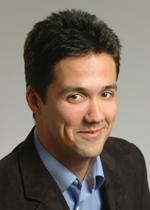
Jose M. Carmena is the Chancellor's Professor of Electrical Engineering and Neuroscience at the University of California-Berkeley and Co-Director of the Center for Neural Engineering and Prostheses (CNEP). His research focuses on brain-machine interfaces (BMIs), neuroprosthetics, and sensorimotor learning mechanisms. Ph.D., Robotics, University of Edinburgh (2002) M.S., Artificial Intelligence, University of Edinburgh (1998) M.S., Electrical Engineering, University of Valencia (1997) B.S., Electrical Engineering, Polytechnic University of Valencia (1995) Dr. Carmena's work bridges neural engineering and systems neuroscience, investigating corticostriatal plasticity, wireless neural recording systems (e.g., neural dust), and closed-loop BMI adaptation. His publications reveal expertise in Neuroprosthetic Algorithms , Wireless Neural Interfaces , and Sensorimotor Learning with applications in chronic neuroprosthetic systems. McKnight Technological Innovations in Neuroscience Award (2017) IEEE Fellow (2017) NSF CAREER Award (2010) Sloan Research Fellow (2009) Hellman Fellow (2007) His advisees include Paul Botros, Archit Gupta, and Vivek Athalye. Dr. Carmena has published extensively in journals like Nature , Neuron , and Nature Neuroscience , developing technologies such as ultrasonic neural dust for cortical recording and adaptive control algorithms for prosthetics.
Luis Sentis is a Professor in the Department of Aerospace Engineering and Engineering Mechanics at The University of Texas at Austin and holds the Frank and Kay Reese Endowed Professorship in Engineering . He leads the Human Centered Robotics Laboratory, focusing on control systems, human-robot interaction, and exoskeleton robotics. His affiliations include UT Austin's Good Systems initiative and Apptronik Systems as an innovation advisor. Ph.D. , Electrical Engineering, Stanford University B.S. , Telecommunications and Electronics Engineering, Polytechnic University of Catalonia His research spans humanoid robotics , agile manipulation , autonomous systems , and human-robot teaming . Recent work emphasizes FAIR datasets , EEG monitoring , and collision detection for legged robots, with applications in industrial automation and ethical AI. Scientific awards include the NASA Elite Team Award and La Caixa Foundation Fellowship . Funding sources include DARPA , NSF , NASA , and ONR .
Ramana Vinjamuri is an Associate Professor in the Department of Computer Science and Electrical Engineering at the University of Maryland, Baltimore County (UMBC). He holds a secondary appointment as Visiting Professor at the Indian Institute of Technology, Hyderabad, India. His academic journey includes a Ph.D. in Electrical Engineering from the University of Pittsburgh (2008), M.S. in Bioinstrumentation from Villanova University (2004), and B.Tech. in Electrical and Electronics Engineering from Kakatiya University (2002). Dr. Vinjamuri's research focuses on Brain-Machine Interfaces (BMIs) for upper-limb prostheses control , neuroprosthetics and exoskeletons , machine learning in motor control , and neurophysiological signal processing . His work extends synergy-based models to control 37-dimensional hand movements, addresses human-robot interaction through emotionally intelligent systems, and develops neurotechnologies for substance use disorder using wearable sensors and AI. NSF CAREER Award (2019) NSF IUCRC BRAIN Center Planning Grant (2020) Harvey N Davis Distinguished Teaching Assistant Professor Award (2018) His publications demonstrate expertise in EEG and EMG signal analysis , deep learning for motor decoding , synergy modeling , and humanoid robot control . The Vinjamuri Lab at UMBC involves graduate, undergraduate, and high school researchers, with international collaborations in India and the US.
Dr. Jenna Yentes is an Associate Professor in the Department of Kinesiology and Sport Management at Texas A&M University, affiliated with the College of Education and Human Development. Her research focuses on functional resiliency in aging populations, biomechanics of chronic obstructive pulmonary disease (COPD), and nonlinear analysis of human movement. She leads studies on gait stability, respiratory-gait coupling, and exoskeleton-assisted walking. Notable contributions include quantifying locomotor reserve and exploring firefighter performance in protective gear. Education: Ph.D. in Biomechanics (University of Nebraska, 2013), M.S. in Kinesiology (California State University Fullerton, 2006), B.A. in Kinesiology (University of Northern Colorado, 2000). Research Interests: Reserve capacity in older adults' mobility and cognition Biomechanical adaptations in COPD patients Methodological rigor in nonlinear data analysis (e.g., entropy metrics) Firefighter physical performance under protective gear Recent Articles Trends: Focus on entropy-based gait analysis, COPD biomechanics, dual-task interference in aging, and exoskeleton effects on interlimb coordination. Methodological rigor in parameter selection for nonlinear algorithms is a recurring theme. Awards: 2023 Faculty Climate Award (Texas A&M), 2019 Promising Scientist Award (International Society of Posture and Gait Research), and 2019 Chancellor's Commission on the Status of Women Award (University of Nebraska). Advising & Grants: Mentors graduate students (noted in publications) and collaborates with TEEX Fire Academy and multiple Texas A&M research centers including the Huffines Institute for Sports Medicine and the Center for Population Health and Aging. Research supported by institutional and federal grants. Labs/Teams: Active in Texas A&M's Human Movement and Aging Lab, collaborating with interdisciplinary teams in sports medicine, rehabilitation engineering, and pulmonary research.
Jeeseop Kim is an Assistant Professor in the Department of Aerospace and Mechanical Engineering at The University of Texas at El Paso (UTEP), College of Engineering, specializing in robotics, autonomy, and control theory. His research focuses on safety-critical planning and control, with emphasis on bipedal/quadrupedal locomotion, hybrid dynamical system control, and whole-body planning and control. Education: B.S. in Mechanical and Aerospace Engineering, Seoul National University (2014) M.S. in Intelligence and Information (Robotics), Seoul National University (2017) Ph.D. in Mechanical Engineering, Virginia Tech (2022) Postdoctoral Scholar, Mechanical and Civil Engineering, Caltech (2022–2025) His research spans safety-critical control systems for legged robots, including obstacle-aware nonlinear model predictive control (MPC), control barrier functions, and distributed coordination algorithms. Recent work explores adaptive delay estimation, tactile sensing for robotic grasping, and hardware-software co-design for humanoid robots. Key article trends highlight advancements in autonomous inspection robotics, hybrid control architectures, and real-time planning for quadrupedal systems. His work integrates control theory with practical applications in industrial and healthcare domains. Awards: ASME DSCD Rudolf Kalman Best Paper Award (2022) IEEE ICRA Outstanding Paper Award (2023) Jeeseop teaches MECH 4332: Mechanical Computational Applications in Vision and Robotics (Fall 2025). He actively recruits Ph.D. students for Spring/Fall 2026 and seeks motivated undergraduates/MS students with skills in robotics kinematics, programming (C/C++, Python, MATLAB), and CAD design. The AIGIS Lab welcomes applicants with interests in robotics, controls, and autonomous systems.
Dr. Anne Koelewijn is an Assistant Professor leading the Biomechanical Motion Analysis and Creation (BioMAC) group at Friedrich-Alexander-Universität Erlangen-Nürnberg (FAU) since 2019. Her research bridges biomechanics, computational modeling, and wearable technology to analyze human movement. She holds a Junior Professorship in Computational Movement Science within the Department of Electrical-Electronic-Communication Engineering. Her educational background includes a Doctor of Engineering in Mechanical Engineering from Cleveland State University (focus: prosthesis design and gait simulations), an MSc in Mechanical Engineering (BioMechanical Design specialization), and a BSc in Aerospace Engineering , both from Delft University of Technology. She completed postdoctoral work at École Polytechnique Fédérale de Lausanne on neuromuscular control. Research interests center on human movement optimization , neuromuscular control mechanisms , and in-the-wild movement analysis . Her work integrates musculoskeletal modeling, optimal control theory, and machine learning to study gait adaptations, exoskeleton design, and pathological movement patterns (e.g., Parkinson’s disease). Publications emphasize predictive simulations , wearable sensor technology , and biomechanical energy optimization , with recent advances in radar-based motion capture, inertial pose estimation, and digital twin applications for medical engineering. Promising Scientist Award , International Society of Biomechanics (2023) Best Paper Award , 5th International Symposium on Wearable Robotics (2020) She leads the BioMAC research group, focusing on computational methods for movement science and collaborating internationally on projects involving exoskeletons, injury prevention, and neuroprosthetics.
Jaynie Yang, PhD, is a full Professor in the Department of Physical Therapy, Faculty of Rehabilitation Medicine at the University of Alberta, where she has served since January 1990. She additionally holds adjunct appointments in the Department of Biomedical Engineering and is an active member of the Neuroscience & Mental Health Institute and the Women and Children’s Health Research Institute. She has previously acted as Graduate Coordinator for the thesis-based MSc and PhD programs and as Acting Chair of the Department of Physical Therapy. Education Post-doctoral Fellowship, Neuroscience, University of Alberta (1987–1989) PhD, Kinesiology, University of Waterloo (1987) BSc, Physical Therapy, Queen’s University (1978) Research Interests Dr. Yang’s research centres on how the nervous system controls human walking and how this control is altered following injury to the central nervous system. She investigates three inter-related themes: (1) neural mechanisms underlying gait control in healthy humans and how these are disrupted by spinal cord injury or perinatal brain injury; (2) optimization of task-specific training paradigms—such as intensive early therapy in infants with perinatal stroke or powered exoskeleton training in adults with spinal cord injury—to drive neuroplasticity and improve walking; and (3) developmental aspects of motor learning, comparing how children and adults acquire and retain novel walking patterns on split-belt treadmills. Recent Publication Trends Over the past decade her team has produced a high-impact portfolio that blends mechanistic studies of neural plasticity with pragmatic clinical trials. Common keywords across recent papers include “perinatal stroke,” “cerebral palsy,” “spinal cord injury,” “powered exoskeleton,” “functional electrical stimulation,” and “neuroplasticity.” The work spans bench-to-bedside translation, from rodent studies of critical periods through multi-centre randomized controlled trials evaluating early intensive rehabilitation protocols in infants and gait-retraining paradigms in adults. Current Studies & Funding Multi-centre RCT (Edmonton & Calgary) examining early, intensive leg training in children Cohort studies investigating cortical and spinal neuroplasticity induced by powered exoskeleton (ReWalk, Ekso) training in adults with chronic SCI. Split-belt treadmill studies comparing motor learning retention across children, young adults, and older adults. Laboratory & Team Dr. Yang leads an interdisciplinary group that integrates neurophysiology, biomechanics, and clinical rehabilitation. The lab is embedded within the University of Alberta’s Neuroscience & Mental Health Institute and has active collaborations with the Glenrose Hospital, Alberta Children’s Hospital, and Children’s Hospital of Eastern Ontario. At present she mentors one graduate student and is not accepting additional trainees for the upcoming cycle. Teaching She is the instructor for PTHER 500 – Movement Analysis, a core course in the MScPT curriculum covering mechanical and analytical concepts essential for physical therapy practice (scheduled for Fall Term 2025).
Paolo Riva is a Full Professor of Structural Engineering at the Department of Design and Technologies of the Faculty of Engineering, University of Bergamo. He has served as Dean of the Faculty of Engineering (2009-2012) and Director of the Department of Engineering at the same university since 2012. His expertise lies in seismic engineering and structural analysis of reinforced concrete structures. Professor Riva graduated in Civil Engineering from Politecnico di Milano in 1984 and earned his Ph.D. in Civil Engineering from the University of Waterloo, Canada in 1987. He began his academic career as a researcher at the University of Brescia (1991-2001), became Associate Professor there in 2001, and joined the University of Bergamo as Full Professor in 2005. His primary research interests focus on the seismic behavior of reinforced concrete structures, particularly structural walls and prefabricated structures. He also specializes in seismic retrofitting of historic buildings, nonlinear analysis of reinforced concrete structures, and fire behavior of reinforced concrete structures. His work bridges theoretical analysis with practical applications for enhancing structural safety in earthquake-prone regions. Professor Riva's recent publications demonstrate a strong focus on seismic damage assessment, structural retrofitting solutions, and sustainability in structural engineering. His research often addresses practical challenges in post-earthquake scenarios, including damage identification through advanced monitoring techniques and development of innovative retrofit strategies for existing structures. A notable trend is his increasing emphasis on integrating sustainability principles into seismic retrofitting practices. Seismic Reliability of Structures (WP3 - Reluis), 2022, 24 months Structural vulnerability models for natural hazards and industrial cascading effects, 2024, 33 months Sustainable Approaches For Earthquake Resistant_REhabilitation solutions for the BUILT environment, 2024, 15 months Professor Riva has directed all these research projects as Scientific Director. His expertise has been recognized through appointments to post-seismic emergency commissions following major earthquakes in Italy, where he provided critical guidance on intervention methods for seismic repairs and improvements for public and monumental buildings.
Thomas L. Martin is a Professor and Bradley Faculty Fellow of Education in the Bradley Department of Electrical and Computer Engineering at Virginia Tech. His work spans wearable/pervasive computing, interdisciplinary design, and educational innovation. He holds a Ph.D. (1999) and M.S. (1994) from Carnegie Mellon University, and a B.S. (1992) from the University of Cincinnati. His research focuses on wearable computing systems, e-textiles, and curricular design. Notable contributions include developing hybrid exoskeletons, e-textile energy systems, and interdisciplinary learning frameworks. He is a leader in engineering education reform, emphasizing threshold concepts and project-based learning. Key Awarde : Bradley Faculty Fellow of Education Teaching/Research Themes : Wearable tech, medical workspace innovation, and adaptive lifelong learning Service : Active in curriculum redesign initiatives and interdisciplinary team processes His over 150 publications span topics from e-textile architectures to healthcare workspace design. Current projects explore the intersection of art/science in engineering education and scalable e-textile manufacturing.
Maria Dolores Blanco Rojas is a Full Professor and Deputy Director of the Systems and Automatic Engineering Department at Universidad Carlos III de Madrid (UC3M). Her research focuses on robotics and biomedical engineering, particularly in the development of soft robotic exoskeletons, shape memory alloy (SMA) actuators, and rehabilitation technologies. She leads the Robotics Lab and has contributed to over 100 peer-reviewed articles. Affiliations : UC3M, Robotics Lab, Systems Engineering and Automation Department Education : Not explicitly stated in text Her research interests include: Soft Robotics : Design of wearable exoskeletons for pediatric and post-stroke patients Materials Science : SMA-based actuators for medical and robotic applications Control Systems : Adaptive control algorithms for rehabilitation devices Biomedical Engineering : Integration of sEMG signals for gesture classification in assistive technologies Recent articles explore topics like hyperparameter optimization for machine learning models, SMA actuator efficiency, and eye-hand coordination assessment systems. Projects include the development of pediatric rehabilitation robots (Discover2Walk) and soft exoskeletons for ankle and wrist mobility. Grants/Projects : SRAR (2024–2027): Soft robotics for ankle rehabilitation STRIDE-UC3M (2022–2024): Pediatric exoskeleton validation Advising : Supervised theses on SMA actuators, soft exoskeletons, and rehabilitation systems Her lab develops novel sensors and actuators, including a silver-coated polyamide sensor and multi-wire SMA actuators for high-displacement applications. Collaborations include Airbus and TechnoFusión facilities.
Wendy M. Murray is a Professor of Biomedical Engineering and Physical Medicine and Rehabilitation at Northwestern University's McCormick School of Engineering. She leads the ARMS Lab, focusing on biomechanical models of upper limb muscles to improve rehabilitation and prosthetic design. Her work addresses spinal cord injury, stroke, and orthopedic interventions. Education: Ph.D. and M.S. in Biomedical Engineering from Northwestern University, B.S. in Mathematics (summa cum laude) from University of Notre Dame. Research interests include musculoskeletal modeling, prosthetics control, and surgical simulations. Key contributions include widely cited anatomical databases and models for hand/wrist function. Current projects explore neuromuscular control, exoskeletons, and injury prevention in sports like baseball. Publications (selected 2024-2017) highlight advancements in motion capture, ultrasound imaging, and computational models for clinical applications. Her work bridges bioengineering with clinical practice to enhance functional recovery. Labs/Teams: Directs the ARMS Lab, collaborating with clinicians and engineers to translate biomechanical insights into real-world medical solutions.
Kevin Lynch is a Professor of Mechanical Engineering and Director of the Center for Robotics and Biosystems at Northwestern University. He holds a Ph.D. in Robotics from Carnegie Mellon University and a B.S.E. in Electrical Engineering (with honors) from Princeton University. His research focuses on robotic manipulation, robot locomotion, physical human-robot interaction, and distributed control of robot swarms. He has pioneered advancements in exoskeleton control, swarm formation algorithms, and haptic interaction frameworks. Professor Lynch has received significant recognition, including the IEEE Fellow distinction (2010), the Harashima Award (2017), and the Charles Deering McCormick Professor of Teaching Excellence award (2007–2010). He serves as Editor-in-Chief of the IEEE Transactions on Robotics and has authored over 150 peer-reviewed publications. Key contributions include the development of safety-aware human-robot collaboration systems and self-healing swarm control algorithms. He created the ME 333 Introduction to Mechatronics course and the Mechatronics Design Laboratory, fostering interdisciplinary robotics education. His lab, the Center for Robotics and Biosystems, integrates biomechanics with advanced robotics to address challenges in rehabilitation and autonomous systems.
Dr. Nick Aldred is a Senior Lecturer in the School of Life Sciences at the University of Essex, specializing in marine invertebrate biology with expertise in larval settlement ecology and marine bioadhesion. His research focuses on biofouling processes, adhesion mechanisms in biological systems, and biofilm engineering, utilizing barnacles as model organisms. He leads multidisciplinary teams collaborating with defense, industrial, and charitable organizations. Education: BSc (Hons) from University of Wales, Bangor (2002) PhD from Newcastle University (2006) His research investigates how bacterial biofilms influence larval settlement and the polymerisation mechanisms enabling underwater adhesion in marine invertebrates. Current projects include developing mistletoe-inspired adhesives and engineered biofilms for naval applications, funded by DARPA, ONR, and Leverhulme Trust. Publication analysis reveals consistent focus on antifouling technologies, marine adhesive mechanisms, and surface-biology interactions, with recent work expanding into materials science and omics-based adhesion studies across 64+ journal articles. Current PhD supervision: Isabelle Eve Firth (Marine Biology) Jacob Peter Cook (Biological Sciences) As Director of Recruitment and Public Voice Scholar, he actively engages in science communication and institutional leadership.
Cagdas Onal is an Associate Professor of Robotics Engineering at Worcester Polytechnic Institute (WPI). He holds a BS and MS from Sabanci University (2003, 2005) and a PhD in Robotics from Carnegie Mellon University (2009). His research focuses on soft robotics, bio-inspired systems, and control theory , emphasizing the development of flexible robotic components for healthcare, industry, and sustainable applications. He leads the Soft Robotics Lab and the Future of Robots in the Workplace (FORW-RD) initiative, advancing human-centric robotics solutions. Research interests include designing bio-inspired soft robots (e.g., origami-inspired snake robots), developing modular actuation systems with embedded sensors, and exploring applications in medical devices and assistive technology. His work aligns with UN Sustainable Development Goals, particularly in healthcare access (SDG 3), quality education (SDG 4), and innovation (SDG 9). Recent projects include origami-based robotic arms for wheelchair users , self-contained underwater robots, and haptic interfaces for teleoperation. His lab collaborates on国家级 grants like the NSF-funded NRT Program and has secured patents for actuator designs (e.g., Hydro Muscle). Labs/Teams: Soft Robotics Lab, FORW-RD, NRT Program. Notable media coverage includes Worcester Telegram & Gazette and Spectrum News for innovations in human-friendly robotics.
Prof. Dr. Gökhan Kiper is a faculty member in the Department of Mechanical Engineering at Izmir Institute of Technology , Turkey. His research focuses on Mechanism Science , Machine Design , and Deployable Structures , with particular emphasis on Polyhedral Geometry applications. Teaches courses: ME332 (Mechanisms), ME402 (Machine Design), ME577 (Advanced Mechanism Design) Active in IFToMM (International Federation for the Promotion of Mechanism and Machine Science), including roles in the Technical Committee for Computational Kinematics and the Turkey Branch (MakTeD) Co-organized the IFToMM Summer School on Mechanism Design for Medical Applications (2018) Research interests span kinematic synthesis of mechanisms, deployable architectural structures, and medical robotics. Key projects include a rollable ramp for temporary use, finger exoskeletons for rehabilitation, and remote-center-of-motion manipulators for minimally invasive surgery. His work integrates theoretical analysis with practical prototyping, reflected in publications across robotics, structural mechanics, and geometric design. Affiliates with the Rasim Alizade Mechatronics Laboratory (RAML) and the IzTech Kinetic Designs in Architecture Group . Presented at international conferences like International Symposium of Mechanism and Machine Science (ISMMS-2017) in Baku, Azerbaijan, where he chaired sessions on mechanism kinematics.