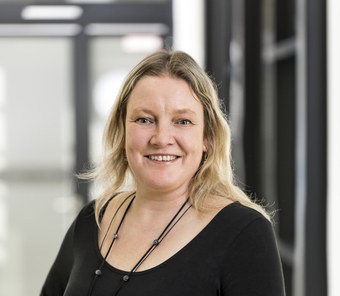
Dr. Cassandra Sampaio Baptista is a Lecturer at the University of Glasgow's School of Psychology & Neuroscience. Her research focuses on brain plasticity in adulthood, particularly exploring how experiences like skill learning or rehabilitation influence structural and functional changes in the brain. She employs neuroimaging techniques such as fMRI neurofeedback and MRI to investigate mechanisms of myelin and white matter plasticity. Her work emphasizes translational applications, including stroke rehabilitation and promoting healthy aging. Key contributions include demonstrating myelin's role in motor learning and developing MRI protocols for white matter analysis. She collaborates on projects funded by the BIAL Foundation (2025–2026) and has supervised multiple postgraduate students. Recent publications highlight studies on oligodendrocyte dynamics, neurofeedback interventions for stroke survivors, and cross-species neuroscience approaches. While no specific awards are listed, her extensive publication record reflects her leadership in neuroplasticity research.
Hyunghoon Cho is an Assistant Professor at Yale School of Medicine in the Department of Biomedical Informatics & Data Science, with a secondary appointment in the Department of Computer Science. He received his PhD in Electrical Engineering and Computer Science from MIT (2019) and MS/BS in Computer Science from Stanford University (2013). His research focuses on computational challenges in biomedical data privacy, single-cell genomics, and network biology. Assistant Professor (Primary): Biomedical Informatics & Data Science Assistant Professor (Secondary): Computer Science Appointments: Yale School of Medicine | Broad Institute (Schmidt Fellow) Research Themes: Privacy-Enhancing Technologies for genomic and health data Scalable AI/ML tools for omics data analysis Structured biological modeling for system-level discovery His work includes secure GWAS, transcriptomic privacy assessment, and sfkit - a federated genomic analysis toolkit. He received the NIH Director's Early Independence Award and leads NSF-funded projects on confidential genome analytics. Awards: NIH Director's Early Independence Award Lab Members: Haris Smajlović (Postdoc), Vincent Angelo (CBB MS), Denis Loginov (Senior Software Engineer), Lucy Zheng (CBB PhD)
Dr. Akhilesh Jaiswal serves as Assistant Professor of Electrical and Computer Engineering at the University of Wisconsin-Madison, where his research pioneers device-circuit co-design for next-generation computing systems. His work focuses on enabling extreme-edge intelligence through processing-in-pixel technology, in-memory computing architectures, and bio-inspired neuromorphic systems. His academic credentials include: PhD in Nano-electronics from Purdue University (2019) MS from the University of Minnesota (2014) Bachelor of Technology from Shri Guru Gobind Singhji Institute of Engineering and Technology (2011) Dr. Jaiswal's research program centers on revolutionizing edge computing through hardware innovations that integrate sensing and processing. His device-circuit co-design approach leverages alternate state variables to create energy-efficient systems for real-time applications, with particular emphasis on retina-inspired sensors and photonic memory architectures. This work bridges semiconductor physics with AI acceleration needs, targeting applications from autonomous systems to biomedical devices. Analysis of his 2023-2025 publications reveals dominant themes in photonic SRAM-based in-memory computing (40% of output), retina-inspired motion processing (30%), and secure hardware architectures (20%). His team consistently develops novel bitcell designs that enable XOR logic execution within memory arrays while maintaining compatibility with CMOS fabrication processes. Recent work shows increasing focus on biomedical applications of processing-in-pixel technology. His distinguished recognition includes: Three consecutive ISI Exploratory Research Awards (2020-2023) IEEE Brain Community Best Paper Award (2022) 27 issued US patents with multiple pending applications Nomination for USC Moore Inventor Fellowship (2022) Dr. Jaiswal actively mentors graduate researchers through ECE 790/890/990 courses while securing exploratory funding through ISI and Keston Foundation awards. His patent portfolio demonstrates exceptional translational impact, with industry game-changer classifications from USPTO. The 2022 VLSI-SoC nomination and multiple research highlights in major outlets validate his contributions to hardware security and neuromorphic vision sensors. His laboratory develops integrated hardware platforms combining magnetic tunnel junctions, photonic memory, and CMOS image sensors to create unified processing-in-sensor systems. Current projects include retina-inspired motion segmentation for event cameras and electro-optic frequency transducers for quantum computing interfaces, with strong industry collaboration through patent licensing.
Dr. Wim Biemans is an Associate Professor at the Faculty of Economics and Business of the University of Groningen, specializing in Innovation Management and Marketing. He holds a PhD from Eindhoven University of Technology (1989) and has over 25 years of experience in research, teaching, and consulting. His work focuses on service innovation, B2B marketing, customer involvement in innovation, and the marketing-sales interface. He has authored over 100 peer-reviewed articles and books, including the best-selling Dutch B2B marketing textbook. His research has been recognized with awards like the Thomas P. Hustad Best Paper Award. He serves as Triage Editor for the Journal of Product Innovation Management and editorial board member for Industrial Marketing Management and Journal of Business & Industrial Marketing. Biemans teaches at the University of Groningen and multiple international institutions, including guest professor roles in Europe, Asia, and the U.S. He also designs executive programs for managerial training in innovation management and customer value creation. His recent research explores humor’s impact on creativity, digital tools in sales-marketing integration, and bridging technology-to-product development gaps. He emphasizes end-to-end value creation through intra-organizational collaboration and has published on the Valley of Death ecosystem challenges in innovation commercialization.
Lara Ferry is the Vice President of Research at Arizona State University (ASU), holding the title of President’s Professor. She is affiliated with the New College of Interdisciplinary Arts and Sciences, specifically the School of Mathematical and Natural Sciences, and serves as graduate faculty in the School of Life Sciences. Her roles include advancing research strategies, fostering interdisciplinary collaborations, and enhancing partnerships with institutions, communities, donors, and industry. Ferry is also a PLuS Alliance Fellow, a Senior Global Futures Scientist at the Global Institute of Sustainability and Innovation, and affiliated with the Biodesign Institute and Global Security Initiative. She holds honors faculty status in ASU’s Barrett Honors College. Her academic background includes a B.S. in Biology from Cal Poly State University, M.S. in Marine Science from San Francisco State University, Ph.D. in Ecology and Evolutionary Biology from UC Irvine, and postdoctoral work at UC Davis. Her research focuses on functional morphology, particularly the evolution of jaws and skeletal materials in aquatic organisms. She has contributed to understanding prey capture mechanisms in fish and the biomechanics of cartilage in elasmobranchs. Ferry’s awards include the 2016 Outstanding Faculty Mentor Award, 2014 Outstanding Research/Creative Activity Award, and the 2018 President’s Professor title. She has led initiatives in equity, diversity, and inclusion (JEDI) and served on boards of professional societies like the American Elasmobranch Society and Society for Integrative and Comparative Biology. Her editorial roles include Senior Executive Editor of Functional Ecology and editorial board memberships in journals like Integrative & Comparative Biology . Her research activity spans functional morphology, biomechanics, and marine physiology, with grants focused on interdisciplinary education and diversity in STEM. Notable projects include studies on cartilage strength in sharks and collaborations on cultural change in professional societies.
Nadia Polikarpova is an Associate Professor in the Department of Computer Science and Engineering at the University of California, San Diego . She earned her PhD from ETH Zurich in 2014 under Bertrand Meyer , followed by postdoctoral research at MIT CSAIL with Armando Solar-Lezama . Her academic contributions have been recognized with prestigious awards including the 2020 Sloan Fellowship , 2020 Intel Rising Stars Award , and 2020 NSF CAREER Award . Polikarpova's research focuses on program synthesis , program verification , and type systems . She leads the Programming Systems group at UCSD and contributes to the IFIP Working Group 2.8 on Functional Programming since 2022. Her work spans foundational research and practical tools, including projects like Synquid , SuSLik , and Laurel that combine formal methods with machine learning for code generation. Her recent publications in venues like OOPSLA , NeurIPS , and ICFP reveal trends in AI-assisted programming , live programming environments , and formal verification . She has advised numerous PhD and Master’s students including Shraddha Barke , Zheng Guo , and Tristan Knoth , many of whom have moved to prominent academic and industry positions. Notable artifacts from her lab include tools like ColDeco for spreadsheet inspection and Superfusion for eliminating intermediate data structures. 2020 : Sloan Fellow 2020 : Intel Rising Stars Award 2020 : NSF CAREER Award 2021 : Distinguished Paper at POPL 2023 : Distinguished Artifact at PLDI 2023 : Distinguished Paper at OOPSLA Polikarpova actively contributes to academic service, serving on program committees for PLDI , POPL , and OOPSLA , and co-chairing the OOPSLA Review Committee in 2023. She has delivered keynotes at APLAS'20 and PLDI'24 , emphasizing the integration of large language models with formal methods.
Jeffrey Schall is a Full Professor of Biology and Program Director of the Visual Neurophysiology Centre at York University. He holds the Canada Research Chair in Translating Neuroscience. His research focuses on neural mechanisms underlying behavior, integrating neurophysiological and computational approaches across multiple scales. Schall is a core member of the Centre for Vision Research and the Canada First Research Excellence Fund Connected Minds initiative. Education: PhD in Anatomy (University of Utah School of Medicine, 1986), postdoctoral training at MIT. Awards include the Troland Research Award, Sloan Foundation Fellowship, and AAAS Fellowship. He served as Vision Science Society President in 2019. Research interests include visual attention, executive control, error monitoring, and translational neuroscience applications in law. His work bridges basic science with applied studies in clinical populations like schizophrenia patients. Collaborative projects involve EEG/MEG analysis, cortical microcircuitry modeling, and neuromodulation techniques. Teaching: YU_NRSC 2100 Systems, Behavioral, and Cognitive Neuroscience. Active in interdisciplinary initiatives linking neuroscience with legal systems through scholarship and policy engagement.
Wim Gevers is a faculty member at the Université libre de Bruxelles (ULB) and leads the CS4S – Cognitive Control & Sleep laboratory within the CRCN research centre. His work bridges cognitive psychology, neuroscience and sleep research to understand how the brain exerts control over thoughts and actions and how sleep contributes to these processes. Research Interests Cognitive Control & Metacognition: Investigating how subjective experiences such as confidence and the "urge-to-err" guide strategic adjustments in behaviour. Working Memory & Ordinal Cognition: Examining how order information is maintained and manipulated, and how these processes relate to mathematical competence. Sleep, Memory & Decision Making: Exploring how sleep-dependent consolidation influences motor learning and decision strategies. Across his 2022–2025 publications a clear trend emerges: a focus on metacognitive monitoring —how humans evaluate their own cognitive states—and the role of emotional and temporal context in shaping those evaluations. Studies range from reaction-time introspection and confidence judgements in perceptual tasks to the impact of aging and depression on metacognitive accuracy. Doctoral Supervision & Mentoring Whitney Stee (PhD 2024) – Sleep-dependent structural brain reorganization & motor learning Gaia Corlazzoli (PhD 2024) – Subjective experience in decision-making Myrtille Dewulf (PhD 2023) – Ordinal coding mechanisms in working memory Rebeca Sifuentes-Ortega (PhD 2023) – REM sleep and memory reactivation All dissertations were defended at ULB, Faculté des Sciences psychologiques et de l’éducation, with Wim Gevers formally listed as Promotor . Laboratory & Collaborative Networks As head of CS4S, Gevers coordinates a multidisciplinary team that combines behavioural experimentation, EEG/MEG, computational modelling and sleep polysomnography. The lab is embedded in the larger CRCN ecosystem, fostering collaborations with groups such as CO3 (consciousness), LCLD (language & deafness), and UR2NF (neurofunctional imaging).
Joy Arulraj is an Associate Professor in the School of Computer Science within the College of Computing at Georgia Institute of Technology. His research focuses on data systems, machine learning, and database systems, with a particular emphasis on video analytics and adaptive query processing. He leads the Data Systems and Analytics Group and is developing the EVA AI-Relational Data System. Dr. Arulraj's research interests span data systems, machine learning, database systems, video analytics, and adaptive query processing. His work centers on developing systems that efficiently process complex queries, particularly for video analytics and machine learning workloads. He has made significant contributions to GPU database systems, non-volatile memory database management, and adaptive query processing techniques. His research often bridges the gap between theoretical database principles and practical implementations for modern hardware architectures. His recent publications show a strong trend toward video analytics systems, adaptive query processing for machine learning workloads, and GPU-accelerated database systems. The EVA system represents a major focus of his recent work, providing end-to-end exploratory video analytics capabilities. His research also addresses fundamental database concepts like buffer management, query optimization, and storage management, adapting these principles for modern hardware and application requirements. Dr. Arulraj has advised numerous graduate students including Pramod Chunduri, Gaurav Tarkok Kakkar, Jiashen Cao, and Sayan Sinha. His graduated students have gone on to work at companies like ServiceNow, Meta Research, and the Korean Army. He actively teaches database system courses at Georgia Tech, including Database System Implementation (CS 4420/6422) and Advanced Database System Implementation (CS 4423/6423), where students build database systems from scratch using C++ and the BuzzDB framework. He maintains an active research program with consistent publication output across top database and systems conferences. His work spans from theoretical database principles to practical system implementations, with a recent emphasis on video analytics, machine learning integration with database systems, and leveraging modern hardware like GPUs and non-volatile memory for database applications.
Chen Li is a Professor in the Department of Computer Science at the University of California, Irvine (UCI), affiliated with the Donald Bren School of Information and Computer Sciences (ICS). He holds a Ph.D. from Stanford University and bachelor's and master's degrees from Tsinghua University. His research focuses on data management, including databases, query optimization, machine learning systems, and open-source tools like AsterixDB and Texera. He has received prestigious awards such as the NSF CAREER Award and IEEE Fellow recognition. Li is also a board member of the VLDB Endowment and the former Faculty Director of UCI's ICS Master of Computer Science Program. Education: Ph.D., Computer Science, Stanford University M.S. and B.S., Computer Science, Tsinghua University Research interests span next-generation databases, approximate query processing, and AI-driven data analytics. Notable contributions include the Texera system for collaborative data science workflows and the Apache AsterixDB project. He has led NIH-funded initiatives in diabetes research and pandemic prediction, emphasizing real-world applications of data science. Professional roles include PC co-chair of VLDB 2015, General Co-chair of SIGMOD 2027, and a visiting research scientist at Google. His awards highlight his impact in both academia and industry. Advising and mentoring are central to his career, with a focus on graduate education. He has pioneered outreach programs like DS4ALL to teach high-school students data science using Texera.
Zhonghai Lu is a Professor of Electronic Systems Design (specializing in Dependable and Autonomous Systems) at KTH Royal Institute of Technology, part of the Department of Electrical Engineering in the School of Electrical Engineering and Computer Science (EECS). He serves as Program Director for KTH's Embedded Systems master's program and Director of Studies at the Division of Electronics and Embedded Systems. His research focuses on Network-on-Chip (NoC), computer architecture, embedded systems, and Prognostics and Health Management (PHM) of power electronics. He leads a research group exploring in-network processing and embedded intelligence, transforming passive networks into active computational frameworks. Lu holds a BSc from Beijing Normal University (1989), MSc and PhD from KTH (2002, 2007), and an MBA in Innovation and Growth from the University of Turku (2012). He has authored over 240 scientific papers, including journal articles and peer-reviewed conferences, with notable recognitions such as Best Paper Awards at NOCS’2015 and EU HiPEAC, and a Featured Paper in IEEE Transactions on Computers (2020). He serves as Associate Editor for ACM Transactions on Architecture and Code Optimization (TACO) and has chaired major conferences like HiPEAC’2017 and NOCS’2018. His research group’s recent work includes integrating AI into hardware acceleration, fault-tolerant neural networks, and RUL estimation for power electronics using recurrent neural networks. Lu has secured grants from the Swedish Research Council and Intel Corporation and developed courses like IL2230 (Hardware Architectures for Deep Learning) and IL2233 (Embedded Intelligence), pioneering embedded AI education at KTH. Education: BSc (Beijing Normal University), MSc/PhD (KTH), MBA (University of Turku) Awards: Best Paper Awards (NOCS, EU HiPEAC), Swedish Research Council Grants, Intel Research Gifts Labs/Teams: Research Group on In-Network Processing and Embedded Intelligence
John P. O'Doherty serves as the Fletcher Jones Professor of Decision Neuroscience within Caltech's Division of Humanities and Social Sciences, holding continuous faculty appointments since 2004 (Assistant Professor 2004-07, Associate Professor 2007-09, Professor 2009-present, Fletcher Jones Professor 2021-present). He previously directed the Caltech Brain Imaging Center (2013-17) and maintains affiliations with the T&C Chen Center for Social and Decision Neuroscience. His educational background includes a B.A. from University of Dublin, Trinity College (1996) and D.Phil. from University of Oxford (2000). His research focuses on computational and neural mechanisms of reward-based learning and decision-making , employing fMRI, intracranial recordings, and mathematical modeling to investigate how the brain solves complex decision problems through evolutionarily conserved algorithms. Key areas include Reinforcement learning systems (model-based/model-free arbitration) Observational and social learning mechanisms Neural representation of value, risk, and uncertainty Computational phenotyping of mental disorders Temporal dynamics of goal persistence Analysis of his 2023-2025 publications reveals dominant trends in computational psychiatry (problem gambling, autism traits), hierarchical decision-making, and neuroeconomic modeling of social behavior. His work consistently integrates cross-species computational frameworks with human neuroimaging to identify transdiagnostic mechanisms. While specific awards beyond his endowed professorship aren't detailed, his leadership as Brain Imaging Center Director and prolific high-impact publications demonstrate significant recognition. Current advising includes graduate researcher Sneha Aenugu on goal-persistence projects, with administrative support from Mary A. Martin (mmartin@caltech.edu). His active research program continues to pioneer computational approaches to understanding decision pathologies.
Sishuai Gong is an Assistant Professor in the Department of Computer Science at the University of North Carolina at Chapel Hill, focusing on system reliability and security. His research bridges machine learning, software engineering, and computer architecture to address challenges in large-scale software systems. Education : Ph.D. in Computer Science from Purdue University (2025), B.S. in Computer Science from the University of Science and Technology of China (2019). Research Interests : System reliability and security, kernel concurrency testing, verified security modules, and machine learning for systems. He develops interdisciplinary techniques to identify and mitigate functional interference bugs in OS virtualization and latency-sensitive applications. Scientific Awards : Jay Lepreau Best Paper Award at OSDI (2024) Google Cloud Research Innovator (2024) Bilsland Dissertation Fellowship at Purdue (2024) Teaching : Offering COMP 790: Reliable and Secure Systems (Fall 2025) with a focus on empirical studies, static/dynamic analysis, and machine learning for systems. Course grading includes paper presentations (30%), class participation (30%), and research projects (40%).
Susanne Weis is a Research Professor and Group Leader of the 'Variability of the Brain' group at the Department of Brain and Behavior (INM-7), part of the Institute of Neuroscience and Medicine (INM) at Research Center Jülich GmbH. Her work focuses on understanding brain variability through advanced neuroimaging techniques and machine learning, with particular emphasis on sex differences, hormonal influences, and clinical applications in mental health. Her research interests include neuroimaging methodologies, machine learning applications in cognitive neuroscience, and the structural-functional relationships underlying brain variability. She investigates how factors like sex hormones and naturalistic stimuli (e.g., movies) affect brain connectivity and cognitive performance, aiming to improve diagnostic and predictive tools for disorders such as schizophrenia and Alzheimer’s disease. Publications highlight her contributions to developing datasets (e.g., SpEx), analyzing confound leakage in ML models, and exploring meta-analytic networks during naturalistic viewing. Her work bridges basic science and clinical impact, addressing challenges in interpreting neuroimaging data and advancing personalized medicine approaches. In her role as a group leader, Weis oversees research projects and collaborates with interdisciplinary teams. She is affiliated with the Helmholtz Association and contributes to the broader scientific community through her research in neuroimaging and computational neuroscience.
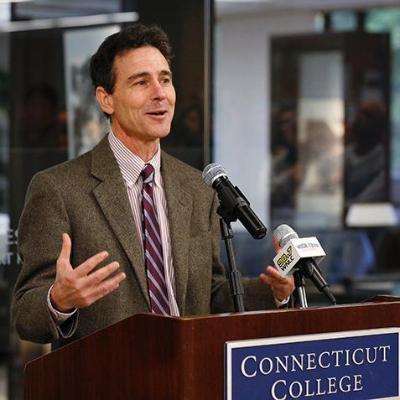
Jeff Moher is an Associate Professor of Psychology and Co-Chair of the Department of Psychology at Connecticut College, where he has been teaching since 2017. He also serves as the Data, Information, and Society Pathway Co-Coordinator, demonstrating his leadership within the institution. His educational background includes a Ph.D. and M.A. from Johns Hopkins University and a B.S. from the University of Michigan. This strong academic foundation has prepared him for his research and teaching career in cognitive psychology. Moher's research focuses on cognitive psychology and cognitive neuroscience, particularly visual attention and cognition in action. His work investigates why distractions occur, when they are likely to arise, and what mechanisms humans can harness to avoid them. He has found that humans employ various cognitive mechanisms to minimize distractions based on explicit knowledge, task goals, object properties, and recent experience, though he has also discovered surprising limitations in attentional selection. His research is particularly relevant given that over 3,000 people are killed annually in the United States from distracted driving. His recent publications show a consistent trajectory examining attentional mechanisms, distraction, and visual processing across different contexts. His work frequently employs sophisticated methodologies to measure both cognitive and motor responses to distractions, revealing how seemingly minor distractions can accumulate to induce serious performance costs. Moher's research is currently funded by grants from the National Science Foundation and the National Institutes of Health, indicating the significance and quality of his work. He likely mentors numerous students through the department's research groups, contributing to their development as researchers. He directs the CAMELab (Center for Attention, Movement, and Embodied Learning), which utilizes multiple methodologies including eye-tracking, electroencephalography, three-dimensional reach-tracking, and psychophysics to approach questions about attention and distraction. Current projects in his lab explore why salient distractors cause people to give up quickly during visual search, the brain mechanisms involved in learning to ignore distractions, how internal distractions impact physical interactions with the world, and how hand movement paths reveal information about attentional processes.