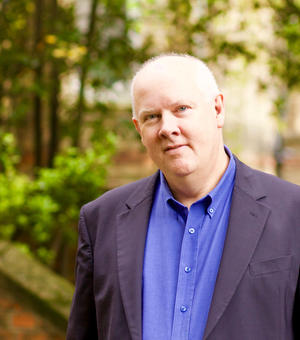
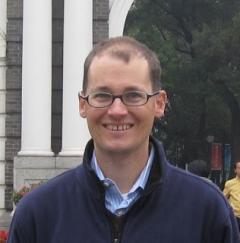
Professor Timothy J. Power is Head of the Social Sciences Division and Professor of Latin American Politics at the University of Oxford, affiliated with the Oxford School of Global and Area Studies (OSGA) and the Department of Politics. He previously directed the Latin American Centre from 2008 to 2012 and has been a leading scholar in comparative politics since 2005. Research Interests: Democratization, political institutions (parties, legislatures, elections), coalitional presidentialism, Brazil, Latin America, new democracies. Awards: None listed in provided text. Advising: No specific students mentioned. Grants: No explicit grants listed, but research involves long-term projects like the Brazilian Legislative Surveys. Labs/Teams: Co-directs the Brazilian Legislative Surveys with Fundação Getúlio Vargas and contributes to cross-regional comparative studies at OSGA. His work analyzes democratization in Latin America, particularly Brazil, focusing on legislative dynamics, coalition governments, and political institutions. Recent articles explore cabinet proportionality, portfolio allocation, and ideological shifts in post-authoritarian settings.
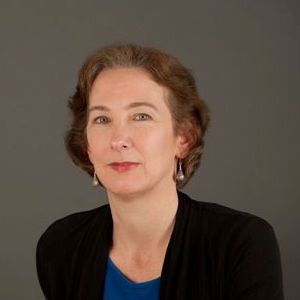
Professor Shoon Murray is a distinguished faculty member at American University's School of International Service, specializing in American foreign policy and civil-military relations. Holding a PhD in political science from Yale University, she teaches foundational courses including Analysis of US Foreign Policy (SISU-230) and Foreign Policy: Theory and Decision Making (SIS-689). Education: PhD in Political Science, Yale University Research Focus: Dr. Murray's scholarship critically examines war powers, decision-making theory, and the interplay between public opinion, media, and foreign policy formation. Her work analyzes how political leaders navigate security crises, congressional-authority tensions in military actions, and institutional shifts in diplomatic practices amid global power diffusion. She investigates enduring phenomena like the “rally ‘round the flag’” effect while documenting the post-9/11 militarization of U.S. strategic approaches. Publication Trends: Recent research centers on the evolution of the 2001 AUMF, combatant commanders' diplomatic roles, and State Department-DoD institutional competition. Her scholarship reveals how military actors increasingly shape foreign policy narratives while traditional diplomatic channels erode, with implications for democratic accountability and strategic coherence in counterterrorism operations.
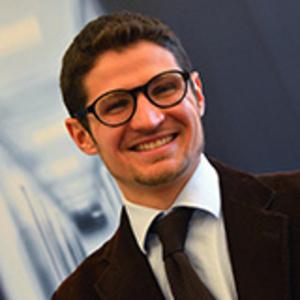
Federico Fabbrini is a Professor at the School of Law and Government of Dublin City University (DCU) . He serves as founding director of the DCU Brexit Institute and the Dublin European Law Institute, and leads multiple EU-funded research initiatives, including BRIDGE, REBUILD, and EXPRESS2. Education : B.A. from University of Trento (2006), J.D. from University of Bologna (2008), Ph.D. from European University Institute (2012) Former judicial clerk at Italian Constitutional Court (2010-2011), qualified attorney in Italy (2011) Prior roles: Associate Professor at University of Copenhagen (Denmark), Assistant Professor at Tilburg Law School (Netherlands) with tenure His research interests span EU law and policy , with focus on fundamental rights , economic governance , defense integration , and post-Covid-19 reforms , often employing comparative analysis with the United States . He has authored four monographs on Oxford University Press, addressing topics like EU fiscal capacity post-Covid-19 and Brexit's constitutional implications. Recent peer-reviewed publications explore EU fiscal responses to the Ukraine war, defense union dynamics, and recovery facility legal technologies. His work intersects constitutional law , international economics , and crisis governance . Scientific Awards : Young European Leader 2022 Knight (Cavaliere) for high scientific merits by President of Italy (2021) DCU President's Research Award (2021) Charlemagne Prize fellowship (2019-20) Advising and Grants : Supervises doctoral students (e.g., Havva Yesil, Elettra Bargellini) and secures EU funding for projects like REGROUP and EXPRESS2. He provides evidence to European Parliament committees and national governments, while authoring reports for the Irish Ministry of Finance and Eurogroup Presidency .
Christopher R. Berry is the William J. and Alicia Townsend Friedman Professor at the Harris School of Public Policy and the College at the University of Chicago, and Director of the Mansueto Institute for Urban Innovation. He also served as the inaugural director of the Center for Municipal Finance. His research focuses on American politics, metropolitan governance, municipal finance, and intergovernmental fiscal relations. Notably, his book *Imperfect Union* won the APSA Best Book Award in Urban Politics. Key affiliations include the American Academy of Arts and Sciences. His work has been featured in major media outlets like the *New York Times* and *Last Week Tonight with John Oliver*. His research often intersects property tax fairness, urban policy, and the effects of leadership in politics and sports. His awards reflect his scholarly impact, including the APSA Urban Politics award and membership in the American Academy of Arts and Sciences. His research extends to leadership studies, as seen in collaborations analyzing coach effects in professional sports.
Bruce Ackerman is Sterling Professor of Law and Political Science at Yale University, holding one of the most prestigious academic positions at Yale. He has made significant contributions to constitutional law, political philosophy, and public policy over his distinguished career. His educational background includes an LL.B. from Yale (1967) and a B.A. from Harvard (1964). Ackerman has received numerous honors including the Henry Phillips Prize for lifetime achievement in Jurisprudence (2002), an Honorary Doctorate from the University of Milan (2023), and recognition as a Commander of the French Order of Merit. Ackerman's research focuses on American Constitutionalism, Comparative Constitutionalism, and Theories of Justice. His groundbreaking work includes the three-volume series We the People , which explores great turning points in American constitutional history. His scholarship has had global impact, influencing constitutional reforms in France, Brazil, Britain, and other countries. His recent work examines the constitutional challenges posed by the internet revolution and digital age. His publications reveal consistent engagement with constitutional crises across different nations and time periods, with particular attention to emergency powers, presidential authority, and democratic resilience. Ackerman's work connects historical constitutional development with contemporary challenges to democratic institutions. Commander of the French Order of Merit Henry Phillips Prize for lifetime achievement in Jurisprudence (2002) Honorary Doctorate from University of Milan (2023) Member of the American Law Institute Member of the American Academy of Arts and Sciences Named Leading Global Thinker by Foreign Policy magazine Ackerman has advised numerous governments and constitutional bodies worldwide. His work Before the Next Attack served as basis for French constitutional reform on emergency powers, while The Stakeholder Society influenced wealth distribution reforms in Brazil and Britain. He continues to actively engage with current constitutional challenges through scholarly publications, media commentary, and direct consultation with constitutional institutions globally.
Sarah A. Soule is the Philip H. Knight Professor and Dean of Stanford Graduate School of Business and Morgridge Professor of Organizational Behavior. She has been a faculty member at Stanford since 2008 and previously taught at the University of Arizona and Cornell University. As of June 2025, she serves as the first woman dean of Stanford GSB, marking the school's centennial year. Her educational background includes a PhD and MA in Sociology from Cornell University (1995, 1991) and a BA in Sociology from the University of Vermont (1989). She has held significant leadership roles including Senior Associate Dean for Academic Affairs (2016-2023) and Director of the Center for Advanced Study in the Behavioral Sciences (2023-2025). Soule's research focuses on organizational theory, social movements, and political sociology, examining how social movements impact organizational and policy change. Her work bridges sociology and business, analyzing how protest influences corporate decisions and how organizations respond to social movement pressures. She has made significant contributions to understanding tactical innovation in social movements and the diffusion of protest strategies. Her scholarly output shows a consistent trajectory examining the intersection of social movements with business and policy. Early work focused on protest policing and movement tactics, while more recent research explores corporate activism, DEI initiatives, and the role of design thinking in organizational contexts. Her publications span top sociology and management journals, demonstrating interdisciplinary impact. Hank McKinnell-Pfizer Inc. Faculty Fellow, Stanford GSB, 2014 James and Doris McNamara Faculty Fellow, Stanford GSB, 2011 GSB Trust Faculty Fellow, Stanford GSB, 2010 Member, Sociological Research Association, 2009 Fellow, Michelle R. Clayman Institute for Gender Research, 2009 Magellan Circle Award for Excellence in Graduate Teaching, University of Arizona, 2006 Soule has served on multiple editorial boards including Sociological Science (founding team), Stanford University Press, and Cambridge University Press. She has advised numerous PhD students and has been actively involved in curriculum development, particularly in diversity, equity, and inclusion education. Her leadership extends to nonprofit boards including the Hasso Plattner Institute of Design (Stanford d.school) and the international advisory board to the president of the Stockholm School of Economics. She co-directs the Stanford LEAD Online Business Program and has developed executive education programs focused on coaching skills and diversity leadership.
Andrew Green serves as Professor and Metcalf Chair in Environmental Law at the University of Toronto Faculty of Law, where he teaches environmental law, climate change law, administrative law, natural resources law, judicial decision-making, and international trade. His scholarly contributions span multiple legal domains with particular emphasis on the intersection of environmental regulation and administrative governance. Green's research interests encompass Environmental Law , Administrative Law , Climate Change Policy , Judicial Decision-Making , and International Trade Law . His empirical approach to legal scholarship has produced significant insights into how judges make decisions, particularly in administrative contexts, and how trade rules interact with domestic environmental regulations. His work often bridges theoretical legal analysis with practical policy implications. His recent publications reveal a strong focus on Canadian climate policy implementation, judicial behavior in high courts, and the evolving standards of review in administrative law. The research demonstrates increasing interdisciplinary integration, incorporating machine learning approaches to analyze judicial decisions and examining the systemic challenges in environmental governance. His scholarship consistently addresses the tension between regulatory effectiveness and legal accountability. Metcalf Chair in Environmental Law Past co-President of the Society for Empirical Legal Studies Past President of the Canadian Law and Economics Association Former Associate Dean at the Faculty of Law Chair of the University of Toronto Academic Appeals Committee (2009-2018) Before joining the Faculty of Law, Green practiced environmental law in Toronto for six years, handling both litigation (including prosecutions, administrative appeals, and civil actions) and transactional work. His practical experience informs his scholarly work on regulatory design and implementation. His research has influenced policy discussions on climate change, securities regulation, and administrative law reform in Canada.
Michael Morse is an Assistant Professor of Law at the University of Pennsylvania Carey Law School, with a secondary appointment in the Political Science Department. He holds a JD from Yale Law School and a PhD in Political Science from Harvard University. Prior to his current position, he was a Bigelow Fellow at the University of Chicago Law School and served as a law clerk for federal judges in Alabama and California. Morse specializes in voting rights, election administration, and criminal justice system reform, combining empirical methods with legal scholarship to address issues such as felony disenfranchisement, voter ID laws, and election integrity. His research has been published in top journals including the California Law Review , American Political Science Review , and Science Advances . Notable contributions include analyses of Florida’s Amendment 4, voter registration coordination via the Electronic Registration Information Center (ERIC), and studies on ballot design impacts. He has also written extensively on the election of local prosecutors and the role of fines/fees in criminal justice. Morse’s work frequently bridges legal and political science disciplines, emphasizing data-driven approaches to electoral systems. His recent focus on ‘lost votes by mail’ and privacy in election results underscores his commitment to advancing equitable and transparent electoral practices. He has been cited in media outlets like Slate , Vox , and NBC News for his accessible explanations of complex election-related issues. Scientific Recognition: Morse was recognized as a Bigelow Fellow at the University of Chicago Law School, a prestigious postdoctoral position supporting legal research.
Raymond Ku is the John Homer Kapp Professor of Law at Case Western Reserve University School of Law. He has served as Associate Dean for Academic Affairs and Co-Director of the Center for Law, Technology and the Art. His work focuses on Constitutional Law, Cyberlaw, Privacy, and Copyright, with an emphasis on how technology and evolving societal norms intersect with individual liberties. Education Juris Doctor (J.D.), New York University (1995) Bachelor of Arts (A.B.), Brown University (1992) Professor Ku’s research explores the tensions between free speech and copyright, the implications of digital technology on privacy, and the constitutional boundaries of surveillance. His publications span topics like peer-to-peer file sharing, reproductive rights, and data privacy, reflecting a commitment to addressing contemporary legal challenges through interdisciplinary lenses. His scholarship appears in prestigious law reviews, including Berkeley, Chicago, and Vanderbilt. He authored the first casebook on cyberspace law. Awards include the 2009 Distinguished Teacher Award and being voted Professor of the Year by the 2009 graduating class. Raymond Ku clerked for Judge Timothy K. Lewis and practiced constitutional, intellectual property, and antitrust law before transitioning to academia. He has taught at multiple institutions, contributing to legal education and research related to technology and civil liberties.
Kevin Evans is an Associate Professor in the Department of Politics and International Relations at Florida International University's Steven J. Green School of International and Public Affairs. He specializes in American presidency, interbranch relations, and the institutional development of the presidency. His research examines conflict and cooperation between branches of American government, with work published in leading political science journals. Education includes: Ph.D. in Political Science, University of California, Davis (2011) B.A. in Political Science, University of California, Irvine (2005) His research focuses on presidential-congressional dynamics, constitutional challenges in executive actions, and strategic communication through signing statements. Recent work explores how presidents claim credit for legislative accomplishments and navigate institutional boundaries. Evans's publications consistently analyze presidential power dynamics across administrations, with frequent examination of signing statements as tools for credit-claiming and constitutional positioning. His articles demonstrate sustained interest in historical case studies of executive-legislative relations. Awards and honors include: FIU Faculty Award for Excellence in Teaching (2018) Morris and Anita Broad Research Fellowship (2015-2016, 2012-2013) SPSA Artinian Travel Award (2016) SIPA Faculty-Student Research Award (2015) He has advised graduate students including Maria I. Gabryszewska (Ph.D.) and Melissa Burgess (M.A.), and serves in departmental leadership roles including Graduate Program Director. Current research examines racial violence in Northern Louisiana through intergenerational family networks.
Associate Professor Marcus Mietzner specializes in the politics of Indonesia, focusing on democratization, electoral systems, and the role of the military. He holds a PhD from the Australian National University (ANU) and an MA from Goethe University Frankfurt. His research explores Indonesian political parties, campaign financing, and the presidency in democratic Indonesia. Mietzner has authored over 95 publications and led projects such as the Indonesia Project Phase V and SEARBO (Supporting the Rules-Based Order in Southeast Asia). His work analyzes Indonesia’s political dynamics, including Jokowi’s majoritarianism, elite collusion, and democratic decline. Notable articles discuss Indonesia’s 2024 elections, autocratisation limits, and military oversight crises. Mietzner has contributed to understanding Indonesia’s post-authoritarian trajectory, emphasizing institutional resilience and elite competition. Research supervision focuses on Southeast Asian electoral politics and political parties. His projects address governance challenges, constitutional reforms, and civil society’s role in resisting democratic erosion. Mietzner’s interdisciplinary approach combines historical analysis with contemporary political developments, positioning him as a leading scholar on Indonesia’s political landscape.
Dr Emily Hammond is a Senior Lecturer at the University of Sydney Law School. She specializes in Australian constitutional and administrative law, focusing on the interplay between judicial power, executive authority, and judicial review of administrative actions. Hammond co-authored the 4th edition of Principles of Administrative Law and Cases for Principles of Administrative Law , both published by Oxford University Press in 2023. She currently serves as the book review editor for the Australian Journal of Administrative Law . Her research explores the boundaries of judicial and executive power, particularly regarding finality in legal adjudication and constitutional constraints on legislative and administrative actions. Recent work includes analyses of High Court cases such as Judge Vasta v Stradford and NZYQ v Minister for Immigration , emphasizing constitutional principles in public law. Hammond’s publications span leading legal journals including the University of Queensland Law Review and Public Law Review . Her scholarship bridges theoretical constitutional frameworks with practical applications in administrative decision-making and citizenship law. She holds a BA, LLB(Hons), and PhD from the Universities of Sydney and Melbourne. Her contributions extend to legal education through co-authoring foundational textbooks and editorial roles, shaping discourse in administrative law and public law scholarship.
Raquel E. Aldana is the Martin Luther King Jr. Professor of Law at UC Davis School of Law, where she rejoined as a full-time faculty member in 2020 after serving as Associate Vice Chancellor for Academic Diversity (2017–2020). She holds a J.D. from Harvard Law School and B.A. degrees in English and Spanish from Arizona State University (summa cum laude). Her academic career includes prior roles at the McGeorge School of Law and the University of Nevada, Las Vegas, as well as a Fulbright Scholarship in Guatemala (2006–2007). Her research focuses on transitional justice, criminal justice reform, sustainable development in Latin America, and immigrant rights. Aldana has authored or edited five books and over thirty law review articles, earning recognition through grants such as the UC Davis Academic Senate Interdisciplinary Grant for the project Building Bridges: Narrowing the Legal-Scientific Divide in Immigration Forensic Assessments . She teaches courses on immigration law, asylum, comparative forced displacement, and critical race theory. Aldana leads the Aoki Center for Critical Race and Nation Studies, co-directing its mission to advance interdisciplinary scholarship on race, ethnicity, and law. She co-founded the Critical Race Theory Book Series with UC Press, aiming to globalize and diversify critical race discourse. Her awards include the ABA’s Margaret Brent Women Lawyers of Achievement Award and the UC Davis Chancellor’s Achievement Award for Diversity. Her service includes roles on the American Law Institute, American Bar Foundation, and the Council on Foreign Relations. She chairs the ABA’s Latin America and Caribbean Council and co-chaired the UC Davis taskforce to achieve Hispanic Serving Institution (HSI) status, realized in 2024. Her work integrates legal education, policy reform, and grassroots advocacy to address systemic inequities in migration, criminal justice, and global development.
Jeffery A. Jenkins is a Provost Professor of Public Policy, Political Science, and Law at the University of Southern California’s Sol Price School of Public Policy, and holds the Maria B. Crutcher Professorship in Citizenship and Democratic Values. He directs the Political Institutions and Political Economy (PIPE) Collaborative and edits the Journal of Political Institutions and Political Economy and the Journal of Historical Political Economy . Previously, he served as Editor in Chief of The Journal of Politics (2015-2020) and founded the Southern California Political Institutions and Political Economy Working Group. His research focuses on American political history, particularly the development of congressional and partisan institutions, and the political economy of historical policy decisions. His major works include Republican Party Politics and the American South, 1865-1968 (Cambridge University Press, 2020), which won the 2021 V.O. Key Award and J. David Greenstone Prize, and Congress and the First Civil Rights Era, 1861-1918 (University of Chicago Press, 2021), awarded the 2023 V.O. Key Award. He co-edited The Oxford Handbook of Historical Political Economy (2024) and oversees a book series on historical political economy with Cambridge University Press. Roles: Editor in Chief of Broadstreet , a historical political economy blog, and host of the podcast P.S. You’re Interesting . Awards: Multiple book prizes recognizing contributions to political science and historical analysis. Research Themes: Reconstruction-era policies, civil rights legislation, Southern Republicanism, and institutional development. His recent articles explore topics such as presidential favoritism in grant allocation, historical disenfranchisement strategies, and the evolution of congressional partisan tactics. Jenkins’ work bridges historical analysis with modern political questions, emphasizing long-term institutional dynamics and their implications for contemporary governance.
Scott L. Kastner is a Professor in the Department of Government and Politics at the University of Maryland, College Park. He holds a BA from Cornell University (1995) and a PhD in Political Science from the University of California, San Diego (2003). His research focuses on international politics of East Asia, particularly US-China relations, cross-Strait dynamics, and the political implications of economic interdependence. Kastner teaches courses on international relations theory, East Asian politics, and US-China strategic competition. His major works include *War and Peace in the Taiwan Strait* (2022), *China’s Strategic Multilateralism* (2019), and *Political Conflict and Economic Interdependence across the Taiwan Strait and Beyond* (2009). His research examines how economic ties shape conflict dynamics, China’s global governance strategies, and the evolving US-Taiwan relationship. He frequently publishes in top journals like *International Security*, *Journal of Conflict Resolution*, and *International Studies Quarterly*. Recent scholarship explores China’s economic statecraft, the viability of cross-Strait rapprochement, and the geopolitical ramifications of US-China trade interactions. His work bridges theoretical frameworks from international relations with empirical analysis of contemporary East Asian security challenges.