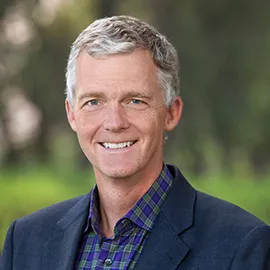
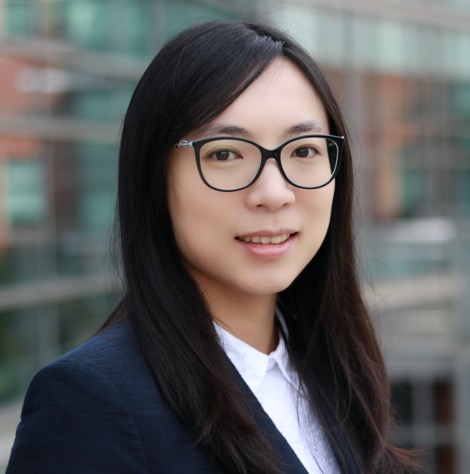
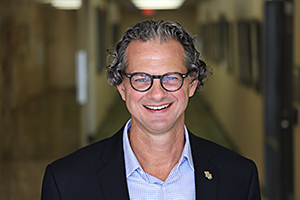
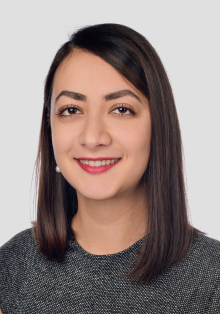
Professor Dan Meagher is a Chair in Law at Deakin University's Faculty of Business and Law, where he leads research in constitutional law and statutory interpretation. He serves as Director of Research at Deakin Law School and actively contributes to legal scholarship through publications, editorial work, and supervision of doctoral candidates. Doctor of Philosophy, University of New South Wales Master of Laws, Monash University Bachelor of Economics, Monash University Bachelor of Laws (LLB), Monash University His research focuses on constitutional law, statutory interpretation, and human rights protections. He explores the principle of legality, responsible government norms, and the interplay between common law and statutory frameworks, often advocating for enhanced rights protections through judicial interpretation. Professor Meagher's scholarly output highlights trends in Australian constitutionalism, including proportionality in secondary legislation, non-discrimination principles, and the evolution of common law rights. His work bridges doctrinal analysis with practical implications for legislative drafting and judicial review. Elected Fellow of the Australian Academy of Law Comments Editor for the Public Law Review Director of Research at Deakin Law School He supervises doctoral research on topics like human rights protection and legislative drafting models. His professional activities include co-editing major legal texts and contributing to debates on constitutional evolution and judicial interpretation.
Claire Célérier is an Associate Professor of Finance at the Rotman School of Management, University of Toronto, where she holds the Canada Research Chair in Household Finance. Her academic career spans prestigious institutions including the University of Toronto (where she advanced from Assistant to Associate Professor between 2016-2022) and the University of Zurich (2014-2016). She maintains an affiliation with the People's History Lab and actively contributes to academic discourse through conference organization including 'Race, Equity and Public Policy' (2023) and 'Banks, States and the People' (2024). Dr. Célérier's research explores how finance can benefit households through multiple lenses including behavioral economics, asset pricing, and financial history. Her work investigates innovation in finance, diversity and inclusion impacts, and historical perspectives on financial systems. She has developed significant expertise in household finance, banking, and the intersection of finance with social issues, particularly racial disparities in financial markets as demonstrated in her award-winning research on the Freedman's Savings Bank. Her scholarly output shows a clear trajectory from foundational work on security design and investor behavior toward increasingly socially relevant research on financial inclusion, racial equity, and household financial decision-making. Recent publications demonstrate her growing focus on historical contexts of financial systems and their contemporary implications, particularly regarding marginalized communities. Canada Research Chair in Household Finance (2024) Bank of Canada Governor's Award (2022) University of Toronto Top 5% Merit Award (2021) Petro Canada Young Innovators Award Program (2021) Multiple Rotman School of Management Teaching Awards (2019-2021) Ieke van den Burg Prize for Research on Systemic Risk (2015) Dr. Célérier has successfully secured substantial research funding including Insight Development Grants (CAD 54,500), Connaught Research Grant (CAD 10,000), and the Marianne and Marcus Wallenberg Foundation Grant (EUR 400,000). She mentors several PhD students including Andrada Bilan (2020), Alexey Vasilenko (2023), and Purnoor Tak (Expected 2026), and has supervised numerous master's theses at both University of Toronto and University of Zurich. Her service contributions include Rotman School of Management MBA program committee, executive committee, seminar coordination, and faculty recruiting committee.
Wendy Ju is an Associate Professor of Information Science at Cornell Tech, with appointments in the Cornell Ann S. Bowers College of Computing and Information Science, the Jacobs Technion-Cornell Institute, and the Technion-Israel Institute of Technology. Previously, she served as executive director of interaction design research at Stanford University's Center for Design Research and as an associate professor of interaction design at the California College of the Arts. Her work bridges human-computer interaction, design, and robotics with a focus on how interactive devices can communicate with people without interrupting them. PhD in Mechanical Engineering from Stanford University Master's degree in Media Arts and Sciences from MIT Professor Ju's research centers on implicit interactions, human-robot collaboration, and automotive interfaces. She investigates how people interact with automated systems in natural contexts, develops methods for early-stage prototyping of autonomous technologies, and examines the social implications of robotics in urban environments. Her work spans from theoretical frameworks to practical applications, with particular emphasis on designing systems that integrate seamlessly into human activities without demanding constant attention. Her recent publications reveal a strong trajectory toward understanding human-robot interaction in public urban spaces, with increasing focus on robot navigation in city streets, the social implications of autonomous vehicles, and the integration of generative AI in design processes. Her work consistently bridges theoretical HCI frameworks with practical applications in transportation, urban design, and everyday robotics. Inducted into the ACM SIGCHI Academy (2025) Multiple Honorable Mention Awards at ACM CHI and DIS conferences Best Paper Award at Multimodal Technologies and Interaction (2023) Best Student Paper Award at IEEE Intelligent Vehicles Symposium (2017) Best Demonstration Award at HRI (2017) Professor Ju actively mentors numerous PhD and master's students, many of whom have become leading researchers in HCI and robotics. Her research has been supported by significant grants from NSF and industry partners, enabling extensive field studies of human-robot interaction in real-world settings. She has pioneered methodologies for studying autonomous vehicle interactions through both simulated and naturalistic driving environments. Her work with the Jacobs Technion-Cornell Institute supports interdisciplinary research at the intersection of computing, design, and urban technology. She has established research partnerships with transportation authorities, automotive companies, and urban planning organizations to study how emerging technologies can enhance urban mobility while respecting human needs and social contexts.
Kaki Ryan is a Teaching Assistant Professor at the Department of Computer Science, University of North Carolina at Chapel Hill. She holds a Ph.D. (2025), M.S. (2021), and B.S. (2020) from UNC, with a minor in AAAD. Her research focuses on hardware security, symbolic execution, and computer science education. Education Ph.D., 2025, UNC-Chapel Hill M.S., 2021, UNC-Chapel Hill B.S., 2020, UNC-Chapel Hill (Computer Science and Mathematics) Ryan's research centers on hardware security, particularly using symbolic execution to identify bugs and vulnerabilities in hardware designs. She also emphasizes broadening participation in computing and improving pedagogical strategies in computer science education. Her recent publications (2023-2025) explore symbolic execution techniques for hardware security verification, including query caching, information flow analysis, and path explosion mitigation. These works span conferences like ASPLOS, VTS, FMCAD, and workshops such as HASP. Scientific Awards John M. Glotzer Graduate Teaching Assistant Award (2020-2021) Tanner Award for Excellence in Undergraduate Teaching (2022) As an educator, Ryan has served as Instructor of Record for COMP 435 (Computer Security Concepts) and COMP 311 (Computer Organization) in Fall 2025. She has extensive teaching experience as a Graduate Teaching Assistant, Head Teaching Assistant, and Undergraduate Teaching Assistant for courses like COMP 210, COMP 110, and COMP 435, with a focus on data structures, security concepts, and programming fundamentals.
David M. Dodson is a Lecturer in Management at Stanford University’s Graduate School of Business (GSB), where he teaches courses on managing growing enterprises and entrepreneurial acquisition. His career spans over 30 years in business management, including founding three search funds and serving as CEO of a technology manufacturer and Executive Chairman of a telecommunications firm. He co-founded Sanku (formerly Project Healthy Children), a nonprofit addressing micronutrient deficiencies in Africa through fortified grains, recognized for its life-saving impact. Dodson holds an MBA from Stanford GSB (1987) and a BA in Economics from Stanford University (1983). His research focuses on entrepreneurial acquisition strategies and managing small-to-medium enterprises. Notable awards include the MSx Teaching Excellence Award (2023, 2021) and recognition as a top lecturer by Stanford GSB students. Beyond academia, he invests in over 40 businesses and serves on 21 corporate boards. In 2020, he founded StudentVotes.org to empower student voting during the pandemic. His media contributions include columns for The Boston Globe and frequent TV commentary on CNBC and Fox Business.
Bo Li is an Associate Professor at the University of Illinois at Urbana-Champaign, affiliated with the Siebel School of Computing and Data Science. Her research focuses on trustworthy machine learning, emphasizing robustness, privacy, and security in AI systems. She leads the Secure Learning Lab (SL²), exploring adversarial attacks and defenses across digital and physical domains. Key contributions include foundational work on adversarial examples, robust learning frameworks, and privacy-preserving techniques. Her academic roles include advisory board positions at the Center for Artificial Intelligence Innovation (CAII) and membership in the Information Trust Institute (ITI). She collaborates with institutions like the Advanced Digital Science Center (ADSC) and the Quantum Information Science and Technology Center (IQUIST). Notable recognitions include the IJCAI Computers and Thought Award (2022), MIT Technology Review's 35 Innovators Under 35 (2020), and multiple best paper awards. Recent work addresses AI safety through frameworks like ShieldAgent and AutoRedTeamer, aiming to enhance system resilience against adversarial threats. Her research spans theoretical guarantees, practical defenses, and ethical AI deployment. Students advised include Chulin Xie, Linyi Li, and Boxin Wang, who have received prestigious fellowships such as the IBM PhD Fellowship and Rising Stars in ML Awards. Advising: Guides PhD students in adversarial ML, privacy, and security. Labs/Teams: Secure Learning Lab (SL²), collaboration with ALERT program. Grants/Funding: NSF CAREER Award, Amazon/Google Faculty Awards, and industry partnerships.
Tim Ceci is a Part-time Lecturer at Parsons School of Design, The New School. He is a Senior Retail/Omni-channel and Arts/Culture Executive with extensive experience in luxury retail and corporate leadership. His career includes roles at Goyard, Hall des Lumiéres, Saks Fifth Avenue, LVMH, and Nike. He focuses on business development, strategic planning, and customer experience optimization. Education: BA in Business with Marketing Major from Hofstra University. Research Interests: Business Development, Retail Project Management, Omni-channel Retail Strategies, Strategic Planning in Luxury Brands, Fashion Industry Dynamics, and Cross-cultural Customer Experience Design. He also explores intersections between arts/culture and retail environments. Professional Roles: Advisory board member for emerging fashion organizations, international conference presenter, and founder of Tim Cecci Retail Consulting (www.timceci.com). His LinkedIn profile further details professional activities. Teaching: Recently taught PMFM 5070: Retailing & Service Design in Spring 2025.
Jenna Wise DiVincenzo is an Assistant Professor at the Elmore Family School of Electrical and Computer Engineering at Purdue University. She specializes in research areas such as software verification, formal methods, and programming languages, with a focus on gradual verification techniques that combine static and dynamic analysis. Her work emphasizes usability and scalability in verification tools, and she has contributed to projects like Gradual C0 and gradual null-pointer analysis. Dr. DiVincenzo earned her PhD in Software Engineering from Carnegie Mellon University (2023) and a BS in Mathematics and Computer Science from Youngstown State University (2017). She has interned at IBM Research, MIT Lincoln Laboratory, and the Software Engineering Research and Empirical Studies Lab at YSU. Her awards include the Google PhD Fellowship, NSF GRFP Fellowship, and 2022 Rising Star in EECS. Her research projects span theoretical advancements in gradual verification, empirical studies on usability, and practical tool development. She advises PhD students (e.g., Craig Liu, Conrad Zimmerman) and collaborates on initiatives like gradual verification for Rust and educational tools to teach verification concepts. Her work also explores leveraging large language models for specification generation and enhancing verification tool soundness through formal proofs.
Professor Rebecca Lawson is a Professor of Neuroscience and Computational Psychiatry at the University of Cambridge, affiliated with the Department of Psychology and Bye-Fellow at Peterhouse College. Her research focuses on understanding how humans learn to make predictions under uncertainty, with applications to mental health conditions such as anxiety and depression. She leads the Prediction and Learning (PaL) Lab, which combines computational modeling, neuroimaging (e.g., 7T MRI), and behavioral experiments to study cognitive processes in typical and atypical populations. Key research interests include computational psychiatry, autism spectrum disorders, neuroimaging techniques, and the neurochemical basis of learning mechanisms. She has received significant funding, including a £4.3m Wellcome Mental Health Award and the Sir Henry Dale Fellowship. Notable contributions include advancing theories of neural gain and sensory expectations in autism, as well as studies on uncertainty processing in anxiety and depression. Professor Lawson holds academic awards such as the BNPA Lishmann Prize and the BAP Psychopharmacology Award. She actively contributes to public engagement, including initiatives like Knit-a-Neuron and involvement with PrideinSTEM. Her lab collaborates internationally, with projects like the CamRAA study investigating autism-anxiety overlaps and the Chemical and Brain Basis of Uncertainty (CBBU) study exploring pharmacological interventions. Education: PhD in Cognitive Neuroscience (University of Cambridge), BA (Hons) Psychology & Philosophy (University of Glasgow). Grants: £4.3m Wellcome Award, Parke-Davis Fellowship, Lister Institute Prize. Labs/Teams: Principal Investigator of the PaL Lab; collaborations with MRC Cognition and Brain Sciences Unit, Yale University, and Brown University.
Ian Goldberg is a Professor at the Cheriton School of Computer Science , University of Waterloo, Canada. He holds the Canada Research Chair in Privacy Enhancing Technologies and leads the Cryptography, Security, and Privacy (CrySP) group . He is affiliated with the Cybersecurity and Privacy Institute and the Institute for Quantum Computing . Research Focus: Security, privacy, and privacy-enhancing technologies (PETs) for the Internet, including Off-the-Record (OTR) Messaging , censorship resistance , private information retrieval , and zero-knowledge proofs . Recent Publications: His work addresses metadata protection , deniable authentication , and secure multi-party computation , with applications to anonymous communication and censorship resistance. Scientific Awards: Canada Research Chair in Privacy Enhancing Technologies Students: He advises current and former PhD/Master’s students in projects like Lox , PRSONA , Walkie-Talkie , and SkypeMorph . Notable advisees include Sajin Sasy (Privacy-Preserving Communications), Justin Tracey (PETs Development), and Tao Wang (Website Fingerprinting Defenses). Labs & Teams: Goldberg is a core member of the CrySP group and contributes to the Tor Project and Off-the-Record Messaging open-source initiatives. His research bridges theoretical and applied cryptography, with deployments in real-world systems like Tor and PIR protocols.
Jon Singletary serves as Dean and holds the Diana R. Garland Endowed Chair of Child and Family Studies at Baylor University's Diana R. Garland School of Social Work. He joined Baylor in 2003 after earning his PhD in Social Work from Virginia Commonwealth University (VCU), alongside an MSW from VCU and MDiv from Baptist Theological Seminary. His career includes prior roles as Associate Dean (2010–2015) before becoming Dean in 2015. Before academia, Singletary worked as a pastor, community organizer, and social service administrator. His research focuses on strengthening congregational ministries, community development, and advocacy for vulnerable populations. Notable projects include launching the Texas Hunger Initiative and directing the Strengthening Congregational Community Ministries Project. He co-founded the Faith and Service Technical Education Network (FASTENnetwork.org) to bridge faith-based organizations and social service sectors. His publications explore spirituality's role in social work, faith-based program development, and community organizing strategies. Recent work examines career resilience among professionals in aging care and leadership development through Enneagram frameworks. Earlier research addressed child food security, orphan care in Kenya, and rural community capacity building. Singletary's leadership emphasizes integrating faith and practice, evidenced by his edited volumes on Christianity and social work, and his advocacy for competency-based education models. He holds leadership roles in national organizations like the North American Association of Christians in Social Work and has advised global initiatives in Africa.
Bahar Asgari is an Assistant Professor in the Department of Computer Science at the University of Maryland, College Park. She holds appointments in CS, UMIACS, and ECE, and directs the Computer Architecture and Systems Lab (CASL). Her research focuses on domain-specific architecture design, near memory processing, and reconfigurable computing. Before joining UMD, she worked at Google, contributing to system optimization and memory utilization strategies. Education: Ph.D., Georgia Institute of Technology, 2021. Research Interests: Developing energy-efficient architectures for sparse problems, scientific computing acceleration, FPGA optimizations, and reconfigurable hardware systems. Her work addresses challenges in memory efficiency, parallelization, and hardware-software co-design across domains like machine learning and IoT. Key Awards: 2024 UMD Excellence in Teaching Award 2023 DOE Early Career Award Advising & Grants: Supervises 9 graduate students and leads projects sponsored by NSF, DOE, and industry partnerships. Her lab explores systolic arrays, near-data processing, and fault-tolerant computing. Labs/Teams: Directs CASL, which builds next-generation computing systems through hardware innovation and algorithm-architecture co-design.
Prof. Dr. Claudia Peus is a full Professor of Research and Science Management at the Technical University of Munich (TUM) School of Management , serving since May 2011. She holds executive roles as Founding Director of the TUM Institute for LifeLong Learning (TUM IL3) since December 2019 and Executive Vice President for Talent Management and Diversity since October 2017. Her career spans visiting positions at MIT's Sloan School of Management and Harvard University, alongside her habilitation (2011) and PhD (2005) from LMU Munich. Current affiliations: TUM School of Management, TUM IL3, RWI – Leibniz Institute for Economic Research Research focuses: Leadership development in the digital age, diversity in organizations, ethical leadership, and research organization management Recent research trends analyze digital leadership dynamics, gender-decoded recruitment practices, robotic leadership interfaces, and neurophysiological mechanisms in leadership behavior. Her 2025 work on moral careers and 2024 resource-based absorption theory highlight evolving themes in organizational psychology. Scientific honors include: Highly Cited Research Award, Leadership Quarterly (2016) Emerald Citations of Excellence (2016) Best Teaching Award, TUM School of Management (2014) Academy of Management Symposium Award (2010) Bayerische Landesbank Wissenschaftspreis (2006) Prof. Peus advises organizations on diversity and talent management. She was recognized as one of Germany's Most Inspiring Women (2020) and leads projects like FührMINT, ForGenderCare, and the TUM Neurophysiological Leadership Lab (NeLeLab).
Franz Heukamp is the Director General of IESE Business School at the University of Navarra and Professor in the Department of Decision Analysis. He holds the Antonio Valero Chair of Business Administration since 2016 and previously served as Vice Dean of the MBA program and Secretary General of IESE. His academic background includes a Ph.D. in Engineering from the Massachusetts Institute of Technology, an Ingénieur Civil des Ponts et Chaussées from Ecole Nationale des Ponts et Chaussées in Paris, and a Diplom-Ingenieur from Technische Universität München. Professor Heukamp's research focuses on behavioral decision-making with a special interest in neuroeconomics, examining how people make decisions under uncertainty, particularly regarding time-probability trade-offs. His work bridges business decision theory with neuroscience, as evidenced by his publications in journals like Management Science , European Neuropsychopharmacology , and British Journal of Pharmacology . In recent years, he has expanded his research interests to include artificial intelligence applications in management and sustainability. His recent scholarly output shows a progression from fundamental decision theory research to practical applications of AI in business leadership and management education. He has published extensively on risk preferences, intuition in decision making, and the neurological basis of economic choices, with increasing focus on how digital transformation and AI are reshaping management practices. As Director General, Heukamp has championed several strategic initiatives including internationalization efforts across North America, Latin America, and Central Europe, development of new degree programs like the Master in Management and Munich Executive MBA, and integration of digital learning technologies while maintaining the school's commitment to in-person educational excellence. Professor Heukamp is an active member of both the Institute for Operations Research and the Management Sciences and the Neuroeconomics Society, reflecting his interdisciplinary approach to business education and research. His leadership prioritizes supporting faculty research, advancing lifelong learning solutions for executives, and maintaining IESE's mission of service to society through academic innovation.
Professor Elaine Fahey is a leading scholar in EU law and global governance at the City Law School, City St George's, University of London, where she serves as Professor of EU Law and Deputy Head of Department (academic programmes). She is co-convener of the Institute for the Study of European Law (ISEL) and the UACES James Madison Trust EUFUtures initiative (2022–2025). Her academic career includes visiting professorships at Washington College of Law (American University), Keio University, and NYU, as well as fellowships at the European University Institute and the University of Graz. LLB, Trinity College Dublin LLM, Sidney Sussex College, University of Cambridge PhD, Trinity College Dublin Barrister-at-Law, Honorable Society of King’s Inns, Ireland Attorney-at-Law, State of New York Senior Fellowship, Higher Education Authority UK Her research focuses on the intersection of EU law with global governance, digital regulation, transatlantic relations, and the Area of Freedom, Security and Justice. She explores how the EU navigates legal frameworks beyond the nation-state, particularly in digital trade, cybersecurity, and data protection. Her work critically examines the EU’s role as a global regulatory actor and its interactions with international institutions. Her extensive publication record includes the monograph The EU as a Global Digital Actor (Hart, 2022) and numerous articles on digital sovereignty, data transfers, and transatlantic cooperation. Recent research analyzes the EU–US Trade and Technology Council (TTC), the evolution of the Privacy Shield, and strategic litigation in digital rights. Her work reveals a strong trend toward understanding how soft law, institutional design, and judicial decisions shape EU external relations and digital governance. Erasmus+ Jean Monnet Chair in Law & Transatlantic Relations (2019–2022) Emile Noël Fellow, NYU Law School Max Weber Fellow, European University Institute Senior Land Steiermark Fellow, University of Graz Senior Fellowship, Higher Education Authority UK Professor Fahey has supervised multiple PhD students, including Isabella Mancini, Giulio Kowalski, and Christos Karetsos, on topics such as algorithmic collusion, digital markets, and investment law. She has led significant research projects, including the ESRC-funded TRILATTRADE grant and the Marie Curie ITN on EU and Transatlantic Investment and Trade (EUTIP). She previously held leadership roles as Associate Dean (International) and interim Associate Dean (Research) at the City Law School. She is an elected member of the EU Studies Association (EUSA) Executive (2021–2025). She has also contributed to public policy through briefings for the Welsh Parliament and reports on CJEU litigation in Ireland. She is associated with research initiatives such as the Institute for the Study of European Law (ISEL) and has collaborated on interdisciplinary projects on Facebook regulation, transatlantic relations, and EU technological sovereignty. Her work bridges legal scholarship, policy, and international academic collaboration.