Renjie Feng is a Research Fellow in Mathematics and AI at the School of Mathematics and Statistics and the Sydney Mathematical Research Institute , University of Sydney. His work bridges probability theory, statistics, and applications in machine learning, deep learning, and artificial intelligence. His research interests focus on probability theory and its applications to machine learning , random matrix theory , and statistical physics . He investigates extreme value problems, spectral properties of random matrices, and topological features of random fields over Riemannian manifolds. Recent publications highlight trends in random matrix theory (GUE, GOE, GSE), extreme gap problems , determinantal point processes , and Wiener chaos . Collaborative works with F. Götze, D. Yao, and R. Adler emphasize U-statistics , multivariate linear statistics , and random topology inspired by Poisson point process studies.
Prof. Dr. Nina Gantert is a distinguished Professor of Probability Theory at the Technical University of Munich (TUM) , affiliated with the TUM School of Computation, Information and Technology . She has held faculty positions at Karlsruhe Institute of Technology and the University of Münster prior to joining TUM in 2011. Her research focuses on probability theory , particularly stochastic processes , large deviations , and random media . She investigates random walks in random environments as models for transport in disordered systems and explores applications in physics and biology . Recent publications highlight her work on branching random walks , mixing times , biased random walks , and large deviation principles for complex stochastic systems. She has co-authored studies on random walks in dynamical percolation , interacting edge-reinforced processes , and extremal point processes in branching models. Scientific Awards: Elected fellow of the IMS (2016) Her academic career spans institutions including ETH Zürich, University of Bonn, Technical University of Berlin, and TUM. She has supervised numerous Bachelor’s and Master’s theses on topics ranging from mixing time analysis to percolation theory , often collaborating with international co-authors.
Brett Kolesnik is a Research Fellow in the Department of Statistics at the University of Warwick. His research focuses on probability theory, random structures, bootstrap percolation, and interactions with combinatorics. He has held postdoctoral fellowships at UC Berkeley, San Diego, and the University of Oxford, and was a Senior Demy at Magdalen College. His work includes organizing workshops on bootstrap percolation and collaborating with leading researchers in probability and combinatorics. Education: PhD in Mathematics from the University of British Columbia (advised by Omer Angel). Notable awards include the NSERC Postdoctoral Fellowship and the Florence Nightingale Bicentennial Fellowship in Statistics. Research interests span bootstrap percolation models, random graph dynamics, and stochastic processes. Recent work includes studies on Brownian map geometry, tournament score sequences, and Coxeter group structures. Selected articles explore topics such as critical beta-splitting processes, Catalan percolation, and random walks on algebraic structures. His publications appear in top journals like Electronic Journal of Probability and Annals of Applied Probability . Awards include the Florence Nightingale Fellowship and NSERC Postdoctoral Fellowship. Professional involvement includes organizing the 2024 BIRS workshop on Bootstrap Percolation and contributing to interdisciplinary collaborations in probability and combinatorics.
Jean-François Le Gall is a full Professor at Université Paris-Saclay and a member of the Orsay Mathematics Laboratory (LMO) since 2006. He has held prominent positions at Pierre and Marie Curie University (1988-2006) and École Normale Supérieure (1997-2007). A Senior Member of the University Institute of France (2007-2017) and an elected member of the Academy of Sciences since 2013, he served as Vice-President of Research for the Mathematics Department at Orsay (2020–present) and led the ERC Advanced Grant GeoBrown (2017–2023). Education: Ecole Normale Supérieure (1978–1982), PhD in stochastic differential equations (1982), State Doctorate on Brownian motion (1987) Research Interests focus on probability theory , particularly Brownian motion , superprocesses , random trees , planar maps , and their connections to PDEs and geometric models. His work bridges stochastic analysis , branching processes , and coalescence phenomena . Selected Publications include foundational studies on the Brownian map , random geometry , and spatial branching processes . His 2025 paper on The area of spheres in the Brownian plane explores fractal properties of random metric spaces, while the 2020 Growth-fragmentation processes work links Brownian trees to fragmentation models. Scientific Distinctions : 1986 Rollo Davidson Prize 1997 Loève Prize in Probability 2005 Sophie Germain and Fermat Prizes 2019 Wolf Prize in Mathematics 2022 BBVA Frontiers of Knowledge Award Academic Leadership includes directing the Probability and Statistics Team (2013–2019) and the Master 2 in Probability and Statistics (2007–2015). He chairs editorial roles in Grundlehren der mathematischen Wissenschaften (since 2020) and Probability Theory and Related Fields (2005–2010).
Yulan Qing is an Assistant Professor in the Department of Mathematics at the University of Tennessee, Knoxville (UTK), part of the College of Arts and Sciences. She holds a Ph.D. in Mathematics from Tufts University. Her research focuses on low-dimensional topology, geometric group theory, asymptotic properties of groups, and big mapping class groups. Notable projects include studies on Gromov boundaries, genericity in groups, and curve graphs. She has published extensively in journals like Geometry & Topology and the Journal of the London Mathematical Society. Dr. Qing has organized conferences such as the 53rd Barrett Memorial Lectures and the GGTea Webinar, fostering collaboration in geometric group theory. She has taught courses like Honors Topology at UTK and supervised graduate students including Sagnik Jana and Alex Squires. Her work bridges theoretical foundations with applications in topology and geometry. Recent invited talks include presentations at the University of Virginia, Caltech, and the 2nd China-Russia Conference on Topology. She actively mentors undergraduate and graduate students, contributing to initiatives like the Math Circle programs at Tufts and MIT's RSI Summer Program.
Weierstrass Institute for Applied Analysis and StochasticsGermany
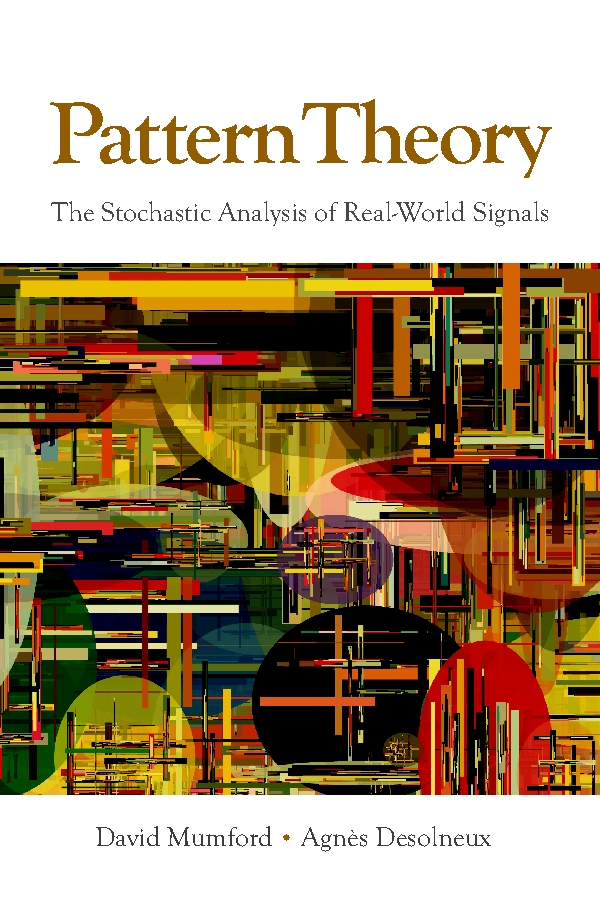
Agnes Desolneux is a CNRS Research Director at the Borelli Centre (formerly CMLA) and a Professor attached to the Mathematics Department at ENS Paris-Saclay. Education: PhD in Applied Mathematics (2000) from ENS Cachan Habilitation in Applied Mathematics (2010) from Université Paris Descartes Her research focuses on image analysis via statistical methods , particularly a contrario approaches, image restoration, texture synthesis, Determinantal Point Processes (DPP), optimal transport, Gaussian mixtures, geometry of random field excursions, shot-noise models, and mathematical modeling of visual perception through Gestalt theory. The articles extracted reflect her expertise in applied mathematics and computer vision , with recent works (2025-2020) on optimal transport algorithms, DPP applications, multiscale texture analysis, and stochastic modeling in medical imaging. Keywords span machine learning, probability theory, medical imaging, and computer vision . She has no listed scientific awards but has authored influential works including the book From Gestalt Theory to Image Analysis: A Probabilistic Approach (Springer, 2008) and Pattern Theory: the stochastic analysis of real-world signals (AK Peters, 2010).
Prof. Dr. Ewa Machotka is Full Professor and Chair of East Asian Art History at the University of Zurich's Institute of Art History since 2023. She leads Switzerland's only academic chair dedicated to East Asian art history, covering China, Japan, and Korea across historical periods through contemporary practices. Her educational background includes a PhD in Japanese art history from Gakushuin University, Tokyo (2008), funded by the Japanese Ministry of Education. Previous positions encompass Professor of Japanese Language and Culture at Stockholm University (2017-2023), Assistant Professor at Leiden University (2011-2017), and Curator of Japanese Art at Kraków's National Museum (1999-2008). Machotka's research centers on Japanese visual culture with dual emphasis on Edo-to-modern print traditions and contemporary socially engaged/eco-art. Methodologically, she integrates global art history, postcolonial theory, ecocriticism, gender/queer frameworks, and digital analysis to examine transnational interactions, canon formation, and socio-ecological dimensions of East Asian visual artifacts. Her work critically engages with Orientalism, collection histories, and multimodal text-image relationships. Under her leadership, the department organizes the Zurich Lectures series featuring international scholars, collaborates with Museum Rietberg on projects like the 2025 'Korean Wave(s)' symposium, and offers object-based pedagogy through seminars, museum excursions, and courses such as 'Curating Surimono'. Current initiatives include Dr. Uli Sigg's visiting professorship on Chinese cultural diplomacy and hands-on workshops exploring Hokusai's legacy.
Jason Schweinsberg is a Professor in the Department of Mathematics at the University of California, San Diego (UCSD), where he has been a faculty member since Fall 2004. His academic journey began with a Ph.D. in Statistics from the University of California, Berkeley in 2001, followed by a three-year NSF Postdoctoral Fellowship at Cornell University. His research focuses on probability theory with applications to evolutionary biology and population genetics. Schweinsberg's work centers on stochastic processes involving coalescence, branching Brownian motion, and their connections to biological phenomena. He has made significant contributions to understanding population models undergoing selection, cancer evolution, and spatial mutation processes. Recent publications reveal a strong emphasis on coalescent theory (particularly Λ-coalescents and nested coalescents), branching processes with absorption, and spatial evolutionary models. His work often bridges rigorous mathematical analysis with biological applications, especially in population genetics and cancer modeling. The 15 most recent articles demonstrate consistent focus on asymptotic analysis of stochastic processes, genealogical structures, and mutation dynamics in evolving populations. Scientific Awards: Fellow of the Institute of Mathematical Statistics NSF Postdoctoral Research Fellowship While specific student names aren't listed in the source material, Schweinsberg has delivered numerous lecture series at international institutions including the Indian Institute of Science (Bangalore), Centre de Recherches Mathématiques (Montreal), and the Isaac Newton Institute (Cambridge), indicating active mentorship and academic leadership. His collaborations span multiple institutions, with frequent co-authorship with researchers like Julien Berestycki, Nathanaël Berestycki, and Rick Durrett. Though no formal lab structure is mentioned, Schweinsberg participates in interdisciplinary research communities through workshops at institutions like BIRS (Banff International Research Station), where he presented on mutation patterns in spatially structured populations in May 2025. His work connects probability theory with biological applications through sustained collaborations across mathematics, statistics, and computational biology fields.
Conrad Alexandrowicz is a Professor in the Department of Theatre at the University of Victoria, Faculty of Fine Arts. Holding a B.F.A. in Dance from York University and an M.F.A. in Directing from the University of Alberta, he is a renowned theatre director, choreographer, and scholar with a focus on interdisciplinary performance. Education: B.F.A. in Dance, York University; M.F.A. in Directing, University of Alberta Awards: Jessie, Sterling, and Dora Awards for artistic excellence His research spans queer theatre , climate crisis pedagogy , and performance innovation . As founder of Wild Excursions Performance, he created over 45 works blending dance and theatrical elements. Recent publications include Performing the Nonhuman (2024) and co-edited Theatre Pedagogy in the Era of Climate Crisis (2021). Publication Trends: His work consistently bridges artistic practice with critical discourses on gender, environmental sustainability, and absurdist literature adaptation. Scientific Awards: Jessie Award Sterling Award Dora Award A veteran educator, he teaches movement for actors and devised physical theatre , directing department productions while contributing to global dialogues on transformative theatre practices.
Professor Igor Wigman is a Professor of Number Theory at King's College London, affiliated with the Department of Mathematics within the Faculty of Natural, Mathematical & Engineering Sciences. He completed his PhD in Number Theory at Tel-Aviv University under Zeev Rudnick, followed by postdoctoral roles at CRM Montreal and KTH Stockholm. He joined King's in 2012 as a Lecturer, becoming a Reader in 2014 and Professor in 2018. His research focuses on analytic number theory, probability, and mathematical physics, with emphasis on nodal lines, random fields, and quantum chaos. Notable contributions include studies on the Gauss circle problem, eigenvalue clusters, and nodal volume distributions of random functions. Wigman co-organized the 2016 'Random Waves in London' workshop and delivered an inaugural lecture in 2023 on the interplay of number theory, random functions, and music geometry. His work bridges pure mathematics with applications in spectral geometry and stochastic processes.
Steven Neil Evans is a Professor in the Departments of Statistics and Mathematics at the University of California, Berkeley, with a joint appointment since 1999. His research spans stochastic processes, probability on algebraic structures, and applications in population biology, phylogenetics, and computational biology. BSc (Hons I & University Medal) in Statistics, University of Sydney (1983) PhD in Mathematics, University of Cambridge (1987) Research Interests: Evans works on random matrices, Lévy processes, measure-valued stochastic processes, coalescent models in biology and chemistry, phylogenetics (including invariants), biodemography, mutation-selection balance, and stochastic models in population genetics. His recent work connects probability theory with computational biology, focusing on metagenomics and transcriptional regulation. He also explores computational algebra in modeling biological systems. Articles Trends: His publications reveal a trajectory from foundational work in stochastic processes and Lévy processes to interdisciplinary applications in phylogenetics, population genetics, and computational biology. Key subfields include mutation-selection models, random tree structures, stochastic differential equations, and algebraic probability. Recent work addresses phylogenetic networks and Frechet mean sets in metric spaces. Scientific Awards: Rollo Davidson Prize (1990) Presidential Young Investigator Award (1991) Alfred P. Sloan Foundation Fellowship (1993) G. de B. Robinson Prize (1997) Miller Research Professor (2002) Fellow, American Mathematical Society (2012) Member, National Academy of Sciences (2016) Advising and Grants: Evans has advised over 30 PhD/Master's students since 1993. He has received continuous NSF grants (1988-2019), NIH funding (2016-2018), and international fellowships. His academic service includes editorial roles at major journals and organizing conferences in probability and mathematical biology.
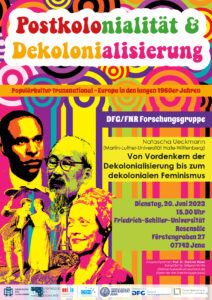
Prof. Dr. Natascha Ueckmann is a Professor of Cultural Studies specializing in France/Francophonie and Spain/Latin America at the Institute of Romance Studies, Faculty of Philosophy II, Martin Luther University Halle-Wittenberg. She manages all IKEA degree programs and master's programs, supervises tutors, and coordinates Erasmus+ exchanges with West African universities in Togo (Lomé and Kara) and Senegal (Dakar). Her academic trajectory includes doctoral studies at the University of Osnabrück with a dissertation on 'Women and Orientalism: Travel texts by French-speaking female authors of the 19th and 20th centuries,' followed by a habilitation on 'Aesthetics of Chaos: Creolization and Neo-Baroque in the Franco- and Hispanic-Caribbean Contemporary Novel' at the University of Bremen, for which she received the Elise Richter Research Prize. Prof. Ueckmann's research focuses on postcolonial studies, particularly Franco-Caribbean literature, gender studies, and the transatlantic circulation of ideas. Her publication record spans from 2016 to 2024, with recent works examining Enlightenment influences in Caribbean literature, gender representations in Francophone digital media, and slave revolts in literary narratives. Her scholarly output demonstrates consistent interdisciplinary engagement across literature, cultural studies, and postcolonial theory. Berninghausen Prize for Outstanding Teaching (2016) Elise Richter Research Prize of the German Association of Romance Studies She has supervised students including Susan Bargmann, who created a blog on the Nantes excursion examining colonial history. Prof. Ueckmann has organized numerous educational excursions to Berlin, Nantes, and Avignon, and has led major research projects including a DFG-funded study on Enlightenment's impact on Franco-Caribbean literature (2017-2023) and the current RE-VISUALIZE project (2022-2025) examining gender and Islam in Francophone digital media. She actively participates in international academic collaborations, has organized multiple Caribbean and West Africa study days, and serves on the board of the Society for Caribbean Research (SoCaRe) as Board Member for International Affairs since 2015.
Christoph Hammann is a researcher at the Department of New Testament Studies within the Faculty of Protestant Theology at the University of Münster, working under Professor Eve-Marie Becker's chair since August 2022. He is currently completing his habilitation on "Authority, Power, and Rule in the Lukan Double Work: Exegetical Investigations of Luke's Ascending Christology Against the Background of Greek-Roman Biography, Historiography, and Epic" (2022-present). His research spans multiple interdisciplinary areas at the intersection of biblical studies, ancient philosophy, and cultural history. Hammann's primary interests include Pauline theology and epistolography, the Lukan works in Greco-Roman cultural context, the relationship between natural science and theology in early Christianity, philosophy of the Imperial Period and Late Antiquity, conceptions of history in the New Testament, and the beginnings of Christianity in Rome. His academic background combines classical philology (specializing in Greek studies) with Protestant theology, enabling unique cross-disciplinary approaches to biblical texts. Hammann's publication record reveals a consistent engagement with how early Christian texts interacted with and transformed contemporary Greco-Roman discourses on topics like purity, authority, and cosmology. His work often examines the philosophical and medical contexts of biblical concepts, particularly in relation to heart metaphors, sacrificial practices, and Christological development. DAAD Congress Travel Grant (2023) Publication subsidy for dissertation (2019) PhD Prize from Philipps-Universität Marburg (2019) Multiple international research grants from Evangelisches Studienwerk Villigst (2015-2018) Fondation Hardt research grant (2017) Hammann actively contributes to academic life through teaching undergraduate and graduate courses in New Testament exegesis (including Greek language instruction), organizing conferences such as the upcoming Colloquium Biblicum Lovaniense LXXIV on The Corinthian Letters (2025), and co-editing scholarly volumes like "Opfer in Antiochien" (2023). He serves on multiple academic committees and is a member of several scholarly societies including the Society of Biblical Literature (since 2025) and the Münster School of Ancient Cultures (since 2023). His research group within the Excellence Cluster "Religion and Politics" focuses on ancient cultural contexts of early Christianity, with particular attention to the intersections between biblical texts and Greco-Roman philosophical, medical, and political discourses. Hammann also leads student excursions to Rome to study early Christian sites and Pauline contexts.
Chris Rogers is a Professor of Statistical Science within the Department of Pure Mathematics and Mathematical Statistics (DPMMS) at the University of Cambridge, actively contributing to research at the intersection of probability theory, stochastic analysis, and financial applications. His academic profile reflects deep engagement with mathematical finance and theoretical probability through publications and departmental affiliations. His research spans financial mathematics, probability theory, stochastic analysis, statistics, and mathematical economics, with emphasis on rigorous mathematical frameworks for financial markets. Key themes include option pricing mechanisms, stochastic process modeling, and geometric probability applications, often addressing real-world financial instruments like Asian options and S&P500 index behaviors through advanced probabilistic techniques. Analysis of his 15 most recent publications (2016-2018) reveals consistent focus on stochastic calculus applications in finance, particularly Lévy processes, diffusion models, and optimal stopping problems. His work bridges theoretical probability with quantitative finance, demonstrating expertise in translating complex stochastic phenomena into financial modeling solutions across asset pricing, risk assessment, and market analysis domains. No scientific awards were documented in the provided source material. Information regarding PhD/Master's student supervision, research grants, or collaborative teams was not specified in the available texts, indicating absence of such details in the source documentation.
Christian Hirsch is an Associate Professor for Data Science and Statistics at Aarhus University, where he studies random networks motivated from biology and health sciences through techniques from topological data analysis and stochastic geometry. He is a member of the Stochastics group at the Department of Mathematics and holds additional affiliations as an Associate Fellow of the Aarhus Institute for Advanced Studies, and with the AU DIGIT Centre and the AU Quantum Campus. Current Position: Associate Professor for Data Science and Statistics, Aarhus University Previous Positions: Assistant Professor at University of Groningen and University of Mannheim Postdoctoral Experience: Aalborg University, LMU Munich, WIAS Berlin Education: PhD from Ulm University Christian Hirsch's research focuses on the statistical foundations of topological data analysis, large deviations theory in stochastic geometry, and percolation theory of spatial random networks. His work bridges theoretical mathematics with practical applications in data science, particularly in analyzing complex structures through topological methods. He investigates how topological features form and disappear in growing data structures, developing statistical tests to determine whether observed patterns are significant or merely random occurrences. His recent publications reveal a strong trend toward applying topological data analysis to increasingly complex structures, with significant focus on statistical validation of topological features. Hirsch has made substantial contributions to understanding the probabilistic behavior of persistent homology, developing functional central limit theorems and large deviation principles for topological functionals. His work spans theoretical foundations in stochastic geometry while finding applications in materials science, neural networks, and wireless communication systems. As an educator, Hirsch teaches graduate courses including Topological Data Analysis, Stochastic Geometry, Monte Carlo Simulation, Markov Decision Processes, Probability Theory, and Stochastic Processes. He has supervised numerous PhD, MSc, and BSc students, with several of his former students securing academic positions at institutions like University of Leiden, Tokyo Institute of Technology, and Budapest University of Technology. Hirsch leads a research group within the Stochastics group at Aarhus University, collaborating extensively with researchers across Europe and North America. His work demonstrates how topological methods can provide rigorous statistical insights into complex data structures, making significant contributions to both theoretical mathematics and practical data analysis techniques.