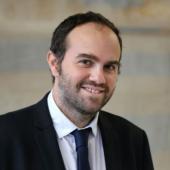
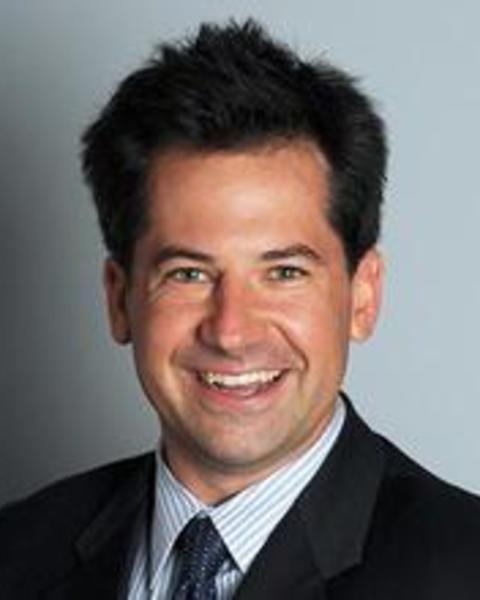
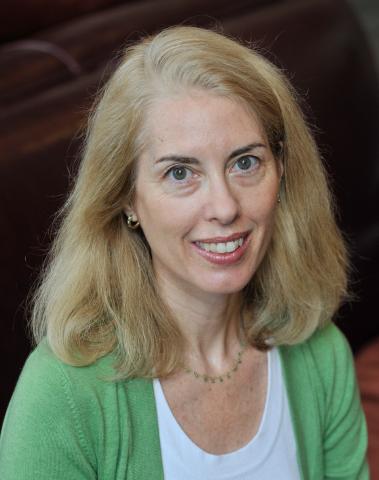
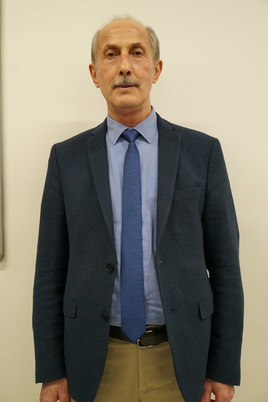
Mauro Bambi is an Associate Professor at Durham University Business School and an Associate Fellow at the Institute of Advanced Studies. His research focuses on Macroeconomic Theory, Endogenous Growth, Habit Formation, and Behavioral Economics. He earned his PhD from the European University Institute (2007) and held positions at ETH Zurich and the University of York. He directs the Centre for Macroeconomic Policy (CEMAP) and has been recognized with the 2008 Italian Association of Applied Mathematics award for his PhD thesis. Education: PhD in Economics (European University Institute, 2007); Postdoctoral Fellowships at Université Catholique de Louvain (Belgium) and ETH Zurich (Switzerland). Research Interests: Macroeconomic Theory and Policy Design Endogenous Growth and Fluctuations Habit Formation in Economic Models Behavioral Economic Preferences Mathematical Methods in Macroeconomics Key Contributions: His work on habit formation models, time-to-build frameworks, and policy design has influenced macroeconomic theory. Recent studies analyze post-COVID demand shifts and pandemic economic impacts. Awards: 2008 Graduate Prize for Best PhD Thesis (Italian Association of Applied Mathematics). Advising and Leadership: Supervised PhD students like Federico Bertoni and Xinyi Xu. Directed CEMAP from 2019–2022, fostering macroeconomic policy research. Active in interdisciplinary collaborations at the Institute of Advanced Studies. Labs/Teams: Leader of CEMAP, collaborating with global institutions on macroeconomic policy analysis.
Athanasios TRIANTAFYLLOU is an Associate Professor of Finance at IÉSEG School of Management in France. He holds a Ph.D. in Economics from the University of Athens (2017) and has held academic positions including Visiting Professor at Cornell University (2019), Lecturer at the University of Essex (2017–2022), and General Equilibrium Modeler at the National Technical University of Athens (2015). His research focuses on commodity markets, volatility forecasting, risk management, and monetary economics. Key contributions include analyzing commodity price uncertainty's impact on economic activity and financial markets. He has published extensively in journals like Journal of Futures Markets , Economics Letters , and International Journal of Finance and Economics . Education includes a BSc in Mathematics (2008), MSc in Accounting and Finance (2010), and M.Phil. in Economics (2013), all from Greek institutions. Professional experience includes risk management consulting at Ernst & Young (2016–2017). His teaching covers financial derivatives, multinational finance, and commodity markets. Research highlights include exploring the role of commodity price uncertainty in global economic dynamics and the predictive power of market information in corporate defaults. His work often bridges theoretical econometrics with practical policy implications, addressing issues like inflation dynamics driven by oil market risks and the tourism-led growth hypothesis in the Eurozone. TRIANTAFYLLOU’s publications emphasize volatility modeling, commodity market linkages, and the interplay between economic uncertainty and financial stability.
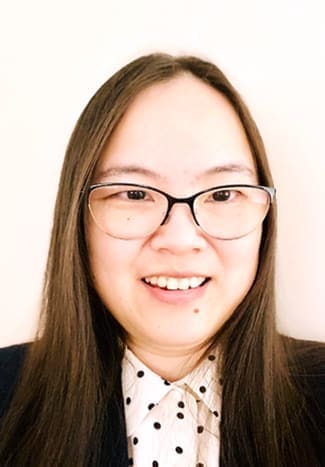
Yaojun Zhang is an Assistant Professor in the Department of Physics & Astronomy and the Department of Biophysics at Johns Hopkins University. She earned her PhD in Physics from the University of California, San Diego (2015), followed by postdoctoral fellowships at the Princeton Center for Theoretical Science (2015-2018) and the Princeton Center for the Physics of Biological Function (2018-2021). Her research focuses on biological physics, particularly the complex behaviors of biomolecules and their assemblies across scales—from single-molecule folding to intracellular transport and biomolecular phase separation. She employs theoretical, mathematical, and computational tools to bridge biological questions with physical principles. Education PhD in Physics, University of California, San Diego (2015) Postdoctoral Fellowships: Princeton University (2015-2021) Research Interests Her group studies biomolecular condensates and liquid-liquid phase separation, exploring how microscopic interactions determine macroscopic properties of cellular compartments. Key areas include: Biomolecular condensate formation and dynamics Phase separation in cellular environments Interactions between biomolecules and cellular components Biophysics of intracellular transport Collaborations & Tools Zhang collaborates with experimentalists to validate theoretical models and develops frameworks for understanding condensate functions, such as surface tension, stoichiometry, and phase diagrams. Her work addresses challenges like condensate stability, molecular exclusion, and biological function regulation. Labs & Resources She leads the Zhang Lab , which integrates experimental and computational approaches. Her team’s research is supported by resources at the Bloomberg Center for Physics and Astronomy.
Zhi Da is the Howard J. and Geraldine F. Korth Chair in Finance and Professor of Finance at the University of Notre Dame , Mendoza College of Business, Department of Finance. He completed his Ph.D. in Finance at Northwestern University’s Kellogg School of Management (2006), preceded by an M.Sc. in Financial Engineering from the National University of Singapore (2001) and a B.B.A. with First-Class Honors (1999) from the same institution. Holding editorial roles at Journal of Finance , Management Science , Review of Financial Studies and several other top journals, he is a leading voice in empirical finance research. Education Ph.D. in Finance, 2006 – Kellogg School of Management, Northwestern University M.Sc. in Financial Engineering, 2001 – National University of Singapore B.B.A. (1st Class Honors), 1999 – National University of Singapore Research Interests Zhi Da’s scholarship sits at the intersection of asset pricing , behavioral finance , and market microstructure . He investigates how investor attention, institutional trading, liquidity frictions, and information flows jointly determine the cross-section of expected returns. His work delves into retail margin trading, the role of pension-fund flows in exchange-rate dynamics, the informational content of SEC filings, and the efficiency of short-selling mechanisms. By combining large-scale data analytics, textual analysis, and structural modeling, he uncovers novel predictors of returns ranging from presidential approval ratings to real-time attention measures. Recent projects explore fractional trading ’s impact on price efficiency, hedging demand as a driver of intraday momentum, and the hidden effort problem in delegated portfolio management. These themes collectively advance our understanding of limits to arbitrage and the formation of extrapolative beliefs. Publication Landscape Spanning 2025 back to 2009, his 15 most recent articles in Journal of Finance , Review of Financial Studies , Management Science , Journal of Financial Economics , and Journal of Financial and Quantitative Analysis converge on three broad motifs: (1) micro-level trading frictions—liquidity costs, margin requirements, and short-selling constraints; (2) macro-finance linkages—exchange rates, fiscal policy, and global capital flows; and (3) information economics—attention allocation, media analytics, and regulatory disclosures. The collective evidence demonstrates that seemingly small trading or informational frictions aggregate into large, persistent cross-sectional return predictability. Honors and Awards 2017 William F. Sharpe Award for Best Paper, Journal of Financial and Quantitative Analysis Lead-article distinctions in Journal of Finance , Review of Financial Studies , and Management Science Featured coverage in SmartMoney and CNBC Teaching & Mentorship At Notre Dame’s Mendoza College, Professor Da teaches Investments (undergraduate and MBA) and Fixed Income Securities , integrating cutting-edge research insights into the curriculum. While specific advisees are not listed, his extensive co-author network (22+ recurring collaborators) attests to a vibrant mentoring environment. Laboratory & Data Resources He publicly distributes the NAT (Net Arbitrage Trading) dataset, a stock-quarter panel of arbitrage positions used in Chen, Da & Huang (2019). This resource has become a standard tool for researchers studying arbitrage capital movements.
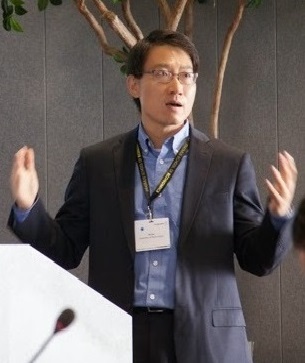
Dr. Tetsu Hara is a Professor at the University of Rhode Island's Graduate School of Oceanography (URI GSO), specializing in Physical Oceanography. With a lifelong fascination for ocean surface waves, his research bridges civil engineering principles with ocean dynamics to study air-sea interactions under extreme conditions like hurricanes. Ph.D., Civil Engineering, Massachusetts Institute of Technology, 1990 M.S., Civil Engineering, University of Tokyo, 1986 B.S., Civil Engineering, University of Tokyo, 1983 Dr. Hara's work focuses on ocean turbulence, wave dynamics, and their role in air-sea energy exchange. He investigates how surface waves influence hurricane intensity predictions, climate modeling, and coastal processes through numerical simulations and field observations. His research emphasizes the importance of sea state (wave height, wind-wave alignment) in determining heat fluxes, drag coefficients, and gas exchange rates critical for climate science. His publications reveal trends in tropical cyclone modeling, Langmuir turbulence, and wave-current interactions. By combining satellite data with computational models, he explores discrepancies between wind strength and wave behavior, advancing understanding of ocean mixing mechanisms that impact climate change predictions. Dr. Hara has received continuous National Science Foundation grants since 2003, including collaborative projects on hurricane modeling (2018-2020), wind-wave turbulence (2015-2020), and storm surge impacts (2016-present). He previously secured funding from the Office of Naval Research (2009-2012) and U.S. Department of Homeland Security (2016). Mentored 15+ graduate students in hurricane dynamics, wave modeling, and air-sea interaction Co-developed advanced courses on geophysical fluid dynamics and tropical cyclone modeling Collaborates closely with Dr. Isaac Ginis (URI GSO) and Dr. Tobias Kukulka (University of Delaware)
Philippe Mueller is a Professor of Finance at Warwick Business School (University of Warwick) and a leading researcher in macro-finance, international finance, and asset pricing. He previously held positions at the London School of Economics (2008–2017) and earned his PhD from Columbia University. His research focuses on factors driving asset prices, foreign exchange markets, corporate credit, and central bank policies. Mueller has published in top journals such as the Journal of Finance and Journal of Financial Economics , and his work on corporate bond pricing won the Fama-DFA Prize (2023). Education: PhD in Finance and Economics, Columbia University, 2008 MBF, Master of Science in Banking and Finance, Université de Lausanne, 2002 lic. rer. pol., Universität Bern, 1999 Research Interests: His primary research areas include asset pricing, financial econometrics, and international finance with a focus on fixed income markets, corporate credit provision, and monetary policy impacts. Recent work examines intraday foreign exchange patterns, central bank swap lines, and volatility dynamics in fixed income and currency markets. Teaching & Grants: Mueller teaches advanced courses in asset pricing and fixed income at Warwick. He has secured grants from the BA/Leverhulme Trust, BIS Research Fellowship, and INQUIRE Europe. His work is supported by collaborations with institutions like the Swiss National Bank and ECB. Awards & Recognition: Fama-DFA Prize for best asset pricing paper (2023) BIS Research Fellowship (2025–2027) Walter Wasserfallen Prize (2000) Professional Activities: He serves on programme committees for major finance conferences (EFA, WFA) and referees for top journals including Journal of Political Economy and Econometrica .
Giuseppe Fontana is an Associate Professor of Political Economy (SECS-P/01) at the University of Sannio (UNISANNIO) in the Department of Law, Economics, Management and Quantitative Methods (DEMM). He has maintained an active research profile for over two decades, establishing himself as a significant contributor to Post-Keynesian economics and monetary theory. His research interests include: Post-Keynesian Economics Monetary Theory and Endogenous Money Macroeconomic Policy and Financial Stability Financialization and Socioeconomic Impacts Economic Methodology and History of Economic Thought International Trade and Exchange Rate Theory Stock-Flow Consistent Modeling Fontana's scholarly trajectory demonstrates a consistent focus on heterodox economic approaches, particularly Post-Keynesian theory. His work evolved from theoretical contributions in the early 2000s to increasingly policy-relevant analyses of contemporary economic challenges. His recent publications show special attention to the Eurozone crisis, the impact of the COVID-19 pandemic on European economies, and the theoretical foundations of monetary production. He frequently employs stock-flow consistent modeling to provide comprehensive analyses of macroeconomic phenomena, challenging mainstream economic frameworks with alternative theoretical perspectives. Fontana has established important collaborations with scholars like Emiliano Brancaccio, Riccardo Realfonzo, and Marc Lavoie, demonstrating his integration within international networks of heterodox economists. His work has been published in leading heterodox economics journals including the Cambridge Journal of Economics, Journal of Post Keynesian Economics, and Review of Political Economy, as well as in edited volumes with major academic publishers like Palgrave Macmillan and Edward Elgar.
Matthias Parey is a Professor in the Department of Economics at the University of Surrey. He holds additional roles as a Research Fellow at the Institute for Fiscal Studies (IFS) and the Institute for the Study of Labor (IZA), a Researcher at the ESRC Research Centre on Micro-Social Change (MiSoC), and a Research Associate at ZEW. His research spans Labour economics Economics of education Micro-econometrics Inequality Economics of innovation . His recent publications analyze high-skilled migration selection, trade shocks, cannabis market size estimation, and gasoline demand elasticity. He has contributed to journals like Review of Economics and Statistics , Economica , and Journal of the European Economic Association . Scientific awards include fellowships at IFS and IZA. His work on trade shocks examines gender-specific labor supply responses to Chinese import competition, while his cannabis market research introduces a forensic economics approach using legal inputs. Earlier studies focus on maternal education impacts on child development and the long-term labor market effects of Erasmus student exchanges.
Thomas Chaney is a Professor of Economics at the University of Southern California (USC), holding the John Elliott Chair in Economics. He is affiliated with Sciences Po’s Department of Economics and leads the ERC Project HTMG. His research focuses on International Trade, Networks, and Finance, with notable contributions to historical trade dynamics and modern financial constraints. Chaney is a CEPR and CESifo Research Fellow, reflecting his academic standing. Research Interests: Chaney’s work bridges historical and contemporary economic phenomena, analyzing trade networks, collateral constraints in corporate finance, and the impact of migration on innovation and urban development. His research often employs innovative methodologies, such as combining archaeological data with economic models to study ancient trade systems. Articles Trends: Recent work examines Bronze Age trade networks, modern corporate investment dynamics, and the role of real estate collateral. His 2024 articles explore ancient trade’s end and contemporary empathy’s economic implications, showcasing interdisciplinary approaches. Earlier papers like Trade, Merchants, and the Lost Cities of the Bronze Age (2019) exemplify his historical focus. Grants & Awards: Chaney leads the ERC-funded HTMG project and holds prestigious fellowships. His work has been published in top journals and spans empirical trade analysis, financial economics, and historical methods. Labs/Teams: Active in USC’s Economics Department and collaborates with global institutions like Sciences Po and the Bank for International Settlements (BIS). His research group integrates economists, historians, and data scientists for interdisciplinary projects.
Samuel G. Hanson is the William L. White Professor of Business Administration at Harvard Business School (HBS), a Research Associate at the National Bureau of Economic Research (NBER), and a Faculty Affiliate of the Harvard Department of Economics. He teaches Finance 1 in the MBA curriculum and Ph.D. courses in Corporate Finance and Empirical Methods. His research focuses on asset pricing, behavioral finance, corporate finance, and financial intermediation, with a particular emphasis on debt markets and financial stability. Hanson holds a Ph.D. in Business Economics from Harvard University and a B.A. in Quantitative Economics and Philosophy from Tufts University. Before academia, he worked at Lehman Brothers, the Federal Reserve Bank of New York, and the U.S. Treasury Department during the 2009 financial crisis. His work explores investor behavior, institutional factors, and policy interventions to enhance financial stability. Key awards include the 2014 RFS Rising Scholar Prize and the 2015 Brattle Group Distinguished Paper. His research is published in top journals like the Quarterly Journal of Economics, Journal of Finance, and Journal of Financial Economics. He also contributes to policy discussions on banking regulation and government debt management.
Kathryn M. Dominguez is a Professor of Public Policy and Economics at the University of Michigan's Gerald R. Ford School of Public Policy, where she also serves as Associate Dean for Academic Affairs. She maintains a dual affiliation with the Department of Economics as director of the honors program. Her educational background includes: PhD in Economics from Yale University (1987) AB from Vassar College (1982) Dominguez's research focuses on international financial markets and macroeconomics, with particular expertise in foreign exchange rate behavior. Her work examines global financial systems, exchange rate interventions, and monetary policy across borders. She has authored influential works including 'Exchange Rate Efficiency and the Behavior of International Asset Markets' and 'Does Foreign Exchange Intervention Work?' (co-authored with Jeff Frankel). Her recent publications reveal a strong emphasis on understanding financial crises, particularly the Great Recession and pandemic-era challenges, with attention to policy responses and international ramifications. Her research demonstrates consistent engagement with central banking policies, exchange rate dynamics, and international financial stability. Professional affiliations: Research Associate, National Bureau of Economic Research Member, Panel of Economic Advisers at the Congressional Budget Office Member, Advisory Scientific Committee of the European Systemic Risk Board Dominguez has advised major institutions including USAID, the Federal Reserve, IMF, World Bank, and Bank for International Settlements. She previously taught at the Kennedy School, Woodrow Wilson School, London School of Economics, and UC Berkeley's Goldman School. At Michigan, she teaches macroeconomics, finance, and international economics courses including Global Financial Markets, Crises, and Policy, and Macroeconomics.
Dr. Nemanja Stanišić is a Full Professor at Singidunum University's Faculty of Business, with a distinguished academic career spanning over 15 years. He holds a Ph.D. in Corporate Finance from Singidunum University (2010), an MBA in Finance from Lincoln University (2007), and a Bachelor's in Accounting from the University of Belgrade (2005). His expertise focuses on Corporate Finance, Banking, Audit, and Applied Statistical Analysis. His research integrates quantitative methods with economic theory, addressing topics such as audit opinion prediction using AI, tourism destination competitiveness, financial distress dynamics, and air pollution health impacts. He co-authored textbooks including Contemporary Exchange and E-business (2010) and Financial Statement Analysis (2024), and served as Editor-in-Chief of The European Journal of Applied Economics . He teaches courses from Financial Accounting to Advanced Financial Engineering at undergraduate, master's, and Ph.D. levels. The 15 most recent publications highlight his interdisciplinary approach: 7 in Finance/Audit, 5 in Tourism/Hospitality, and 3 in Environmental Health. Key trends include applying machine learning to audit quality (2023), multilevel modeling for hospitality satisfaction (2015-2019), and air pollution mortality analysis (2016). His work appears in high-impact journals like Tourism Management (IF 10.125) and Environmental Health (IF 4.986). He held administrative roles including Rector (2020-2021) and Vice President of Singidunum University. He served as Vice Dean for Student Affairs (2010-2011) and participated in TEMPUS projects for educational reform. He mentors graduate students extensively, advising 100+ bachelor's, 57 master's, and 4 doctoral theses, including international candidates. His visiting professorship at Bangkok's ICO NIDA and teaching in Austria-Singidunum joint programs reflect global engagement. Professional development includes advanced training at Utrecht University (Bayesian Modeling, 2019), Stanford (Mentoring, 2010), and NYU (Valuation, 2012). He reviews for top journals like Annals of Tourism Research and Cornell Hospitality Quarterly , with 1017 Google Scholar citations and 349 Scopus citations. Current research involves the Science Fund of Serbia's TOURCOMSERBIA project evaluating tourism competitiveness models.
Debarshi K Nandy is Barbara and Richard M. Rosenberg Professor of Global Finance at Brandeis International Business School. He serves as MSF Program Director and Senior Associate Dean, with affiliations in Economics and Social Policy. Research focuses on venture capital, FinTech innovation, and entrepreneurial finance. Holds a Ph.D. from Boston College and M.S. from University of Calcutta. Research explores venture capital ecosystems, corporate payout policies, private equity impacts on trade, and behavioral aspects of financial decision-making. Recent work examines hedge fund strategies and student debt effects on investment behavior. Publications demonstrate consistent focus on financial intermediation mechanisms, with methodological innovation in natural experiments and empirical finance techniques. Fama/DFA Prize for Capital Markets and Asset Pricing Best Paper in Financial Institutions (FMA) Provost Research Award Directs Masters in Finance program and mentors startups. Affiliated with U.S. Census Bureau and NBER, with NSF and SSHRC research grants supporting work in financial innovation.
Tommy Sveen is Professor of Economics at BI Norwegian Business School and serves as Head of the Department of Economics. He also holds an adjunct professorship at the Norwegian School of Economics (NHH) and directs the Centre for Monetary Economics. His career includes extensive experience at Norges Bank in roles including Assistant Director and Senior Advisor across Research and Monetary Policy departments. Education: PhD (Dr.Oecon) in Economics from Norwegian School of Economics (NHH), 2001 Master Cand. Oecon from Norwegian School of Economics (NHH), 1995 Master of Science in Business from BI Norwegian Business School, 1988 Research Focus: Professor Sveen specializes in Monetary Economics, Macroeconomics, and Open Economy Macroeconomics. His work examines monetary-fiscal policy interactions, investment dynamics under nominal rigidities, labor market adjustments to technological shocks, and exchange rate mechanisms. He frequently employs New Keynesian frameworks to analyze policy transmission and economic stabilization. Publication Trends: Recent research (2020-2025) focuses on optimal policy coordination in small open economies, monetary responses to export shocks, and labor market margins. Earlier work (2013-2018) established foundational insights into lumpy investment behaviors, Taylor rule applications, and real exchange rate determinants. His articles consistently integrate microeconomic foundations with macroeconomic policy analysis. Leadership: Directs the Centre for Monetary Economics and authors the independent evaluation report Norges Bank Watch , critically assessing Norwegian monetary policy.
Nezir KÖSE is a Professor and currently serves as the Dean of the Faculty of Economics and Administrative Sciences at Beykent University. He has previously held academic positions at Istanbul Gelişim University and Gazi University, where he advanced from Research Assistant to full Professor. His academic career spans over three decades, with continuous contributions in teaching, research, and administrative leadership. Beykent University – Faculty of Economics and Administrative Sciences (2020–Present) Istanbul Gelişim University – Faculty of Economics, Administrative and Social Sciences (2017–2020) Gazi University – Faculty of Economics and Administrative Sciences (1990–2017) Education: Doctorate, Institute of Social Sciences, Gazi University (1992–1998) Degree, Faculty of Economics and Administrative Sciences, Gazi University (1990–1992) Licence, Faculty of Science, Gazi University (1985–1989) His primary research interests include Econometrics , Macroeconomics , Financial Economics , Time Series Analysis , and Energy and Environmental Economics . He has made significant contributions to the analysis of inflation, exchange rate volatility, foreign direct investment, oil price impacts, and financial stability, with a regional focus on Turkey and emerging markets. His recent publications (2023–2025) reflect a dynamic research agenda involving cryptocurrency markets , climate change economics , machine learning applications , and nonlinear macroeconomic modeling . His work frequently employs advanced econometric techniques such as panel data analysis, VAR/SVAR models, GARCH models, and time-varying parameter estimation. Scientific Awards: No awards mentioned in the provided text. Nezir KÖSE has supervised numerous graduate students, including PhD candidates who have completed theses on topics such as foreign direct investment, financial stability, oil price effects, and inflation uncertainty. He has also contributed to academic grants and collaborative research projects, particularly in energy and financial economics. He teaches core courses including Econometrics I & II , Time Series Analysis , and Nonparametric Statistics , demonstrating a strong commitment to pedagogy. He has authored several textbooks in econometrics and statistics, enhancing educational resources in Turkish academia. There is no indication of lab or team leadership, but his collaborative publications suggest active participation in research groups.