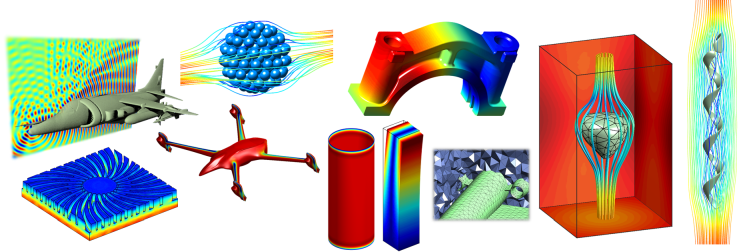
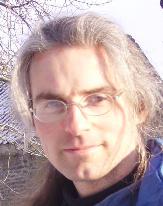
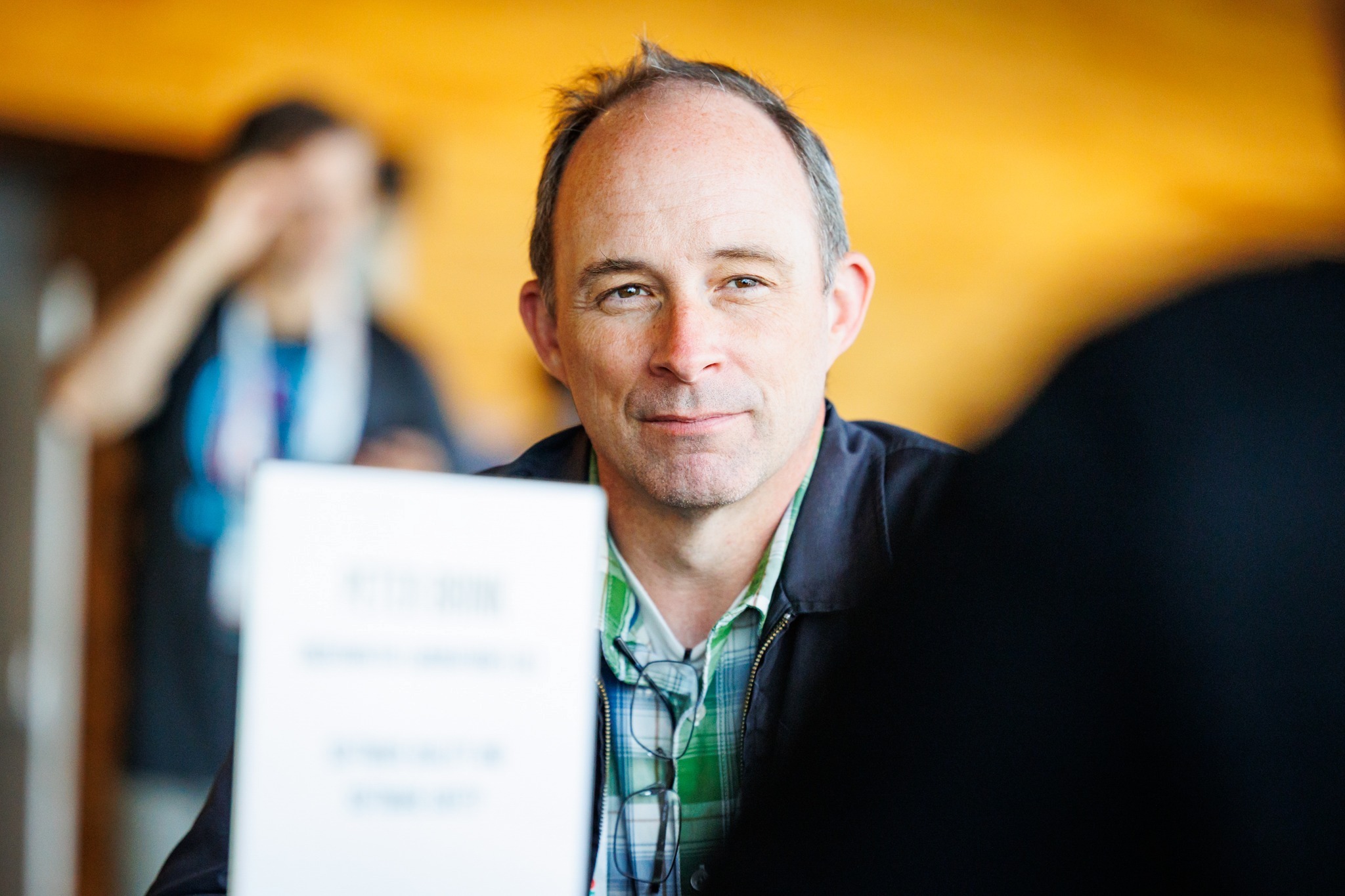
Professor Rubén Sevilla is a Computational Engineering academic at the Faculty of Science and Engineering , Swansea University . He holds a Chair in Civil Engineering and has held leadership roles including President of the UK Association for Computational Mechanics and Chief Editor of the European Journal of Computational Mechanics . PhD in Civil Engineering (2009), UPC-BarcelonaTech Postdoctoral Researcher (2009-2012), Zienkiewicz Centre for Computational Engineering Lecturer (2012), Senior Lecturer (2015), Associate Professor (2016), Full Professor (2021) Research Interests focus on high-order numerical methods for engineering problems, including: Face-Centred Finite Volume Methods (FCFV) Hybridizable Discontinuous Galerkin (HDG) NURBS-Enhanced Finite Element Methods (NEFEM) Reduced Order Modeling Machine Learning for Mesh Optimization Computational Fluid and Electromagnetic Dynamics Geometrically Parametrized Problems Article Trends show a focus on hybrid numerical methods for fluid-structure interaction, geometrically accurate mesh generation using NURBS, machine learning integration for flow simulations, and parametric modeling of complex systems. His work bridges CAD and FEM through NEFEM while advancing reduced-order models for real-time engineering applications. Scientific Awards include: European Association for Computational Methods in Applied Sciences award Spanish Association for Computational Methods in Engineering award Birkhauser-Verlag Best Thesis award (Spain/Europe) EMERALD award SIAM award Welsh Government recognition Teaching & Supervision spans modules like Finite Element Computational Analysis and Problem Solving with MATLAB . He supervises PhD students in computational mechanics and co-led the International MSc in Computational Mechanics since 2012. Grants & Projects include: EPSRC-funded "Feature-Independent Mesh Generation" (2020-2023, £427,929) ELEMENT - Exascale Mesh Network (2020-2021, £245,611) EPSRC Solar Absorber Project (2017-2020, £315,556) H2020 Advanced Model Reduction (2015-2019, €2,080,164.96)
Ravindra Laxman Shinde is a Researcher in Computational Chemical Physics at the MESA+ Institute, University of Twente. His work focuses on quantum Monte Carlo methods, exascale quantum simulations, and high-performance software development for accurate electronic structure calculations. Research Interests: Quantum Monte Carlo (QMC) Machine-Learned Force Fields Exascale Computing Electronic Structure Theory Scientific Software (CHAMP, AiiDA) Reproducibility in Computational Physics His recent publications highlight a strong trend in developing robust, scalable software solutions for quantum mechanical simulations, particularly in navigating hardware-software challenges at the exascale. His work bridges theoretical physics, computational chemistry, and computer science, with a focus on practical implementation and data integrity. Scientific Awards: FAIR data fund 4TU 2024 Advising and Grants: While specific students are not listed, Shinde is deeply involved in large-scale collaborative research projects such as TREX and NWO CHAINS, indicating leadership in grant-funded, team-based scientific computing initiatives. His role in creating software and datasets suggests mentorship in computational methods and data practices. Labs and Teams: He is a key contributor to the TREX project and the development of the CHAMP software suite, working within interdisciplinary teams focused on advancing quantum simulation capabilities at the exascale.
GANESH GOPALAKRISHNAN is a Professor of Computer Science at the University of Utah's School of Computing. His work focuses on formal verification of parallel/distributed systems, GPU programming, and numerical error analysis. He has contributed to tools like ISP for MPI verification, ARCHER for OpenMP race detection, and FLiT for floating-point consistency testing. His research spans theoretical foundations (e.g., concurrency models) and practical applications (e.g., GPU error analysis). Recent work includes advancing formal methods for mixed-precision computing and resilience in exascale systems. Notable projects include rigorous error estimation for floating-point operations and compiler-assisted verification techniques. Research Interests: Formal Verification of Parallel Systems | GPU & HPC Correctness | Floating-Point Numerical Analysis | Concurrency Bugs | Tools for Distributed Systems. Current work emphasizes hybrid approaches combining formal methods with dynamic analysis to address emerging challenges in heterogeneous computing architectures. Articles Trends: Recent publications (2020–2025) emphasize GPU verification (data races, error analysis), mixed-precision computing (matrix operations, tensor cores), and resilience in HPC systems. Tools like FPDetect and BinFPE highlight practical contributions to error detection in production runs. Workshops (DOE/NSF) indicate leadership in defining correctness strategies for exascale computing. Labs/Teams: Leads research groups focused on formal methods for parallel computing and numerical system reliability. Collaborations include Argonne National Lab, NVIDIA, and LLNL on verification tools and HPC correctness frameworks.
Kinshuk Panda is a Researcher II in the Computational Sciences division at the National Renewable Energy Laboratory (NREL) . His work focuses on applying computational methods to clean energy systems, particularly in grid operations, wind farm design, and water treatment technologies under uncertainty. He utilizes high-performance computing (HPC) systems, including NREL’s Eagle supercomputer, to develop scalable software solutions. Education: Bachelor of Mechanical Engineering, Manipal Institute of Technology PhD in Mechanical Engineering, Rensselaer Polytechnic Institute Panda’s research spans uncertainty quantification , multi-fidelity optimization , and resilient grid operations . He contributes to projects like the Exascale Computing Project , enhancing modeling under extreme weather events, and develops tools for water treatment performance analysis using HPC. His recent publications highlight advancements in co-simulation frameworks , emergency asset positioning , and parameter sweep analyses , emphasizing scalability and efficiency. Collaborations include work with the IEEE Power and Energy Society and SIAM , focusing on energy systems and computational methods. Panda’s professional engagement includes memberships in IEEE and Society for Industrial and Applied Mathematics , supporting interdisciplinary approaches to energy and environmental challenges.
Pedro Javier García García is a Professor at the Department of Computer Systems, Universidad de Castilla-La Mancha, Spain. His work focuses on high-performance interconnection networks, congestion control, and routing algorithms for large-scale systems. Research Themes: High-Performance Computing (HPC), Congestion Management, Adaptive Routing, Fat-Tree Networks, Network Simulation, Quality of Service (QoS) Publication Trends: Recent articles address congestion control in Dragonfly/Slim Fly networks, hybrid routing strategies, energy-efficient interconnects, and scalable simulation frameworks for exascale/big-data architectures.
Hendrik Ranocha is a Professor in Numerical Mathematics at Johannes Gutenberg University Mainz, Germany. His research focuses on the analysis and development of numerical methods for partial and ordinary differential equations, with particular emphasis on stability and structure-preserving techniques that transfer results from continuous to discrete levels. His educational background includes: PhD in Mathematics from TU Braunschweig (2016-2018), advised by Thomas Sonar MSc in Mathematics from TU Braunschweig (2014-2016) BSc in Mathematics from TU Braunschweig (2011-2014) Exchange student at Yonsei University, Seoul (2013) BSc in Physics from TU Braunschweig (2010-2013) Hendrik Ranocha's research spans Numerical Analysis and Scientific Computing . His work focuses on developing numerical schemes for hyperbolic balance laws and dispersive-dissipative equations, including Discontinuous Galerkin methods, spectral element methods, finite difference schemes, and flux reconstruction. He specializes in structure-preserving methods that conserve entropy/energy, utilizing summation by parts operators and mimetic properties. His research also encompasses Runge-Kutta methods, stability of time integration schemes, adaptivity in time and space, data-driven approaches, and uncertainty quantification. His recent publications demonstrate a strong focus on entropy-stable numerical methods, structure-preserving discretizations, and high-performance computing implementations in Julia. The research trends show increasing emphasis on practical software implementations (Trixi.jl, SummationByPartsOperators.jl), applications to physical systems like compressible Euler equations and shallow water equations, and addressing fundamental numerical challenges in stability and convergence. Hendrik Ranocha leads a research group at Johannes Gutenberg University Mainz with several PhD students and postdocs, including Louis Petri, Marco Artiano, Sebastian Bleecke, Saurav Samantaray, Arpit Babbar, and Valentin Churavy. He collaborates extensively with researchers such as Gregor Gassner, Andrew R. Winters, Michael Schlottke-Lakemper, and Jesse Chan on numerical methods and software development. He is actively involved in open-source scientific computing, contributing to projects like Trixi.jl (a Julia package for adaptive high-order numerical simulations of conservation laws), SummationByPartsOperators.jl, OrdinaryDiffEq.jl, NodePy, and RK-Opt. He is part of the SciML organization, which develops high-performance Julia libraries for scientific machine learning and computational science.
Juan Massó Bennásar is a Full Professor of Theoretical Physics at the University of the Balearic Islands (UIB), where he has been based since 1999 after returning full-time to academia in 2010. He leads the Advanced Computational Physics (ACP) group since 2018 and is renowned for co-creating the Cactus computational framework (basis of the Einstein Toolkit) and developing Simflowny, an open platform for exascale scientific simulations. PhD in Physics (1992) from UIB Postdoctoral Fellow at NCSA (1993) Research Scientist at NCSA (1994) Senior Researcher at Max Planck Institute for Gravitational Physics (1996-1999) His research spans Numerical Relativity, Computational Physics, and High-Performance Computing. He pioneered the first 3D hyperbolic formulation of Einstein Equations and led the creation of Gridsystems, a European Grid Computing company with 40 employees and €200M+ in project funding. Scientific awards : European Union IST prize (2003)
Neil Drummond is a Senior Lecturer in the Physics Department at Lancaster University, where he conducts research in computational condensed matter physics. He is affiliated with both the Quantum Technology Centre and the Condensed Matter Theory group, focusing on advanced computational methods for studying quantum systems. Dr. Drummond's research interests center on the development and application of quantum Monte Carlo methods for calculating material properties from first principles. His work spans several key areas including two-dimensional materials (particularly graphene, silicene, and transition metal dichalcogenides), materials at high pressure, and electron(-hole) gases. His computational approach enables precise modeling of quantum effects in condensed matter systems that are challenging to study with conventional methods. Analysis of Dr. Drummond's recent publications reveals a strong focus on quantum Monte Carlo techniques applied to two-dimensional electron systems and novel materials. His work consistently addresses fundamental questions about electron correlation, phase transitions, and quasiparticle properties in low-dimensional systems. The research demonstrates increasing computational sophistication, with recent papers exploring GPU acceleration of quantum Monte Carlo codes and reproducibility of computational methods. Dr. Drummond currently supervises two postgraduate research students, James Doughty and Clio Johnson, guiding them in the development and application of quantum Monte Carlo methods. He serves as Principal Investigator for the PAX-HPC (Particles At eXascale On high Performance Computers) project, funded by the Engineering and Physical Sciences Research Council, which runs from December 2021 to March 2025. This project represents significant research funding supporting advanced computational physics research at Lancaster University. Within the Lancaster University research ecosystem, Dr. Drummond contributes to the Quantum Technology Centre, where his computational expertise complements experimental work on quantum materials and devices. His research forms part of the broader condensed matter physics efforts at the university, which spans both fundamental theoretical investigations and potential applications in next-generation electronic materials.
João Pedro Faria Mendonça Barreto is an Associate Professor at Instituto Superior Técnico (University of Lisbon) and a researcher in the Distributed Systems Group at INESC-ID. His work focuses on system support for persistent memory, exascale computing, transactional memory, and blockchain consensus protocols, with significant contributions to heterogeneous memory systems and NUMA optimization.
Filip Pawłowski is an Assistant Research Professor in the Department of Chemistry and Biochemistry at Auburn University's College of Sciences and Mathematics. His research focuses on quantum chemistry, particularly electron propagator methods, coupled-cluster theory, and response function theory for molecular properties. PhD, Aarhus University, Denmark (2004) MSc, Nicholas Copernicus University, Poland (1999) Filip's work develops and implements advanced electronic structure methods (e.g., cluster perturbation theory) to predict ionization potentials, excitation energies, and relativistic effects with accuracy surpassing standard models. His methods enable applications in solvated electron precursors, double Rydberg anions, and non-linear optical properties for materials design. The 15 most recent articles highlight his expertise in cluster perturbation theory for coupled-cluster models, Dyson orbital analysis, and relativistic corrections in molecular spectroscopy. These studies span quantum chemistry, computational physics, and molecular dynamics with implications for atmospheric chemistry and astrochemistry. NSF grant on self-energy models (2022–2025) DOE grants for exascale cluster-perturbation theory (2022–2025) Oak Ridge Leadership Computing Facility allocations (2018–2019) CAAR partnership with Oak Ridge and Aarhus University (2015–2017) Homing Grant, Polish Science Foundation (2008–2011) As an advisor, Filip collaborates with Ernest Opoku on ionization experiments and computational methods. He contributes to the Dalton quantum chemistry program package, enabling global access to his CC3 response theory implementations.
Bradford L. Chamberlain is a Distinguished Technologist at Hewlett Packard Enterprise and an Affiliate Professor in the Paul G. Allen School of Computer Science & Engineering at the University of Washington. He is the founding technical lead of the open-source Chapel programming language, which targets productive parallel computing from laptops to supercomputers. Education: Ph.D. in Computer Science & Engineering, University of Washington, 2001 M.S. in Computer Science & Engineering, University of Washington, 1995 B.S. (with honors) in Computer Science, Stanford University, 1992 Research interests center on user productivity for high-performance computing, spanning programming languages, compilers, algorithms, and applications. His work emphasizes scalable parallel computation and the design of language abstractions—such as regions, distributions, and iterators—that enable both high productivity and high performance. Over the past two decades he has led the Chapel project from a small research effort to a thriving open-source language with nearly twenty full-time developers at HPE and numerous external collaborators. His recent publications explore locality-aware compiler optimizations, fabric-attached memory, and the expression of sophisticated parallel patterns like stencil tiling and data re-allocation. Teaching & service: He created and regularly teaches UW’s graduate parallel computation course (CSEP 524), has advised graduate students, and serves on departmental committees, fostering tight ties between the Allen School and HPE/Cray.
Somdatta Goswami serves as Assistant Professor in Civil and Systems Engineering and Applied Mathematics and Statistics at Johns Hopkins University, with dual affiliations at the Institute for Data Intensive Engineering and Science (IDIES) and Hopkins Extreme Materials Institute (HEMI). She leads the Centrum IntelliPhysics research group developing AI-driven methodologies for scientific discovery. Her educational trajectory includes: Bachelor's in Civil Engineering from Birla Institute of Technology, Mesra (2011) Master's in Structural Engineering from Indian Institute of Engineering Science and Technology (2013) PhD in Civil Engineering and Structural Mechanics from Bauhaus University-Weimar, Germany (2020) funded by DAAD Dr. Goswami's research pioneers Scientific Machine Learning at the intersection of computational mechanics and AI, focusing on neural operator architectures that accelerate physics-based simulations. Her group develops methods for long-time horizon prediction, multiscale multiphysics modeling, and real-time inference in complex systems through latent space representations and physics-informed learning. Current emphases include cardiac digital twins, structural response under natural hazards, and RNA electrophoresis modeling. Analysis of her 2024-2025 publications reveals dominant trends in latent operator learning, physics-informed neural networks, and hybrid solvers combining traditional numerical methods with deep learning. These innovations enable breakthroughs in computational efficiency across engineering and biological domains, particularly in multiscale modeling and uncertainty-aware simulation. Her scientific recognition includes: National Science Foundation’s National Artificial Intelligence Research Resource (NAIRR) Pilot Johns Hopkins University Discovery Award 2024 Dr. Goswami mentors PhD candidates including Dibakar Roy Sarkar (Creel Family Engineering Fellow), Sharmila, and Maryam. Major research funding comprises: NSF grant for "Cardiac Digital Twins" with Kevrekidis, Trayanova, and Maggioni NSF grant for exascale AI-integrated simulations with UT Austin DOE grant for uncertainty-informed latent operators with Shields, Graham-Brady, and Kevrekidis Johns Hopkins Discovery Award for biological systems modeling The Centrum IntelliPhysics group operates within JHU's Latrobe Hall, collaborating with IDIES and HEMI on interdisciplinary projects spanning computational mechanics, materials science, and biological systems. Their work integrates high-performance computing with novel neural architectures to solve previously intractable scientific problems.
Isaías A. Comprés Ureña serves as a Researcher at the Chair of Computer Architecture and Parallel Systems within the Department of Informatics at the Technical University of Munich (TUM), focusing on advancing exascale computing infrastructure and distributed memory systems. His research centers on High Performance Computing with specialized expertise in parallel programming standards including MPI and PMIx, distributed resource management, batch scheduling optimization, and automatic performance tuning for supercomputing environments. These areas directly support the development of next-generation HPC tools and frameworks for scientific computing workloads. Dr. Comprés actively contributes to international HPC initiatives through membership in the MPI Forum, Virtual Institute - High Productivity Supercomputing, and Eurolab4HPC collaborations, driving standardization efforts for process management and distributed memory programming models.
Albert Mollén is a Postdoc at Kungliga Tekniska Högskolan (KTH Royal Institute of Technology) in the Division of Electromagnetic Engineering and Fusion Science. He holds a M.Sc. in Applied Physics and Electrical Engineering from Linköping University and a Doctoral degree in Nuclear Engineering from Chalmers University of Technology. Research Focus: His work centers on kinetic modeling of particle and heat transport in toroidal magnetic fusion plasmas (tokamaks and stellarators), driven by Coulomb collisions and turbulence. He has contributed to developing transport codes for Exascale supercomputers and currently focuses on plasma wave modeling for the NOVATRON fusion reactor at KTH. Professional Experience: Previous roles include positions at the Max Planck Institute for Plasma Physics (Stellarator Theory Division) and Princeton Plasma Physics Laboratory (Theory/Computational Sciences Departments).
Ernst Gunnar Gran is Associate Professor at the Department of Information Security and Communication Technology at the Norwegian University of Science and Technology (NTNU), where he heads the communication technology discipline. He also holds an adjunct research scientist position at Simula Research Laboratory, where he headed the Cloud department until December 2016. His research spans high performance computing (HPC), HPC interconnection networks, enterprise data centre networks, cloud computing, and data-intensive processing in multi-clouds. He serves as the Scientific Leader of Communication Technologies in the RCN-funded infrastructure project eX3 (Experimental Infrastructure for Exploration of Exascale Computing) and has significant experience with both RCN-funded and EU-funded research projects, including the H2020 project Melodic (Multi-cloud Execution-ware for Large-scale Optimised Data-Intensive Computing). Gran received his M.Sc. and Ph.D. degrees in computer science from the Department of Informatics, University of Oslo, in 2007 and 2014, respectively. Both theses focused on different aspects of resource management in high performance interconnection networks. He previously headed the RCN-funded project ERAC (Efficient and Robust Architecture for Big Data Clouds) and led the design, implementation, and deployment of the multi-homed IP-based research testbed NorNet Core. Gran also has several years of experience as a system administrator and scientific programmer. His research interests center on the intersection of high performance computing and networking, with particular focus on anomaly detection in time series data, HPC interconnection networks, network virtualization, and cloud computing infrastructure. His work demonstrates a consistent evolution from fundamental networking research to applied solutions for modern computing challenges, particularly in IoT security and smart home applications. His recent publications show a strong emphasis on developing lightweight, real-time anomaly detection systems using deep learning techniques. Analysis of his publication trends reveals a clear progression from traditional HPC networking research toward time series anomaly detection applications, particularly for IoT systems. His 15 most recent publications show dual focus areas: approximately 60% concentrate on anomaly detection methods for time series data (particularly for IoT applications), while the remaining 40% maintain his foundational work in HPC networking, virtualization, and cloud infrastructure. This evolution demonstrates his ability to adapt core networking expertise to emerging application domains while maintaining technical depth. While no specific scientific awards are mentioned in the provided text, Gran's leadership roles in significant research projects (eX3, Melodic, ERAC) indicate recognition of his research capabilities within the academic and research funding communities. His position as Scientific Leader of Communication Technologies in the RCN-funded eX3 project further demonstrates his standing in the Norwegian research community. Gran's teaching responsibilities include serving as course coordinator for DCSG1006 Data Communication and Networks, DCSG2001 Interconnected Networks and Network Security, and Networks: Administration, Programming and Security. His research leadership extends to significant grant-funded projects, including the RCN-funded eX3 infrastructure project and the EU H2020 Melodic project. His previous leadership of the ERAC project and the NorNet Core research testbed demonstrates sustained ability to secure and manage substantial research funding. His laboratory and team affiliations include the Department of Information Security and Communication Technology at NTNU, where he heads the communication technology discipline, and Simula Research Laboratory, where he maintains an adjunct position. The NorNet Core research testbed, which he led the development of, represents a significant infrastructure contribution to the networking research community. His current work with the eX3 project suggests ongoing involvement in experimental infrastructure for exascale computing exploration.