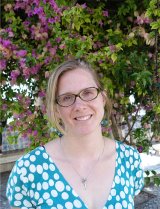
Anne Pluymakers is an Assistant Professor at the Applied Geophysics and Petrophysics department of Delft University of Technology (TU Delft) , with prior postdoctoral experience at both TU Delft (2018-2020) and the University of Oslo (2015-2017). Her research focuses on experimental rock mechanics and thermo-hydro-mechano-chemical (THMC) fluid-rock interaction , particularly investigating how mechanical and transport properties of rocks evolve under realistic subsurface conditions. Education: Doctorate (2015) in Frictional and sealing behaviour of simulated anhydrite fault gouge , Universiteit Utrecht Master's (2010) in Earth Sciences, Universiteit Utrecht Bachelor's (2008) in Earth Sciences, Universiteit Utrecht Her recent work spans CO2 storage , wellbore integrity , and microstructural analysis using neutron/X-ray imaging, with applications to geothermal energy and subsurface energy systems . Collaborative projects include Constraining uncertainties across scales and REFLECT , focusing on geoenergy transitions. Scientific Awards: Veni grant, Netherlands Organisation for Scientific Research (NWO), 2017 She actively contributes to public engagement , including media appearances on CO2 storage beneath the North Sea and educational initiatives like the Geo-resources for the future minor program.
Professor James A.R. Marshall is a Professor of Theoretical and Computational Biology at the University of Sheffield's School of Computer Science, where he also serves as Director of the Centre for Machine Intelligence. He leads the Behavioural and Evolutionary Theory Lab (BET Lab), an interdisciplinary research group focused on understanding behavior through mathematical and computational approaches. His academic journey includes previous positions at the University of Bristol before joining Sheffield in 2010. Marshall's research spans collective social insect behavior, evolutionary theory, decision theory, robotics, and theoretical neuroscience. He applies mathematical and computational approaches to understand how and why behaviors evolve, with particular interest in social insect colonies, swarm intelligence, and biomimetic applications for robotics. His work often bridges biology and computer science, developing algorithms inspired by natural systems. He has made significant contributions to understanding confidence-weighted decision-making, quorum sensing in swarms, and magnitude-sensitive reaction times in multi-alternative choices. His recent publications reveal a strong trend toward applying insights from biological systems to robotics and AI, particularly through projects like Brains on Board and Opteran Technologies. His work increasingly focuses on neuromorphic control systems that mimic insect brains for autonomous navigation, demonstrating how constraints in biological systems can lead to robust engineering solutions. The interdisciplinary nature of his research is evident in publications spanning computational neuroscience, robotics, animal behavior, and theoretical biology. EPSRC Peer Review College Member (2010-present) Member of the UKRI Future Leaders Fellowship Panel College (2019-present) Editorial Board, Swarm Intelligence (2017-present) Associate Editor, PLoS Computational Biology (2020-present) Marshall has successfully mentored numerous researchers including HaDi MaBouDi, Andreagiovanni Reina, and Alexander Cope, while securing substantial research funding including EPSRC grants totaling over £4 million. His lab has produced the spinout company Opteran Technologies, which has secured over £12 million in funding to develop natural intelligence technology for autonomous systems. The BET Lab maintains strong connections with Sheffield Robotics and focuses on testing theoretical models in physical robotic systems while developing computational models of biological processes.
Luis Seco is a Professor in the Department of Mathematics at the University of Toronto, with a focus on Mathematical and Computational Sciences. He is based at the Bahen Centre for Information Technology (Room BA-7262) and maintains a presence at the University of Toronto Mississauga (UTM) campus. He serves as Director of the Mathematical Finance Program and is affiliated with RiskLab Toronto, housed at the Bahen Centre. Dr. Seco's research spans multiple disciplines at the intersection of mathematics and finance: Harmonic Analysis Mathematical Physics Mathematical Finance Quantitative Risk Management His scholarly work demonstrates a sophisticated integration of advanced mathematical techniques with practical financial applications. Recent publications (2022-2025) reveal a strong emphasis on machine learning approaches to financial problems, with particular focus on algorithmic trading, risk modeling, and ESG (Environmental, Social, and Governance) investing. His research has evolved from theoretical mathematical foundations to cutting-edge applications in quantitative finance. Dr. Seco's publication record shows significant scholarly productivity with a clear trajectory from pure mathematics toward increasingly applied financial mathematics. His work bridges theoretical rigor with practical financial applications, making substantial contributions to both academic research and industry practices. As Director of the Mathematical Finance Program, Dr. Seco provides leadership in shaping education and research in quantitative finance at the University of Toronto. His RiskLab affiliation indicates active engagement with real-world risk management challenges, connecting academic theory with industry applications.
Ron Wakkary is a prominent researcher and faculty member at Simon Fraser University's School of Interactive Arts and Technology, with a dual appointment at Eindhoven University of Technology in the Industrial Design department. His work bridges Human-Computer Interaction and Interaction Design, focusing on innovative approaches to design research and practice. Wakkary's research interests center around Human-Computer Interaction, Interaction Design, and Research through Design methodologies. He has pioneered work in More-than-human Design, exploring relationships between humans and non-human entities through design. His research in Material Speculation investigates how physical materials can inform critical inquiry, while his work on Sustainability examines ecological approaches to design practice. Wakkary also contributes significantly to Design Methods, particularly in domestic contexts and everyday design practices. Analysis of his recent publications reveals a strong trend toward More-than-human Design approaches, with increasing focus on backyard practices, biomaterials, and human-nonhuman relationships. His work has evolved from traditional HCI topics toward more speculative and materially engaged design research. Wakkary's publications consistently explore the philosophical dimensions of design while maintaining strong empirical grounding through Research through Design methodologies. 5 Honorable Mention Paper Awards 4 Best Paper Awards Wakkary maintains an extensive collaborative network, with frequent co-authorship with researchers like Erik Stolterman (59 collaborations), Audrey Desjardins (26), William Odom (25), and Doenja Oogjes (20). His advising appears to focus on advanced design research, with students like Lauren Thu, Elvia Vasconcelos, and Doenja Oogjes producing work on biomaterials, voice annotation, and collective design practices. His research has received significant attention with 3,035 total citations across 193 publications. Wakkary's work appears to be conducted through the Research through Design community, with strong connections to both the Simon Fraser University and Eindhoven University of Technology design research groups. His recent focus on backyard practices suggests a shift toward more localized, situated design research that moves beyond traditional institutional settings.
Bob Sheil is Professor of Architecture and Design through Production at The Bartlett School of Architecture, University College London. A registered architect with over 25 years of experience, he is renowned for his work exploring the relationship between design, making, craft, and technology in architecture. As the sixth Director of the Bartlett School of Architecture from 2014 to 2022, he led transformative changes that significantly expanded the school's physical space, student applications, and research impact, while championing equality, diversity, and inclusivity initiatives. Professor Sheil's research centers on the complex relationship between design and making in architecture, particularly how this relationship affects architectural outcomes. He advocates for 'Protoarchitecture,' a speculative approach that creates alternative pathways for architectural production through varied design and making methodologies. His work examines how new tools have dissolved boundaries between the drawn and the made, arguing that how we design has become equally important to what we design. This perspective has informed his hands-on teaching philosophy that emphasizes learning through direct engagement with evolving technologies and materials. His publication record reveals a consistent focus on digital fabrication, material innovation, and the evolving role of the designer in contemporary practice. The Fabricate conference series he co-founded has become a major international platform for research in architectural production, with publications generating over 330,000 downloads across 184 countries. Recent work shows increasing emphasis on resource efficiency, sustainable practices, and the integration of material intelligence within digital workflows. Professor Sheil's significant professional recognition includes: RIBA award for design (2010) for '55/02' with Stahlbogen GmbH As an educator and mentor, Professor Sheil has supervised PhD students since 2011 and has been instrumental in developing innovative architectural education programs. His leadership resulted in substantial growth in research funding, student applications (90% increase), and international collaborations. He co-founded the influential FABRICATE conference series and sixteen*(makers), and played a key role in establishing the Bartlett Manufacturing and Design Exchange (Bmade), which has transformed the school's workshop facilities and safety culture. Professor Sheil maintains active collaborations with institutions including the Royal Central School of Speech and Drama, SHUNT, ScanLAB projects, and Thomas Pearce, creating interdisciplinary opportunities that bridge architecture with performance, digital scanning, and scenography. His current work continues to push the boundaries of architectural practice through the integration of emerging technologies and material innovation.
Mauricio ITURRALDE serves as a Teacher-researcher at CESI La Rochelle Campus, France, within the Engineering and Digital Tools Research Team. His expertise bridges telecommunications engineering and cybersecurity, with significant contributions to mobile network optimization and security protocols. His academic credentials include: Doctorate in Networks, Telecom, Systems and Architecture from National Polytechnic Institute of Toulouse and ENSEEIHT (2012) Master's Degree in Computer Systems Security from Télécom SudParis and Paris EST University (2009) ITURRALDE's research centers on 5G/LTE networks, quality of service optimization, digital twin implementation for Industry 5.0, and cyber security solutions. His work addresses critical challenges in resource allocation using game theory, energy-efficient network design, and security mechanisms for mobile communications and transportation systems. Analysis of his 15 publications (2011-2020) reveals a consistent focus on mobile network performance, with evolving emphasis from LTE resource allocation (2011-2013) to 5G sleep strategies (2019) and transportation applications (2020). His methodologies frequently integrate machine learning and game theory to solve real-world network optimization problems. No scientific awards are documented in the provided materials. Information regarding student advising and research grants is unavailable in the source text. He actively contributes to the Engineering and Digital Tools Research Team at CESI La Rochelle, which develops digital innovation solutions for engineering contexts with particular focus on network technologies and security applications.
Dr. Borja Sanz Urquijo serves as a Senior Lecturer at the Faculty of Engineering, University of Deusto, and has been a core researcher at DeustoTech-Computing since 2008, including a tenure as Head Researcher (2015-2018). He holds a cum laude PhD in Information Systems (2012) from the University of Deusto, specializing in Android malware detection. Education PhD in Information Systems, University of Deusto (2012, cum laude) His research spans machine learning, big data, and knowledge discovery, with critical expansion into AI ethics, fairness, accountability, and societal impact. He investigates AI applications in domestic violence intervention, health rights, law enforcement transparency, and Edge Computing optimization, consistently bridging technical innovation with social responsibility. His work demonstrates rigorous methodology in small-dataset machine learning and genomic sequence analysis. Dr. Sanz Urquijo's publication trajectory reveals evolving expertise from foundational cybersecurity (Android malware analysis, spam filtering) to contemporary societal challenges (feminist AI frameworks, quantum software security). Recent articles emphasize interdisciplinary collaboration, particularly in feminist technology studies and ethical AI governance, while maintaining technical depth in Edge Computing and genomic analytics. Advising and Projects He has supervised multiple theses including doctoral work on Edge Computing for digital twins and cybersecurity competency frameworks. As lead researcher in over 50 projects (H2020, national, private), he currently directs BEACON (industrial AI systems) and contributes to EU initiatives like IMPROVE (domestic violence response) and ELKARTEK (Industry 5.0 ethics). His collaborations span social organizations, enterprises, and research centers globally. Research Environment As a pillar of DeustoTech-Computing, he operates within a multidisciplinary unit advancing AI, cybersecurity, and Edge Computing applications. His leadership in projects like AI-Driven Cognitive Robotic Platforms and REal tiME control systems demonstrates integration of theoretical research with industrial implementation in smart manufacturing contexts.
Prof. Dr. Mimoza Anastoska Jankulovska serves as a full Professor at the Faculty of Technical Sciences and Informatics, International Slavic University "G.R. Derzhavin", delivering courses across both Sveti Nikole and Bitola campuses in North Macedonia. Her academic career spans over 30 years with significant contributions to computer science education and educational technology integration. Her educational foundation includes: Doctor of Technical Sciences from Faculty of Information and Communication Technologies, University "Sv. Kliment Ohridski", Bitola Postgraduate studies at Pedagogical Faculty, University "Sv. Kliment Ohridski", Bitola Undergraduate degree in Electrical Engineering from Faculty of Electrical Engineering, University "Kiril and Metodij", Skopje Prof. Jankulovska's research centers on Educational Technology and ICT in Education, with specialized focus on Internet Technologies, Programming methodologies, and digital transformation in learning environments. Her work critically examines infrastructure challenges, teacher training needs, and pedagogical adaptations required for effective technology integration, particularly emphasizing crisis-responsive education models as demonstrated during pandemic lockdowns. Her 12 publications from 2005-2021 reveal an evolving research trajectory: early work established foundations in educational information systems and project management, while recent studies analyze pandemic-driven digital shifts, database utilization in Macedonian education, and social media's pedagogical implications. Collectively, these works demonstrate consistent engagement with technology's role in reshaping educational assessment, teacher responsibilities, and student engagement across diverse learning contexts. With extensive project leadership experience at IMOR (2000-2020) combined with current teaching responsibilities in core computer science subjects, Prof. Jankulovska bridges theoretical research with practical implementation in North Macedonia's educational landscape.
Peter Brown serves as an Honorary Senior Lecturer at the School of Mathematics and Statistics, University of New South Wales (UNSW), Sydney. His academic role centers on undergraduate education as a casual tutor across first and second-year pure mathematics courses, while maintaining active research contributions in theoretical and historical mathematics. His research program bridges Number Theory and History of Mathematics, with significant work in Diophantine equations, arithmetic functions, and elliptic curves alongside cultural studies of Chinese mathematics and ancient Greek texts. This dual focus manifests in publications spanning rigorous theoretical proofs and contextual historical analysis, demonstrating consistent scholarly output from 1997-2015. Publication trends reveal evolving expertise: early work concentrated on classical number theory problems (Pell equations, Möbius functions), while later research incorporated historical dimensions (Chinese mathematics, cultural revolutions) and educational monitoring. The interdisciplinary nature connects abstract mathematical structures with socio-historical frameworks. Scientific Recognition Vice Chancellor's Teaching Award (2009) Science Faculty Lecturer of the Year (2016) Brown's teaching excellence has been formally acknowledged through university-wide awards, highlighting his effectiveness in foundational mathematics instruction. While specific grant funding and doctoral advising aren't documented, his sustained publication record and educational monitoring work indicate ongoing scholarly activity. The absence of laboratory facilities aligns with his theoretical research profile in pure mathematics.
Jean-Luc Danger is a Professor at TELECOM Paris where he currently heads the Digital Electronic Systems Research Group. He is affiliated with the Secure and Safe Hardware (SSH) Research Team within the Information Processing and Communication Laboratory (LTCI). With a career spanning over three decades in academia after 12 years in industrial research at PHILIPS and NOKIA, Professor Danger has established himself as a leading expert in hardware security and cryptographic implementations. Professor Danger received his degree in electrical engineering from SUPELEC in 1981 before embarking on his industrial career. His academic journey began in 1993 when he joined TELECOM Paris, where he has since made significant contributions to the field of hardware security. His educational background in electrical engineering provided the foundation for his later specialization in secure hardware design and analysis. Professor Danger's research primarily focuses on embedded systems security , physically unclonable functions (PUFs) , side-channel attacks and countermeasures , and fault injection techniques . His work bridges the gap between theoretical cryptography and practical hardware implementations, addressing critical security challenges in modern computing systems. His research has evolved from foundational work on cryptographic algorithms to more recent investigations into hardware Trojans, aging effects on security primitives, and automotive security systems. Professor Danger has been particularly influential in developing methodologies for analyzing and protecting against electromagnetic fault injection attacks and side-channel information leakage. His extensive publication record demonstrates a consistent focus on hardware security challenges, with recent work showing increased attention to automotive security systems, machine learning applications for intrusion detection, and reliability issues in security primitives affected by aging and process variations. The trajectory of his research shows a natural progression from pure cryptographic implementations to more holistic security approaches that consider the entire hardware stack and its vulnerabilities. Through his leadership of the Secure and Safe Hardware research team, Professor Danger has fostered a collaborative environment that bridges theoretical security research with practical hardware implementation challenges. His work has contributed significantly to the development of standardized methodologies for evaluating hardware security and has influenced both academic research and industry practices in secure hardware design.
Giacomo Nardi is an Associate Professor (Maître de Conférences) at INSA Rouen starting September 2025, holding a PhD in Mathematics from Sorbonne University. His research bridges mathematical analysis and biomedical image processing through extensive collaborations with the Institut Pasteur in Paris, focusing on developing advanced mathematical frameworks for biological imaging applications. His educational background includes: PhD in Mathematics, Sorbonne University (Pierre and Marie Curie), thesis: "On a characterization of the relaxation of a generalized Willmore functional" under supervisors S. Masnou and E. Mascolo. Nardi's work spans Biomedical Image Processing and Mathematical Analysis , evolving from foundational contributions in calculus of variations (Willmore functionals, BV functions) to cutting-edge biomedical applications. His current research employs topological data analysis and geometric methods to solve complex biological imaging problems including 3D segmentation of hematopoietic stem cells, receptor dynamics analysis, and retinal degeneration quantification. This interdisciplinary approach integrates deep mathematical theory with practical biological challenges through close partnerships with biologists at the Institut Pasteur. Analysis of his publication trajectory reveals a decisive shift toward biomedical applications since 2016, with recent work (2022-2025) dominating in high-impact imaging journals and conferences. His research consistently applies geometric measure theory and functional analysis to innovate in cellular dynamics modeling and 3D image segmentation, demonstrating exceptional versatility across pure mathematics and translational biomedical research. Nardi actively mentors the next generation of researchers: Postdoctoral supervision: Somoballi Ghoshal (2024-present, Institut Pasteur) on persistent homology-based 3D cell segmentation in cardiac tissue. PhD supervision: Benjamin Dorra (defense March 5, 2025, Medetia/Institut Pasteur) on AI-driven histopathology for ciliopathy models, resulting in ISBI 2024 award-winning publications. He co-develops the open-source Fshapestk (Functional shapes toolkit) and collaborates with J.-C. Olivo-Marin's Quantitative Image Analysis Unit at the Institut Pasteur, maintaining strong ties between theoretical mathematics and experimental biology through ongoing joint projects in cellular dynamics and tissue imaging.
Professor Klaus Berberich is a faculty member at htw saar (Saarland University of Applied Sciences), where he serves as Professor in the Databases & Information Systems department within the Faculty of Engineering. He is the Laboratory manager of the software laboratory (SWL) and Chairman of the examination boards for Practical Computer Science, Communication Informatics and Production Informatics. His research focuses on Information Retrieval, Machine Learning, Data Mining, and Web Archives, with significant contributions to knowledge graphs, temporal information retrieval, and neural information retrieval models. Professor Berberich has developed innovative approaches for quantity extraction from web tables, structuring text into tables, and knowledge graph querying. His publication record shows a consistent trend toward increasingly sophisticated neural approaches to information retrieval, evolving from traditional temporal search techniques to modern deep learning models. Recent work demonstrates strong integration of knowledge graphs with neural information retrieval systems, particularly in handling quantities and temporal aspects of information. Professor Berberich has received numerous prestigious awards throughout his career: 2020: Test of Time Award, ECIR 2020 2018: Honorable Mention for Best Poster Award, WWW 2018 2017: Prominent Paper Award, Artificial Intelligence Journal 2014: Highly Commended Poster Presentation Award, IIiX 2014 2013: Honorable Mention for Best Paper Award, CIKM 2013 2011: Best Demo Award, WWW 2011 2009: Best Late-Breaking Result Award, WSDM 2009 As an active researcher and educator, Professor Berberich serves on numerous program committees for major conferences including WSDM, CIKM, SIGIR, and ICTIR. He has been a consistent reviewer for prestigious journals in the field and is a member of the executive committee of the Information Retrieval specialist group of the German Informatics Society. His teaching portfolio includes courses in Databases, Information Retrieval, Data Science, Machine Learning, and Deep Learning. Professor Berberich leads the software laboratory (SWL) at htw saar and has been instrumental in developing research infrastructure for knowledge-centric tasks, including the GYANI indexing infrastructure. His research group has made significant contributions to temporal information retrieval, particularly in the context of web archives and news archives.
Dr. Matthew Lewis is an Honorary Senior Research Fellow at Bangor University's School of Ocean Sciences, specializing in physical oceanography with applications to blue economy industries and coastal flood risk. His research employs computer models to simulate marine processes, including wave-tide interactions, estuarine dynamics, and future changes to coastal hazards. With affiliations spanning multiple research projects and international collaborations, Dr. Lewis plays a significant role in advancing marine renewable energy and coastal resilience science. Dr. Lewis's research interests focus on numerical modeling of marine systems, with particular expertise in wave-tide interactions, estuarine flood risk, marine renewable energy resource assessment, and marine plastic pollution. His work combines physical and biological processes to better understand marine systems, with applications ranging from coastal flood risk mitigation to optimizing offshore renewable energy deployment. His research bridges the gap between fundamental oceanographic processes and practical applications for coastal communities and industries. His recent publications demonstrate a strong focus on tidal and wave energy resource assessment, coastal flooding mechanisms, and the environmental impacts of marine renewable energy. The research shows increasing emphasis on interdisciplinary approaches, combining physical oceanography with ecological and social considerations, particularly in addressing compound flooding events and marine plastic pollution. His work has evolved from fundamental process studies toward more applied research with direct policy and industry relevance. Dr. Lewis actively supervises PhD and MRes students, with current projects covering renewable energy resource assessment, microplastic dispersal, coastal flooding mitigation, and estuarine dynamics. He teaches the ocean modeling module at Bangor University and serves as an Associate Editor for Frontiers in Marine Science and Guest Editor for Elsevier's Renewable Energy journal. His research is supported by multiple grants from NERC, EPSRC, and other funding bodies. As a member of the EPSRC Associate Peer Review College and the Digital Environment Expert Network, Dr. Lewis contributes significantly to the research community beyond his own projects. He has collaborated with numerous research partners including the UK Met Office, Deltares, CSIRO Australia, and NIWA New Zealand, demonstrating strong international engagement in marine science.
Dr. Liang Min serves as the Managing Director of the Bits & Watts Initiative at Stanford University's Precourt Institute for Energy and as the founding Managing Director of the Stanford Net-Zero Alliance at the Stanford Doerr School of Sustainability. He leads multidisciplinary programs advancing the digital transformation of the electric grid and promoting net-zero emissions solutions through research, education, and industry collaboration. Dr. Min's educational background includes: Ph.D. from Texas A&M University (2007) M.S. from Tianjin University (2004) B.S. from Tianjin University (2001) His research focuses on the digital transformation of electric grids, with pioneering work on 100% Clean Electric Grid, EV50, AI for Climate and Energy, and the Digital Grid platform for integrating distributed energy resources. He recently launched the Powering AI Sustainably program addressing AI's energy demands while accelerating clean power transition. His work bridges high-performance computing with power system operations to enhance grid reliability, security, and sustainability amid increasing renewable penetration and electrification trends. Analysis of Dr. Min's recent publications reveals a strong emphasis on grid modernization through digital technologies, with particular focus on integrating distributed energy resources, enhancing grid resilience, and applying advanced computational methods to power system challenges. His research spans from fundamental work in power system dynamics and control to practical applications addressing energy transition, electric vehicle integration, and AI's role in sustainable energy systems. Dr. Min has led significant research projects funded by the Department of Energy, Bonneville Power Administration, and other organizations, resulting in multiple U.S. patents related to grid technologies including voltage stability smart meters and synchronized electric meters with atomic clocks. As the founder of the Stanford Energy Executive Education Program, Dr. Min has created platforms to equip energy leaders with strategic insights for navigating the rapidly evolving energy landscape. He also established the Stanford Net-Zero Alliance to bring together industry leaders, faculty, and students for collaborative research and education toward net-zero emissions.
Dr. Jan Tekülve is a researcher at the Institute of Neuroinformatics (INI), part of the Faculty of Computer Science at Ruhr University Bochum. Holding a Dr.-Ing. degree, he actively contributes to neural dynamics research and teaches Autonomous Robotics lab courses alongside preparatory mathematics and computer science courses for modeling. His research centers on neural dynamic process models for cognitive functions including visual search, scene memory, attentional mechanisms, and embodied agent behavior. Key interests span embodied cognition, autonomous robotics, scene grammar, and the neural basis of goal-directed actions, with a focus on translating biological principles into robotic implementations. Analysis of his 13 publications (2015-2024) reveals a consistent trajectory in neural dynamic modeling across cognitive domains. Early work examined developmental aspects of reaching and attentional shifts, evolving toward integrated models of intentional agents, active vision, and scene understanding. Recent contributions emphasize human-inspired architectures for naturalistic environments and foundational principles for embodied cognition. Within the INI's Theory of Cognitive Systems group, Tekülve collaborates extensively with Prof. Gregor Schöner and colleagues on interdisciplinary projects bridging experimental psychology, neurophysiology, and robotics. His teaching portfolio includes continuous instruction in Autonomous Robotics since 2016/2017 and preparatory courses supporting computational modeling education.