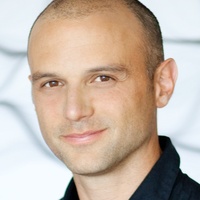
Steven Kelts is a Lecturer at Princeton University, affiliated with the School of Public and International Affairs (SPIA) and the Department of Computer Science . He leads the Integrated Ethics in CS program and has served as Director of the non-profit All Tech Is Human. Research Focus: Kelts examines ethical frameworks in technology innovation, historical political economies, and the intersection of democratic theory with corporate responsibility. His work spans Measuring ethics education in computing Evolving corporate structures for ethical action Locke's economic justice theories Machiavelli's republican ideals Madison's institutional designs Publications reveal trends in: Utilitarian logic in Agile teams Roman censorship models 17th-century English economic debates Mill's social value legislation Scientific Recognition: Recipient of Princeton's Council on Science and Technology grants for Agile Ethics program Google seed grant for corporate ethics frameworks University-wide award for GradFutures AI ethics leadership Advisory Roles: Includes ethics advisor to the Responsible A.I. Institute and institutional design mentor for political theory projects.
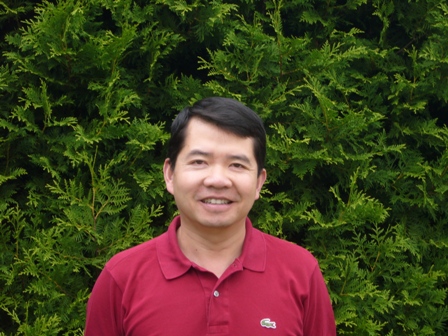
Kevin A. Shinpaugh is Collegiate Professor in the Department of Aerospace and Ocean Engineering at Virginia Tech’s College of Engineering. Since 2019 he has led instruction and research in spacecraft design and propulsion, leveraging decades of experience in high-performance computing and space-systems engineering. Education Ph.D., Aerospace Engineering, Virginia Tech (1994) M.S., Aerospace Engineering, Virginia Tech (1989) B.S., Aerospace Engineering, Virginia Tech (1986) Research Focus Dr. Shinpaugh’s scholarship centers on the intersection of high-performance computing (HPC) and space systems engineering . He develops and applies advanced computational techniques to spacecraft design, propulsion analysis, and mission planning. His work spans numerical simulation of complex aerospace systems, optimization of propulsion architectures, and creation of scalable HPC frameworks that enable rapid design iteration for spacecraft and launch vehicles. Publication Trends Across more than thirty refereed papers and design-competition reports, a clear trajectory emerges: early contributions in experimental fluid-mechanics instrumentation (laser-Doppler velocimetry, fiber-optic sensors) evolved into large-scale computational studies of space systems, and most recently into student-led mission-concept designs for CubeSats, lunar exploration, and interplanetary missions. Keywords consistently include spacecraft design, propulsion, deployable structures, and mission architecture. Service & Committees Chair, Virginia Tech HPC User Committee (2004–2011) Member, VT HPC Advisory Board (2007–present) NSF TeraGrid/XSEDE Campus Champion for Virginia Tech (2006–2013) IBM HPC/AI Customer Advisory Council DC (2019–present) Member, VT AOE Seminar Committee (2019–present) Laboratory & Computing Resources Dr. Shinpaugh has long stewarded Virginia Tech’s high-performance computing ecosystem. He directs students and collaborators in leveraging the university’s Advanced Research Computing (ARC) clusters, as well as national facilities through XSEDE and DoD HPCMP, to execute spacecraft-design simulations and propulsion analyses at scale.
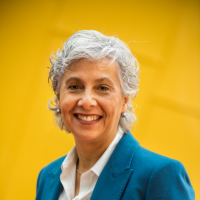
Frédéric Kaplan serves as Director of the College of Humanities at École Polytechnique Fédérale de Lausanne (EPFL), where he holds the Chair of Digital Humanities. He also serves as President of the Time Machine Organisation, a nonprofit entity comprising over 600 institutions. His academic appointments span multiple departments including the Digital Humanities Laboratory (DHLAB), School of Architecture (SAR), and School of Humanities (SODH), demonstrating his interdisciplinary leadership across EPFL's academic structure. Dr. Kaplan's research focuses on the intersection of computational methods and humanities, particularly in historical urban analysis, cultural heritage digitization, and the development of the Mirror World concept. His work bridges computational techniques with historical scholarship, creating new methodologies for analyzing historical documents, maps, and urban structures through advanced digital tools. His research has significant implications for how we understand and reconstruct historical urban environments and cultural heritage. His publication record reveals a strong emphasis on computational approaches to historical data, with recent work focusing on LLM applications for historical cadastre navigation, historical map analysis through deformation patterns, 4D city modeling, and language technology applications for historical document processing. This research trajectory demonstrates an evolving focus from basic digitization toward sophisticated analytical frameworks that extract deeper historical insights from digital representations. Kaplan has supervised numerous doctoral students whose work spans digital heritage applications, historical document analysis, computational cartography, and language technology. His research has been supported through multiple institutional frameworks at EPFL and has resulted in practical applications demonstrated through exhibitions at major institutions including the Venice Architecture Biennale, Grand Palais, Centre Pompidou in Paris, and the Museum of Modern Art in New York. He leads the Digital Humanities Laboratory (DHLAB) which serves as a nexus for computational approaches to humanities research. The lab focuses on developing methodologies for historical data analysis, creating digital tools for cultural heritage institutions, and exploring the theoretical implications of computational approaches to historical scholarship. The lab's work with the Time Machine Organisation represents one of the most ambitious efforts to create comprehensive digital reconstructions of historical urban environments.
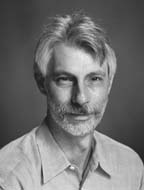
Minjie Chen is an Associate Professor of Electrical and Computer Engineering and the Andlinger Center for Energy and the Environment at Princeton University, serving as Acting Associate Director for Research at the Andlinger Center. He leads the Princeton Power Electronics Lab (PowerLab), which focuses on developing fundamental and novel power electronics solutions for a wide range of applications from mW-scale energy harvesting to MW systems in renewable energy integration. Dr. Chen received his Ph.D. in Electrical Engineering and Computer Science from MIT in 2015 and his B.S. in Electrical Engineering from Tsinghua University in 2009. Before joining Princeton as an Assistant Professor in February 2017, he was a postdoctoral associate at MIT Research Laboratory of Electronics. His research spans power electronics, magnetics design, and machine learning applications in energy systems. The PowerLab develops advanced power conversion architectures that enable order-of-magnitude higher power density through high-frequency designs, addressing circuit timing, parasitics, magnetics, and thermal management challenges. Their work targets applications ranging from portable devices to data centers and renewable energy systems. The research group has produced a remarkable series of high-impact publications, with seven IEEE Transactions on Power Electronics Prize Papers in seven consecutive years (2016-2023). Their recent work increasingly integrates machine learning techniques with power electronics, exemplified by the MagNet project which redefines how power magnetics are studied and modeled. NSF CAREER Award, 2019 IEEE PELS Richard M. Bass Outstanding Young Power Electronics Engineer Award, 2023 Power of Associations Silver Award from ASAE for MagNet project, 2024 Multiple IEEE Transactions on Power Electronics Prize Papers (2016-2023) Princeton Engineering Commendation List for Outstanding Teaching (2019, 2020) Dr. Chen advises approximately 15 graduate students who have received numerous awards including the IEEE PELS John G. Kassakian Fellowship, Princeton SEAS Honorific Fellowship, and multiple IEEE conference best paper awards. His research is supported by significant grants from NSF, DOE ARPA-E, Princeton Innovation Fund, C3.ai DTI, and industry partners including Intel, Google, and pSemi. The lab's MagNet project has become a major international initiative with a $60,000 prize pool challenge. The PowerLab maintains strong industry connections and has launched several collaborative projects with Intel, Google, and pSemi. Their MagNet project has evolved into an international challenge with participation from over 40 teams worldwide, demonstrating the growing impact of their approach to machine learning for power magnetics modeling.
Xiaoming Hu is a Professor at the Division of Numerical Analysis, Optimization and Systems Theory within the Department of Mathematics at KTH Royal Institute of Technology (Kungliga Tekniska Högskolan) in Stockholm, Sweden. Born in Chengdu, China, he received his B.S. degree from University of Science and Technology of China in 1983, followed by M.S. and Ph.D. degrees from Arizona State University in 1986 and 1989 respectively. After serving as a research assistant at the Institute of Automation, Chinese Academy of Sciences (1983-1984), he was a Gustafsson Postdoctoral Fellow at KTH (1989-1990) before becoming a faculty member. His educational background includes: B.S. in Engineering, University of Science and Technology of China, 1983 M.S. in Engineering, Arizona State University, 1986 Ph.D. in Engineering, Arizona State University, 1989 Xiaoming Hu's research primarily focuses on multi-agent systems, nonlinear feedback stabilization, nonlinear observer design, and sensing and active perception. His work bridges theoretical control theory with practical applications in robotics and autonomous systems. He has made significant contributions to geometric control theory, mathematical systems theory, and nonlinear systems analysis and control. His research often involves developing theoretical frameworks for distributed control, formation control, and cooperative behavior in multi-robot systems. Professor Hu's publication record shows a consistent research trajectory with numerous high-impact publications in top-tier journals like Automatica, IEEE Transactions on Automatic Control, and Systems & Control Letters. His research has evolved from fundamental control theory to more applied problems in robotics and multi-agent systems, while maintaining strong mathematical foundations. Recent work shows increasing focus on safety-critical control, inverse problems in estimation, and networked systems. His scientific contributions include: Development of theoretical frameworks for multi-agent coordination and formation control Advances in nonlinear observer design for robotic systems Contributions to geometric control theory and systems theory Research on distributed estimation and control algorithms Applications of control theory to robotics and autonomous systems Professor Hu teaches several advanced courses including Mathematical Systems Theory, Geometric Control Theory, and Nonlinear Systems: Analysis and Control. He has supervised numerous degree projects at both undergraduate and graduate levels in mathematics, optimization, systems theory, and scientific computing. His teaching reflects his research expertise, providing students with both theoretical foundations and practical applications of control theory.
Sara Zahedi is a Professor of Numerical Analysis at the Department of Mathematics, KTH Royal Institute of Technology, working within the Division of Numerical Analysis, Optimization and Systems Theory. She serves as an Associate Editor for the SIAM Journal on Numerical Analysis and contributes to the SCI Faculty Board to enhance collaboration and transparency in academic decision-making. Her educational background includes a doctorate from KTH on numerical methods for fluid interface problems followed by a postdoctoral position at Uppsala University. Doctorate: KTH Royal Institute of Technology Postdoctoral Position: Uppsala University Zahedi's research bridges mathematical theory and practical applications, focusing on computational methods for partial differential equations in evolving domains. She pioneers Cut Finite Element Methods (CutFEM) to eliminate re-meshing requirements in multiphase flow simulations, ensuring accuracy and robustness when interfaces separate immiscible fluids. Her work specifically targets challenges in large deformations and time-dependent geometries. Analysis of her recent publications reveals a concentrated research trajectory in advancing CutFEM for diverse applications including Stokes flow, Darcy flow, Maxwell's equations, and hyperbolic conservation laws. Key trends include high-order conservative schemes, divergence preservation, stabilization techniques for unfitted meshes, and extensions to surface PDEs and multi-physics problems. Her scientific recognition includes: European Mathematical Society Prize (2016) for outstanding contributions by young researchers Wallenberg Fellowship (2019) with extension granted in 2024 Zahedi serves as examiner for Degree Projects in Scientific Computing (SF250X, SF259X) and course responsible for Engineering Mathematics projects (SA120X). Her Wallenberg Fellowship provides substantial research funding supporting her work on numerical algorithm development. While specific lab structures aren't detailed, her research operates within KTH's Division of Numerical Analysis, emphasizing collaborative development of simulation tools for industrial and scientific applications. Her current research focuses on extending CutFEM to complex multi-physics scenarios with emphasis on conservation properties and computational efficiency, with potential applications in aerospace, biomedical engineering, and environmental modeling.
Dr. İsmail ÖZTEL serves as an Assistant Professor in the Department of Computer Engineering at Sakarya University's Faculty of Computer and Information Sciences. He has been a faculty member since 2019, following his tenure as a Research Assistant from 2012-2019 at the same institution. His educational background includes: Doctorate in Computer and Information Engineering (2014-2018) from Sakarya University with thesis on "Facial expression detection on partial and full face images using machine learning methods" Master's Degree in Computer and Information Engineering (2012-2014) from Sakarya University with thesis on "Driver simulator for educational purposes" Bachelor's Degree in Computer Engineering (2007-2011) from Sakarya University Dr. ÖZTEL's research focuses on artificial intelligence, deep learning, and computer vision with significant applications in healthcare, mobile technology, and public safety. His work has evolved from foundational facial expression recognition to sophisticated medical applications including skin disease classification using smartphones, monkeypox detection from skin lesions, and pandemic response systems for face mask detection. His research demonstrates strong interdisciplinary connections between computer science and healthcare. An analysis of his publication trends reveals a clear progression toward increasingly complex deep learning architectures applied to real-world problems, with recent work emphasizing medical applications using mobile technology and public health safety systems. His 2023-2025 publications show particular focus on skin disease classification, intelligent vehicle systems, and hybrid feature extraction methods for pandemic response. Dr. ÖZTEL has served as a reviewer for numerous prestigious journals including Expert Systems With Applications (multiple years), World Wide Web, Multimedia Tools and Applications, and Journal of King Saud University - Computer and Information Sciences, demonstrating his recognition in the academic community across multiple domains. His research projects include work on facial expression detection in open scientific databases (2020), performance evaluation of transfer learning approaches (2019), and current projects on brain tumor classification systems and earthquake safety education for individuals with developmental disabilities. His international research experience includes collaboration with Filiz Bunyak in 2017, indicating global engagement in his field.
Anna Levina is an Assistant Professor for Computational Neuroscience at the University of Tübingen , affiliated with the Department of Computer Science under the Faculty of Science. Her research focuses on the self-organization of neuronal activity, critical dynamics in neural networks, and the excitation/inhibition balance in cortical circuits. Current positions: Assistant Professor (since 2018), Group Leader (2017-2018), Equality Officer (Computer Science) Previous roles: IST Fellow (2015-2017), Associated Researcher (2011-2015), Postdoc/PI (2011-2015), Postdoc (2008-2011) Her research integrates mathematical modeling , statistical physics , and computational neuroscience to study criticality phenomena, neural avalanches, and adaptive network dynamics. Key interests include: Self-organized criticality in neural systems Excitation/Inhibition balance mechanisms Network topology and dynamics Timescale analysis in neural processing Stochastic modeling of neural activity Recent publications reveal trends in understanding critical dynamics across biological and artificial networks, with applications to memory systems, sensorimotor integration, and disease modeling. She has received recognition as an IST Fellow .
Jishen Zhao is an Assistant Professor in the Department of Computer Science and Engineering at the University of California, San Diego (Jacobs School of Engineering). His research focuses on computer architecture, non-volatile memory systems, and deep learning acceleration. Dr. Zhao has published extensively in top venues including ISCA, MICRO, ASPLOS, and IEEE Transactions. He collaborates with researchers at UCSD and beyond to advance systems for emerging applications in AI and autonomous vehicles. Dr. Zhao's primary research areas include persistent memory systems, hardware/software co-design for deep learning, and safety-critical computing. He develops techniques for crash consistency, memory disaggregation, and efficient neural network deployment. His work on autonomous vehicles addresses scenario generation and perception-aware system design. Recent projects explore LLM applications for software engineering and hardware verification. Analysis of Dr. Zhao's 2024-2025 publications reveals a strong shift toward AI-integrated systems research. He applies large language models to tasks like RTL verification and software issue localization while continuing to innovate in memory systems for serverless computing. There is growing emphasis on safety-critical systems for autonomous vehicles and energy-efficient neural network training using novel hardware architectures. Information about Dr. Zhao's scientific awards, advising activities, grants, and laboratory facilities was not available in the provided documentation.
Timo Minssen is Professor of Law at the University of Copenhagen (UCPH) and the Founding Director of UCPH's Center for Advanced Studies in Bioscience Innovation Law (CeBIL). He also holds affiliations as an LML Research Affiliate at the University of Cambridge and an Inter-CeBIL Research Affiliate at Harvard Law School's Petrie-Flom Centre. With extensive expertise in Intellectual Property, Competition, and Regulatory Law, Minssen focuses on the legal aspects of emerging health and life science technologies, including genome editing, big data, artificial intelligence, and quantum technology. His educational background includes a German law degree (Staatsexamen) from Georg-August-University in Göttingen, and Swedish biotech & IPR related LL.M., LL.Lic., and LL.D. degrees from Lund University and Uppsala University. His PhD thesis on the patentability of biopharmaceutical technology in the US & Europe received the prestigious Swedish King Oscar award. 2024: TUM Global Visiting Professor, Technical University of Munich (Germany) 2016: Visiting Research Fellow, University of Cambridge (UK) 2014: Visiting Research Fellow, University of Oxford (UK) 2013-14: Visiting Scholar, Harvard Law School (US) 2012: LL.D. - Doctor of Laws (Swedish "juris doktor"), EU/US patent law, Lund University, Sweden Minssen's research spans AI & Big Data in Health & Life Sciences, Sustainable and responsible innovation & tech transfer, Pharmaceutical-, Life Science- & Biotech Law, Comparative European & US Patent Law, Intellectual Property Law & Open Innovation, and EU Competition- & US Antitrust Law. His work addresses legal issues throughout the lifecycle of health and life science products and processes, from R&D regulation to technology transfer and commercialization. His extensive publication record includes 7 books and over 200 articles and book chapters published in leading journals such as Science, Nature Biotechnology, JAMA, and Harvard Business Review. His research has been featured in The Economist, Financial Times, and other major media outlets. Minssen's recent work shows a strong focus on AI regulation, quantum technology law, and data governance in health contexts, reflecting the evolving landscape of technology and law. Scientific Awards and Recognition King Oscar award for best Jur. Dr. thesis (2014) Jorcks Fonds Forsknings Pris (Jorck's Foundation Research Prize) (2017) Awapatent Research Prize (2009) Max Planck Research Scholarship (2005) Visiting Scholar appointments at Harvard Law School, University of Oxford, and University of Cambridge Recipient of a Novo Nordisk Foundation Grant for a "Collaborative Research Program in Biomedical Innovation Law" (2018) As an advisor, Minssen serves international organizations including the WHO, WIPO, and EU Commission. He has supervised numerous PhD students in areas including pharmaceutical law, biotechnology patents, and antimicrobial resistance. His current research projects include the Novo Nordisk Foundation's International Collaborative Bioscience Innovation & Law (Inter-CeBIL) Programme (50 million DKK), CLASSICA: EU Horizon Project on AI-assisted surgery, and AI@Care: Law and Ethics and Algorithmic Bias in Healthcare. Minssen leads the Center for Advanced Studies in Bioscience Innovation Law (CeBIL), which serves as a hub for interdisciplinary research on the intersection of law, technology, and innovation in the health and life sciences. The center collaborates with institutions worldwide to address pressing legal challenges in emerging technologies.
Valerie Viet Triem Tong is a Research Professor at the Paris Institute of Electrical and Electronic Engineering, School of Electrical and Electronic Engineering. She has established herself as a leading researcher in cybersecurity with a particular focus on information flow control systems, Android security, and malware analysis. Her work spans both theoretical foundations and practical security tools development. Her research interests center on Information Flow Control , where she has developed frameworks for monitoring and enforcing security policies at both operating system and application levels. She has made significant contributions to Android Security , creating tools for detecting malicious behavior in mobile applications and addressing privacy concerns in smartphone environments. Her work in Malware Analysis includes developing advanced techniques for tracking and visualizing malware behavior, with emphasis on evasive Windows malware and Android malware in the wild. She also investigates Peer-to-Peer Network Security , focusing on Sybil attack resistance and distributed identity management. Analysis of her publication record reveals a consistent trajectory from foundational work in information flow theory to increasingly applied security research. Her recent work shows a strong emphasis on practical security tools (DaViz, GUI-Mimic, BAGUETTE), security evaluation methodologies (Digital twin, CERBERE), and addressing contemporary challenges in malware analysis (debiasing datasets, handling obfuscated applications). A notable trend is her integration of visualization techniques with security analysis to make complex security data accessible to both experts and machine learning systems. As an advisor, she has mentored numerous researchers who have become first authors on significant publications, including Radoniaina Andriatsimandefitra, Tomás Concepcion Miranda, and Cedric Herzog. Her research has been supported by multiple grants focused on cybersecurity infrastructure, though specific grant details are not provided in the available information. Dr. Tong is actively involved with the CIDre security research group in Rennes, contributing to collaborative projects that bridge theoretical security models with practical implementation challenges. Her work on information flow monitoring has evolved from basic research to applied systems that address real-world security concerns across multiple platforms.
Miguel Ángel Bernal Merino serves as a Part-Time Lecturer in the Department of Modern Philology, Translation and Interpretation at the University of Las Palmas de Gran Canaria. Concurrently, he acts as convener of the MA in Translation at the University of Roehampton in London, managing its Specialised Translation, Audiovisual Translation, and Intercultural Communication pathways since 2005. His academic profile bridges theoretical research and industry application in localization disciplines. PhD in The Localisation of Video Games, Imperial College London MSc in The Localisation of Multimedia Interactive Entertainment Software, Imperial College London Certificate in Software Localisation, University of Limerick CELTA, University of Cambridge MPhil in Lip-Synched Dubbing, Universidad de Alicante MA in Hispanic Literature, University of Rhode Island BA in English & Spanish Linguistics, Universidad de Alicante Bernal Merino's research pioneers the expansion of Translation Studies into interactive media domains. His work on video game localization examines interactivity, cultural adaptation, glocalisation, and playability, while his audiovisual translation research investigates creativity in lip-synched dubbing, subtitling, and audiodescription. He extends these frameworks into gaming-based language learning through haptic environments and multisensory reinforcement, exploring physiological aspects of multilingual cognition and polysemiotic neural networks. This multidisciplinary approach fundamentally challenges traditional boundaries in translation theory. His publication trajectory reveals evolving industry-academia integration, shifting from foundational game localization frameworks (2008-2015) toward user-centered research and educational applications (2018-2024). Recent work emphasizes measurable business impacts through quality localization, regional market adaptations, and crowd-sourced methodologies, demonstrating consistent influence on professional standards across gaming and translation sectors. Fellow of the Higher Education Academy Bernal Merino supervises doctoral research on mobile game localization, transmedia fan experiences, and historical game content translation while developing industry-academia pipelines through projects like AHRC's Media Across Borders. His funded initiatives—including Maximising ROI through Quality Game Localisation and Video Games for Language Learning—bridge theoretical innovation with commercial implementation, focusing on glocalisation strategies, interactivity metrics, and playability optimization. These collaborations connect European universities, gaming studios, and localization service providers. As chair of the IGDA Localization SIG and member of GIR Discourse, Communication and Society, he directs international forums for game localization discourse. His work with Routes into Languages promotes audiovisual media in language education, while REF-readiness collaborations enhance research excellence across European institutions through his professional network spanning industry conferences like GDC Summit and Game Global.
Una-May O'Reilly is a Principal Research Scientist at MIT's Computer Science and Artificial Intelligence Laboratory (CSAIL), leading the ALFA group. She holds a PhD in Computer Science from Carleton University (1995), with prior roles including a postdoctoral appointment at MIT's Artificial Intelligence Laboratory. Her research focuses on cybersecurity, adversarial AI, software security, and disinformation dynamics, applying evolutionary algorithms and machine learning to address arms races in cyber defense and societal challenges like climate change communication. Education: B.Sc., University of Calgary M.C.S., Carleton University Ph.D., Carleton University (1995) Research Interests: Adversarial machine learning for secure systems Coevolutionary algorithms in cybersecurity and healthcare Program comprehension via neuroscience and AI Climate disinformation mitigation on social media Large language model applications in code synthesis and threat hunting Key Projects: Adversarial Cyber Security : Modeling cyber attack-defense arms races GIGABEATS : AI-driven medical sensor data analysis for critical care MOOC Learner Project : Data science for online education insights Awards: EvoStar Award (2013) for contributions to evolutionary computation Fellow of ACM Sig-EVO Leadership & Service: Co-founder and Vice-Chair of ACM Sig-EVO Former Chair of GECCO (2005), major evolutionary computation conference Editorial roles in Evolutionary Computation and Genetic Programming and Evolvable Machines Labs & Groups: Leads the AnyScale Learning for All (ALFA) group at CSAIL, focusing on scalable AI for cybersecurity, healthcare, and education.
Don Towsley is a Distinguished University Professor in the Department of Computer Science at the University of Massachusetts Amherst, within the College of Information and Computer Sciences. He has held visiting positions at AT&T Labs, IBM Research, INRIA, Microsoft Research Cambridge, and the University of Paris 6. He earned a B.A. in Physics and a Ph.D. in Computer Science from the University of Texas. Prof. Towsley's research spans network science, measurement, modeling, and analysis, with recent emphasis on quantum networking and wireless security. His work addresses foundational challenges in network tomography, entanglement distribution, and quantum communication protocols, contributing to efficient and secure next-generation networks. Analysis of his 2022-2025 publications reveals a dominant focus on quantum networking—including quantum internet architecture, entanglement distribution, and tomography—alongside continued contributions in classical networking areas such as DDoS detection and edge computing. His exceptional contributions have been recognized with numerous prestigious awards: 2007 IEEE Koji Kobayashi Computer and Communications Award 2007 ACM SIGMETRICS Achievement Award 2008 ACM SIGCOMM Award 2011 INFOCOM Achievement Award 1999 IEEE Communications Society William Bennett Award 2008 ACM SIGCOMM Test of Time Paper Award 2012 ACM SIGMETRICS Test of Time Award 2018 ACM MOBICOM Test of Time Award UMass Award for Outstanding Accomplishments in Research and Creative Activity University of Massachusetts Chancellor's Medal UMass Amherst Distinguished Graduate Mentor Award Outstanding Research Award from the College of Natural Science and Mathematics IBM Faculty Fellowship Award (twice) Fellow of the IEEE Fellow of the ACM Corresponding member of the Brazilian Academy of Sciences Prof. Towsley has mentored numerous graduate students, as evidenced by his Distinguished Graduate Mentor Award, and his research has been funded by significant grants including an NSF NeTS grant for quantum network design. He leads the Gaia research group at UMass Amherst, which has evolved from traditional networking research to pioneering quantum networking initiatives.
Sean Carroll serves as the Homewood Professor of Natural Philosophy at Johns Hopkins University and holds External Faculty status at the Santa Fe Institute. His research bridges cosmology, quantum mechanics, and philosophy, focusing on foundational questions about spacetime emergence, quantum interpretation, and complexity across cosmic scales. Carroll earned his Ph.D. from Harvard University in 1993. His academic trajectory reflects deep engagement with theoretical physics and philosophical inquiry, culminating in his current named professorship at Johns Hopkins. Carroll's research centers on the intersection of physics and philosophy, with significant contributions to quantum foundations, cosmology, and the nature of emergence. He is a leading proponent of the many-worlds interpretation of quantum mechanics and has pioneered work on the thermodynamic arrow of time, quantum decoherence, and the fine-tuning of initial cosmic conditions. His recent investigations explore discretized quantum systems, holographic principles in gravity, and the philosophical implications of quantum gravity. Analysis of his 2022-2025 publications reveals a pronounced shift toward computational approaches in quantum gravity, with increasing emphasis on finite-dimensional Hilbert spaces and GPU-accelerated modeling. His work consistently integrates quantum information theory with cosmological questions, particularly examining how spacetime geometry emerges from quantum entanglement and how complexity evolves in closed systems. Carroll's scientific recognition includes: National Science Foundation Fellowship NASA Fellowship Sloan Research Fellowship Packard Fellowship Fellow of the American Physical Society American Institute of Physics Award Fellow of the Royal Society Guggenheim Fellowship Fellow of the American Association for the Advancement of Science His research has been sustained through major fellowships from NSF, NASA, Sloan, and Packard foundations, enabling interdisciplinary collaborations across physics and philosophy. Carroll actively mentors graduate students at Johns Hopkins and contributes to public discourse through his popular science books (including the Biggest Ideas in the Universe series) and the weekly Mindscape podcast. As Fractal Faculty at the Santa Fe Institute, Carroll participates in cross-disciplinary research on complex systems, exploring how emergent phenomena arise from fundamental physical laws. His work bridges theoretical physics with broader questions about complexity in biological, cognitive, and social systems.