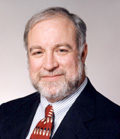
Krister Wolff is an Associate Professor of Adaptive Systems at the Department of Mechanics and Maritime Sciences (M2) at Chalmers University of Technology. He also serves part-time as Vice Head of Department for Education. His research focuses on applying artificial intelligence, machine learning, and bio-inspired methods to robotics, autonomous systems, and self-driving vehicles. He teaches in the international Master's program in Complex Adaptive Systems. His work includes projects such as AI-supported vehicle suspension design, propeller optimization using genetic algorithms, and developing interactive robots for social distancing in healthcare settings. He has contributed to over 39 publications and 9 research projects, collaborating with organizations like VINNOVA and the Swedish Transport Administration. Notable projects include ISOLDE for hospital robots and Tactical Decision-Making in Autonomous Driving funded by the Wallenberg Foundation. Key areas of expertise include reinforcement learning for autonomous vehicles, evolutionary algorithms in design optimization, and driver behavior modeling in critical scenarios. His research bridges theory and practical applications, emphasizing collaboration between academia and industry.
Sotirios K. Goudos is a Professor at the Department of Physics, Aristotle University of Thessaloniki (AUTH), Greece, and Director of the ELEDIA@AUTH lab within the ELEDIA Research Center Network. His research focuses on antenna design, evolutionary algorithms, wireless communications, machine learning, and IoT applications. He holds a B.Sc. in Physics (1991), M.Sc. in Electronics (1994), Ph.D. in Physics (2001), and additional qualifications in Information Systems and Electrical Engineering. Prof. Goudos is a Senior Member of IEEE and serves as Editor-in-Chief of the Telecom open access journal (MDPI) and Associate Editor for IEEE Transactions on Antennas and Propagation, IEEE Access, and IEEE Open Journal of the Communication Society. He has organized multiple special issues in journals like EURASIP Journal on Wireless Communications and Networking and has authored/edited books on antennas and AI in networks. His awards include multiple IEEE Access Outstanding Associate Editor recognitions (2019–2023) and inclusion in Stanford University's top 2% scientists list (2020–2024). He teaches courses on telecommunications, Java programming, and microwave systems, and has supervised over two dozen master's students since 2009. His work spans antenna optimization, AI-driven communications, and IoT security, with contributions to 5G/6G, RIS systems, and smart agriculture. Prof. Goudos actively contributes to IEEE Greece Section leadership roles, including Secretary (2022) and Vice-Chair (2023–2024). His labs and teams focus on ELEDIA's research in electromagnetics, optimization, and AI applications.
Jeffrey Schank is a Professor in the Department of Psychology at the University of California, Davis. He directs the Agent-Based Models Lab, focusing on understanding social and evolutionary behaviors through computational modeling. His academic appointments include teaching roles in biological psychology and quantitative methods, such as courses on Developmental Psychobiology, Animal Behavior, and Agent-Based Modeling. He earned his Ph.D. in Psychology from the University of Chicago in 1991. Research Interests: Schank investigates how complex group behaviors emerge from individual rules, using agent-based models to study social dynamics, evolutionary processes, and developmental biology. Key areas include human mate choice, evolutionary game theory, and the behavior of animal groups like rats and primates. Publications Overview: His work spans theoretical population biology, social simulation, and computational modeling methodologies. Notable contributions include models of cooperative breeding in harsh environments, the evolution of fairness in game theory, and the dynamics of social identity. Recent research emphasizes interdisciplinary applications of agent-based models in ecology and conservation (e.g., waterfowl management). Lab Activities: The Schank Lab collaborates with institutions like the California National Primate Center to model primate social structures. Current projects involve agent-based models of macaque colonies and titi monkeys, incorporating behavioral syndromes and health data. The lab also develops biorobotic models of rat behavior using genetic algorithms.
Dr. Malcolm Heywood is a Professor in the Faculty of Computer Science at Dalhousie University, Halifax, Canada. He leads the Network Information Management and Security (NIMS) Lab and is actively involved in research on genetic programming, coevolution, reinforcement learning, and big data analytics. His research interests span: Genetic Programming and Evolutionary Computation Coevolution and Competitive Learning Problem Decomposition and Hierarchical Models Streaming Data Analysis and Anomaly Detection Network Security and Insider Threat Detection Reinforcement Learning in Games (Atari, ViZDoom, Dota 2) Dr. Heywood's recent publications focus on emergent behaviors in reinforcement learning using Tangled Program Graphs (TPG), benchmarking genetic programming for streaming data, and applications in cybersecurity and computational finance. His work demonstrates a strong trend toward scalable, efficient evolutionary models for complex, real-world problems. His scientific awards include: Silver placed at Human-Competitive (Humies) Competition (2018) Best Paper at EuroGP (2017) Best Paper at DETA track, ACM GECCO (2017) Best Paper at RWA track, ACM GECCO (2018) Nomination for Best Paper at DETA track, ACM GECCO (2019) He has supervised numerous graduate students, including PhD and Master's candidates, many of whom have continued research in evolutionary computation. His lab has developed open-source code distributions for Tangled Program Graphs and Symbiotic Bid-Based GP. Dr. Heywood teaches courses in Computer Organization, Introduction to AI with Gaming Applications, and Genetic Algorithms and Programming.
Professor Anthony Gachagan is a leading academic at the University of Strathclyde, serving as Head of Department and Research Director in the Department of Electronic and Electrical Engineering (EEE) within the Faculty of Engineering. He has been Director of the Centre for Ultrasonic Engineering (CUE) since 2010, leading a multidisciplinary team of around 55 researchers with over £5M in active funding. He also holds leadership roles in RCNDE as Academic Chair and Management Board member, and participates in BINDT committees. His research spans ultrasonic transducer design, non-destructive evaluation (NDE), robotics, high-power ultrasound, and industrial process control. His work is highly collaborative, involving national and international partnerships with industry and academia, and contributes to sectors such as energy, aerospace, nuclear, and healthcare. He is actively involved in major research initiatives aimed at net zero, structural integrity, and advanced manufacturing. Recent publications highlight his focus on robotic ultrasonic inspection, adaptive signal processing, phased array techniques, and in-process monitoring of additive manufacturing. These works demonstrate a strong trend toward automation, real-time defect detection, and integration of ultrasonic systems in industrial and safety-critical applications. Scientific Awards: The BINDT Annual Conference Award (2019) Prof Gachagan has secured significant grants from EPSRC, Innovate UK, and industry partners, including projects on future ultrasonic engineering, lightning impulse testing, and robotic inspection for offshore wind. He supervises numerous research students and leads large collaborative teams. He also contributes to research commercialization through IAA projects. He leads the Centre for Ultrasonic Engineering (CUE), a vibrant research unit integrating electronic, mechanical, and biomedical engineers, physicists, and material scientists. The centre focuses on next-generation ultrasonic technologies, robotics integration, and industrial deployment.
Melissa J. Moore, PhD, is Professor at the University of Massachusetts Chan Medical School, where she holds the Eleanor Eustis Farrington Chair of Cancer Research and serves in the RNA Therapeutics Institute. She also holds appointments in the T. H. Chan School of Medicine (Department of Chemical Biology) and the Morningside Graduate School of Biomedical Sciences (Departments of Biochemistry & Molecular Biotechnology, Interdisciplinary Graduate Program, and Translational Science). Additional affiliations include campus-wide programs in Bioinformatics & Integrative Biology and Chemical Biology. Education: BS in Chemistry/Biology, College of William and Mary PhD in Biological Chemistry, Massachusetts Institute of Technology Research Focus: Melissa Moore’s laboratory investigates post-transcriptional gene regulation in eukaryotes, with emphasis on three interconnected themes: (1) spliceosome structure and catalytic mechanism, (2) nuclear-to-cytoplasmic control of mRNA metabolism, and (3) quality control and clearance of defective ribosomal and messenger RNAs. The group combines biochemistry, single-molecule biophysics, RNA structural biology, and cell biology to dissect these processes at molecular and systems levels. Scientific Awards & Honors: Eleanor Eustis Farrington Chair of Cancer Research Funding & Collaborations: Work is supported by grants from the National Institutes of Health and involves ongoing collaborations with investigators at Brandeis University, MIT, University of Rochester, and other institutions. Rotation projects for graduate students are available in all active research areas. Laboratory & Team: The Moore laboratory is located in the RNA Therapeutics Institute at UMass Chan Medical School, 364 Plantation Street, Worcester, MA. The team employs state-of-the-art single-molecule imaging, mass spectrometry, and high-throughput sequencing to advance understanding of RNA biology and to translate insights into therapeutic RNA technologies.
Mohamed S. Donia is an Associate Professor in the Department of Molecular Biology at Princeton University, where he leads the Donia Lab. His research focuses on small-molecule-mediated interactions within complex microbial communities and between microbes and their hosts, spanning human microbiome and marine symbiosis systems. B.Sc., Pharmacy, Suez Canal University, Egypt Ph.D., Medicinal Chemistry, University of Utah Postdoctoral Training, University of California, San Francisco Dr. Donia’s research lies at the intersection of microbiology, molecular biology, biochemistry, and computational biology. His lab investigates how small molecules mediate microbe-microbe and microbe-host interactions, particularly in the human gut and marine invertebrates. A key focus is on the role of the microbiome in drug metabolism and the discovery of novel bioactive compounds from uncultivable microbes using metagenomics and multi-omics approaches. The recent publications of the Donia Lab reveal a strong trend in microbiome-derived small molecule discovery, host-microbe interactions, and drug metabolism. The work spans human microbiome drug interactions , marine symbiotic chemistry , computational mining of biosynthetic gene clusters , and ecological modeling of microbial systems . These studies frequently appear in top-tier journals such as Cell , Science , and Nature , reflecting the high impact of the research. Scientific honors include: NIH Director’s New Innovator Award Kenneth Rainin Foundation Breakthrough Award Kenneth Rainin Foundation Innovation Award Pew Biomedical Scholar Dr. Donia actively mentors a diverse group of postdoctoral researchers, graduate students (including MD/PhD candidates), and undergraduates. His lab has received research funding from NIH and other agencies, enabling high-throughput, interdisciplinary studies. He is also a member of the Scientific Advisory Board for Deepbiome Therapeutics, indicating translational applications of his work. The Donia Lab operates as an interdisciplinary research team integrating experimental and computational methods. It maintains strong collaborations and develops tools like MetaBGC for metagenomic analysis of biosynthetic gene clusters. The lab culture emphasizes diversity, innovation, and scientific rigor, as reflected in its outreach and team composition.
Nikos Komninos is a researcher at City, University of London , specializing in cybersecurity, network security, and privacy-preserving systems. His work spans Internet of Things (IoT) , mobile ad hoc networks , and cloud computing security. Research Areas : Cybersecurity frameworks, machine learning for threat detection, quantum-resistant encryption, and privacy-preserving authentication systems. His recent publications focus on ransomware detection under concept drift, DDoS mitigation in IoT, and attribute-based encryption for fog computing. He has contributed to IEEE Transactions and journals like Computers & Security , with a trend toward real-time adaptive security systems and Bayesian risk assessment .
John Basl is an Associate Professor at the Khoury College of Computer Sciences , Northeastern University , with an affiliate appointment in the Department of Philosophy and Religion. His research focuses on the ethics of technology , particularly artificial intelligence , data ethics , and environmental ethics , while bridging moral philosophy and interdisciplinary collaboration. He holds a PhD in Philosophy (2011) from the University of Wisconsin, Madison . His work includes empirical studies on ethics education in computer science and theoretical explorations of machine moral status and automated decision-making . He co-edited the book Designer Biology: The Ethics of Intensively Engineering Biological and Ecological Systems (2013). Recent publications analyze transparency in AI systems (2025, 2023) and the moral implications of synthetic biology (2013). His research also extends to international climate negotiations (2014) and animal ethics (2018). He leads the Northeastern Ethics Institute , promoting interdisciplinary ethical frameworks.
Jean Philippe Gibert is the Joanne W. Markman and A. Morris Williams, Jr. Associate Professor of Biology at Duke University's Trinity College of Arts & Sciences. His research bridges ecological and evolutionary dynamics, focusing on microbial food webs and climate change impacts. Education: Ph.D. from University of Nebraska, Lincoln (2016) Research Interests: He investigates how phenotypic traits and their evolution determine predator-prey interactions and food web structure, particularly in microbial systems. Key areas include thermal performance curves, eco-phenotypic feedbacks, and spatially mediated ecological processes. Grants: Recipient of NSF CAREER funding (2024-2029), NSF Collaborative Research (2022-2026), Simons Foundation, and Department of Energy grants. His work spans climate change effects on microbial communities, organic matter decomposition, and nutrient cycling. Teaching: Offers courses in ecology, food web theory, and independent research. Maintains the Gibert Lab, emphasizing quantitative microbial food-web ecology in a changing world.
Professor Ian Henderson is a leading academic in the Department of Plant Sciences at the University of Cambridge, affiliated with the School of Biological Sciences. He holds the title of Professor of Genetics and Epigenetics and has been a Royal Society University Research Fellow and Gatsby Resident Fellow since 2008. Education: BA in Biological Sciences (University of Oxford, 1997-2000); PhD in Plant Genetics (John Innes Centre, 2000-2004) under Prof. Caroline Dean His research focuses on genetic and epigenetic control of meiotic recombination in plant genomes, with an emphasis on crossover frequency, chromatin interactions, and centromere evolution. His group uses model organisms like Arabidopsis thaliana , wheat, potato, and oak trees. Key trends in his recent publications include centromere genomics , epigenetic regulation of recombination , and application of long-read sequencing to resolve complex genomic regions. Collaborations with agro-biotech companies (Bayer Biosciences, Solynta) aim to translate findings into crop breeding technologies. Scientific Awards EMBO Member (2022) Society for Experimental Biology President's Medal (2013) Royal Society University Research Fellow (2008-2016) Gatsby Research Fellow (2008-2016) EMBO Long Term Fellowship (2004-2008) Professor Henderson's work bridges fundamental research on plant genome evolution with applied strategies to control recombination for climate-resilient crops. His lab employs advanced techniques including nanopore sequencing , ChIP , and high-performance computing for genome analysis.
Steven O. Kimbrough is a Professor of Operations, Information and Decisions at the Wharton School, University of Pennsylvania. His research spans artificial intelligence, computational rationality, and strategic optimization with applications to political science, economics, and service innovation. He teaches courses like Agents, Games, and Evolution and Thinking With Models , focusing on experimental approaches to bounded rationality and uncertainty in decision-making. Primary Email: kimbrough@wharton.upenn.edu Office: 3730 Walnut Street, 565 Jon M. Huntsman Hall, Philadelphia, PA 19104 His research interests include: Artificial intelligence and metaheuristics for constrained optimization Evolutionary computation in electoral redistricting Agent-based modeling of market dynamics Logic modeling for normative reasoning Text mining applications in event analysis Publications demonstrate expertise in computational economics, political modeling, and service analytics. Recent work focuses on: Empirical validation of electoral compactness Strategic learning in oligopolies Multi-objective matching algorithms Feasible-infeasible solution spaces Service network optimization Teaching emphasizes: Game-theoretic approaches to strategic behavior Modeling life-cycle for energy sustainability Computational experiments in social science
Prof. Dr. Rolf Wanka is a Professor at the Department of Computer Science, Friedrich-Alexander-Universität Erlangen-Nürnberg (FAU), specializing in efficient algorithms and combinatorial optimization. His research focuses on swarm intelligence, discrete optimization algorithms, and scheduling problems, particularly in timetabling and robotics applications. Education : Sc.D. (Dr. rer. nat.) in Computer Science His work includes theoretical and experimental analyses of particle swarm optimization (PSO) algorithms, addressing runtime complexity, stagnation behavior, and convergence properties. He has developed novel heuristics for timetabling and sorting problems, with applications in multi-robot systems and medical imaging. Notable collaborations include studies on Markov chain-based PSO and fairness in academic scheduling. Key trends in his recent publications span swarm intelligence , discrete optimization , and scheduling heuristics , with a focus on robust timetabling , runtime analysis , and stochastic algorithm behavior . While no explicit scientific awards are listed, his mentorship in the Max Weber-Programm highlights his advisory role in academia. His publications demonstrate interdisciplinary applications of algorithms in robotics , medical imaging , and parallel computing , leveraging both theoretical rigor and practical experimentation. The full description below provides exhaustive details on his academic contributions and affiliations.
Ala Trusina is an Associate Professor at the Niels Bohr Institute , University of Copenhagen , specializing in Biocomplexity and Biophysics . Her research integrates coarse-grained modeling to study complex biological systems. Key Research Areas Stress Response Systems (diabetes, aging, cancer, inflammation) Stem Cell Differentiation (cell fate coordination, reversibility of states) Complex Systems (species coexistence, epidemics, CRISPR-phage interactions) Methodologies Theoretical: Agent-based modeling, in-silico simulations Experimental: Quantitative single-cell imaging, RNA/protein profiling Collaborations Joshua Brickman (ES cells), Anne Grapin-Botton (pancreas), Feroz Papa (diabetes), Else Kai Hoffman (p53 dynamics) Thomas Mandrup-Poulsen (inflammation), Savas Tay (spatio-temporal regulation) Teaching Physics of Molecular Diseases Numerical Methods in Physics
Professor Michael Breakspear is an internationally recognized leader in computational neuroscience, brain imaging, and translational neurotechnology at the University of Newcastle's School of Psychological Sciences. His research bridges complex systems theory, mathematical modeling, and clinical neuroscience to advance understanding of brain dynamics in health and disease through interdisciplinary collaboration across mathematics, physics, neuroimaging, psychiatry, and artificial intelligence. Professor Breakspear holds a Doctor of Philosophy from the University of Sydney, along with multiple undergraduate degrees including a Bachelor of Medicine and Bachelor of Surgery. His academic journey includes professorial appointments at the University of Sydney (School of Physics), University of Queensland (School of Psychiatry), and University of Western Sydney (School of Psychiatry), where he progressed from Post-doctoral Research Fellow to Associate Professor. Current: Professor, University of Newcastle, School of Psychological Sciences 2017-present: Principal Research Fellow, National Health & Medical Research Council 2017-present: Senior Scientist and Head, QIMR Berghofer Medical Research Institute 2012-2017: Professor (adjunct), University of Sydney, School of Physics 2011-present: Professor (adjunct), University of Queensland, School of Psychiatry 2007-2012: Associate Professor, University of Western Sydney, School of Psychiatry Professor Breakspear's research program integrates expertise across mathematics, physics, neuroimaging, psychiatry, and artificial intelligence. His core expertise includes computational neuroscience (modeling brain dynamics using nonlinear systems theory), neuroimaging and connectomics (pioneering methods to analyze brain networks), brain disorders and mental health (applying computational models to disorders like schizophrenia and bipolar disorder), and neurotechnology and AI (developing machine learning techniques for imaging biomarkers). His recent publications demonstrate a strong focus on brain dynamics, neuroimaging techniques, and applications to psychiatric and neurological disorders. His work spans theoretical frameworks to clinical applications, with particular emphasis on understanding the neural basis of mood disorders, Alzheimer's disease, and psychosis, employing advanced computational approaches to uncover fundamental principles of brain organization and dysfunction. Senior Researcher Award (2017) Principal Research Fellow, National Health & Medical Research Council (2017-present) Professor Breakspear actively collaborates with clinical researchers, engineers, and technology developers to translate theoretical frameworks into practical diagnostic and therapeutic innovations. He provides leadership in training programs at the nexus of neuroscience, mathematics, and data science, fostering the next generation of interdisciplinary researchers through mentorship and collaborative projects that bridge theoretical and clinical domains.