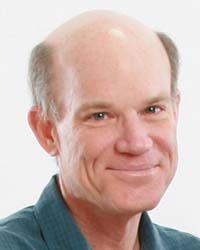
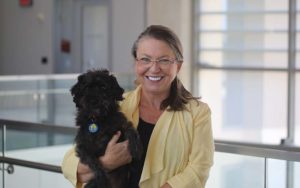
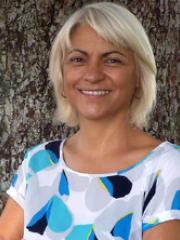
Jessica Hadlow is a researcher at the School of Biological Sciences , The University of Western Australia. Her work focuses on reproductive biology, sexual selection, and gamete evolution in marine invertebrates. Key research themes include: Sperm biology (morphology, motility, viability) Broadcast spawning dynamics in mussels Environmental impacts on reproductive fitness Phenotypic plasticity in gametes Recent publications examine: Rescue of sperm from phenotypic ageing by female fluids Multivariate selection on sperm traits Paternal environmental effects in external fertilizers Intergenerational responses to sperm competition Collaborations include researchers like J.P. Evans , R.A. Lymbery , and R.C. Firman . Her work is supported by grants from the Ecological Society of Australia.
Marta Shocket serves as a Lecturer in Ecology within the Lancaster Environment Centre at Lancaster University, with additional affiliations at the Data Science Institute and Centre of Excellence in Environmental Data Science. Her research program investigates environmental drivers of infectious disease transmission, specializing in temperature effects on pathogen dynamics in invertebrate host systems through integrated field, laboratory, and mathematical approaches. Dr. Shocket's work centers on ecological epidemiology with emphasis on vector-borne diseases including malaria, dengue, and West Nile virus. She examines thermal constraints on transmission, host-pathogen coevolution under climate change, and cross-scale mechanisms linking organism physiology to epidemic patterns. Current projects include fungal pathogen research in insect hosts, for which she is recruiting a PhD student starting autumn 2024. Analysis of her publication record (2015-2025) reveals consistent contributions to climate-disease modeling, particularly demonstrating how mean daily temperatures better predict malaria transmission limits than hourly summation, and how thermal acclimation influences host-pathogen interactions. Her research increasingly incorporates fluctuating temperature regimes and ecological complexity to refine transmission forecasts. Dr. Shocket actively seeks PhD candidates for fungal pathogen research while contributing to the Centre of Excellence in Environmental Data Science's Ecology and Conservation group. Her work bridges ecological theory, data science, and public health applications through interdisciplinary collaboration at Lancaster University.
Phillip Byrne is an Associate Professor at the University of Wollongong's School of Earth, Atmospheric and Life Sciences (SEALS). His research focuses on evolutionary biology, behavioral ecology, and conservation biology, particularly in amphibian conservation and assisted reproductive technologies (ART). He leads the Evolution Assisted Reproduction Laboratory (EARL), developing strategies to protect endangered species like the Baw Baw frog and corroboree frog. Byrne actively supervises PhD students in topics such as amphibian genetics, captive breeding protocols, and environmental impacts on species survival. His research explores how sexual selection shapes reproductive traits and assesses the effects of human-driven environmental changes on species viability. Key projects include hormone-based breeding techniques, microbiome analysis, and the use of detection dogs for endangered amphibian tracking. Byrne has secured funding from organizations like the Australian Research Council and the NSW Environmental Trust to advance ART for conservation. His publications span topics such as UV radiation effects on frogs, sperm cryopreservation protocols, and antibiotic impacts on microbiomes. He collaborates widely, with co-authors from institutions globally. Byrne’s work emphasizes bridging theoretical evolutionary biology with applied conservation strategies to mitigate biodiversity loss.
Becky Lewis is an Associate Professor in Evolutionary Biology at the University of East Anglia's School of Biological Sciences. She holds roles including Director of Admissions, Transitions Officer, and academic advisor. Her research focuses on population genetics and thermal adaptation, particularly using flour beetles. She completed her PhD in 2020 at UEA, investigating thermal adaptation mechanisms. Lewis has contributed to educational initiatives like pre-arrival platforms for student support and has received a Team Award for EFYE (2024). She actively participates in academic committees and teaching development programs. Education: PhD (2020), MSc/BSc details not specified, all from University of East Anglia. Research Interests: Her work explores evolutionary responses to environmental stressors, genetic rescue strategies, and reproductive dynamics. Recent studies include multi-generational experiments on sexual selection's role in conservation and the impact of thermal evolution in Tribolium castaneum. She also investigates educational innovations to enhance student transitions into higher education. Awards: Team Award - European First Year Experience (EFYE) 2024 Administration & Teaching: Leads admissions, oversees student transitions, organizes modules (BIO-4008Y, BIO-6011B), and has directed foundation-year programs. Engaged in equity initiatives through committee memberships. Labs/Teams: Active in Biosciences Teaching and Education Research groups.
Dr. Mriganka Sur is the Newton Professor of Neuroscience and Director of the Simons Center for the Social Brain at MIT. He previously served as head of the MIT Department of Brain and Cognitive Sciences for 15 years. His research focuses on the organization, plasticity, and dynamics of the cerebral cortex, employing experimental and theoretical approaches. Key areas include synaptic plasticity mechanisms, cortical circuit development, and neurodevelopmental disorders like Rett syndrome. His lab pioneered imaging techniques to study intact brain circuits and identified gene networks underlying cortical plasticity. Education: B.Tech. in Electrical Engineering from the Indian Institute of Technology, Kanpur (1978), and PhD in Electrical Engineering from Vanderbilt University (1983). Research interests span cortical circuit dynamics, neuromodulation (e.g., noradrenaline signaling), astrocyte-neuron interactions, and translational strategies for neurodevelopmental disorders. Recent work includes discoveries on astrocyte roles in synaptic refinement and the therapeutic potential of IGF-1 for Rett syndrome. Major awards include the Krieg Cortical Discoverer Prize, Royal Society Fellowship, and multiple NIH grants. He has mentored over 80 doctoral students and postdoctoral fellows, recognized for teaching and mentoring excellence. His lab is funded by NIH BRAIN Initiative, Simons Foundation, and other institutions. Labs/Teams: Sur Lab (MIT) focuses on cortical circuits and Rett syndrome mechanisms. He directs the Simons Center for the Social Brain, advancing social neuroscience research.
David W. Pfennig is a Professor in the Department of Biology at the University of North Carolina at Chapel Hill. His research focuses on the interplay between evolution, ecology, and development, with a particular emphasis on phenotypic plasticity, biodiversity, and Batesian mimicry. He leads the Pfennig Lab, which studies spadefoot toads as model organisms to explore how environmental cues shape traits and drive evolutionary innovation. His research interests include: (1) the causes and ecological consequences of developmental plasticity, (2) the role of competition in generating biodiversity, and (3) the evolution of mimicry systems. He has contributed to understanding how plasticity influences diversification and how genetic mechanisms underpin adaptive traits. His lab’s work integrates field studies, experimental evolution, and genomic approaches. They investigate topics such as the genetic basis of plasticity in spadefoot toads, the evolutionary stability of mimicry, and the impacts of environmental stressors on organismal development. Dr. Pfennig collaborates widely, including with the Amphibian Genomics Consortium, and his research has implications for conservation biology and evolutionary theory. He is based in Wilson Hall, Chapel Hill, and actively engages in outreach and mentoring students in ecological and evolutionary research.
Paul Sunnucks is a Professor in the School of Biological Sciences at Monash University , where he leads the Wildlife Genetic Management Group . His research integrates evolutionary biology, genomics, and conservation science to manage genetic variation in wildlife populations under natural and anthropogenic pressures. He is actively involved in teaching undergraduate units including Conservation Biology (BIO2040), Evolutionary Ecology (BIO3020), and Advanced Ecology and Evolution (BIO3070), which he coordinates. His research interests focus on: Evolutionary processes in conservation Population genetics and genomics Genetic rescue and outcrossing Mitonuclear co-evolution Hybrid zones and speciation Integration of molecular tools in biodiversity management Recent publications highlight his work on sex-linked genomic analysis, hybridization in birds, and collaborative conservation frameworks involving Indigenous communities. His research aligns with UN Sustainable Development Goals, particularly those related to life on land and climate action. His recent articles reflect a strong trend in applying genomic tools to real-world conservation challenges, with emphasis on methodological innovation, collaborative science, and evolutionary resilience. His work often involves interdisciplinary and international collaborations. Notable scientific contributions include: Development of R functions for sex chromosome analysis in non-model organisms Advancing the concept of 'risky rescue' in genetic management Promoting equitable partnerships in conservation genomics He has supervised postgraduate and honors students and is actively engaged in research grants, including projects funded by the Australian Research Council and the Department of Energy, Environment and Climate Action (Victoria). His current projects include Upscaling genetic management of wildlife populations and Genetic considerations in grassland restoration . He is affiliated with the Wildlife Genetic Management Group, a collaborative research team that works closely with governmental agencies and Indigenous ranger groups to implement science-based conservation strategies. The group emphasizes field biology, genomic analysis, and spatial modeling to inform management decisions.
Kathryn Hodgins is an Associate Professor in the School of Biological Sciences at Monash University, specializing in evolutionary and ecological genomics. Her work focuses on understanding how species adapt to environmental changes, particularly in the context of climate change and biological invasions. She leads multiple research projects funded by the Australian Research Council, including studies on rapid adaptation to climate extremes, genetic rescue of endangered species, and developing climate-resilient restoration strategies. Her research integrates genomic tools to study invasive species biology, parallel evolution, and the genetic basis of climate adaptation. Notable projects include analyzing genomic data of Ambrosia artemisiifolia (common ragweed) to track invasion dynamics and investigating structural variants driving parallel adaptation. Hodgins also explores social factors in STEM education, such as how group identity impacts academic outcomes. Hodgins has authored over 50 peer-reviewed articles and collaborates internationally on topics like genomic tools for invasion management and predicting species' responses to environmental shifts. Her work contributes to UN Sustainable Development Goals related to life on land and climate action.
Professor Jacob Höglund is a distinguished academic at Uppsala University, where he serves as Professor of Animal Conservation Biology in the Department of Ecology and Genetics, specializing in Animal Ecology. His research focuses on the importance of genetic variation for the persistence of small and fragmented populations, with primary emphasis on vertebrates though he has also contributed to insect conservation projects. Höglund has held significant positions at Uppsala University, including: Professor, Animal Conservation Biology, Department of Ecology and Genetics (2006-present) Head of Department, Division of Population Biology and Conservation Biology (1999-2005) Senior lecturer/Associate Professor in Evolutionary Biology, Department of Zoology (1993-1998) Assistant Professor, Department of Zoology (1989-1993) Höglund's research program spans conservation genetics, population genomics, and evolutionary biology, with particular emphasis on understanding how genetic variation influences population viability. His work frequently examines MHC (Major Histocompatibility Complex) diversity, population structure, and the application of genomic approaches to conservation challenges. While primarily focused on avian species (particularly grouse and other game birds), his research extends to amphibians, mammals, and insects, reflecting a broad ecological perspective on conservation genetics. His recent publications reveal a strong trend toward applying cutting-edge genomic techniques to conservation problems. Höglund has been instrumental in developing chromosome-level genome assemblies for threatened species, analyzing population structure and genetic diversity, and investigating the impacts of inbreeding and outbreeding depression. His work often combines field studies with sophisticated genomic analyses to address critical questions in wildlife conservation. Höglund has made significant contributions to bridging the gap between genomic research and practical conservation applications, helping establish frameworks for using genomic data in conservation decision-making for species with small or fragmented populations. His collaborative research spans multiple continents and involves numerous international partners, reflecting the global relevance of his work in conservation genomics.
Dr. Deborah Bell-Pedersen is a Thomas University Professor and Associate Head of Biology at Texas A&M University (TAMU), renowned for her pioneering work in circadian clock mechanisms and their implications for human health. Her research focuses on how circadian oscillators regulate rhythmic gene expression in the model organism Neurospora crassa , with particular emphasis on mRNA transcription, translation, and links to cancer and aging. Key affiliations: Texas A&M University (1997–present) Leadership roles: Associate Editor of the Journal of Biological Rhythms , Board of Directors for the Society for Research on Biological Rhythms and Fungal Genetics Society Honors: University Professor title, Fellow of American Academy of Microbiology and AAAS, multiple research excellence awards Her work has revealed that the circadian clock controls translation fidelity via eIF2α activity and ribosome interactions, linking reduced clock function to aging. Articles highlight her expertise in MAPK signaling, glycogen metabolism regulation, and fungal stress response, with implications for human diseases like glioma and metabolic disorders. Scientific recognition includes TAMU Jo Ann Treat Award for Excellence in Research Eminent Scholar and Distinguished Research Awards Fellowships from AAAS and American Academy of Microbiology Dr. Bell-Pedersen mentors students in circadian biology and emphasizes independence in research, inspired by her PhD advisor Marlene Belfort. She also explores interdisciplinary connections between circadian rhythms and vaccination timing, cognitive performance, and physical balance. Outside academia, she is learning violin (in honor of her late father’s musical legacy) and cares for rescue animals including 4 cats, a dog, a horse, and 3 miniature donkeys.
Professor Kevin M O'Dell is a leading academic at the University of Glasgow , holding the title of Professor of Behaviour Genetics in the School of Life Sciences , Molecular Biosciences department . With over two decades of research spanning genetics, mitochondrial pathology, and neurobiology, his work has significantly advanced understanding of human genetic disorders through Drosophila melanogaster models. Specializes in sex-specific behavior and mitochondrial disease research Recipient of prestigious Wellcome Trust and BBSRC grants International conference speaker (USA, Belgium, France, England) Member of Genetics Society (1995-present) His research program integrates mitochondrial dysfunction studies with genetic rescue mechanisms , focusing on disorders like deafness and myotonic dystrophy. Key contributions include developing Drosophila models for human diseases and investigating gene dosage effects in phenotypic expression. Scientific awards and funding include: Wellcome Trust grant (2013-2015) for confocal microscopy BBSRC grant (2003-2006) for molecular biosciences research His publications demonstrate consistent leadership in mitochondrial disease modeling (2001-2014), with collaborative work spanning biochemistry, neurogenetics, and developmental biology. The research shows particular focus on ANT1 deficiency , oxidative phosphorylation defects , and temperature-sensitive neurological mutations .
Jukka Jernvall is an Academy Professor at the University of Helsinki , affiliated with the Faculty of Science and the Department of Geosciences and Geography . His research bridges ecology, evolutionary biology, developmental biology, and paleontology , focusing on the interplay between developmental processes and evolutionary patterns in mammals. His current projects include investigating developmental mechanisms in dental diversity , exploring evolutionary constraints , and analyzing genomic adaptations in glacial relict species . Recent work spans from 3D imaging techniques in organ development to conservation genetics of ringed seals . Key research trends involve evolutionary developmental genetics , mammalian dentition , and quantitative analysis of morphological robustness . He supervises doctoral programs in Geosciences, Materials Research, Wildlife Biology, and Integrative Life Science .
David Robertson is a Research Professor and Head of CVR Bioinformatics at the University of Glasgow's Centre for Virus Research (College of Medical, Veterinary and Life Sciences). Previously, he held positions as Principal Investigator at the University of Manchester (2002-2017), Wellcome Trust Research Fellow at the University of Oxford, and ANRS Research Fellow in France. He holds a PhD in Genetics from the University of Nottingham/Trinity College Dublin and a BSc from the University of Edinburgh. His research focuses on computational virology, particularly virus evolution , host-pathogen interactions , and viral emergence , with extensive work on SARS-CoV-2 origins and evolution. His lab employs data-driven approaches to study molecular determinants of cross-species transmission, viral fitness, and pandemic preparedness. Publication analysis reveals a strong emphasis on viral genomics , evolutionary modeling , and bioinformatic tool development . Key themes include SARS-CoV-2 variant tracking, recombination mechanisms, protein language models for host prediction, and mutational signatures in viral adaptation. Awards/Honors: Wellcome Trust Research Fellowship ANRS Research Fellowship He leads the Robertson Lab, specializing in computational analyses of viral datasets and collaborating globally on pathogen genomics projects. Current efforts focus on integrating AI with genomic surveillance to predict viral evolutionary trajectories.
Corbin Jones is a Professor in the Department of Genetics at the University of North Carolina at Chapel Hill (UNC), School of Medicine. He serves as Faculty Director of the UNC High-Throughput Sequencing Facility and is affiliated with the Carolina Center for Genome Sciences (CCGS). His academic roles include dual appointments in Biology and Genetics, and he contributes to graduate programs in Biology, Genetics and Molecular Biology, and Biomedical Engineering (BCB). Dr. Jones' research focuses on evolutionary genetics, particularly using Drosophila species to study adaptive traits. Key projects include analyzing Drosophila sechellia’s genetic resistance and attraction to Morinda citrifolia, investigating mechanisms of new gene formation through chimeric gene studies, and developing statistical tools for QTL mapping accuracy. His lab integrates computational methods, molecular genetics, and genomic data to explore how genetic changes—both regulatory and structural—drive evolutionary adaptations. Collaborations with Dr. Sally Otto and Dr. Philip Awadalla highlight his contributions to theoretical and applied genomics. His work extends to translational research, including studies on human disease genetics (e.g., schizophrenia, lupus) and microbiome assembly dynamics. Recent publications reflect diverse applications of his expertise in virology (SARS-CoV-2 treatment efficacy), cancer biology (evolutionary rescue models), and AI-driven clinical data analysis. Funding for his lab comes from the NSF and NIH, supporting projects that bridge basic and applied sciences. Grants: NSF and NIH-funded research on genomic evolution and disease mechanisms Lab Affiliations: Corbin Jones Lab in the Genome Sciences Building, UNC High-Throughput Sequencing Facility Tools Developed: QTL-based estimator method for genetic mapping, computational pipelines for genomic data analysis Notable research themes include the molecular basis of behavioral adaptations in Drosophila, the role of chimeric genes in evolutionary innovation, and statistical improvements in detecting quantitative trait loci. His studies on D. sechellia’s olfactory-driven behavior reveal insights into gene function beyond mere sensory detection, emphasizing behavioral genetics.
Dr. Alexandra Grutter is a researcher at the School of the Environment, University of Queensland, with a focus on coral reef ecology and marine parasitology. She is affiliated with the Centre for Marine Science and conducts research programs at Lizard Island on the Great Barrier Reef and on campus. Dr. Grutter earned her Doctor of Philosophy from James Cook University. Her research integrates multiple disciplines including evolutionary biology, molecular biology, parasitology, and animal behaviour. She uses field observations to generate hypotheses which are tested using field and laboratory experiments. Her primary research interests focus on cleaning symbiosis as a model system for developing and testing models of non-kin cooperation in multispecies mutualisms. She investigates the ecological significance of cleaning behaviour in reef fishes, the direct and indirect effects of cleaner fish on the coral reef community, interactions between larval coral reef fish and parasites, the effects of parasites on fish physiology, and the taxonomy of gnathiid isopods. Dr. Grutter also studies the role of colour and pattern in communication among animals, the molecular and colour pattern biogeography of cleaner fish, and sustainable amateur marine aquaria. Analysis of Dr. Grutter's recent publications reveals a strong focus on coral reef ecology, parasitology, and fish behaviour. Her work spans disciplines including marine biology, ecology, evolutionary biology, and conservation science. Recent research has particularly emphasized the role of cleaner fish in reef ecosystems, parasite-host interactions, and the impacts of environmental changes on marine communities. Dr. Grutter has supervised 28 postgraduate students, all of whom are now employed in science-related areas. Her research has been supported by multiple grants including ARC Discovery Projects, National Geographic Society grants administered by Deakin University, and Sea World Research and Rescue Foundation grants. Current projects include investigating the effects of climate change on reef mutualisms and the role of parasites in coral reef fish recruitment. Dr. Grutter's research is conducted through the Coral Reef Ecology Lab, with field programs at Lizard Island and Heron Island on the Great Barrier Reef. Her work involves collaborations with researchers across multiple institutions and countries, contributing significantly to our understanding of marine ecosystem dynamics and conservation.