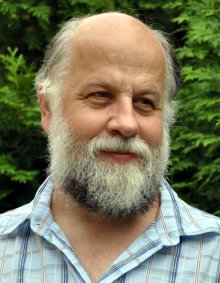
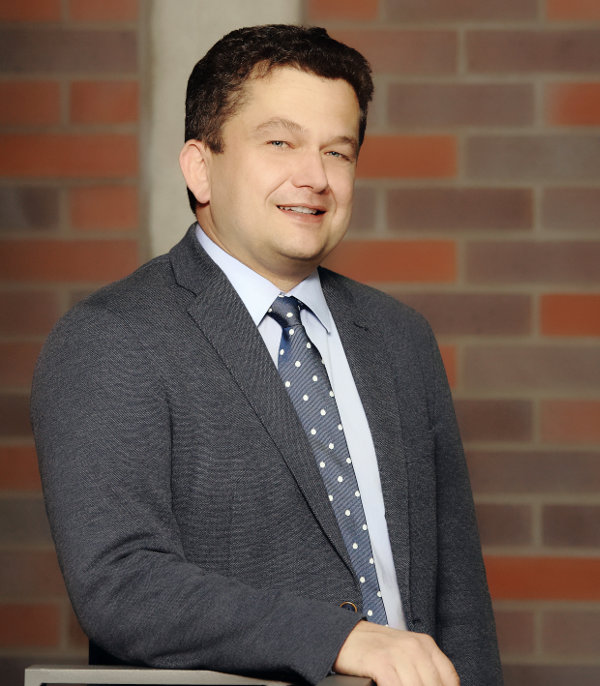
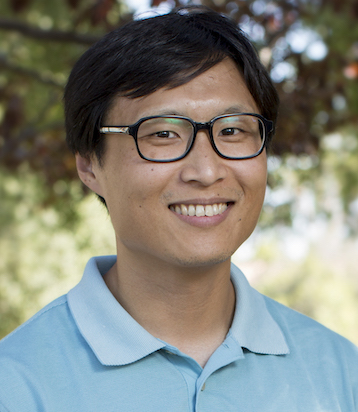
Hynek Burda is a Professor at the Czech University of Life Sciences Prague, affiliated with the Faculty of Forestry and Wood Technology's Department of Hunting and Forestry Zoology. His research focuses on animal sensory systems and behavioral ecology, particularly magnetoreception across diverse species including canids, rodents, and ungulates. Research interests center on: Magnetic field perception in mammals and birds Adaptive behaviors in subterranean species Evolution of sensory systems Wildlife navigation mechanisms Comparative zoology of African rodents Recent publications (2020-2024) demonstrate consistent focus on magnetoreception, with 67% of articles addressing geomagnetic navigation in species ranging from hunting dogs to mole-rats. Key patterns include sensory biology (73% of works), navigation studies (60%), and mammalian behavior (87%). Grant support includes projects on: Magnetosenzitivita psů a jiných zvířat (2016-2017) Magnetická orientace savců (2011-2013)
Prof. Dr.-Ing. Andreas Wenzel is a Professor at Schmalkalden University of Applied Sciences in the Faculty of Electrical Engineering, specializing in Embedded Systems. His office is located in Building M, Room 0401, and he can be reached at +49 3683 688 5113. With a distinguished research career spanning over two decades, Prof. Wenzel has established himself as a leading expert in embedded diagnostic systems with applications across multiple domains including biomedical engineering, industrial automation, and assistive technologies. Prof. Wenzel's primary research interests focus on the development and application of embedded diagnostic systems, with particular emphasis on neural networks for pattern recognition, fuzzy logic systems for classification problems, and real-time monitoring solutions. His work bridges theoretical machine learning approaches with practical engineering applications, resulting in innovative solutions for quality control in manufacturing processes, medical diagnostics, and mobility assistance technologies. He has made significant contributions to EEG data analysis for sleep stage and anesthesia depth monitoring, as well as developing smart systems for injection molding quality assessment and advanced mobility solutions for elderly individuals. Analysis of Prof. Wenzel's publication record reveals a consistent research trajectory focused on applying computational intelligence to solve practical engineering problems. His work demonstrates exceptional versatility across domains while maintaining a cohesive research theme centered on embedded diagnostic systems. From 2012-2016, his research output shows increasing focus on real-time embedded solutions with industrial applications, particularly in manufacturing quality control and assistive technologies, while continuing his foundational work in biomedical signal processing. The interdisciplinary nature of his research is evident in collaborations with medical professionals, industrial partners, and robotics specialists. Prof. Wenzel leads the Embedded Diagnostic Systems Research Group at Schmalkalden University of Applied Sciences, which maintains strong industry partnerships, particularly in plastics manufacturing and medical technology sectors. His team develops practical embedded solutions that address real-world challenges in production quality monitoring, medical diagnostics, and mobility assistance. The research group's work is characterized by its practical orientation, with many projects resulting in deployable systems rather than purely theoretical contributions. Prof. Wenzel's strategic focus on applied research ensures that his work has direct industrial relevance and practical impact.
Sergei Kliver is a Guest Researcher and Postdoc at the University of Copenhagen's Globe Institute within the Section for Hologenomics. His research focuses on advanced genome assembly techniques and cytogenetic analyses of diverse mammalian species, with particular emphasis on carnivores, marine mammals, and other evolutionarily significant lineages. Dr. Kliver's research interests center on chromosome-length genome assembly, which enables unprecedented insights into genetic architecture across species. His work integrates cutting-edge sequencing technologies with traditional cytogenetic approaches to investigate chromosome evolution, speciation mechanisms, and adaptive processes. Much of his research has direct conservation applications, especially for endangered species like the black-footed ferret and African hunting dog, where genomic insights can inform recovery programs. His publications demonstrate significant scientific impact, with multiple papers receiving extensive media coverage, social media attention, and academic citations. Several studies have been highlighted by numerous news outlets, referenced in Wikipedia, and widely shared across academic platforms like Mendeley, indicating broad relevance beyond specialized research communities. Kliver's collaborative network spans international institutions, reflecting the global nature of modern genomic research. His work has been cited in Scopus and has accumulated substantial reader engagement, demonstrating the practical utility of his findings for conservation biology and evolutionary studies.
Prof. Dr. Markus Stetter is a Professor at the Botanical Institute of the University of Cologne, Germany, actively leading research in plant domestication genomics within the CEPLAS Cluster of Excellence on Plant Sciences. His work focuses on evolutionary adaptation in crops, particularly amaranth and maize, using population genetics and molecular approaches to decode how wild plants became globally distributed crops. His research interests include: Genomic signatures of domestication Population and quantitative genetic modeling Molecular mechanisms of trait adaptation Theoretical plant biology and data science applications Edaphic adaptation in crop-wild relative systems Analysis of his 2017-2024 publications reveals a dominant focus on amaranth domestication genomics, with recurring themes in evolutionary rescue by wild relatives, inbreeding depression dynamics, and seed trait adaptation. His work integrates high-throughput sequencing with evolutionary theory to address crop resilience under environmental change. Prof. Stetter co-developed PopAmaranth, a specialized genome browser for amaranth population genetics, and maintains active leadership in CEPLAS Research Area 4 (Theoretical Plant Biology and Data Science). His laboratory utilizes genomic facilities including plant metabolomics and imaging platforms for experimental validation.
Jae Hur is an Associate Professor in the Department of Biology at Harvey Mudd College in Claremont, California. His academic journey includes a B.A. in Biology from the California Institute of Technology, a Ph.D. in Biology from Harvard University, postdoctoral training at Harvard and UCLA, and prior service as a Visiting Assistant Professor at Harvey Mudd College. Research Focus: Dr. Hur investigates the molecular mechanisms of aging and longevity using Drosophila melanogaster . His work integrates genetics, biochemistry, and molecular biology to explore mitochondrial dysfunction, proteostasis, stem cell dynamics, and genetic interventions affecting lifespan. Key research themes include: Mitochondrial biology in aging (Complex I/V, oxidative stress) Proteasome regulation and proteostasis PGC-1 homologs in tissue homeostasis Evolutionary studies of bdelloid rotifers Publication Analysis: His recent articles (2019–2021) emphasize experimental interventions in aging (e.g., proteasome overexpression), while earlier work (2009–2016) includes foundational studies on mitochondrial genetics and evolutionary biology. Thematically, 80% focus on aging/longevity mechanisms, 13% on evolutionary genomics, and 7% on biology education. Teaching: He instructs courses spanning foundational to specialized topics, including: Bio 52: Introduction to Biology Core Lab 57: Synthetic Biology Bio 111: Molecular Biology Lab Bio 186: Molecular Biology of Aging Seminar No awards, grants, or student advisees are documented in the provided materials.
Marko Vendelin is a Tenured Full Professor at Tallinn University of Technology's School of Science, Department of Cybernetics, where he also leads the Laboratory of Systems Biology. His academic career spans over two decades with continuous appointments at Tallinn University of Technology since 1997, including prestigious fellowships from Wellcome Trust and EU Marie Curie programs. His educational background includes a Doctor's Degree (2001) and Research Master's Degree (1997), both from Tallinn University of Technology under supervision of Jüri Engelbrecht, focusing on cardiac mechanoenergetics and electrical activation modeling. His research interests center on heart muscle biophysics, bioenergetics, and biomechanics, with particular emphasis on energy transfer systems in cardiomyocytes. Analysis of his recent publications reveals strong focus on cardiac metabolism, sex-specific differences in heart structure, and advanced imaging techniques. His work frequently examines creatine kinase systems, calcium handling mechanisms, and metabolic compartmentalization in cardiac cells. The publications span high-impact journals including American Journal of Physiology, PLoS Computational Biology, and FEBS Letters. Awarded the National Science Award in 2008 and recognized as Tallinn University of Technology's Young Investigator of the Year in 2007, his scientific contributions have been widely recognized. His editorial service includes roles at American Journal of Physiology: Cell Physiology and numerous manuscript reviews for leading journals. Prof. Vendelin has supervised two postdoctoral researchers and served as external reviewer for PhD theses at multiple European institutions. His administrative roles include leadership positions in COST Actions CA16225 and CA15203, and chairing joint meetings of major physiological societies across Europe.