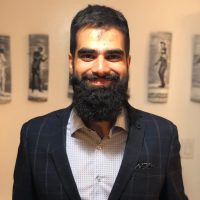
Kaius Sinnemäki is a Professor of Quantitative and Comparative Linguistics at the University of Helsinki, affiliated with the Department of Languages under the Faculty of Arts. Since 2025, he has directed the strategic profiling action Diversity in Society and Life (DIVSOL) , funded by the Research Council of Finland, and previously led the ERC Starting Grant project Linguistic Adaptation (2019-2024). His research focuses on large-scale comparative linguistics, integrating language typology with sociolinguistics. Key areas include core argument marking, statistical methods in typology, linguistic complexity, language contact, and the interplay between language and religion. He teaches courses spanning language typology, evolution, sociolinguistics, and quantitative methods. Recent publications address replication in linguistic research, adaptation in contact ecologies, and complexity measures across phonological, morphosyntactic, and syntactic domains. His work often bridges theoretical linguistics with empirical data analysis, utilizing open datasets and computational tools. Scientific Awards: Prize for the Humanities (2021) He actively supervises academic theses, serves on editorial boards (e.g., Linguistic Typology ), and participates in international collaborations, peer reviews, and media engagements on linguistic diversity and secularism.
David Puts is a Professor of Anthropology at Pennsylvania State University, specializing in evolutionary approaches to human behavior. His research focuses on sexual selection, hormonal influences on behavior, and reproductive strategies. He holds a B.A. from Kenyon College (1995), M.A. (1998), and Ph.D. (2004) from the University of Pittsburgh. Puts’ work bridges anthropology, biology, and psychology, emphasizing topics like voice pitch as an evolutionary signal, pubertal timing effects, and the biological basis of gendered behavior. His lab (https://beel.la.psu.edu/) investigates human evolution and sexual selection mechanisms. Research interests include vocal communication, hormonal endocrinology, and the evolutionary origins of sexual dimorphism. His studies often address how traits like voice pitch or facial features signal health, dominance, or fertility. Recent work examines cross-cultural variations in social perception and the role of hormones in shaping sexual motivation. Puts frequently collaborates across disciplines, integrating data from primatology, endocrinology, and behavioral ecology. Publications highlight themes such as sexual orientation’s biological underpinnings, the relationship between vocal parameters and health, and the societal implications of evolutionary adaptations. His research has been featured in high-impact journals, emphasizing methodological rigor and interdisciplinary synthesis.
Anne-Lise Giraud is a Professor and Group Leader at the Faculty of Medicine, University of Geneva, where she directs a research laboratory focused on the neural mechanisms underlying language and vocal communication. Her work bridges experimental neurophysiology, computational neuroscience, and clinical applications for language disorders. Her research interests encompass: Neural bases of speech and language processing Audio-visual integration in communication Brain-Computer Interfaces for speech communication Neural mechanisms of language disorders (dyslexia, autism, aphasia) Computational modeling of speech processing Comparative studies of vocal communication across species Dr. Giraud's recent publications demonstrate a sophisticated integration of multiple neuroimaging techniques (EEG, fMRI, MEG) with computational approaches to understand both typical and atypical speech processing. A notable trend in her work is the emphasis on neural oscillations as fundamental mechanisms for speech perception, with applications ranging from understanding autism spectrum disorders to developing brain-computer interfaces for communication-impaired individuals. Her research increasingly explores cross-species communication mechanisms, as evidenced by her recent work on dog-human vocal interactions. Her laboratory at Campus Biotech includes multiple graduate students, postdocs, and research assistants working collaboratively on various aspects of language neuroscience.
Max Planck Institute for Evolutionary AnthropologyGermany
Senay Cebioglu is a Postdoctoral Researcher in the Department of Human Behavior, Ecology and Culture at the Max Planck Institute for Evolutionary Anthropology in Leipzig, Germany. Her work focuses on cross-cultural developmental psychology, examining how cultural contexts shape child development across diverse societies. She holds a Ph.D. from Simon Fraser University, Canada. Dr. Cebioglu earned her Ph.D. in Developmental Psychology from Simon Fraser University, Canada. Her academic background includes advanced studies in cross-cultural research methodologies, with a focus on developmental processes in sociocultural contexts. Her research interests center on understanding the impact of culture on early socio-cognitive development, particularly in infants and children. She employs mixed methods, including naturalistic and structured observations, experimental tasks, interviews, and questionnaires. Key areas of focus include the development of self-awareness—such as mirror self-recognition—and the relationship between cultural practices and well-being in indigenous communities, such as the Bantu and BaYaka groups in the Republic of Congo. Her work integrates perspectives from psychology, anthropology, and cultural evolutionary theory. Cebioglu’s publications explore cross-cultural comparisons in child development, including studies on child-directed speech, teaching strategies influenced by formal education, and phonetic variations in baby-talk across cultures. Her research consistently emphasizes the importance of cultural context in shaping developmental outcomes, with recent attention to the dynamics of cultural change and its effects on well-being. While no specific grants are detailed, her research is supported through collaborative projects, such as co-leading a multidisciplinary investigation into cultural change and well-being in Congo. No advisees are listed in the provided materials. She is part of the Department of Human Behavior, Ecology and Culture at the Max Planck Institute, which facilitates interdisciplinary research into human development and cultural evolution.
Laura Becker is an Assistant Professor at the Department of General Linguistics, University of Freiburg. Her research focuses on linguistic typology, quantitative methodology, and the role of coding efficiency in grammatical structures. She holds a PhD exploring article systems across languages and has contributed to cross-linguistic studies on syntax, morphology, and sociolinguistics. Her work emphasizes statistical rigor and computational tools, such as the glottospace R package for geospatial linguistic analysis. Recent projects include investigating phoneme inventories in Polynesian languages and socio-linguistic influences on conditional constructions. Publications highlight her expertise in morphosyntax, language contact, and corpus-based approaches. No scientific awards are explicitly mentioned in the provided materials. Dr. Becker has advised no recorded students in the available data and has not listed specific grants or labs. Her current research trends prioritize quantitative frameworks to address typological and evolutionary questions in linguistics.
Diane Nelson is a Senior Lecturer in Linguistics at the School of Languages, Cultures and Societies, University of Leeds, where she has been a faculty member since 1996. She currently serves as Director of Studies for Linguistics and Phonetics, overseeing undergraduate programs including the BA in Linguistics. She is actively involved in research, teaching, and academic leadership, with affiliations to Language@Leeds, the Centre for Endangered Languages, Cultures and Ecosystems (CELCE), and the Leverhulme-funded Extinction Studies Doctoral Training Programme. PhD in Linguistics, University of Edinburgh, 1995 BA in Ancient History, Columbia University, 1990 Her research spans theoretical and applied linguistics, with core interests in morphosyntax—especially grammatical case, event structure, and animacy—across Uralic and other lesser-studied languages. She has developed a strong interdisciplinary focus on language origins and evolution, linguistic endangerment, extinction, and reclamation, particularly through her collaborative work on the Kariri-Xocó language revival in Brazil. Her teaching includes the innovative module The Life Cycle of Languages , which explores the birth, diversity, and death of languages from evolutionary, ecological, and sociopolitical perspectives. She also co-teaches on minoritised languages and decolonial approaches in global environmental humanities. The recent publications reflect a dual trajectory: one rooted in formal syntactic theory (e.g., Finnish case assignment), and another in sociolinguistic and anthropological inquiry into language loss, resilience, and justice. This interdisciplinary breadth connects linguistic structure with broader human and ecological crises, particularly the parallel declines of linguistic and biological diversity. Professional Memberships: Linguistics Association of Great Britain Philological Society Global Council for Anthropological Linguistics International Ecolinguistics Association Diane Nelson has supervised 13 PhD students to completion and currently co-supervises three others. She has served as External Examiner for Linguistics programs at multiple UK universities and contributed to national benchmarking through the QAT Subject Benchmarking review panels. She has held roles as Postgraduate Research Tutor, Promotions Advisor, and MA Programmes Manager. Her grant involvement includes AHRC-funded Language Acts and Worldmaking and the Leverhulme Extinction Studies DTP. She also engages in public scholarship through BBC radio, art collaborations, film screenings, and public talks on language extinction. She is a founding member of the Centre for Endangered Languages, Cultures and Ecosystems (CELCE) and a steering group member of Language@Leeds and the Embracing Linguistic Diversity satellite. Her current research includes a monograph on the natural history of language and ongoing work on animacy in cognition and grammar.
Professor Piotr Gąsiorowski is a University Professor of Linguistics at the Faculty of English, Adam Mickiewicz University in Poznań, Poland. With a distinguished academic career spanning several decades, he holds a D.Litt. in English linguistics and has established himself as a leading expert in historical linguistics, phonology, and Indo-European studies. His work bridges traditional philological approaches with evolutionary perspectives on language change. His academic journey includes: M.Sc. in electronic engineering, Warsaw, 1984 M.A. in English, Poznań, 1987 Ph.D. in English, Poznań, 1994 D.Litt. in English linguistics, Poznań, 1998 Professor Gąsiorowski's research focuses on phonological change, historical linguistics, and the evolution of language systems. His work particularly emphasizes the reconstruction of Proto-Indo-European phonology and morphology, with special attention to Germanic sound laws like Verner's Law. He has pioneered an evolutionary approach to language variation and change, examining how linguistic systems adapt over time through processes analogous to biological evolution. His scholarship spans theoretical phonology, historical semantics, and the comparative method, with numerous publications addressing complex problems in etymology and sound change. His extensive publication record shows consistent focus on phonological change in Indo-European languages, with particular expertise in Germanic historical linguistics. Professor Gąsiorowski frequently examines how sound changes interact with morphological systems, and his work often challenges established interpretations of complex historical developments. He has made significant contributions to understanding the phonemicization of voiced fricatives in English, the etymology of obscure lexical items, and the reconstruction of Proto-Indo-European grammatical categories. His scholarly recognition includes: Minister of National Education's Award for outstanding research results (1998) Minister of National Education's Award for outstanding research results (2004) Medal of the Commission of National Education (KEN) (2013) Professor Gąsiorowski has supervised numerous graduate students and has been actively involved in academic service, serving on editorial boards and as a reviewer for major linguistics journals. He led the NCN OPUS11 research project 'A multivalued model of stress in English' (2017-2020) as Principal Investigator. His international collaborations include guest professorships at the University of Vienna and research stays at Oxford University and UCLA. Beyond traditional academic work, Professor Gąsiorowski maintains an influential blog called 'Language Evolution' and has been an active Wikipedia contributor since 2004, creating and improving numerous articles on phonetics and historical linguistics. His interdisciplinary approach connects linguistic theory with insights from evolutionary biology and cognitive science.
Dr Alexis Kirke is a Senior Research Fellow in Computer Music at the School of Art, Design and Architecture (Faculty of Arts, Humanities and Business) at the University of Plymouth. As a composer-in-residence, he specializes in interdisciplinary research at the intersection of music, computing, and healthcare. His work includes developing adaptive music systems like RadioMe for dementia care, applying quantum computing to music composition, and exploring affective computing through brain-computer interfaces. Teaching roles include associate lecturer positions in modules such as Collaborative Practice (BA Sound and Music Production), Psychology (BA Music), and MRes Computer Music. He has supervised five PhD students as a second supervisor and served as an internal PhD examiner. His research focuses on algorithmic composition, music technology for healthcare, quantum computing applications in music, and multi-agent systems inspired by natural phenomena like humpback whale song evolution. Recent projects include the Plymouth Marine Institute collaboration and the Cloud Chamber performance involving real-time interaction with subatomic particles. Key contributions include innovative systems like RadioMe, which combines adaptive radio with reminder systems for dementia patients, and Q-Muse, a quantum computer music system. His work bridges computational creativity with human-centric applications, emphasizing ethical and accessible technology. Grants & Awards: No specific awards listed, but active in collaborative research projects Lab/Teams: Plymouth Marine Institute, Cloud Chamber Project
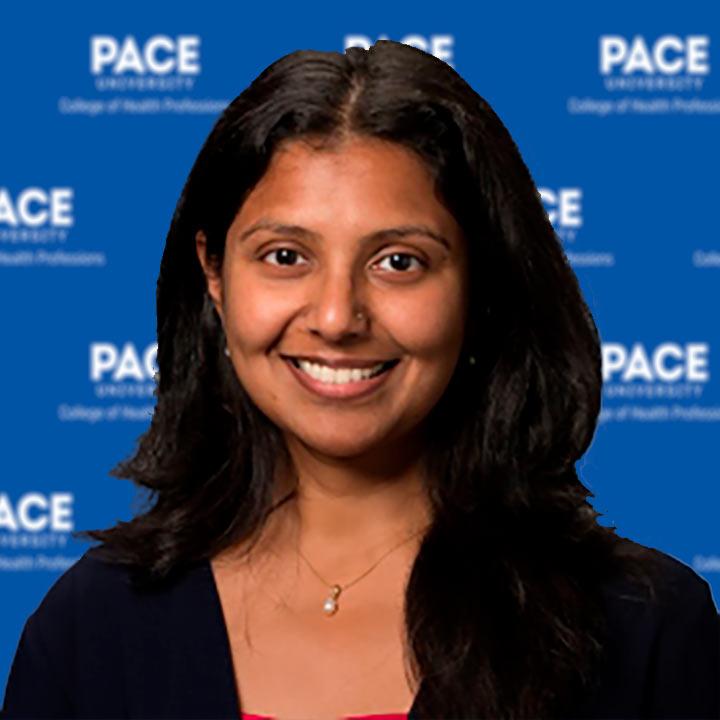
Sethu Karthikeyan is an Associate Professor in the Department of Communication Sciences and Disorders at the College of Health Professions, Pace University, where he has been a faculty member since 2013. He holds a PhD in Speech-Language-Hearing Sciences from The Graduate Center, City University of New York. His academic roles are deeply integrated with interdisciplinary research at the intersection of evolutionary psychology, speech science, and sociolinguistics. PhD, Speech-Language-Hearing Sciences, The Graduate School and University Center, The City University of New York, 2012 MS, Speech and Hearing, All India Institute of Speech and Hearing, Mysore, India, 2003 BS, Speech and Hearing, Dr. MV Shetty College of Speech and Hearing, Mangalore, India, 2001 Dr. Karthikeyan's research focuses on evolutionary behavioral sciences, particularly the human capacity for spoken language, social evaluations based on speech, vocal-verbal flexibility, and cultural diversity. He investigates how voice pitch, articulation, and dialect influence perceptions of attractiveness, status, and empathy, often using an evolutionary psychology framework. His work bridges speech science and sociocultural factors, with collaborations involving the Evolutionary Psychology Lab at SUNY New Paltz and the Behavioral Endocrinology and Evolution Lab at Penn State. His recent publications, including in Scientific Reports and Evolutionary Behavioral Sciences , reveal a strong trend toward understanding human mating behaviors, sound symbolism (e.g., Bouba-Kiki effect), and cross-cultural communication. The articles collectively emphasize experimental and evolutionary approaches to language and social perception, often incorporating cross-modal and cross-cultural data. Dr. Karthikeyan has received several honors, including the College of Health Professions Dean's Scholarship Award (2023), the Martin Gitterman Excellence in Teaching Award (2010), and the Moe and Hannah Bergman Award (2009). He has advised multiple student researchers and secured numerous grants, such as the Dean’s Summer Research Grant (2024), SRC awards, and the Kenan Grant for conference presentations (2014–2024). He is also actively involved in university governance, serving on committees including the Allied Health Search Committee and the Scholarly Research Committee. Dr. Karthikeyan is an Editorial Board member of Scientific Reports (Human Behaviour) and a member of professional organizations such as the International Society for Human Ethology and the American Speech-Language-Hearing Association. He teaches courses such as Evolutionary Psychology, The Science of Speech Sounds, and Research in Communication Science Disorders, reflecting his broad expertise and integrative approach to behavioral and communication sciences.
Valentina Canessa-Pollard serves as Senior Lecturer in Psychology at the University of Chichester's Department of Psychology and Criminology. She concurrently holds leadership roles as Curator of the Human Factor Professional Learning Programme, Programme Lead for MSc Coaching Psychology and BSc Counselling Psychology, and Departmental Sustainability Lead. Her research integrates three interconnected domains: Coaching Psychology examines cognitive-behavioural and ecological approaches to career transitions, outdoor practice, and ethical leadership; Sexual Violence and Abuse research investigates psychosocial factors in trauma prevention/recovery through empowerment-based interventions; Vocal Communication studies explore voice-based well-being approaches and LGBTQ+ youth mental health. Recent publications reveal a methodological evolution from experimental child vocal studies toward applied coaching frameworks and trauma recovery models. Fellow of the Higher Education Academy She supervises PhD candidates in coaching psychology, nature-based coaching, and gendered violence, while maintaining VCPollard Coaching—a private practice specializing in career transitions. Her grant-funded work with Survivors’ Network Rape Crisis Centre (2010–2017) and Rape Crisis England & Wales (Trustee 2016–2018) directly informs her trauma recovery research. Canessa-Pollard directs the Research in Practice Lab (focusing on applied coaching methodologies) and the Sexualised Violence and Abuse Research Lab (developing survivor-centered interventions), while contributing to the Lab for Global Research on Gender, Sexuality and Identity. Her interdisciplinary approach bridges academic research with community-based trauma support systems.
Michelle Aldridge serves as Professor of Instruction and Program Head for the Speech-Language Pathology MS and Speech, Language, and Hearing Sciences BS programs within the Department of Speech, Language, and Hearing at the School of Behavioral and Brain Sciences, University of Texas at Dallas. Her academic credentials include: Ph.D. in Human Development and Communication Sciences, University of Texas at Dallas (1997) M.S. in Communication Disorders, University of Texas at Dallas (1995) B.S. in Psychology, Texas Woman's University (1992) Dr. Aldridge's research focuses on early communication development in typical and atypical populations, with dual emphases on infant speech perception (vowel categorization, intermodal representation) and autism-related language/cognitive development . Her work bridges foundational neuroscience with clinical applications for pediatric speech disorders including motor speech impairments and speech sound disorders, informing early intervention strategies for autism spectrum disorders. Publication analysis reveals an evolutionary trajectory from basic infant speech processing research (1994-1999) toward applied autism studies (2000-2001), demonstrating how newborn perception mechanisms inform understanding of communication breakdowns in autism. Recognition includes: Callier Excellence in Education award (4K, 1999) She directs the Follow-Up study of Children in the Preverbal Program and oversees academic operations for two degree programs. While not currently accepting undergraduate researchers, her Program Head role involves extensive graduate mentorship in speech-language pathology. Professional engagement spans the American Speech-Language Hearing Association, Texas Speech-Language Hearing Association, Autism Society of America, and International Society for Infant Studies.
Prof. Alexandru Gafton is a Professor and Head of the Department of Romanian Language and General Linguistics at Alexandru Ioan Cuza University in Iași. His academic career spans roles from preparator (1995–1997) to professor since 2005. He holds a doctorate in philology (2000) and has led doctoral programs since 2008. Gafton is an editor of the journal Diacronia and has organized national conferences on religious discourse. His research focuses on diachronic linguistics, historical phonetics, biblical translation, and cultural anthropology. Key contributions include studies on the evolution of the Romanian language through biblical translations, paleography, and the foundational texts of the Iași School of Linguistics. He has authored over 30 books and numerous articles, including Elemente de istorie a limbii române and Evolutionismul Parabolelor . Gafton’s work emphasizes the interplay between language, culture, and history, with a focus on Romanian linguistic norms and their socio-historical contexts. He has held visiting professorships in Germany and Switzerland and has received grants, including the Prince Dimitrie Sturdza Fellowship. His editorial work includes critical editions of historical texts like Codicele Bratul and Palia de la Orăştie . Gafton’s research also explores the philosophical foundations of science and the role of metaphor in language evolution.
Richard H. Granger, Jr. is a Professor at Dartmouth College , affiliated with the Thayer School of Engineering and the Psychological and Brain Sciences department. His work spans computational and cognitive neuroscience, focusing on brain circuit analysis, neuroimaging, robotics, and brain engineering. B.S., Massachusetts Institute of Technology Ph.D., Yale University His research integrates artificial intelligence, neurobiology, and mathematical modeling to understand fundamental mechanisms of learning, memory, and brain evolution. He develops algorithms inspired by cortical-subcortical loops and explores brain-inspired hardware architectures for efficient computing. Recent publications highlight his innovations in neural network design (Hamiltonian bitwise architecture), neuroimaging analyses, and cognitive modeling. His work bridges theoretical neuroscience with practical applications in medical diagnostics and robotic systems. Invited talk at UC San Diego (2018) Keynote speaker at Artificial General Intelligence Conference (2014) TEDx talk at Dartmouth (2010) Contact: Richard.Granger@dartmouth.edu , Moore Hall, Dartmouth College.
Dr. David M. Sidhu is an Assistant Professor in the Department of Psychology at Carleton University, affiliated with the Faculty of Arts and Social Sciences. He holds a Ph.D. from the University of Calgary and completed a postdoctoral fellowship at University College London, funded by SSHRC. His research focuses on multimodal language processing, sound symbolism, and embodied cognition, exploring how language sounds connect to sensory and conceptual meanings. Education: Ph.D. in Psychology, University of Calgary Postdoctoral Research, University College London (SSHRC-funded) Research Interests: Sound symbolism and iconicity in language Cross-modal associations (e.g., shape-sound mappings) Embodied cognition and conceptual metaphor theory Name symbolism and social perception Language evolution and lexical development Funded by NSERC and SSHRC, his CLaSSI Lab investigates topics like the bouba/kiki effect, vowel symbolism in size perception, and the cognitive mechanisms behind name stereotypes. Recent work includes studies on temporal semantics and affective sound congruence. Lab & Collaborations: Director of the CLaSSI Lab, collaborating with institutions internationally. Research emphasizes experimental methods and large-scale language analyses.
Tim Wharton is a Principal Lecturer in the School of Humanities and Social Science at the University of Brighton, specializing in pragmatics and non-verbal communication. His research bridges linguistics, cognitive science, and philosophy, focusing on how non-linguistic behaviors like tone, gesture, and facial expressions interact with language. He leads projects funded by grants such as the Leverhulme Research Project 'Searching for Relevance' and collaborates internationally with institutions like the Swiss Centre for Affective Sciences. Wharton’s work emphasizes interdisciplinary approaches, co-editing special issues on relevance theory and emotion, and co-organizing events like the 'Relevance-by-the-Sea' roundtable. He supervises PhD students exploring topics ranging from autism communication to food design and multilingualism. His books include Pragmatics and Non-Verbal Communication (2009) and Pragmatics and Emotion (2023), advocating for pragmatics as a dynamic, evolving field. Current research includes a Leverhulme-funded project (2025) exploring relevance theory’s applications and collaborations on communication access for neurodiverse populations. Wharton also co-leads the 'Relevance and Emotion' Special Interest Group within the Relevance Researchers Network, fostering weekly interdisciplinary discussions on cognitive pragmatics.