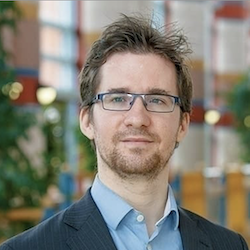
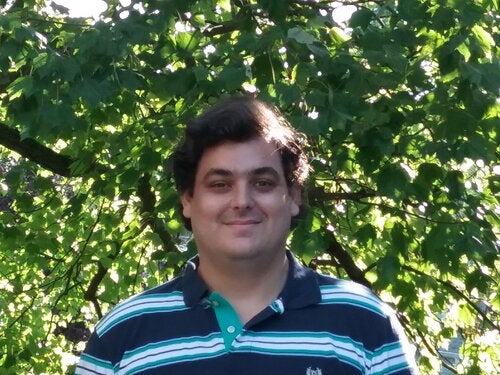
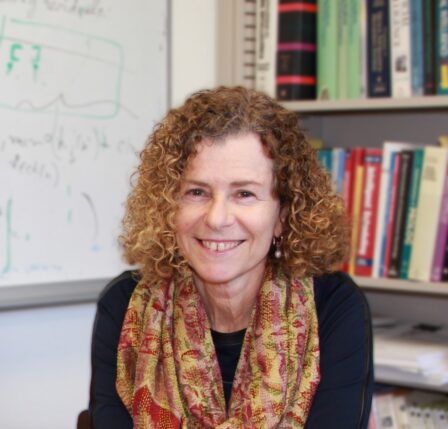
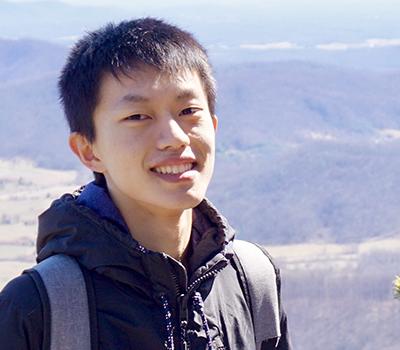
Caglar Gulcehre is a Tenure Track Assistant Professor at École Polytechnique Fédérale de Lausanne (EPFL) and Principal Investigator of the CLAIRE (Caglar Gulcehre Laboratory of Artificial Intelligence Research) lab. Previously, he worked as a Staff Research Scientist at Google DeepMind, Microsoft Research, and IBM Research. His research focuses on reinforcement learning , foundation models , LLM alignment , and sequence modeling . Current Position : Assistant Professor, EPFL Lab : CLAIRE Lab Previous Roles : Staff Research Scientist at DeepMind, MSR, IBM Research His work spans reinforcement learning , deep learning , and neural architecture design , with a focus on safety , trustworthy AI , and real-world applications . He has published in top venues including Nature , NeurIPS , ICML , and JMLR . Scientific contributions include: Best paper award at NeurIPS Nonconvex Optimization workshop Honorable mention for best paper at ICML 2019 Co-organizer of seven workshops at NeurIPS, ICML, and ICLR He supervises PhD students in areas related to AI for algorithm discovery , neural architectures , and foundation models , including: Skander Moalla Justin Samuel Deschenaux Liangze Jiang Xiuying Wei Yitao Xu
David Stillwell serves as Professor of Computational Social Science at Cambridge Judge Business School and Academic Director of The Psychometrics Centre, University of Cambridge. His research leverages big data to understand human psychology and behavior, with significant contributions in personality prediction from digital footprints and personalized advertising applications. His educational background includes: BSc in Psychology from the University of Nottingham (2007) MSc in Research Methods from the University of Nottingham (2008) PhD in Decision Making from the University of Nottingham (2012) Dr. Stillwell's research centers on computational social science and psychometrics, pioneering the myPersonality Facebook application that collected data from over 6 million users. His work demonstrates computers can predict personality as accurately as spouses, reveals psychological targeting's advertising effectiveness, and establishes links between personality-matched spending and life satisfaction. He also explores linguistic honesty markers through profanity analysis and personality-based dating patterns. His recent publications (2019-2025) reveal a strong trajectory toward AI evaluation using psychometric frameworks, particularly in medical and general-purpose AI assessment. Key themes include fairness metrics in language models, crisis emotional responses through social media, and computational personality recognition - demonstrating consistent innovation at the psychology-technology intersection. He has received significant recognition: Top 10 most influential papers of 2013 by Altmetric Nieman Journalism Lab highlight of 2013 Named in 'top 30 thinkers under 30' by Pacific Standard Magazine Dr. Stillwell maintains active industry engagement through consultancy with Barclays, Hilton, and Ubisoft on projects spanning computer-adaptive testing systems to interactive experiences like Predictive World for Watch Dogs 2. His policy impact is substantial, with citations by the European Data Protection Supervisor, World Bank, and multiple national governments, leading to speaking engagements at the European Parliament and Bank of England. As Academic Director of The Psychometrics Centre, he leads a global hub for advancing psychological assessment through innovative methods including Concerto open-source software, collaborating with organizations ranging from the European Commission to major corporations on psychometric applications in people analytics and digital behavior.
Daniel Cooney is an Assistant Professor in the Department of Mathematics at the University of Illinois Urbana-Champaign. He holds additional affiliations as an Affiliate at the Carl R. Woese Institute for Genomic Biology. His research focuses on applying partial differential equations (PDEs), dynamical systems, and stochastic processes to study evolutionary dynamics, particularly in biological and social systems. Key themes include multilevel selection, evolutionary game theory, and the emergence of cooperative behavior. Cooney earned his PhD in Applied and Computational Mathematics from Princeton University, advised by Simon Levin, and completed a postdoc as a Simons Fellow in Mathematical Biology at the University of Pennsylvania. His work bridges theoretical mathematics with applications in ecology, epidemiology, and social sciences. Recent publications explore topics like altruistic punishment in cultural systems, classroom-turnover dynamics, and protocell evolution. He actively participates in academic outreach, co-organizing conferences such as the AMS Special Session on Mathematics of Infectious Disease and the SIAM Minisymposium on Social-Ecological Systems. His research has been published in high-impact journals including *Proceedings of the National Academy of Sciences* and *Bulletin of Mathematical Biology*.
Martin T. Wells is the Charles A. Alexander Professor of Statistical Sciences at Cornell University, with joint appointments in the Department of Statistical Science, Department of Biological Statistics and Computational Biology, Department of Social Statistics, and as Professor of Clinical Epidemiology and Health Services Research at Weill Medical School. He serves as Editor-in-Chief of the ASA-SIAM Book Series and Co-Editor of the Journal of Empirical Legal Studies. Cornell University, Ithaca, NY Weill Cornell Medical College Research Interests span applied and theoretical statistics, Bayesian methods, biostatistics, clinical epidemiology, and computational biology. His work bridges disciplines like finance, legal studies, and health services research. Article Trends highlight advancements in Bayesian modeling, quantum cognition machine learning, tensor analysis, and misclassification correction, with applications in genomics, finance, and public health. Fellow of the American Statistical Association Fellow of the Royal Statistical Society Contributions include developing statistical software (e.g., rTensor), methodological innovations in clinical trials, and empirical legal studies on civil rights and the death penalty.
Rina Dechter is a Professor of Computer Science at the University of California, Irvine (UCI), affiliated with the Donald Bren School of Information and Computer Sciences (ICS). She specializes in automated reasoning, probabilistic and constraint-based graphical models, and causal inference. Dechter has held leadership roles, including Co-Editor-in-Chief of Artificial Intelligence since 2011 and editorial board memberships in journals such as the Constraint Journal and Journal of Machine Learning Research . Education : Ph.D., Computer Science, University of California, Los Angeles (UCLA) M.S., Applied Mathematics, Weizmann Institute B.S., Mathematics and Statistics, Hebrew University of Jerusalem Research Interests : Dechter’s work focuses on computational aspects of automated reasoning, constraint processing, probabilistic reasoning, and causal inference. She develops efficient algorithms for graphical models, emphasizing tractable reasoning tasks and anytime search strategies. Her recent projects include causal decision-making frameworks funded by a $5M NSF grant. Awards : Presidential Young Investigator Award (1991) AAAI Fellow (1994) ACP Research Excellence Award (2007) ACM Fellow (2013) Elected to the American Academy of Arts & Sciences (2025) Grants & Collaborations : She leads a multi-institutional NSF-funded project on causal foundations of AI decision-making. Her work emphasizes trustworthiness in AI through causal models, with applications in robotics and public health.
Eduardo Azevedo is the John M. Bendheim and Thomas L. Bendheim Professor of Business Economics and Public Policy at the Wharton School , University of Pennsylvania. He holds a courtesy appointment as Professor of Economics and was awarded the 2016 Sloan Foundation Fellowship. His research integrates economic theory with practical applications across science and business domains. His research interests include: Market design Selection markets Social science genetics Experimental economics Game theory Recent publication trends focus on: Economic theory applications to healthcare and digital markets Empirical Bayes methods in A/B testing Adverse selection in insurance markets Strategic behavior in two-sided matching Evolutionary behavioral economics He serves as an instructor for BEPP2500 - Managerial Economics , emphasizing real-world application of microeconomic theory to business problems. His work also involves software development for economic research, including MATLAB-based empirical Bayes tools for analyzing treatment effects in large-scale experiments. Scientific awards : Sloan Foundation Fellow (2016)
Dylan Hadfield-Menell is an Assistant Professor in the Department of Electrical Engineering and Computer Science at the Massachusetts Institute of Technology, holding the Bonnie and Marty (1964) Tenenbaum Career Development Professorship. His research focuses on AI alignment and human-AI interaction within MIT's School of Engineering. His research interests center on agent alignment problems in AI systems, particularly examining uncertainty in objective optimization for human-robot teams and societal oversight of machine learning systems. Key areas include the principal-agent alignment problem , assistance games frameworks , and robust preference learning that accounts for hidden contextual factors in reinforcement learning from human feedback. His recent publications reveal strong trends toward multi-agent cooperation , formal contract mechanisms for resolving social dilemmas, and advanced evaluation methodologies for AI safety. The research spans theoretical frameworks like open-universe assistance games while addressing practical challenges in language model alignment and cultural bias assessment. Scientific awards include: AI2050 Early Career Fellowship from Schmidt Futures Berkeley Fellowship NSF Graduate Research Fellowship C.V. Ramamoorthy Distinguished Research Award His work bridges theoretical computer science with real-world AI governance challenges, as demonstrated through MIT's participation in AI policy white papers. Current research directions include developing frameworks for transparent AI systems and addressing fundamental limitations in aligning recommender systems with human values through interdisciplinary synthesis.
Leslie Ann Goldberg is a Senior Research Fellow at St Edmund Hall and Professor of Computer Science at the University of Oxford. She currently serves as Head of the Department of Computer Science (on sabbatical 2025-26) and focuses on foundational problems in Algorithms and Complexity Theory , particularly randomised algorithms for network communication, machine learning, and statistical physics models. Her research includes solving Aldous' 1987 conjecture on backoff protocol instability (with John Lapinskas), developing rigorous mathematical analysis frameworks for algorithmic efficiency, and advancing approximate counting techniques via Markov Chain Monte Carlo methods (with Andreas Galanis and collaborators). Key projects involve graph homomorphisms , Moran process dynamics , and #BIS complexity class analysis. Recent publications (2023-2024) span topics like Sybil defense mechanisms, low-temperature sampling on random graphs, and parameterised subgraph counting modulo 2. Her work demonstrates cross-disciplinary impact in computational biology, statistical physics, and database theory. Scientific Awards include Best Paper Prizes at ICALP 2016, ICALP 2010, and IPEC 2017. She supervises PhD student Paulina Smolarova and collaborates extensively with researchers in Oxford and beyond.
Conor Ryan is a Professor in the Department of Computer Science & Information Systems at the University of Limerick. He is a Science Foundation Ireland-funded Investigator since 2002 and a member of multiple research centres including Lero – the Irish Software Research Centre and the Limerick Digital Cancer Research Centre. His research focuses on Genetic Programming, Grammatical Evolution, and their applications in domains like healthcare analytics, digital circuit design, and financial modeling. He has authored over 250 publications, with recent work emphasizing automated feature selection in medical diagnostics, neural architecture search, and blockchain ecosystems. Teaching includes courses on Foundations of Computer Science and Computer Games Programming. Research interests span evolutionary computation, machine learning, and interdisciplinary applications. Collaborations involve global institutions, reflecting his work's impact across computer science, engineering, and healthcare. His research has addressed challenges in breast cancer diagnosis via genetic algorithms, cryptocurrency volatility prediction using random forests, and automated generation of digital circuits. Ongoing projects explore interpretability in AI, energy-efficient computing, and sustainable transport systems through predictive analytics. Professional memberships include roles in the Centre for Research Training in Foundations of Data Science and the Data-Driven Computer Engineering Research Centre, underscoring his commitment to interdisciplinary innovation.
Dr. Rasmus Ibsen-Jensen is a Lecturer in Computer Science at the University of Liverpool. Previously, he held a Postdoctoral position at IST Austria under Krishnendu Chatterjee and completed his PhD under Peter Bro Miltersen. Research Focus: Algorithmic game theory, strategy complexity in two-player zero-sum games, control flow graph algorithms, edit distance for automata, and theoretical biology applications. Teaching: Module Coordinator for second-year courses in database development (COMP207), C++ programming (COMP282), and industrial placement (COMP299). His work bridges computational game theory and formal verification, with recent publications exploring memory constraints in partial-information games, algebraic path properties in concurrent systems, and evolutionary spatial dynamics. While no scientific awards are explicitly mentioned in the provided text, his contributions to algorithmic complexity and interdisciplinary research (e.g., theoretical biology) highlight his academic impact.
George J. Mailath is the Walter H. Annenberg Professor in the Social Sciences and Professor of Economics at the University of Pennsylvania, and an Honorary Professor at the Research School of Economics, Australian National University. He specializes in microeconomics, noncooperative game theory, repeated games, and the theory of reputations. His research explores pricing strategies, evolutionary game theory, and social norms. Mailath is a Fellow of prestigious institutions including the American Academy of Arts & Sciences and the Econometric Society. He served on the Econometric Society Council (2013-2015, 2020-2023), Game Theory Society Council (2005-2011), and co-founded Theoretical Economics . His editorial roles include editorships at Econometrica , Review of Economic Studies , and others. His 2019 book Modeling Strategic Behavior provides graduate-level insights into game theory and mechanism design. Mailath’s articles focus on strategic interactions, reputation effects, and dynamic game theory. Notable works include analyses of trust in risk-sharing mechanisms and coalition-proof strategies under frictions. His research emphasizes long-term strategic behavior and institutional design.
Katy D. Heath is a Professor of Plant Biology and Affiliate Professor in Microbiology at the University of Illinois Urbana-Champaign (UIUC). She leads the Plant Biology department and is affiliated with the Carl R. Woese Institute for Genomic Biology. Her research focuses on the evolution of mutualisms, particularly plant-microbe interactions such as legume-rhizobium symbiosis, emphasizing genetic and ecological factors influencing symbiotic stability and adaptation. She investigates how environmental pressures (e.g., global change) shape mutualistic relationships and microbial community dynamics. Education: B.S. (2000) and Ph.D. (2007) from the University of Illinois and University of Minnesota, respectively, followed by postdoctoral work at the University of Toronto (2007–2009). Research Interests: Symbiosis evolution, microbial genetics, plasmid transmission dynamics, and the impacts of agricultural practices on rhizobia populations. She studies diverse systems, including Medicago-Sinorhizobium, soybean-Bradyrhizobium, and invasive legume-rhizobium interactions. Recent publications (2020–2025) highlight studies on endophyte impacts on soybean yield, rhizobia diversity under conventional farming, and genomic analyses of symbiotic coevolution. Her work integrates molecular biology, quantitative genetics, and ecology. Grants & Collaborations: Lead PI on a $12.5M NSF Biology Integration Institute (Genomics and Eco-evolution of Multi-scale Symbiosis). Her team includes collaborations with institutions like Indiana University and the University of Chicago. Labs & Teams: Heath Lab focuses on symbiosis research, with active projects on microbiome dynamics, plasmid-host coevolution, and community outreach (e.g., Boys and Girls Club collaborations). Recent lab highlights include student graduations (e.g., Ivan Sosa Marquez, Chase) and awards like the John R. Laughnan Award in Plant Biology.
Risto Miikkulainen is a Professor of Computer Science and Neuroscience at the University of Texas at Austin and VP of AI Research at Cognizant AI Lab. He directs the UTCS Neural Networks Research Group and is currently on leave from UT, working on Evolutionary Computation and Deep Learning at Sentient Technologies, Inc. Education: Ph.D. in Computer Science, UCLA, 1990 M.S. in Applied Mathematics, Helsinki University of Technology (now Aalto University), 1986 Risto Miikkulainen's research focuses on biologically-inspired computation such as neural networks and evolutionary computation. His work spans three main areas: (1) Neuroevolution, evolving complex deep learning architectures and recurrent neural networks for sequential decision tasks in robotics, games, and artificial life; (2) Cognitive Science, developing models of natural language processing, memory, and learning that shed light on disorders such as schizophrenia and aphasia; and (3) Computational Neuroscience, studying the development, structure, and function of the visual cortex, episodic memory, and language processing. His research combines theoretical understanding of biological information processing with practical applications for developing intelligent artificial systems. His recent publications (2025) show a strong focus on evolutionary approaches to AI development, particularly in neural architecture search, loss function optimization, and explainable AI. Many papers explore the intersection of evolutionary computation with deep learning, creating more efficient and transparent AI systems. His work spans theoretical foundations and practical applications in areas ranging from environmental control systems to cognitive modeling. Scientific Awards: College of Fellows, International Neural Network Society, 2024 Best Pathway to Impact Award, NeurIPS Climate Change workshop, 2024 AAAI Fellow, 2023 IEEE CIS Evolutionary Computation Pioneer Award, 2020 Gabor Award, International Neural Network Society, 2017 Outstanding Paper of the Decade Award, International Society for Artificial Life, 2017 IEEE Fellow, 2016 Multiple Best Paper Awards at GECCO, CIG, and CEC conferences Deployed Application Award, AAAI/IAAI-2013, AAAI/IAAI-2018 Miikkulainen has extensive experience mentoring students through undergraduate research courses like CS378 Computational Intelligence in Game Design I and II, where students develop independent research projects on the OpenNERO research platform. He has received multiple awards for deployed applications, demonstrating the practical impact of his research. His work has led to the development of the NERO game platform, which serves as both an educational tool and research platform for AI. He directs the UTCS Neural Networks Research Group, which focuses on neuroevolution, cognitive science models, and computational neuroscience. The group has developed the NERO (Neuro-Evolving Robotic Operatives) platform, a machine learning game that allows users to train intelligent agents through evolutionary computation. The group's work spans theoretical research and practical applications in AI, with connections to both academic and industry partners.
Chuang Gan is an Assistant Professor at the University of Massachusetts Amherst, affiliated with the College of Information and Computer Sciences and the Department of Computer Science. His work focuses on advancing artificial intelligence, robotics, computer vision, and embodied agents through interdisciplinary research combining neural networks, physical simulations, and multimodal learning. Research interests include generative models, reinforcement learning, vision-language integration, and scalable autonomous systems. He explores topics like world modeling for robots, adaptive policy learning, and physics-driven AI. His projects often involve creating systems that learn from visual, auditory, and tactile inputs to perform complex tasks such as object manipulation, navigation, and decision-making in dynamic environments. Recent research trends emphasize embodied AI systems capable of long-horizon planning, compositional reasoning, and efficient learning from limited data. His work bridges theory and practice, with applications in robotics, simulation platforms, and multimodal generation. Key contributions include frameworks for 3D scene understanding, adaptive world models, and novel training paradigms for large language models. His research has been applied to robotics platforms like RoboDreamer and UBSoft, focusing on unbounded soft environments. Collaborations involve designing benchmarks for physical scene understanding (e.g., Physion++), and creating tools like DiffTactile for tactile simulation. His work often integrates principles from differential geometry, PDE dynamics, and game theory. Chuang Gan’s research group develops open-source tools and benchmarks, such as the SoftZoo robot co-design platform and the SOK-Bench situated reasoning benchmark. His team emphasizes scalable alignment methods beyond human supervision and explores ethical AI through principles like symmetry-enhanced training.
Huazheng Wang is an Assistant Professor in the School of Electrical Engineering and Computer Science at Oregon State University. His research focuses on reinforcement learning, information retrieval, and trustworthy AI. He received his Ph.D. from the University of Virginia (2021) and B.E. from the University of Science and Technology of China (2015). He holds awards including the 2025 EECS Fabulous Teacher Recognition and SIGIR 2019 Best Paper Award. His work addresses challenges in robust reinforcement learning, adversarial attacks on bandit systems, and applications in scientific discovery. Education: Ph.D., Computer Science, University of Virginia (2021) B.E., Computer Science and Technology, University of Science and Technology of China (2015) Research interests emphasize developing efficient algorithms for reinforcement learning, multi-armed bandits, and their applications in recommendation systems, protein optimization, and security. Notable contributions include provably efficient risk-aware reinforcement learning frameworks and adversarial attack analysis on bandit systems. Recent work includes NSF-funded research on neural bandits (IIS-2403401) and publications in top venues like ICML, NeurIPS, and AAAI. His lab explores embodied LLM agents for team cooperation and federated collaborative online monitoring frameworks.