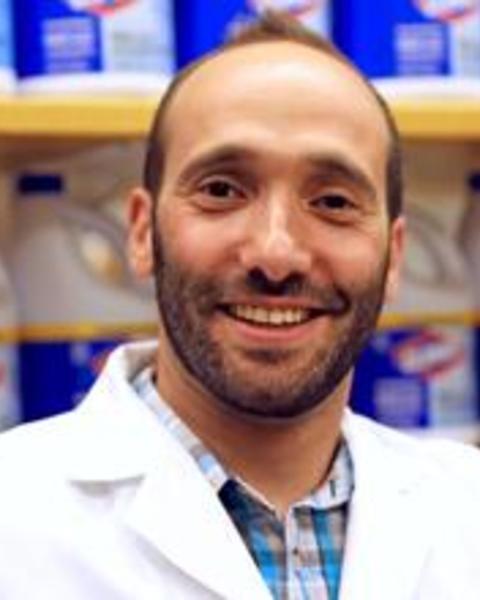
Kenneth Hoehn is an Assistant Professor in the Department of Biomedical Data Science at the Geisel School of Medicine, Dartmouth College. As a computational immunologist with expertise in evolutionary biology, he develops computational evolutionary approaches to trace cellular lineages, particularly B cells, in contexts such as infection, vaccination, cancer, and autoimmune diseases. His research focuses on understanding adaptive immunity in conditions like COVID-19 Food allergies Myasthenia gravis through collaborations with experimental teams. Key projects include: Phylogenetic modeling of B cell responses Evolutionary signatures in immune repertoires Tracking B cell dissemination in autoimmune diseases Epigenetic regulation of memory B cells Recent publications highlight trends in single-cell immunology , phylogenetic inference , and computational tools for analyzing B cell dynamics. His lab at Dartmouth integrates evolutionary genetics with high-resolution immune profiling.
Huazheng Wang is an Assistant Professor in the School of Electrical Engineering and Computer Science at Oregon State University. His research focuses on reinforcement learning, information retrieval, and trustworthy AI. He received his Ph.D. from the University of Virginia (2021) and B.E. from the University of Science and Technology of China (2015). He holds awards including the 2025 EECS Fabulous Teacher Recognition and SIGIR 2019 Best Paper Award. His work addresses challenges in robust reinforcement learning, adversarial attacks on bandit systems, and applications in scientific discovery. Education: Ph.D., Computer Science, University of Virginia (2021) B.E., Computer Science and Technology, University of Science and Technology of China (2015) Research interests emphasize developing efficient algorithms for reinforcement learning, multi-armed bandits, and their applications in recommendation systems, protein optimization, and security. Notable contributions include provably efficient risk-aware reinforcement learning frameworks and adversarial attack analysis on bandit systems. Recent work includes NSF-funded research on neural bandits (IIS-2403401) and publications in top venues like ICML, NeurIPS, and AAAI. His lab explores embodied LLM agents for team cooperation and federated collaborative online monitoring frameworks.
Dr. Michael Baym is an Associate Professor of Biomedical Informatics at Harvard Medical School with affiliate appointments in Microbiology and the Laboratory of Systems Pharmacology, and as an Associate Member of the Broad Institute. He leads the Baym Lab, which studies microbial evolutionary genomics and antibiotic resistance through a hybrid of experimental, computational, and theoretical approaches. His research focuses on: Antibiotic Resistance Evolution and practical interventions Mobile Genetic Elements (plasmids, phages, transposons) Computational Genomic Algorithms for big data analysis Synthetic Biology tools and technologies Key recent publications explore phage discovery systems , phylogenetic compression of microbial genomes, and RNA-guided gene drives in plasmids. His work is supported by multiple NIH/NIGMS and NSF grants including a MIRA award. Scientific honors include: Packard Fellowship (2018) Pew Biomedical Scholarship (2020) Sloan Research Fellowship (2020) A. Clifford Barger Excellence in Mentoring Award (2021) SSQBio Mentorship Award (2022) The lab actively trains PhD students and postdoctoral fellows with alumni occupying academic and industry positions globally. Current team members include researchers from interdisciplinary backgrounds working at the intersection of experiment, computation, and theory .
George Perry is a Professor of Anthropology at Pennsylvania State University, with research intersections in Biology, Evolutionary Medicine, and Genomics. He is affiliated with the Huck Institutes' Center for Infectious Disease Dynamics, Ecology, Molecular Cellular and Integrative Biosciences, and Bioinformatics and Genomics programs. Perry directs the Anthropological Genomics Lab , focusing on paleogenomics and evolutionary adaptation. Research areas: anthropological genomics, parasite evolution, human body size transitions, and evolutionary medicine Key collaborations: international teams in Madagascar, Europe, and Africa Leadership: Bioinformatics and Genomics Chair (2019–2023) His 2025–2022 publications span evolutionary responses to invasive species, human migration health impacts, chemosensory gene adaptation, and primate genomic diversity. Notable methodological contributions include ancient DNA recovery and comparative paleogenomics. Perry advises graduate students like Vanessa Garcia and Annette Mercedes, with grants including NIH support for Cuban health disparity studies. Scientific leadership includes tenure-line promotions (2023) and NASA Space Grant collaborations.
Pekka Marttinen is a tenured Associate Professor of Machine Learning at Aalto University, Department of Computer Science, and leads the Machine Learning for Health (Aalto-ML4H) group within the Helsinki Institute for Information Technology HIIT. Education: M.Sc. in Applied Mathematics, University of Helsinki (2004) Ph.D. in Statistics, University of Helsinki (2008) Title of Docent in Information and Computer Science, Aalto University (2015) Research Focus: His methodological work spans large language models, reinforcement learning, deep learning, probabilistic machine learning, and causal inference . These techniques are applied to critical domains of healthcare, bioinformatics, statistical genetics, epidemiology, and personalized medicine . The group develops novel algorithms, theoretical guarantees, and open-source software that enable data-driven discovery and decision-making in medicine and biology. Publication Trends: Across 2022-2024 the lab has concentrated on (i) rigorous causal reasoning over temporal clinical data, (ii) principled uncertainty quantification in LLMs, (iii) representation learning for neural network comparison, and (iv) translational projects that turn raw EHRs into actionable clinical insights. Earlier work integrated high-dimensional genomics with metabolomics and mapped evolutionary forces in bacterial pathogens. Scientific Awards & Recognition: While no specific awards are listed, his sustained publication record in top-tier venues (NeurIPS, ICML, AISTATS, Nature Genetics, PLOS CB) and his role as responsible professor of the Machine-Learning, Data-Science and AI major signify significant peer recognition. Advising & Grants: Prof. Marttinen currently mentors 8 PhD students as primary supervisor and an additional 7 PhD students as co-supervisor. He has already graduated 8 PhDs since 2014. The group is supported through competitive funding including the Finnish Center for Artificial Intelligence (FCAI) doctoral program. Labs & Teams: He directs the Machine Learning for Health (Aalto-ML4H) research group, comprising postdocs Hans Moen, Ti John, Alexander Nikitin, Negar Safinianaini, Linli Zhang, Zhiyuan Li, and the above-mentioned PhD cohort.
Jim Smith is a Professor in Interactive Artificial Intelligence at the University of the West of England (UWE), Bristol, affiliated with the School of Computing and Creative Technologies and the Department of Computer Science and Creative Technologies. He serves as Director of the Computer Science Research Centre and leads the AI@UWE theme. His research is supported by UKRI, Innovate UK, and partnerships with organizations including Health Data Research UK, Office for National Statistics, NHS Scotland, and DSTL. University: University of the West of England School: School of Computing and Creative Technologies Department: Department of Computer Science and Creative Technologies Role: Professor in Interactive Artificial Intelligence Leadership: Director, Computer Science Research Centre Research Interests : Jim Smith's work focuses on Interactive Artificial Intelligence, particularly at the intersection of AI and privacy preservation when using sensitive data for public good. His research includes statistical disclosure control, privacy leakage from AI models, evolutionary computation, machine learning, and systems that learn through human interaction or self-adaptation. He explores how AI can automate privacy checks in research outputs and assess vulnerabilities in trained models. Recent Publications : His recent work spans AI privacy in trusted research environments (e.g., SACRO, SDC-Reboot), dialogue act classification, human-robot interaction, and visualization of deep learning models. Themes include privacy-preserving AI, automated disclosure control, interactive machine learning, and neuromorphic computing. Machine Learning & Privacy Evolutionary Computation Interactive AI Systems Human-Computer Interaction Statistical Disclosure Control Federated Learning Security Scientific Awards : No specific awards are mentioned in the provided texts. Advising and Grants : He currently supervises PhD students on topics including spatio-temporal air quality modeling, federated learning privacy, and threat detection in mobile networks. He leads Innovate UK and UKRI-funded projects such as SACRO and SDC-Reboot, focusing on AI-driven solutions for data confidentiality in public sector research. Interactive Machine Learning for Claim Settlement (Innovate UK) SDC-Reboot (DARE UK/Health Data Research UK) Threat Identification in Mobile Networks (Ribbon Communications) Labs and Teams : He leads the AI@UWE initiative and the Computer Science Research Centre at UWE. His work involves collaboration through DARE UK and open-source development via the AI-SDC GitHub organization, which hosts tools from SACRO and GRAIMATTER projects.
Simone Fior is a Lecturer at the Department of Environmental Systems Science , ETH Zürich , focusing on ecological genetics and plant adaptation. Their research integrates genomic, quantitative genetics, and ecological field experiments, particularly on Dianthus (Caryophyllaceae) along altitudinal and climatic gradients. Recent work explores climate-induced range shifts, local adaptation, and genomic responses to environmental changes. Professional experience includes roles at ETH Zürich since 2013 (Senior Assistant, Postdoc) and prior positions at the Edmund Mach Foundation (2009-2012) and University of Insubria (2007-2008). Education spans a PhD in Plant Biology (University of Milan, 2007) and an MSc in Natural Sciences (University of Milan, 2003). Simone co-organizes the Bioinformatics for Adaptation Genomics Winter School . Key research areas include adaptive divergence , polygenic adaptation , climate change biology , and phylogenomics . Articles emphasize genomic selection signatures, functional-structural modeling, and ecological-genetic interactions. Notable collaborations involve Jake Alexander, Alex Widmer, and interdisciplinary teams at ETH Zurich.
Max Lau is an Assistant Professor in the Department of Biostatistics and Bioinformatics and the Department of Epidemiology at Emory University. His research focuses on integrating machine learning and computational methods with epidemiological and genomic data to study infectious disease dynamics. He teaches courses such as BIOS 790R (Advanced Seminar in Biostatistics) and DATA 534 (Applied Machine Learning). Dr. Lau's work emphasizes scalable Bayesian inference, graph neural networks, and stochastic modeling to address challenges in disease transmission, outbreak control, and pathogen evolution. His recent research includes developing tools like ScITree and Epilearn, and he has contributed to understanding measles dynamics, tuberculosis treatment, and livestock disease management. His academic contributions span over 30 publications since 2010, with a particular focus on phylodynamics, epidemic modeling, and vaccine strategy evaluation. His interdisciplinary approach bridges computational methods with public health applications, aiming to enhance disease prediction and intervention efficacy.
Donald Rio holds the Richard and Rhoda Goldman Distinguished Chair in the Biological Sciences and is a Professor of Biochemistry, Biophysics, and Structural Biology. He is affiliated with the Division of Biochemistry and Molecular Biology and the Center for Integrative Genetics. His lab focuses on nucleic acid transactions, including transposable element mobilization (P elements) and RNA binding protein mechanisms controlling alternative splicing. Research highlights include studies on THAP9 proteins in humans/zebrafish, cryo-EM structural analysis of transposase-DNA complexes, and splicing regulation in neurodegenerative diseases like ALS and Parkinson’s. His work combines biochemical, genetic, and computational approaches, including the development of the Junction Usage Model (JUM) for splicing analysis. Research interests span transposition mechanisms linked to HIV integration, immune system recombination, and evolutionary genome dynamics. His team investigates how RNA binding proteins like hnRNPA1 influence splicing in disease contexts, with projects involving CRISPR-based models and patient RNA-seq data analysis. Collaborations include studies on splicing accuracy across tissues and age, and the impact of splicing defects in neurodegenerative disorders. Key awards include the Goldman Chair. His lab’s contributions bridge fundamental molecular mechanisms with translational applications in genetic disease modeling and drug discovery. Recent work focuses on isogenic stem cell models (iSCORE-PD) for Parkinson’s research and structural biology insights into transposase function. Grants and projects involve NIH funding for ALS splicing studies and collaborations with institutions like the Buck Institute. His lab actively publishes in top journals such as Genome Research , PNAS , and Nature , with a strong emphasis on cryo-EM and bioinformatic methods.
Leslie Valiant is the T. Jefferson Coolidge Professor of Computer Science and Applied Mathematics in Harvard University's School of Engineering and Applied Sciences, where he has held a faculty position since 1982. A foundational figure in theoretical computer science, his work bridges artificial and natural computational phenomena across multiple disciplines. His academic background includes education at: King's College, Cambridge Imperial College, London Ph.D. in Computer Science from Warwick University (1974) Valiant's research spans computational complexity , machine learning theory , parallel systems , and computational neuroscience . He pioneered the PAC (Probably Approximately Correct) learning framework that established computational learning theory as a rigorous field. His holographic algorithms work revealed deep connections between computational complexity and statistical physics, while his neuroidal model and evolvability theory provide computational explanations for cognitive processes and biological evolution. Current investigations focus on cortical computation primitives and knowledge infusion architectures. His publication trends show increasing integration of neuroscience with computational theory since 2010, with dominant themes in holographic computation (2006-2018), cortical modeling (2012-2018), and evolvability (2009-2017). The work consistently applies computational complexity analysis to biological and cognitive systems. Major recognitions include: Nevanlinna Prize (1986) for mathematical aspects of computer science Knuth Award (1997) for foundational algorithms contributions EATCS Award (2008) for theoretical computer science impact Turing Award (2010) for computational learning theory and complexity Fellowship in the Royal Society and National Academy of Sciences Valiant's research has been supported by NSF and international grants enabling cross-disciplinary work in computational neuroscience and evolutionary algorithms. While specific advisees aren't documented in source materials, his theoretical frameworks have shaped generations of researchers in machine learning and complexity theory. His current research group explores neuroidal architectures for cognitive computation, investigating how cortical circuits achieve robust information processing through in-circuit testing methodologies. Ongoing projects aim to identify fundamental computational primitives in neural systems and develop biologically inspired AI frameworks.
Nathan (Nati) Linial is a Professor at the School of Computer Science and Engineering at the Hebrew University of Jerusalem, where he has been a faculty member since completing his postdoctoral period at UCLA. He earned his undergraduate degree in mathematics from the Technion and his PhD in graph theory from the Hebrew University. His research spans multiple areas of theoretical computer science and mathematics, with primary focus on combinatorics, theoretical computer science, and bioinformatics. Linial's work has made significant contributions to high-dimensional combinatorics, expander graphs, metric embeddings, and computational molecular biology. His research often bridges geometry, analysis, and combinatorial structures, demonstrating deep connections between seemingly disparate mathematical fields. Linial's recent publications reveal a strong trend toward high-dimensional combinatorial structures, including simplicial complexes, hypertrees, and high-dimensional permutations. His work frequently employs probabilistic methods, linear programming techniques, and geometric approaches to solve fundamental combinatorial problems. The breadth of his research is evident in both pure mathematical contributions and applications to computational biology. Fellow of the American Mathematical Society ISI Highly Cited Researcher Conant Prize (2008) for the influential survey paper "Expander graphs and their applications" Linial has served on the editorial boards of several prestigious journals including the Israel Journal of Mathematics (as Chief Editor 2013-2017), Random Structures and Algorithms, and Combinatorica. His academic leadership extends to organizing conferences and workshops in combinatorics and theoretical computer science. He has mentored numerous students whose work spans theoretical computer science, combinatorics, and computational biology. Linial is associated with research projects including ProtoNet (for protein sequence classification) and EVEREST (for evolutionary conserved protein domains), demonstrating his commitment to interdisciplinary research that bridges computer science with molecular biology.
Arthur Lesk is a Professor of Biochemistry and Molecular Biology at Pennsylvania State University since 2003. Previously, he held roles including faculty member at the clinical school of the University of Cambridge (1990–2003), group leader at the European Molecular Biology Laboratory (1987–1990), and professor of chemistry at Fairleigh Dickinson University (1971–1987). He earned a B.A. from Harvard University (1961), Ph.D. from Princeton University (1966), and M.Sc. from the University of Cambridge (1999). His research focuses on bioinformatics, genomics, protein structure, and molecular biology. He has authored 189 scientific articles, 10 books, and has an h-index of 61. Notable works include Protein Science (2021) and Introduction to Bioinformatics (2019). Lesk chairs CODATA’s Biological Macromolecules Task Group and is a Fellow of the AAAS and Royal Society of Biology. He maintains active teaching and research roles, delivering lectures globally. His contributions include advancing protein structure databases and computational methods for molecular biology. Lesk is a Life Member of Clare Hall, Cambridge, and has held visiting positions at universities in New Zealand, Australia, and Europe.
Satish Rao is a Professor in the Computer Science Division at the University of California, Berkeley. He is affiliated with the Simons Institute for the Theory of Computing and the Center for the Theoretical Foundations of Learning, Inference, Information, Intelligence, Mathematics and Microeconomics at Berkeley (CLIMB). His research focuses on algorithms, combinatorial optimization, graph theory, and theoretical computer science with applications to computational biology and machine learning. Rao has held teaching roles for courses such as CS 70 (Discrete Mathematics and Probability Theory) and CS 270 (Spring 2024). He has been recognized with prestigious awards including ACM Fellow (2013), the Delbert Ray Fulkerson Prize (2012), and the Okawa Research Grant (1999). Research Interests: Algorithm design, graph algorithms, combinatorial optimization, computational biology, and machine learning. Key Contributions: Pioneering work on metric embeddings, approximation algorithms, and network flow problems. Notable publications include foundational papers on tree metrics, distributed object location, and electrical flow-based optimization. Rao’s work bridges theoretical computer science with practical applications, including contributions to phylogeny estimation, anomaly detection, and parallel computing frameworks like the BSP model.
Michael Levin is a Vannevar Bush Professor and Distinguished Professor at Tufts University, affiliated with the School of Arts and Sciences (Department of Biology) and School of Engineering (Biomedical Engineering). His research focuses on bioelectricity, developmental biology, and collective intelligence. He leads the Allen Discovery Center and the Tufts Center for Developmental and Regenerative Biology. Education: PhD in Genetics from Harvard Medical School (1996); BS in Computer Science and Biology from Tufts University (1992). Research Interests: Integrates developmental biology, computer science, and cognitive science to study morphogenesis, regeneration, and cancer. Explores bioelectric signaling, synthetic organisms, and AI-driven discovery. Key areas include regenerative medicine, cancer reprogramming, and collective intelligence in biological systems. Publications: Over 600 articles, with recent work on xenobots, neuroevolution, and bioelectric therapies. Themes include bioelectric control of form, AI in biology, and collective intelligence. Awards: INNS Donald O. Hebb Award, AAAS Fellow, and Vox Future Perfect 50 List recognition. Frequently invited to speak at conferences on biology, AI, and consciousness. Advising & Labs: Mentored numerous postdocs and students, including pioneers in bioelectricity and synthetic biology. Lab focuses on interdisciplinary approaches to biological pattern formation and regeneration.
Nicole C. Riddle is a Professor and Associate Chair for Research and Facilities in the Department of Biology at the University of Alabama at Birmingham (UAB). She holds a B.S. in Biology from the University of Missouri Columbia and a Ph.D. in Evolutionary and Population Biology from Washington University in St. Louis. Her research focuses on epigenetics and chromatin dynamics, particularly in the context of aging and sex differences using Drosophila melanogaster as a model system. Dr. Riddle's work explores how epigenetic mechanisms influence lifespan, genome stability, and phenotypic variation. She has pioneered the use of Drosophila to study exercise-induced physiological changes and their genetic underpinnings. Her lab investigates the roles of HP1 proteins in transcriptional regulation and chromatin organization, with recent studies emphasizing cross-species comparisons of aging mechanisms. Her research has been supported by grants including the BII: IISAGE project on sex-specific aging mechanisms. Notable contributions include developing novel tools like the Rotating Exercise Quantification System (REQS) to measure Drosophila activity levels. Dr. Riddle actively mentors students and postdoctoral researchers, inviting inquiries via riddlenc@uab.edu to join her lab.