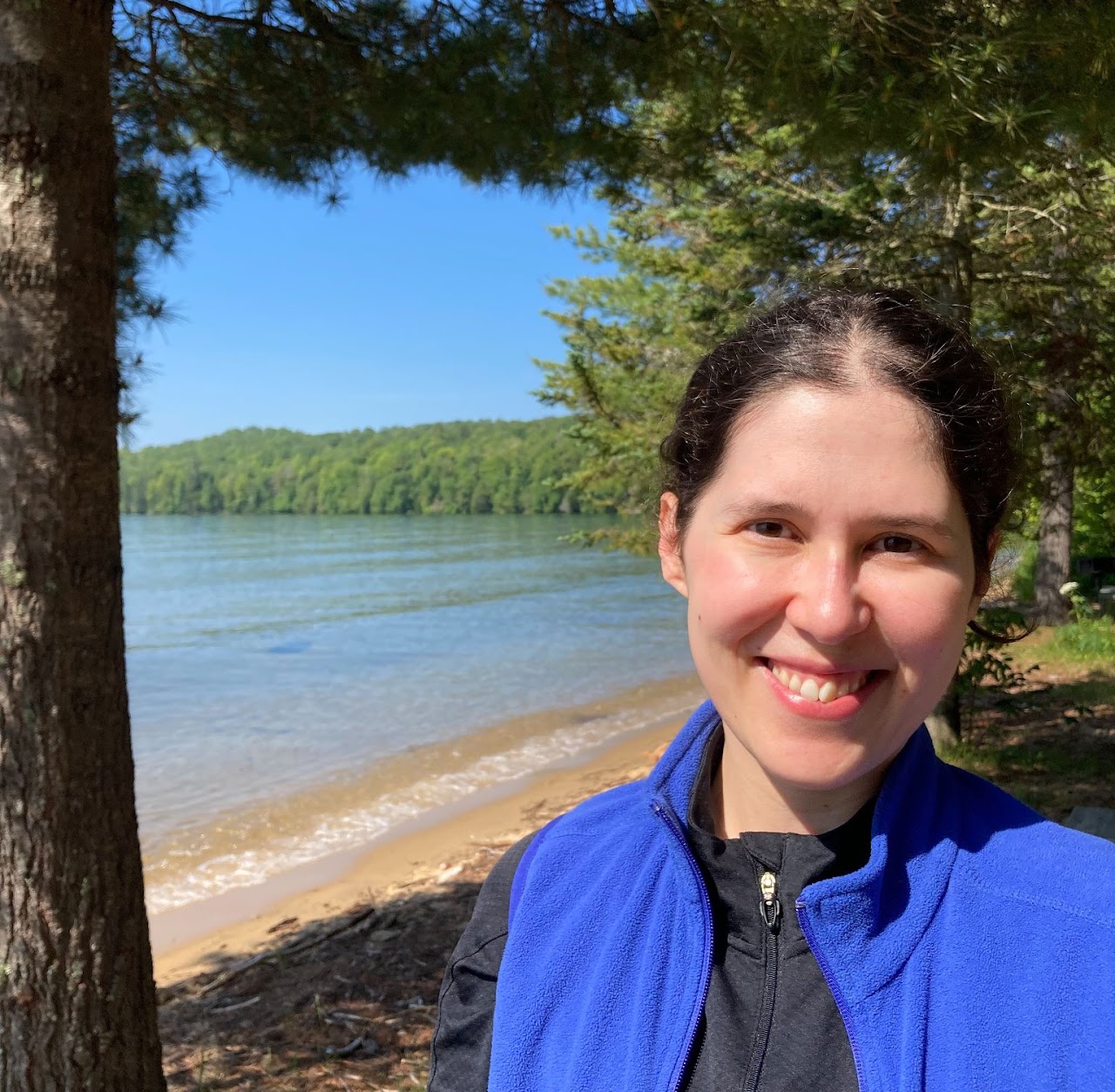
Olga Turanova is an Assistant Professor in the Department of Mathematics at Michigan State University (MSU). Her research focuses on nonlinear partial differential equations (PDEs), reaction-diffusion systems, free boundary problems, optimal transport, and numerical analysis. She is currently supported by the NSF grant DMS-2204722. Her work bridges theoretical mathematics with applications in biology and engineering. Key areas of investigation include tumor growth models, chemotaxis dynamics, and robotic swarm coverage optimization. She actively contributes to the analysis of incompressible limits, nonlocal equations, and multi-agent control systems. Research outputs span topics from mathematical biology to fluid dynamics, with recent emphasis on nonlocal diffusion phenomena and inhomogeneous tissue growth models. Turanova maintains an active presence in the academic community through her arXiv preprints and Google Scholar profile. Her grants and collaborations reflect interdisciplinary interests, integrating analytical rigor with computational methods to address complex systems in natural and engineered environments.
Jun Liu is a Professor in the Department of Statistics at Harvard University, renowned for his contributions to computational statistics, bioinformatics, and Bayesian methods. He leads research in statistical genetics, genomic data analysis, and algorithm development for biological systems. His work integrates advanced statistical theory with computational tools, such as the Gibbs Motif Sampler and Bayesian Aligner, widely used in bioinformatics. Research interests include Monte Carlo methods, statistical genetics, and machine learning applications in biology. He has developed influential software tools like BPPS, MDScan, and CLIC, addressing problems in motif discovery, genomic sequence analysis, and pathway expansion. Liu’s interdisciplinary approach bridges statistics and computational biology, with applications in cancer genomics, immune repertoire analysis, and evolutionary biology. Notable recognition includes fellowships from the American Statistical Association, Institute of Mathematical Statistics, and International Society for Bayesian Analysis. He advises numerous Ph.D. students and postdoctoral researchers, many of whom hold academic and industry positions globally. His lab collaborates internationally, organizing workshops on Monte Carlo methods and statistical forums in China. Liu’s publications span statistical methodology, computational biology, and genetics, with recent work on genomic element evolution, immune cell profiling, and algorithmic advancements in high-dimensional data analysis. He emphasizes inverse modeling and Bayesian approaches to tackle complex biological questions.
Max Klimm is an Assistant Professor for Discrete Optimization at Technische Universität Berlin, affiliated with Faculty II – Mathematics and Natural Sciences and the Department of Mathematics. He leads the research group in Discrete Optimization and holds editorial roles at journals like the International Journal of Game Theory and Operations Research Forum . His academic journey includes a PhD in Mathematics from TU Berlin (2012), followed by roles as an Assistant Professor at Humboldt-Universität zu Berlin and Head of the Junior Research Group at the Einstein-Center for Mathematics. His research focuses on mathematical optimization, game theory, and mechanism design applied to multi-agent systems in traffic, telecommunications, and economics. Recent work addresses equilibrium computation in congestion games, stochastic optimization, and algorithmic challenges in network design. Key projects include Combinatorial Network Flow Methods for Gas Markets and the Math+ projects on mechanism design and evolutionary models for networks. Teaching responsibilities include courses on Discrete Optimization, Algorithmic Game Theory, and introductory mathematical courses. His research has been funded by DFG, Einstein Center, and Math+ initiatives. Notable contributions include advancements in parametric flow algorithms, impartial selection mechanisms, and reconstructing historical road networks using cost-benefit models.
Emily Jefferson is a Professor of Health Data Science at the University of Dundee, currently serving as CTO of Health Data Research (HDR) UK and Interim Director of DARE UK. She holds an honorary professorship in Population Health and Genomics. With a PhD in Bioinformatics and industry experience in Big Data and project management, her career spans academia, finance, and solo global travel. Her research focuses on Trusted Research Environments (TREs), data governance, and machine learning applications in healthcare. She led the Health Informatics Centre (2013–2022), managing a 60-person team supporting over 100 projects. Key achievements include ISO27001 certification and Scottish Government-accredited Safe Haven infrastructure. Since 2014, she has secured over £120M in grants as PI/Co-I, delivering £28M. Notable projects include HT-ADVANCE (hypertension biomarkers), Alleviate (chronic pain data hub), and GRAIMATTER (TRE disclosure control guidelines). She chairs boards at Swansea University and European Bioinformatics Institute. Awards include the 2016 Farr Institute Future Leader. Her work addresses SDG 3 (Good Health) and 9 (Industry/Innovation). Recent publications emphasize TRE innovation, hypertension subtyping, and pandemic data infrastructure (e.g., CO-CONNECT for COVID-19).
Pawel Swietach is Professor of Physiology at the University of Oxford, Head of the Proton Transport Group (DPAG), and Handa Tutorial Fellow at Corpus Christi College. His work bridges cardiac physiology , cancer pH biology , and blood oxygen transport , with a focus on acid-base regulation and its therapeutic implications. PhD in Physiology (Oxford, 2004) First Class BA in Physiological Sciences (Oxford, 2001) His research uncovers how pH gradients govern cell function in heart and cancer, including: Proton-calcium crosstalk in cardiomyocytes Metabolic adaptation to acidosis in tumors Biochemical control of oxygen release in stored blood His 15 most recent publications (2020-2025) span Nature Reviews Cancer , Nature Cardiovascular Research , and Cell Reports , focusing on acid-driven oncogenesis, histone modifications from propionate metabolism, and novel methods for imaging oxygen transport. Key findings include tumor-stroma acid exchange via gap junctions and nuclear pH's role in cardiac gene expression. Honors include: ERC Consolidator Grant (2017) Royal Society University Research Fellowship (2008-2016) CRUK-U.S. Fulbright Scholar (2018) Academia Europaea membership (2024) He leads cross-disciplinary projects funded by British Heart Foundation, ERC, MRC, and industry partners, translating pH biology into clinical tools like FlowScore for blood storage quality assessment.
Jamie Moore is a Research Fellow at the University of Essex, focusing on linked and missing data. They previously worked at the Administrative Data Research Centre for England (University of Southampton) and the UK Office for National Statistics. Moore holds a BSc in Biology (University of Southampton) and a PhD in Evolutionary Ecology (University of Leeds). Research Interests: Quantifying non-response bias in surveys, adjusting for missing data in longitudinal studies, pandemic-related data collection challenges, and record linkage methodologies. Key Collaborations: Regularly works with Gabriele Durrant, Peter W.F. Smith, and other interdisciplinary teams. Recent publications highlight their work on survey design during global crises, bias adjustment techniques, and health disparity analysis using large-scale datasets like the UK Household Longitudinal Study. Moore’s methodological contributions span both academic journals and policy-oriented working papers, emphasizing practical applications in public health and social sciences.
Dr David Begg is a Senior Lecturer at the University of Portsmouth, affiliated with the Faculty of Technology and School of Civil Engineering and Surveying. He contributes to the Portsmouth Centre for Advanced Materials and Manufacturing and serves as a PhD supervisor. Academic Rank: Senior Lecturer University: University of Portsmouth School: Faculty of Technology Department: School of Civil Engineering and Surveying His research focuses on structural engineering, concrete technology, and smart systems. Key areas include: Structural Modeling, Monitoring, and Design Steel Fiber Reinforced Concrete Building Information Modeling (BIM) Optimization Seismic Analysis and Rehabilitation Intelligent Structural Systems Research trends show consistent contributions to concrete material properties, BIM integration, and seismic vulnerability assessment. Scientific awards are not explicitly mentioned in available data. He accepts PhD students but notes no current funding opportunities.
Pezhman Mardanpour is an Associate Professor in the Department of Mechanical and Materials Engineering at Florida International University (FIU), part of the College of Engineering. His research focuses on aeroelasticity, constructal theory, fluid-structure interaction, structural dynamics, and thermodynamics. He is particularly known for work on origami-inspired design applications in engineering systems. Research Interests: Aeroelasticity (both experimental and theoretical) Constructal theory-based design optimization Fluid-structure interaction phenomena Thermodynamic systems analysis Biomimetic origami structures Professional Contributions: His work bridges theoretical constructs with practical applications in aerospace engineering, structural design, and materials science. Recent research emphasizes fatigue life optimization of origami-inspired structures and evolutionary aeroelastic design methods for flying wing aircraft. Affiliations: Director of the CELL-MET ERC Pathways-UP ERC member National Industry Advisory Board (NIAB) Lab affiliations include the Mardanpour Research Group , focusing on advanced structural mechanics and smart materials.
Dean F. Hougen is the Lloyd and Joyce Austin Presidential Professor and Director of the School of Computer Science at the University of Oklahoma, within the Gallogly College of Engineering. He also holds affiliations with the School of Electrical and Computer Engineering, Data Science and Analytics Institute, and has served as Interim Director and Associate Director of the School of Computer Science. His research focuses on artificial intelligence, robotics, machine learning, and distributed systems, conducted in labs like the Robotic Intelligence and Machine Learning Laboratory and the Artificial Intelligence Research (AIR) SuperLab. Key areas include evolutionary computation, autonomous systems, and applied AI in healthcare and transportation. He has led over $24M in grants, including projects on intelligent aerospace systems, pandemic monitoring, and robotics for infrastructure safety. Notable awards include the Presidential Professorship, multiple best paper awards, and recognition for teaching excellence. Hougen has advised numerous students and contributed to interdisciplinary initiatives, including the CS INCLUDES program supporting Indigenous learners. His work spans academic leadership, industry collaborations, and advancing AI applications across domains.
Peter Ross is a Researcher at the Edinburgh Napier University , affiliated with the School of Computing Engineering and the Built Environment and the Centre for Algorithms, Visualisation and Evolving Systems . He collaborates with academics like Emma Hart, Alistair Lawson, and Andrew Webb on projects involving evolutionary swarm robotics , artificial immune systems , and optimisation algorithms . His research focuses on applying bio-inspired computing to robotics, including work on perceptual aliasing , adaptive scheduling , and swarm intelligence . He has supervised postgraduate research, notably serving as Director of Studies for Dr Neil Urquhart’s thesis on evolutionary machine learning in metamorphic malware analysis (1999-2003). His publications span 1998-2003 and explore intersections between immunology , sparse distributed memory , and robotic systems . Recent projects like VanFill Innovation Voucher (2025) indicate ongoing involvement in AI-driven solutions and human-robot interaction research.
Cara MacNish serves as an Associate Professor in the Department of Computer Science and Software Engineering at The University of Western Australia's School of Physics, Maths and Computing. Her academic role spans computational intelligence research and teaching with interdisciplinary applications in biomedical engineering and materials science. Her research expertise encompasses adaptive systems, artificial intelligence, neural networks, bioinformatics, cognitive science, evolutionary algorithms, machine learning, optimisation, and robotics. These converge in medical image processing (OCT denoising via GANs) and materials analysis (digital image correlation for displacement fields), reflecting her dual focus on algorithmic innovation and real-world engineering solutions. Recent publications demonstrate consistent advancement in two domains: deep learning applications for Optical Coherence Tomography enhancement (using GANs and deep feature loss) and novel digital image correlation techniques for materials science (handling discontinuities and nonlinear behavior). These areas show growing citation impact in medical imaging and fracture mechanics. MacNish has supervised 3 research students and secured 4 competitive grants, including Office for Learning & Teaching projects on engineering education (student experiences and gender inclusivity) and Defence Science and Technology Group funding for red teaming computational tools, alongside university research on evolutionary programming for code analysis. She maintains active collaborations across biomedical optics and materials engineering disciplines, evidenced by co-authorship with clinicians, computer scientists, and mechanical engineers on interdisciplinary projects addressing complex imaging and material behavior challenges.
Stefan Kremer is a Professor at the University of Guelph. His research focuses on learning to recognize, categorize, and generate structural patterns in complex data, utilizing artificial neural networks, support vector machines, deep belief networks, hidden Markov models, evolutionary algorithms, and deep learning. His lab emphasizes problem-driven approaches, particularly in domains like biology. Methods include deep learning, spatio-temporal pattern recognition, and bioinformatics. Contact: skremer@uoguelph.ca
Martim Brandão is a Lecturer (Assistant Professor) in Robotics and Autonomous Systems at King’s College London, where he leads the Responsible Robotics and AI (RRAI) Lab and serves as Co-Director of the UKRI Centre for Doctoral Training in Safe and Trusted AI. His research focuses on ethical, explainable, and safe AI and robotics, with applications in human-robot interaction, motion planning, fairness, and societal impact. His research interests include: Explainable AI and Motion Planning Fairness and Bias in AI Systems Human-Robot Interaction and Social Robotics Adversarial Robustness in Robotics Value Alignment and Ethical AI Inclusive and Participatory Robotics Design His recent publications (2023–2025) reflect a strong trend toward socially responsible robotics, focusing on fairness in navigation, explainability of planning failures, worker-centered agricultural robotics, environmental justice in drone delivery, and the dangers of bias in drowsiness detection and LLM-driven robots. His work emphasizes user understanding, societal impact, and ethical safeguards in autonomous systems. He has advised and collaborated with numerous students and researchers across diverse topics in robotics and AI. He is actively involved in shaping responsible robotics through: Leadership in the RRAI Lab Co-directing a national CDT in Safe and Trusted AI Developing fairness-aware algorithms Advocating for inclusive and ethical design practices His lab and research group focus on: Responsible Robotics and AI Explainability in Multi-Agent Planning Fairness in Coverage and Navigation Human-Centered Evaluation of AI Systems
Arnold Polanski is an Associate Professor in Economics at the School of Economics, University of East Anglia (UEA), where he is an active member of the Applied Econometrics and Finance, Economic Theory, and Statistics research groups. He is currently accepting PhD students and supervising research in socio-economic networks, game theory, financial economics, and financial tail risk. His academic journey includes a PhD from the University of Alicante, postdoctoral research at the University of Minnesota, and prior teaching at Queen’s University Belfast. PhD in Economics, University of Alicante (2004) Postdoctoral Studies, University of Minnesota (2005) Postgraduate Certificate in Higher Education Teaching, Queen’s University Belfast (2007) Arnold Polanski's research focuses on socio-economic networks , game theory , information economics , and financial tail risk , with a growing emphasis on integrating machine learning into economic modeling. His work explores how network structures influence cooperation, information diffusion, and financial interdependencies, particularly during extreme market events. He investigates the role of homophily, influence, and strategic behavior in shaping economic outcomes. His recent publications (2019–2025) reveal a consistent trend toward analyzing tail risk interdependence , network stability , and information flows using advanced econometric and computational methods. Many of his articles apply machine learning and axiomatic frameworks to bargaining and financial risk, published in journals like Journal of Economic Theory , Journal of Applied Econometrics , and Computational Economics . His work bridges theoretical economics with empirical and computational approaches. Arnold Polanski has received research funding from prestigious institutions including the British Academy and the Institut Europlace de Finance Louis Bachelier . He leads the Economic Theory Group at UEA and serves in key administrative roles such as Plagiarism Officer and Chair of the Faculty Appeals and Complaints Panel. He actively contributes to the academic community as co-organizer of an annual international workshop on the economics of networks. His research supervision includes PhD projects on socio-economic networks, game theory, and financial tail risk. He collaborates with scholars such as E. Stoja, F. Vega-Redondo, and J. Sikora, and his work often involves interdisciplinary methods combining economics, statistics, and computer science. Arnold Polanski is involved in the Economic Theory Group and contributes to collaborative research within UEA’s School of Economics. His projects emphasize network-based modeling, financial risk analysis, and the application of machine learning in economic contexts. He fosters academic exchange through organizing international workshops and leading research initiatives focused on the intersection of networks and economic behavior.
Professor Kenneth Payne is a Professor of Strategy at King's College London's Defence Studies Department, part of the Faculty of Social Science & Public Policy. His research focuses on the intersection of political psychology, strategic studies, and artificial intelligence. He has authored influential books like I, Warbot (2021) and Strategy, Evolution, and War (2018), exploring AI's transformative impact on conflict and decision-making. Payne has advised governments, NATO, and appeared before parliamentary committees in the UK and Netherlands. His work bridges evolutionary theory, modern warfare, and AI ethics, with recent contributions to debates on autonomous weapons and reliable AI in defense. Key affiliations include the Cyber Security Research Group (CSRG) and King's Cybersecurity Centre. His awards include a Visiting Fellowship at Oxford University's Department of International Relations (2008). He teaches strategic studies, AI's role in conflict, and has supervised PhD students in related fields. Payne's research projects include studies on geopolitics, post-traumatic stress in combat troops, and counterinsurgency strategies in Iraq.