

Chrysafiadi Konstantina is an Assistant Professor in the Department of Informatics at the University of Piraeus's School of Information and Communication Technologies. Her work bridges fuzzy logic, artificial intelligence, and educational technology to develop adaptive systems for diverse applications. Research Interests: Her primary focus includes fuzzy logic-driven personalization, intelligent tutoring systems, and machine learning applications in education and safety. Key areas are: Design of adaptive educational games and e-learning platforms AI-enhanced cultural analysis using large language models Smart home safety systems with fuzzy-based emergency alerts Personalized recommendation engines for tourism and entertainment Publication Trends: Recent work (2023-2025) demonstrates extensive use of fuzzy logic combined with machine learning to create context-aware systems. Dominant themes include personalized education (e.g., programming tutors, adaptive quizzes), cultural heritage analysis (e.g., song/poem interpretation with GPT), and safety solutions (e.g., fire prevention in smart homes).
جستجوی استاد راهنمای دانشگاهی
برای مسیر پژوهشیتان، استاد راهنما، استاد دانشگاه و پژوهشگر مناسب را پیدا کنید و با آنها ارتباط بگیرید.
نمایش ۳۱-۴۲ از ۴۲ استاد راهنما
اطلاعات پروفایلها از صفحات عمومی دانشگاهها گرفته شده و ممکن است بهروز نباشد.
Sotiropoulos Dionisios is an Assistant Professor at the Department of Informatics, University of Piraeus. His research focuses on bio-inspired computing and machine learning methodologies, with a specific emphasis on social media analysis. He has held postdoctoral positions at the Athens University of Economics and Business (Department of Management Science and Technology) and serves as a visiting researcher at the Norwich Business School, University of East Anglia. He is a member of the SocioMine research group. Education: PhD in Informatics (2011), University of Piraeus; BSc in Informatics (2003), University of Piraeus His research spans Machine Learning , Data Mining , Evolutionary Computation , Signal Processing , and Intelligent Software Systems . Recent work explores hybrid AI architectures combining knowledge graphs and large language models for cultural analytics, boundary-aware classification, and transparent financial modeling using genetic programming. His publications reveal trends in applying machine learning to social media analytics, healthcare diagnostics, cryptocurrency trading, and cultural domains like music and political speech. Key methodologies include LSTM networks , artificial immune systems , BERT models , and reinforcement learning . As part of the SocioMine research group , he develops user modeling techniques for personalized recommendation systems and investigates opinion formation dynamics in social networks.
Dimitris G. Sotiropoulos is a researcher at the Department of Mathematics, University of Patras . His work spans optimization , numerical analysis , and machine learning , with a focus on developing advanced algorithms for nonlinear systems , neural network training , and global optimization . Key research contributions include: Innovations in BFGS and conjugate gradient methods for large-scale optimization. Applications of interval arithmetic to discrete minimax problems and parameterized equations. Hybrid genetic algorithms for global optimization of multimodal functions. His publications (1997–2010) reflect expertise in computational mathematics and algorithm design , with applications in biomedical data classification and computational geometry. Articles emphasize memory efficiency , nonlinear programming , and validated numerics . Collaborations include researchers in optimization theory , neural networks , and numerical methods across multiple Greek institutions.
Konstantinos Liagouras serves as an Assistant Professor in the Department of Informatics at the University of Piraeus, specializing in Intelligent Systems for Operational and Financial Resources. His academic career spans teaching and research at both undergraduate and graduate levels, with extensive participation in research programs aligned with computational finance and artificial intelligence. His educational foundation includes: Bachelor's and PhD in Informatics from the University of Piraeus MSc in Computer Systems and Networking from London South Bank University MPhil in International Finance from the University of Glasgow Dr. Liagouras' research integrates computational intelligence with financial systems, focusing on evolutionary algorithms for portfolio optimization and decision support frameworks. His work bridges machine learning, fuzzy systems, and multiobjective optimization to solve complex resource allocation problems in business contexts, demonstrating significant interdisciplinary synergy between computer science and financial engineering. No scientific awards were documented in the source materials. He has supervised coursework across Enterprise Resource Planning (ERP) systems, Project Management, Business Analytics, and Big Data analytics. While specific grant details remain unspecified, his research program consistently targets operational and financial resource optimization through computational methods, with office hours conducted by email appointment between 10:00-16:00.
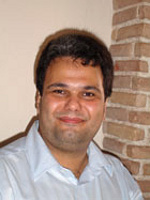
Ioannis Marinakis is a Professor at the School of Production and Management Engineering, Technical University of Crete, specializing in Stochastic Optimization and Applications. He holds a B.A., M.A., and Ph.D. from the same department (1999–2005). His research focuses on metaheuristics, evolutionary algorithms, supply chain optimization, and large-scale systems. Education: B.A. (1999), M.A. (2001), Ph.D. (2005) in Production and Management Engineering, Technical University of Crete. Research Interests: Explores stochastic and combinatorial optimization, nature-inspired algorithms, supply chain design, game theory, and vehicle routing. He has contributed to projects involving operations research and automatic control. Labs/Teams: Leads the Decision Science Laboratory,专注于开发决策支持系统.
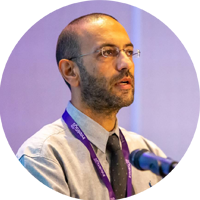
Professor Michael Papoutsidakis is affiliated with the Department of Industrial Design and Production Engineering at the University of West Attica. His academic career spans research in industrial automation, mechatronics, and intelligent control systems, with a focus on applications in hydraulic/pneumatic systems, robotics, and Industry 4.0 technologies. PhD from Bristol Robotics Laboratory (2004) MSc in Automatic Control Systems from University of the West of England (2004) Graduated from TEI Piraeus Automation Engineering (2000) His research interests include: Modeling of fluid power systems AI-driven control algorithms Smart logistics and ERP systems Embedded systems for motion devices Autonomous robotic platforms Wireless sensor networks in industrial applications Recent publications highlight his work at the intersection of 3D printing, robotics, and Industry 4.0, including advancements in digital twins, biomimetic manufacturing, and drone technology. His research emphasizes practical implementations for industrial and educational contexts. 2005 Patent for robotic training base 2025 Digital Twin Systems research 2024 UAV fuzzy control systems Contact: mipapou@uniwa.gr
Dionysios Sotiropoulos serves as an Assistant Professor at the Department of Informatics, University of Piraeus, specializing in bio-inspired algorithms with emphasis on social media analysis. His academic career spans multiple prestigious institutions in Greece and internationally. Dr. Sotiropoulos earned his PhD in Computer Science from the University of Piraeus in 2011, following his undergraduate degree in the same field from the same institution in 2003. His doctoral research focused on bio-inspired computing with particular emphasis on machine learning methodologies based on Artificial Immune Systems. His primary research interests encompass Machine Learning, Data Mining, Evolutionary Computation, and Signal Processing, with specific applications in Digital Social Networks. He develops machine learning and pattern recognition algorithms for data mining from social networks, with recent publications focusing on community detection in platforms like Twitter, prediction of future ties, thematic modeling of user posts, sentiment analysis, and computational theory of Opinion Formation Models. Dr. Sotiropoulos has served as a post-doctoral researcher at the Athens University of Economics and Business in the Department of Management Science and Technology, where he is a member of the SocioMine research group. He also held a position as visiting researcher at the Norwich Business School, University of East Anglia, demonstrating his international research collaborations.
Antonios G. Kladas is a Full Professor at the National Technical University of Athens (NTUA), School of Electrical and Computer Engineering, where he directs the Laboratory of Electrical Machines and Power Electronics. He holds a Diploma from Aristotle University of Thessaloniki (1982) and DEA/PhD degrees from Université Paris VI (1983-1987). His academic career spans roles as Assistant Professor (1996-2001), Associate Professor (2001-2006), and Full Professor (2006-present). Research Focus: Prof. Kladas specializes in electric machine and transformer design, renewable energy systems, industrial drives, and electromagnetic field computation. His work integrates finite-element modeling with optimization techniques for applications in electric vehicles, aerospace actuators, and power grids. Key innovations include hybrid electromagnetic-thermal methodologies and multi-objective evolutionary algorithms for motor design. Awarded the Best Paper Award at ICEM 2010 , he has led projects like the EU Clean Sky Programme and the fuel-efficient 'Pyrforos' vehicle prototype (Shell Eco Marathon 2012). He serves on steering committees for IEEE CEFC and ICEM conferences and has evaluated research programs for Italian/Portuguese agencies. Major Grants: EU Clean Sky (HPEM, EMAS), HERACLITOS II (electric vehicles), CREAM (integrated actuators) Advising: Supervised 14 PhD theses and >100 undergraduate projects on topics ranging from PM motor optimization to wave energy converters. Laboratory Leadership: Oversees 50+ researchers in the NTUA Laboratory of Electrical Machines and Power Electronics, focusing on experimental validation of industrial and renewable energy systems.
Daphne Manoussakiمشاهده پروفایل
استادیار
- Mathematical Biology
- Biophysics
- Cochlear Mechanics
- +۳ مورد دیگر
Daphne Manoussaki is an Assistant Professor at the University of Crete. Her primary research area is Mathematical Biology, with a focus on biophysics and computational modeling. Education: PhD in Mathematics, University of Washington (1996) Research Interests: She investigates biomechanical processes in cellular and auditory systems, combining mathematical modeling with experimental techniques like atomic force microscopy. Key areas include cochlear mechanics, vascular network formation, and cytoskeletal dynamics. Publication Trends: Her recent work (2015-2002) spans biophysical modeling of cell migration, cochlear geometry effects on hearing, and vascular morphogenesis. Keywords include Cell Biology, Biophysics, and Computational Modeling. Labs & Teams: No explicit lab or team affiliations are mentioned in the provided texts.

Hamid Bagheriمشاهده پروفایل
دانشیار
- Software Engineering
- Security
- Formal Methods
- +۷ مورد دیگر
Hamid Bagheri is an Associate Professor in the School of Computing at the University of Nebraska-Lincoln and a faculty associate of the Institute for Software Research (ISR) at the University of California, Irvine. He co-directs the ESQuaReD Lab and serves on the review boards of IEEE Transactions on Software Engineering and ACM Transactions on Software Engineering and Methodology. His research focuses at the intersection of software engineering, security, and formal methods, with particular expertise in Security of Mobile Devices and IoT Systems Scaling Formal Verification with Machine Learning Software Analysis and Testing Dependable Cyber-Physical Systems Automated Program Repair and Fault Localization His publication record spans top-tier venues including ICSE, ASE, ISSTA, ESEC/FSE, and IEEE/ACM Transactions, with recent work focusing on efficient analysis of Alloy specifications, IoT security, and ML-enhanced formal verification. His research has been recognized with multiple Distinguished Paper Awards. Among his notable awards are: EPSCoR FIRST Award NSF CISE Career Research Initiation Initiative Award SoC Student Choice Outstanding Teaching Award (2023-2024) CSE Outstanding Teaching Award (2020-2021) NSF EPSCoR First Award (2017) Prof. Bagheri has successfully advised multiple PhD students including Mohannad Alhanahnah (now tenure-track faculty at Chalmers University) and Clay Stevens (now tenure-track faculty at Iowa State University). He has received substantial research funding including NSF SHF Research Grants and has been actively involved in conference organization as PC member and track chair across numerous major software engineering venues.

Baishakhi Rayمشاهده پروفایل
دانشیار
Baishakhi Ray is an Associate Professor of Computer Science at Columbia University's School of Engineering and Applied Science. Her work focuses on the intersection of AI, Software Engineering, and Security. She received her Ph.D. from the University of Texas, Austin and has established herself as a leading researcher in software engineering with AI applications. Dr. Ray's educational background includes a Ph.D. from the University of Texas, Austin. Her academic journey has led to a prominent position at Columbia University where she continues to advance research in software engineering. Dr. Ray's research spans several critical areas at the intersection of software engineering and artificial intelligence. Her work explores how machine learning techniques can improve software development processes, enhance security practices, and address challenges in program analysis. She has made significant contributions to understanding how large language models can be effectively applied to code generation, vulnerability detection, and software testing. Her research has practical implications for improving software reliability and security in real-world applications, particularly in safety-critical domains like autonomous systems. Analysis of Dr. Ray's recent publications reveals a clear trajectory toward leveraging AI for practical software engineering challenges. Her work has evolved from foundational program analysis techniques to cutting-edge applications of large language models in code understanding and generation. A notable trend is her focus on making AI-assisted software development more reliable, secure, and energy-efficient. Her research increasingly addresses the practical limitations of current AI approaches while developing novel methodologies to overcome them. IEEE TCSE Rising Star Award NSF CAREER Award IBM Faculty Award VMWare Faculty Award ICSME Most Influential Paper Award (2023) FSE'17 Distinguished Paper ASE'22 Distinguished Paper ISSTA'23 Distinguished Paper CACM Research Highlights Dr. Ray actively mentors graduate students and has built a productive research group focused on AI-driven software engineering solutions. Her research has been supported by prestigious grants including the NSF CAREER award. She has successfully guided numerous students through their research projects, with several of her advisees making significant contributions to publications in top-tier conferences. Dr. Ray also serves as an Amazon Visiting Academic, bridging academia and industry to address real-world software engineering challenges. Through her leadership in various research projects and collaborations, Dr. Ray has established a dynamic research environment that combines theoretical rigor with practical applications. Her work often involves interdisciplinary collaboration across computer science subfields, particularly connecting software engineering with security and AI research communities.
- Maritime Systems
- Environmental Protection
- Shipping
- +۶ مورد دیگر
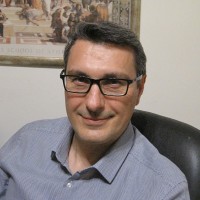
Dr. Georgios Kokosalakis serves as Assistant Professor at the School of Business and Economics, American College of Greece (ACG), and Executive Director of the Center of Excellence in Logistics, Shipping and Transportation (CoELST). He maintains dual academic roles as Senior Research Associate at University of Patras' Civil Engineering Department and Educational Counselor at MIT, while also directing industry ventures through Proteus Marine Ltd. His academic credentials include: Science Doctorate in Civil and Environmental Engineering, MIT (2006) Master of Science in Civil and Environmental Engineering, MIT (2000) Diploma in Civil Engineering (Structural Division), National Technical University of Athens (1998) Dr. Kokosalakis' research centers on Maritime Systems and Environmental Protection, with emphasis on operational efficiency, energy conservation, and emissions control in shipping logistics. His interdisciplinary approach integrates large data analytics, systems modeling, and sensor technology to develop practical solutions for sustainable maritime operations while addressing environmental pollution challenges. Recent publications (2019-2021) reveal dual research trajectories: maritime-focused work on energy efficiency impacts on container ship valuation, regulatory responses in shipping, and pandemic effects on second-hand markets; and civil engineering contributions to water distribution network optimization through probabilistic modeling of minimum night flow and real losses. This cross-disciplinary pattern demonstrates his ability to transfer methodologies between maritime and infrastructure domains. His scientific recognition includes: Schoettler Fellowship Award from MIT (2002-2003) Technical Chamber of Greece Best Thesis Award (1998) Exceptional Student Performance Awards (1995-1997) Active grant funding supports his research through projects with Athens Water Supply Company (2021), Greece's Center for Renewable Energy Sources (2020), and Hellenic Foundation for Research Innovation (2019). His industry experience as a shipowner and Proteus Marine Ltd Director provides practical grounding for academic work, though specific student supervision details aren't documented in available materials. The Center of Excellence in Logistics, Shipping and Transportation (CoELST) functions as his primary research ecosystem, facilitating collaborations between ACG, University of Patras, MIT, and maritime industry partners to advance sustainable transportation solutions through integrated engineering and business perspectives.