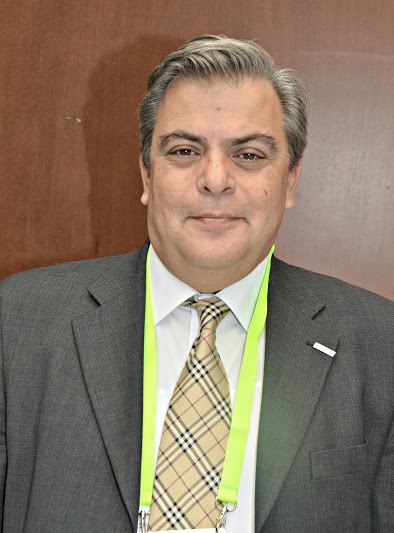
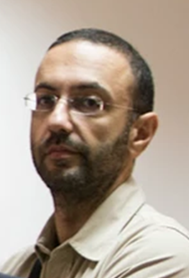
George S. Atsalakis is an Associate Professor at the School of Production Engineering and Management, Technical University of Crete. He holds an MBA from the Technical University of Crete, a Master's Degree in Organization and Management, and a PhD in Stock Market Forecasting from the same institution. Doctoral Degree, Technical University of Crete (2006) Postgraduate Diploma, Technical University of Crete (1999) Bachelor's Degree, Athens University of Economics and Business (1986) His research focuses on technological forecasting , market prediction , and economic evolution modeling , utilizing computational intelligence methods such as neural networks, fuzzy logic, and genetic algorithms. He leads the Data Analysis and Forecasting laboratory and has authored over 90 scientific papers in international journals and conferences. Atsalakis has contributed extensively to public discourse through articles in Greek media outlets like Kathimerini and To Vima, as well as two books: Stock Market Forecasting Techniques (2008) and Simple Logics of Reorganization of the Economy and Businesses (2013). He frequently participates in television and radio discussions on economic development and technological innovation.
Delis Anargyros is a Professor of Computational Mathematics at the School of Production Engineering & Management, Technical University of Crete. He holds a B.Sc. in Mathematics from the University of Crete (1993), an M.Sc. in Numerical Analysis and Computing from the University of Manchester (1994), and a Ph.D. in Applied and Computational Mathematics from the University of the West of England (1998). His academic career includes roles as Director of the MSc in Applied Mathematics program (2019–2023) and membership in research groups such as the Turbomachines & Fluid Dynamics Laboratory and the Applied Mathematics and Computers Laboratory (AMCL). B.Sc. Mathematics, University of Crete M.Sc. Numerical Analysis, University of Manchester Ph.D. Applied and Computational Mathematics, University of the West of England His research focuses on computational methods for fluid dynamics (e.g., shallow water equations, Boussinesq-type models), traffic flow modeling, and numerical analysis. Notable contributions include finite volume schemes for hydraulic and traffic systems, and collaborative projects like TRAMAN21 (traffic management) and C-NORA (transport systems control). He has advised on grants involving numerical methods for environmental systems and is active in coastal engineering applications. Recent work includes acoustic streaming simulations, wind turbine optimization, and PDE-based traffic control algorithms. He leads the MSc in Applied Mathematics and collaborates with institutions like IACM-FORTH and the Coastal Information Research Unit (CIRUM). His current projects address multi-lane traffic dynamics, cooperative vehicle systems, and unstructured mesh simulations for coastal and fluid dynamics problems.
Konstantinos Parsopoulos is a Professor at the Department of Computer Science & Engineering, University of Ioannina. He holds a Dipl. Mathematics (1998) and M.Sc. in Mathematics of Computers and Decision Making (2000) from the University of Patras, where he also earned his Ph.D. in Intelligent Optimization (2005). Prior to his current role, he served as a Lecturer at the Department of Mathematics, University of Patras (2008–2009). His academic journey includes positions as Assistant Professor (2009–2016), Associate Professor (2016–2022), and Professor (since 2022) at the University of Ioannina. His research focuses on Numerical Optimization, Computational Intelligence (including Evolutionary Computation and Swarm Intelligence), and Computational Operations Research. These areas encompass the development and analysis of metaheuristics, algorithm portfolios, and optimization techniques for real-world applications such as logistics, financial forecasting, and engineering systems. His work emphasizes parallel computing strategies, reinforcement learning for parameter adaptation, and software tools like SOMO-VCB for stochastic optimization. Parsopoulos has contributed to diverse optimization challenges, including crowdshipping models, neural network-based differential equation solvers, and variance counterbalancing in stochastic systems. His publications span topics from theoretical algorithm design to practical implementations in MATLAB and distributed computing environments. Despite his extensive contributions, no scientific awards are explicitly mentioned in the provided texts. In terms of academic leadership, he has advised numerous students (though no names are listed) and has been involved in grants related to optimization software and algorithmic research. His collaborations extend to cross-disciplinary projects in visual sensor networks, traffic light optimization, and bioinformatics, reflecting the broad applicability of his optimization methodologies.
Professor Ioannis Pallikaris is a renowned ophthalmologist and founder of EYE PCR, specializing in cataract surgery, refractive lens exchange, and corneal reconstructive techniques. He is internationally recognized for innovations like the fixOflex™ intracapsular ring, which improves IOL stability and reduces posterior capsule opacification. His research spans ocular biomechanics, corneal cross-linking for keratoconus, and surgical device development. Honors include the Prof. I. Pallikaris Award at the MEOM Conference and an honorary award from the Indian Intraocular Implant Society. His work bridges clinical practice with cutting-edge research, emphasizing patient-centered solutions for ocular disorders. Key contributions include the Cretan Protocol for corneal treatments and advancements in ocular rigidity measurement. He actively participates in global conferences and collaborates on initiatives like the Mobile Ophthalmology Unit for underserved populations. Research interests focus on surgical innovation, ocular disease epidemiology, and refractive surgery outcomes. His lab, Optics & Vision Laboratory, drives translational research in intraocular devices and corneal reconstruction. Grants and collaborations are directed toward improving accessibility and precision in ophthalmic care.
Christos Zaroliagis is a Full Professor in the Department of Computer Engineering & Informatics at the University of Patras, Greece, where he serves as Head of the Intelligent Computing & Engineering Lab (ICE Lab). He is also a Senior Research Associate at the Computer Technology Institute & Press "Diophantus" in Patras. Previously, he held positions at the Max-Planck-Institut für Informatik in Saarbrücken, Germany, and the Department of Informatics at King's College, University of London, UK. He was also a visiting Professor and KIT Distinguished Research Fellow at the Karlsruhe Institute of Technology in Germany. Professor Zaroliagis specializes in algorithm engineering, optimization, decentralized computing, and cryptography & information security, with applications in large-scale networks and systems. His research has significant focus on mobility in smart cities, intelligent transportation systems, and big data analysis. He has published extensively in major international journals and conferences, and has served as editor for several academic journals including Algorithms, Journal of Discrete Algorithms, and ACM Journal of Experimental Algorithmics. His work spans both theoretical foundations and practical implementations, with numerous software libraries and systems developed under his leadership. His recent publications demonstrate continued innovation across cloud computing, intelligent transportation systems, decentralized computing, and big data analytics, showing a clear progression from foundational algorithm design to practical applications in smart city infrastructure. The research shows strong interdisciplinary connections between computer science, operations research, and urban planning. prize award 2012 for Academic and Scientific Excellence awarded by the Greek Ministry of Education KIT Distinguished Research Fellow Mercator Fellow Professor Zaroliagis leads the Intelligent Computing & Engineering Lab (ICE Lab), which has produced several significant software systems including PGL (graph algorithms library), ECC-LIB (cryptography library), Searchius (collaborative search engine), and iClone (social navigation system). His academic service includes heading the EURAXESS Services Center of the University of Patras and serving as National Contact Point for the FP7 PEOPLE Program - Mobility. He has been extensively involved in organizing international conferences and serving on program committees across computer science.
Professor John-Paris Pantouvakis is affiliated with the School of Civil Engineering at the National Technical University of Athens (NTUA), where he serves in the Department of Structural Engineering. His expertise spans construction management, project scheduling, and productivity optimization. Email: jpp@central.ntua.gr Research interests include: Risk analysis in structural engineering Digitalization and automation in construction Evolutionary algorithm applications Disaster risk reduction frameworks Interdisciplinary education models Cost-benefit analysis under uncertainty Recent publications highlight trends in: 3D printing for emergency shelters Learning curve modeling Corporate responsibility metrics Optimized resource allocation Construction process simulation International project management standards
Abhik Roychoudhury is a Provost's Chair Professor of Computer Science at the National University of Singapore (NUS), where he has been working since 2001. He serves as the Editor-in-Chief of ACM Transactions on Software Engineering and Methodology (TOSEM) and chairs the FSE Steering Committee. Professor Roychoudhury leads the TSUNAMi center, a five-year research effort funded by the National Research Foundation in trust-worthy software, and is the Lead Principal Investigator of the Singapore Cyber-security Consortium. Professor Roychoudhury received his Ph.D. in Computer Science from the State University of New York at Stony Brook in 2000. His academic journey has been primarily at NUS, where he has built a distinguished career in software engineering research. His research focuses on software testing and analysis, software security, and trust-worthy software construction. Professor Roychoudhury's research group has developed scalable techniques for testing, debugging, and repair of programs using systematic semantic analysis. His work on automatic program repair has been particularly influential, contributing to the vision of self-healing software. Current research directions include integrating large language models with traditional program analysis techniques for autonomous software engineering, as exemplified by the AutoCodeRover project. Professor Roychoudhury's recent publications demonstrate a strong focus on automated program repair, with increasing integration of large language models and AI techniques. His work spans both theoretical foundations and practical applications, with numerous contributions to top software engineering conferences. The research shows a clear trajectory toward more autonomous software engineering systems that can understand code intent, generate repairs, and verify their correctness. IEEE TCSE New Directions Award (2022) ICSE 2023 Most Influential Paper Award ACM Distinguished Speaker (2013-2019) Fellow of the ACM Professor Roychoudhury has successfully mentored numerous Ph.D. students who have gone on to academic positions at prestigious institutions worldwide, including University College London, Max-Planck Institute, and University of Melbourne. His research is supported by significant grants, including a five-year program on Automated Program Repair at NUS funded by the National Research Foundation, and collaborations with industry partners through the Singapore Cyber-security Consortium. The TSUNAMi center represents a major research initiative with substantial funding for trust-worthy software research. Professor Roychoudhury leads an active research group focused on software analysis and repair. The group has developed several notable systems including AutoCodeRover, an autonomous software engineer that can resolve GitHub issues with minimal LLM cost. The group collaborates extensively with industry, as evidenced by the recent acquisition of AutoCodeRover by Sonar. Current research directions include next-generation fuzzing of stateful systems and the integration of AI techniques with formal methods for more reliable software.
Raptopoulos Christoforos is an Assistant Professor at the Department of Mathematics of the University of Patras , Greece. His academic qualifications include a Ph.D. (2009), M.Sc. (2005), and B.Sc. (2002) in Computer Engineering & Informatics from the same university. His research focuses on Random Graphs , Design of Algorithms , and Evolutionary Dynamics on Networks , with applications spanning computer science, probability theory, and computational biology. Key contributions include work on temporal graph algorithms, network majority determination, and evolutionary processes on graphs. His teaching portfolio covers Discrete Mathematics , Numerical Solutions of Ordinary Differential Equations , and Data Structures at the undergraduate level, alongside Algorithm Analysis and Data Structures for the MSc in Computational and Analytical Statistics in Data Science. While no specific scientific awards are listed, his 35+ publications since 2004 in journals like Theoretical Computer Science and Journal of Computer and System Sciences highlight his prolific output. He has collaborated extensively with Paul Spirakis, Sotiris Nikoletseas, and George Mertzios.
Michail Papoutsidakis is a Professor and Deputy Head of the Department of Industrial Design and Production Engineering at the School of Engineering, University of West Attica. He also directs the Postgraduate Program in New Technologies in Shipping and Transport (co-founded with the University of Aegean) and the 'Unmanned Autonomous and Remote-Control Systems' program. His academic background includes a PhD from the Bristol Robotics Laboratory (UK) focusing on control systems and robotics, along with a postdoctoral research fellowship at the University of Thessaly. Education: BSc in Automation Engineering (2000, Technological Institute of Piraeus), MPhil in Control Systems (2004, University of the West of England), and PhD in Robotics and Artificial Intelligence (2004, BRL). Research interests span robotics, mechatronics, Industry 4.0, additive manufacturing, and smart infrastructure. He leads the Research Lab 'Industrial Systems and Mechatronics Applications' and has authored over 150 publications. Notable contributions include a patented 'Self-propelled polymorphic test base' for robotics education and pioneering work in predictive maintenance using machine learning. His academic contributions extend to educational innovation, including open-source robotics platforms (DuBot) and STEM-focused curricula emphasizing sustainability. He has directed numerous projects funded by national and international bodies, with a focus on bridging theoretical research and practical industrial applications. Professional roles include leadership in postgraduate program development, research lab management, and industry-academia collaboration through applied research initiatives in shipping, logistics, and smart manufacturing systems.
Tambouratzis Tatiana is an Associate Professor at the Department of Industrial Management & Technology, University of Piraeus. She specializes in applying computational intelligence techniques to complex systems, with a focus on environmental sustainability, nuclear engineering, and advanced manufacturing. Her work bridges theoretical research with practical applications in areas such as artificial neural networks, genetic algorithms, and decision-making models. Her research interests encompass sustainability index development, nuclear reactor diagnostics, and optimization strategies for environmental performance. She has extensively explored the reliability and reproducibility of sustainability metrics, contributing to improved methods for country-level environmental evaluations. Tambouratzis also investigates material selection in sustainable product design and innovative applications of soft computing in fields like traffic accident prediction and optical music recognition systems. Her publications demonstrate a strong focus on interdisciplinary solutions, combining artificial intelligence with domain-specific challenges. Recent work includes studies on 3D printing distortion analysis using neural networks and adaptive sustainability maximization through evolutionary strategies. Notably, she has collaborated on projects such as reactor diagnostics monitoring at Ringhals and developed methodologies for non-invasive flow regime identification in nuclear systems. Her research emphasizes real-world applicability, with applications ranging from energy systems to environmental policy frameworks. No scientific awards or current grants are explicitly mentioned in the provided materials. She maintains an active academic presence through teaching and research in the Industrial Management & Technology domain.
Gail E. Kaiser is a Professor of Computer Science at Columbia University, where she conducts research in software engineering and security from a systems perspective. Her work spans program analysis, software testing, and pioneering applications of AI to software engineering (AI4SE) and vice versa (SE4AI), with significant contributions dating back to the 1980s. Education: PhD from Carnegie Mellon University ScB from Massachusetts Institute of Technology Research Focus: Professor Kaiser's work centers on static and dynamic program analysis , software testing , and software security . She pioneered applying software engineering testing techniques (particularly metamorphic testing) to machine learning software (SE4AI) during her 2005-2006 sabbatical at Columbia's Center for Computational Learning Systems. Her historical contributions include semantics-focused language-based editors (1980s-1990s, precursors to modern IDEs) and self-adaptation techniques for cloud computing (late 1990s-2000s). Publication Trends: Recent publications (2020-2024) reveal intense focus on AI-software engineering intersections: developing code generation/refinement systems (CYCLE), cross-lingual code search models (REINFOREST), execution-aware pre-training (TRACED), and specialized testing for deep learning systems. Her work consistently bridges traditional program analysis with cutting-edge AI methodologies to solve complex software quality challenges. Academic Service: Kaiser maintains active leadership in the research community through program committee roles at top conferences including PLDI, ICSE, ESEC/FSE, ASE, and SPLASH from 2013-2025. Her GitHub profile (gailkaiser) hosts course materials like COMS W4156 Advanced Software Engineering, demonstrating ongoing educational impact.
Konstantinos Vergidis is a Professor at the Department of Applied Informatics, School of Information Sciences, University of Macedonia. With a PhD in Business Process Optimisation from Cranfield University (2008), he has established himself as a leading expert in business process management, enterprise architecture, and process modeling. His academic career spans over a decade at the University of Macedonia, where he has held various administrative roles including Director of the Doctoral Studies Coordination Committee and member of the University's Research Committee. PhD in Business Process Optimisation (2008), Cranfield University MSc in IT for Product Realisation (2005), Cranfield University Degree in Applied Informatics (2003), University of Macedonia Professor Vergidis' research focuses on Business Process Intelligence (BPI), with particular expertise in BPMN modeling, process optimization, and decision modeling with DMN. His work bridges theoretical frameworks with practical applications in both public and private sectors, examining process quality metrics, resilience, and the integration of emerging technologies like low-code platforms and AI. He has pioneered research on process modeling in the public sector and the impact of Large Language Models on BPMN-based process modeling. His publication record includes 21 scientific journal articles, 22 conference papers, and 8 books, demonstrating consistent scholarly output across multiple venues. Recent work shows a clear trajectory toward integrating AI technologies with traditional business process management, particularly examining how LLMs can transform process modeling practices and exploring low-code development platforms for process-driven application development. Teaching Excellence Award (2022-2023) Research Award 2022 (14th cycle) Research Award 2021 (13th cycle) Teaching Excellence Award (2020-2021) Thatcher Bros Prize (2008/09) Professor Vergidis has secured multiple research grants, including projects with Expertise France/European Commission on digital public services and with the National Research Foundation on process modeling for public administration. He leads the Business Process Intelligence research group and has coordinated significant projects including MODA (Multi-Omics Data Analysis) and Science Data and Analytics Platform. His administrative contributions include directing doctoral studies and serving on numerous university committees related to research, curriculum development, and digital transformation initiatives. His work with the National Process Registry (mitos.gov.gr) demonstrates his commitment to applying academic research to real-world public sector challenges, developing tools and methodologies that enhance process transparency and service delivery for Greek citizens.
Stelios Tsafarakis is an Associate Professor at the School of Production Engineering and Management of the Technical University of Crete . His academic journey includes a PhD in Scientific Marketing from the Technical University of Crete and Université Paris Dauphine (2010), a Postgraduate Diploma in Production Engineering and Management (2007), an MSc in Management Information Systems from the University of Southampton (2002), and a Diploma in Electrical and Computer Engineering from the National Technical University of Athens (2000). PhD: Technical University of Crete & Université Paris Dauphine (2010) Postgraduate Diploma: School of Production Engineering and Management, TUC (2007) MSc: Management Information Systems, University of Southampton (2002) Diploma: Electrical & Computer Engineering, NTUA (2000) His research focuses on consumer buying behavior , product line design and optimization , discrete choice models , and the application of evolutionary algorithms to market structure analysis. His work bridges marketing theory with computational methods, emphasizing nature-inspired optimization techniques for practical business solutions. Recent publications highlight trends in digital platform analytics , ICT integration in education , and bio-inspired optimization algorithms . His studies explore gamification in tourism, automated learner grouping via particle swarm optimization, and fuzzy systems for product line design. Stelios contributes to the Organization & Administration Laboratory at TUC. His collaboration hours are available by arrangement , and he can be reached at office D5.009 (phone: +30 28210 37160).
Giannakoglou Kyriakos is a Professor at the School of Mechanical Engineering , National Technical University of Athens , within the Section of Fluids . His research focuses on Thermal Turbomachines , Computational Fluid Dynamics (CFD) , Grid Generation , Optimization Methods , and Artificial Intelligence applications in engineering. Professional Experience: Research Engineer at Electricite de France (1983-1984) Teaching Duties: Undergraduate and postgraduate courses in Thermal Turbomachines, Viscous Flows, Optimization Methods, and Computational Techniques His technical expertise includes Evolutionary Algorithms , Genetic Algorithms , and Parallelization of CFD Codes . He is affiliated with the Technical Chamber of Greece and the Greek Association of Computational Mechanics (GRACM) .
Tsafarakis Stelios is an Associate Professor at the School of Production Engineering and Management (PEM) of the Technical University of Crete. He is affiliated with the Production Engineering and Management department and can be reached at tsafarakis@tuc.gr . His office is located in room Δ5.009 of the DPEM Building on the Ground Floor. His research focuses on optimization algorithms (e.g., swarm intelligence, nature-inspired computations), product line design strategies, marketing analytics, and applications of ICT in education. He has pioneered computational frameworks integrating artificial intelligence with consumer behavior analysis, particularly in dynamic sectors like tourism and education. Recent work highlights include: Developing bio-inspired algorithms (e.g., flying fox optimization, mayfly algorithms) for complex decision-making problems Investigating ICT adoption strategies in higher education during crises Applications of gamification in tourism and educational settings His publications demonstrate a strong interdisciplinary approach, bridging operations research, marketing strategy, and computational sciences. No scientific awards are listed in the provided materials. Dr. Tsafarakis collaborates with the university's Production Systems Laboratories and contributes to strategic initiatives in supply chain innovation. His work often involves industry partnerships to translate theoretical models into practical solutions for product diversification and market strategy optimization.

.jpg)