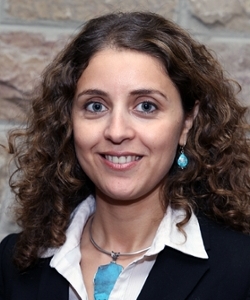
Dr. Marwa Farag is an Associate Professor at the University of Saskatchewan, specializing in health policy, health economics, and program evaluation. Her research focuses on social determinants of health inequities, economic evaluation of healthcare interventions, and barriers to healthcare access. She teaches courses such as Program Planning and Evaluation, Health Policy and Politics, and Canada Health Systems. Recent grants include roles as Principal Investigator and Co-Investigator on projects addressing hepatitis-C care in Indigenous communities, food insecurity among Syrian refugees, and global food security initiatives. Her work emphasizes equity-focused policy solutions and evidence-based interventions. Dr. Farag's research explores socioeconomic inequities in maternal healthcare, economic impacts of health policies, and mental health service accessibility. Her publications analyze topics ranging from sleep-related falls in older adults to youth violence risk factors. She collaborates with multidisciplinary teams to address complex public health challenges through data-driven approaches. Grants: SHRF Grant (2016-2018): Mobile Hepatitis-C care in First Nations communities ($40,000) SSHRC Grant (2017-2020): Food insecurity among Syrian refugees ($189,815) Queen Elizabeth Scholarship (2017-2020): Global food security initiative ($449,200) Key Research Themes: Health equity, healthcare policy, economic evaluation, global health disparities
Penelope Weller is a Professor of Law and Head of the School of Law at RMIT University. She leads the Health strand in the Centre for Business and Human Rights (BHRIGHT) and is a Fellow of the British Academy. Her expertise spans mental health law, human rights frameworks, and disability rights. Weller holds a PhD in the sociology of law from Victorian University and has advised governments across Australia and internationally on mental health law reforms. She currently chairs the Programs Committee and is co-editor of the International Journal of Law and Psychiatry. Non-academic roles include membership of the Mental Health Tribunal since 2013. Her research focuses on human dignity, justice, and equality in health systems, emphasizing the Convention on the Rights of Persons with Disabilities. Key projects include the ARC-funded FACTORS and STILS initiatives, examining community treatment orders and trauma-informed lawyering. She has led evaluations for the Victorian Department of Health’s Mental Health Rights Legal Service and contributed to the Royal Commission into Victoria’s Mental Health System, influencing legislative reforms. Education: Monash University (Arts/Law), Latrobe University (Health Law), Victorian University (PhD). Grants: ARC Discovery (2023), ARC Linkage (2023), Victorian Health Department contracts. Awards: Fellow of the British Academy (2023). Teaching: Principles of Administrative Law, Health Law, Human Rights Law. Recent publications address psychiatric advance directives, community treatment order variations, and legal accountability in mental healthcare. Her work bridges legal scholarship, policy advocacy, and interdisciplinary research to advance equitable mental health systems.
Professor Daphne Flynn is the Director of Monash Art, Design and Architecture's Health Collab, an interdisciplinary lab focused on healthcare innovation. She holds a BA in Industrial Design from RMIT University (1984) and has over 35 years' experience spanning academic leadership and industry roles at Philips Design and Invetech. Her research emphasizes human-centered design methodologies applied to healthcare challenges such as medtech devices, patient experience improvement, and chronic disease management. Key Projects: Design Health Collab initiatives: Emergency Department redesign, Hospital-to-Home care pilots, venous access improvement Co-creation of award-winning medical devices like X-halo asthma monitor and Blundstone Intelligent Footwear for healthcare workers Leadership in Asia-Pacific telehealth solutions through Philips collaboration Awards & Recognition: 2021 Good Design Award (Gold) for Hand Hygiene Management 2022 Designers Australia Award for Blundstone Footwear innovation 2024 Monash-led 12-award achievement in Good Design Awards Grants & Partnerships: Principal investigator on 29+ projects including ARC Training Centre for Optimal Ageing (2023-2028) and Asia-Pacific Resilient Hospitals Initiative (2024-2025). Collaborates with Philips, Blundstone, and healthcare institutions globally. Labs/Teams: Directs Design Health Collab - pioneering co-design approaches across 15+ active research streams including Future Healthcare, Mobile Stroke Imaging, and Patient-Centered Multimedia Solutions.
Dr. Sally Barlow is a Senior Lecturer in Mental Health Nursing at City St George's, University of London, where she has been a faculty member since 2013. She is affiliated with the School of Health Sciences and the Department of Mental Health Nursing, contributing significantly to education and research in recovery-focused mental health and collaborative care. Education BSc (Hons) in Neuroscience Postgraduate Diploma in Statistics PhD in Behavioural Neuroscience, Trinity College Dublin Research Interests Dr. Barlow's research centers on recovery-focused mental health care, shared decision-making, risk assessment and management in mental health services, and collaborative care models. Her early work involved molecular neuroscience, particularly the pathophysiology of depression and anxiety, before transitioning into clinical and healthcare research. She has led and contributed to numerous studies exploring how mental health service users experience risk management and how peer support can improve discharge outcomes. Her work emphasizes patient-centered approaches, co-production with service users, and the integration of experiential knowledge into mental health service design. Publication Trends Her recent publications (2017–2024) reflect a strong focus on qualitative and mixed-methods research in mental health services. Key themes include shared decision-making, peer support interventions, recovery-oriented care planning, and the experiences of service users and carers in dementia and severe mental illness. She frequently collaborates on large-scale, cross-national studies and randomized controlled trials, often using the Theoretical Domains Framework to analyze behavioral influences in clinical practice. Scientific Awards Patrizia Matteucci Prize for Best Letter of Intent (2007) Health Research Board (HRB) Scholar Award (2004) Children's Memorial Hospital, Chicago Scholarship (2002) Advising and Grants Dr. Barlow has served as a second supervisor for PhD students including Michelle Parker and Nafiso Ahmed, whose research explored dementia diagnosis help-seeking and shared decision-making in risk management. Her research has been supported by funding from City, University of London, and the East London NHS Foundation Trust. She actively engages in co-produced research and collaborates with service user advisory groups such as SUGAR (Service User and Carers Group Advising on Research). Labs and Teams She is part of research teams focusing on mental health service delivery, recovery-oriented practices, and peer support interventions. Her work is closely linked with NHS mental health services and involves longitudinal, mixed-methods studies evaluating the impact of care coordination and discharge planning. She contributes to editorial boards, including the British Journal of Psychiatry Bulletin , and serves as a peer reviewer for NIHR grant programs.
Dr. Michael Schneider serves as Professor and Director of the Doctor of Chiropractic (DC) Program at the University of Pittsburgh's School of Health and Rehabilitation Sciences (SHRS). A dual-qualified Doctor of Chiropractic and PhD in Rehabilitation Science, he brings over 25 years of clinical practice experience and NIH-funded research to academia. His leadership includes launching the first chiropractic program at a research-intensive public university (R1), integrating interprofessional education and evidence-based practice. Education: Doctor of Chiropractic, Palmer College of Chiropractic Doctor of Philosophy in Rehabilitation Science, University of Pittsburgh Certificate in Clinical Research, Institute for Clinical Research Education Research Focus: Prioritizes non-pharmacological pain management, spinal biomechanics, and interprofessional clinical collaboration. Current initiatives explore the efficacy of chiropractic care for musculoskeletal conditions and post-concussion recovery. Awards & Recognition: 2025 ACA Academician of the Year 2024 Dynamic Chiropractic Person of the Year NIH/NCCIH & PCORI grant leadership ($50M+ portfolio) Grants & Teams: Oversees NIH-funded studies on complementary therapies and co-leads the Pitt Primary Spine Practitioner Program training physical therapists/chiropractors globally. Collaborates with UPMC and VA Pittsburgh Healthcare System for clinical integration.
Maria Louison Vang is an Associate Professor in the Department of Psychology at the University of Southern Denmark (SDU), Faculty of Health Sciences. She also serves as a Senior Researcher at the Research Unit for Occupational and Environmental Medicine (Odense), Odense University Hospital (OUH), and is affiliated with the Knowledge Center for Psychotraumatology. Her work bridges academic research and clinical application in trauma psychology. Her research focuses on psychotraumatology, including PTSD, CPTSD, prolonged grief, burnout, and secondary traumatization. She investigates trauma exposure and mental health outcomes in high-risk professions such as emergency responders and legal professionals. Her studies often involve clinical validation of diagnostic tools, longitudinal cohort designs, and intervention development. The 15 most recent publications reflect a strong emphasis on trauma assessment, occupational mental health, and evidence-based interventions. Key themes include the development of structured clinical interviews (e.g., A-PGDi), latent class analysis of victimization patterns, and psychosocial work environment studies among Danish prosecutors and ambulance personnel. Her work integrates epidemiology, psychometrics, and clinical psychology. Saupere Aude Grant Maria Louison Vang actively supervises PhD and master’s students, including Jensen, C. F., Alkærsig, M., and Melander-Nyboe, P. She leads major research projects such as the ADAPT study and P.OEM series, funded by competitive grants. Her collaborations span across SDU, OUH, Ulster University, and the Danish Barnáhus network. She is involved in developing resilience programs like DUSA for emergency workers and contributes to public understanding through media engagement and teaching in psychotraumatology seminars.
Dr. Vanlal Thanzami is a Senior Lecturer at the Malaysia Jeffrey Cheah School of Medicine and Health Sciences, Monash University. Her research focuses on aggression studies, cross-cultural psychology, and mental health interventions. She holds a PhD in Psychology from the University of Central Lancashire (2004) and has taught at institutions in the UK and Malaysia. Her research interests include beliefs about aggression across cultures, predictors of aggression (especially among men), and forms of aggression like direct/indirect aggression. She explores cross-cultural mediators of aggression, honor-based violence, cyber-bullying, and evolutionary concepts in aggression. She has published in journals like Aggressive Behaviour and Personality and Individual Differences. Dr. Thanzami has led or contributed to projects such as Global COIL Expansion (2025-2029) and innovative mHealth applications for adolescent mental health. She received the Pro-Vice Chancellor's Excellence in Diversity & Inclusion Award (2022). Her teaching spans social, cross-cultural, and forensic psychology. She emphasizes research-informed pedagogy and has designed multicultural learning experiences via Collaborative Online International Learning (COIL) programs.
Pieter Van Gorp is an Associate Professor at the School of Industrial Engineering at Eindhoven University of Technology (TU/e). He holds a part-time appointment at Utrecht University of Applied Sciences, focusing on societal applications of connected health games. His work spans digital health tools, personal health data economics, and cloud infrastructure for reproducible research. Education Background: Obtained PhD in Software Engineering from University of Antwerp, followed by a postdoc there. He has served as program manager for TU/e's Data Science Center (DSC/e) and Eindhoven AI Systems Institute (EAISI), linking research to societal challenges. Since 2023, he is Scientific Director of the Clinical Informatics EngD program. Research Interests: Focuses on personal health records as economic assets (e.g., MyPHRMachines platform), workflow model transformations (UML/BPMN/Petri-Net), and tools like SHARE/SciModeler for reproducible research. Active in gamification for corporate health and healthcare decision support systems. Awards: Awarded Best Paper (2007, 2012), 2nd Executable Paper Prize (2011). Current activities include teaching Health Information Systems and supervising 9 active PhD students. Advising & Grants: Mentor to 9 current PhD students and 5 alumni. Facilitates industry-academia collaboration through TU/e's innovation initiatives. Labs/Teams: Leads the Information Systems Lab at TU/e and co-leads EAISI Health. Involved in multidisciplinary teams addressing health tech and data science challenges.
Prof. Dr. Stefan Felder is a full Professor of Health Economics at the Faculty of Business and Economics, University of Basel, holding the Interpharma Foundation Professorship. He is based at the WWZ (Wirtschaftswissenschaftliche Fakultät) in Basel, Switzerland, and leads the Research Group Health Economics, affiliated with the Basel Center for Health Economics (BCHE). His work bridges economic theory and healthcare policy, focusing on regulation, prioritization, and decision-making under uncertainty. PhD and Habilitation, University of Bern Research stay, University of Western Ontario, Canada Professor, Otto-von-Guericke University Magdeburg (1997–2008) Professor, University of Duisburg-Essen (2008–2011) Professor of Health Economics, University of Basel (since 2011) Stefan Felder’s research centers on health economics , particularly competition and regulation in health insurance, prioritization of medical services, and economic aspects of medical decision-making under uncertainty. His work integrates microeconomic theory with empirical analysis to inform healthcare policy and resource allocation. He investigates how health, wealth, and mortality risk influence treatment choices and evaluates the cost-effectiveness of diagnostic procedures such as cardiac MRI. His recent publications reflect a strong focus on policy-relevant health economics. Themes include pandemic restrictions and their societal burden, ethical and economic challenges in medical markets (e.g., kickbacks), and methodological rigor in public health modeling. He critically engages with controversial topics, such as lockdown policies, emphasizing evidence-based analysis. His work spans journals like Journal of Health Economics , European Journal of Health Economics , and The Economists’ Voice , indicating interdisciplinary reach and policy impact. His notable scientific recognition includes: Gérard Gäfgen-Medaille für Verdienste für die Gesundheitsökonomie (2019) Prof. Felder actively contributes to the academic community through editorial roles as Coeditor of Applied Economic Perspectives and Policy and The Economists’ Voice , and as a board member of the Round Table Antibiotics. He serves on the Swiss Medical Board Expert Council and leads the Swiss Society of Health Economics. He mentors through doctoral programs in health economics and is affiliated with the Distance University Switzerland. Though no direct students are listed, his leadership in research groups and editorial boards suggests a strong advisory and collaborative presence. He has not received mention of external grants, but his foundation professorship implies sustained institutional and donor support. He is a core member of the Research Group Health Economics and the Basel Center for Health Economics (BCHE) , which serve as hubs for interdisciplinary research on healthcare financing, policy evaluation, and economic modeling in medicine. These platforms support collaboration across economics, medicine, and public health, reinforcing Basel’s role in European health economics research.
Mikki Meadows-Oliver is a Clinical Professor and Assistant Dean for Pre-Licensure Programs at the New York University College of Nursing. She has over 25 years of experience in pediatric nursing and has held faculty positions at Yale University, Quinnipiac University, and the University of Connecticut prior to joining NYU. Her work spans clinical practice, education, and leadership in advancing pediatric and global health. PhD, University of Connecticut School of Nursing MSN, Yale University School of Nursing MPH, Yale University School of Public Health BA, Barnard College Her research and professional interests center on pediatric nursing, environmental health equity, maternal-child health, and culturally appropriate care for underserved and immigrant populations. She has conducted clinical work in Nicaragua, the Dominican Republic, and Cape Town, South Africa, emphasizing global health outreach. Her scholarship addresses school-based health, asthma management, postpartum depression, and health disparities among vulnerable populations. Her recent publications focus on clinical case studies in pediatric primary care, covering conditions such as abdominal pain, bedwetting, burns, asthma, and behavioral issues, with a strong emphasis on diagnostic reasoning and evidence-based practice. She also contributes to nursing education through guidelines and preceptor development. Fellow, Alliance of Nurses for a Healthy Environment (2019) Henry K. Silver Memorial Award, National Association of Pediatric Nurse Practitioners (2017) Fellow, American Academy of Nursing (2014) Nightingale Award for Excellence in Nursing (2009) University of Connecticut’s 40 Under 40 Outstanding Graduates (2008) Meadows-Oliver has advised numerous nursing students and contributed to national nursing guidelines. She is a past president of the National Association of Pediatric Nurse Practitioners and serves as column editor for the Practice Guidelines Department of the Journal of Pediatric Health Care. Her leadership in nursing education includes program development and preceptor support. She has presented widely at national and international conferences and authored nearly 60 publications. Her work continues to shape pediatric nursing practice and education, particularly in underserved communities.
Dr Sophie Lea is a Lecturer at Monash University in the School of Educational Psychology & Counselling, where she teaches in the Master of Counselling program and is accepting PhD students. She holds a PhD in Counselling Psychology from Monash University and has extensive experience in adolescent and family counselling, mental health education, and clinical supervision. Education: PhD in Counselling Psychology, Monash University (Awarded: 10 Aug 2021) Graduate Certificate of Academic Research, Monash University (Awarded: 15 Jun 2016) Master of Counselling, Monash University (Awarded: 20 Apr 2006) Bachelor of Education, Deakin University (Awarded: 11 Dec 1996) Bachelor of Teaching (Primary), Deakin University (Awarded: 8 Dec 1995) Her research focuses on Kindness Education, Trauma-Informed Healthcare Design, Youth Mental Health, and Emerging Therapist Supervision . She integrates psychological wellbeing with practical, evidence-based approaches to support young people’s self-awareness and self-actualisation. Her work aligns with UN Sustainable Development Goals, particularly in education and mental health. Recent publications (2022–2025) emphasize transgender youth mental health, kindness in schools, and evaluations of mental health programs. These works span qualitative inquiry, program evaluation, and policy-relevant research, reflecting a strong commitment to social justice, inclusive education, and trauma-informed practice. Scientific Awards: EPC School Award for Early Career Research Excellence (2024) Dr Lea is actively involved in advising and grant-funded research projects, including the Stand Up Project (2025–2027) and evaluations of youth mental health initiatives. She collaborates with organizations such as Satellite Foundation and Resilient Youth Australia. She serves as a clinical supervisor and advocate for the counselling profession within mental health care systems. She is co-founder and director of Kind Schools Ltd , a not-for-profit promoting kindness in educational and therapeutic settings, and serves on the advisory board of Resilient Youth Australia. Her external roles include board membership with Living Ripples and the Australian Counselling Association, reflecting her leadership in both academic and community mental health spheres.
Claire Somerville is a Lecturer in International Affairs and Executive Director of the Gender Centre at the Geneva Graduate Institute. She holds a PhD from the University of Cambridge and has held academic positions at institutions including the University of Newcastle (Australia), Queen Mary (London), and Trinity College Dublin. Her work critically examines intersections of gender, health, and digitalization, emphasizing policy-world linkages. Thematic expertise spans Gender & Public Policies, Global Health Diplomacy, Multilateral Diplomacy, Digital Technologies, and Decolonial Theory. Geographically, she focuses on Africa, South Asia, and Southern Europe. Recent research includes studies on NCDs in Mozambique, LGBTQ health needs, and digital gender gaps. She serves on the Royal Anthropology Institute’s Policy Committee and advises UN bodies on gender and health. Key research projects include the COHESION initiative addressing NCDs in LMICs and analyses of male partner involvement in HIV care programs in Malawi. Her writing critiques global health governance structures and advocates for gender-responsive policies. Claire’s academic contributions bridge anthropology, public health, and international relations, with a focus on decolonizing knowledge production and equitable global health systems.
David Peters is a Professor of Integrated Healthcare and Clinical Director at the University of Westminster's School of Life Sciences. He trained as a family doctor and later specialized in osteopathic medicine and musculoskeletal physiology. A key figure in complementary therapies integration, he co-founded the School of Integrated Health (now merged into the School of Life Sciences). His research focuses on complementary medicine implementation in NHS settings, resilience in healthcare professionals, and self-care strategies for chronic conditions. Education: Family medicine, osteopathic medicine, musculoskeletal physiology Research interests span integrative healthcare models, non-pharmaceutical treatments for chronic pain (e.g., acupuncture), and the psycho-physiology of resilience. He leads the Westminster Centre for Resilience, exploring resilience-building interventions for individuals and organizations. Peters has secured over £2 million in grants for projects like the SelfCare Library and acupuncture programs for low back pain. Professional roles include former Chair of the British Holistic Medical Association (2010), founding director of the College of Medicine (2013), and editor of the Journal of Holistic Healthcare. He has authored/co-authored five books on complementary therapies and led over 30 research projects. Awards: Fellow of the Higher Education Academy Current initiatives include evaluating acupuncture combined with counseling for men's mental health and developing clinical governance frameworks for complementary therapies.
Dr Barbara Pendry is a Principal Lecturer and Programme Leader for BSc (Hons) Pharmaceutical Science at the University of East London (UEL). She leads the Medicines Research Group within the Department of Bioscience, focusing on herbal medicine quality control, antimicrobial resistance, and natural product drug discovery. Her roles include Editor-in-Chief of the Journal of Herbal Medicine and membership in the UK's Herbal Medicine Advisory Committee. She has collaborated internationally on projects addressing herbal medicine efficacy in West Africa and antimicrobial resistance in South Asia. Research interests span phytochemical analysis of herbal medicines, ethnopharmacological studies, and botanical treatments for chronic diseases. Recent work includes optimizing silymarin extraction methods and evaluating cranberry efficacy against urinary tract infections. She actively engages in public health initiatives, such as workshops in India and Bangladesh funded by the British Council and GCRF. Teaching responsibilities include pharmaceutical science modules and supervision of undergraduate/postgraduate dissertations. She has served as an external examiner for herbal sciences programs and contributed to academic governance via periodic reviews. Her publications emphasize herbal medicine's role in modern healthcare, with a focus on translational research bridging traditional practices and evidence-based methodologies. Collaborations with global health organizations aim to standardize herbal product quality in unregulated markets.
Dr. Mary C. Schroeder is an Associate Professor in the Department of Pharmacy Practice and Science at the University of Iowa College of Pharmacy, with an appointment in the Division of Health Services Research. Her expertise spans health economics, outcomes research, and healthcare quality improvement, with a focus on cancer and cardiovascular disease treatment decision-making. She holds a BS in Physics from Texas A&M University and a PhD in Economics from Emory University. Her research examines how information, incentives, and uncertainty influence treatment choices and population health outcomes. Key areas include cancer disparities, implementation science for rural healthcare networks, and optimizing cancer registry data utilization. Dr. Schroeder has contributed to projects like the Greater Plains Collaborative's PCORnet integration and rural cancer network development. Awarded the Collegiate Teacher of the Year, she actively engages in educational initiatives. Her recent work addresses geographic access to cancer care, body weight impacts on breast cancer treatment, and adherence to lung cancer screening protocols. Dr. Schroeder collaborates across disciplines to bridge gaps between clinical practice and policy, emphasizing real-world data applications. Her publications analyze disparities in HER2 testing, vitamin D's role in breast cancer outcomes, and the clinical significance of extramammary findings in breast MRI. She leads efforts to improve rural hospital accreditation through data-driven interventions and evaluates treatment disparities in neoadjuvant endocrine therapy responses among racial groups.