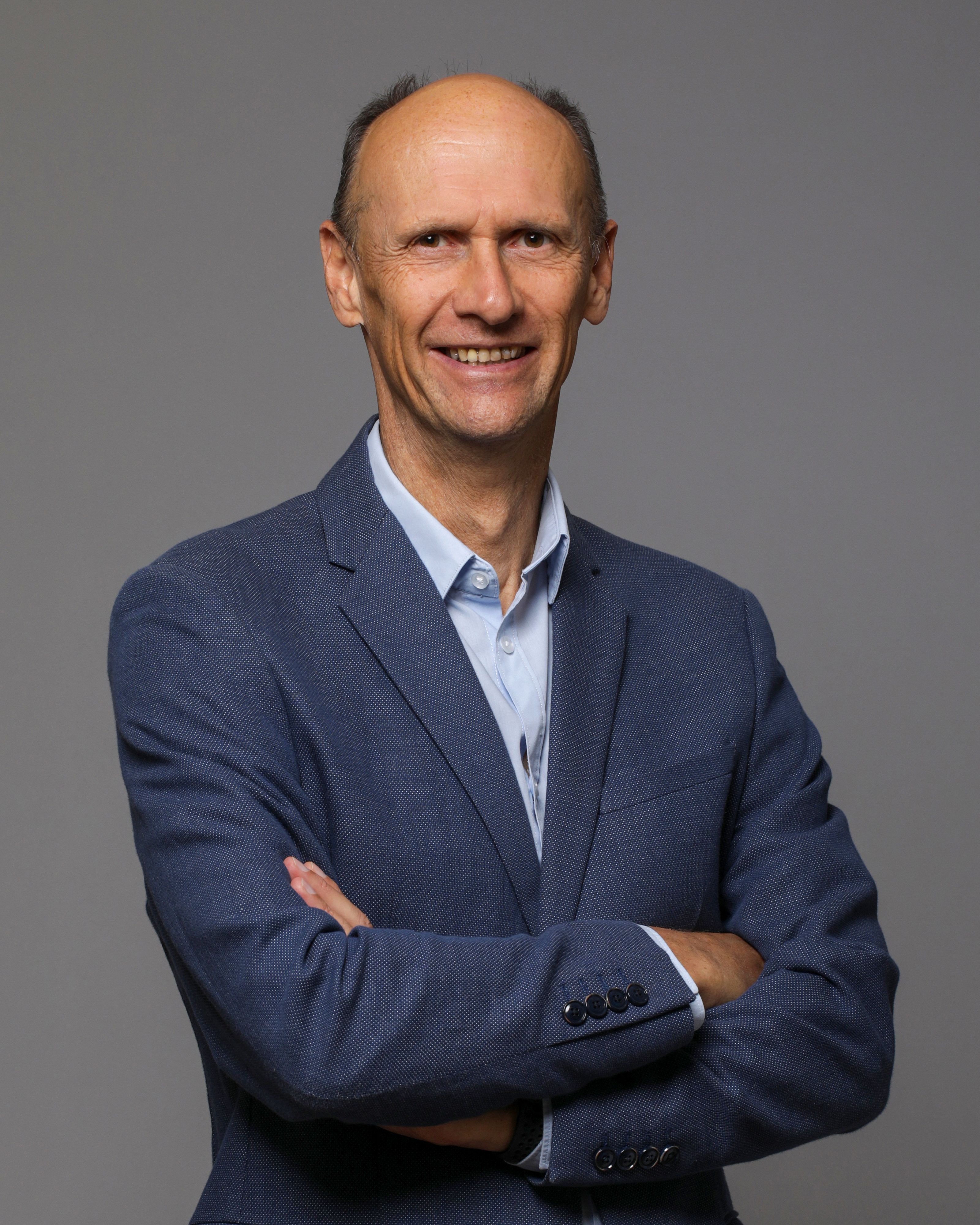
Bahram Parvin is a Professor at the University of Nevada, Reno, with a laboratory at Lawrence Berkeley National Laboratory (LBNL). His work focuses on developing novel cancer therapeutics through epithelial-stromal signaling research and creating computational methods to identify tumor heterogeneity biomarkers. He teaches courses in Bioimaging, Tissue Engineering, Deep Learning, and Digital Signal Processing (DSP), bridging interdisciplinary research between biomedical and computational domains. Research Interests: Cancer therapeutics, tumor heterogeneity, 3D cell culture models, deep learning for medical imaging, and computational biology. Awards: Received an R&D100 Award in 2014 for BioSig3D, a pioneering system for high-content screening of 3D cell culture models. Key Contributions: BioSig3D, CSTA-NET, MAT3D, and algorithms for nuclei segmentation in histology images. His recent publications (2025–2014) emphasize advancements in 3D medical image analysis, particularly in oncology and histopathology. Parvin’s work combines experimental and computational approaches to address challenges in tumor profiling and cellular imaging.
David I. Inouye is an Assistant Professor at Purdue University's Elmore Family School of Electrical and Computer Engineering (ECE), where he conducts research on trustworthy machine learning methods that are robust to imperfect distributional and computational assumptions. His work bridges the gap between theoretical foundations and practical applications in AI systems. Dr. Inouye's educational background includes: PostDoc in Machine Learning (2019) from Carnegie Mellon University under Prof. Pradeep Ravikumar PhD in Computer Science (2017) from The University of Texas at Austin under Profs. Inderjit Dhillon and Pradeep Ravikumar MS in Computer Science (2015) from The University of Texas at Austin BS in Electrical Engineering (2012) from Georgia Institute of Technology BA in Natural Sciences (2011) from Covenant College Dr. Inouye's research focuses on developing trustworthy AI systems through multiple interconnected threads. His primary research vision centers on creating machine learning methods that maintain robust performance even when faced with distributional shifts or computational constraints. Trustworthy AI/ML forms the foundation of his work, with particular emphasis on Causal ML approaches to understand and mitigate robustness issues. He investigates how ML explanations relate to model robustness, exploring whether interpretability can enhance reliability. Another significant strand examines Robust Collaborative Learning on dynamic networks of edge devices, addressing the challenges of distributed AI systems. His work on Distribution Shift and Robustness tackles the critical problem of models failing when deployed in environments different from training conditions. Additionally, he explores Fairness in machine learning, viewing it as a specific form of robustness to sensitive attributes. Dr. Inouye's recent publications (2022-2025) reveal a strong focus on causal approaches to robustness, with approximately 40% of his work connecting counterfactual reasoning to distribution shift problems. His research shows a clear trajectory toward practical implementations of theoretically grounded methods, with increasing emphasis on collaborative and federated learning settings. The interdisciplinary nature of his work is evident in publications spanning computer vision (25%), graph neural networks (15%), and fundamental machine learning theory (60%). Dr. Inouye has received recognition for his research, including a Spotlight paper at ICLR 2024 (5% acceptance rate) for his work on "Benchmarking Algorithms for Federated Domain Generalization." As an educator and mentor, Dr. Inouye has taught multiple iterations of ECE 47300 (Introduction to Artificial Intelligence) and ECE 57000 (Artificial Intelligence), as well as ECE 20875 (Python for Data Science). His research has been supported by significant funding from the National Science Foundation (NSF) , the Army Research Laboratory (ARL) , and the Office of Naval Research (ONR) . These grants have enabled his team to pursue ambitious research questions at the intersection of theory and practice in trustworthy machine learning. Dr. Inouye leads the Inouye Lab at Purdue University, which focuses on developing theoretically sound yet practical approaches to trustworthy machine learning. The lab maintains active collaborations with researchers at Carnegie Mellon University, The University of Texas at Austin, and industry partners working on edge computing and robust AI systems. Current projects include developing methods for robust collaborative learning across distributed edge devices and creating causal frameworks for understanding and mitigating distribution shifts in real-world applications.
Gullal Cheema is a Researcher at the Visual Analytics department of Technische Informationsbibliothek (TIB), the German National Library of Science and Technology. Based in Hannover, Germany, Cheema is actively engaged in cutting-edge research at the intersection of computer vision, natural language processing, and multimedia analysis with a particular focus on news media and social platforms. Research interests primarily center around multimodal analysis, with specialization in news video processing, fake news detection, claim verification, and image-text relation understanding. Cheema's work bridges the gap between technical AI approaches and real-world media analysis challenges, particularly in the context of misinformation detection and verification. The research spans multiple modalities including text, images, and video, with applications in social media analysis, news verification, and hate speech detection. Cheema's publication record shows a consistent trajectory of impactful research in multimodal AI, with a strong emphasis on practical applications for media verification. Recent work has focused on speaker role identification in news videos, multimodal claim detection, and the analysis of image-text relations in news contexts. The research demonstrates expertise in both theoretical approaches and practical system development for complex multimodal challenges. Best Paper Award at International Conference on Multimedia Retrieval (ICMR 2024) for work on speaker roles and situation types in news videos Multiple publications at premier venues including ACM conferences, IEEE workshops, and Frontiers in Artificial Intelligence Active participation in major evaluation labs like CLEF CheckThat! and MediaEval Cheema is an active member of the Visual Analytics research group at TIB, contributing to projects that address contemporary challenges in media analysis and verification. The work has significant implications for understanding and combating misinformation in digital media landscapes.
Dr. Thanh Tam Nguyen is a Lecturer at the School of Information and Communication Technology, Griffith University, Gold Coast Campus. He holds a PhD in Computer Science from École Polytechnique Fédérale de Lausanne (EPFL), Switzerland, and is a Fellow of the Higher Education Academy (FHEA). His academic and research profile is centered on advancing Big Data and Smart technologies through efficient and trustworthy AI systems. His educational background includes a Doctor of Science and a Master of Science, both from EPFL. He is actively involved in high-impact research and has published over 65 papers in top-tier venues such as SIGMOD, VLDB, SIGIR, ICDE, IJCAI, VLDBJ, TKDE, and Pattern Recognition, with over 35 in CORE A* journals and conferences. His work has attracted more than 4,200 citations (h-index 35+). Dr. Nguyen's research focuses on Big Data Analytics, Social Network Mining, Stream Processing, Privacy-Preserving Machine Learning, Recommender Systems, Explainable AI, and Graph Neural Networks . He aims to bridge human insights with data models to ensure transparency and trust in data-driven decisions. His recent work explores misinformation management, machine unlearning, and federated learning, with applications in social networks, healthcare, and sustainable agriculture. The 15 most recent publications reflect a strong trend in privacy-preserving AI, explainability, federated learning, and graph-based modeling . Key themes include machine unlearning, adversarial robustness in recommender systems, heterogeneous graph representations, and trustworthy AI deployment. His work is frequently published in ACM and IEEE venues, indicating sustained excellence in computer science and AI research. Fellow of the Higher Education Academy (FHEA) Dr. Nguyen has secured over $1 million in research funding from government (DFAT, A4I, AKF), industry (CSIRO, Ubitech, Johnson & Johnson), and international bodies (NAFOSTED, ETRI, KARI). He serves as a guest editor for IEEE Journal of Biomedical and Health Informatics, area chair for ACL and EMNLP, and reviewer for top journals like TKDE, JVLDB, and CSUR. He supervises multiple PhD students and collaborates with leading international researchers such as Prof. Karl Aberer (EPFL), Prof. Björn Schuller (Imperial College), and Prof. Hongzhi Yin (UQ). He is a key contributor to the Responsible Big Data Lab at Griffith University and leads projects on misinformation management, AI safety, and sustainable agriculture through AI-powered traceability. His impact extends to policy and industry, particularly in cybersecurity and trustworthy AI adoption.
Roman Krämer is a Research Associate at the Institute for Production Engineering and Systems (IPTS) at Leuphana University of Lüneburg, where he has been working since 2023 at the Professorship for Modeling and Simulation of Technical Systems and Processes. Previously, from 2020 to 2022, he served as a Research Associate at the Chair of Process Measurement Technology and Intelligent Systems within the same institute. Mr. Krämer holds a Master of Science in 'Management & Engineering' (2016-2019) and a Bachelor of Engineering in 'Engineering (Industrial)' (2012-2016), both from Leuphana University of Lüneburg. His professional background includes work as a Project and Sales Engineer (2019-2020), involvement in assembly planning at an automobile manufacturer during his master's studies (2018-2019), and software development for Machine Vision Systems (2017-2018). Roman Krämer's research spans multiple engineering disciplines with a focus on production systems and digital technologies. His primary expertise includes Production engineering, Automation engineering, and Electrical engineering, with specialized knowledge in Production management, Supply chain management, Lean production, and Factory planning. He is particularly active in the areas of Modeling & Simulation, Artificial intelligence, and Digital twin technologies, applying these to optimize production and logistics processes. His work bridges theoretical approaches with practical industrial applications, focusing on improving efficiency in manufacturing systems. Dr. Krämer's recent publication demonstrates the application of cutting-edge AI technologies to traditional engineering challenges. His work on using GPT-based Large Language Models for accelerating simulation model creation reflects his interdisciplinary approach, combining artificial intelligence with production engineering to develop innovative solutions for industry. Roman Krämer is actively involved in research projects including the TrICo Subproject focused on Community Sustainable Production and the diZi-FTS project developing a digital twin for virtual commissioning of automated guided vehicles. These projects reflect his commitment to applying digital technologies to address real-world production challenges. At Leuphana University, Mr. Krämer contributes to the research ecosystem of the Institute for Production Engineering and Systems, which houses multiple research groups working on manufacturing technology, product development, measurement technology, and production management. His work connects with various ongoing projects addressing challenges in Industry 4.0 and digital transformation of manufacturing processes.
Giulia Bruno is an Associate Professor at the Department of Management and Production Engineering (DIGEP) of Politecnico di Torino, where she also serves as a Junior project manager and is a member of both the Interdepartmental Center J-Tech@PoliTO and the Joint Committee on Teaching. Her academic expertise lies in Manufacturing Technologies and Systems (IIND-04/A) within Industrial and Information Engineering. She holds formal recognition in ERC sectors including Artificial Intelligence, Manufacturing Engineering, and Production Technology. Dr. Bruno's research focuses on the integration of digital technologies with manufacturing systems, exploring how discrete event simulation, Industrial IoT, and Industry 4.0 principles can transform traditional manufacturing through lean approaches. Her work spans manufacturing execution systems, product lifecycle management, and increasingly incorporates machine learning applications for quality control and predictive maintenance in production environments. Recent publications reveal expanding interest in applying manufacturing principles to agricultural technology, particularly in aeroponics and vertical farming systems. Her publication record demonstrates a clear trend toward human-centric approaches to digitalization in manufacturing, with emphasis on sustainable production practices and the integration of AI with traditional manufacturing processes. Recent work shows strong interdisciplinary connections between manufacturing systems and agricultural technology. Burbidge Award for the Best Paper - APMS'14 (International Federation for Information Processing) Mentoring Polito Project (M2P) badge issued August 25, 2023 Dr. Bruno actively supervises five PhD students working on advanced manufacturing technologies and systems. She currently leads the HANDS project (Human-centric Agile Next-gen Digitalization System, 2024-2026) as Scientific Manager and contributes to regional research initiatives. Her teaching spans PhD, Master's, and Bachelor's levels with focus on machine learning applications in manufacturing, production systems management, and business information systems. She leads research groups focused on Knowledge engineering management and Management of production systems within DIGEP, contributing to the advancement of manufacturing technologies and sustainable production practices.
Andreas G. Andreou is a Professor at Johns Hopkins University with primary appointments in the Department of Electrical and Computer Engineering, and secondary appointments in the Department of Computer Science and the Whitaker Biomedical Engineering Institute. He co-founded the Johns Hopkins University Center for Language and Speech Processing (CLSP) and co-directs the Andreou Lab alongside Philippe Pouliquen. His research focuses on brain-inspired microsystems for sensory information processing, neuromorphic computing, and theoretical neuroscience. Education: Born in Nicosia, Cyprus; resides in Baltimore, Maryland. Research Interests: Computing Machinery, Sensory Information Processing, Theoretical Neuroscience, Pattern Analysis, Machine Intelligence, Microsystems Technologies, and Integrated Circuits. Awards: IEEE Fellow, 3rd Best Paper Award at IEEE BioCAS 2018, and recognition for the award-winning Stethovest wearable acoustic sensing array. His lab explores energy-efficient computing beyond Moore's Law, integrating neuroscience principles into microsystem design. Recent projects include quantum-inspired neuromorphic optimizers, AI-generated chips using ChatGPT4, and applications in cardiac acoustics and wearable technology. Collaborations span institutions like NSF, JHU-APL, and the Telluride Neuromorphic AI workshop. His work is supported by grants from DARPA, NSF, NIH, ONR, AFRL, and JHU-APL. He also holds honorary professorships at the University of Cyprus and Universidad Nacional del Sur.
Tobias Grosser is an Associate Professor in Compiler Design at the Department of Computer Science and Technology, University of Cambridge. His research spans compilation, programming language design, and performance programming with applications to climate science, quantum computing, and hardware design. He leads an active research group focusing on making compilers more modular, predictable, and trustworthy while bridging the gap between developers and compilers. His research interests include: Compilers and polyhedral compilation Static and dynamic program analysis High-performance computing and loop optimization Domain-specific compilation for accelerators (GPU, FPGA) Formal verification for compiler correctness Machine learning applications to compiler design His recent publications demonstrate significant contributions to multi-level intermediate representations (MLIR), compiler verification using Lean, and performance modeling. His work on xDSL provides a Python-native compiler framework that enables rapid prototyping of compiler infrastructure. His research group has developed tools like FPL (Fast Presburger Library) for loop optimization in deep learning and scientific computing. Scientific awards include two Amazon Research Awards (2023-2024) for work in automated reasoning, a Google PhD Fellowship, and an Ambizione Fellowship at ETH Zurich. He has advised numerous PhD students and researchers who have gone on to positions at Google, ETH Zurich, NVIDIA, and Intel. He actively collaborates with industry through the Amazon Scholars program and hosts regular Compiler Social events in Cambridge. His research vision emphasizes connecting compiler technology with societal challenges like climate change while maintaining a strong commitment to open-source development and diversity in computer science.
Tengxiang Su serves as a Postdoctoral Research Associate at Cardiff Business School, Cardiff University. He holds a PhD in Computer Engineering from Cardiff University's School of Engineering and an MSc degree from University College London (UCL). As a professional member of BCS (The Chartered Institute for IT), he contributes to advancing AI applications in construction and real estate domains. His research spans multiple AI disciplines with emphasis on machine learning integration with Building Information Modeling (BIM) systems. Key interest areas include data standardization for property valuation, knowledge graph construction through natural language processing, digital twin synchronization using LiDAR technology, and LLM fine-tuning for domain-specific applications. His work consistently bridges theoretical AI advancements with practical construction industry challenges. Recent publications demonstrate a clear trajectory toward automated valuation models and AI uncertainty mitigation in the Architecture, Engineering and Construction (AEC) sector. His 2022-2024 works particularly focus on damage assessment through digital twins and autonomous knowledge mining, showing increasing sophistication in handling complex construction data. Currently engaged in a Knowledge Transfer Partnership project (2023-2025) titled 'Data-driven strategic decision making in charity marketing' between Cerebra and Cardiff University, this work was recognized by Welsh Government for the KTP 50 Years Event (March 20, 2025). The project represents his expanding application of AI methodologies beyond traditional construction domains into nonprofit sector analytics. His technical expertise manifests across multiple platforms including GitHub where he maintains repositories related to time-series prediction (PM2.5 pollution modeling using LSTM networks) and NLP sentiment analysis, demonstrating practical implementation skills alongside theoretical research.
Dr. Michelle Dunn is a Senior Lecturer in the School of Engineering at Swinburne University of Technology, where she leads research in robotics and signal processing. She serves as the academic lead for the Swinburne Rover Team and the lead of Space Robotics within the Swinburne Space Technology and Industry Institute. Her interdisciplinary work bridges engineering, space technology, industrial monitoring, and cultural heritage conservation. School: School of Engineering University: Swinburne University of Technology Academic Rank: Senior Lecturer Dr. Dunn's research is centered on robotics and signal processing, with key interests in Space Robotics, Collaborative Robotics, Lunar Dust Mitigation, and Assistive Technologies. She applies signal analysis techniques to diverse fields including steelmaking, where she uses acoustic and vibration signals to monitor processes, and art conservation, where she integrates spectroscopy and imaging to analyze paintings. Her work combines experimental modeling, sensor development, and data analytics to solve real-world engineering challenges. Her recent publications span robotics in agriculture, lunar dust mitigation, additive manufacturing defect detection, and acoustic monitoring in steelmaking. These works reflect a strong trend toward applying robotics and advanced signal processing to practical, interdisciplinary problems. She frequently collaborates with industry and government agencies, securing funding from the ARC and Department of Industry, Science and Resources. Scientific awards include: Vice-Chancellor's Teaching Excellence (Higher Education) Award (2018) Vice-Chancellor's Teaching Excellence (Higher Education) Award (2013) Dr. Dunn actively supervises PhD and Master’s students across diverse projects, including heat flow monitoring, assistive mobility devices, UAV-based parking systems, and EEG-based voice detection. She has been principal investigator on multiple ARC-funded grants, such as the ARC Training Centre for Collaborative Robotics in Advanced Manufacturing and projects focused on sound and vibration monitoring in steelmaking. Her research contracts include development of portable parasite detection systems and cuffless blood pressure monitoring. She leads and contributes to laboratory-based research in the Swinburne Space Technology and Industry Institute, focusing on space robotics and lunar dust mitigation. Her team also operates experimental setups for acoustic and vibration monitoring in industrial models, supporting innovation in steelmaking and manufacturing.
Jeroen Van Schependom is a researcher at Vrije Universiteit Brussel’s Neurology department, specializing in artificial intelligence-assisted modeling in clinical sciences. He leads projects such as FWOTM1254 (2024–2028) and FWOTM1215 (2024–2027) focused on multiple sclerosis (MS) and Alzheimer’s disease. His work aims to develop novel biomarkers and improve understanding of disrupted cortical networks in neurodegenerative conditions. His research integrates neuroimaging , computational neuroscience , and machine learning to analyze brain network dynamics, particularly information processing speed deficits and cognitive rehabilitation in MS. Key methodologies include connectome analysis , transcranial stimulation , and vision-based signal processing . Notable scientific awards include the Marie-Curie Seal of Excellence (2019) and the Research Prize of the Belgian Neurological Society (2018) . His recent publications explore smartphone-based cognitive screening, vaccination efficacy in MS patients, and AI-driven neurophysiological modeling. Projects : 28 ongoing, including 3D imaging techniques for tissue analysis and transcranial current stimulation for cerebral blood flow improvement. Public Engagement : Delivered talks on AI in healthcare (2023) and barriers to open science (2024).
Fabio Morbidi is an Associate Professor (Maître de Conférences HDR) at the Université de Picardie Jules Verne (UPJV), France, where he heads the Robotic Perception group at the MIS laboratory since 2022. His office is located at 33 Rue Saint-Leu, Amiens. He holds a Ph.D. in Robotics and Automation from the University of Siena (2009) and conducted postdoctoral research at Northwestern University, University of Texas at Arlington, and Inria Grenoble. His research focuses on multi-robot systems, event-based vision, autonomous vehicles, and assistive robotics. Research interests span robotic vision, distributed control, and sensor fusion for applications in exploration, wheelchair assistance, and drone technology. His work emphasizes real-world implementations, such as the SpheriCol driving assistant for power wheelchairs and event-based perception for autonomous vehicles. Awards include ICRA'25 Best Paper Award Finalist and contributing to an IEEE RAM issue that received the APEX 2024 Awards of Excellence. He actively advises PhD students and coordinates ANR projects (e.g., CERBERE, DEVIN) focused on robotic perception. He serves as Associate Editor for IEEE Transactions on Robotics and IEEE Robotics and Automation Letters.
Dr. Luke Reisner is an Adjunct Professor in the Department of Electrical and Computer Engineering at Wayne State University's College of Engineering. His research focuses on surgical robotics, Raman spectroscopy, and medical visualization, with applications in autonomous camera control for medical, military, and space domains. Education: Ph.D. in Computer Engineering (Wayne State University, 2012), M.S.E. in Computer Engineering (University of Michigan–Dearborn, 2005), B.S.E. in Computer and Electrical Engineering (University of Michigan–Dearborn, 2003) Research Interests: Surgical robotics: Developing autonomous camera systems for the da Vinci Surgical System, focusing on task analysis, remote presence interfaces, and recording/playback platforms for surgical training. Key innovations include entropy-based bleeding detection algorithms and sensor-integrated robotic systems. Raman Spectroscopy: Applications in medical diagnostics for ulcerative colitis and pediatric brain tumors, combined with biosensor integration for optimized port placement and real-time analysis in vivo. Medical Visualization: Advancing surgical imaging techniques, including bleeding assessment visualization and sensor-integrated virtual reality for surgical training. Patents: U.S. Patent 9,439,556 (2016): "Intelligent Autonomous Camera Control for Robotics with Medical, Military, and Space Applications" U.S. Application 14/913,793 (2016): "Camera Control System and Method" Labs & Teams: Collaborated with surgical robotics teams to implement autonomous camera control and biosensor-integrated systems. His work bridges engineering principles with clinical applications, emphasizing real-time data processing and human-in-the-loop robotic systems.
Professor Marcus Carter at The University of Sydney (Faculty of Arts and Social Sciences) is a leading researcher in Human-Computer Interaction , currently holding an Australian Research Council Future Fellowship for his work on 'The Monetisation of Children in the Digital Games Industry'. With a BA Hons and PhD in History and Philosophy of Science from Melbourne, he directs the Sydney Games and Play Lab . Focuses on digital games, mixed reality, and social impacts of technology Expert in animal-computer interaction through projects like 'Kinecting with Orangutans' Recognized as Australia's top HCI researcher in 2021 by The Australian His research explores VR/AR ethics , player experience analysis , and immersive technology governance . Publications span game monetization, metaverse politics, and conservation applications of XR. Current projects examine disability inclusion in VR and ethics of immersive data collection. Key awards include: ARC Future Fellowship FT220100076 ($911,616) Best Paper at ACM CHI 2017 and ACM ToCHI 2017 2020 & 2021 Researcher Rising Star by The Australian Supervises HDR students in topics ranging from blockchain gaming to social VR, and contributes to industry reports like the 2024 SXSW Games analysis. Leads innovative research bridging game studies with social responsibility frameworks.
Academician Professor Sven Lončarić serves as a Full Professor in the Department of Electronic Systems and Information Processing at the Faculty of Electrical Engineering and Computing, University of Zagreb. With his office located in room D-119 and contactable via phone at 6129-891, he maintains an active presence in both teaching and research activities within the institution. His work bridges theoretical computer science with practical applications across multiple domains. Professor Lončarić's research spans computer vision, image processing, and deep learning with significant contributions to medical imaging, particularly in retinal analysis using optical coherence tomography. His work in color constancy and illumination estimation has advanced techniques for handling multi-illuminant scenes, while his research in ultrasound image analysis has practical applications in non-destructive testing. He also explores computer security aspects of machine learning models, particularly in backdoor detection and removal. His recent publications demonstrate a strong trend toward applying deep learning techniques to solve complex problems in medical imaging, retail automation, and industrial applications. The concentration of work in retinal imaging and color constancy shows his commitment to advancing computer vision fundamentals while simultaneously addressing practical challenges in healthcare and industry. His research increasingly incorporates anomaly detection methods and robust security practices for machine learning systems. Professor Lončarić actively contributes to the academic community through organizing events like the Croatian Computer Vision Workshop and the First Croatian Symposium on Artificial Intelligence, providing platforms for knowledge exchange in his fields of expertise. His work on astronomical data processing demonstrates the versatility of his methodological approaches across diverse scientific domains. Within the Department of Electronic Systems and Information Processing, he participates in the Center of Excellence for Computer Vision, contributing to the institution's research profile in artificial intelligence and computer vision. His work on medical imaging applications connects the faculty with healthcare institutions, facilitating interdisciplinary collaborations that translate technical advances into medical practice.