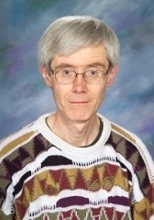
Ambuj K. Singh is a Distinguished Professor of Computer Science at the University of California, Santa Barbara (UCSB), with a part-time appointment in the Biomolecular Science and Engineering Program. He holds a PhD from the University of Texas at Austin (1989), an MS from Iowa State University (1984), and a BTech from the Indian Institute of Technology, Kharagpur (1982). His campus affiliations include the Center for Bio-Image Informatics, Information Network Academic Research Center, and IGERT on Network Science. PhD, University of Texas at Austin, 1989 M.S., Iowa State University, 1984 B.Tech., Indian Institute of Technology, Kharagpur, 1982 Research interests span network science, machine learning, and bioinformatics, with a focus on graph-based methodologies. His work addresses: Data-centric modeling of dynamic networks Representation learning and explainability in graph neural networks Network analysis in social systems and biological networks Applications in drug discovery and brain sciences Geometry-preserving distance metrics for data integrity Recent publications highlight advancements in counterfactual explanations, GNN benchmarking, molecular graph pretraining, and self-attention for event detection. Scientific contributions include: Founding Acelot, Inc., an in silico drug discovery company Editorial roles at IEEE Transactions on Knowledge & Data Engineering and BMC Journal of Clinical Bioinformatics NSF-IGERT (2013-2018), ARL-funded Information Networks Academic Research Center (2009-2014), and US Army MURI grants Advising has involved mentoring over 50 graduate/postdoctoral students, including 30+ PhD candidates. He leads a multidisciplinary research group at UCSB and collaborates with off-campus entities like Acelot, Inc.
Professor Emily So serves as Deputy Head of the School of Arts and Humanities at the University of Cambridge and directs the Cambridge University Centre for Risk in the Built Environment (CURBE). A chartered civil engineer with extensive field experience, she holds leadership roles in the Open-Oxford-Cambridge AHRC Doctoral Training Partnership and chairs the Faculty EDI Committee. Her research focuses on urban risk and resilience , particularly in earthquake-prone regions. Combining structural engineering with epidemiological approaches, she develops innovative casualty estimation models and engages directly with affected communities worldwide. Her work spans seismic safety, disaster epidemiology, and remote sensing applications for rapid damage assessment. Professor So's publication trends reveal strong emphasis on machine learning for disaster risk modeling , with recent work featuring graph neural networks, deep clustering for urban morphology, and LSTM-based population forecasting. Her research bridges engineering, social sciences, and data science to address resilience in developing nations. 2010 Shah Family Innovation Prize (Earthquake Engineering Research Institute) Fellow of the Institution of Civil Engineers (FICE) Scientific Advisory Group for Emergencies (SAGE) member advising UK government As Director of CURBE, she leads interdisciplinary collaborations with EEFIT, Global Earthquake Model (GEM), World Bank, and USGS. Her field investigations following major earthquakes inform practical solutions for vulnerable communities, notably contributing to the 2017 World Building of the Year design in China. Current work includes sabbatical research for 2025-2026 focused on decolonizing architectural approaches to disaster resilience. Professor So maintains active roles in professional organizations and international disaster response frameworks, with her CURBE team developing methodologies now implemented globally for seismic safety improvements.
Gordon Wetzstein is an Associate Professor of Electrical Engineering and, by courtesy, Computer Science at Stanford University. He leads the Stanford Computational Imaging Lab and co-directs the Stanford Center for Image Systems Engineering (SCIEN). His research focuses on computational imaging, wearable computing, and neural rendering, blending computer graphics, vision, AI, and optics. Education: Ph.D., Computer Science, University of British Columbia (2011) Diploma, Media Systems Science, Bauhaus University (2006) Research Interests: His work spans computational displays , holography , non-line-of-sight imaging , and AI-driven optical systems . Key projects include Autofocals (gaze-contingent eyeglasses) and neural holography systems. He explores applications in AR/VR, medical imaging, and scientific visualization. Publications: Recent work includes advances in 3D holography, gaze-tracking systems, and AI-optics integration. His papers address challenges in display efficiency, light-field processing, and real-time imaging. Awards: Fellow of Optica NSF CAREER Award (2016) PECASE (2019) ACM SIGGRAPH Significant New Researcher Award (2018) Advising & Grants: He advises over 20 doctoral and postdoctoral students. His lab collaborates with industry (e.g., Raxium, Google) and has secured grants from NSF, DARPA, and private foundations. Labs & Teams: His lab develops cutting-edge systems like neural holography and non-line-of-sight imaging. The SCIEN center fosters interdisciplinary image systems research.
Farhad Rachidi-Haeri is a Titular Professor and Head of the Electromagnetic Compatibility (EMC) Group at EPFL. His expertise spans EMC research, lightning electromagnetics, time reversal techniques, and fault location in power systems. He has led the EMC Group since the 1980s, with funding from the Swiss National Science Foundation, European Union, and private sector collaborations. His work involves international partnerships with institutions like the University of Toronto and KTH. Education: PhD in Electrical Engineering from EPFL (1991), M.S. from EPFL (1986). Roles: President of Swiss National Committee of URSI (2012–2020), Editor-in-Chief of IEEE Transactions on EMC (2013–2015), and member of the Academy of Sciences of Bologna Institute (2019). Research Focus: Lightning interaction with infrastructure, electromagnetic field modeling, time reversal applications for fault detection, and high-frequency transient analysis. His work bridges theoretical physics and engineering, addressing challenges in power systems, lightning protection, and aerospace. Awards: IEEE EMC Technical Achievement Award (2005), Berger Award (2016), and Distinguished Honorary Professor at Tsinghua University (2024). Over 400 peer-reviewed papers and 500 conference contributions reflect his prolific research output. Labs/Teams: Leads the EMC Laboratory at EPFL, focusing on experimental and numerical studies of electromagnetic phenomena. Collaborates with global networks on projects like Laser Lightning Control and structural lightning protection for wind turbines.
Soumya Dutta is an Assistant Professor in the Department of Computer Science and Engineering at the Indian Institute of Technology Kanpur (IITK), where he leads the INSIGHT: Intelligent Scientific and Visual Computing of Big Data Research Group. He joined IIT Kanpur in October 2022 after working as a Scientist II at Los Alamos National Laboratory (LANL) from July 2019 to August 2022, and previously as a Postdoctoral Research Associate at LANL from June 2018 to July 2019. His educational background includes a Ph.D. and M.S. in Computer Science and Engineering from The Ohio State University (2011-2018), where he was part of the GRAVITY research group, and a B.Tech. in Electronics and Communication Engineering from West Bengal University of Technology, India (2005-2009). Research Interests: Dr. Dutta's research focuses on the intersection of machine learning, visual computing, big data, and high-performance computing. His primary research areas include Machine Learning for Visual Computing and Image Analysis, Big Data Visualization and Analytics, Data Science and HPC, Machine Learning for Scientific Computing, and Explainability and Interpretability of AI Models. His work addresses various big data characteristics including the 5 Vs: Volume, Velocity, Variety, Veracity, and Value. He develops techniques that make complex machine learning models more interpretable and explainable, enabling their effective adoption in real-life applications across scientific domains, social media, IoT, healthcare, and industry applications. Dr. Dutta's research group has secured multiple funded projects including: DAVi: An Intelligent Data Analytics and Visualization Framework (funded by ISRO), Intelligent Visual Computing of Extreme-scale Data for Accelerating Scientific Discovery (IIT Kanpur Initiation Grant), Enabling Interactive Big Data Analytics and Visualization at Exascale (SERB), Development of AI-Enabled National Portal for Efficient Search of Missing People (C3iHub), and Proactive and Generalized Deepfake Defense Mechanisms (C3iHub). Best Reviewer, Honorary Mention Award for IEEE Transactions on Visualization & Computer Graphics (TVCG), 2021 Best Paper Award at ISAV 2021, co-located with Supercomputing (SC) LAAP Award at Los Alamos National Laboratory, 2021 Best Paper Award at TopoInVis 2019 Best Paper Award at ISAV 2018, co-located with Supercomputing (SC) Best Poster Award in 12th Annual CSE Student Poster Exhibition, The Ohio State University, 2018 Best Poster Award in 11th Annual CSE Student Poster Exhibition, The Ohio State University, 2017 Best Paper Honorable Mention Award at IEEE Visualization Conference (IEEE VIS) 2016 Dr. Dutta actively mentors a large group of students including Ph.D., M.Tech., and B.Tech. students. His current Ph.D. students include Shanu Saklani, Sankhadeep Bhowmick, Ananya Chaturvedi, Arpita Santra, Anubhav Dixit (co-supervised), and Robin Shah. He has supervised numerous M.Tech. students with thesis topics ranging from uncertainty-aware neural networks to deepfake detection. Dr. Dutta currently teaches courses including CS360 - Introduction to Computer Graphics and CS661 - Big Data Visual Analytics. The INSIGHT research group collaborates internationally with researchers from Meta, Oak Ridge National Laboratory, and National Taiwan Normal University. The group's work focuses on building machine learning and data science-based solutions to analyze large-scale multifaceted data in a scalable way, enabling interactive and interpretable analytics of complex data from scientific simulations, social media, IoT, healthcare, and other application domains.
Professor Matthias Mann is a world-leading scientist serving as Director of the Proteomics and Signal Transduction department at the Max Planck Institute of Biochemistry in Martinsried, Germany, and Director of the Proteomics department at the Novo Nordisk Foundation Center for Protein Research, Faculty of Health Sciences, University of Copenhagen, Denmark. With an h-index exceeding 277 and over 350,000 citations, he is recognized as the highest cited German researcher and one of the most influential scientists globally in proteomics. His educational background includes: Ph.D. in Chemical Engineering from Yale University (1988) Master's Degree in Physics from Georg August University Göttingen (1984) Bachelor's of Arts in Mathematics from Georg August University Göttingen (1982) Professor Mann's research focuses on advancing mass spectrometry-based proteomics to understand biological systems at the protein level. His work spans technological developments in mass spectrometry, bioinformatics and computational analysis, signal transduction and posttranslational modifications, and clinical proteomics applications for disease diagnosis and treatment. The Mann lab has pioneered groundbreaking methods like SILAC for quantitative proteomics and MaxQuant for proteome data analysis. Their vision is to translate proteomics knowledge into clinical practice for predictive, diagnostic, and preventive medicine, with recent work focusing on AI-guided platforms for analyzing proteomes from minimal tissue samples. Analysis of Professor Mann's recent publications reveals a strong trend toward clinical applications of proteomics, particularly in cancer research, metabolic diseases, and neurodegenerative disorders. His work increasingly integrates spatial proteomics, single-cell resolution techniques, and artificial intelligence approaches to uncover disease mechanisms and identify potential biomarkers, with a clear shift from basic technology development toward direct clinical applications and personalized medicine. Professor Mann has received numerous prestigious awards throughout his career: 2025: Elected member of the American National Academy of Sciences 2024: Dr. H.P. Heineken Award for Biochemistry and Biophysics 2023: Otto Warburg Medal 2019: Nominated member of the Bavarian Academy of Sciences 2013: Elected member of Leopoldina German National Academy of Sciences 2012: Körber European Science Award, Louis-Jeantet Foundation Prize for Medicine, Ernst Schering Prize, and Leibniz Prize Professor Mann leads a highly collaborative research team involved in multiple international networks including the Bill & Melinda Gates Foundation, Michael J. Fox Foundation for Parkinson's Research, CLINSPECT-M, and Munich Heart Alliance. His lab has mentored numerous successful researchers, with several former postdocs receiving prestigious ERC Starting Grants. The Mann group has developed innovative clinical proteomics pipelines for analyzing archived tissue specimens and body fluids, aiming to identify protein markers for early detection of diseases such as diabetes and cancer. The Mann lab operates across two major research centers with state-of-the-art mass spectrometry facilities. Their Clinical Knowledge Graph platform integrates multi-omics data with extensive metadata, creating an ecosystem for machine learning applications in proteomics. Current research focuses on developing highly sensitive methods that can profile thousands of proteins from minimal cell samples, enabling the identification of critical disease-related proteins and supporting the development of individualized therapies.
Aidan J Horner is a Professor in the Department of Psychology at the University of York. He holds a BSc in Psychology (2005) and MSc in Cognitive Neuroscience (2006) from the University of York, followed by a PhD in Cognitive Neuroscience from the University of Cambridge (2010). His career includes postdoctoral research at Otto-von-Guericke University (2010–2011) and University College London (2011–2016), and a visiting scholar position at Stanford University (2008). He returned to York as a Lecturer in 2016, advancing to Senior Lecturer and his current Professorship. Research Focus: Horner’s work examines how the brain encodes and retrieves long-term memories, particularly spatial and event-based information. He employs experimental psychology, virtual reality, neuroimaging (e.g., fMRI, MEG), and computational modeling to study hippocampal and cortical mechanisms underlying memory formation, consolidation, and forgetting. His recent studies explore the role of theta oscillations in memory binding, the impact of emotion on memory coherence, and forgetting dynamics. Publications & Awards: Over 50 peer-reviewed articles, including high-impact work in Current Biology , Nature Communications , and Cognition . Recognized with the Annual Cognitive Paper Prize Award (2022) for groundbreaking contributions to memory research. Grants & Projects: Lead investigator on ESRC-funded projects (e.g., "Promoting rapid and sustained learning of novel information" , 2018–2022). Collaborates with institutions like the York Neuroimaging Centre (YNiC) to advance neuroimaging techniques in cognitive studies. Labs & Teams: Affiliated with the York Neuroimaging Centre (YNiC), integrating neuroimaging with behavioral and computational approaches to memory systems. Active in interdisciplinary teams studying memory plasticity and cognitive neuroscience.
Chita R. Das is a Professor at Pennsylvania State University, known for extensive contributions in computer architecture, machine learning, and high-performance computing. Their research focuses on optimizing hardware-software co-design for edge computing, cloud infrastructure, and energy-efficient systems. Key areas include FPGA acceleration, GPU optimization, and serverless computing frameworks. Das collaborates frequently with institutions like AMD and Intel, addressing challenges in parallel computing and distributed systems. Their work bridges theoretical advancements with practical applications in recommendation systems, bioinformatics, and real-time video processing. Research interests span across hardware acceleration techniques, cloud resource management, and sustainable computing. Notable projects include adaptive training frameworks for intermittent power environments and neural-augmented game streaming for mobile platforms. Das's publications often address performance bottlenecks in modern architectures and propose novel solutions for latency and energy efficiency. Recent articles highlight innovations in serverless computing cost optimization, low-bandwidth VR streaming, and FPGA-based bioinformatics tools. Their contributions are characterized by interdisciplinary approaches combining computer architecture with machine learning and embedded systems.
Rita Cucchiara is a Full Professor at the Department of Engineering 'Enzo Ferrari' of the University of Modena and Reggio Emilia. She leads the AImageLab research laboratory, part of the Artificial Intelligence Research and Innovation Center (AIRI) in Modena. Her research focuses on Computer Vision, Pattern Recognition, Machine Learning, and Multimedia, with applications in video surveillance, medical imaging, human-centered AI, and generative models. She is actively involved in interdisciplinary projects like ELIAS (European Lighthouse for AI Sustainability) and ELSA (European Lighthouse on Secure AI). Her recent roles include being elected Rector of the University of Modena and Reggio Emilia in 2025. She has organized and participated in major AI events, including workshops at NeurIPS, CVPR, and ECCV, and has contributed to advancements in multimodal models, deepfake detection, and trustworthy AI. Education details are not explicitly provided, but her extensive academic and research experience at the University of Modena underscores her expertise. She collaborates with institutions like NVIDIA, CINECA, and industry partners such as Digital Design and NVIDIA's AI Technology Center. AImageLab's projects include developing systems for medical imaging, ethical AI, and generative adversarial networks (GANs) for design surfaces. She co-organizes initiatives like the ELLIS Summer School on Large-Scale AI and contributes to policy discussions on AI ethics and societal impact. Her work spans from foundational research (e.g., vision transformers, continual learning) to applied projects (e.g., DDGan system for surface printing). Key grants and collaborations include the FAIR project and PNRR-M4C2 initiatives. She advises students and researchers in AI, with 7 PhD positions funded under national programs. Her leadership roles in AIRI and AImageLab highlight her commitment to bridging academia and industry, fostering innovation in AI-driven solutions for sustainability and healthcare.
Professor Yasamin Mostofi is a faculty member in the Department of Electrical and Computer Engineering at the University of California, Santa Barbara. She is also affiliated with the Department of Computer Science and the Center for Control, Dynamical Systems and Computation. Her work bridges wireless systems, robotics, and machine learning. PhD, Stanford University MS, Stanford University MS, Sharif University of Technology Research Interests : Her lab focuses on wireless systems and autonomous agents , developing novel mathematical models for RF sensing and communication-aware robotics. Current directions include WiFi/millimeter wave/6G-based imaging and analytics, networked robotics for cellular systems, human-robot collaboration, and machine learning integration. Recent Publications : Her work spans through-wall crowd analytics , robot-assisted connectivity , and vision-aided wireless sensing , with applications in smart health, security, and retail optimization. Key trends include cross-modal integration (WiFi and vision), synthetic data generation, and real-world clinical validation. Scientific Recognition : Presidential Early Career Award for Scientists and Engineers (PECASE) Antonio Ruberti Prize, IEEE Control Systems Society NSF CAREER Award IEEE Region 6 Outstanding Engineer Award IEEE Fellow (2020) Advising and Leadership : She mentors PhD students in systems research, with graduates joining leading companies like Qualcomm and Google. She co-founded NPJ Wireless Technology (Nature Portfolio) and serves on editorial boards including IEEE Transactions on Control of Network Systems .
Carey Rappaport is a Professor of Electrical and Computer Engineering at Northeastern University. He serves as deputy director of the U.S. Department of Homeland Security’s ALERT Center (Awareness and Localization of Explosive-Related Threats) and associate director of the Gordon-CenSSIS Center (Bernard M. Gordon Center for Subsurface Sensing and Imaging Systems). His research focuses on microwave and millimeter-wave sensing technologies for homeland security and biomedical applications, including tunnel detection, airport security systems, and breast cancer diagnostics. His work on explosives detection involves standoff and portal-based millimeter-wave radar, X-ray backscatter, IR and Terahertz spectroscopy for trace detection, and electronic sensing of hidden triggers. He has emphasized balancing technological effectiveness with privacy, health, and cost considerations in security systems. His projects include developing airport scanners with improved imaging and analyzing challenges in securing "soft targets" like public events. Rappaport's research has been highlighted in media outlets such as Boston Herald, The Economist, and Northeastern University news. He has discussed technical limitations of ground-penetrating radar in tunnel detection and policy implications for international airport security measures, including the 2011 Moscow airport bombing and 2023 Gaza Metro tunnel network analysis.
Alexis Berne is an Associate Professor at the Environmental Remote Sensing Laboratory (LTE) within the School of Architecture, Civil and Environmental Engineering (ENAC) at École Polytechnique Fédérale de Lausanne (EPFL). He co-directs the SSIE-GE program and serves as a member of the CDS (Commission for Doctoral Studies) . His research spans radar meteorology, precipitation microphysics, polar precipitation, and geostatistics, with a focus on mountainous and polar regions. Current Positions Associate Professor, LTE, EPFL (2013–present) Co-Director, SSIE-GE, EPFL PhD Program Committee Member, EDCE-GE, EPFL Research Interests include the remote sensing of precipitation, particularly snowfall and ice production mechanisms, using radar and geostatistical methods. His work addresses atmospheric processes in extreme environments like Antarctica and the Swiss Alps, leveraging machine learning and numerical modeling for climate analysis. Teaching encompasses courses on remote sensing, atmospheric processes, and climate change, emphasizing interdisciplinary approaches and spatiotemporal variability. He advises current PhD students such as Heather Anne Corden and Gionata Ghiggi, alongside mentoring past students like Jacopo Grazioli and Timothy Hugh Raupach.
Antonio González is a full Professor at the Barcelona School of Informatics (FIB), Universitat Politècnica de Catalunya (UPC), where he is affiliated with the Department of Computer Architecture. He leads the Microarchitecture and Compilers (ARCO) research group, focusing on robust and energy-efficient computing systems, including general-purpose processors, GPUs, and cognitive computing architectures. His research spans computer architecture, microarchitecture, compilers, GPU design, and deep learning acceleration, with a strong emphasis on energy efficiency and memory optimization. His work integrates hardware and compiler techniques to enhance performance in modern computing systems. The recent publications highlight a strong trend in energy-efficient DNN acceleration, GPU microarchitecture, memory systems, and near-data processing. His team explores novel quantization methods, adaptive caching, and architectural extensions for vision and AI workloads, published in top-tier venues such as MICRO, ISCA, and IEEE/ACM journals. ACM Fellow (2020) ICREA Academia Award (2014, 2019, 2024) UPC Duran Farell Award (2008) HiPEAC 2024 Paper Award (twice) González has supervised several PhD students and leads competitive R&D+i projects, including those funded by ICREA and the European Research Council. His research group collaborates extensively within UPC and with international institutions. He is actively involved in advancing computer architecture through innovation in simulation, hardware design, and AI acceleration. He is a member of IEEE and ACM, and his work continues to influence both academic and industrial developments in high-performance and energy-efficient computing.
Shih-Fu Chang is the Dean of Columbia Engineering and holds the Morris A. and Alma Schapiro Professorship at Columbia University. His research focuses on computer vision, machine learning, and multimedia information retrieval. He is recognized as a foundational figure in the field of content-based visual search and has pioneered innovations in image/video search engines, crime prevention systems, and brain-machine interfaces. His leadership roles include Chair of Columbia's Electrical Engineering Department (2007-2010), Editor-in-Chief of the IEEE Signal Processing Magazine (2006-2008), and Senior Executive Vice Dean at Columbia Engineering, where he drives strategic planning and international collaboration. Dr. Chang has received prestigious awards including the ACM Multimedia Technical Achievement Award, IEEE Signal Processing Technical Achievement Award, and IEEE Kiyo Tomiyasu Award. He is a Fellow of AAAS, ACM, and IEEE, and an Academician of Academia Sinica. His recent work emphasizes multimodal reasoning, few-shot learning, and vision-language systems, with applications in healthcare diagnostics and multimedia benchmarking. His research spans cross-modal understanding, event extraction, and adaptive AI systems. Key contributions include systems like Ferret-v2 for multimodal grounding and RESIN for schema-guided event tracking. He has advised multiple startups and actively contributes to curriculum development in AI and engineering education.
Professor Peter F. Driessen is a faculty member in the Department of Electrical and Computer Engineering at the University of Victoria, with a cross-appointment in the School of Music. He holds a BSc and PhD from the University of Victoria and is a Professional Engineer (PEng). His research focuses on communication systems, signal processing, control, and interdisciplinary projects in computer music and wireless technologies. Key areas include audio/video signal processing, radio propagation, sound recording, and multimedia systems. He leads the University of Victoria Propagation Laboratory, which explores radio wave propagation and Amateur radio integration with engineering education. His work spans theoretical research and applied projects like ECOSat satellite systems, software-defined radio (SDR), and innovative musical instruments such as the Radio Drum. He supervises undergraduate and graduate projects in these domains through ELEC 499 courses. Notable contributions include the APEGBC Editorial Board Award for Best Paper (2002) and patents in wireless networking and signal processing. His teaching includes courses in signal analysis and electromagnetics, and he collaborates on interdisciplinary programs like the Music/Computer Science degree. Education: BSc in Electrical Engineering, University of Victoria PhD in Electrical Engineering, University of Victoria Research Interests: Audio and video signal processing for music and media Software-defined radio and Amateur radio technologies Satellite communication and ground station development Gesture-based interfaces and musical instrument design Error mitigation in streaming audio/video Optical and microwave-photonic systems Labs & Collaborations: Propagation Laboratory (radio wave research) UVic Experimental Radio Group (Amateur radio club) UVic Satellite Design Team (ECOSat projects) UVic Centre for Aerospace Research Grants & Awards: APEGBC Editorial Board Award (2002) Multiple US patents in wireless systems and signal processing



.jpg)