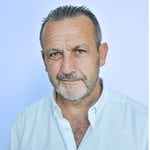
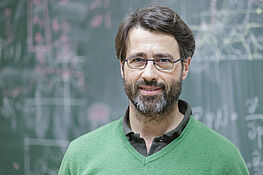
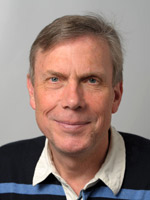
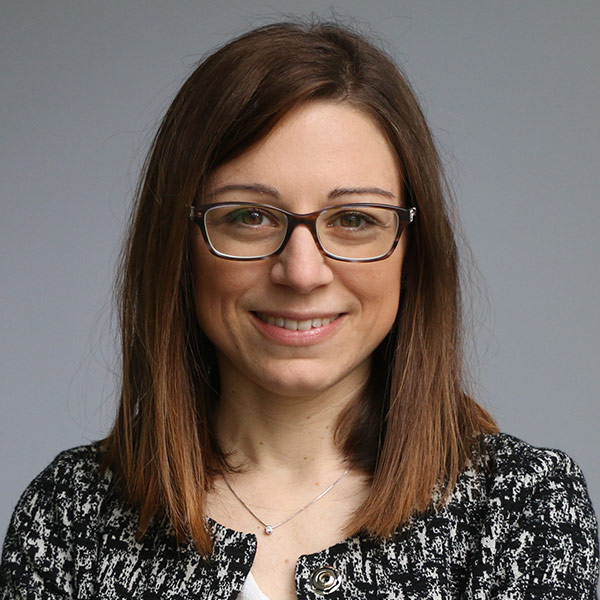
Mats Leijon is Professor of Electrical Engineering at Uppsala University, Sweden. His work centers on renewable energy systems, particularly wave and marine current energy conversion, with a focus on direct-driven linear generators, power electronics, and grid integration. He has led projects at the Lysekil Research Site, Sweden, and contributed to experimental hydrokinetic power stations like the Söderfors Project. Key Affiliations: Department of Electrical Engineering, Uppsala University; Ångström Laboratory; Lysekil Research Site. Research Interests span wave energy converter design, electromagnetic systems, control strategies for renewable energy, and marine substation technology. He explores: Hydrodynamic and electromagnetic modeling of point-absorbing wave energy devices Power optimization via resonance circuits and predictive control Robotized manufacturing for electric machines Publication Trends highlight collaborations on Wave Energy Converters , Marine Current Turbines , and Three-Level Inverter Systems , with applications in the Baltic Sea and Norwegian fjords. His work addresses extreme wave survivability, power fluctuation reduction, and environmental impact assessments. Grants and Projects include offshore wave energy deployments, thermal rating of submerged substations, and experimental validation of marine power systems. He has advised on robotics for cable winding and stator slot geometry optimization. Labs and Teams operate at the Ångström Laboratory and Lysekil Research Site, focusing on full-scale offshore experiments, CFD simulations, and grid-connected marine substations.
Rui Vinhas da Silva is a Full Professor at ISCTE-IUL and an Associate Professor at the University of Manchester Business School. With a career spanning over two decades, he has contributed extensively to research in national competitiveness, corporate reputation, and sustainable business practices through publications, books, and executive training programs. Education: PhD and Postdoctoral Fellow at the University of Manchester; MBA and Master of Economics from UK and Canada Research Focus: National competitiveness, sustainability in business, marketing strategy, and organizational behavior His recent articles explore topics like AI's role in society, caravan tourism regeneration, and sustainable business models. He has received teaching accolades at ISCTE and leads research initiatives in European networks like COST-CHERN. Silva's work bridges academic rigor with practical applications in consulting and executive education.
Jonathan Voersaa Wenshøj is an academic researcher at the Department of Computer Science, University of Copenhagen. He contributes to the Machine Learning section's activities spanning theoretical foundations and applications in diverse domains like information retrieval, medical data analysis, remote sensing, sustainability, and biological modeling. The section participates in the SCIENCE AI Centre and collaborates with initiatives like TreeSense for global tree resource analysis. His research intersects machine learning with quantum computing, medical informatics, and sustainability. Recent publications highlight applications in environmental monitoring, healthcare diagnostics, and energy-efficient AI systems. The department provides advanced compute resources including a powerful cluster for intensive machine learning tasks. This researcher's work appears in diverse machine learning domains, with recent publications addressing quantum-inspired architectures, explainable AI in medical imaging, and sustainable computing practices. The section actively hosts events including seminars, conferences, and PhD defences related to machine learning advancements.
Tijs Slaats is an Associate Professor in the Software, Data, People & Society section at the Department of Computer Science, University of Copenhagen. His research focuses on Business Process Management with particular emphasis on declarative and hybrid process notations to provide flexible workflow support for knowledge workers, funded by the Danish Council for Independent Research. His educational background includes: M.Sc. in Information Technology from IT University of Copenhagen Ph.D. in Computer Science from IT University of Copenhagen (supervised by Thomas Hildebrandt) Dr. Slaats specializes in declarative process modeling, particularly Dynamic Condition Response (DCR) graphs which enable flexible workflow systems. His work bridges theoretical foundations with practical applications in cross-organizational settings. Recent research extends into blockchain technologies, smart contracts, and applications in sensitive domains like asylum processing and refugee law. He combines formal methods with empirical evaluation to ensure both correctness and usability of workflow systems. His publication pattern shows increasing application of process mining techniques to blockchain technologies and socially impactful domains, while maintaining core research in Business Process Management. Notable trends include integration of DCR graphs with smart contracts, privacy-preserving techniques for asylum data, and object-centric approaches to process discovery. Research funding includes: Hybrid Business Process Management Technologies project (Danish Council for Independent Research) Technologies for Flexible Cross-organizational Case Management Systems (FLExCMS) industrial Ph.D. project Alongside his academic work, Dr. Slaats maintains strong industry connections through Exformatics A/S where he developed the DCR Graphs workflow solution (www.dcrgraphs.net), and previously worked as a software engineer in the Dutch e-commerce sector. His dual expertise in academia and industry ensures his research addresses real-world workflow challenges while maintaining theoretical rigor.
Lauren Tompkins is an Associate Professor of Physics in the School of Humanities and Sciences at Stanford University, holding appointments in the Physics Department. Her research focuses on fundamental particle interactions through participation in major international experiments including the ATLAS experiment at CERN's Large Hadron Collider, the Light Dark Matter Experiment (LDMX) at SLAC, and the Heavy Photon Search (HPS) at Jefferson Laboratory. Her research interests span particle physics , dark matter detection , and advanced trigger systems . She investigates the Higgs boson's properties, searches for evidence of dark sectors through heavy flavor fermions, and develops FPGA-based real-time processing systems for particle detectors. Her group specializes in custom electronics for high-rate collision environments, particularly focusing on identifying rare events like Higgs boson production and potential dark matter signatures. Professor Tompkins' recent publications demonstrate strong focus on dark matter searches, Higgs boson physics, and advanced computing techniques. Her work bridges experimental particle physics with cutting-edge computational methods, particularly in deep learning applications for vertex reconstruction and FPGA-based trigger systems for the High Luminosity LHC upgrade. CAREER Award, National Science Foundation (2016-2021) Terman Fellow, Stanford University (2014-2017) US ATLAS Education and Public Outreach Award (awarded to group member Rocky Bala Garg) She actively mentors doctoral students and postdoctoral researchers, currently advising Elizabeth Berzin, Noe Gonzalez, Sadaf Kadir, and Rory O'Dwyer as Doctoral Dissertation Advisor. Her group participates in multiple collaborative projects including the NSF Institute for Research and Innovation in Software for High Energy Physics (IRIS-HEP) and contributes to the development of the ACTS open source software project. The Tompkins Group maintains active research programs across three major experimental facilities in Switzerland, California, and Virginia.
Christoph Dellago is a full Professor of Computational Physics at the Faculty of Physics of the University of Vienna, where he has been a faculty member since 2003. He currently serves as Director of the Erwin Schrödinger Institute for Mathematics and Physics, Head of the Computational and Soft Matter Physics Group, and Project lead of EuroCC Austria - National Competence Centre for Supercomputing. Previously, he served as Dean of the Faculty of Physics (2009-2012) and Coordinator of the Doctoral College Advanced Functional Materials (DCAFM). Full Professor, Faculty of Physics, University of Vienna (2003-present) Director, Erwin Schrödinger Institute for Mathematics and Physics (2017-present) Head, Computational Physics and Soft Matter Group (2024-present) Coordinator, Doctoral College Advanced Functional Materials (DCAFM) Austrian Representative, Council of CECAM Dellago received his PhD in Physics from the University of Vienna in 1996, followed by postdoctoral research at UC Berkeley as a Schrödinger Fellow of the Austrian Science Foundation. His research focuses on developing computational methods to study rare events in condensed matter systems, particularly transition path sampling methodology for simulating nucleation, chemical reactions, and biomolecular reorganizations. He has pioneered the application of machine learning to molecular structure recognition and potential energy surfaces. Recent work examines self-assembly of nanocrystals, biopolymer folding, aqueous interfaces, phase separation in alloys, thermo-polarization, cavitation, and freezing phenomena. Analysis of Dellago's recent publications (2023-2025) reveals a strong emphasis on machine learning applications in computational physics, particularly neural network potentials for simulating water interfaces, crystal defects, and phase transitions. His work bridges traditional statistical mechanics with modern computational techniques, creating powerful tools for studying complex dynamical processes that occur on timescales far beyond conventional molecular dynamics simulations. The publications demonstrate increasing integration of machine learning with rare event sampling methods, reflecting the cutting-edge direction of computational statistical mechanics. Förderpreis der Stiftung Futura zur Förderung junger Südtiroler im Ausland (1997) The Raymond and Beverly Sackler Prize in the Physical Sciences (2005) UNIVIE Teaching Award of the University of Vienna (2014) Dellago leads an active research group with multiple PhD students and postdocs, focusing on computational statistical mechanics. His group develops trajectory-based sampling methods and machine learning approaches for molecular simulation. He has secured significant funding through EuroCC Austria and various research platforms including the Research Platform Accelerating Photoreaction Discovery and the Research Platform Erwin Schrödinger International Institute for Mathematics and Physics. His research has been supported by numerous grants enabling advanced computational infrastructure for high-performance simulations. The Dellago Group operates within the Computational and Soft Matter Physics division at the University of Vienna, with strong connections to the Research Network Data Science. The group collaborates extensively with international research institutions and maintains close ties with the Erwin Schrödinger Institute, which Dellago directs. Their research environment combines theoretical physics, computational chemistry, and machine learning expertise to tackle fundamental questions in condensed matter physics and soft matter systems.
Odd Olai Aalen is a Professor of Medical Statistics at the University of Oslo, holding a PhD in Biostatistics from UC Berkeley. His research focuses on survival analysis, causal inference, and epidemiological modeling, contributing to advancements in statistical methodologies for clinical and public health applications. Aalen has been recognized for his work, including presenting the 2010 Armitage Lecture in Cambridge. Education: PhD in Biostatistics, UC Berkeley Research Interests: Development and application of survival analysis techniques Causal inference in medical research Frailty modeling in epidemiology Methodological innovations in longitudinal data analysis Recent Publications Trends: Aalen's work emphasizes translating statistical theory into practical tools for understanding disease mechanisms and treatment effects. His articles frequently address challenges in clinical trial design, mediation analysis, and addressing biases in observational studies. Key themes include improving outcomes prediction, refining causal pathway models, and integrating longitudinal data with survival analysis. Awards: 2010 Armitage Lecture, University of Cambridge Advising & Grants: While specific grant details are not listed, his extensive publication record reflects sustained funding in biostatistics and medical research. He leads the Causal inference and event history analysis research group, fostering interdisciplinary collaboration. Labs/Teams: Active in the Causal inference and event history analysis group at the University of Oslo, focusing on statistical methodologies for medical and epidemiological challenges.
Thomas Gries is a Professor at RWTH Aachen University 's Department of Textile Technology . He serves as the Director of the university's textile machinery department, leading research in composite materials, sustainable textiles, and advanced manufacturing technologies. Current Role: University Professor & Director, Chair of Textile Machinery Research Focus: Textile engineering, carbon fiber composites, sustainable manufacturing, digital twins His work spans experimental studies on fiber-reinforced composites, AI-driven process optimization, and lunar regolith-based fiber production for space applications. Collaborations include public research projects with industrial partners and events like the WIRKTag 2025 on AI in work design. Recent publications analyze: Mechanical behavior of natural/synthetic fiber composites Recycled thermoplastic composite thermoforming 3D-woven CFRP structural optimization Moon-based fiber production from lunar materials Environmental impact assessment tools for textiles
Deborah Agostino is an Associate Professor of Management Accounting at Politecnico di Milano and a core faculty member at Polimi Graduate School of Management. She teaches financial and management accounting in executive and post-graduate courses and serves on the scientific committee of the EIASM Public Sector Conference. Her research focuses on performance measurement and digital innovation in public sector and cultural institutions. Education: PhD in Management Economics and Industrial Engineering, Politecnico di Milano Master of Science in Management Engineering, Politecnico di Milano Her research explores digital technologies' impact on management accounting, particularly social media integration into performance measurement systems of cultural institutions. She investigates challenges in digital transformation and data-driven decision-making in public organizations. Key trends in her publications include digital innovation in museums, crisis management during pandemics, and big data applications in cultural sectors. Her work emphasizes online engagement tools, hybrid organizational governance, and social media's role in public accountability. Scientific Awards: Highly cited research in Public Relations Review for 'Using social media to engage citizens: A study of Italian municipalities' Deborah contributes to academic courses in accounting, finance, and heritage management. She leads the REMAPS Research Group (www.remaps.polimi.it), focusing on digital transformation in public and cultural sectors.
Charbel Azzi is an Assistant Professor, Teaching Stream at the University of Waterloo, specializing in Computer Vision and Autonomous Robotics. His work focuses on robotics navigation, image-based localization, and sensor technology applications. He holds a full-time faculty position within the university's engineering domain. Research interests include developing algorithms for motion estimation, global localization, and context-aware robotics systems. His contributions span both theoretical advancements and practical applications such as AR-assisted wayfinding and energy-harvesting prototypes like the Eco-Brella. Notable research trends include leveraging global descriptors and 3D keypoints for improved localization accuracy, alongside interdisciplinary projects in renewable energy. No academic awards or grants are explicitly listed in the provided information.
Tiziano De Matteis is an Assistant Professor in the @Large Research group at Vrije Universiteit Amsterdam's Faculty of Science, Department of Computer Systems. He also holds an affiliation with the Network Institute. His research focuses on overcoming post-Moore architecture challenges through parallel and distributed computing, high-performance systems, energy efficiency, and FPGA applications. Previously, he was a PostDoc at ETH Zurich's SPCL Group and earned his MSc/PhD from the University of Pisa. Education PhD in Computer Science, University of Pisa MSc in Computer Science, University of Pisa Research Interests Post-Moore architectures for distributed ecosystems Energy-aware parallel computing High-level abstractions for parallel software development FPGA-based hardware acceleration Data stream processing and distributed systems Recent Research Trends Recent work emphasizes: Data center risk analysis and sustainability Optimizing microservices and distributed scheduling LLM model offloading to NVMe storage Python-based data-centric programming productivity GPU interconnect performance in supercomputing Grants & Projects Participates in the EU-funded 'Extreme and Sustainable Graph Processing' project (2023-2025), exploring scalable graph algorithms and energy-efficient computing systems. Teaching Accelerator-Centric Computing Ecosystems Computer Organization Distributed Systems Systems Seminar
Professor Amanda Lee is a Chair in Medical Statistics at the University of Aberdeen, affiliated with the School of Medicine, Medical Sciences and Nutrition. She holds the title of Professor since 2006 and has served as Director of the Institute of Applied Health Sciences (IAHS) from 2018 to 2023. Her research focuses on applied medical statistics, epidemiology of vascular diseases, and healthcare equity. She has led the University Medical Statistics Team since 2005 and currently heads the Biostatistics and Health Data Science group. Lee is active in Equality, Diversity, and Inclusion (EDI), co-founding the Women's Development Network in 2020 and serving as IAHS EDI Lead since 2024. Education: MSc in Medical Statistics from Newcastle University (1987), PhD (details unspecified), and extensive postdoctoral experience at the University of Dundee and University of Edinburgh. Her career includes roles as a senior research fellow, Reader, and academic leadership positions. Research Interests: Her work spans biostatistics, vascular disease epidemiology, and health services research. She has contributed to studies on COPD management, surgical training equity, and quality of life in chronic conditions. Notable projects include the BICS RCT on bisoprolol for COPD and analyses of differential attainment in medical examinations. Publications and Grants: Over 250 publications, with recent work on COPD, medical education equity, and surgical training. She has secured £12 million in grants across 84 projects. Teaching includes online courses in research methods and statistics for health professionals. Leadership and Service: Member of numerous university committees, including EDI networks, promotions panels, and policy groups. External roles include statistical editorships, data monitoring committees, and grant review panels.
Thomas Reynolds is a Senior Lecturer and Chancellor's Fellow in Civil Engineering at the University of Edinburgh School of Engineering. He holds an MEng in Engineering Science from Oxford (2005), PhD from Bath (2013), and PGCert in Teaching from Cambridge (2017). A Chartered Engineer and ICE member since 2010, his industry experience includes structural design for WYG and AKT on projects ranging from Swansea sea lock to Masdar Institute in Abu Dhabi. Research focuses on timber engineering innovation, structural health monitoring, and disaster-resilient construction. Current investigations include cyclone resilience of traditional housing in Madagascar, CLT connection robustness, and bicycle-based bridge monitoring techniques. Publications emphasize experimental mechanics of timber systems, climate impact modeling on structures, and sustainable construction technologies. Recent work explores novel materials applications and field measurement methodologies. He leads projects like 'Sustainable Improvement of Cyclone Resilience for Traditional Houses in Coastal Madagascar' (EPSRC) and 'EDACAB: Efficient Data Acquisition for Condition Assessment of Bridges'. Teaching covers structural mechanics, materials engineering, and design courses.
Bettina Kemme is a Professor in the School of Computer Science at McGill University, Montreal, Canada. She leads the Distributed Information Systems Lab (DISL) and specializes in large-scale data management, distributed systems, and cloud computing. Her academic roles include teaching COMP 512 (Distributed Systems) and COMP 421 (Database Systems). Education: Diplom (M.Sc. equivalent) in Computer Science, Friedrich-Alexander University, Erlangen, Germany (1996) PhD in Computer Science, Swiss Federal Institute of Technology (ETH), Zurich, Switzerland (2000) Research Interests: Distributed systems, cloud-native data management, in-database analytics (AIDA project), monitoring-as-a-service frameworks, and scalable pub/sub systems for online games. Current projects focus on integrating machine learning with databases, cloud performance monitoring using SDN, and sustainable data systems for data science. Lab & Collaborations: Leads the Distributed Information Systems Lab (DISL) with active projects in distributed databases, cloud computing, and game systems. Collaborates on EU-Canada initiatives like the SustainSys program for sustainable data infrastructure. Advising: Supervises PhD and M.Sc. students in topics like monitoring frameworks (Mona ElSaadawy), in-database ML (Winnie He), and distributed systems (Maximilian Schiedermeier). Alumni include over 50 researchers from PhD candidates to undergraduate researchers.
Reza Bosagh Zadeh is an Adjunct Professor at the Institute for Computational and Mathematical Engineering (ICME) at Stanford University. His research focuses on machine learning, deep learning, and their applications in video classification, healthcare analytics, and distributed algorithms. He specializes in developing scalable computational methods for real-time data processing and has contributed to advancements in neural networks and optimization techniques. Reza's work spans theoretical and applied domains, with notable contributions to TensorFlow frameworks, video summarization systems, and medical imaging analysis. His research often integrates interdisciplinary approaches, leveraging both academic and industrial collaborations. Notable projects include developing machine learning models for glaucoma detection and creating efficient algorithms for large-scale data processing in environments like Apache Spark. His publications emphasize real-time video stream analysis, distributed computing architectures, and practical implementations of deep learning. Reza holds a strong presence in both academic and tech sectors, with contributions to platforms like Twitter's Who-to-Follow system and innovations in edge computing for video surveillance.