Erik Velldal is a Professor in the Language Technology Group (LTG) at the Section for Machine Learning , Department of Informatics, University of Oslo . With over 25 years of experience in machine learning and natural language processing (NLP), he leads the SANT project focused on sentiment analysis and contributes to major research initiatives including MediaFutures , NorwAI , and Integreat (Norwegian Center for AI Research). His work bridges linguistic theory and computational methods, emphasizing semantic modeling and uncertainty detection. Research interests include sentiment analysis , language modeling , event extraction , and machine learning applications to NLP. Recent publications address cross-domain sentiment classification , generative event analysis , and multilingual model adaptation . He co-developed the Norwegian Review Corpus (NoReC) and Norwegian Anaphora Resolution Corpus (NARC) , foundational resources for Norwegian NLP. His projects often involve collaboration with international institutions, reflected in publications at venues like ACL, COLING, and EMNLP. Current efforts focus on entity-level sentiment analysis , diagnostic datasets for Norwegian , and evaluating compositional generalization in language models. No public record of scientific awards or part-time appointments exists.
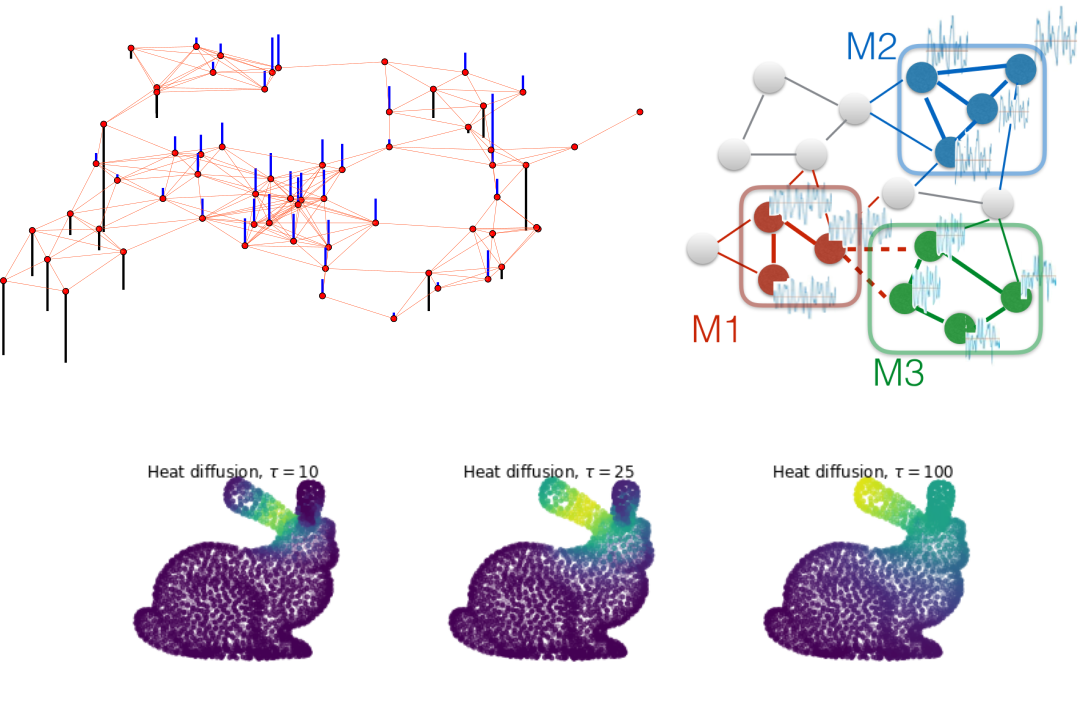
Benjamin Ricaud is an Associate Professor and Group Leader in Machine Learning at UiT The Arctic University of Norway's Department of Physics and Technology. His core affiliations include membership in the Machine Learning Group, Visual Intelligence center, and co-directorship of the Digital Technology Innovation Lab focused on Arctic-region tech startups. He also co-chairs the annual Northern Light Deep Learning conference. Ricaud's research spans: Fundamental ML : Graph signal processing, explainable AI, and generative models Applications : Microfossil classification, medical diagnostics (retinal aging), drug analysis, and climate data interpretation Emerging domains : Self-supervised learning and biological data analysis using Raman spectroscopy His recent publications (2020-2025) cluster in three domains: Graph ML methodologies (35%) Biomedical/biological applications (40%) Geoscience/climate informatics (25%) with consistent focus on interpretability and real-world data challenges. Teaching includes Image Processing (FYS-2010), Pattern Recognition (FYS-3012), and Machine Learning (FYS-2021). He leads outreach initiatives developing AI exhibits for Tromsø Science Centre.
Lilja Øvrelid is a Professor at the Department of Informatics, University of Oslo, leading the Language Technology Research Group. Her research focuses on syntactic and semantic text processing using machine learning techniques such as dependency parsing, negation analysis, and sentiment analysis. She teaches courses including IN1140: Introduction to Language Technology , IN5550: Neural Methods in NLP , and INF5830: Natural Language Processing . Her academic interests span natural language processing, machine learning, and computational linguistics, with a particular emphasis on Norwegian language technology. Recent publications highlight work in sentiment analysis (including patient feedback), event extraction from Norwegian news, benchmarking language models, emotion analysis for under-resourced languages (Pashto, Farsi-Dari), and bias detection in multilingual models. She actively contributes to the development of Norwegian language resources such as NorBench, NorQuAD, and NoReC. Current projects include BigMed and SIRIUS , focusing on biomedical text mining and AI infrastructure. Collaborations with colleagues like Erik Velldal, David Samuel, and Vladislav Mikhailov are frequent in her work. Despite no explicit mention of scientific awards, her contributions to NLP and computational linguistics are substantial through publications, datasets, and tool development.
Synnøve Kristine Nepstad Bendixsen is a Professor and Head of Department at the Department of Social Anthropology, University of Bergen (UiB), Faculty of Social Sciences. She is a leading scholar in migration, bordering, and welfare state dynamics, with extensive research on irregular migration, humanitarianism, and belonging in Nordic and European contexts. Her research interests include: Migration and bordering practices Welfare state exclusion and inclusion Irregular migrants' access to healthcare Humanitarian governance and encampment Transnational kinship and mobility Gender, religion, and identity among migrants Digitalization of welfare and borders Her recent publications (2022–2024) reflect a strong focus on the Nordic welfare model’s role in controlling migration through bordering practices, the moral economies of healthcare for irregular migrants, and the lived experiences of displacement. Themes across her work include precarity, slow violence, deservingness, and the paradoxes of egalitarian societies producing hierarchical belonging. Scientific contributions and outreach include: Keynote speaker at international conferences (e.g., University of Iceland, EASA) Invited lectures at Princeton, Oxford (COMPAS), Humboldt University, and others Public engagement through op-eds (Bergens Tidende, Morgenbladet), podcasts, and media interviews Documentary film co-creation: Birthdayparents (2018) She has advised PhD candidates such as Elina Niinivaara and Signe Aarvik and has led major research projects including: PrecaNord (2022–2025): Tackling Precarious and Informal Work in the Nordic Countries EQUALPART (2021–2025): Migrant Women’s Participation in Labour Supercamp (2019–2022): Genealogies of Humanitarian Containment Energethics (2015–2019): Norwegian Energy Companies Abroad She has organized academic events such as the Bergen Summer Research School and participates in public discourse on deep sea mining, inclusion, and migration policy. Her work bridges academic research, policy critique, and public anthropology.
Meghan Balk is a Postdoctoral Fellow with the Evolution and Paleobiology Group at the Natural History Museum, University of Oslo. Her work combines museum collections and trait databases to investigate how inter- and intra-specific traits change across time and space. She is passionate about digitizing museum data and enabling FAIR data principles for continued exploration of data-driven science across evolutionary biology and ecology. Balk received her Ph.D. from the University of New Mexico in 2017 with a concentration in Interdisciplinary Science through the Department of Biology. She earned her B.S. from the University of California, Davis in 2010 in the Department of Evolution, Ecology, & Biodiversity, with a minor in Paleobiology through the Department of Geology. Her academic journey reflects a strong foundation in both biological sciences and geological perspectives on evolutionary processes. Her research employs both micro- and macroscopic approaches to understand abiotic and biotic drivers of phenotypic evolution. She investigates within and among lineage phenotypic evolution using fossil and modern records of organisms like bryozoans. Her work on abiotic drivers examines body size changes in species like the bushy-tailed woodrat across geological time, while her research on biotic drivers explores predator-prey relationships in the fossil record, particularly focusing on species like Otodus megalodon. She utilizes machine learning and computational approaches to extract morphological trait data from specimen images. Balk's publication record demonstrates expertise across evolutionary biology, paleontology, ecology, and computational approaches. Her recent work focuses on developing FAIR and modular workflows for image-based knowledge discovery in the emerging field of imageomics. She has made significant contributions to understanding body size evolution across geological time, predator-prey relationships in the fossil record, and promoting open science principles for trait-based research. Her work bridges traditional paleontological methods with cutting-edge computational techniques. Balk is actively involved in several research projects including ROCKS PARADOX (Dissecting the paradox of stasis in evolutionary biology) and Machine-readable Nature (MaNa). She collaborates with researchers across institutions to create ontologies and workflows for trait data, such as the Functional Trait Resource for Environmental Studies (FuTRES) project and the Biology-Guided Neural Networks project. She teaches courses including Foundational Open Science Skills workshop, Git for Mere Mortals webinar, and R Basics Crash course, emphasizing the importance of reproducible research practices.
Jon Otto Fossum is a Professor in the Department of Physics at the Norwegian University of Science and Technology (NTNU), Faculty of Natural Sciences. His research focuses on soft and complex condensed matter physics, particularly experimental studies of clay minerals and nanomaterials. Position: Professor Institution: NTNU Department: Physics Research Interests: Fossum investigates the physical properties of clay-based nanomaterials, including CO2 capture, intercalation processes, and self-assembly of colloidal particles. His work spans fundamental physics of nanoscale systems to applied technologies like electromagnetic shielding and drug delivery systems. Publication Trends: His recent articles highlight experiments with synthetic clays, graphene suspensions, and machine learning applications. Topics include CO2 interactions in nanolayered materials, structural coloration, and electromagnetic interference shielding using nanocomposites. Teaching & Supervision: He has advised multiple doctoral dissertations and master's theses, including projects on Pickering emulsions, electric field-induced structuring, and clay-stabilized emulsions. Laboratory: Leads the Soft and Complex Matter Lab , focusing on nanomaterials and their environmental/technological applications.
Evi Zouganeli is a Professor at the Department of Mechanical, Electrical and Chemical Engineering, Faculty of Technology, Art and Design, Oslo Metropolitan University (OsloMet). She leads the Automation, Robotics, and Intelligent Systems (ARIS) research group and serves as a board member of the Norwegian Artificial Intelligence Society (NAIS). Her work bridges academic research and industrial applications in intelligent systems. Research Focus: Zouganeli specializes in Machine Learning and Computer Vision applications for Cognitive Robotics, with emphasis on assistive technologies, smart cities, and smart industry. Her research explores neuromorphic computing, sensor network optimization, and multi-modal AI integration. Publications Trends: Recent works focus on AI-enabled robotics, sensor placement optimization in smart homes, and neuromorphic reservoir networks. Earlier contributions include European collaborative research in photonic technologies and broadband networks. Additional Contributions: She actively participates in public discourse about AI implementation challenges and Norway’s AI development potential, engaging with industry leaders and policymakers.
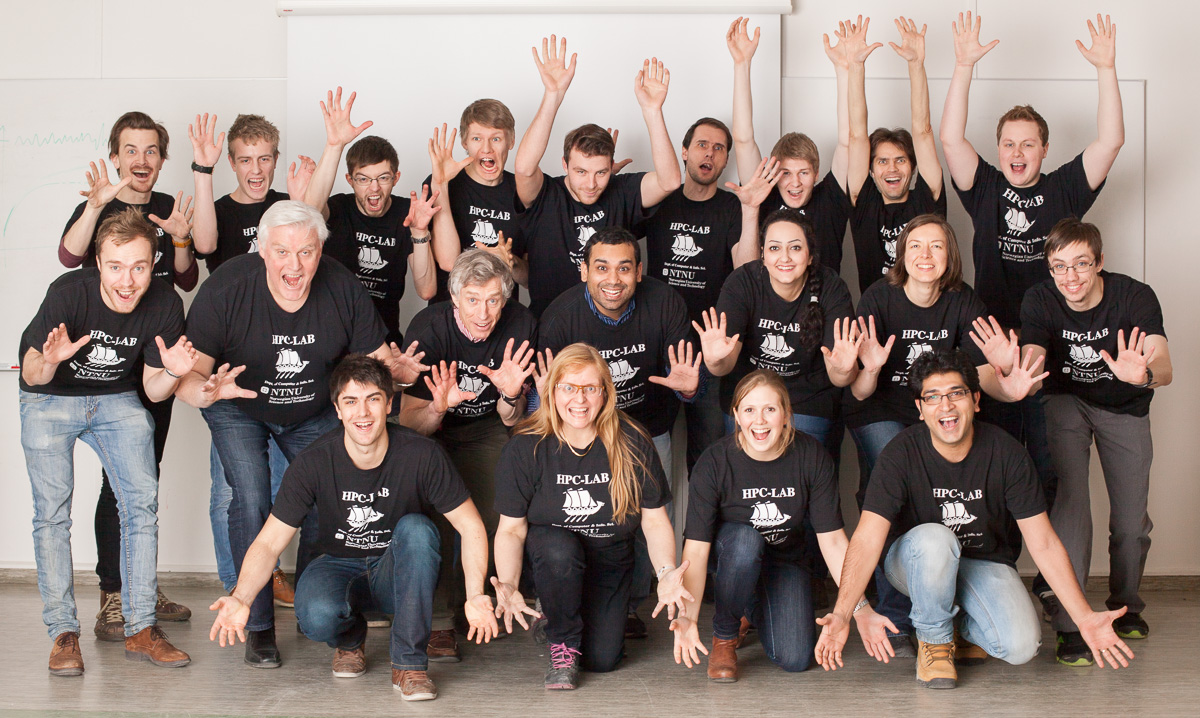
Prof. Anne C. Elster is a Professor of Computer Science at NTNU's Department of Computer & Information Science (IDI), leading the HPC-Lab. She specializes in High-Performance Computing (HPC), GPU acceleration, and heterogeneous systems. Her work spans HPC applications in medical imaging, seismic processing, and oil & gas simulations, with collaborations at CERN, NVIDIA, and Schlumberger. Elster holds a PhD in Electrical Engineering from Cornell University (1994) and is an IEEE Senior Member since 2000. She has supervised over 70 master students and numerous PhD candidates, emphasizing GPU computing. Her teaching includes courses like Parallel Computing and Compilers , with a focus on programming and problem-based learning. She leads EU projects like CLOUDLIGHTNING (2015–2018) and has organized major conferences (e.g., ISC, SC, PARA). Her HPC-Lab is a CUDA Research and Teaching Center, and she advocates for HPC infrastructure investments in Norway through policy engagement.
Melina Antonia Buns is an Associate Professor of History at the University of Stavanger, affiliated with the Department of Cultural Studies and Languages within the Faculty of Arts and Education. She is a core member of the Greenhouse Center for Environmental Humanities and leads the international research project Energy Lives! Infrastructural Citizenship in Nordic Energy Transitions , funded by NordForsk. Her work spans environmental, energy, and international history, with a focus on the Nordic region, nuclear waste, and imperial legacies in energy infrastructures. PhD, University of Oslo, 2021 Her research lies at the intersection of environmental and energy history, emphasizing nuclear waste, Nordic environmental diplomacy, and the socio-political dimensions of energy transitions. She explores how historical processes shape contemporary debates on sustainability, citizenship, and environmental justice. Her work engages with transnational environmental movements, the performance of 'green modernity', and the imperial logics embedded in extractive industries such as North Sea oil and gas. Her recent publications reveal a strong trend in analyzing Scandinavian anti-nuclear activism, the historical development of Nordic environmental cooperation, and the material and spatial dimensions of nuclear waste. She frequently examines how environmental policies are intertwined with national identity, economic interests, and geopolitical strategies, particularly in the Nordic context. Her work also critically engages with the concept of 'green transitions' by uncovering colonial continuities in energy infrastructure. Three-year Researcher Project with International Mobility grant, Research Council of Norway (Nuclear Nordics project) NordForsk grant for Energy Lives! project (project no. 181638) Member of the Young Academy of Norway (2024–2028) Research Event Coordinator, Greenhouse Center for Environmental Humanities (since 2023) Member, ESEH 2025 Conference Organising Committee Melina Antonia Buns has secured significant research funding and leads a major international project involving scholars from Norway, Sweden, and Denmark. She mentors MA students affiliated with the Energy Lives! project and collaborates widely across disciplines. She is actively involved in academic service, including organizing research seminars and contributing to public discourse through media and podcasts. Her work is embedded in collaborative research collectives such as the Ghosts of Empire in the North Sea, where she investigates wastelanding and radioactive waste disposal in the North Sea. She is a key figure in the Greenhouse Center for Environmental Humanities and co-leads the CREATURE research group focused on creative methods in environmental humanities. She teaches undergraduate and graduate courses in environmental history, historiography, and the cultural history of technology, and has guest lectured at institutions including KTH Royal Institute of Technology and the University of Oslo.
Yong Man Ro is a Professor of Electrical Engineering and ICT Endowed Chair Professor at Korea Advanced Institute of Science and Technology (KAIST). His research spans multiple areas of computer vision and artificial intelligence with a focus on facial expression recognition, video anomaly detection, and virtual reality applications. Professor Ro's research interests include: Computer Vision and Image Processing Facial Expression and Micro-expression Recognition Video Anomaly and Abnormal Event Detection Virtual Reality and 360-degree Image Quality Assessment Large Language and Vision Models Medical Image Analysis His recent publications demonstrate a strong trend toward multimodal AI systems, particularly focusing on the integration of language and vision capabilities. Professor Ro has made significant contributions to video anomaly detection with his BMAN framework and has recently been exploring the frontiers of large language and vision models with works like Moai and Meteor. His research trajectory shows evolution from foundational work in facial recognition to cutting-edge multimodal AI systems. Professor Ro has received substantial academic recognition with his work being cited over 12,865 times, indicating significant influence in his field.
Arthur Mason is an Associate Professor at the Department of Geography and Social Anthropology, Faculty of Social and Educational Sciences, Norwegian University of Science and Technology (NTNU). He also serves as a Visiting Senior Fellow at the London School of Economics (LSE) Department of Anthropology, a Research Affiliate at the University of St Andrews, and a Research Associate at the University of Calgary. His research focuses on Energy Politics, The Anthropocene, and Arctic Late Industrialism, among other areas. Education details are not explicitly provided in the text, but his academic positions and publications suggest advanced qualifications in Anthropology and related fields. Dr. Mason's research interests include Energy Politics and Policy, the Anthropocene, Event Ethnography, Cultures of Expertise, and Arctic Late Industrialism. He examines how energy systems and policies intersect with ecological vulnerability, particularly in the Global North. His recent work explores the aesthetics of energy and futurity, as well as the impacts of climate change on ecosystems and local communities. His recent publications include the forthcoming book Consulting Energy: From Judgment to Decision-Making (2025), and other works such as Energy Capitol: The Waning of Regulatory Form and Arctic Abstractive Industry: Assembling the Valuable and Vulnerable North . He contributes to academic blogs like Allegra Lab and Svalbard Post . Awards and grants are not explicitly mentioned in the provided texts. He collaborates with institutions such as StudioPolar and the Arctic Institute of North America. His work often involves interdisciplinary approaches, combining anthropology with political science and sociology.
Ignasi Josep Soler Poquet is a Doctoral Research Fellow at the Rosseland Centre for Solar Physics, University of Oslo. His research focuses on solar physics and computational science, with a strong emphasis on applying machine learning techniques to analyze solar observations. **Education**: Bachelor's in Physics from University of Valencia (specializing in astrophysics/theoretical physics) Master's in Advanced Physics (University of Valencia, focusing on supernovae and simulations) **Research Interests**: Development of deep learning models for detecting solar phenomena like Ellerman bombs Integration of Python-based tools for observational astronomy Computational analysis of solar dynamics using instruments like SST and SDO **Publications Trends**: His recent work demonstrates a clear trajectory in leveraging neural networks and deep learning to interpret solar observational data, with a focus on automated detection systems for transient solar events. **Advising & Grants**: No specific grants or advisees listed, though his PhD work is institutionally supported through the Rosseland Centre.
Samia Touileb is an Associate Professor in Natural Language Processing (NLP) at the University of Bergen's Department of Information Science and Media Studies. She co-leads the NLP work package at MediaFutures, a research center focused on responsible media technology. Her research emphasizes bias, fairness, and ethical implications of AI, particularly in language models and under-resourced languages. Education: PhD in NLP from the University of Bergen (2017), postdoctoral research at the University of Oslo's Language Technology Group, and prior roles in MediaFutures. Research Interests: - Bias and fairness in NLP models - Information extraction and summarization - Applications of NLP in social sciences - Scandinavian and under-resourced languages Notable Projects: - Co-developer of the NorBench benchmark for Norwegian language models - Creator of the EDEN dataset for event detection in Norwegian news - Lead in MediaFutures' NLP initiatives Publications focus on event extraction, bias measurement, and ethical AI, with contributions to conferences like NoDaLiDa and ACL.
Aistė Klimašauskaitė is a Postdoctoral Fellow in the Centre for the Study of the Sciences and the Humanities at the University of Bergen (UiB), Norway, as part of the SEAS (Shaping European Research Leaders for Marine Sustainability) programme. Her research critically examines deep-sea mining policy in Norway and the Arctic, focusing on the interplay between science, policy, and societal values. Her research interests lie at the intersection of science and technology studies, environmental governance, and marine sustainability. She explores how knowledge, expertise, and power shape blue growth initiatives, particularly deep-sea mining. Her work emphasizes post-normal science, ethical dimensions of sustainability, and the role of interdisciplinary collaboration in addressing complex environmental challenges. The recent publications reflect a strong focus on the governance of deep-sea mining, the role of the International Seabed Authority, and the alignment (or misalignment) of extractive policies with the UN 2030 Agenda. Her work combines qualitative analysis with critical policy evaluation, often highlighting tensions between economic ambitions and ecological responsibility. She actively contributes to public and academic discourse through blogs, podcasts, and conference presentations. Her outreach includes participation in webinars, summer schools, and public events such as the SDG Bergen Conference and Arctic Frontiers. She has co-organized symposia and facilitated workshops on topics ranging from mineral mining to climate ethics. While no formal students are listed, she mentors through collaborative research and teaching modules. She has contributed to courses at UiB and NHH, focusing on science, ethics, and climate governance. She is also involved in the AFINO network for responsible research and uses qualitative tools like NVivo in her research.
Asbjørn Karlsen is a Professor in the Department of Geography and Social Anthropology at the Norwegian University of Science and Technology (NTNU), Faculty of Social and Educational Sciences. He specializes in economic geography with research focusing on industrial restructuring, regional innovation, cluster formation, and sustainability transitions in natural resource-based regions. His current research examines global production networks and sustainability transitions, particularly the shift from oil and gas to renewable energy in offshore regions. He collaborates with researchers at Newcastle University (UK) and Universitas Gadjah Mada (Indonesia), and supervises three PhD students working on technology and environmental upgrading in manufacturing industries. Karlsen's publications focus on regional development dynamics, industrial transitions, and the governance of sustainable transformations. His recent work analyzes the role of institutions in facilitating sustainable transitions, technological legitimation processes, and policy frameworks for just transitions in carbon-intensive regions. Articles frequently appear in economic geography, regional studies, and energy policy journals. He has received significant recognition including an ARC Future Fellowship and ARC Discovery Early Career Researcher Award supporting his investigations into regional innovation systems. His grant-supported research examines policy mechanisms for sustainable development in specialized industrial regions. Karlsen leads research projects on renewable energy transitions and manufacturing upgrading, coordinating international teams examining path creation in industrial systems. He maintains active research partnerships examining the socio-economic dimensions of energy transitions across different geographical contexts.